
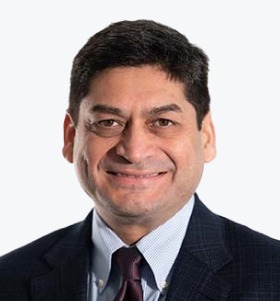
| Key facts | |
|---|---|
| Born | June 1969 (UK Companies House records); place of birth not publicly recorded [1] |
| Family roots | Marwari trading family from Rajasthan; business built in Madras (Chennai), later Mumbai [22] [26] |
| Education | No college degree on record; joined the family business in his teens [19] [7] |
| Family | Father Shashi Ruia (1943-2024), Essar co-founder; uncle Ravi Ruia, co-founder; brother Anshuman Ruia [8] [25] |
| Company/Group | Essar Group: energy transition, refining (UK), steel and mining, ports, technology, green mobility, managed by Essar Capital [15] [8] |
| Wealth | No separate figure for him; Forbes last valued “Shashi & Ravi Ruia” at US$2.2 billion (April 2021) [18] |
| Known for | Leading Essar through one of India’s largest-ever corporate deleveragings, then rebuilding it around energy transition |
On 25 October 2018, inside a tribunal process that had already lasted fourteen months, the family that built Essar Steel did something almost no defaulting promoter in India had done. They offered to pay back every rupee. Rs 54,389 crore, the full admitted claims of the company’s creditors, Rs 47,507 crore of it upfront in cash [39].
“We believe our current proposal will provide 100 per cent recovery to secured creditors and lenders,” said Prashant Ruia, the Essar chief who had become the family’s public face [39].
It was too late. That same day the creditors chose ArcelorMittal as the new owner of Essar Steel. The tribunal rejected the Ruias’ route back in [40]. A year later the Supreme Court cleared the takeover. The steel plant at Hazira, the Ruias’ biggest bet, passed to a joint venture of Japan’s Nippon Steel and ArcelorMittal, the steel giant controlled by Lakshmi Mittal’s family (see our Lakshmi Mittal profile) [3] [42].
Most families would have been finished. Essar wasn’t. By November 2022 it said it had repaid about US$25 billion (Rs 2 lakh crore) of debt and owed nothing to Indian banks [45]. By 2026 it was building hydrogen plants in England, LNG trucks in India and, by a US President’s announcement, a US$15 billion steel mill in Iowa [48] [51] [52].
This is the story of the man who ran Essar through all of it. He started as a schoolboy in his father’s office and found himself selling the family’s crown jewels to save the house. Then he tried to build again.
Where it began
A Marwari family in Madras
The Ruias are Marwaris, the trading community from Rajasthan whose families fanned out across India in the 19th and 20th centuries. A company history of Essar traces the family’s trading roots back to the early 1800s [22]. In 1956 Prashant’s grandfather, Nand Kishore Ruia, moved to Madras and set up a company exporting for the region’s iron ore trade, later adding stevedoring work at the port [22].
Shashi Ruia, Prashant’s father, began working under Nand Kishore in 1965 [23]. Accounts differ on when Nand Kishore died: some say 1967, others 1969 [28] [22]. What every source agrees on is what his two sons did next. In 1969 Shashi and his younger brother Ravi, an engineer, won an order from the Madras Port Trust to build an outer breakwater. PTI and Essar put its value at Rs 2.5 crore; some profiles say Rs 2.3 crore [23] [7]. They named the business Essar, after their initials: S and R [7].
The breakwater was finished in 1971. More port jobs followed at Tuticorin and Mormugao. In 1976 Essar became the first private Indian company to buy an oil tanker [22] [7].
A boy in the office
Prashant Shashikant Ruia was born in June 1969, the year Essar was founded, according to UK Companies House filings for the British companies he has directed [1] [2]. No official source records where. His younger brother, Anshuman, followed him into the business [20].
He describes his childhood as an apprenticeship. “As far as my journey is concerned, yes, I did start early,” he told PTI in 2024. “Our group was fairly small in the sense papa (my father) and chacha (uncle)… they got started in 1969. But we were still a very small group in 80-85 and I started working with my father in all my holidays at the age of 12… well, not working but actually being there” [19].
By 17, he said, he had real responsibility. He was offered the chance to study abroad and turned it down, because he was learning more at work, “and I was enjoying myself. So ‘Marwari School of Management’ was the one I went to” [19]. We could not find a reliable record of a college degree.
Essar’s own pages date his involvement in the group’s management to 1985, when he was about 16, and also say he has “been with the Essar Group since 1989” in a formal sense [7]. Either way, the teenager joined a business in the middle of a growth spurt. Essar was laying pipelines for ONGC, buying Karnataka Shipping (renamed Essar Shipping in 1984), and starting a steel venture in Gujarat [22].
The family was unusual in one more way. Three generations still live together and run Essar jointly, an arrangement Prashant credits to his grandmother: “It was set up by my father, my uncle and my grandmother. So she made sure that we all stay together and it’s been like that ever since” [19].
The first break
The young Prashant’s real school was steel.
In 1987 the steel venture became Essar Gujarat. German modules for making hot briquetted iron, a feedstock for steelmaking, were imported in 1989 and began production in 1990 at Hazira, near Surat [22]. A cold-rolling mill started in 1989 took until 1997 to reach commercial output [22]. In the same years Essar moved into oil exploration (1989) and power, starting a 515 MW plant at Hazira in the early 1990s [22].
Prashant joined the board of the steel company in his late teens or around 20; by 2003 he had sat on it for more than 14 years [21]. In 1997, aged 28, he was given direct charge of Essar’s three biggest businesses: steel, oil and power. A Business Standard report that July called him the heir-apparent. Group sources said that for the three companies, “the buck stops with him.” Anshuman took shipping, Shashi kept telecom and Ravi ran overseas business and financing [20].
The timing was brutal. The late 1990s were hard years for Indian steelmakers, and Essar had borrowed heavily to build. In 1999 Essar defaulted on about US$250 million of eurobonds and floating-rate notes [22]. Its steel company went into corporate debt restructuring in 2002, on loans of about Rs 2,800 crore [78]. The refinery project at Vadinar in Gujarat, begun in 1996, was hit by a cyclone in 1998 when it was about 60% built, and stood stalled for years [77].
In October 2003 Prashant was named managing director of Essar Steel, a post that had been vacant for about a year and a half. Business Standard said he had been “instrumental in chalking out its growth and expansion strategies” [21]. The steel company came out of restructuring early, in 2006, as the commodity boom of the mid-2000s turned the family’s fortunes [78].
Building the empire
The telecom jackpot
Essar’s most profitable move took the least steel. In 1995 it entered mobile telephony in partnership with foreign firms and launched a GSM service in Delhi [22]. The business grew into Hutchison Essar, with Hong Kong’s Hutchison as the majority partner.
In 2007 Vodafone bought Hutchison’s 67% stake for about US$11 billion. Essar kept its 33% [79] [30]. In March 2011 the Ruias agreed to sell that stake to Vodafone for US$5 billion. After a public fight over price, the deal was revised in July 2011 to US$5.46 billion (about Rs 24,297 crore) [30] [31]. Shashi Ruia remembered: “We were one of the early entrants in the telecom space in 1995” [31]. After tax, Business Standard estimated the Ruias would net about US$4.5 billion [31].
Going global
The mid-2000s were Essar’s expansion years, and Prashant was at the centre of them. In June 2007 Essar Global completed its purchase of Algoma Steel in Ontario, Canada, for US$1.85 billion [29]. Prashant, then a director of Essar Steel, told The Globe and Mail: “We think Canada is a safe market and we see no substantial political or economic risk in investing there” [28]. That year Essar also bought Minnesota Steel, a project to build an iron ore mine and plant at Nashwauk on the Iron Range [70].
Back in India, the Vadinar refinery restarted construction in 2005, began commercial production in 2008 and reached 20 million tonnes a year (about 405,000 barrels a day) in 2012 [77]. It became one of the most complex refineries in the world. Essar also built ports at Hazira, Vadinar and Paradip, and power plants including Mahan in Madhya Pradesh [36] [44].
By about 2007, Business Today later reported, Shashi and Ravi had moved into “mentor-advisor roles”, and Prashant was running the group from the 19th floor of Essar House in Mahalaxmi, Mumbai [36].
London, Stanlow and the peak
In April 2010 the family floated Essar Energy on the London Stock Exchange, raising about £1.3 billion at 420 pence a share. It was the biggest London listing since 2007, and the company joined the FTSE 100 [80] [35]. Prashant was a director from April 2010 and became chairman when Ravi stepped down in late 2011 [1] [57].
In 2011 Essar bought Shell’s Stanlow refinery in Cheshire, a plant of about 296,000 barrels a day, paying about US$350 million for the plant plus US$916 million for its stock of oil [32]. The aim, Essar said, was “direct access to the UK products market” [32].
At its high point, in FY2014-15, the group’s revenue reached about US$27 billion [36]. The empire ran from Hazira to Stanlow, from Mahalaxmi to Minnesota.
How the money was borrowed
Underneath, the debt was piling up. Prashant later explained the arithmetic. Around 2010 Essar launched a Rs 1.25 lakh crore expansion, funded with roughly 30-35% equity and about 65% debt [10]. The family put in about Rs 30,000 crore of extra equity over three years, including the Vodafone money [10].
Then the ground moved. In 2014 the Supreme Court cancelled 214 coal block allocations, hitting power and steel projects built around captive coal, and steel prices slumped. Prashant later named the coal cancellations among the shocks the group could not plan for [10]. “What we did not, or could not, foresee was the risk of regulation and judicial intervention,” Prashant said in 2019 [41].
By mid-2017 Business Today put the group’s debt at Rs 1.38 lakh crore. Essar Steel alone owed banks about Rs 40,000 crore, and the Cayman Islands holding company, Essar Global Fund, owed about US$5 billion more [36]. Essar had been one of the big borrowers in India’s bad-loan crisis.
The great sell-off
What came next was the defining episode of Prashant Ruia’s career: deciding what to sell, and selling fast.
The refinery. Talks with Russia’s Rosneft began in 2016, and the deal was signed on the sidelines of the BRICS summit in Goa that October. It closed on 21 August 2017 after lenders insisted their dues be settled first. Rosneft and a consortium of Trafigura and Russia’s UCP each took 49.13% of Essar Oil for a total of US$12.9 billion. The deal covered the Vadinar refinery, more than 3,500 fuel stations and the Vadinar port [38] [37]. Essar called it the biggest foreign direct investment India had received [37]. “We have substantially deleveraged our portfolio companies’ balance sheets, reducing debt by over $11 billion,” Prashant said that day [37]. The company was renamed Nayara Energy in 2018 [14].
The outsourcing business. Essar’s BPO arm, Aegis, was sold in pieces: its US operations to Teleperformance for US$610 million in 2014, and the remaining business to Capital Square Partners for about US$300 million in 2017 [36]. Essar says Aegis was monetised at almost 20 times what it cost [8].
Ports and power. In August 2022 Essar agreed to sell port and power assets to ArcelorMittal Nippon Steel India for US$2.4 billion [44]. The deal that closed in November 2022 was smaller, US$2.05 billion (Rs 16,500 crore), covering the Hazira port, the Paradip terminal and a 270 MW power plant at Hazira [9]. “Essar has concluded its asset monetisation programme and completed the debt repayment of $25 billion,” Prashant said [45].
Essar’s own accounting has risen over time, from Rs 1.4 lakh crore repaid in October 2019 to “$25 billion (Rs 2,00,000 crore)” by 2022 [41] [9]. The larger figures include debt that left the group with the businesses it sold. They are Essar’s claims rather than audited group figures, and Forbes has described the total as about US$20 billion [18]. Prashant called it “the largest deleveraging by any Indian corporate,” adding: “I think we did it at the right time because we would have struggled to do so much in the current environment” [41].
How the wealth is held
The Ruias do not own Essar the way a typical Indian promoter owns a listed company. The group’s ultimate holding company is Essar Global Fund Ltd, registered in the Cayman Islands, and Essar Capital manages its investments [36] [8]. Two discretionary family trusts, one for each brother’s branch, sit above that, according to records reported in the 2017 Paradise Papers investigation. Essar said the trusts were disclosed to regulators [73]. Apart from Black Box, almost all of Essar’s companies are unlisted. That is why no list-maker publishes a reliable personal figure for Prashant [50].
Essar 2.0: energy transition
With the debt largely cleared, Prashant set out what he calls the group’s next phase. In February 2023 Essar announced it would invest US$3.6 billion over five years in energy-transition projects: US$2.4 billion in the UK, centred on Stanlow, and US$1.2 billion in India [46]. The new company, Essar Energy Transition (EET), set out plans for:
- blue hydrogen at Stanlow
- green ammonia in India
- biofuels [46]
The flagship is HPP1, a 350 MW low-carbon hydrogen plant at Stanlow designed to capture about 600,000 tonnes of CO2 a year. It was picked for UK government support in 2024, and the EPC contract went to Turkey’s ENKA in January 2025 [47]. By August 2026, Essar said it had invested about £1 billion in Stanlow since 2011 and had a £4.3 billion pipeline of projects, more than £1 billion of it close to a final investment decision [48]. Prashant is non-executive chairman of EET Fuels, which runs Stanlow [13].
He has been pragmatic about it. “I don’t believe that fossil fuels are in the past, and that everything is going to go green,” he told the Financial Times. “We have not shut the door on fossil fuel investments” [11]. At Davos in 2025 he called a carbon-free future inevitable but said the cost gap with fossil fuels had to close through technology, not subsidy [12].
Trucks, Saudi steel and Iowa
The new Essar runs on several bets at once:
- Green trucking in India. Prashant’s brother Anshuman runs the green mobility businesses: Blue Energy Motors (trucks), GreenLine Mobility (fleet operations) and a fuel network. In January 2026 they set a target of 30,000 LNG and electric trucks and 100 fuelling hubs, backed by a US$275 million equity round that included Zerodha co-founder Nikhil Kamath (see our Nithin Kamath profile for the Zerodha story). GreenLine already runs more than 800 LNG trucks [51].
- Black Box. The IT services company was bought through Essar’s AGC Networks in January 2019 [81], and Prashant has set a goal of US$2 billion in revenue for it [49].
- Saudi Arabia. Essar has proposed a green steel plant of about 4 million tonnes a year at Ras Al-Khair. In June 2024 Prashant said: “We still haven’t got all the final approvals” [82]. We could not confirm that construction has begun.
- The United States. Essar’s old Minnesota project, now run by Mesabi Metallics under Ravi’s son Rewant, has come back from bankruptcy and court battles (see Controversies). Prashant said in January 2025 that Essar had invested US$1.7 billion there and planned another US$650 million [49]. On 28 September 2026, President Donald Trump announced at the White House that Mesabi would build a US$15 billion steel mill in Lee County, Iowa, with about US$18 billion of investment in total including the Minnesota mine. Ravi and Rewant Ruia stood with him [52] [53].
At Davos in January 2026, Prashant hinted that the family might list more of its companies. “We are currently not a very big player in the capital markets, but obviously that can’t be forever,” he said. Essar has “about 10 portfolio companies… most of them are closely held right now.” He added that “India would certainly be 50% or more of the group” [50]. No listing has been announced.
The setbacks and failures
Essar’s story has as many losses as wins, and Prashant has been unusually open about some of them while defending the decisions behind them.
Essar Steel. The biggest was the loss of Essar Steel, the Hazira plant the family had built over three decades. In June 2017 the RBI put it on its first list of 12 large defaulters, and the NCLT admitted it to insolvency on 2 August 2017 [3]. Section 29A, added to the Insolvency and Bankruptcy Code in November 2017, barred defaulting promoters from bidding for their own companies. The Ruias’ October 2018 offer to repay creditors in full was rejected by the tribunal, which said only the creditors who started the insolvency could seek withdrawal [40]. On 15 November 2019 the Supreme Court upheld ArcelorMittal’s plan and gave creditors primacy over how the money was shared [3] [43]. ArcelorMittal and Nippon Steel completed the purchase for about Rs 42,000 crore on 16 December 2019 [42].
Prashant did not hide his frustration. “We feel this is a little unfair,” he told The Economic Times. “I won’t say the system has been unfair — I just feel the circumstances have been unfair.” He also said: “If you are doing a business, there is no guarantee that you are going to have success all the time. India is trying to promote a huge startup culture and there are going to be failures” [10].
Algoma. The Canadian steelmaker bought for US$1.85 billion entered creditor protection in November 2015. In November 2018 its assets were sold to a new company sponsored by its lenders and noteholders, ending Essar’s ownership [72] [29].
Minnesota. At Nashwauk, about US$2 billion was spent on a mine and plant that was less than half built. In July 2016 Minnesota’s governor cancelled the state mineral leases and Essar Steel Minnesota filed for bankruptcy the same day [69] [70].
Essar Energy. The London listing that raised £1.3 billion at 420p in 2010 had fallen to about 55p by early 2014. The family then bought out minority investors at 70p and delisted the company in June 2014 [35].
In 2025, asked whether he would do it differently, Prashant would not concede that the strategy was wrong. “I don’t think our investment decisions in the past were bad, they were good decisions. What really happened was that we were caught out by some regulatory decisions and court orders.” What changed, he said, was discipline: “Our risk management has gone up, we do a lot of deep analysis before we make investment decisions” [11]. In 2019 he had put it more simply: “The question is on us, how we look at leverage in a much more conservative way going forward” [10].
Controversies and allegations
Essar has faced more legal and regulatory scrutiny than most Indian business groups. Many cases named the companies or other family members rather than Prashant himself, and we say who was named in each. None has ended in a finding of wrongdoing against him personally.
The 2G spectrum case and Loop Telecom
Allegation: In December 2011 the CBI charged Ravi Ruia, Prashant’s uncle, and Anshuman Ruia, his brother, along with Loop Telecom promoters I.P. and Kiran Khaitan, Essar director Vikash Saraf and three companies. The CBI alleged that Essar used Loop as a front to win 2G mobile licences in 2008 despite rules barring a company from holding 10% or more in two licensees in the same area, and charged them with cheating and conspiracy [4]. Prashant was not an accused. He appeared for CBI questioning, and in April 2011 the NGO Centre for Public Interest Litigation told the Supreme Court he should have been among those charged [56].
Response: Essar said it held only about 2% of Loop and that Loop was “not an associate or front.” It said the CBI had ignored the views of the telecom department and the law ministry. Prashant and Ravi publicly pleaded innocence [57].
What happened next:
- In February 2012 the Supreme Court cancelled 122 licences issued in 2008, including Loop’s, in a separate case on how spectrum was allotted.
- Ravi Ruia stepped down as chairman of Essar Energy after the chargesheet, and Prashant took over [57].
- On 21 December 2017 Special Judge O.P. Saini acquitted all eight accused, the same day he acquitted A. Raja and others in the main 2G case [4].
- In April 2018 the CBI appealed the Essar-Loop acquittal to the Delhi High Court [58].
Status: Acquitted at trial. The CBI’s appeal is pending in the Delhi High Court; in March 2024 the court admitted the CBI’s separate appeal in the main 2G case [59]. We found no ruling on the Essar-Loop appeal as of October 2026.
The “Essar leaks” emails
Allegation: In February 2015 lawyer Prashant Bhushan, for the CPIL, filed a petition in the Supreme Court based on internal Essar emails leaked by a whistleblower. The Indian Express and The Caravan reported on them. The petition alleged Essar had given favours to politicians, officials and journalists, including phones, job recommendations, and a two-night stay for Nitin Gadkari and his family on an Essar yacht off the French Riviera in July 2013. It asked for a court-monitored investigation [60] [61]. The material we read did not name any Ruia individually.
Response: Essar said it was law-abiding and that the reports relied on stolen or doctored material. It said it had complained to the police about the theft, and in court it described the favours as common courtesies. Gadkari said he paid for the trip from a family account and held no office at the time [61]. Essar also sued The Caravan for defamation.
What happened next:
- The Supreme Court issued notice on the petition in March 2015 and kept it pending for years [62].
- In July 2018 the government called the petition a “roving and fishy inquiry”, and Essar’s counsel called it “frivolous”. The matter was listed for final hearing in October 2018 [62].
Status: We found no reported final ruling. The allegations remain unproven.
The phone-tapping complaint
Allegation: In June 2016 Delhi lawyer Suren Uppal complained to the Prime Minister that Essar had intercepted the phone calls of ministers, officials and business leaders between about 2001 and 2006. He said a former Essar security official had run the scheme [63] [64].
Response: Essar denied making any recordings and accused the complainant of trying to extort money. The former security official said the tapes existed but denied that Essar had made them [64].
What happened next:
- The Home Ministry ordered an inquiry, and in July 2016 the Delhi High Court declined to order a court-monitored probe because a police preliminary inquiry was already under way [63].
- A year later no FIR had been registered [64].
Status: No FIR, charge or finding that we could find. It remains an unproven allegation.
Essar Steel’s insolvency and the personal guarantees
Allegation: This was a recovery case, not a criminal one. State Bank of India-led lenders said that Prashant and Ravi Ruia had personally guaranteed Essar Steel’s loans and were liable for what ArcelorMittal’s payment did not cover. In 2019 SBI went to the Debts Recovery Tribunal to enforce the guarantees [5].
Response: In Prashant Shashi Ruia v State Bank of India, the guarantors argued in the Gujarat High Court that once the insolvency plan was approved and the debt passed to the new owner, nothing was left to claim [5] [65].
What happened next:
- In March 2020 the Gujarat High Court allowed the guarantors to amend their petitions. The tribunal later dismissed SBI’s application, a ruling legal commentators questioned [5] [65].
- In June 2026 SBI-led lenders put Rs 13,751 crore of guarantee claims against the Ruias and group companies up for sale, at a reserve price of Rs 200 crore [66].
- ArcelorMittal Nippon Steel India reportedly bought the claims for Rs 200 crore. The Economic Times described this as closing the Essar Steel bad-loan chapter [67].
Status: Lenders recovered close to 90% of Essar Steel’s financial debt through the insolvency [66]. The guarantee claims now sit with AM/NS India. We found no public statement from the Ruias on the sale.
ArcelorMittal USA’s conspiracy claim
Allegation: After winning a US$1.5 billion arbitration award against Essar Steel Ltd over a Minnesota iron ore contract, ArcelorMittal USA sued Ravi Ruia, Prashant Ruia and Essar Global Fund in London. It alleged a conspiracy to strip assets so the award could not be paid, and sought a worldwide freezing order [6].
Response: Essar called the claims “totally ill-conceived and lacking any basis in fact or reality” [68].
What happened next:
- On 30 March 2020 Mr Justice Henshaw refused the freezing order, finding no good arguable case and no real risk that assets would be moved away. He expressed “very considerable doubt” about the asset-stripping case [6].
- Permission to appeal was refused in April 2020 [68]. The underlying conspiracy claim was not decided by these rulings.
Status: Freezing order refused. We found no reported final judgment or settlement.
Minnesota and the Iron Range
Allegation: Minnesota officials said Essar Steel Minnesota had left the Nashwauk project unfinished and owed tens of millions of dollars to local vendors and the state. In July 2016 the state cancelled its mineral leases [69].
Response: Essar Steel Minnesota filed for bankruptcy. In January 2019 Essar regained control of the project, now Mesabi Metallics, by settling about US$260 million of debt. That month Governor Tim Walz’s administration moved to bar Essar Global from doing business in the state, saying it was “a company that left the Iron Range in the lurch” [70].
What happened next:
- The state cancelled Mesabi’s leases in 2021. The courts upheld that, and in January 2023 the Minnesota Supreme Court declined to hear Mesabi’s appeal [71].
- Mesabi has since secured new financing. In September 2026 the Iowa mill was announced with White House backing [52].
Status: The lease dispute is closed against Mesabi. Mesabi’s separate antitrust suit against Cleveland-Cliffs was sent to trial in 2024; we could not confirm its outcome.
The Essar Energy buyout in London
Allegation: In 2014 independent directors of Essar Energy, then chaired by Prashant Ruia, said the family’s 70p offer for the shares it did not own “clearly undervalued the company.” Standard Life called it “cynical opportunism,” and the Association of British Insurers warned of damage to the integrity of the UK market [33] [34].
Response: Essar Global kept its offer at 70p and pressed ahead; its stake rose from 78% to 86% as shareholders accepted [35].
Status: Shareholders approved the buyout, and Essar Energy was delisted in June 2014 [35]. No regulator found wrongdoing.
Russian loans and sanctions questions
Allegation: In April 2026 SourceMaterial and The Guardian reported that after Russia invaded Ukraine in 2022, Essar moved loans of more than US$2.5 billion from Russia’s VTB Bank from a Cypriot company to a Mauritius subsidiary, beyond the reach of EU sanctions. UK MPs called for an investigation, and Cyprus said it was examining the matter [55]. In September 2026 Al Jazeera examined Essar’s Russian links, including the Rosneft-led refinery sale. The refinery, now Nayara, has been under EU sanctions since July 2025 [54].
Response: Essar denied wrongdoing. It said it acted on expert legal advice, that the Cypriot authorities had approved the move, and that the increase in the loans reflected accrued interest. The reporting itself said there was no suggestion Essar acted illegally [55]. Al Jazeera said it found no evidence of a sanctions breach in the US steel investment [54].
Status: No finding against Essar. Cyprus’s review was reported in April 2026; we found no outcome.
Over-invoicing allegations
Allegation: Show-cause notices issued by the Directorate of Revenue Intelligence in 2014 and 2016 alleged that power companies of the Essar and Adani groups had over-valued imported equipment and coal (see our Gautam Adani profile). In December 2023 the Delhi High Court asked the CBI and DRI to look into the allegations “meticulously and expeditiously” [74].
Response: We found no public Essar statement. The CBI told the court it had registered cases, and the DRI said proceedings were pending before the customs appellate tribunal [74].
What happened next:
- In January 2024 the High Court put its order on hold for the Adani matter pending a Supreme Court case [75].
Status: Pending in various forums. No Ruia is named individually, and nothing has been proven.
All matters above are stated as of 22 October 2026.
Giving back
Essar’s philanthropy runs mainly through the Essar Foundation. It says its programmes reach more than a million people across about 500 villages in eight states, including Gujarat, Odisha, Chhattisgarh and Madhya Pradesh, in education, health, women’s livelihoods, skills and the environment [76]. Its work includes schools near Essar’s former plant towns and sanitary-napkin units run by women’s self-help groups.
Shashi Ruia’s personal giving included hospital facilities in Surat and Mumbai, mobile medical vans, Tamil Nadu tsunami relief in 2004, and dialysis machines for the Tamil Nadu Kidney Research Foundation [27]. We found no documented large personal pledge by Prashant Ruia. Ravi’s daughter Smiti Kanodia oversees CSR through the foundation [8].
Prashant’s public roles are mostly in business diplomacy. He is a member of the UK India Business Council, CII and the Young Presidents’ Organization, and sits on the board of the US-India Strategic Partnership Forum [15].
Succession
Shashi Ruia died in Mumbai late on 25 November 2024, aged 80 [24] [23]. Prime Minister Narendra Modi called him “a colossal figure in the world of industry” [23]. Prashant wrote: “Papa continues to guide and inspire us through his vision, laughter, and love” [17].
Essar has not announced a formal new group chairman. Ravi Ruia remains co-founder and the senior family figure [52]. In practice, the work is shared:
- Prashant Ruia leads the group as Chief Executive and sets its strategy. He is its main public voice and chairs EET Fuels [15] [13].
- Anshuman Ruia, his younger brother, is an executive director of Black Box and leads the green-mobility businesses. Earlier he built Aegis [16] [51].
- Rewant Ruia, Ravi’s son, chairs Mesabi Metallics and leads the US steel project [53].
- Smiti Kanodia, Ravi’s daughter, handles communications, people and CSR [8].
Prashant’s view of why it holds together: “If the goals are aligned and people are given space to express themselves, it is possible (for families to stick together).” He admitted surprise that the tradition is fading elsewhere: “I am surprised that the tradition is coming down so fast” [19].
What their journey teaches
Leverage turns bad luck into a crisis. Essar’s plants were not bad assets. Buyers paid billions for them. But a 65% debt-funded expansion left no room for coal-block cancellations and a steel slump arriving together [10]. Prashant’s own lesson was to look at leverage “in a much more conservative way” [10]. For any business or household, the question is not whether a bet is good but whether you can survive it going wrong.
Sometimes the best move is selling what you love. The refinery, the telecom stake, the ports: each was a crown jewel, and each sale bought time. Moving early, before the insolvency law tightened, is what Prashant credits with saving the rest of the group [41].
Build things someone else will pay for. Rosneft paid US$12.9 billion for a refinery that had been stalled by a cyclone [37] [77]. Aegis sold for many times its cost [8]. Quality assets gave the family options when everything else failed.
Rules can change mid-game. Section 29A was written after Essar Steel entered insolvency, and it shut the founders out [3]. Long-term plans need room for policy risk, which Prashant now names as the thing he did not foresee [41]. CapitalVia’s Insights section covers how regulation and debt shape company risk.
A family that agrees can rebuild. Plenty of Indian business families have split over far less. Three Ruia generations under one roof, with clear divisions of work, is part of why Essar could regroup after losing its biggest company [19].
Reputation follows the balance sheet. The court record mostly ended in acquittals, dismissals or no findings. Still, the cases from 2G to Minnesota followed the family for over a decade, and the Russian ties still draw questions in 2026 [4] [54]. Clean governance is part of the comeback, not a side issue.
A profile for general reading, based on public records and reporting as of 22 October 2026. Not investment, tax or legal advice.
Sources (82)
- Prashant Ruia: officer appointments - UK Companies House, accessed Oct 2026
- Essar Oil (UK) Limited: officers - UK Companies House, accessed Oct 2026
- Committee of Creditors of Essar Steel India Ltd v Satish Kumar Gupta & Ors, judgment - Supreme Court of India (via Indian Kanoon), Nov 2019
- CBI v Ravi Kant Ruia & Ors (Loop Telecom case), judgment - Special CBI Court, New Delhi (via Indian Kanoon), Dec 2017
- Prashant Shashi Ruia v State Bank of India, order - Gujarat High Court (via Indian Kanoon), Mar 2020
- ArcelorMittal USA LLC v Ravi Ruia & Ors (2020) EWHC 740 (Comm) - High Court of England and Wales, Mar 2020
- Frequently asked questions - Essar (official site), accessed Oct 2026
- The Ruia family - Essar (official site), accessed Oct 2026
- EPTL and EPL conclude US$2.05 bn transaction of port and power assets with AM/NS - Essar (official site), Nov 2022
- Can't have a one-size-fits-all policy for insolvency, says Prashant Ruia - The Economic Times (republished by Essar), 2019
- Prashant Ruia on Essar's next phase of growth - Financial Times (republished by Essar), 2025
- Prashant Ruia in conversation with Bloomberg at WEF Davos 2025 - Bloomberg (republished by Essar), Jan 2025
- Board members - EET Fuels, accessed Oct 2026
- Essar Oil renamed Nayara Energy - Rosneft press release, Jun 2018
- Prashant Ruia - World Economic Forum, accessed Oct 2026
- Anshuman Ruia, board profile - Black Box, Mar 2022
- Prashant Ruia on his father's passing - X (@prashantruia), Nov 2024
- Shashi & Ravi Ruia profile - Forbes, Apr 2021
- 'Marwari' school of business keeps 3 generations of Ruia family under one roof - Deccan Herald (PTI), Jun 2024
- Prashant Ruia to head 3 Essar units - Business Standard, Jul 1997
- Prashant Ruia is Essar Steel MD - Business Standard, Oct 2003
- Essar Group Ltd., company history - International Directory of Company Histories (Encyclopedia.com), c. 2007
- Essar Group co-founder Shashi Ruia dead - The Week (PTI), Nov 2024
- Essar Group co-founder Shashikant Ruia passes away - All India Radio News, Nov 2024
- Shashi Ruia, architect of Essar Group's global expansion, passes away - Business Today, Nov 2024
- Essar Group founder Shashikant Ruia passes away - Business Standard, Nov 2024
- Philanthropist Shashi Ruia built Essar Group keeping family values intact - People Matters, Dec 2024
- An Algoma edge for an Indian dynasty - The Globe and Mail, 2007
- Essar Global completes acquisition of Algoma Steel for US$1.85 billion - Fasken, Jun 2007
- Vodafone buys out Essar's stake in Vodafone Essar - MediaNama, Mar 2011
- Vodafone, Essar bury the hatchet - Business Standard, Jul 2011
- Essar completes purchase of UK refinery - Oil & Gas Journal, Aug 2011
- Essar Energy delisting plan faces a setback - Business Standard, Feb 2014
- Essar investors fighting buyout appeal to India and UK - Gulf News (Reuters), Apr 2014
- A very slippery business - Outlook Business, Jun 2015
- Quest to save Essar - Business Today, Jun 2017
- Essar Oil closes sale of company to Russia's Rosneft for $12.9 bn - Business Standard (IANS), Aug 2017
- Rosneft, investment consortium close on Essar Oil purchase - Oil & Gas Journal, Aug 2017
- Essar Steel insolvency: Ruias' Rs 54,389 crore offer - Business Today, Oct 2018
- Essar Steel: NCLT rejects promoter Ruias' settlement bid - BloombergQuint, 2019
- Essar repaid Rs 1.4 lakh crore; pending debt to be cleared within two quarters: Prashant Ruia - Business Today, Oct 2019
- ArcelorMittal completes acquisition of Essar Steel, forms JV with Nippon - Business Today, Dec 2019
- Goliath v Goliath: the Supreme Court verdict putting an end to the battle for Essar Steel - S&R Associates via Mondaq, Dec 2019
- Essar signs $2.4 billion deal to sell ports business to ArcelorMittal Nippon Steel - Outlook Business, Aug 2022
- Essar Group is debt-free after repaying $25 billion - Entrepreneur India, Nov 2022
- Essar to invest $3.6 billion in energy transition in UK, India - Outlook Business, Feb 2023
- EET Hydrogen signs EPC contract with ENKA for 350 MW low-carbon hydrogen plant - Energetica India, Jan 2025
- Stanlow marks 15 years under Essar as focus shifts to next phase of investment - Fuel Oil News, Aug 2026
- Essar Group to invest $650 mn more in US steel plant: Prashant Ruia - Business Standard, Jan 2025
- Davos 2026: Is Essar Capital looking to grow in capital markets? Prashant Ruia gives big update - Business Today, Jan 2026
- Essar's green mobility eyes 30k clean trucks, 100 charging hubs in India - Business Standard, Jan 2026
- Who are the Ruias, and how did Essar land America's $15 bn steel project - Business Standard, Sep 2026
- Essar's Rewant Ruia hails USD 18 billion investment in largest US steel plant as 'true homecoming' - ANI, Sep 2026
- Indian firm building $15bn Trump-announced steel mill has deep Russia ties - Al Jazeera, Sep 2026
- Essar, Stanlow and the VTB loans - SourceMaterial, Apr 2026
- Anil Ambani, Prashant Ruia, Tatas untouched by CBI: NGO to SC - Governance Now (PTI), Apr 2011
- Essar: Ravi Ruia, Prashant Ruia plead innocence - Business Today, Jan 2012
- 2G case: CBI moves HC challenging acquittal of promoters of Essar and Loop - Business Standard, Apr 2018
- Delhi HC admits CBI's appeal challenging acquittal of A Raja, others in 2G case - Business Today, Mar 2024
- The Essar PIL, Nitin Gadkari and the Sunrays - The Caravan, Feb 2015
- Gadkari received favours from Essar, says PIL - Deccan Herald, Feb 2015
- Essar diaries: SC to take final call on October 23 - LiveLaw, Jul 2018
- Delhi High Court refuses to intervene in Essar phone-tapping inquiry - Bar & Bench, Jul 2016
- Essar tapes: no FIR, why the delay? - The Quint, Jun 2017
- Is the Gujarat High Court judgment in Prashant Shashi Ruia v State Bank of India flawed? - Bar & Bench, May 2023
- SBI-led banks seek bids for Essar promoters' guarantees - Kotak Neo, Jun 2026
- Banks close Essar Steel bad-loan chapter as AM/NS acquires Rs 13,751 crore guarantee claims for Rs 200 crore - Moneylife (citing ET), Jul 2026
- London court rejects ArcelorMittal appeal against Essar - Essar (official site), Apr 2020
- Essar Steel Minnesota files for bankruptcy after Dayton pulls mineral leases - Steel Technology, Jul 2016
- State officials move to bar Essar Steel from Minnesota - MPR News, Jan 2019
- State Supreme Court rejects Mesabi Metallics bid to keep critical iron ore leases - Star Tribune, Jan 2023
- Essar Steel Algoma concludes restructuring under the CCAA - Lexpert, Mar 2019
- Paradise Papers: I P Khaitan managed Ruia family trusts, says report - Business Standard, Nov 2017
- Adani, Essar groups in the dock as Delhi HC orders CBI to look into alleged over-invoicing - Business Today, Dec 2023
- Delhi HC keeps order directing CBI, DRI to look into over-invoicing by Adani group in abeyance - Deccan Herald (PTI), Jan 2024
- Essar Foundation - Give.do, accessed Oct 2026
- Vadinar Refinery - Wikipedia, accessed Oct 2026
- Essar Steel - Wikipedia, accessed Oct 2026
- Vodafone India - Wikipedia, accessed Oct 2026
- Essar Energy - Wikipedia, accessed Oct 2026
- AGC Networks completes acquisition of Black Box Corporation - Business Today (PTI), Jan 2019
- Essar's Saudi green steel plant awaits final approvals: Prashant Ruia - India Seatrade News (PTI), Jun 2024