
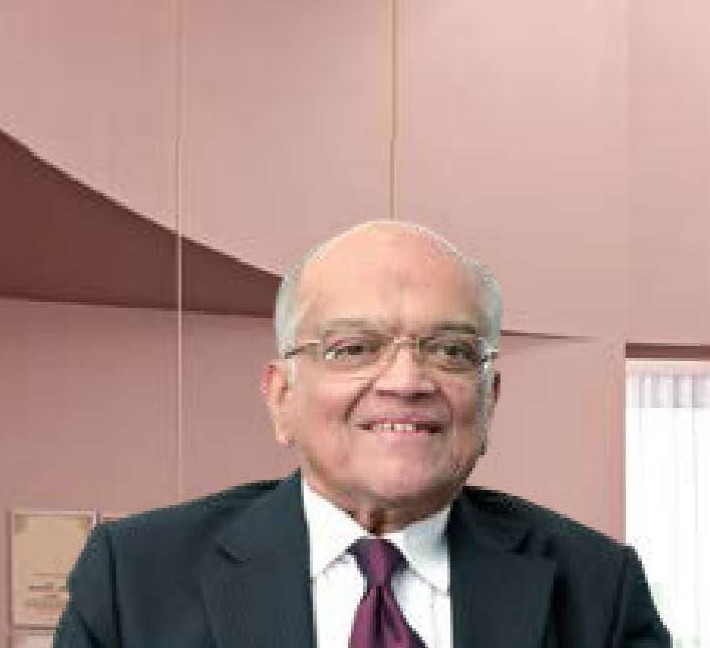
| Key facts | |
|---|---|
| Born | 24 October 1942, Mumbai [18] [19] |
| Died | 28 September 2023, Mumbai [23] |
| Family roots | Gujarati Jain family with roots in Kapadvanj, Kheda district, Gujarat; father Suryakant Dani co-founded Asian Paints [21] [29] |
| Education | B.Sc (Hons), Institute of Science, Bombay; B.Sc (Tech), UDCT Bombay; master’s in polymer science, University of Akron; diploma in colour science, Rensselaer Polytechnic Institute [1] [26] |
| Family | Wife Ina Dani; sons Jalaj, Hasit and Malav [19] |
| Company | Asian Paints (Vice-Chairman and MD 1998-2009; Chairman 2018-2021) [1] [44] |
| Wealth | Dani family about US$5.35 billion, Forbes India’s Richest, as of 30 September 2026 [17] |
| Known for | Turning Asian Paints into a technology-led company: computerised colour matching, backward integration and its first big overseas acquisitions |
Early in his career at Asian Paints, one of the company’s senior executives came to its young chemist with a domestic complaint. “Ashwin bhai, I like a lot of ice in my drink, but my moist glass ruins the French polish on my table. Can you find a solution?” Ashwin Dani took six months over it. The result was a fast-drying, water-resistant melamine finish called Apcolite. “It worked like a charm, and became a household word,” he recalled decades later. “Melamine now means Apcolite; it is my own baby.” [26]
That small story says a lot about the man. Ashwin Dani was born into one of the four families that owned Asian Paints, and could have lived comfortably as a shareholder. Instead he trained as a paint scientist on two continents, came home to work in the laboratory and the factory, and spent 55 years making the company’s products, processes and plants better. By the time he died in September 2023, Asian Paints was India’s largest paint company by a wide margin, worth more than Rs 3 lakh crore on the stock market [25], and his family was among the richest in the country.
This is the story of how a chemist from a Mumbai business family helped turn a wartime garage venture into a national champion, the fights he and his partners had to win along the way, and what is left unfinished.
Where it began
A paint company born in a war
Ashwin Suryakant Dani was born in Mumbai on 24 October 1942 [18] [19], in the same year his father helped start a paint business. Asian Paints’ own filings put his age at 76 in January 2019, which fits that date [1]. (Obituaries in 2023 gave his age variously as 79, 80 and 81, and one data site records a 1944 birth year; the company’s filings support 1942.) [20] [24]
The family was Gujarati and Jain [21]. Its roots lie in Kapadvanj, a town in Gujarat’s Kheda district, where Suryakant Dani went to a polytechnic school before moving to Bombay; a local education society there runs institutions named after him [29].
The business began in 1942, the year of the Quit India movement, when four young men - Champaklal Choksey, Chimanlal Choksi, Suryakant Dani and Arvind Vakil - started making paint in a garage in Bombay [30] [31]. Accounts differ on the exact founding date: some give February 1942, while a 2026 history by The Ken dates the establishment to 9 November 1942 [28]. The company was formally registered in 1945 as Asian Oil and Paint Company Private Limited [32].
The timing was not an accident. During the Second World War, the British government had temporarily banned paint imports, leaving Indian buyers with only a few local makers or expensive foreign brands [30]. The partners saw an opening. According to The Ken, Champaklal Choksey and Suryakant Dani had earlier run a small agency selling paint, building links with about 130 Bombay shopkeepers, before the four friends pooled capital and began mixing colours themselves [28].
They chose an unusual route to market. Instead of fighting foreign brands in big cities, they sold small packs in smaller towns first - the first dealer, The Ken reports, was in Sangli - and moved towards the cities later [28]. In 1945, The Better India reports, sales were about Rs 3.5 lakh [30].
Gattu and the climb to No. 1
In 1954 the company introduced Gattu, a mischievous boy with a paint bucket drawn by cartoonist R.K. Laxman, as its mascot [31]. The name came from a public contest that, according to The Better India, drew about 47,000 entries [30]. Gattu made Asian Paints a household name, and by 1967 the company had become India’s largest paint maker, a position it says it has held ever since [14].
Ashwin, meanwhile, was growing up inside this business. There is no reliable public record of his school. What is documented is what he chose to study.
A chemist, not a manager
Ashwin Dani took a B.Sc (Hons) from the Institute of Science, Bombay, and then a B.Sc (Tech) in pigments, paints and varnishes from the University Department of Chemical Technology (UDCT), now the Institute of Chemical Technology, Mumbai [1]. Several obituaries date his Bombay graduation to 1966 [18] [19].
His father then sent him to the United States [22]. He earned a master’s degree in polymer science from the University of Akron in Ohio, the heart of America’s rubber and polymer industry, and a diploma in colour science from Rensselaer Polytechnic Institute in Troy, New York [1] [26]. (Some 2023 obituaries describe the Akron degree as chemical engineering; Asian Paints’ own filing says polymer science, which we follow.) [18] [1]
In 1967 he took his first job, as a development chemist at Inmont Corporation, an industrial coatings maker in Detroit that later became part of BASF [19]. It was a real job in a real lab, far from the family firm. A year later he came home.
The first break
Joining the family firm from the bottom of the ladder
Ashwin Dani joined Asian Paints in 1968 as a senior executive [1]. He did not walk into the corner office. The company’s own account of his career says he worked his way up as Director of R&D, Works Director and Whole-time Director before becoming Vice-Chairman and Managing Director [1]. He joined the board in 1970 [23].
The founders, by then, had made an important decision: they would hire professional managers, including MBAs from the new Indian Institutes of Management, rather than fill the company with relatives [28]. Ashwin, with his American degrees and lab experience, fitted that culture. He was a promoter’s son, but he earned his standing as a technologist.
Colour by computer
His first big contribution was in colour. Mixing paint to match a shade a customer wanted was slow, messy work done by eye. In 1975, Asian Paints became the first paint company in India - and, by its account, in Asia - to adopt computerised colour matching, a project credited to Ashwin Dani [19]. The Economic Times later called it India’s first computerised colour-mixing programme, and a “technological moat” for the company [21]. The Ken reports that a colour computer cut tinting time from five or six days to about four hours [28].
It sounds technical, and it was. But it changed the business. Faster, accurate shade matching meant dealers could offer thousands of colours without stocking thousands of tins, and it laid the groundwork for the in-shop tinting machines that Indian paint buyers now take for granted.
Products that became household words
Apcolite, his melamine wood finish, gave Asian Paints what Ashwin Dani described as a virtual monopoly in that product for about 15 years [26]. He also moved water-based decorative paints from metal tins to plastic containers, and his long-time friend, the chemical engineer M.M. Sharma, credited him with being “the first to bring plastic packaging for paint to India and to print on plastics” [26] [19].
“In the 32 years I’ve known him,” Sharma told Mint in 2007, “Ashwin bhai has grown the company through technological innovation, rural marketing and international acquisitions… His antennae are always up.” [26]
Building the empire
Backward integration in the 1980s
In the 1980s, Ashwin Dani pushed Asian Paints into making its own key raw materials. The company set up a pentaerythritol plant at Cuddalore in Tamil Nadu in 1984 and a phthalic anhydride plant at Ankleshwar in Gujarat in 1987 [22]. Both are inputs for the resins that go into paint. Owning them meant steadier supplies and better control over cost, a theme he returned to throughout his career.
In August 1982 Asian Paints made a public issue and listed its shares [32] [28]. By then it was decisively India’s No. 1 paint company, and the founding families were beginning to hand over to the second generation. In 1984, Atul Choksey (Champaklal’s son) and Ashwin Choksi (Chimanlal’s son) became joint managing directors [33].
He also built businesses outside the paint company. Asian Paints’ 2019 filing describes him as the founder promoter of Loctite India, now part of Henkel’s adhesives business in India [1]. In 1991 the Dani family set up Hitech Plast, later Hitech Corporation, which makes rigid plastic containers, including paint packaging [12].
Holding the company together in 1997
The biggest test of the 1990s was not commercial but a fight for control, which is told in full under Controversies below. In 1997, the Choksey family sold its stake and the British paint giant ICI agreed to buy it. The Dani, Choksi and Vakil families resisted, and ICI eventually backed off [37] [38]. The episode ended with the three remaining families more firmly in control, and with Ashwin Dani about to take charge.
Vice-Chairman and Managing Director, 1998-2009
Asian Paints’ filings give two start dates for Ashwin Dani’s term as Vice-Chairman and Managing Director: December 1997 in the narrative, and 18 December 1998 in the formal annexure. Both agree it ended on 31 March 2009 [1]. In that decade, he turned a strong domestic company into a multinational.
The numbers tell the story. In 1998, Asian Paints’ turnover was about Rs 1,128 crore; by 2003 it was about Rs 2,040 crore, with operations in 24 countries [38].
He was clear about where to go. “We are not interested in entering developed markets,” he said in 1999, as Asian Paints bought a Sri Lankan paint company. “We will look at companies in emerging markets in Africa, South-East Asia and neighbouring countries.” [39]
The largest step came in 2002, when Asian Paints bought a majority stake in Berger International, a Singapore-based paint company with operations across Asia, the Middle East and the Caribbean. Business Today reported the price as Rs 57.6 crore and said the deal brought 11 plants and was expected to take the group’s turnover past Rs 2,000 crore [27]. “Most of the countries that BIL operates in were on our radar,” Dani said, “and we believe that there is tremendous scope for Asian Paints to add value in these markets.” [27] He told PCI Magazine the deal was “in line with our vision of becoming a leading player in emerging markets.” [40] His stated ambition at the time was for Asian Paints to become the world’s fifth-largest decorative paint company [27].
He also formed partnerships with global leaders. In 1997 Asian Paints set up a 50:50 joint venture with America’s PPG Industries for automotive and industrial coatings, and Ashwin Dani sat on its board from the start [19] [1].
In 2003, in a turn of history, Asian Paints bought the government of India’s 9.2% stake in ICI India - the Indian arm of the very company that had tried to take a slice of Asian Paints six years earlier. “ICI India Ltd offers a good investment opportunity and Asian Paints does not plan to destabilise the current management,” Dani said [38]. That holding later became a stake in Akzo Nobel India, which Asian Paints finally sold in July 2025 for about Rs 734 crore [62].
In February 2004 he joined the board of Sun Pharmaceutical Industries as an independent director. “Mr Dani’s rich experience in internationalizing the business at Asian Paints… and his grasp of technology will be an invaluable asset,” said Sun’s founder Dilip Shanghvi [13].
Vice-Chairman, then Chairman
From April 2009 Ashwin Dani stepped back from executive work and became non-executive Vice-Chairman, while professional managers ran the company day to day [1]. The business kept compounding. Asian Paints moved into adjacent home categories: it bought 51% of the kitchen company Sleek International in 2013 and agreed in 2014 to buy the front-end sales business of Ess Ess Bathroom Products, at a time when its annual net sales had passed Rs 12,500 crore [41]. Later deals added White Teak, a decorative lighting brand, and Weatherseal, a uPVC windows business, in 2022 [43].
When Ashwin Choksi, the company’s chairman, died in September 2018, the board elected Ashwin Dani as Chairman with effect from 5 November 2018 [1]. In his first chairman’s letter he paid tribute to “my dear friend, late Mr. Ashwin Choksi… I will always cherish and take strength from his reassuring smile,” and said the company treated governance norms “as an ethical requisite rather than a regulatory necessity” [2].
His chairmanship coincided with the COVID-19 pandemic. In 2020 he welcomed Amit Syngle as MD and CEO [3], and the next year thanked frontline health workers as “a beacon of hope for humanity” while describing the company’s donations to states and hospitals [4]. He handed over the chairmanship to independent director Deepak Satwalekar in 2021 and stayed on the board as a non-executive director [44] [5].
How the wealth was held
Ashwin Dani’s fortune was never a salary story. It was the value of his family’s slice of Asian Paints, held directly and through private holding companies. As of December 2025, the promoter group as a whole - the Dani, Choksi and Vakil families and their companies - held 52.63% of Asian Paints [10]. Dani-family companies such as Smiti Holding & Trading appear among those holders in stock exchange filings, and some of their shares have been pledged with lenders, as those filings disclose [10].
Over time, those shares made the family very rich. Forbes put “Ashwin Dani & family” at about US$7 billion on its April 2023 billionaires list [16], and Bloomberg estimated his worth at about US$7.1 billion on the eve of his death [19]. The 360 ONE Wealth Hurun India Rich List 2023 valued Ina Ashwin Dani and family at Rs 68,700 crore [15], and Forbes India’s 2023 list put the Dani family at US$8 billion [64].
The figure has since fallen with Asian Paints’ share price. As of 30 September 2026, Forbes valued the Dani family at about US$5.35 billion [17]. The 360 ONE Wealth Creators List 2026 ranked “Ina Ashwin Dani and Family” 44th among India’s wealthiest families at Rs 46,252 crore [65].
The family’s other company, Hitech Corporation, completed a voluntary delisting offer in October 2026, taking the promoters’ holding above 90% [12].
The setbacks and failures
Ashwin Dani’s career had fewer public stumbles than most of his peers’, but neither he nor his company was spared.
The 1997 takeover scare. The Choksey family’s sale of its stake to ICI showed how fragile a four-family company could be. For several months it was unclear whether a foreign rival would get a foothold inside India’s top paint maker [37]. The families won, but only after a bruising public fight.
Closing the first big plant. In May 2014 Asian Paints stopped manufacturing at Bhandup in Mumbai, the plant that had once been described as the largest single paint factory in India; workers were offered voluntary retirement or transfer [42] [32]. It marked the end of an era for a company that had grown up in Mumbai.
Mixed results outside paint. The home-improvement push did not deliver as fast as the core business. In FY25, Asian Paints booked exceptional charges including impairments at White Teak and at Causeway Paints in Sri Lanka, which it had bought in 2017 [57]. It also sold its Indonesian business in 2025, expecting a loss of about Rs 90 crore [59].
A new kind of competition. In February 2024, Grasim Industries of the Aditya Birla Group, led by Kumar Mangalam Birla, launched Birla Opus with a plan to invest about Rs 10,000 crore [66], while JSW Paints, part of Sajjan Jindal’s JSW Group, kept expanding. By January 2025 Asian Paints’ shares had fallen about 25% in six months to a 52-week low, amid a rural slowdown, new entrants and higher raw material costs [58]. In FY25 consolidated sales fell 4.5% to Rs 33,797 crore and net profit dropped 32.8% to Rs 3,667 crore [57].
The company has since steadied. Net profit rose 18% to Rs 4,325 crore in FY26 [60], and in the April-June 2026 quarter profit rose about 40% to Rs 1,539 crore on revenue up 17.9% [61]. Its big backward-integration bet of this decade - a vinyl acetate monomer (VAM/VAE) plant at Dahej - has seen its budget raised from Rs 2,560 crore to Rs 3,250 crore because of pre-operative expenses and cost escalations [11].
Controversies and allegations
No court, regulator or government agency has ever found wrongdoing by Ashwin Dani personally, as far as public records show. The matters below involve the promoter families or Asian Paints as a company, during and after his time in charge.
The 1997 ICI battle for the Choksey stake
Allegation: In 1997, Atul Choksey, son of co-founder Champaklal Choksey, sought to sell his family’s stake of about 9% in Asian Paints. A placement through DSP Merrill Lynch fell through, and on 18 August 1997 Imperial Chemical Industries (ICI) of Britain agreed to buy a 9.1% block from Kotak Mahindra Capital, which had bought it from the Chokseys, at about Rs 351 a share, roughly Rs 128.7 crore [34] (another account gives Rs 346 a share [38]). The Dani, Choksi and Vakil families called the purchase “illegal and unwelcome”, refused to register the shares and saw it as a backdoor bid for control by a rival [37].
Response: ICI denied any takeover intent. The three families, then holding about 40-45%, agreed not to sell to outsiders and offered to buy ICI out; ICI turned down the offer in September 1997 [35] [37]. The state-run Unit Trust of India, holding just under 10%, said it would back existing management if ICI made an open offer [36]. Then-industry minister Murasoli Maran described ICI’s move as “perceived to be somewhat hostile” [37]. The deal was handled by Kotak Mahindra Capital, part of the group founded by Uday Kotak.
What happened next:
- The Foreign Investment Promotion Board did not approve ICI’s purchase, and ICI dropped its plan [38].
- Kotak sold about 4.5% to UTI and the rest to the promoter families, at Rs 406 a share, according to Sucheta Dalal [38].
- Atul Choksey resigned as managing director; the remaining three families stayed in control [37] [38].
Status: Closed. The exact date of the FIPB decision is reported inconsistently, and some commentators have argued that the Chokseys were within their rights to sell; but the outcome - the stake returned to Indian hands - is not in dispute [38].
JSW Paints’ complaint to the Competition Commission (2019-2022)
Allegation: JSW Paints complained to the Competition Commission of India (CCI) that Asian Paints abused its dominant position by pressuring dealers in Karnataka, Tamil Nadu and Telangana not to stock JSW products, pushing a warehouse provider to end a contract with JSW, and cutting dealers’ credit limits. A separate dealer, Sri Balaji Traders, complained that its status and tinting software were withdrawn after it started selling JSW paint [46].
Response: Asian Paints contested the complaints. The CCI’s investigation arm found Asian Paints dominant in decorative paints, but did not find abuse [46].
What happened next:
- In September 2022 the CCI dismissed both complaints, noting among other things that JSW had added more dealers than Asian Paints in the period and that most JSW dealers also sold Asian Paints [46].
- JSW Paints said it did not agree with the commission’s judgment [47].
- In February 2025 the National Company Law Appellate Tribunal dismissed Balaji Traders’ appeal [48].
Status: Closed in Asian Paints’ favour.
The Birla Opus complaint and the CCI investigation (2024-present)
Allegation: Grasim Industries, which makes Birla Opus paints, complained to the CCI that Asian Paints threatened dealers who stocked Birla Opus with credit cuts and loss of perks, pushed dealers to return Birla Opus tinting machines, and pressured suppliers, warehouse owners and transporters not to work with Grasim. Grasim cited affidavits, dealer surveys and audio recordings [50]. On 1 July 2025 the CCI found a prima facie case of abuse of dominance, treating Asian Paints as holding more than half the market, and ordered its Director General to investigate [49].
Response: Asian Paints told the stock exchanges it was reviewing the order and would take appropriate legal recourse, while cooperating with the investigation. It argued that the market is highly competitive, pointing out that Birla Opus had become the third-largest player within a year [49] [50].
What happened next:
- On 2 July 2025 the CCI issued a rare revised order, removing its reliance on findings from the earlier JSW case [51].
- On 11 September 2025 the Bombay High Court dismissed Asian Paints’ petition against the probe, holding that the company had no right to be heard at the prima facie stage [52] [53].
- On 13 October 2025 Asian Paints withdrew its appeal in the Supreme Court, so the investigation continues [54] [55].
Status: Pending. As of 22 October 2026, no final CCI order has been publicly reported. A prima facie finding is not a finding of guilt.
InGovern’s related-party report (2021)
Allegation: In November 2021, the proxy advisory firm InGovern Research published a report titled “Asian Paints Limited - Saving the Company from Promoter Shareholders”. It alleged that Asian Paints’ purchases from companies linked to the promoter families, especially one supplier, Paladin Paints & Chemicals, were prejudicial to shareholders, called the disclosures inadequate, sought the removal of Ashwin Dani and Malav Dani from the board, and asked SEBI to investigate [56] [9].
Response: Asian Paints called the report “factually incorrect” and based “on hearsay rather than any serious investigation”. In a formal reply filed with the stock exchanges, it said related-party purchases had been about 4.5-6% of total purchases over ten years, that each such contract went through competitive quotes and audit committee approval, and that Paladin accounted for Rs 1.3 crore of Rs 553.88 crore in related-party purchases in FY20 - about 0.2%, not the 7% InGovern had claimed [9] [56].
Status: No regulatory action arising from the report has been publicly reported. Ashwin Dani remained on the board until his death.
As of 22 October 2026, there is no other court judgment or regulatory order on record against Ashwin Dani personally.
Giving back
Ashwin Dani’s quieter passion was yoga. He began Iyengar yoga in 1980 for a slipped disc - “Right away, I got 75% relief and never saw the physiotherapist again,” he said - and became a long-time student of B.K.S. Iyengar [26]. When the family built its Mumbai home, Home Villa, in 1998, “the first thing we did was to create an Iyengar Yoga Centre on the first floor,” he told Mint. His wife, Ina, pushed him to give time as well as money, and he served as a managing trustee of his guru’s Light on Yoga Trust [26]. Iyengar returned the compliment with a teacher’s bluntness: “Once upon a time, he was totally involved in making money, but today his mind is balanced between the material and the spiritual.” [26]
His guru could be tough. “He would say, ‘You call yourself a technical director of India’s largest paint company, yoga ka technique to aata hi nahin,’” Dani recalled - once in front of a competitor’s technical director. “So, we learnt to be humble and laugh at ourselves.” [26]
At Asian Paints, his chairman’s letters stressed that being “one with the community” was “an integral aspect of our philosophy” [3]. The company’s CSR spending in FY24 was Rs 91.26 crore, with about half going to skills - its Colour Academies train painters - and the rest largely to water and health projects [63]. His son Malav Dani has chaired the company’s CSR committee since 2015 [7].
The next generation has taken family giving further. His son Jalaj Dani and daughter-in-law Vita Dani run the Dani Foundation, which works on education, health and community projects, including in the family’s ancestral town of Kapadvanj [29].
Succession
Ashwin Dani died in Mumbai on 28 September 2023. Asian Paints told the stock exchanges that he had passed away after a brief illness and “will always be remembered for his significant contributions to the Company” [23]. Asian Paints’ chairman R. Seshasayee later called him “not just a business leader but a pioneer and philanthropist who left an indelible mark on both the paint industry and society as a whole” [6].
Asian Paints has long separated ownership from management. It is run by a professional MD and CEO, Amit Syngle, and chaired by an independent director, R. Seshasayee, who took over on 1 October 2023 [45] [7]. The founding families keep their influence through board seats and shareholding.
For the Danis, that role has passed to the next generation. Malav Dani, who joined Asian Paints as a quality manager in 2005, has been a non-executive director since 2013 and is managing director of the family’s Hitech Corporation [7]. In July 2026 the board added Shubhlakshmi Dani, wife of Hasit Dani, as a non-executive director, giving the family two board seats [8]. Jalaj Dani leads the family’s philanthropy [29].
What his journey teaches
Expertise is the best inheritance. Ashwin Dani was born a shareholder but chose to become a paint scientist. Two technical degrees, a job in an American lab and years in R&D gave him an authority over the business that ownership alone could not.
Small technical edges compound into moats. Computerised colour matching in 1975 and plastic packaging look modest on paper. Over decades they let Asian Paints serve more dealers, with more shades, faster than rivals - an advantage that took competitors a generation to challenge.
Control the inputs that matter. The 1980s plants for pentaerythritol and phthalic anhydride, and today’s Dahej project, follow one idea: if a raw material can make or break your margins, learn to make it yourself.
Family firms survive when families agree on the rules. The 1997 ICI episode showed how one family’s exit could open the door to an outsider. The three remaining families held together, and then handed day-to-day management to professionals - a model many Indian family businesses still struggle to copy.
No lead is permanent. Five decades at No. 1 did not stop deep-pocketed rivals from arriving in 2024. The fall in profits and the open CCI investigation are reminders that market leaders are judged both by customers and by regulators.
You can read more about how Indian businesses are built and valued on CapitalVia Insights.
A profile for general reading, based on public records and reporting as of 22 October 2026. Not investment, tax or legal advice.
Sources (66)
- Notice of Postal Ballot (director profiles of Ashwin Dani) - Asian Paints Ltd, Jan 2019
- Chairman's Letter, Annual Report 2018-19 - Asian Paints, Jun 2019
- Chairman's Message, Annual Report 2019-20 - Asian Paints, Jun 2020
- Chairman's Letter, Annual Report 2020-21 - Asian Paints, Jun 2021
- Chairman's Message, Integrated Report 2021-22 - Asian Paints, Jun 2022
- Chairman's Letter, Integrated Report 2023-24 - Asian Paints, Jun 2024
- Profile of Board of Directors - Asian Paints, May 2026
- Intimation under Regulation 30: appointment of Additional and Non-Executive Director - Asian Paints, Jul 2026
- Response to InGovern's report on Asian Paints - Asian Paints filing on NSE, Dec 2021
- Disclosure under SEBI takeover regulations by Smiti Holding and Trading (promoter group) - BSE filing, Dec 2025
- Intimation of increase in VAM/VAE project capex - Asian Paints filing on NSE, Mar 2025
- Post-offer public announcement, delisting offer - Hitech Corporation filing on NSE, Oct 2026
- Mr Ashwin Dani joins Sun Pharma board - Sun Pharmaceutical Industries press release, Feb 2004
- About Us - Asian Paints, accessed Oct 2026
- 360 ONE Wealth Hurun India Rich List 2023 - Hurun India, Oct 2023
- Ashwin Dani & family profile (2023 Billionaires list) - Forbes, Apr 2023
- Dani family profile (India's Richest 2026) - Forbes, Sep 2026
- Ashwin Dani: The life and legacy of the man behind Asian Paints' success - CNBC-TV18, Sep 2023
- Asian Paints co-founder & non-executive director Ashwin Dani passes away - Business Standard, Sep 2023
- Ashwin Dani, credited for success of Asian Paints, passes away at 79 - Business Standard, Sep 2023
- Asian Paints' Ashwin Suryakant Dani passes away - The Economic Times, Sep 2023
- Asian Paints co-founder Ashwin Suryakant Dani passes away - The Economic Times, Sep 2023
- Asian Paints non-exec director Ashwin Dani passes away - Business Today, Sep 2023
- Indian Paints Billionaire Ashwin Dani Dies At 80 - Forbes, Sep 2023
- Ashwin Dani, who turned Asian Paints from a small company in a garage to market leader, passed away - Goodreturns, Sep 2023
- Ashwin Dani: Full circle - Mint, Aug 2007
- Ashwin Dani: Putting Gattu on the global map - Business Today, Sep 2002
- The Business of Colour: Asian Paints - The Ken, Mar 2026
- Vita and Jalaj Dani: Creating self-sustaining communities - Forbes India, Mar 2023
- Asian Paints: Did you know that it was born during the Quit India Movement? - The Better India, Aug 2020
- 40 years ago... and now: Gattu's antics coloured Asian Paints' future - Business Standard, Feb 2015
- History of Asian Paints Ltd - Goodreturns, accessed Oct 2026
- The coat beneath the gloss - Business Standard, Sep 1997
- ICI's 9.1% stake in Asian Paints: the facts behind the case - Business Standard, Aug 1997
- ICI spurns Asian Paints promoters' buyback offer - Business Standard, Sep 1997
- UTI to back Asian Paints if ICI makes open offer - Business Standard, Sep 1997
- Hostile buyers beware - Euromoney, Oct 1997
- Asian Paints and ICI: coming a full circle - Sucheta Dalal, Oct 2003
- Asian Paints acquires Sri Lankan paint company - domain-b, Oct 1999
- Asian Paints (India) to acquire majority stake in Berger - PCI Magazine, Oct 2002
- Asian Paints to buy Ess Ess Bathroom's front-end business; Q4 net up - Business Standard, May 2014
- Asian Paints gains after closing Bhandup plant in Mumbai - Business Standard, May 2014
- Asian Paints acquires White Teak, Weatherseal Fenestration - Venture Intelligence, Apr 2022
- Asian Paints appoints Deepak Satwalekar as chairman of board - Business Standard, Jun 2021
- Asian Paints appoints R Seshasayee as chairman - Coatings World, Jul 2023
- CCI dismisses allegations against Asian Paints Limited - AZB & Partners, Jan 2023
- JSW Paints disagrees with CCI's findings in favour of Asian Paints - IIFL, Sep 2022
- NCLAT dismisses appeal filed by Balaji Traders against Asian Paints - Mondaq, Apr 2025
- CCI orders probe into Asian Paints over alleged abuse of dominant position - Business Standard, Jul 2025
- CCI finds prima facie abuse of dominance by Asian Paints in Grasim Paints case - Storyboard18, Jul 2025
- CCI removes reference to earlier findings in rare revision to probe order for Asian Paints - Business Standard, Jul 2025
- Bombay High Court refuses to set aside CCI probe against Asian Paints - Bar & Bench, Sep 2025
- Bombay HC on abuse of dominance by Asian Paints - SCC Online, Sep 2025
- Supreme Court refuses to entertain Asian Paints' plea against CCI probe - Storyboard18, Oct 2025
- Supreme Court refuses to entertain Asian Paints' plea against Competition Commission probe - Moneylife, Oct 2025
- InGovern seeks removal of Asian Paints promoters over conflict of interest; company responds - Business Today, Nov 2021
- Asian Paints reports weaker earnings for FY 2025 amid market headwinds - European Coatings, May 2025
- Asian Paints, Indigo Paints hit 52-week low, slip up to 25% in 6 months - Business Standard, Jan 2025
- Asian Paints books Rs 90 crore loss on Indonesia exit - Angel One, Feb 2025
- Asian Paints posts 69% rise in Q4 profit, declares Rs 23 final dividend - Outlook Business, May 2026
- Asian Paints Q1 results: profit jumps 40% to Rs 1,539 crore - Business Today, Jul 2026
- Asian Paints divests entire stake in Akzo Nobel India for Rs 734 crore - Business Standard, Jul 2025
- Asian Paints allocates Rs 91.26 crore to CSR activities in FY 2023-24 - IndiaCSR, Jul 2024
- Forbes India Rich List 2023: Meet the newcomers and returnees - Forbes India, Oct 2023
- Ina Ashwin Dani and Family - 360 ONE Wealth Creators List, 2026
- Why Asian Paints shares are down 30% from 52-week high: a deep dive into industry changes - Angel One, Jul 2025