
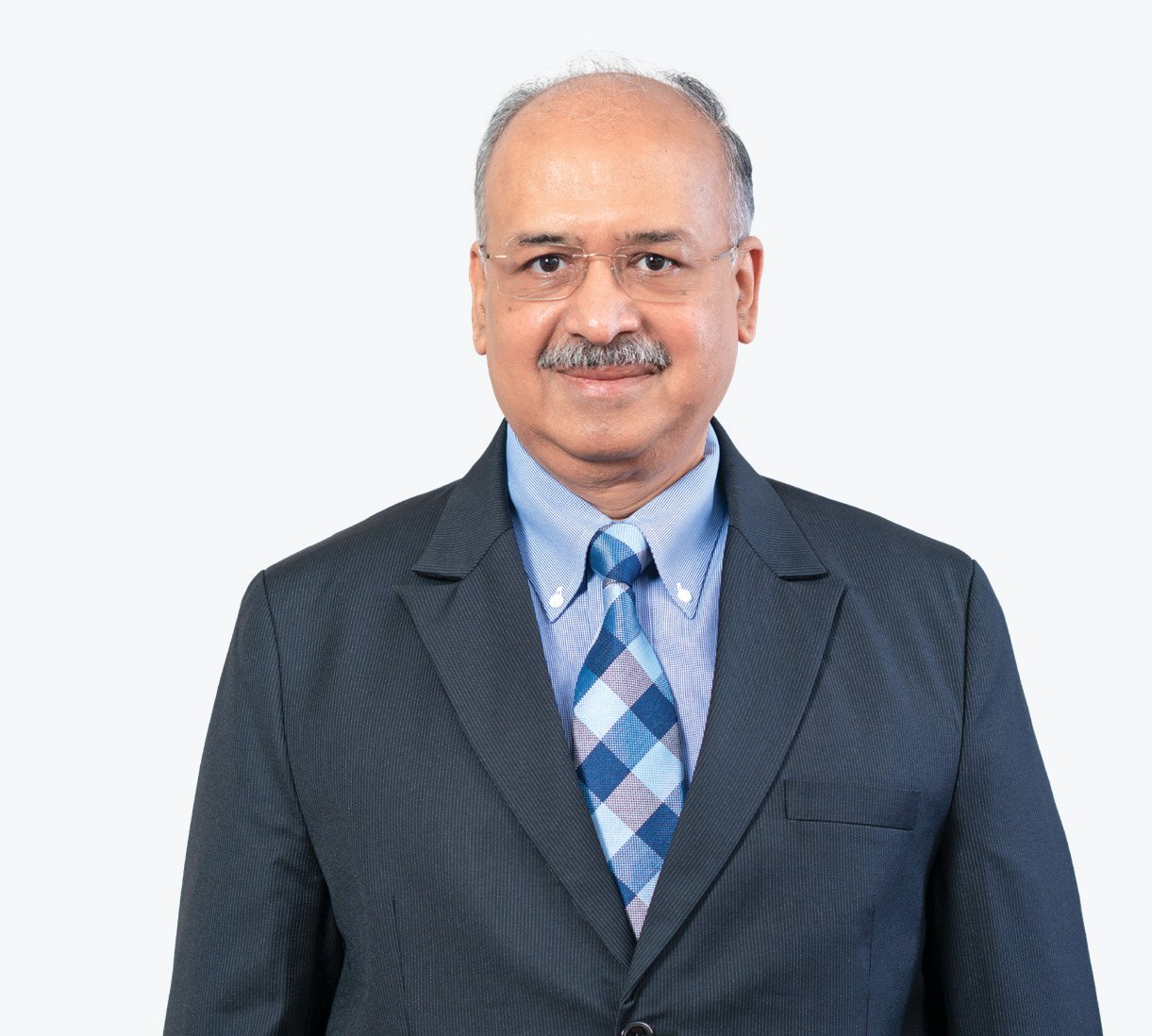
| Key facts | |
|---|---|
| Born | 1 October 1955, Amreli, Gujarat [49] |
| Family roots | Grew up in Kolkata, where his father Shantilal ran a wholesale medicine shop in Dawa Bazaar [61] [55] |
| Education | B.Com, University of Calcutta [49] [53] |
| Family | Married, two children; son Aalok and daughter Vidhi are executive directors of Sun Pharma [51] [2] |
| Company | Sun Pharmaceutical Industries (founder and executive chairman); chairman of Sun Pharma Advanced Research Company, SPARC [2] |
| Hurun India Rich List 2026 | Rank 7, about Rs 2.65 lakh crore [69] [70] |
| Known for | Building India’s largest drugmaker from a Rs 10,000 start, largely by buying and fixing companies others had given up on |
On 4 March 2015, a new name went to the top of the list of India’s richest people. Forbes’s real-time ranking showed Dilip Shanghvi, the founder of Sun Pharmaceutical Industries, at US$21.5 billion, ahead of Mukesh Ambani at US$20.4 billion [64]. Asked how it felt, he gave what may be the shortest answer in Indian business: “Uncomfortable, very uncomfortable” [55].
He meant it. When he was first approached about a biography, he refused. “You will probably put my face on the cover and I would be recognized by many more people on the streets and that’s always a problem. It takes away from my freedom” [55]. The book that finally appeared in 2019 was called The Reluctant Billionaire.
The crown did not stay long. Mukesh Ambani took the top spot back on 27 April 2015 [65]. Over the next four years Sun Pharma’s share price fell by about two-thirds, from a record above Rs 1,100 in April 2015 to Rs 375 in January 2019 [78] [116], as American regulators, falling drug prices and a whistleblower complaint hit the company one after another.
Then came the rebuild. On 23 September 2026 the M3M Hurun India Rich List placed him seventh, with about Rs 2.65 lakh crore [69]. And in April 2026, at 70, a man who says “personally, I am not comfortable with debt” signed the biggest deal of his life: an agreement to buy the American drugmaker Organon for US$11.75 billion [39] [61].
This is the story of how a commerce graduate with no science degree and Rs 10,000 of borrowed money built India’s largest pharmaceutical company, what went wrong along the way, and what the public record says about the controversies.
Where it began
Dilip Shanghvi was born on 1 October 1955 in Amreli, a small town in Gujarat [49]. He grew up in Kolkata, where his father, Shantilal, ran a small medicine distributorship in Dawa Bazaar, the city’s wholesale drug market [61] [55].
The shop sold other companies’ medicines. Shantilal was the Kolkata distributor for Tamilnadu Dadha Pharmaceuticals, Torrent and others [54]. One account says the shop was Torrent’s only stockist in the city, at a time when Torrent was the one Indian drug company focused on psychiatry [56]. Both details would matter later.
The boy was curious about what he was selling. He read the information leaflets packed with the medicines [53] and wondered how the molecules inside the bottles were made [61]. After school he sat in the shop “obsessively committing to memory all the chemical names of the drugs”, his biographer Soma Das wrote [62].
He took a commerce degree from the University of Calcutta [49] and worked in the family business while still in college [52]. He had no training in chemistry or pharmacy. About a decade after starting up, as the managing director of a fast-growing drug company, he hired a chemistry lecturer to brush up his fundamentals [62].
What he did have was an idea. Instead of selling medicines that other people made, he would make his own. A friend asked the obvious question: “What do you have, to start a company?” His reply, as Das tells it: “It doesn’t matter what I have, what matters is what I do with [what] I have” [62].
The first break
Rs 10,000 and five psychiatry drugs
In 1983, aged 27, Shanghvi borrowed Rs 10,000 from his father and started Sun Pharmaceutical Industries [55] [58]. The figure varies with the teller: Forbes puts the loan at US$200, and one company history has him starting in 1982 with just US$250 before borrowing from his father [51] [52]. The company itself dates its founding to 1983 [1].
Sun Pharma’s own history gives it one line: “Sun Pharma established with five psychiatry products and a two-person marketing team” [1]. The first plant was in Vapi, Gujarat, a long way from Kolkata. “The industry was concentrated in the western region and it was easier to get permission there to launch new drugs,” he explained [52]. By the end of the first year the factory was a 3,000 square foot shed and sales had crossed Rs 7.5 lakh [52].
He named the company after the sun because, he said, “The sun is the perennial source of all energy” [61].
One of the five products was Lithosun, a lithium brand for bipolar disorder that Sun still makes [53] [50]. Bloomberg names an early partner, Pradeep Ghosh, who it says still works for the company [50].
Why psychiatry? Lithium was not available in eastern India, and psychiatric drugs offered high margins [52]. There was also a logic that colleagues heard from him often. “There was greater loyalty in chronic,” recalled Rajesh Kikani, an early executive: patients on long-term treatment, and their doctors, tend to stay with a brand [54]. A former head of the bulk-drugs business remembered a second rule: “He always said a product should give us margin of 60-70%. Else, there was no point being in that business” [54].
Specialist by specialist
By the late 1980s Sun was selling across India [52]. The method stayed the same: pick one group of specialist doctors and serve them better than anyone else. The company, he told McKinsey in 2025, “focused on finding ways to work with specialists in different therapy areas, starting with psychiatry” [60]. Cardiology followed in 1988 with Monotrate and Angize. Exports began in 1989, and the first research centre opened in 1991 [1] [52].
He hired the way he sold: in person. Sundaresh Raju, then working for another drug company, was at home in Delhi’s Janakpuri one July afternoon when Shanghvi arrived unannounced in a taxi, described his young company and said three words: “Please join me.” Raju joined on the first day of 1987 as sales manager, employee number 44 [54].
Colleagues remember the pace. “When other pharma companies were growing each year by 15%, Sun was growing at 70-80%,” said Shyamal Ghosh, who joined in 1991 [54]. They also remember the frugality. When Ghosh suggested the boss trade his Maruti 1000 for a Mercedes, he was told: “A car is meant to serve the basic purpose of mobility; this car is good enough” [54]. Shanghvi travelled between Baroda and Mumbai by train often enough for ticket examiners to know him by name [62].
When Kikani, who joined from Alembic in 1990, asked where the company would be in ten years, the man in the 2,000 square foot office answered: “In the top 10 by 2000” [58] [54].
The 1994 listing
By 1994 turnover was about Rs 43 crore [58]. That year Sun went public, and the issue was oversubscribed 55 times [50] [52]. His brother-in-law Sudhir Valia, a chartered accountant, joined the board the same year and became the finance mind behind the deals that followed [63] [56].
The listing gave Shanghvi the one thing he had lacked: money to buy things.
Building the empire
Buying what others had given up on
Most Indian drug companies of the 1990s grew by building plants. Shanghvi grew by buying tired ones. “If a company is not doing well, it doesn’t necessarily mean that it is not a good company,” he told Forbes India [53]. His test for a deal, he said in 2025, includes “whether you can run that business better than the present owners” [59].
The list is long. Knoll Pharma’s bulk-drug plant came in 1996. Stakes in MJ Pharma and in Tamilnadu Dadha Pharmaceuticals, the company his father had once distributed for, came in 1997. Milmet Labs followed in 1999, Pradeep Drug Company in 2000 and Phlox Pharma in 2004 [1]. In 2005 Sun bought plants in Hungary and Ohio from Valeant [72], and picked up the assets of the bankrupt Able Laboratories in New Jersey for US$23.15 million [5].
Two rules kept the risk in check. The first: “I will never risk capital, but I will risk profit” [60]. The second: “if we understand 70 percent of an idea, we are prepared to take the risk and learn 30 percent” [60].
Caraco: six years of losses in Detroit
The first foreign bet looked like a mistake for years. In 1997 Sun paid US$7.5 million for 5.3 million shares of Caraco Pharmaceutical Laboratories, a struggling generic-drug maker in Detroit [3]. The deal was unusual. Instead of only putting in cash, Sun would receive 544,000 more Caraco shares for each generic product formula it transferred. It also lent Caraco about US$10 million and guaranteed US$27.5 million of bank credit [3].
Caraco’s own filings show how slow the turnaround was. In 2000 it lost US$7.6 million on sales of US$2.4 million. The first profit, US$11.2 million on sales of US$45.5 million, came only in 2003, six years after Sun walked in [3]. By fiscal 2009 sales had reached US$337 million [4]. Caraco gave Sun its first US FDA-approved factory [52] and its first lessons in the world’s largest drug market.
Taro: three years to win control
In May 2007 Sun agreed to buy Taro Pharmaceutical Industries, an Israeli drugmaker that was short of cash, for US$454 million. It also put in US$45 million of interim equity [74]. Then Taro’s business recovered, and in May 2008 its board terminated the merger [73].
Shanghvi did not walk away. Sun fought in courts in Israel and New York for more than two years [75]. On 7 September 2010 Israel’s Supreme Court dismissed Taro’s appeal, and two weeks later Sun took control with 48.7% of the equity and 65.8% of the votes [74]. Buying out the remaining shareholders took far longer. That was completed only on 24 June 2024, at US$43 a share, or US$347.73 million for the shares Sun did not already own [28] [77] [30].
Ranbaxy: becoming India’s No. 1
The deal that made his name came on 6 April 2014. Sun announced it would acquire Ranbaxy Laboratories, once India’s largest drugmaker, in an all-share deal: 0.8 Sun share for every Ranbaxy share, valuing the equity at about US$3.2 billion and the whole transaction at US$4 billion [8].
Ranbaxy was a fallen giant. Japan’s Daiichi Sankyo had paid US$4.6 billion for control in 2008, then watched US regulators act against its plants and the company pay US$500 million to resolve criminal and civil charges in the US [79] [126]. This was exactly the kind of asset Shanghvi liked: valuable, damaged and unloved.
The Competition Commission of India ran a detailed second-stage review and cleared the deal in December 2014 on condition that seven brands be sold [108] [10]. The merger closed on 25 March 2015. Sun now called itself the world’s fifth-largest specialty generics company and the largest drugmaker in India [11]. Three weeks earlier, the rally in Sun’s shares had made its founder the richest Indian. Daiichi sold its 8.9% stake in Sun in April 2015 for about Rs 20,000 crore [79].
Looking back in 2026, he noted the cost: “We paid for that acquisition through a much more expensive currency, our stock, leading to dilution” [61]. And he had sensed the danger early. “The cost of making a mistake now is much higher than before,” he said in October 2014. “We are doing many of these things for the first time” [53].
From copying medicines to owning them
Generic drugs are copies of medicines whose patents have expired. From around 2016, prices for them in the United States fell sharply [83], and Sun’s most important overseas market turned into its biggest problem (see the next section). Shanghvi’s answer was to build a second business in patented “specialty” medicines, which the company now calls innovative medicines.
The key move came in September 2014, when Sun paid Merck US$80 million upfront for the rights to an experimental psoriasis drug, tildrakizumab [9]. The US Food and Drug Administration approved it in March 2018 as Ilumya [15]. Around it Sun assembled a portfolio, mostly through purchases:
- DUSA Pharmaceuticals, a skin-treatment company, for about US$230 million in 2012 [6]
- 14 prescription brands from Novartis in Japan for US$293 million in 2016 [80]
- Ocular Technologies, owner of the dry-eye drug later sold as Cequa, for US$40 million upfront in 2016 [81]
- The skin-cancer drug Odomzo from Novartis for US$175 million upfront in December 2016 [82]
- Concert Pharmaceuticals for US$576 million in 2023 [26]. Its hair-loss drug Leqselvi reached the US market in July 2025 after a patent fight with Incyte [85] [34]
- Checkpoint Therapeutics, with a skin-cancer drug, for up to about US$355 million upfront in 2025 [32]
“We initially identified dermatology, ophthalmology and onco-dermatology as areas where we wanted to focus,” he explained [57]. The share of these medicines in Sun’s sales rose from 7% in FY18 to 16% in FY23 [57] and to 20.7%, or US$1.42 billion, in FY26 [41]. In the July-September 2025 quarter, Sun’s innovative medicines outsold its generics in the US for the first time [38].
It is a shift from copying to owning, in a country that ranked 38th in the Global Innovation Index 2026. At home, Sun remained the largest drug company, with an 8.4% share of the Indian market in FY26 [41].
Organon: the biggest bet, at 70
On 26 April 2026 Sun signed an agreement to buy Organon & Co., the women’s health and established-brands company that Merck spun off in 2021. The price was US$14 a share in cash, an enterprise value of US$11.75 billion [39]. FiercePharma called it the drug industry’s largest deal of 2026 up to that point [87].
Organon had revenue of US$6.2 billion in 2025 and debt of US$8.6 billion [39] [61]. Together the two companies would have revenue of about US$12.4 billion, which Sun said would place it among the world’s 25 largest drugmakers and make it the seventh-largest seller of biosimilars [39].
For a founder who built his company on avoiding debt, the financing was the surprise. Business Standard reported a US$10 billion loan from 11 banks, including State Bank of India, signed on 30 June 2026 [88]. Reuters, which put the bridge financing at about US$12 billion, reported in September 2026 that Sun planned to raise about Rs 10,000 crore through rupee bonds to refinance part of it [90].
He had signalled the change in February, telling analysts: “For acquisition, if it is necessary, we are comfortable in raising debt” [86]. But he did not pretend to be relaxed. “I’m happy, excited, also a little bit anxious. It is a large transaction that we are entering into,” he told Business Today. “As a company, we ourselves are debt-averse. However, we are not risk-averse…personally, I am not comfortable with debt” [61]. He said he would look for ways to minimise or eliminate the debt, as Sun did with the borrowings that came with Ranbaxy [61].
Analysts listed the risks: integrating two large companies, reviving Organon’s flat older brands, the coming loss of exclusivity on its contraceptive implant Nexplanon, and servicing the debt [61] [87].
On 24 July 2026 Sun announced that Organon’s stockholders had approved the sale [43]. A week later Shanghvi said Sun had filed for regulatory approvals, had received some, and expected to complete the deal in the January-March 2027 quarter [89]. As of 1 October 2026 the acquisition had not closed.
One more shadow hangs over the US business: tariffs. On 1 September 2026 Sun signed an agreement with the US government, offering “most favoured nation” prices to state Medicaid programmes and on future launches in return for a delay of more than two years in tariffs on its innovative medicines [45].
Scale, and how the wealth is held
In FY26, the year to 31 March 2026, Sun reported gross sales of Rs 58,220 crore and a net profit of Rs 11,479 crore. It spent Rs 3,554 crore on research [41]. It has 40 factories, more than 47,000 employees and sales in over 100 countries [42].
Shanghvi’s wealth is almost entirely Sun Pharma shares. The promoter group owned 54.48% of the company on 31 March 2026. Of that, 40.30% sits in a family holding company, Shanghvi Finance Private Limited, and 9.60% is in his own name [40]. Sun’s market value was about Rs 4.47 lakh crore on 24 September 2026 [71]. The family also owns about two-thirds of SPARC, the listed research company [50].
He has almost never sold. “I really haven’t sold anything in all these years—except maybe a few cars,” he said in 2014 [53].
Hurun’s lists show both the fall and the recovery. He was 11th in 2019 with Rs 71,500 crore, and sixth in 2023 with Rs 1,64,300 crore [27]. He was fifth in 2024 with about Rs 2.5 lakh crore [66] [67], seventh in 2025 with about Rs 2.31 lakh crore [68], and seventh again in 2026 with about Rs 2.65 lakh crore, up 15% [70]. He sits just behind Roshni Nadar Malhotra and Kumar Mangalam Birla, and one place ahead of Azim Premji [69]. The top ten also includes the vaccine maker Cyrus Poonawalla at No. 4. Forbes’s real-time estimate in mid-September 2026 was about US$26 billion [51].
The setbacks and failures
The seizure at Caraco
Caraco, the Detroit turnaround, ended badly. On 25 June 2009 US Marshals seized drugs at three Caraco sites in Michigan after the FDA said manufacturing violations had gone unresolved [95]. A consent decree followed and about 430 people lost their jobs [4]. Sun closed the Detroit plant in 2014 [96].
The hard years after Ranbaxy
The four years after he became India’s richest were the worst of his career. In December 2015 the FDA sent a warning letter to Halol in Gujarat, a key plant for Sun’s US business [109]. Generic prices in America kept falling. In the January-March 2017 quarter Sun’s US sales dropped 34% [83]. Net profit fell about 70% in FY18 [57]. By January 2019 the stock was at a six-year low [116], and Hurun’s 2019 list had him down at 11th [27].
In FY19, the year of the governance storm described below, he and Sudhir Valia each took a salary of Re 1 [84].
Suzlon and the payments bank
His personal bets outside pharma did worse than his company. In February 2015 the Shanghvi family and associates agreed to invest Rs 1,800 crore for a 23% stake in the debt-laden wind-turbine maker Suzlon Energy [97]. By December 2019 Suzlon was close to bankruptcy and Business Standard, which put the original investment at Rs 1,400 crore, valued the stake at about Rs 242 crore [100].
“If I look at outcome then clearly that investment hasn’t had a great outcome,” he admitted in 2019 [99]. He stayed on. In September 2023 his group ended its shareholder agreement with Suzlon but said, “we will continue as investors in the company” [101]. Bloomberg lists a stake of about 4% [50].
In August 2015 the Reserve Bank of India gave him one of 11 in-principle approvals for a payments bank [12]. Nine months later he and his partners, IDFC Bank and Telenor, dropped the plan [98].
Research failures and a cyberattack
SPARC, the research company he chairs, has had painful failures. A Parkinson’s disease trial was halted in April 2024 [103]. In June 2025 Sun stopped work on a skin drug, SCD-044, after it failed in trials [104]. In March 2023 a ransomware attack hit Sun’s systems; the company said data had been stolen and that revenue would be affected in some businesses [102].
He treats failure calmly. “If I don’t succeed, I don’t get upset,” he told Forbes India [59]. Asked about regrets, he offered one: “Sometimes I would have got angry… That I wouldn’t have wanted to do. Other than that, nothing” [58].
Controversies and allegations
Sun Pharma has faced regulators in India and the United States many times. Below are the main matters, the responses, and where each stands as of 1 October 2026. No criminal prosecution of Shanghvi personally appears on the public record. He did personally pay settlement and compounding amounts in the Indian regulatory matters described here.
The whistleblower complaints and Aditya Medisales, 2018-2024
Allegation: In late November 2018 a note from the brokerage Macquarie raised questions about Sun’s audit arrangements and a US$225 million foreign-currency convertible bond issue from 2004. Days later it emerged that a whistleblower had sent SEBI a complaint alleging governance, tax and securities-law lapses by the company, Shanghvi and others [112]. Three issues stood out. First, Jermyn Capital, a co-manager of the 2004 bond issue, whose Indian arm allegedly had links to the stockbrokers Ketan Parekh and Dharmesh Doshi [112]. Second, a jump in “loans to employees and others” from about Rs 70 crore to Rs 2,242 crore in one year [114]. Third, the routing of all domestic formulation sales through Aditya Medisales, a firm owned by Sun’s promoters [114] [122]. In January 2019 Moneylife reported a second, 172-page complaint alleging more than Rs 5,800 crore of transactions between Aditya Medisales and Suraksha Realty, a company controlled by Sudhir Valia. Sun’s shares fell as much as 12% that day [116].
Response: On an investor call in December 2018 Shanghvi said “some of the issues are not related to Sun Pharma, some issues are factually incorrect and some issues are very old; dating back to as much as 10-15 years or maybe more”. On the bonds he said “JP Morgan Chase was the lead manager and sole bookrunner for the issue. Jermyn Capital was only co-manager” [115]. The company wrote to SEBI alleging “unfair trade practices prejudicial to the interest of shareholders and other stakeholders” [16], and Shanghvi met SEBI’s chairman and, Business Standard reported, told him a “mala fide campaign” was being run against him [119]. Sun said it had given no loans or guarantees to Suraksha Realty [118], and Valia said: “So far as Sun Pharma’s money is concerned, it has not been diverted” [117]. In February 2019 Shanghvi said: “at no point of time Sun Pharma’s shareholders have been disadvantaged in transactions with Aditya Medisales” [120].
What happened next:
- In January 2019 Sun said it would unwind the Rs 2,238 crore of loans, which it said were to a Dubai firm, Atlas Global Trading, that was not a related party. It also said it would move distribution from Aditya Medisales to a wholly owned subsidiary and change the auditors of some subsidiaries. By then the stock had lost about Rs 42,700 crore of value since September 2018 [118].
- In September 2019 Moneycontrol reported that SEBI had ordered a forensic audit [121]. In February 2020 Business Standard, citing two people familiar with the probe, reported that it found disclosure violations over Aditya Medisales but did not confirm the fund diversion of Rs 42,000 crore that the whistleblower had alleged [122].
- On 11 February 2021 SEBI passed a settlement order. It recorded an allegation that Sun had not treated Aditya Medisales as a related party in 2015-16 and 2016-17 and had not taken the audit-committee and shareholder approvals required. Sun paid Rs 56.1 lakh “without admitting or denying the findings of fact and conclusions of law” [20]. Shanghvi paid Rs 62.35 lakh in a separate settlement. The company and seven executives paid Rs 2.92 crore in all [123] [124].
- In November 2024 a regional director of the Ministry of Corporate Affairs compounded alleged Companies Act violations over the same transactions. Shanghvi’s fee was Rs 9.5 lakh. Sun said there was no material impact [31].
Status: Settled. The SEBI case ended without admission or denial, and the alleged company-law violations were compounded on payment of fees. We found no later public action, and no public SEBI order making any finding on the 2004 bond issue or on the alleged diversion of funds.
Trading in Ranbaxy shares before the 2014 deal
Allegation: Ranbaxy’s share price rose sharply in the days before the merger was announced on 6 April 2014, and SEBI began looking at the trades [105]. Two retail investors went to the Andhra Pradesh High Court alleging insider trading, and at the end of April the court ordered an interim status quo on the merger. A Sun subsidiary, Silverstreet Developers, had bought nearly 60 lakh Ranbaxy shares in the January-March quarter [106].
Response: Sun said the purchase “does not violate insider-trading rules” and that those shares would be cancelled in the merger [106].
What happened next:
- The High Court lifted its order in May 2014, noting that SEBI was already examining the matter, and the merger went ahead [107].
- In August 2017 Sun, Shanghvi and nine others paid Rs 18 lakh to settle a SEBI proceeding, reported to concern the company’s internal code for preventing insider trading [113] [112]. Shanghvi called it “a minor technical issue related to trading-window closure pertaining to some holidays” and said Sun “has not been involved in any insider trading norm violation in this deal” [114] [115].
- In December 2018 news reports said SEBI might reopen the matter [113]. We found no report that it did.
Status: Settled in 2017. We found no SEBI order holding that Shanghvi traded on inside information.
Generic drug price-fixing in the United States
Allegation: On 23 July 2020 the US Department of Justice charged Taro Pharmaceuticals U.S.A., the American arm of Sun’s Israeli subsidiary, with two counts of conspiring with other companies to fix prices, divide customers and rig bids for generic drugs between 2013 and 2015 [19]. Drug buyers and state governments also sued many generic makers, including Taro and Sun’s US unit.
Response: Taro U.S.A. admitted taking part in the two conspiracies, agreed to cooperate and paid a criminal penalty of US$205.65 million under a deferred prosecution agreement [19]. In the civil class actions the Sun companies denied liability and settled.
What happened next:
- In October 2021 Taro paid US$213.2 million to resolve civil claims under the US False Claims Act [21].
- In 2022 Taro and Sun’s US unit agreed to pay about US$85 million to direct purchasers, an amount that could be adjusted up or down under the agreement [127].
- In July 2025 the two agreed to pay US$200 million to “end-payer” plaintiffs such as insurers and consumers [134]. A US court gave final approval in January 2026 [137].
Status: The criminal case, the False Claims Act claims and the direct-purchaser and end-payer class actions are resolved. Suits by US state attorneys general against many generic makers, including Sun and Taro, were still being litigated when last reported in 2026 [138]. Neither Justice Department announcement names Shanghvi [19] [21].
Patent and antitrust settlements in the US
Allegation: Three separate American cases cost Sun large sums. Pfizer and Takeda said Sun and Teva had infringed the patent on the acidity drug Protonix by launching generics early [7]. Buyers of the sleep drug Provigil alleged that generic makers, including Ranbaxy, had taken payments to delay their versions [110]. And drug purchasers alleged that Ranbaxy, before Sun owned it, had wrongly obtained exclusive rights to generic Diovan, Nexium and Valcyte, which delayed cheaper versions [125] [126].
Response: In the Ranbaxy case Sun said it “has disputed the claims of the plaintiffs and defended these matters vigorously” and was settling “to resolve this dispute and avoid uncertainty” [125].
Status: All three are closed by settlement. Sun paid US$550 million in the Protonix case in 2013 and admitted that its sales had infringed the patent [7]. It paid US$150 million in the Provigil case in 2017 [110] and US$485 million in the Ranbaxy case in March 2022, without admitting the allegations [125].
Factory quality and the US FDA
Allegation: The FDA has cited Sun’s factories for quality failures repeatedly since 2009. The list includes the Caraco seizure in 2009 [95], a warning letter to Halol in December 2015 [109] and an import alert on Halol in December 2022 that blocks most of its products from the US [128]. US shipments from Mohali were paused in April 2023 [129], and the Dadra plant received a warning letter in June 2024 [29]. That letter, addressed to Shanghvi as managing director, said: “These repeated failures at multiple sites demonstrate that management oversight and control over the manufacture of drugs is inadequate” [29]. In August 2025 a ProPublica investigation reported that the FDA had exempted more than a dozen Halol-made drugs from its own import ban, five of which were still exempt, and that inspectors found problems at the plant again in June 2025 [135].
Response: Sun told ProPublica that it maintains “a relentless focus on quality and compliance” [135]. Halol had been cleared once before, in June 2018, when Shanghvi called the clearance “an important development” [111]. US supplies from the plant accounted for about 3% of Sun’s revenue in FY22 [128]. Sun’s FY26 annual report says compliance constraints at some plants slowed product launches and that remediation continues [42].
Status: Open. In September 2025 Sun told the stock exchanges that Halol remained under import alert and had again been classified “Official Action Indicated” after a June 2025 inspection [37]. Another plant, Baska, received the same classification in December 2025 [136]. We found no announcement, as of 1 October 2026, that the Halol import alert has been lifted.
Taro’s minority shareholders
Allegation: In 2007-10 Taro’s board and the Levitt family, its leading shareholders, resisted the sale after the company’s business recovered, and the two sides sued each other [73] [75]. Minority investors later opposed Sun’s buyout offers as too low. An offer of US$39.50 a share was withdrawn in February 2013 [76]. In 2024 the investor Krensavage Asset Management called the US$43 offer inadequate and argued the shares were worth at least US$77 [130].
Response: Sun held that its 2007 agreements were binding, and Israel’s Supreme Court ruled in its favour in September 2010 [74]. The 2024 price was negotiated with a committee of Taro’s independent directors, and the proxy advisers ISS and Glass Lewis recommended that shareholders accept [28] [131].
Status: Closed. The merger was completed on 24 June 2024 [30].
A price-control demand
Allegation: India’s drug-price regulator demanded Rs 4.65 crore from Sun for selling the antibiotic Roscilox above the ceiling price set under the Drugs (Price Control) Order, 1995 [132].
Response: Sun argued that it was only a dealer of the product, and not liable as a distributor [132].
Status: Closed, against Sun. The Supreme Court dismissed its appeal on 15 July 2024 and upheld the recovery [132] [133].
Claims that remain unproven
Three claims from the 2018-19 episode were widely reported but have never been established. The first is the suggested link between Sun’s 2004 bond issue and entities connected to Ketan Parekh. It rests on the observation about Jermyn Capital’s Indian arm. Sun’s answer was that JP Morgan ran the issue, and no regulator has published a finding [112] [115]. The second is the whistleblower’s claim that Rs 42,000 crore was diverted. Business Standard reported that SEBI’s probe did not confirm this [122]. The third is the claim of Rs 5,800 crore of dealings between Aditya Medisales and Suraksha Realty. Sun and Valia denied that company money was diverted, and SEBI’s published order deals only with how the Aditya Medisales transactions were approved and disclosed [117] [20]. Readers should treat all three as allegations, not facts.
The status of every matter in this section is as of 1 October 2026.
Giving back
Shanghvi’s philanthropy is quiet, like the rest of his life. The Shantilal Shanghvi Foundation, which he set up and which carries his father’s name, runs the Shantilal Shanghvi Eye Institute, a cancer day-care centre and a school for underprivileged children [48]. It also supported the Shantilal Shanghvi Cornea Institute at L V Prasad Eye Institute in Hyderabad, inaugurated on 12 November 2022. “We are happy to partner with LVPEI and support them in their endeavour to manage corneal blindness,” he said [25].
The EdelGive Hurun India Philanthropy List, which tracks personal donations, recorded Rs 15 crore against his name in 2021 and Rs 11 crore in 2022 [22] [24]. Those figures do not capture everything the foundation or the company spends.
The company’s best-known project is against malaria. In April 2016 Sun, the Indian Council of Medical Research and the Madhya Pradesh government launched a demonstration project in Mandla, a tribal district, covering more than 1,200 villages [14]. Sun says the project, which ended in 2021, cut locally transmitted malaria cases by 91% [47]. In FY25 the company spent about Rs 51 crore on its social programmes [36]. During the first Covid-19 lockdown it committed Rs 25 crore of medicines and sanitisers [18].
Public recognition has come anyway. He received the Padma Shri in 2016 [13] and was nominated to the Reserve Bank of India’s central board in 2018 [94]. He has chaired the board of governors of IIT Bombay, and the Gujarat government appointed him chairman of Gujarat Biotechnology University in 2022 [2].
Succession
For more than a decade Shanghvi has been handing over pieces of his job. He gave up the chairman’s post in 2012 to Israel Makov, who retired in August 2022 [50] [23]. Shanghvi, who had stayed on as managing director, later took the chair again [58] [2].
The bigger step came on 13 June 2025. Sun announced that Kirti Ganorkar, an engineer who joined in 1996 and ran the India business, would become managing director from 1 September 2025, with Shanghvi continuing as executive chairman [33]. “Kirti has consistently demonstrated effective leadership managing diverse roles at Sun,” he said [33]. For the first time in 42 years, the person running Sun day to day was not its founder.
Both his children work in the company. Aalok Shanghvi, who studied molecular biology and joined in 2006, became a whole-time director in June 2023 and chief operating officer in February 2025 [91] [92]. Vidhi Shanghvi, a Wharton graduate who runs consumer healthcare and India distribution, joined the board as a whole-time director in May 2025 [93] [2].
Ownership stays with the family through Shanghvi Finance [40]. On what comes next, he keeps it open. “I don’t think there is any grand plan. It is up to my children to decide whether they want to be active managers or owners,” he told Forbes India in 2025 [59]. A year later he added: “Any decision that I take now, I keep my family involved as they will have to live with the implications of those decisions” [61]. He has long held one view about how they should learn: “I want them to have an appreciation of the pain involved in building a business” [53].
One long partnership has formally ended. Sudhir Valia moved to a non-executive role in 2019 and retired from the board in 2025 [17] [35]. On 26 September 2026 shareholders approved the reclassification of Valia and two relatives, who hold 1.80% of Sun, from the promoter group to public shareholders [44] [46].
What their journey teaches
1. Own a small field completely before you chase a big one. Sun began with five psychiatry drugs and a two-person marketing team, in a field few rivals cared about. It moved to cardiology only after it had won the psychiatrists. A narrow start is a way to be first at something.
2. Buy broken things only if you know how to fix them, and give them time. Caraco lost money for six years. Taro took three years and a Supreme Court ruling. Shanghvi’s test was never the price alone. It was whether Sun could run the business better than its owners.
3. Risk this year’s profit, never the company’s capital. That rule let him make dozens of bets without betting the firm. It is also the yardstick by which the debt-funded Organon deal will be judged.
4. Your biggest win is when you are most exposed. Ranbaxy made him India’s richest man in March 2015. The four years that followed were his worst. He had said it himself months earlier: “The cost of making a mistake now is much higher than before.”
5. Related-party questions cost far more than the fines. The SEBI settlement over Aditya Medisales came to Rs 2.92 crore. Sun’s market value fell by about Rs 42,700 crore between September 2018 and January 2019, when the governance worries were at their peak. Simple structures and early disclosure are cheaper.
6. Quality is the founder’s job. When the FDA wrote about failures “at multiple sites”, it addressed the letter to Shanghvi by name. More than fifteen years of recurring factory problems show that deal-making skill cannot stand in for discipline on the shop floor.
Few Indian business lives are as free of noise. No private jet, no bodyguards and a taste for a simple south Indian meal in Matunga, as his biographer describes him [62]. Yet the quiet trader’s son from Dawa Bazaar now chairs the largest drug company in India, has turned 71 on the day this profile was written, and is in the middle of the largest deal of his career. Whether Organon becomes another Taro or another post-Ranbaxy slump is the next chapter.
A profile for general reading, based on public records and reporting as of 1 October 2026. Not investment, tax or legal advice.
Sources (138)
- Milestones and Recognitions - Sun Pharma, accessed Oct 2026
- Board of Directors - Sun Pharma, accessed Oct 2026
- Caraco Pharmaceutical Laboratories annual report (Form 10-K) for 2004 - US SEC, Mar 2005
- Caraco Pharmaceutical Laboratories annual report (Form 10-K) for fiscal 2010 - US SEC, Jun 2010
- Sun Pharma closes Able Labs acquisition - Sun Pharma, Dec 2005
- Sun Pharma to acquire DUSA Pharmaceuticals - Sun Pharma, Nov 2012
- Pfizer obtains $2.15 billion settlement from Teva and Sun for infringement of Protonix patent - Pfizer, Jun 2013
- Sun Pharma to acquire Ranbaxy in a US$4 billion landmark transaction - Sun Pharma, Apr 2014
- Sun Pharma and Merck enter into licensing agreement for tildrakizumab - Merck, Sep 2014
- CCI approves Sun Pharma's acquisition of Ranbaxy - Sun Pharma, Dec 2014
- Press release on closure of the Sun Pharma-Ranbaxy merger - Sun Pharma (BSE filing), Mar 2015
- RBI grants in-principle approval to 11 applicants for payments banks - Reserve Bank of India, Aug 2015
- Padma Awards 2016 - Press Information Bureau, Jan 2016
- Sun Pharma and ICMR partner for a Malaria Free India - Sun Pharma, Apr 2016
- Sun Pharma announces US FDA approval of Ilumya - Sun Pharma, Mar 2018
- Letter to SEBI on alleged second whistleblower complaint - Sun Pharma, Jan 2019
- Corporate governance report, Annual Report 2018-19 - Sun Pharma, Jul 2019
- Sun Pharma commits donation to support India's COVID-19 response - Sun Pharma, Mar 2020
- Sixth pharmaceutical company charged in ongoing criminal antitrust investigation - US Department of Justice, Jul 2020
- Settlement order in respect of Sun Pharmaceutical Industries Ltd - SEBI, Feb 2021
- Pharmaceutical companies pay over $400 million to resolve alleged False Claims Act liability - US Department of Justice, Oct 2021
- EdelGive Hurun India Philanthropy List 2021 - Hurun India, Oct 2021
- Chairman to retire on completion of term - Sun Pharma, Aug 2022
- EdelGive Hurun India Philanthropy List 2022 - Hurun India, Oct 2022
- Shantilal Shanghvi Cornea Institute inaugurated at LVPEI - L V Prasad Eye Institute, Nov 2022
- Sun Pharma to acquire Concert Pharmaceuticals - Sun Pharma, Jan 2023
- 360 ONE Wealth Hurun India Rich List 2023 - Hurun India, Oct 2023
- Taro announces merger agreement with Sun Pharma - Taro Pharmaceutical (SEC filing), Jan 2024
- Warning letter to Sun Pharmaceutical Industries Ltd (Dadra) - US FDA, Jun 2024
- Sun Pharma completes Taro merger - Sun Pharma, Jun 2024
- Intimation of Regional Director's compounding orders - Sun Pharma, Nov 2024
- Sun Pharma to acquire Checkpoint Therapeutics - Sun Pharma, Mar 2025
- Sun Pharma appoints Kirti Ganorkar as Managing Director - Sun Pharma, Jun 2025
- Sun Pharma announces US launch of Leqselvi - Sun Pharma, Jul 2025
- Notice of the 33rd Annual General Meeting - Sun Pharma, Jul 2025
- Board's report and corporate governance, Annual Report 2024-25 - Sun Pharma, Jul 2025
- Update on Halol facility (stock exchange intimation) - Sun Pharma, Sep 2025
- Q2 FY26 financial results - Sun Pharma, Nov 2025
- Sun Pharma signs definitive agreement to acquire Organon - Sun Pharma, Apr 2026
- Shareholding pattern as on 31 March 2026 - Sun Pharma, Apr 2026
- Q4 and full-year FY26 financial results - Sun Pharma, May 2026
- Chairman's message and management discussion, Annual Report 2025-26 - Sun Pharma, Jul 2026
- Organon stockholders approve acquisition by Sun Pharma - Sun Pharma, Jul 2026
- Notice of postal ballot on reclassification of promoter group members - Sun Pharma, Aug 2026
- Sun Pharma statement on White House signing ceremony - Sun Pharma, Sep 2026
- Scrutinizer's report on postal ballot - Sun Pharma, Sep 2026
- Corporate social responsibility - Sun Pharma, accessed Oct 2026
- About us - Shantilal Shanghvi Eye Institute, accessed Oct 2026
- Dilip Shanghvi - Britannica Money, accessed Oct 2026
- Dilip Shanghvi - Bloomberg Billionaires Index, accessed Oct 2026
- Dilip Shanghvi profile - Forbes, accessed Oct 2026
- Sun Pharmaceutical Industries Ltd, International Directory of Company Histories - Encyclopedia.com, accessed Oct 2026
- Sun Pharma's Dilip Shanghvi has become the stuff of legends - Forbes India, Oct 2014
- The Boss: Dilip Shanghvi - Outlook Business, Jul 2015
- The Reluctant Billionaire: an excerpt - Penguin Random House India, Jun 2019
- A journey extraordinaire (review of The Reluctant Billionaire) - Business Today, Nov 2019
- Decoding Dilip Shanghvi's winning formula - Business Today, Jul 2023
- Dilip Shanghvi has built Sun Pharma by making bold bets, and he's not done yet - Forbes India, May 2025
- I'm determined, I'm not passionate: Dilip Shanghvi - Forbes India, May 2025
- Dilip Shanghvi on the focus and philosophy behind Sun Pharma's success - McKinsey & Company, Jul 2025
- Aiming for the Sun: how the $11.75 billion Organon buy is cementing Dilip Shanghvi's legacy - Business Today, May 2026
- When 'low profile' is 'high valuation', by Soma Das - Business Today, May 2026
- Meet Sudhir Valia, Sun Pharma's director and one of India's prolific investors - Business Standard, Dec 2018
- Dilip Shanghvi overtakes Mukesh Ambani as richest Indian - Business Standard (PTI), Mar 2015
- Mukesh Ambani regains richest Indian slot from Dilip Shanghvi - Business Standard (PTI), Apr 2015
- Gautam Adani pips Ambani as India's richest, Hurun India Rich List 2024 - Business Standard, Aug 2024
- Hurun India Rich List 2024: Gautam Adani tops with Rs 11.6 lakh crore, check full list - Zee News, Aug 2024
- Hurun Rich List India 2025: list of 50 richest Indians and their net worth - The Daily Jagran, Oct 2025
- India's richest in 2026: Adani tops the list, 27 new billionaires emerge - Business Standard, Sep 2026
- Hurun India Rich List 2026: Adani reclaims top spot as wealth jumps 13% - India TV, Sep 2026
- NSE pips Sun Pharma, Titan, Adani Enterprises, Infosys in terms of market cap - Business Today, Sep 2026
- Sun buys Valeant Pharma's US unit - Business Standard, Sep 2005
- Israel's Taro terminates merger with India's Sun Pharma - PharmaTimes, May 2008
- Sun Pharma finally wins battle for Taro - GaBI Online, Oct 2010
- Sun Pharmaceutical Industries v. Levitt, Supreme Court of New York - Justia, Oct 2008
- Sun Pharma gives up Taro merger plan - Business Standard, Feb 2013
- Sun Pharma completes Taro merger, acquires all outstanding shares - Business Standard, Jun 2024
- Sun Pharma scales record high after settling patent litigation in US - Business Standard, Apr 2015
- Sun Pharma stock drops 9% as Daiichi raises $3.2 bn - Business Standard, Apr 2015
- Sun Pharma buys Novartis brands for Rs 1,900 cr - Business Standard, Mar 2016
- Sun Pharma gains after announcing acquisition of Ocular Technologies - Business Standard, Oct 2016
- Sun Pharma to acquire cancer product from Novartis for $175 million - BioSpace, Dec 2016
- Significant price erosion in US takes toll on Sun Pharma - Business Standard, May 2017
- Dilip Shanghvi takes 99% pay cut despite Sun Pharma's 27% earnings growth - Business Standard, Jul 2019
- Sun Pharma snags appeals win over Incyte, clearing way for US launch of alopecia med Leqselvi - FiercePharma, Apr 2025
- Sun Pharma to maintain disciplined approach for acquisitions: chairman - Business Standard (PTI), Feb 2026
- Sun Pharma strikes biopharma's largest deal of '26 with $11.75B buyout of Organon - FiercePharma, Apr 2026
- SBI joins global banks to fund Sun Pharma's $11.75 billion Organon buy - Business Standard, Jul 2026
- Sun Pharma Q1 FY27 earnings call transcript - Investing.com, Jul 2026
- India's Sun Pharma plans $1 billion local debt sale for loan takeout, sources say - Reuters via Business Recorder, Sep 2026
- Rolf Hoffmann and Aalok Shanghvi appointed as directors of Sun Pharma - Free Press Journal, May 2023
- Sun Pharma names Aalok Shanghvi as COO - Medical Dialogues, Feb 2025
- Board of Sun Pharmaceutical Industries appoints director - Business Standard, May 2025
- Government nominates two directors to RBI central board - Business Standard (IANS), Feb 2018
- US Marshals seize Caraco's drug products at three sites - Pharmaceutical Technology, Jun 2009
- Caraco plant in Detroit being shut down by Sun Pharma - FiercePharma, May 2014
- Dilip Shanghvi takes 23 per cent stake in debt-laden Suzlon - Business Today, Feb 2015
- After Cholamandalam, Dilip Shanghvi also drops payments bank plans - Business Standard, May 2016
- What billionaire Shanghvi sees in debt-laden Suzlon that no one else does - Business Standard (Bloomberg), May 2019
- Dilip Shanghvi staring at huge loss as Suzlon Energy heads to bankruptcy - Business Standard, Dec 2019
- Suzlon Energy shares slip as Dilip Shanghvi, associates terminate pact - Business Today, Sep 2023
- Sun Pharma says IT security incident to impact its revenues - The Federal, Mar 2023
- Sun Pharma Advanced dives 5% after Parkinson's drug trial halted - IIFL Capital, Apr 2024
- Sun Pharma halts development of SCD-044 skin drug after trial failure - Business Standard, Jun 2025
- Sun Pharma-Ranbaxy deal may come under Sebi lens - Business Standard, Apr 2014
- Sun Pharma-Ranbaxy deal: court orders interim status quo on merger - Business Standard, Apr 2014
- Sun Pharma, Ranbaxy gain after AP HC lifts merger stay - Business Standard, May 2014
- CCI gives nod to Sun-Ranbaxy merger, asks to divest 7 drug assets - Business Standard, Dec 2014
- Sun Pharma tumbles after receiving warning letter from USFDA - Business Standard, Dec 2015
- Sun's profit crushed as it pays $150M to settle Provigil pay-for-delay case - FiercePharma, Aug 2017
- Sun Pharma rises after USFDA clears Halol plant - Business Standard, Jun 2018
- Sebi starts probe against Sun Pharma, to also reopen insider trading case - Business Standard, Dec 2018
- Sun Pharma drops 7.5% on reports Sebi may reopen insider trading case - Business Standard (PTI), Dec 2018
- Sun Pharma to bring in changes to boost investor confidence, stock falls - Business Standard, Dec 2018
- Sun Pharma says it has not received any query so far from Sebi - Mint via inkl, Dec 2018
- Sun Pharma plunges to six-year low on fresh whistleblower complaint buzz - Business Standard, Jan 2019
- Sun Pharma revamps business structure in the face of whistleblower accusation - FiercePharma, Jan 2019
- Sun Pharma to settle Dubai firm loans, shift distribution arm to subsidiary - Business Standard, Jan 2019
- Sun Pharma promoter meets Sebi chief to clarify on whistleblower complaint - Business Standard, Jan 2019
- Shareholders not disadvantaged in transactions with Aditya Medisales: Sun Pharma - Business Standard (PTI), Feb 2019
- Sun Pharma slides 4% on report of Sebi ordering forensic audit - Business Standard, Sep 2019
- Sebi probe finds violation of listing and disclosure norms by Sun Pharma - Business Standard, Feb 2020
- Sun Pharma, 7 executives settle dispute with Sebi, pay Rs 2.92 cr - Business Standard, Feb 2021
- Sun Pharma, Dilip Shanghvi, officials pay over Rs 2 crore to settle alleged violation case with SEBI - Medical Dialogues (PTI), Feb 2021
- Sun Pharma settles Ranbaxy generic drug application antitrust litigation in the US - Medical Dialogues, Mar 2022
- Sun Pharma to pay $485 million to settle claims over Ranbaxy generics - STAT, Mar 2022
- Direct purchaser plaintiffs announce settlements in generic pharmaceuticals pricing antitrust litigation - Business Wire, Jun 2022
- Sun Pharma plant in Gujarat listed under US FDA import alert, says company - Business Standard, Dec 2022
- Temporary pause in US shipments from Sun Pharma's Mohali plant - Business Standard, Apr 2023
- Taro Pharmaceutical board relies on flawed analysis to shortchange minority shareholders (Krensavage statement) - PR Newswire, Apr 2024
- ISS and Glass Lewis recommend Taro shareholders vote for the Taro-Sun Pharma merger - Business Wire, May 2024
- Supreme Court rejects Sun Pharma's claim in drug price overcharging case, 2024 INSC 521 - Verdictum, Jul 2024
- Supreme Court upholds Rs 4.6 crore recovery against Sun Pharma for overpricing medicine - LiveLaw, Jul 2024
- Sun Pharma resolves US antitrust case with $200 mn agreement - Business Standard, Jul 2025
- A giant Indian drugmaker failed to fix safety breaches. The FDA let its drugs into the US anyway - ProPublica, Aug 2025
- Sun Pharma declines after US FDA classifies Baska facility inspection as OAI - Business Standard, Dec 2025
- Sun Pharma, Taro get final approval of $200 million antitrust deal - Bloomberg Law, Jan 2026
- $200M deal can shield drugmakers in states' generic price-fixing suit - Law360, Feb 2026