
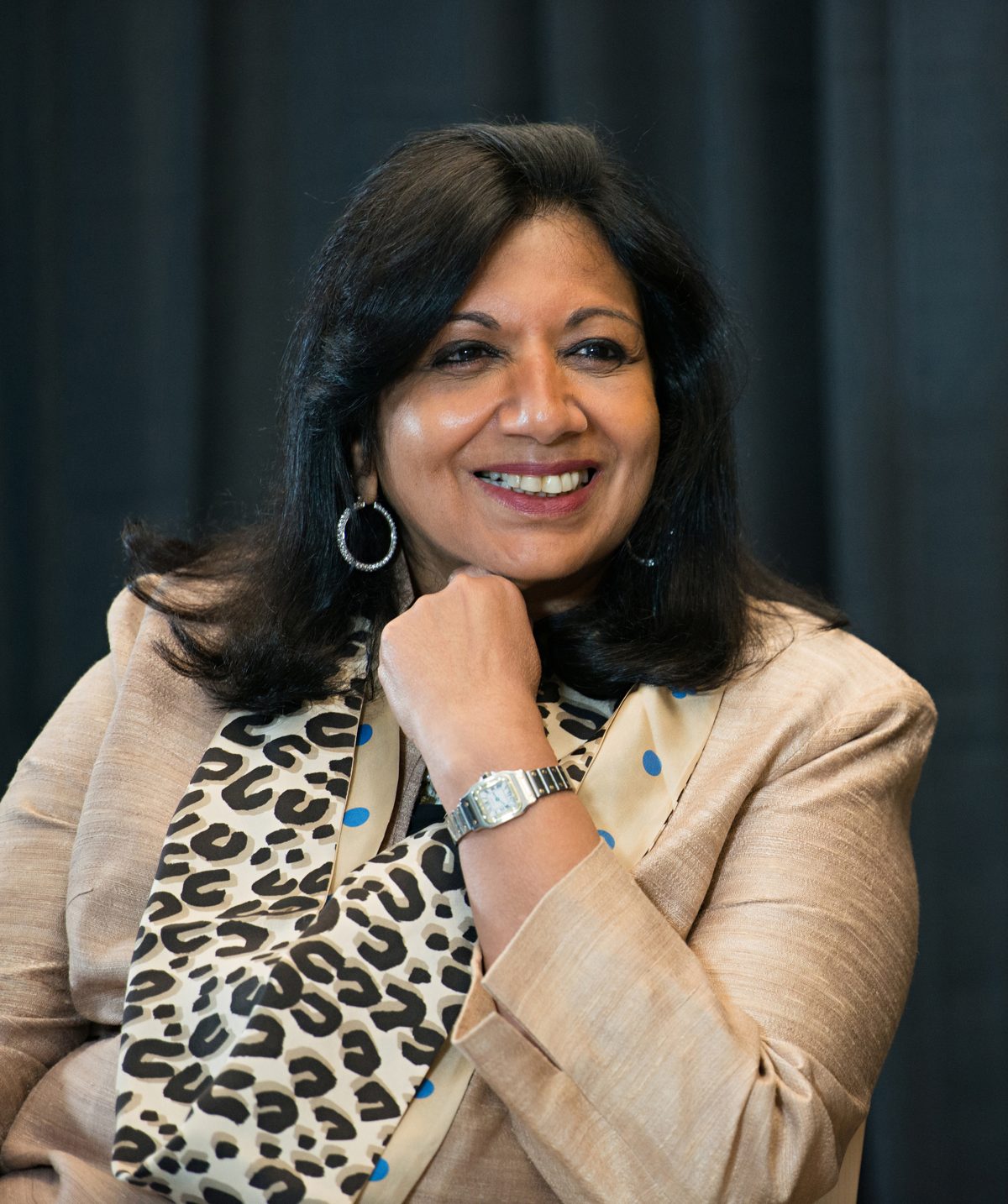
| Key facts | |
|---|---|
| Born | 23 March 1953, Bangalore (now Bengaluru), Karnataka |
| Family roots | Gujarati family; father Rasendra Mazumdar was head brewmaster at United Breweries [38][39] |
| Education | Bishop Cotton Girls’ School; BSc Zoology, Bangalore University (1973); Graduate Diploma in Malting and Brewing, Ballarat College of Advanced Education, Australia (1975) [26] |
| Family | Married John Shaw (1998; he died in 2022); no children; niece Claire Mazumdar named successor in 2026 [44][64] |
| Company | Biocon Ltd (founder, executive chairperson); Syngene International (executive chairperson) |
| Wealth | About US$2.9 billion (Forbes real-time, 13 Oct 2026; #94 on Forbes India’s Richest 2026) [29]; US$3.4 billion (Hurun Richest Self-Made Women in the World, Mar 2026) [28] |
| Known for | Starting Biocon in a garage in 1978; building India’s largest biosimilars business; affordable insulin; philanthropy in cancer care and science |
Where it began
In the mid-1970s, a young woman with a brewing diploma and the top marks in her class went from brewery to brewery in India asking for a job. The answers were polite and final. “People told me, no we can’t give you a job as a brewer, you’re a woman,” she later recalled [41]. One company asked how a woman would handle the unions [40]. Even United Breweries, where her own father had worked for 27 years, would not take the risk [35].
She was about to give up on India altogether. A brewing job in Inverness, Scotland was waiting. “I would have been a brewer in Scotland!” she once said, laughing at how close she came [35]. Instead, a chance meeting with an Irishman sent her back into a rented garage in Bangalore, and that garage became Biocon, today one of the world’s larger makers of biosimilar medicines.
Kiran Mazumdar-Shaw likes to put the irony plainly: “Do you know that India’s largest biopharmaceutical company was founded because of a gender bias?” [30]
A brewer’s daughter in Bangalore
She was born in Bangalore on 23 March 1953, the eldest of three children in a middle-class Gujarati family that was not in business [39]. Her father, Rasendra Mazumdar, was head brewmaster at United Breweries, often described as India’s first brewmaster [31][39]. WIPO noted the oddity: a master brewer from a Gujarati Brahmin family, from a state that prohibits alcohol [38].
Her mother, Yamini, was a homemaker who had married before finishing her degree. She would later prove that entrepreneurship ran in the family: in 1990, at the age of 68 and after her husband’s death, she mortgaged the family house and sold her late husband’s shares to start Jeeves, a laundry and dry-cleaning business. “My mom’s entrepreneurial genes have made me who I am,” Kiran has said [43].
The family valued education over an early arranged marriage [36]. Kiran went to Bishop Cotton Girls’ School, where she remembers teachers who taught “with a lot of illustrations and analogies” [31]. She then took a BSc (Honours) in Zoology from Bangalore University in 1973 [26][38].
The medical seat her father would not buy
She wanted to be a doctor. She applied to medical colleges but did not get a merit seat. When she asked her father to pay for a seat at a private college, he refused. “My dear girl, I will do anything but buy a seat for you, because money is not about buying your way into life,” she recalls him saying [31]. (Some accounts say instead that she missed a scholarship.)
Her father suggested something unusual for a young Indian woman in the 1970s: learn brewing.
Top of the class in Ballarat
In 1974 she went to Australia, her first trip abroad, to study for a Graduate Diploma in Malting and Brewing at the Ballarat College of Advanced Education, now Federation University Australia [26][31]. She was the only woman in a class of about a dozen, and the only one with no brewing experience. She finished first. “I topped the class even though the others had a lot of experience,” she said [41]. She also worked as a trainee brewer at Carlton & United in Melbourne [26].
Back in India she did consulting work for breweries alongside her father [40], and was described as India’s first woman brewmaster [26][37]. But no brewery would give her a full-time job. After about two years of trying, she accepted the offer in Scotland [33][35].
The first break
Before she left for Scotland, she met Leslie Auchincloss, an Irish entrepreneur whose company, Biocon Biochemicals of Cork, made enzymes for the brewing and food industries [38][97]. He wanted to set up in India, but the law at the time capped foreign ownership at 30%, so he needed an Indian partner who would own the rest. He told her she had the personality to “hold her own” [36].
She agreed, after first training as a manager with his company in Cork in 1978 [97]. Biocon India was registered on 29 November 1978 as a joint venture, with Auchincloss holding 30% and Kiran 70% [32][36]. Getting approval meant about three weeks of waiting at Udyog Bhawan in Delhi, where touts asked for bribes. She refused to pay [32].
Rs 10,000 and a garage
The seed money is most often reported as Rs 10,000 [33], though other accounts give figures from under US$200 to Rs 1.5 lakh in later money [37][39][98]. She rented a one-bedroom house for Rs 500 a month and turned its garage into an office [32][39]. Production soon moved into a rented 3,000 sq ft shed in the Koramangala industrial area, which Biocon remembers as a “tin-roofed shed” [1][39].
Her first two employees were retired garage mechanics, Gangappa and Nasir Ahmed, whom she trained to process enzymes [32][33]. The products were papain, an enzyme from papaya used to stop chilled beer going cloudy, and isinglass, a clarifier made from fish [1]. In 1979 Biocon became, by its own account, the first Indian company to export enzymes to the US and Europe [1].
“I was 25 years old. I was a woman. I had no business experience. I had no money in the bank,” she said later [42].
Nobody wanted to work for a woman
The obstacles were not only financial. “No bank wanted to lend to me, no professional wanted to work for me,” she said [97]. Graduates turned down job offers, suppliers preferred to deal with a male manager, and even renting space was hard [33][36].
Banks wanted her father as guarantor because she was unmarried; she refused [32]. A Canara Bank manager, Dinesh Nayak, eventually gave her a Rs 4 lakh working-capital line. The Karnataka State Financial Corporation offered a Rs 14 lakh term loan under a special category for women and backward classes. She asked to be assessed as an ordinary applicant instead [32][33].
The first year brought sales of about Rs 8 lakh and a profit of about Rs 1 lakh, by her account [32]. In 1980 she bought 20 acres on Hosur Road and laid a foundation stone on 8 March 1980. Shortages of cement and steel, which went to the 1982 Asian Games, slowed the building, and the campus opened only on 2 November 1983 [1][32].
Vaghul’s cheque
The turning point came in 1987. Biocon needed about Rs 1 crore to expand, and state lenders thought it too risky [34]. Narayanan Vaghul, then chairman of ICICI, steered her to TDICI, a venture fund set up by ICICI and UTI. It invested Rs 1.8 crore in equity [34]. “He really believed in me when nobody else did,” she said [39], and she calls the meeting “the inflexion point in my journey” [32].
Within about a year, in 1989, a Unilever company bought her Irish partner, Biocon Biochemicals [1][38]. Unilever bought out TDICI’s stake at roughly four times its value [32][34]. Biocon began making enzymes for Unilever’s food business, and she says Unilever turned it into “a very professional organization” [30]. The same year she received the Padma Shri [39].
Building the empire
From enzymes to medicines (1990-2003)
Through the 1990s Biocon used its skill in fermentation, growing useful molecules from microbes, to move from enzymes into medicines. It set up Syngene as a contract research company in 1993 and formed Biocon Quest, a roughly 50:50 company with Unilever, in 1995 [1][2]. In 1996 it entered biopharmaceuticals with statins, the cholesterol drugs [1].
In 1997 Unilever sold its specialty chemicals arm, including its Biocon interest, to ICI [36]. The following year Kiran married John Shaw, a Scottish executive who had chaired Madura Coats in India [44]. The couple bought out the foreign shareholding. Accounts differ on whether the stake was bought from Unilever or ICI, but agree it cost about US$2 million and that John Shaw sold his London home to help pay for it [2][33][36][38]. His company, Glentec International, held the shares, and he joined Biocon in 1999 [44][45]. In 1998 Biocon became an independent, privately owned company [1].
Next she went after big partners. ICICI Ventures took a 15.35% stake in 2000 [2]. In 2001 the US FDA approved Biocon’s lovastatin facility, and Biocon was granted a patent for its PlaFractor bioreactor [2][40]. “This was the big first patent application that we handled entirely on our own,” she told WIPO [38]. In 2002 Biocon bought out Syngene completely [2].
The 2004 IPO
On 11 March 2004 Biocon opened India’s first big biotech IPO, with shares priced at Rs 315, the top of its range [46]. The issue was subscribed about 32 times, with bids worth more than Rs 10,000 crore [2][46]. On listing day its market value crossed US$1.11 billion, which made Biocon only the second Indian company to pass US$1 billion on its first day of trading [2]. A woman who could not get a bank loan in 1978 now ran a billion-dollar listed company.
The same year Biocon launched Insugen, its human insulin, from what it called Asia’s largest human insulin plant [2]. Kiran received the Padma Bhushan in 2005 [6], and Biocon Park, a 90-acre campus near Bengaluru, followed [2].
Selling the first love
In 2007 she did something many founders cannot: she sold the business that had made her. Biocon sold its enzymes division, about 12% of revenue, to Denmark’s Novozymes for about US$115 million [47]. The money and the attention went to biologics, complex medicines made in living cells.
The biosimilars bet
Her big idea was biosimilars: close copies of expensive biologic drugs that become possible once patents expire. They are much harder and costlier to make than ordinary generics, and in the late 2000s few Indian companies were willing to take on the clinical trials and regulators of the US and Europe.
In June 2009 Biocon signed an exclusive partnership with the US generics company Mylan to develop biosimilar insulins, antibodies and other biologics. The two shared development costs, and Mylan sold the products in the US, Europe and other developed markets, sharing profits with Biocon [3]. The same year she won the Nikkei Asia Prize, and in 2010 TIME named her among its 100 most influential people [99].
In 2010 Biocon also committed to a large insulin plant in Johor, Malaysia. The project cost about US$275 million (the company has said “over US$250 million”), and it won European approval in 2017 [50].
The bet took years to pay off. Then the approvals came in a run:
- December 2017: the US FDA approved Ogivri (trastuzumab), the first US biosimilar for breast and stomach cancer, developed by Biocon and Mylan [48].
- June 2018: Fulphila became the first FDA-approved biosimilar of Neulasta, a drug whose US sales were about US$4.2 billion a year [4].
- July 2021: Semglee became the first interchangeable biosimilar insulin approved in the US, which meant pharmacists could substitute it for Lantus [49].
Meanwhile, in August 2015, Biocon listed Syngene through a Rs 550 crore offer for sale that was subscribed about 32 times [58]. Syngene now does research and manufacturing for drug companies around the world. Its FY26 revenue was Rs 3,739 crore [18].
In June 2020 Kiran was named EY World Entrepreneur of the Year. She was the first Indian woman to win, after Narayana Murthy (2005) and Uday Kotak (2014) [6].
Going big: Serum and Viatris (2021-2022)
In September 2021 Biocon Biologics, the biosimilars subsidiary, struck an unusual deal with the Poonawalla family’s Serum Institute. Serum Institute Life Sciences took about 15% of Biocon Biologics, valuing it at about US$4.9 billion. In return, Biocon Biologics got access to 100 million vaccine doses a year for 15 years and the rights to sell Serum’s vaccines worldwide [51][52]. (Read the story of Cyrus Poonawalla, who built Serum.)
Then came the biggest bet of her life. On 27 February 2022 Biocon Biologics agreed to buy the global biosimilars business of its own partner, Viatris (formed from Mylan’s merger with Pfizer’s Upjohn), for up to US$3.335 billion. The price was US$2.335 billion in cash plus US$1 billion in preference shares [53]. She called it “transformational” [53]. The deal closed on 29 November 2022, and Biocon took direct control of selling its products in the US and Europe [19].
It was paid for largely with debt: a US$1.2 billion loan and mezzanine financing, on top of equity from Biocon and Serum [19][53].
Cleaning up the balance sheet (2024-2026)
The next three years were spent paying for that bet:
- October 2024: Biocon Biologics refinanced US$1.1 billion of long-term debt, including US$800 million of bonds at 6.67% due in 2029 [12].
- June 2025: Biocon raised Rs 4,500 crore through a qualified institutional placement (QIP) at Rs 330 a share. It was the company’s first equity raise since the 2004 IPO [56].
- December 2025: Biocon dropped plans to list Biocon Biologics and announced it would fold it in fully, valuing it at US$5.5 billion. Viatris was to receive US$815 million in cash and Biocon shares [54][55]. “An IPO would not have captured the true intrinsic worth of Biocon Biologics given prevailing debt levels,” she said [54].
- January 2026: a second QIP raised Rs 4,150 crore at Rs 368.35 a share [11].
- 29 June 2026: Biocon Biologics became a wholly owned subsidiary [13].
- July 2026: Mylan (Viatris) sold its entire 5.64% stake in Biocon in a block deal worth about Rs 3,679 crore [59].
By September 2025 consolidated debt was 2.5 times EBITDA, down from 4.3 times [54].
The numbers today
Biocon’s revenue has grown, but profits have been squeezed by interest costs and integration [7][8].
| Biocon (consolidated) | FY24 | FY25 | FY26 |
|---|---|---|---|
| Revenue from operations (Rs crore) | 14,756 | 15,262 | 16,927 |
| EBITDA (Rs crore) | 4,164 | 4,374 | 3,798 |
| Net profit, after exceptional items (Rs crore) | 1,022 | 1,013 | 386 |
| Biosimilars revenue (Rs crore) | 8,824 | 9,017 | 10,431 |
Biosimilars now bring in well over half of Biocon’s revenue, and grew 16% in FY26 [8].
Biocon also backed Bicara Therapeutics, a Boston cancer drug company founded by her niece Claire Mazumdar. Bicara listed on Nasdaq in September 2024, raising US$315 million, and Kiran rang the opening bell [57].
How the wealth is held
Almost all of her fortune is Biocon stock. On 31 March 2025 she held 40.36% of Biocon in her own name, and Glentec International, her late husband’s company, held 19.76%. With small holdings of relatives, the promoter group owned 60.64% [9]. John Shaw’s shares passed to her in 2023 [9].
The share count has since grown because of the two QIPs and the Biocon Biologics share swaps, so the promoter group’s roughly 728 million shares are now a smaller slice: about 44.9% after the January 2026 QIP (29.90% in her name, 14.63% through Glentec) [10]. Biocon in turn owns just over half of Syngene; it held 52.46% after a stake sale in December 2024 [17].
Her wealth therefore moves with Biocon’s share price. Forbes put it at about US$2.9 billion on 13 October 2026, ranking her #94 on its India’s Richest 2026 list [29]. Hurun’s global list of self-made women (March 2026) put her at US$3.4 billion [28]. The Hurun India Rich List 2025 put her at Rs 29,330 crore, fourth among India’s self-made women [61]. Her figure in the Hurun India Rich List 2026, released on 23 September 2026 [60], was not available in the public reports we reviewed. The richest woman on that list is Roshni Nadar Malhotra.
The setbacks and failures
Biocon’s history is often told as a smooth climb. It was not.
The decade of rejection. Two years of refused job applications, banks that wanted a male guarantor, and graduates who would not work for a woman shaped her more than any boardroom win [32][33].
Slow buildings, slow money. It took from 1980 to 1983 to build the first proper factory, and for nearly a decade Biocon could not raise serious capital until Vaghul backed it [1][34].
Regulatory knock-backs. The US FDA rejected Semglee twice, in June 2018 and September 2019; the second time it cited 12 deficiencies at the Malaysia plant [100]. In 2022 US inspectors issued Form 483s with 11 observations at each of two Bengaluru sites and 6 at Malaysia [78]. In July 2023 the FDA classified the Malaysia insulin plant as “Official Action Indicated”, meaning new approvals from it could be held back [79]. The plant won back a “Voluntary Action Indicated” status only in January 2025 [80]. In October 2022 a European regulator found a “major” deficiency at a Bengaluru API unit, and Biocon’s shares fell about 12% in five days [81].
The weight of debt. The Viatris deal turned Biocon into a global company but loaded it with borrowings. It took two share sales, a bond issue and the shelving of the planned Biocon Biologics IPO to bring leverage down [12][54][56]. FY26 net profit fell to Rs 386 crore from Rs 1,013 crore a year earlier, though the company said FY25 had been boosted by one-off gains [7][8].
Personal loss. John Shaw, her partner in business and life, died of cancer in Bengaluru on 24 October 2022, aged 73 [44][45].
Controversies and allegations
Biocon and its founder have been involved in several legal, regulatory and public disputes. None has resulted in a court finding of wrongdoing against Kiran Mazumdar-Shaw. Each is set out below with the response and the latest known status.
Roche vs Biocon and Mylan: the trastuzumab “biosimilar” suit (2014-present)
Allegation: In 2014 Roche and Genentech sued in the Delhi High Court. They alleged that India’s drug regulator had approved Biocon’s and Mylan’s versions of Roche’s breast cancer drug Herceptin (trastuzumab) in 2013 without the full trials required, that the companies had relied on Roche’s data, and that they were wrongly calling their products “biosimilar” [82][83].
Response: Biocon maintained that its product was properly approved and that the order limiting how it could be described “would not stand” [82].
What happened next:
- February 2014: the court temporarily restrained the companies from calling their products biosimilar [82].
- April 2016: a single judge allowed the products to be sold but barred them from claiming biosimilarity or relying on Roche’s data. Within days a division bench restored the earlier position [83].
- March 2017: the division bench allowed sales for all three approved uses on an agreed package insert. In August 2017 Roche withdrew its appeal to the Supreme Court [84].
- April 2017: on a complaint by Biocon and Mylan, the Competition Commission of India ordered a probe into whether Roche had disparaged the biosimilars. Roche challenged this in the Delhi High Court, and the CCI agreed not to proceed pending the hearing [85].
- September 2023: a Delhi High Court judgment in related Roche suits recorded that the Biocon and Mylan suit was still pending [21].
Status: The products remain on sale. No final judgment in the Biocon and Mylan suit had been reported as of 13 October 2026.
Itolizumab for COVID-19 (2020)
Allegation: In July 2020 the Drugs Controller General of India gave restricted emergency approval to Biocon’s itolizumab (Alzumab) for severe COVID-19 complications. The approval rested on a 30-patient trial, and the larger Phase 3 trial was waived. Doctors and public health researchers, quoted in The Wire and The Quint, said the trial was too small, open-label and unpublished, and criticised promotion of the drug as a breakthrough [67][68]. On about 25 July 2020 the National Task Force for COVID-19 called the data “inconclusive” and left the drug out of the national treatment protocol [69].
Response: Mazumdar-Shaw said the randomised study “met both the primary and secondary endpoints” and was supported by Cuban data. Biocon later said nearly 1,000 patients had used the drug with good outcomes and announced a 200-patient post-approval study [67][69].
Status: This was a scientific and regulatory dispute, not a legal case. No penalty or court action followed.
Insider trading around the Biocon-Sandoz deal (2021-2026)
Allegation: In July 2021 SEBI found that Allegro Capital and its CEO, Kunal Ashok Kashyap, had traded Biocon shares while holding unpublished price-sensitive information about Biocon’s January 2018 biosimilars deal with Sandoz. SEBI treated Kashyap as a “connected person”: he advised Biocon, sat on the board of the Mazumdar Shaw Medical Foundation, and handled trading accounts for her and a former Biocon CEO. It banned him from the market for a year, fined him and ordered disgorgement of about Rs 24.7 lakh with interest. The order did not accuse Mazumdar-Shaw of wrongdoing [70]. In a separate order in June 2021, SEBI also penalised Shreehas Tambe, then a Biocon executive, over sales of Biocon shares in December 2017 [72].
Response: Kashyap and Tambe both appealed to the Securities Appellate Tribunal (SAT) [71][72].
What happened next:
- July 2022: SAT set aside the insider-trading finding against Tambe and kept only a Rs 1 lakh penalty for late disclosure. The Supreme Court later declined to interfere [72].
- Early 2025: SAT upheld SEBI’s order against Kashyap [71].
Status: Closed for Tambe, who is now CEO of Biocon. SEBI’s order against Kashyap stands, per reports on the SAT ruling.
Her Infosys share trades (2019)
Allegation: In February 2019, while she was an independent director of Infosys, her portfolio manager sold 1,600 Infosys shares without the required pre-clearance. Infosys’s audit committee found this was a breach of its insider-trading rules [73]. SEBI separately began proceedings over late disclosure of a change in her Infosys holding [74].
Response: Infosys said the sale happened without her knowledge and the audit committee found it inadvertent. She paid a Rs 9.5 lakh penalty, which went to charity [73]. In November 2019 she settled the SEBI proceedings by paying Rs 3,01,758, without admitting or denying the allegations [74].
Status: Closed. She served on the Infosys board, latterly as lead independent director, until retiring on 22 March 2023 [20].
The CBI bribery case over insulin aspart (2022-present)
Allegation: On 20 June 2022 the Central Bureau of Investigation arrested five people, including S. Eswara Reddy, a Joint Drugs Controller, and L. Praveen Kumar, an associate vice president for regulatory affairs at Biocon Biologics. The CBI alleged that Reddy was paid to help get a Phase 3 trial waiver for Biocon Biologics’ insulin aspart, and that Rs 4 lakh of a promised Rs 9 lakh was paid through intermediaries [75].
Response: Biocon Biologics and Mazumdar-Shaw denied the allegations. The company said its approvals were “backed by science and clinical data” and that it was cooperating with the investigation [75].
What happened next:
- August 2022: the CBI filed a chargesheet against the five individuals. The company itself was not reported as an accused [76].
- September 2022: the Delhi High Court granted bail to three accused, including the Biocon Biologics official. It noted that the intercepted calls still had to be tested as evidence [77].
Status: No trial verdict had been reported as of 13 October 2026. The accused are presumed innocent unless proven guilty.
The Pandora Papers (2021)
Allegation: In October 2021 The Indian Express, as part of the Pandora Papers investigation, reported that Glentec International, John Shaw’s Mauritius company holding about 19.8% of Biocon, was linked to an offshore trust. It also reported that Kunal Kashyap had powers over the appointment of its trustee [87][88]. Offshore trusts are not illegal in themselves, and no illegality was alleged.
Response: Mazumdar-Shaw said the reports “wrongly implicate” a “bonafide, legitimate trust”. Biocon said the trust was set up for philanthropy and estate planning, that neither of the Shaws was a settlor, trustee or beneficiary, that Glentec had been disclosed to the RBI and SEBI, and that Kashyap had no control over the trust [87][88].
Status: No regulatory action has been reported.
Public clashes with governments (2019-2025)
Allegation: These were political rows, not legal cases. In July 2019, after the death of Café Coffee Day founder V.G. Siddhartha, she said businesses complained of “tax terrorism”. She later said a government official had called asking her to stop speaking about tax harassment [89][90]. In March 2022 she urged Karnataka’s chief minister to resolve a “growing religious divide” after Hindu temple fairs barred non-Hindu traders. BJP leaders called her remarks politically coloured [91][92]. In October 2025 she posted a foreign visitor’s question about Bengaluru’s bad roads and garbage. Deputy Chief Minister D.K. Shivakumar told her not to harm the city “that helped you grow”, and other ministers accused her of political bias [93].
Response: She said she had criticised earlier governments too, and that “our agenda is clear: clean up and restore roads” [94]. In 2022 she said media had turned her comments into a party issue [92].
Status: In late October 2025 she met Chief Minister Siddaramaiah and Shivakumar, and later announced an agreed action plan on the city’s roads [95]. No legal consequence followed any of these episodes.
Patent battles
As a biosimilars maker, Biocon is regularly sued by the companies whose drugs it copies. These are routine commercial cases, not allegations of misconduct. Regeneron won a 2023 US ruling against Biocon’s version of the eye drug Eylea; the parties settled in April 2025, allowing a US launch in the second half of 2026 or earlier in certain cases [86]. Amgen’s claims over Fulphila were resolved in Mylan’s favour in 2019 [100].
Status of all matters above as of 13 October 2026.
Giving back
“Philanthropy is not charity; it is about social impact,” she told Forbes Asia in 2013, when it estimated she had given about US$33 million since 2005 [62]. “My legacy is going to be in affordable health care” [62]. She calls her approach “compassionate capitalism” [96].
Biocon Foundation. Set up in the mid-2000s, the foundation runs health, education and sanitation work, mostly in Karnataka. In December 2004 it launched Arogya Raksha Yojana, a micro health insurance scheme with a premium of Rs 120 per person a year, run with Narayana Hrudayalaya and ICICI Lombard [27]. Its eLAJ smart clinics have served over a million people, according to Biocon, and the foundation says it has reached 2.8 million lives [15].
Cancer care. In July 2009 the Mazumdar Shaw Cancer Centre opened at Narayana Health City in Bengaluru, named after her [5].
The Giving Pledge. In December 2015 she committed to give away most of her wealth, and the pledge was announced in June 2016. She was the second Indian resident to sign after Azim Premji [63]. In her letter she wrote: “I would like to be remembered as someone who made a difference to global healthcare through affordable innovation” [23].
Glasgow. In 2019 she and John Shaw gave US$7.5 million to the University of Glasgow, his alma mater, the largest single donation in its history [24]. The £118 million Mazumdar-Shaw Advanced Research Centre opened there in June 2022 [25].
Recent giving. The EdelGive Hurun India Philanthropy List 2025 recorded Rs 83 crore in donations from her, mainly to science and research, and ranked her the second most generous woman in India [16]. “Philanthropy has never been about the magnitude of giving, but about giving with a purpose,” she said [16].
She has also been active in civic life. She chaired IIM Bangalore’s board of governors, and chairs Karnataka’s Vision Group on biotechnology [99]. Her honours include the Othmer Gold Medal (2014), France’s Légion d’honneur (2016) and honorary membership of the Order of Australia (2020) [6][22].
Succession
She has no children, so Biocon has no automatic heir. She has dealt with succession in two steps.
Professional management. From 1 April 2026 Shreehas Tambe, who had run Biocon Biologics, became CEO and managing director of Biocon. Kedar Upadhye became CFO, and the previous CEO, Siddharth Mittal, moved to run Syngene [14][66]. She herself became executive chairperson of Syngene for five years [18].
Ownership. In May 2026, in an interview with Fortune India, she named her niece Claire Mazumdar as her successor. “I am the sole owner of Biocon, and I need to make sure that I put it in good hands,” she said. “I have seen my niece Claire as my successor because I think she has proved to me that she can run a company” [64]. Claire, the daughter of her brother Ravi Mazumdar (a Biocon director), trained at MIT and Stanford and founded Bicara Therapeutics [65]. Kiran added on social media that she was “not planning to hang up my boots for a while” and that Claire would “gradually transition” into her role [65].
What their journey teaches
Rejection can be redirected, not just endured. She did not get the brewing job she trained for. She used the same science, fermentation, to build something bigger. The skill was not wasted; only the plan changed.
Refuse the shortcut that would cost you later. She refused to bribe officials for a licence and refused a special loan category she felt she did not need [32][33]. Her father had refused to buy her a medical seat. That habit of earning it showed up again and again.
Find the one backer who believes. For nine years, banks would not take her seriously. One banker, Narayanan Vaghul, changed Biocon’s path with Rs 1.8 crore [34]. Founders need to keep pitching until they find that person.
Be willing to sell what you love. Selling the enzymes business in 2007, the business that started Biocon, freed money and focus for biosimilars [47]. Her later fortune rests on that hard choice.
Big bets come with a bill. The Viatris deal made Biocon global, but servicing the debt took four years, two share sales and a shelved IPO [12][54]. Ambition and balance-sheet discipline have to travel together.
Plan the handover in public. By naming a professional CEO and a family successor openly, with a stated timeline, she gave staff and shareholders clarity that many Indian family businesses lack [14][64].
For more stories of how India’s businesses were built, see CapitalVia’s Insights and our profiles of pharma founders such as Dilip Shanghvi.
A profile for general reading, based on public records and reporting as of 13 October 2026. Not investment, tax or legal advice.
Sources (100)
- Legacy: Biocon timeline - Biocon, Oct 2026
- Corporate history - Biocon (archive), Oct 2026
- Biocon and Mylan enter into exclusive collaboration on generic biologics - Biocon press release, Jun 2009
- Mylan and Biocon receive US FDA approval for Fulphila - Biocon press release, Jun 2018
- Mazumdar Shaw Cancer Centre launched at Narayana Hrudayalaya - Biocon press release, Jul 2009
- Kiran Mazumdar-Shaw named EY World Entrepreneur of the Year 2020 - Biocon press release, Jun 2020
- Q4 FY25 earnings release - Biocon, May 2025
- Q4 FY26 earnings press release - Biocon, May 2026
- Shareholding pattern as of 31 March 2025 - Biocon, Mar 2025
- Shareholding pattern post QIP - Biocon, Jan 2026
- Biocon completes Rs 4,150 crore QIP - Biocon press release, Jan 2026
- Biocon Biologics refinances USD 1.1 billion long-term debt - Biocon press release, Oct 2024
- Intimation: Biocon Biologics becomes wholly owned subsidiary - Biocon NSE filing, Jun 2026
- Biocon announces leadership changes - Biocon, Mar 2026
- Biocon Foundation marks 20 years of transforming lives - Biocon, Feb 2025
- Kiran Mazumdar-Shaw ranked among India's most generous women philanthropists - Biocon, Nov 2025
- Intimation of sale of Syngene shares - Biocon filing, Dec 2024
- Q4 FY26 results press release - Syngene International, Apr 2026
- Viatris completes biosimilars transaction with Biocon Biologics - Viatris, Nov 2022
- Kiran Mazumdar-Shaw retires from the Infosys board - Infosys press release via NSE, Mar 2023
- Roche v. DCGI, judgment of the Delhi High Court - Delhi High Court via SpicyIP, Sep 2023
- Honorary Order of Australia for Kiran Mazumdar-Shaw - Australian High Commission, India, Jan 2020
- Kiran Mazumdar-Shaw pledge letter - The Giving Pledge, Dec 2015
- UofG receives largest-ever donation - University of Glasgow, Jul 2019
- Mazumdar-Shaw Advanced Research Centre opens - University of Glasgow, Jun 2022
- Dr Kiran Mazumdar-Shaw, Honour Roll - Federation University Australia, Oct 2026
- Arogya Raksha Yojana launched - Biocon Foundation, Dec 2004
- Hurun Richest Self-Made Women in the World 2026 - Hurun Report, Mar 2026
- Kiran Mazumdar-Shaw profile - Forbes, Oct 2026
- Kiran Mazumdar-Shaw, Creating Emerging Markets oral history - Harvard Business School, Jun 2018
- When learning is through association, you never really forget anything - Outlook Business, Mar 2018
- Failure is temporary but giving up is permanent - Outlook Business, Mar 2018
- The Trailblazer - Outlook Business, Oct 2016
- Never take no for an answer: perseverance pays - Business Today, Feb 2020
- Start-up frenzy reflects a herd-like mentality: Kiran Mazumdar-Shaw - Business Standard, Apr 2016
- Big Shot in Bangalore - Forbes, Oct 2004
- $800 million biotech business started in a garage - CNN, Nov 2012
- Profiles in Innovation: Building Biotech in Bangalore - WIPO Magazine, Sep 2005
- BioSpectrum Award 2003: Person of the Year - BioSpectrum India, Dec 2003
- Biotech Visionary - BioSpectrum India, Feb 2003
- The unstoppable walk of an Indian woman - YourStory, Nov 2014
- Meet the self-made woman leading biotechnology - Roland Berger, Dec 2018
- Kiran Mazumdar-Shaw's mother Yamini, a senior citizen entrepreneur - The Better India, Nov 2021
- John Shaw, Biocon founder Kiran Mazumdar's husband, passes away - BioSpectrum India, Oct 2022
- John Shaw, former Vice Chairman of Biocon, passes away at age 73 - YourStory, Oct 2022
- The making of India's first biotech IPO - BioSpectrum India, Mar 2004
- Novozymes acquires part of Indian company Biocon for about $116M - GEN, Jul 2007
- FDA approves first biosimilar for the treatment of certain breast and stomach cancers - The ASCO Post, Dec 2017
- FDA approves first interchangeable biosimilar insulin product - BioSpace, Jul 2021
- Biocon insulin plant in Malaysia wins EU manufacturing approval - Fierce Pharma, Sep 2017
- Biocon jumps into vaccines through $4.9bn Serum Institute pact - BioProcess International, Sep 2021
- CCI approves Serum Institute Life Sciences-Biocon Biologics deal - Business Today, May 2022
- Biocon buying Viatris biosimilar business in $3.3bn deal - BioProcess International, Feb 2022
- Biocon to integrate Biocon Biologics in $5.5 bn transaction, pivots away from IPO - Business Standard, Dec 2025
- Biocon to merge Biocon Biologics, acquire stakes held by Serum and Mylan - YourStory, Dec 2025
- Biocon closes Rs 4,500 crore QIP - Business Standard, Jun 2025
- Bicara Therapeutics prices upsized IPO at $18 - IPO Scoop, Sep 2024
- Syngene IPO subscribed 32.05 times - Business Standard, Jul 2015
- Biocon block deal: Mylan may sell Rs 3,481 crore worth of shares - Business Today, Jul 2026
- India's richest in 2026: Adani tops the list, 27 new billionaires emerge - Business Standard, Sep 2026
- India's richest self-made women - Channel IAM, Oct 2025
- Heroes of Philanthropy: Kiran Mazumdar-Shaw's affordable health care legacy - Forbes Asia, May 2013
- Biocon's Kiran Mazumdar-Shaw second Indian to take Giving Pledge - Business Standard, Jun 2016
- Biocon founder Kiran Mazumdar-Shaw names niece Claire as successor - IANS, May 2026
- Kiran Mazumdar-Shaw names niece Claire as successor, not hanging up her boots just yet - Outlook Business, May 2026
- Siddharth Mittal steps in as Managing Director and CEO of Syngene International - BioSpectrum India, Jul 2026
- Biocon's itolizumab, the national task force and the DCGI approval - The Wire Science, Jul 2020
- Not enough studies to back itolizumab's claims for COVID: experts - The Quint (FIT), Jul 2020
- India's national task force rejects Biocon's itolizumab for COVID-19 - Pharmafile, Jul 2020
- Sebi bars Allegro Capital for insider trading activities in Biocon shares - Business Standard, Jul 2021
- SAT upholds SEBI order barring appellant for trading in Biocon scrip using UPSI - Taxmann, Feb 2025
- Biocon MD gets SC relief - The Economic Times (via Biocon), Jun 2026
- Biocon chief fined Rs 9.5 lakh by Infosys - Medical Dialogues, Mar 2019
- Shaw settles alleged insider trading case with SEBI - Deccan Herald (PTI), Nov 2019
- CBI arrests officer for allegedly taking bribe, Biocon Biologics denies - The News Minute, Jun 2022
- CBI files charge sheet in Biocon case against five persons - Outlook (PTI), Aug 2022
- Delhi High Court grants bail to three accused in Biocon bribery case - LiveLaw, Sep 2022
- Biocon hit with multiple 483s - Pharma Manufacturing, Sep 2022
- Official Action Indicated for Biocon arm's unit in Malaysia after USFDA inspection - Outlook Business, Oct 2023
- Biocon shares gain 4% after USFDA gives VAI tag to its Malaysia unit - Business Standard, Jan 2025
- Biocon falls 12% in 5 days on major deficiency alert for API unit - Business Standard, Oct 2022
- Roche wins case against Herceptin similar biologics producers - GaBI Online, Feb 2014
- Delhi HC strikes down breast cancer biosimilars approval for Roche drug - Business Standard, Apr 2016
- Roche withdraws SLP against Biocon and Mylan's trastuzumab biosimilar - Center for Biosimilars, Aug 2017
- CCI order against Roche anti-competition, says HC - Medical Dialogues, May 2017
- Biocon achieves settlement agreement with Regeneron to launch Yesafili in the US - Ophthalmology Times, Apr 2025
- Kiran Mazumdar-Shaw says Pandora Papers wrongly implicates husband's offshore trust - The News Minute, Oct 2021
- Pandora Papers: Kunal Kashyap has no influence over Biocon-linked trust - Business Standard, Oct 2021
- Financial stress isn't money laundering: Kiran Shaw on CCD owner Siddhartha - The Quint, Jul 2019
- Kiran Mazumdar-Shaw says govt official told her not to discuss income tax harassment - The News Minute, Aug 2019
- Karnataka CM Bommai calls for restraint after Kiran Mazumdar-Shaw's religious divide remark - The Tribune, Mar 2022
- Kiran Mazumdar-Shaw says media turned her comments into BJP issue - The Week, Mar 2022
- Don't harm the city that helped you grow: DK Shivakumar responds to Kiran Shaw - ETV Bharat, Oct 2025
- Our agenda is clear, clean up Bengaluru roads: Kiran Mazumdar-Shaw - Business Today, Oct 2025
- Kiran Mazumdar-Shaw and Mohandas Pai meet D K Shivakumar - Deccan Herald, Oct 2025
- Compassionate capitalism: Biocon's Kiran Mazumdar-Shaw - Milken Institute podcast, Aug 2020
- Honorary Doctor of Science citation: Dr Kiran Mazumdar-Shaw - University College Cork, Jun 2012
- How an accidental entrepreneur is on a mission to change capitalism - EY, Oct 2020
- Kiran Mazumdar-Shaw: awards and recognition - Biocon, Oct 2026
- Mylan's insulin biosimilar blocked but wins patent battle over pegfilgrastim biosimilar - GaBI Online, Sep 2019