
| Key facts | |
|---|---|
| Born | 1941, Pune, Maharashtra |
| Family roots | Parsi family of Pune; father Soli A. Poonawalla founded the Poonawalla Stud Farms in 1946 |
| Education | The Bishop’s School, Pune; B.Com, Brihan Maharashtra College of Commerce (BMCC), Pune; PhD, University of Pune, 1988 |
| Family | Wife Villoo Poonawalla (died June 2010); son Adar Poonawalla (CEO, Serum Institute of India); daughter-in-law Natasha Poonawalla (executive director); younger brother Zavaray Poonawalla |
| Group | Cyrus Poonawalla Group: Serum Institute of India (unlisted, wholly family-owned), Bilthoven Biologicals, Poonawalla Fincorp, stud farms, real estate |
| Hurun India Rich List 2026 | Rank 4, “Cyrus S Poonawalla & family”, Rs 3,03,400 crore (about Rs 3.03 lakh crore), up 23% |
| Known for | Building the world’s largest vaccine maker by number of doses from a corner of his family’s horse farm |
On 12 June 1966, by the record on Serum Institute’s own milestones page, a young commerce graduate stood with his parents on a patch of the family’s horse farm at Hadapsar, on the edge of Pune, and laid a foundation stone.[10] By his own telling it was the morning after his wedding. “Serum Institute was founded in 1966 the morning after my marriage with Villoo, my dear late wife,” Cyrus Poonawalla said 55 years later, dedicating an award to her.[49]
The plot was 12 acres that, according to Forbes, had been a burial ground for horses.[28] The capital was Rs 5 lakh.[30][32] The founder had no science degree, and he has since admitted that the grand name overstated the business: it was a small-scale unit making serum from horse blood.[30]
In 2019 the University of Oxford described that unit as “the world’s largest manufacturer of life-saving vaccines by number of doses”.[18] The company estimates that about 65% of the world’s children receive at least one of its vaccines.[9] Johns Hopkins University, giving him its Dean’s Medal, cited an estimate of 30 million lives saved.[22] And on 23 September 2026 the M3M Hurun India Rich List placed “Cyrus S Poonawalla & family” at No. 4 with Rs 3,03,400 crore, behind only Gautam Adani, Mukesh Ambani and Lakshmi Mittal.[44][45]
This is the story of how a horse breeder’s son got there by selling a life-saving product at what he calls “a price of a cup of tea”.[52] It is also the story of what went wrong along the way: a pandemic in which his company was both saviour and lightning rod, court cases over rare vaccine side effects, and a Mumbai mansion he agreed to buy in 2015 and, on the last public reports, had still not been allowed to take over.
Where it began
Cyrus Soli Poonawalla was born in 1941 into a Parsi family in Pune.[31][29] The surname is itself a Pune story. His great-great-grandfather, Dhanjishaw Ankleshwaria, was a leading contractor known respectfully as “Poonawalla seth”, and some branches of the family adopted the title as a name, writes the journalist Coomi Kapoor in her history of the Parsis.[30]
The fortune did not survive intact. Kapoor records that his grandfather Burjor lost much of his share of it.[30] “He was not born to great wealth,” she writes; as a boy in Poona he was “a little envious of the cars and houses of the two richest Parsi families in town”.[30] Forbes described the same childhood from another angle: he “grew up comfortably, the heir to a 70-acre stud farm”.[28]
The horses were his father’s work. Soli A. Poonawalla set up the Poona Stud Farm in 1946 with about a dozen mares and one stallion, Fitz Clarence, and its very first crop produced a winner of the Indian 2000 Guineas.[17][40] Cyrus and his younger brother Zavaray grew up with the farm.[28]
He went to The Bishop’s School and then to the Brihan Maharashtra College of Commerce in Pune.[33] Even this simple fact comes in three versions: his official biography, as reproduced by Parsi Times, says he graduated in 1966; Forbes India says 1963; Kapoor says 1962.[33][29][30]
The car that never was
His first business idea had nothing to do with horses or medicine. At about 20, with a school friend named Don Patrick, he built a prototype sports car modelled on the D-type Jaguar. Forbes put the cost at US$120; the friends called it the Cydon.[29][28]
It went no further. “Producing the prototype on a commercial basis required more money than we had, so we abandoned the idea, realising that making a product for the masses, rather than India’s elite, would be a smart move,” he told Forbes India.[29] He kept the car as a memento.[28] The lesson stayed with him for life: make something millions need.
Horses, too, looked like a dead end. By 20 he had decided that racing had “no future in the socialist India of the time”.[28]
The first break
The idea that changed everything was already standing in the family’s paddocks. When the stud farm’s horses retired, they were donated to the government-run Haffkine Institute in Mumbai, which used horse serum to make antitoxins.[28] A horse is given small doses of a toxin, its blood builds antibodies, and the serum drawn from that blood becomes medicine. “The serum was the foundation,” he said decades later.[31]
Forbes says the spark was “a chance conversation with a vet at the farm”.[28] Kapoor names the vet as Dr Balakrishnan, who pointed out that the Poonawallas were giving away the raw material and suggested a processing plant in a corner of the farm. The family’s edge over pharmaceutical companies, Kapoor notes, was that it already had the land to keep the horses.[30]
There is a second version. Suresh Jadhav, a long-time Serum executive director, told NPR that in 1966 a snake bit one of the Poonawallas’ horses. Haffkine had the anti-venom, but it took four days to get official permission to release it, and the mare died.[34] In that telling, the company was born out of anger at red tape. The two stories are not incompatible, and both point at the same gap: government institutes could not meet India’s demand for sera and vaccines, so they were imported at high prices.[28]
Rs 5 lakh and a train to Bombay
How much money he started with depends on who is counting. Kapoor and the Deccan Chronicle say Rs 5 lakh, and Forbes India uses the same figure.[30][32][37] Forbes wrote in 2007 that the brothers “raised $12,000 selling horses” and persuaded their father to put up the rest.[28] In Forbes India in 2021 he described the whole capital as the equivalent of US$12,000, from selling horses and a loan from his father.[29] In 2023 he told the Asian Racing Report, “It started with a capital of US$25,000.”[31] The rupee figure is the one repeated most consistently.
He did not do it alone. Forbes says Zavaray partnered with him early on, and a World Health Organization inspection report states that Serum Institute “was founded in 1966 by the Poonawalla Family with Dr. Jal Mehta”.[28][3] Mehta, the family doctor and later the company’s vice-chairman, introduced him to Dr P.M. Wagle, who had just retired as director of Haffkine.[30] Having no science background themselves, the brothers hired doctors and scientists from Haffkine; Forbes counted ten.[28]
Production began in October 1967.[3] The first product was tetanus antitoxin, of which India had a severe shortage.[30][36]
Selling it was manual labour. “In those early days the brothers traveled four hours by train to Mumbai each week to sell and deliver cartons of their vaccine, which they say was 40% cheaper than the alternative and better packaged,” Forbes reported. Orders from state governments and hospitals followed.[28]
None of it came easily. Building a factory on farmland meant wrangling permissions from planning authorities, and there were no tax breaks for vaccine makers despite the shortage.[28] “I had to fall at the feet of bureaucrats and drug controllers, etc, to get permissions,” he said in 2021.[49]
Building the empire
From serum to vaccines: 1967 to 1990
Serum Institute moved from antitoxins to vaccines one product at a time. The triple vaccine against diphtheria, tetanus and whooping cough (DTP) came in 1974.[29][35] An anti-snake-venom serum followed in 1981.[29] Along the way he stopped using horses for serum and moved to discarded army mules, Kapoor writes.[30] In 1988 the University of Pune awarded him a PhD for a thesis on improved technology for making antitoxins.[33]
Money stayed tight. Selling mainly to the Indian government was not very profitable: a DTP dose sold for about three US cents under government-set prices, Forbes noted, and government departments paid chronically late.[28][30]
Two episodes from these years show his temperament. He tried to borrow US$3 million from the International Finance Corporation for a new facility and walked out when its representatives asked for all present and future assets as collateral. “They were worse than any moneylender on the street,” he said. And when France’s Institut Mérieux wanted to buy a stake, it balked at his asking price of US$10 million, which was 100 times the company’s earnings of about US$100,000 at the time.[28] The company stayed in the family.
An Indian bank finally lent him the money to launch a measles vaccine in 1989.[28] By 1990 Serum Institute was the largest vaccine manufacturer in India.[29]
The WHO stamp: 1994 to 2010
“The big break came in 1994, when Serum got accredited by the World Health Organization (WHO) to export vaccines from India,” Forbes wrote.[28] (Forbes India dates the first accreditation, for measles, to 1993.)[29] From March 1994 the company was shipping to the WHO, UNICEF and the Pan American Health Organization.[3]
That certificate turned a domestic supplier into a global one. UN agencies buy in enormous volumes for the world’s poorest countries, and they buy on price. By 1998 Serum Institute was exporting to more than 100 countries, and by 1999 it was the world’s largest producer of measles and DTP vaccines.[35]
The numbers followed. In 2007-08 the company earned a net profit of Rs 380 crore on revenue of Rs 987 crore, with nearly 85% of turnover from exports to 140 countries; UNICEF alone was about a quarter of revenue.[35] Forbes estimated his fortune at US$3.1 billion in 2007.[28]
His method never changed: high volume, low price, no frills. “I want to be the best and the cheapest,” he told Forbes, adding: “We reach more children than Coca-Cola and PepsiCo can ever hope to.”[28] Kapoor writes that he offered vaccines at “half, and sometimes even one-tenth” of prices elsewhere, and quotes him on why it worked as strategy as well as charity: “Everything fell into place. You are saving children’s lives and you are keeping the competition away.”[30]
The best example is meningitis A. In 2001 the Gates Foundation funded the Meningitis Vaccine Project to make a vaccine for Africa’s “meningitis belt”. The project turned to Serum Institute in 2002 because, by the account of its partner PATH, no manufacturer in the rich world would make it at the target price of under US$0.50 a dose.[25] MenAfriVac was launched in December 2010. Over the next decade about 360 million people were immunised, cases of meningitis A fell by more than 99%, and none has been reported since 2017.[25][24]
He also refused outside shareholders. Listing plans were studied for two years and shelved in 2008.[35] “We don’t really need the money. And I don’t fancy the idea of being answerable to anyone,” he said.[28]
Father and son: 2001 to 2019
His only son, Adar, joined in 2001 after studying at the University of Westminster, and became chief executive in 2011.[39][38] Forbes India says the company was then selling to some 50 countries; Open magazine puts it at 20 to 30.[37][38] The handover was not always smooth. Adar told The Economic Times in 2014 that his father “is still the chairman and he’s really headstrong. He does what he likes and undoes my decisions”. He said his father had been “very skeptical” about entering oral polio vaccine, and that he himself had dismissed more than 50 people because the founder “never had the heart to take disciplinary action”.[39]
Under Adar the company began buying. In 2012 it acquired Bilthoven Biologicals from the Dutch government in a deal Cyrus Poonawalla put at 80 million euros (about Rs 550 crore), with 32 million euros paid upfront. It brought technology for the injectable Salk polio vaccine.[53][9] In 2017 it bought the Czech arm of Nanotherapeutics for 72 million euros, paid from internal accruals.[13]
In September 2015 the family discussed selling 5% to 10% of the company at a valuation of about Rs 80,000 crore (US$12 billion), then halted the talks.[54][55] Adar later said he was thankful that the sale never happened.[37]
New products kept arriving, priced to undercut. When its pneumococcal vaccine reached the UN system in 2020, UNICEF said Serum’s price of US$2 a dose was 43% below the price that Gavi, the vaccine alliance, had been paying at the start of its purchase programme.[27] By 2018 Serum supplied 40% of all Gavi-funded vaccines.[23] That year Adar described the economics plainly: “We sell 1.3 billion doses of vaccines every year, but our turnover is just three-fourth of a billion dollars.”[36]
The pandemic bet: 2020 to 2022
When Covid-19 arrived, Serum Institute had something almost no one else had: spare capacity for hundreds of millions of doses and owners who could commit it without asking anyone. It began investing at risk in March 2020.[12] By June it had a licence to make one billion doses of the Oxford-AstraZeneca vaccine for low- and middle-income countries; in India the vaccine was sold as Covishield.[19]
“Because we’re privately listed and not accountable to investors and bankers and shareholders, it was just a quick five-minute chat between myself and my father,” Adar told NPR.[34] To Forbes India he called it “a huge personal risk”, one he could take “because we aren’t a listed company”.[37]
The bet was about US$800 million.[47] TIME’s breakdown was US$250 million from the family, US$300 million from the Gates Foundation and US$250 million in advance orders; Open magazine put the company’s own share at US$300 million.[42][38] By the time regulators approved the vaccine around the turn of 2021, some 50 million doses were already in cold storage.[42]
What followed was the largest vaccination drive in India’s history, and most of it ran on one company’s product. By early September 2021, 87.93% of all doses given in India were Covishield; across the whole programme to December 2022 the share was about 79%, or 174.52 crore of 220.07 crore doses.[66][6] By November 2021 the company had made more than 1.25 billion doses.[12][67]
The financial effect was dramatic. Net sales rose from Rs 5,446 crore in 2019-20 to Rs 25,645 crore in 2021-22, and net profit from Rs 2,251 crore to Rs 11,116 crore, making Serum the most profitable pharmaceutical company in India that year.[57]
Then demand collapsed. Production of Covishield stopped in December 2021, and Adar said in October 2022 that 100 million doses had already expired.[58] He later told TIME that about 210 million doses were destroyed in 2022.[43]
After Covid: malaria, TB and a wider group
Revenue settled back to Rs 10,190 crore in 2022-23 and Rs 9,549 crore in 2023-24, with net profit of Rs 4,187 crore and Rs 4,278 crore.[4] The pipeline moved on to older killers.
In October 2023 the WHO recommended R21/Matrix-M, a malaria vaccine developed with Oxford and made by Serum, and said that at US$2 to US$4 a dose it would be as cost-effective as other childhood vaccines.[26][43] Adar told TIME it would cost US$4 a shot. The magazine put Serum’s output at 3.5 billion doses of all vaccines a year.[43] In July 2026 the company agreed with the Gates Medical Research Institute to manufacture a tuberculosis vaccine candidate that is in late-stage trials, and said it expected to invest more than US$100 million of its own money to get ready.[14][64]
Meanwhile the group spread well beyond vaccines, largely on Adar’s initiative:
- In February 2021 Rising Sun Holdings, a company owned and controlled by Adar, agreed to take 60% of the lender Magma Fincorp in a Rs 3,456 crore deal; it is now the listed Poonawalla Fincorp.[56][7]
- In April 2023 a plan to take about 15% of Biocon Biologics was replaced with a simpler US$300 million equity investment.[59]
- In December 2023 a UK subsidiary, Serum Life Sciences, agreed to buy Aberconway House in London’s Mayfair for 138 million pounds, to serve as a company guest house and a base for the family in the UK.[60]
- In October 2024 Adar’s Serene Productions agreed to buy 50% of Karan Johar’s Dharma Productions for Rs 1,000 crore.[61]
How the wealth is held
Almost all of the fortune sits in one unlisted company. Rating agency Crisil says Cyrus Poonawalla, “along with his family, wholly owns” Serum Institute of India through a holding company, Poonawalla Investments and Industries, and individual holdings.[4] It has stayed family-owned throughout: talks with a French company in the early years and with investment funds in 2015 both ended without a sale.[28][55]
The balance sheet explains why none was needed. At 31 March 2024 the company had a net worth of Rs 41,186 crore, no external borrowings at the standalone level, and about Rs 8,600 crore in cash and liquid investments, according to CARE Ratings.[5] Crisil rates it AAA.[4] Exports bring in roughly 70% of revenue.[5][4]
The vaccine business also funds the newer ventures. Crisil notes that Serum Institute put about Rs 6,663 crore into Rising Sun Holdings, the vehicle that holds the Poonawalla Fincorp stake, and that its investments in and guarantees for group companies outside its consolidated accounts equal about 28% of its tangible net worth.[7][4] CARE counts the guarantees Serum has given for group borrowings among its rating weaknesses.[5]
Because there is no share price, every wealth figure is an estimate. The Burgundy Private Hurun India 500 valued the company at Rs 2,11,610 crore, second among India’s unlisted companies after the National Stock Exchange.[48] Hurun’s 2026 India list put the family at Rs 3,03,400 crore, up 23% in a year, and its global list in March 2026 called him India’s biggest gainer in absolute terms.[45][46] Forbes’ real-time estimate was about US$28 billion in the second half of September 2026.[47]
Will it ever list? In 2019 Cyrus Poonawalla said the family did not “want to go to the public domain and be accountable to other shareholders”.[32] Adar said in January 2025 that “with price controls, you can’t list a vaccine company”, though a listing might be considered in five to ten years.[63]
The setbacks and failures
The early years. His first venture, the car, died at the prototype stage for want of capital. Later he walked out on one international lender, and stake-sale talks with France’s Institut Mérieux failed on price.[28]
The fire. On 21 January 2021, days after India’s vaccination drive began, a fire broke out in a building under installation at the Manjari campus in Pune. Five contract workers died. “Today is an extremely sorrowful day for all of us at Serum Institute of India,” Cyrus Poonawalla said, announcing Rs 25 lakh for each family over and above the mandated amounts.[98] Adar put the loss at about Rs 1,000 crore; rotavirus and BCG vaccine facilities were hit, not Covishield.[99] The state’s health minister first blamed welding work near inflammable material; deputy chief minister Ajit Pawar later said a short circuit was the cause and that there was no foul play.[98][100]
The glut. Having bet on making Covid vaccine faster than anyone, the company ended up with stock it could not sell, and wrote off doses in the hundreds of millions.[58][43]
Lincoln House. In September 2015 he made the winning bid for Lincoln House, the former US consulate at Breach Candy in Mumbai. At Rs 750 crore, Business Today reported, it was the largest residential property deal in India until then.[30][101] Within weeks the Defence Ministry, which claims the land, objected that it had not been formally told of the sale, and the Mumbai collector ordered that the deal not be registered.[102] The Maharashtra government claims the same land.[103] In April 2023 he told Bloomberg that the government had given no rationale, and that his understanding was that it did not want US$120 million going to the United States; the US embassy said the two governments were working to complete the lease transfer.[104] No later public report seen for this profile shows the transfer being completed.
Deals that did not go to plan. The Biocon Biologics alliance had to be restructured.[59] Poonawalla Fincorp reported a net loss of Rs 471 crore for the July-September 2024 quarter after a one-time provision of Rs 670 crore on its short-term personal loans.[62]
A personal loss. Villoo Poonawalla, a former amateur rider who led in the family’s winners at the racecourse, died on 8 June 2010.[41] The family’s foundation carries her name.
Controversies and allegations
Most of the disputes below concern Serum Institute as a company, or its chief executive, during the pandemic. They are included because Cyrus Poonawalla is its founder, chairman and owner. Where a matter involves someone else, that is stated.
Covishield pricing, April 2021
Allegation: On 21 April 2021 Serum Institute announced that it would charge state governments Rs 400 a dose and private hospitals Rs 600, against Rs 150 for the central government. The Indian Express reported, as cited by Scroll, that Rs 600 would be the highest price in the world for this vaccine, against US$2.15 to US$5.25 elsewhere, and recalled that Adar Poonawalla had earlier said the firm made a profit even at Rs 150.[73]
Response: The company called the international comparisons “inaccurate”, saying early prices were low because governments had given advance funding for at-risk manufacturing, and that its initial price to government programmes “has been the lowest”.[73] On 28 April Adar cut the price for states to Rs 300, calling it “a philanthropic gesture”.[74]
What happened next:
- On 30 April 2021 the Supreme Court, hearing the pandemic on its own motion, said the way the Centre’s vaccine policy had been framed “would prima facie result in a detriment to the right to public health”.[75]
- In its order of 31 May 2021 the Court called the policy of paid vaccination for those aged 18 to 44 “prima facie, arbitrary and irrational” and asked how public funding of the manufacturers was reflected in prices.[1]
Status: The price to states was cut within a week. In the two orders cited here the Court’s observations were directed at the central government’s policy, and neither records a finding against Serum Institute.[75][1]
The export halt and the COVAX shortfall, 2021
Allegation: Serum Institute was the main supplier to COVAX, the global scheme for poorer countries, under a contract for 200 million committed doses and up to 1.1 billion in all. Gavi said in April 2021 that the agreement “is legally binding”.[69] When India’s second wave hit, exports stopped; just under 30 million doses had been delivered.[67] AstraZeneca sent a legal notice over supply delays.[68] In December 2021 John Nkengasong, head of the Africa Centres for Disease Control, said Serum had acted “in a very unprofessional manner” in talks with the African Union, and called remarks by Adar Poonawalla about African orders “condescending”. Devex reported that Serum did not respond to its request for comment.[70]
Response: Adar said in April 2021 that the company was “prioritising supplies only to India based on the request of the government”.[68] His father was blunter. “It is a very bad move by the Modi government. My son asked me not to open my mouth. But it is my view that exports ought to be opened,” Cyrus Poonawalla said in August 2021, adding that more than 150 countries depended on Serum and had paid in advance.[50] On the same occasion he praised the same government for cutting red tape.[49]
What happened next:
- In late April 2021, with deaths rising in India, Adar flew to London. He told The Times he had received aggressive calls from powerful people demanding supplies; the government gave him ‘Y’ category security and he said he would return within days.[71][42]
- In June 2021 the Bombay High Court disposed of a lawyer’s petition seeking Z-plus security for him, observing that he was not before the court and might not even know of the plea.[72]
- Cyrus Poonawalla said in August 2021 that his son had simply left for his usual summer vacation, and dismissed reports of threats to the family.[51]
- Exports to COVAX resumed on 26 November 2021.[67][12]
Status: Exports resumed in November 2021. No litigation arising from the AstraZeneca notice appears in the sources reviewed. The company attributed the halt to the government’s request; the criticism of how it dealt with overseas buyers remains on record.
The Chennai trial volunteer, 2020-21
Allegation: A 40-year-old participant in the Covishield trial in Chennai said he suffered a serious neurological illness after being dosed on 1 October 2020. His legal notice of 21 November 2020 sought Rs 5 crore and a halt to the trial.[76] Separately, in September 2020, the drugs regulator had issued Serum a show-cause notice for not informing it that AstraZeneca had paused trials abroad.[78]
Response: Serum said it was sympathetic to the volunteer’s condition but that there was “absolutely no correlation with the vaccine trial”, called the notice “malicious and misconceived”, and said it would seek damages of more than Rs 100 crore.[76] Public health activists criticised that threat as an attempt to intimidate a trial participant.[77]
What happened next:
- An expert committee set up by the Drugs Controller General found no connection between the illness and the vaccine.[79]
- In February 2021 the volunteer moved the Madras High Court seeking Rs 5 crore in compensation and an interim injunction on the use of Covishield, saying he had not been given a chance to present his case to the committee. The court issued notice to the Centre, Serum Institute and others.[79]
Status: The regulator found no link. No outcome of the High Court petition has been publicly reported.
Rare side effects and the compensation cases
Allegation: In a document filed in the UK High Court in February 2024, AstraZeneca stated: “It is admitted that the AZ vaccine can, in very rare cases, cause TTS,” a rare clotting disorder.[80] In India, families of people who died after vaccination have sought compensation. Two parents petitioned the Supreme Court over the deaths of their daughters after vaccination, in the case known as Rachana Gangu v Union of India.[83] In the Bombay High Court, another father sought Rs 1,000 crore over his daughter’s death, naming Serum Institute, the central government and Bill Gates among the respondents.[86]
Response: Serum Institute said in May 2024 that it had “disclosed all rare to very rare side-effects, including Thrombosis with Thrombocytopenia Syndrome, in the packaging insert in 2021”, and that it had stopped making Covishield in December 2021.[81] According to the petitioners’ counsel, Serum had replied to one family that the case could be related to MIS-C, a post-Covid inflammatory syndrome, or to Covid-19, and not the vaccine.[83] The central government told the Supreme Court that the vaccines had passed regulatory review and that holding the State liable for such deaths may not be legally sustainable.[82]
What happened next:
- September 2022: the Bombay High Court issued notices on the Rs 1,000 crore petition.[86] No later order appears in the sources reviewed.
- May 2024: AstraZeneca began a global withdrawal of the vaccine.[81]
- July 2025: after Karnataka’s chief minister linked vaccines to heart-attack deaths, the Health Ministry cited studies by the Indian Council of Medical Research and AIIMS that found no link between Covid vaccines and sudden deaths. Serum said: “The vaccines are safe and scientifically validated.”[87]
- November 2025: the government told the Supreme Court that 92,687 adverse events had been recorded from about 220 crore doses (0.0042%), including 50 cases of TTS.[83]
- 10 March 2026: in Rachana Gangu v Union of India, the Supreme Court directed the Centre to frame a no-fault compensation policy for serious adverse events after Covid vaccination. It declined to set up a separate expert body or to attribute any individual death to a vaccine, and said the policy would not amount to an admission of liability.[84][85]
Status: The Supreme Court’s directions are addressed to the Union government. The reports of the judgment cited here record no direction to, or finding against, the manufacturer.[84][85] No public report seen for this profile shows the compensation policy being notified yet, or any final order in the Bombay High Court petition.
“Mass murder” claims and the defamation suit
Allegation: During and after the vaccination drive, some activists posted videos and articles calling Serum Institute and Adar Poonawalla “murderers” and “criminals” over deaths they attributed to Covishield.[88] These are unproven claims. Government figures given to the Supreme Court put all reported adverse events at 0.0042% of doses, and no court ruling holding the company responsible for a death appears in the sources reviewed.[83]
Response: Serum Institute and Adar Poonawalla filed a Rs 100 crore defamation suit in the Bombay High Court, Serum Institute of India v Yohan Tengra and others. Cyrus Poonawalla is not a plaintiff.[88]
What happened next:
- On 5 June 2023 Justice Riyaz Chagla held the statements prima facie defamatory with “no justification”, ordered the content removed and restrained the defendants from repeating it.[88][2]
Status: That was an interim order. No final judgment in the suit has been publicly reported.
Insider trading around the Magma Fincorp deal
Allegation: On 15 September 2021 SEBI, the market regulator, passed an interim order barring Abhay Bhutada, then a senior executive of the group’s finance business, and seven others from the market and impounding Rs 13.6 crore. It alleged that price-sensitive information about the group’s purchase of Magma Fincorp had been used to trade before the announcement. Neither Cyrus Poonawalla nor Adar Poonawalla was among those named.[89]
Response: Bhutada stepped down the next day.[90] In June 2022 SEBI revoked its directions against him after its investigation found he had not communicated the information.[91]
What happened next:
- In May 2023 four other people and entities settled with SEBI, paying Rs 10.97 crore and giving up Rs 11.82 crore of gains.[92]
Status: SEBI withdrew its directions against Bhutada in June 2022 and four others settled in May 2023.[91][92] The outcome for the remaining parties does not appear in the sources reviewed.
The FEMA case against his brother
Allegation: On 8 May 2023 the Enforcement Directorate said it had seized three properties in Worli, Mumbai, worth Rs 41.64 crore belonging to Zavareh (Zavaray) Poonawalla and family under the Foreign Exchange Management Act. It alleged that money remitted abroad under the Liberalised Remittance Scheme had been mis-declared and used to buy four flats in London through a British Virgin Islands company. The case followed the Panama Papers.[93]
Response: No response from Zavaray Poonawalla was included in the agency reports. The Press Trust of India report on the seizure said of Serum Institute: “The company and its promoters are not linked to this case.”[93]
Status: These are the agency’s allegations. No adjudication appears in the sources reviewed. Cyrus Poonawalla is not a party to the matter, and the report names him only to identify his brother.[93]
Political donations and proximity
Allegation: In March 2024 a graphic shared widely on social media claimed that Serum Institute had “donated 52 Crore Rupees in a single day to the BJP as electoral bonds”.[94]
Response: A fact-check by The Quint found the graphic misleading: what it showed were contributions to an electoral trust, not electoral bonds. Serum Institute gave Rs 50.25 crore in August 2022 to the Prudent Electoral Trust, whose donors are publicly disclosed, and the trust issued a cheque of the same amount to the BJP on 18 August 2022.[94] That made it the second-largest corporate donor to electoral trusts in 2022-23, according to the Association for Democratic Reforms.[95] No company comment was carried in those reports.
Status: The donation went through an electoral trust, a publicly disclosed route, and no allegation of wrongdoing by any authority appears in the sources reviewed. His public relationships run across party lines. He praised and criticised the Modi government on the same occasion in August 2021, and the veteran politician Sharad Pawar publicly demanded the Bharat Ratna for him in February 2024.[49][50][96]
The “Covishield” name
Allegation: Cutis Biotech, a pharmaceutical products firm, claimed it had coined “Covishield” first and accused Serum of passing off.[97]
Response: Serum said it coined the mark in March 2020 and had used it continuously.[97]
Status: On 20 April 2021 a division bench of the Bombay High Court dismissed Cutis Biotech’s appeal for an injunction, as lower courts had done.[97]
As of 30 September 2026, in the public record reviewed for this profile, none of these matters has produced a court or regulatory finding of wrongdoing against Cyrus Poonawalla personally. The compensation question for vaccine injuries now rests with the policy the Supreme Court has asked the central government to frame. As far as public reports show, the defamation suit, the two High Court petitions in Mumbai and Chennai, the proceedings against the remaining parties in the insider-trading case and the case against his brother all remain open.
Giving back
Ask Cyrus Poonawalla about charity and he points to his price list. “I’ve been a philanthropist throughout, so our price is low,” he told the Asian Racing Report in 2023.[31] In 2022 he said UNICEF and other philanthropic organisations bought his vaccines for poorer nations “at a price of a cup of tea”.[52]
The formal giving runs through the Villoo Poonawalla Foundation, set up in his wife’s memory after her death and chaired by Natasha Poonawalla.[16] It supports English-medium schools in and around Pune, a multispecialty hospital at Hadapsar inaugurated by Sachin Tendulkar in December 2016, a clean-water project in nearby villages and a sanitation drive in Pune.[15]
The largest single gift went abroad. In December 2021 the family’s Serum Life Sciences committed 50 million pounds to the University of Oxford for a vaccines research building, which Oxford called its largest ever gift for vaccines research.[20] Construction of the Cyrus Poonawalla Vaccines Research Building began in June 2025.[21]
On the EdelGive Hurun India Philanthropy List, Cyrus and Adar Poonawalla ranked tenth in 2025 with donations of Rs 173 crore.[65] Measured against a fortune that Hurun puts above Rs 3 lakh crore, that is a small fraction. The family’s argument is that the pricing is the philanthropy.
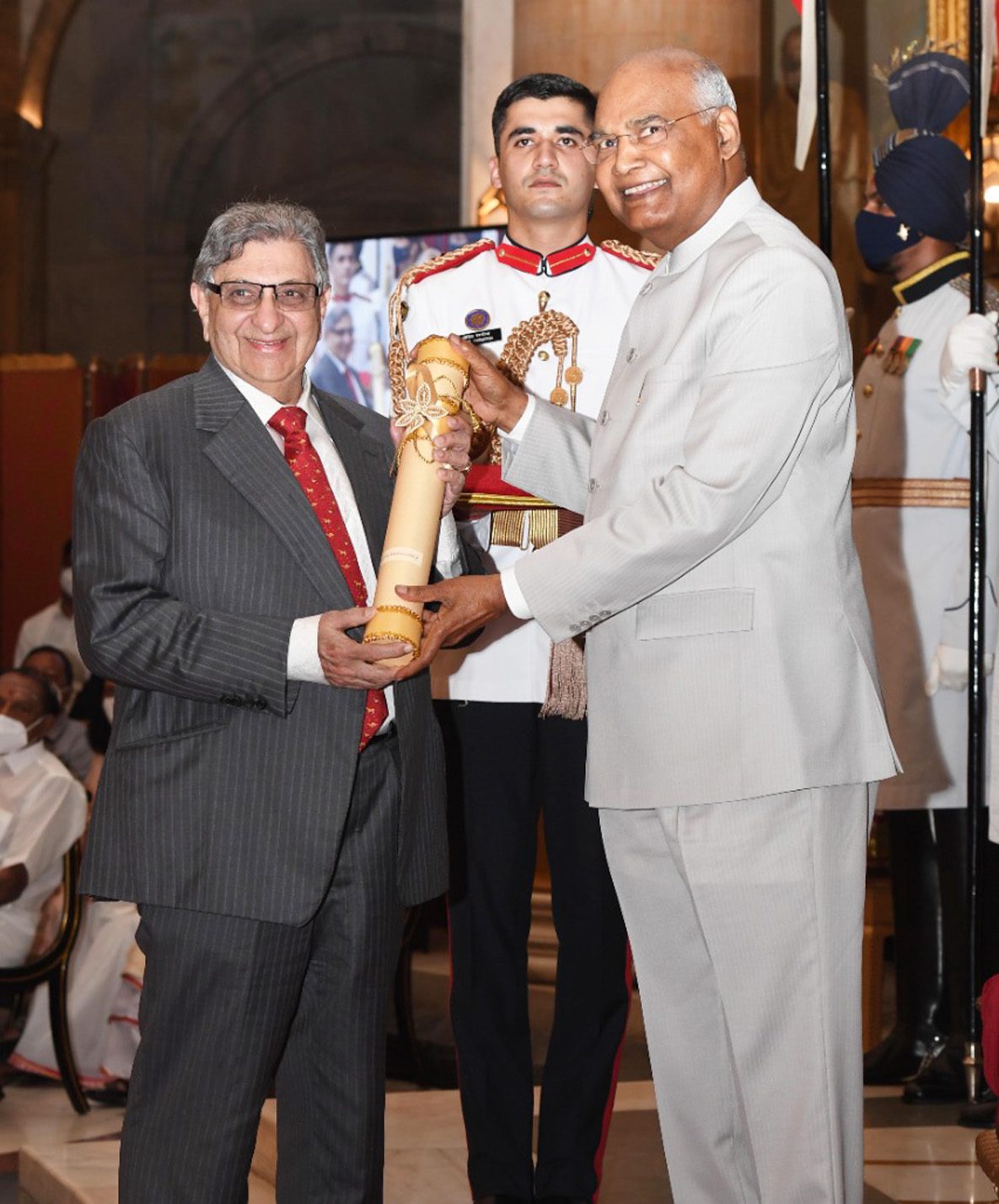
The honours have been many: the Padma Shri in 2005 and the Padma Bhushan in 2022, Gavi’s first “Vaccine Hero” award in 2018, an honorary degree from Oxford in 2019 and the Johns Hopkins Dean’s Medal.[11][8][23][18][22]
The showman
He has never pretended to be an ascetic. He lives in a 40,000-square-foot English-style manor in Pune whose domed ceiling carries replicas of Michelangelo’s Sistine Chapel frescoes, collects sports cars and limousines, and flies in the group’s own jets.[28][31] “I am proud of spending the money with which I have enriched myself, without compromising my principles and being ruthless,” he told Kapoor.[30]
He is just as unguarded in public. In August 2021, months before India offered booster shots, he urged people to take a third dose after six months and declared himself “against the mixing of two different vaccines”.[51]
And he never left the horses. The stud farm his father began has bred 387 classic winners, including ten Indian Derby winners, and has been champion breeder 15 times.[17] He won his first Indian Derby as an owner in 1990 with a horse he named Exhilaration, and has sat on the Asian Racing Federation’s executive council since 1992.[31]
Succession
The succession at Serum Institute happened long ago, in plain sight. Adar Poonawalla has run daily operations since 2011; his father remains chairman.[38][46] Natasha Poonawalla is an executive director and chairs Serum Life Sciences.[16][20]
Cyrus Poonawalla protected that line of succession deliberately. Kapoor writes that when his brother wanted to bring his own son into the company, he refused: “I feared that at some stage it could lead to a rift with my only son.” Zavaray chose to exit Serum Institute, though Cyrus says he advised him against selling.[30] Zavaray’s side of the family runs the stud farm day to day.[40]
Of his son he has said: “As they say, the apple doesn’t fall far from the tree.”[29] The two are different in style. The father spent 45 years on one product line; the son has added lending, films and London property within a few years.
What is not public is the detail. The split of shares between father and son does not appear in the public sources reviewed for this profile, and an unlisted company is not required to publish it. The ratings agencies simply treat Serum Institute as wholly owned by the family.[4][5] Outsiders can see how much depends on two people, but not what has been written down about what comes after them.
What their journey teaches
1. Your by-product may be your real business. The Poonawallas were giving away retired horses to a government lab. The business was in what the lab did with them. It is worth looking hard at anything you hand over for free.
2. Be the cheapest on purpose. He priced at a half to a tenth of rivals and treated it as a moat. Large rivals had little reason to fight for vaccines that sold for a few rupees, which left him the volume.
3. A certificate can be worth more than capital. WHO accreditation in 1994 did more for the company than any loan. It opened a market where buyers were huge, payment was reliable and the rules favoured the lowest qualified bidder.
4. Refuse money that costs you control. He walked out on a lender that wanted every asset as collateral and named a price a foreign buyer would not pay. The cost was slower growth. The reward was owning all of the company when it became valuable.
5. Private ownership buys speed and hides risk. A five-minute chat between father and son committed hundreds of millions of dollars in 2020. The same freedom means there are no outside shareholders to question a Mayfair mansion bought through a vaccine-company subsidiary, or the group’s move into lending and films.
6. If governments are your customers, their decisions are your risks. An export ban, a pricing policy and a stalled property transfer all came from the state. The man who said he once fell at the feet of bureaucrats found, at 80, that scale does not remove that dependence.
A profile for general reading, based on public records and reporting as of 30 September 2026. Not investment, tax or legal advice.
Sources (104)
- Order of 31 May 2021 in Suo Motu Writ Petition Civil No. 3 of 2021 - Supreme Court of India, May 2021
- Serum Institute of India Pvt Ltd v Yohan Tengra and Others, order of 5 June 2023 - Bombay High Court via Indian Kanoon, Jun 2023
- WHO Public Inspection Report: Serum Institute of India Pvt Ltd, inspection of 15-19 July 2019 - World Health Organization, Jul 2019
- Rating Rationale: Serum Institute of India Private Limited - Crisil Ratings, Mar 2025
- Press Release: Serum Institute of India Private Limited - CARE Ratings, Jan 2025
- Press Release: Serum Institute of India Private Limited - CARE Ratings, Jan 2023
- Rating Rationale: Poonawalla Fincorp Limited - Crisil Ratings, Aug 2024
- Padma Awards 2022 announced - Press Information Bureau, Government of India, Jan 2022
- About Us - Serum Institute of India, Sep 2026
- Milestones - Serum Institute of India, Sep 2026
- Achievements - Serum Institute of India, Sep 2026
- Serum Institute of India re-starts COVAX exports; passes 1 billion Covishield dose milestone - Serum Institute of India, Nov 2021
- Serum Institute of India acquires the Czech arm of US-based firm Nanotherapeutics - Serum Institute of India, Apr 2017
- Gates Medical Research Institute and the Serum Institute of India Reach Agreement for the Manufacture of M72/AS01E Tuberculosis Vaccine Candidate - Serum Institute of India, Jul 2026
- Villoo Poonawalla Foundation - Cyrus Poonawalla Group, Sep 2026
- Villoo Poonawalla Foundation: home page - Villoo Poonawalla Foundation, Sep 2026
- About Poonawalla Stud Farms - Poonawalla Stud Farms, Sep 2026
- Honorary degrees awarded at Encaenia 2019 - University of Oxford, Jun 2019
- Oxford University's COVID-19 vaccine: next steps towards broad and equitable global access - University of Oxford, Jun 2020
- The Poonawalla Vaccines Research Building to be established at Oxford University following £50m funding commitment from Serum Life Sciences - University of Oxford, Dec 2021
- Construction begins on state-of-the-art research facility - University of Oxford, Jun 2025
- Bloomberg School awards highest honor to Poonawalla and Casals - Johns Hopkins Bloomberg School of Public Health, Aug 2020
- Serum Founder wins inaugural 'Vaccine Hero' award - Gavi, Dec 2018
- How Africa defeated meningitis A - Gavi, Oct 2023
- The Meningitis Vaccine Project: A groundbreaking partnership - PATH, Sep 2026
- WHO recommends R21/Matrix-M vaccine for malaria prevention in updated advice on immunization - World Health Organization, Oct 2023
- Pneumonia vaccine price drops dramatically for lower-income countries thanks to the Gavi pneumococcal Advance Market Commitment - UNICEF, Jun 2020
- Horse Sense - Forbes, Nov 2007
- FILA 2021 Lifetime Achievement: Cyrus Poonawalla, the vaccine king - Forbes India, Mar 2021
- The Legend of the Poonawallas - Open, Jul 2021
- Cyrus Poonawalla: horse breeder and vaccine king - Asian Racing Report, Mar 2023
- The Vaccine King - Deccan Chronicle, Sep 2019
- Dr. Cyrus Poonawalla Felicitated With Padma Bhushan 2022 - Parsi Times, Jan 2022
- The World's Largest Vaccine Maker Took A Multimillion Dollar Pandemic Gamble - NPR, Mar 2021
- Meet India's biotech giant - Business Today, Aug 2008
- Adar Poonawalla: Improving access to vaccines - Forbes India, Nov 2018
- Adar Poonawalla's Vaccine: No Shot In The Dark - Forbes India, Jun 2020
- Adar Poonawalla: The Vaccine Prince of Pune - Open, Nov 2020
- How Cyrus Poonawalla's son, Adar Poonawalla is boldly changing course of the family business - The Economic Times via adarpoonawalla.com, Apr 2014
- India Blog: More Mumbai, Poonawalla Stud - Thoroughbred Daily News, Jan 2016
- Villoo Poonawalla's death leaves a void in racing - Racing Pulse, Jun 2010
- Serum Institute of India CEO Bets He Can Still End COVID-19 Globally - TIME, Jan 2022
- Serum Institute of India's Plans for Its Game-Changing Malaria Vaccine - TIME, May 2024
- India's richest in 2026: Adani tops the list, 27 new billionaires emerge - Business Standard, Sep 2026
- Hurun India Rich List 2026: Adani reclaims top spot as wealth jumps 13%, check top 10 - India TV, Sep 2026
- Hurun Rich List 2026: India now has 308 billionaires, ranks third globally - Business Standard, Mar 2026
- Cyrus Poonawalla: profile - Forbes, Sep 2026
- Burgundy Private Hurun India 500: NSE tops list as India's most valuable unlisted company - Outlook Money, Feb 2025
- Bureaucratic red tape, licence raj came down under Modi govt: SII chairman - Business Standard, Aug 2021
- Covid-19 vaccine export ban 'very bad' move: SII chairman Cyrus Poonawalla - Business Standard, Aug 2021
- COVID Vaccines: Cyrus Poonawalla Bats for Booster Dose, Criticises Export Ban - The Wire Science, Aug 2021
- Serum Institute makes vaccines available at price of 'a cup of tea': Cyrus Poonawalla - Business Today, Feb 2022
- Poonawalla Group acquires Netherlands-based co for Rs 550 cr - Business Standard, Jul 2012
- Serum in stake sale talks at $12-bn valuation - Business Standard, Sep 2015
- India's Serum Institute says halted stake sale talks with funds - Reuters via Business Standard, Sep 2015
- Adar Poonawalla-backed firm takes over Magma Fincorp in Rs 3,456 cr deal - Business Standard, Feb 2021
- Serum Institute tops profit charts among unlisted firms amid Covid war - Business Standard, Mar 2023
- SII stopped Covishield production in Dec 2021, says CEO Adar Poonawalla - Business Standard, Oct 2022
- Serum Institute to double its investment in Biocon unit to $300 million - Business Today, Apr 2023
- Billionaire Adar Poonawalla to pay £138 mn for Mayfair mansion in London - Business Standard, Dec 2023
- Poonawalla's bold script: 50% stake buy in Dharma for Rs 1,000 crore - Business Standard, Oct 2024
- Poonawalla Fincorp turns volatile post Q2 nos; brokerages mixed on outlook - Business Standard, Oct 2024
- 'Vaccines cheaper than chappals...': At Davos, Serum's Adar Poonawalla demands fair pricing for innovation - Business Today, Jan 2025
- SII to manufacture TB vaccine candidate under Gates MRI agreement - Business Standard, Jul 2026
- Hurun India Philanthropy List 2025: Shiv Nadar tops list with Rs 2,708 cr donation - Business Today, Nov 2025
- In India's vaccination race, Covishield at 88% beats Covaxin hands down - ThePrint, Sep 2021
- India's Serum Institute resumes vaccine exports to COVAX - Al Jazeera, Nov 2021
- AstraZeneca has sent us legal notice for vaccine supply delay: Poonawalla - Business Standard, Apr 2021
- Amid India Surge, Gavi Asserts Serum Institute's Obligation to Supply Vaccines - The Wire Science, Apr 2021
- Africa CDC director calls Serum Institute of India head 'condescending' - Devex, Dec 2021
- Serum CEO Adar Poonawalla says will return to India in a few days - Business Standard, May 2021
- 'We Don't Know If He Even Wants It': Bombay High Court Disposes Plea For Z-Plus Security To Adar Poonawalla - LiveLaw, Jun 2021
- Covid-19: Serum Institute defends vaccine pricing, says initial rates were based on advance funding - Scroll, Apr 2021
- Covishield to be sold for Rs 300 to states, Adar Poonawalla calls it 'philanthropic gesture' - Scroll, Apr 2021
- Centre's Vaccine Policy Prima Facie Detrimental To Right To Health: Supreme Court - LiveLaw, May 2021
- Vaccine trial participant sues Serum Institute for 'severe adverse effect', DCGI begins inquiry - Scroll, Nov 2020
- Serum Institute's trial has run into a controversy. Will this erode public trust in a vaccine? - Scroll, Dec 2020
- Serum Institute suspends Covishield trials in India - The Week, Sep 2020
- Madras HC seeks SII's response after man alleges adverse reaction to Covishield - The News Minute, Feb 2021
- AstraZeneca admits its Covishield vaccine may lead to rare side effect - Business Standard, Apr 2024
- Serum Institute responds for first time on Covishield amid safety row - Business Standard, May 2024
- Government Not Liable To Compensate For Deaths Due To COVID Vaccination: Centre Tells Supreme Court - LiveLaw, Nov 2022
- Supreme Court Reserves Judgment On Plea Seeking Govt Compensation For Covid Vaccine Deaths - LiveLaw, Nov 2025
- Who pays for alleged Covid-19 vaccine deaths? - Supreme Court Observer, Mar 2026
- SC asks Centre to frame 'no-fault compensation policy' for COVID-19 vaccine adverse effects - Onmanorama, Mar 2026
- Covishield vax death: Bombay HC issues notices to govt, Bill Gates, SII - Business Standard, Sep 2022
- 'Our vaccines are safe': Covishield makers support ICMR-Aiims findings - Business Standard, Jul 2025
- Bombay High Court Orders Take Down Of Prima Facie Defamatory Videos Against Serum Institute, Adar Poonawalla - LiveLaw, Jun 2023
- Sebi bars CEO of Poonawalla Finance, seven others for insider trading - Business Standard, Sep 2021
- Poonawalla Fincorp MD Abhay Bhutada quits following Sebi action - Business Standard, Sep 2021
- Sebi revokes order against Poonawalla Finance MD & CEO Abhay Bhutada - Business Standard, Jun 2022
- Four Entities Settle Insider Trading Case in Poonawalla Fincorp With Sebi - Outlook Business, May 2023
- Panama Papers: ED seizes over Rs 41-cr valued prime real estate of Zavareh Poonawalla - ThePrint, May 2023
- Does This Graphic Show SII Donating Rs 52 Crore to BJP via Electoral Bonds? No! - The Quint, Mar 2024
- BJP received 70.6% of donations made by electoral trusts in 2022-'23, says report - Scroll, Jan 2024
- 'His work in the field of vaccines is significant': Sharad Pawar demands Bharat Ratna for SII founder Cyrus Poonawalla - ANI, Feb 2024
- Bombay High Court Rejects Plea To Restrain Serum Institute Of India From Using 'COVISHIELD' Trademark - LiveLaw, Apr 2021
- Fire at Serum Institute: 5 Dead, SII Offers Rs 25 Lakh to Kin - The Quint, Jan 2021
- Losses in Serum Institute of India fire estimated at Rs 1,000 crore, says Adar Poonawalla - The Tribune, Jan 2021
- 'Short circuit caused fire at Serum Institute, no foul play,' says Maharashtra Dy CM Ajit Pawar - Business Today, Feb 2021
- Cyrus Poonawalla buys iconic Lincoln House in Mumbai for Rs 750 crore - Business Today, Sep 2015
- Cyrus Poonawalla's Lincoln House buy hits a hurdle - Business Standard, Oct 2015
- Forget trade deal, ease of doing business, US can't sell own property in Mumbai for 5 years - ThePrint, Feb 2020
- Cyrus Poonawalla unable to move into $120-mn mansion he bought 8 yrs ago; here's why - Business Today, Apr 2023