
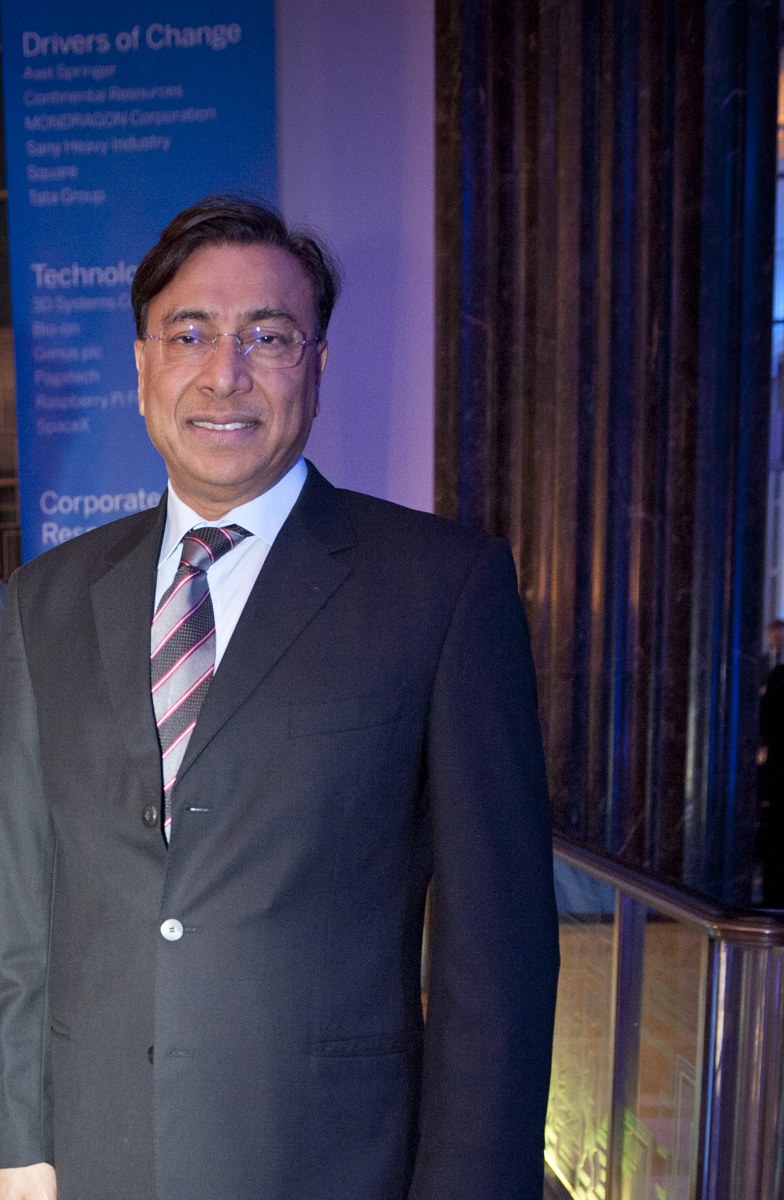
| Key facts | |
|---|---|
| Born | 15 June 1950, Sadulpur (Rajgarh), Churu district, Rajasthan [4][34] |
| Hometown / family roots | Marwari business family; grew up in Kolkata, where his father Mohan Lal Mittal ran a steel rolling mill [35][37] |
| Education | Shri Daulatram Nopany Vidyalaya (Hindi medium) and St Xavier’s College, Kolkata, B.Com, 1969 [36][39] |
| Family | Wife Usha; son Aditya Mittal (CEO, ArcelorMittal); daughter Vanisha Mittal Bhatia (director, ArcelorMittal; chief strategy officer, Aperam) [11][4] |
| Company / Group | ArcelorMittal (executive chairman); family trust holds about 43% [2] |
| Hurun India Rich List 2026 | Rank 3, “LN Mittal & family”, Rs 3,39,300 crore, up 93% [31][32] |
| Known for | Building the world’s largest steelmaker out of broken state-owned mills; the 2006 hostile takeover of Arcelor; the 2019 Essar Steel purchase that brought him back to India [6][12] |
On the afternoon of 25 June 2006, in Luxembourg, the board of Arcelor gave up. For five months Europe’s proudest steelmaker had fought a hostile bid from a company most of its directors had barely heard of a year earlier. Arcelor’s chief executive had sneered that the bidder’s shares were “monkey money” and that while his company made perfume, the Indian upstart made eau de Cologne [53]. Governments in Paris and Luxembourg had bristled. A Russian white knight had been summoned. And now, with the price raised to €40.40 a share and the deal worth roughly €27 billion, Arcelor agreed to merge with Mittal Steel, creating a company that would make roughly one in every ten tonnes of the world’s steel [6][52].
The man across the table had been born 56 years earlier in a house in the Rajasthan desert that had no electricity or piped water. He had never bought a mill in India. He had built his entire fortune by walking into steelworks that everyone else thought were finished - in Indonesia, Trinidad, Mexico, Kazakhstan, Romania - and making them work.
Twenty years on, on 23 September 2026, the M3M Hurun India Rich List put “LN Mittal & family” at No. 3 in India with wealth of Rs 3,39,300 crore, up 93 per cent in a single year, the biggest absolute gain of anyone on the list [31][32]. Only Gautam Adani and Mukesh Ambani stand above him. Yet his story is different from theirs in a fundamental way: almost none of it happened in India. This is the story of how a boy from Sadulpur became the world’s steel king, what it cost, and what he is trying to do now that he has finally come home.
Where it began
Lakshmi Niwas Mittal was born on 15 June 1950 in Sadulpur, a small town in Churu district in the Shekhawati region of Rajasthan [4][34][36]. The town is also called Rajgarh, and in the tribute he wrote for his father in January 2026 Mittal described it simply as “a small village named Rajgarh, Rajasthan” [37]. The family was Marwari, the trading community that has produced a disproportionate share of India’s industrialists, and he was the eldest of five children, named after the goddess of wealth [35].
The house he was born in had been built by his grandfather, a small-time commodities broker. Some twenty members of the extended family shared it, sleeping on rope beds and cooking on a brick oven in the yard [34][35]. “It was a very poor, very hard place to work,” Mittal told the biographer Tim Bouquet years later. “There was no electricity or piped water until the 1960s” [34]. When he went back decades later, for the first time in thirty years, he found it “very nostalgic” to see the house where he was born [34].
His father, Mohan Lal Mittal, was the engine of the family. Born in 1926, he had lived in Karachi before Partition, and in 1952 he took over a struggling steel rolling mill in Calcutta, the start of the family’s long association with the metal [37][38]. He built up a group of small mills over the next two decades and in 1974 founded the Ispat group, whose name is simply the Hindi word for steel [37][40]. When he died in London on 15 January 2026, at the age of 99, his eldest son wrote that “he was a natural entrepreneur, with a vision that was in many ways well ahead of his time” and that “he inspired us to be bold and extend our horizons beyond what was safe” [37]. Mittal has said his father was the man he admired most [34].
The family moved to Calcutta when Lakshmi was a boy, and he went to a Hindi-medium school, Shri Daulatram Nopany Vidyalaya [36]. That became a problem when he tried to get into St Xavier’s College, the city’s elite Jesuit institution. “I had to work hard to persuade the then Principal to let me in,” he told an audience at the college in 2017. “He had reasons to say no… mainly that I didn’t speak English.” He kept coming back. “I don’t know what changed his mind, maybe he was fed up of seeing me knocking on his door everyday” [39].
He graduated with a B.Com in 1969, with what the college remembers as the highest marks ever achieved by a St Xavier’s student in accountancy and commercial mathematics [35][39]. The principal offered him a job teaching accountancy the next morning at six o’clock. Mittal did it once and, as he tells the story, decided: “Six o’clock? I will not do that again” [35]. He had been working in his father’s business after school since he was sixteen, and at nineteen he joined it full time [7][34].
What he learned there was not glamorous. The Indian steel industry of the 1970s was throttled by the licence system, and the big integrated plants belonged to the state; the Mittals ran small mills re-rolling scrap and billets into bars and rods. It taught him to read a balance sheet, to obsess about the cost of every input, and to look at a broken mill and see what it could become.
The first break
In 1976, when Lakshmi Mittal was 26, his father sent him to Indonesia. The family had bought about 16 hectares of rice paddies near Surabaya in East Java, intending to build a mill there, and when the plan stalled the young man’s job was to sell the land [34][35]. He did something else instead. “I went to the retail market to see the prices of bars and rods,” he recalled. Then, he said, “I called my father and I told him, ‘I am not going further on my vacation’” [34].
“I moved to Indonesia in 1976,” he said in 2017. “That was a huge decision back then to leave home, family and live in a foreign country” [39]. Asked in 2009 about the biggest crisis of his career, he did not name a takeover battle or a market crash. “The biggest crisis or challenge I faced I believe is when I left India. I did not have any exposure to the global market… and I landed up in a country I never knew about. That was the biggest challenge” [58].
PT Ispat Indo started as a small bar-rolling mill of about 65,000 tonnes a year, financed with machinery shipped from India, a local partner’s cash, and an Indian government export scheme that would lend up to 85 per cent of the cost [35][42]. Mittal ran it with his wife Usha, who by several accounts managed the Indonesian plant while he began looking further afield [34]. The technical choice he made there shaped everything that followed. Rather than a blast furnace, which needs coke and enormous capital, he ran an electric-arc furnace fed with direct-reduced iron (DRI), a cheaper, more flexible route that a small operator could afford [34][41]. By the late 1980s the mill was producing several hundred thousand tonnes a year [35].
The first real break came in 1989. The government of Trinidad and Tobago owned a steelworks, ISCOTT, that had been losing well over US$100 million a year and was run by expensive German consultants [35][43]. Mittal leased it, with an option to buy. He replaced sixty German managers, who cost about US$20 million a year, with sixty Indian managers who cost about US$2 million, and within a year the plant was profitable; in 1994 he bought it outright for roughly US$70 million [35][43]. The template was set: find a state-owned mill a government is desperate to be rid of, pay little, put in Indian engineers who know DRI and electric furnaces, cut costs, and use the cash flow to buy the next one.
In 1992 he did it again in Mexico, buying the Sibalsa plant at Lázaro Cárdenas, which the Mexican state had spent more than US$2 billion building, for US$220 million [41]. It became, in his words, the “cash cow” that funded the 1990s [42]. In August 1994 he added Sidbec-Dosco in Quebec, which had cost the provincial government almost C$700 million in accumulated losses [44].
That same year the family split. Mittal wanted to go global; his father and younger brothers Pramod and Vinod wanted to keep India as the main focus. In 1994 the international operations were separated under Lakshmi’s control as the LNM Group, registered in the Netherlands, while the Indian businesses stayed with the rest of the family [35][40]. Bouquet reports that the two halves did not speak for two years [35]. In 1995 Mittal moved his base to London [36].
The boldest bet of that era came in November 1995 in Kazakhstan. The Karmet steelworks at Temirtau was a Soviet giant whose output had collapsed from six million tonnes to about two and a half million and which had not paid its workers for months [45][46]. Reported prices range from about US$250 million plus assumed debts to about US$400 million, depending on the source, and the buyer inherited far more than a mill: Karmet supplied the town’s electricity, heating, water and trams, and ran its hospitals, hotel and television station [45][46]. Mittal took it all on, along with the coal mines that fed it, a decision that would haunt the company decades later.
Building the empire
The roll-up: 1997 to 2005
By 1997 Mittal had a string of turned-around plants in the Caribbean, Mexico, Canada, Germany and Kazakhstan, and needed capital to keep going. In August 1997 he listed Ispat International on the New York and Amsterdam stock exchanges, selling about a fifth of the company for roughly US$776 million in what was then the largest public offering in the steel industry’s history [41][42]. His son Aditya, who had joined from Credit Suisse that year at the age of 21, helped run the offering [11].
The money went straight back into deals. In March 1998 Ispat bought Inland Steel of East Chicago for about US$1.43 billion and became the world’s eighth-largest steelmaker [47]. Unimetal in France followed in 1999 [41]. Then came the wave of post-communist privatisations that would make him. In 2001 his private holding company, LNM Holdings, bought 91.6 per cent of Sidex in Romania, a plant with 27,000 workers that was losing hundreds of millions of dollars a year, for just over US$70 million plus a promise to invest US$350 million [48]. The same year he took 70 per cent of Algeria’s El Hadjar works [41]. Nova Hut in the Czech Republic and the Polish steel monopoly Polskie Huty Stali followed in 2003-04, each for a token sum plus the assumption of debts and investment promises [41][42].
His thesis never changed. “The steel sector is still highly fragmented and I have been saying since 1997 or 1998 that it needs to consolidate,” he told El País in 2006 [7]. And unlike most steel bosses, who were engineers, he thought like an investor. “I’m a steelmaker, not a dealmaker,” he liked to say, but he added that he would not buy any company “that doesn’t fit in with our growth strategy, something without production, marketing or cost synergies, or that couldn’t become a low-cost producer” [42].
In October 2004 he pulled the pieces together. Ispat International bought LNM Holdings from the family and, in the same stroke, agreed to buy International Steel Group, the American company Wilbur Ross had assembled out of bankrupt US mills, for about US$4.5 billion. The three-way deal was valued at US$17.8 billion, and the combined company, renamed Mittal Steel, had capacity of about 70 million tonnes, 165,000 employees in 14 countries and pro-forma revenue of around US$30 billion. It was the largest steel company in the world, and the Mittal family owned about 88 per cent of it [5][49].
A year later, in October 2005, he outbid a consortium including Arcelor to buy Kryvorizhstal in Ukraine for US$4.8 billion at a televised auction, then the largest foreign investment in Ukraine’s history [50]. The rivalry with Arcelor was now personal.
The Arcelor battle: 2006
On 27 January 2006 Mittal Steel launched an unsolicited €18.6 billion bid for Arcelor, the Luxembourg-based group formed from the steel champions of France, Spain and Luxembourg [51]. The reaction in Europe was ferocious. Arcelor’s chief executive Guy Dollé questioned whether a company controlled by one family with special voting rights could be trusted, and the “monkey money” and “eau de Cologne” remarks travelled around the world [51][53]. Political leaders in Paris and Luxembourg voiced their unease. The Mittal camp pushed back: “We are European company,” Mittal insisted at a press conference, “Dutch-based European company and Arcelor is also European company” [8].
Arcelor’s defence peaked on 26 May 2006, when it announced a plan to merge with Alexei Mordashov’s Severstal of Russia, a deal that would have handed the Russian tycoon about a third of the enlarged Arcelor and shut Mittal out [52]. Mittal raised his offer, courted Arcelor’s shareholders directly, and agreed to give up the family’s super-voting shares. Arcelor’s own investors revolted against the Severstal deal. On 25 June 2006 the Arcelor board accepted a final offer of 13 Mittal Steel shares plus €150.60 in cash for every 12 Arcelor shares, worth €40.40 a share, and Mittal Steel paid about US$33.6 billion in total for a company that had rejected it as unworthy five months earlier [6][52]. The Mittal family’s stake in the combined ArcelorMittal fell to 43.6 per cent, the head office stayed in Luxembourg, and Lakshmi Mittal became president and, later, chairman and chief executive [6].
“This combination is a natural alliance that represents a transformational change towards realising our vision of a more sustainable and stable industry,” he said that day [6]. Twenty years later, in an essay published on 30 September 2026, he was still defending it. “I sincerely believe that the merger has created a stronger company, one that benefits from greater scale, better diversification, greater resilience and a broader strategic reach,” he wrote, adding a detail that captures how long ago 2006 now feels: “All our communications during the merger were carried out on BlackBerrys” [54].
The peak and the fall: 2008 to 2016
In 2008 everything came together. ArcelorMittal produced 103.3 million tonnes of crude steel, employed 316,000 people, booked sales of US$124.9 billion and net income of US$9.4 billion [9]. Forbes ranked Lakshmi Mittal the fourth-richest person on earth, worth US$45 billion, behind only Warren Buffett, Carlos Slim and Bill Gates [56][55]. He was in the Time 100, had been named the Financial Times’ Person of the Year for 2006, received the Padma Vibhushan from the Indian government in 2008, and joined the board of Goldman Sachs that June [4][26]. In Britain he had topped the Sunday Times Rich List every year since 2005 [59][60]. He had bought a house on Kensington Palace Gardens from Bernie Ecclestone for £57 million in 2004, reported at the time as a world record for a private home, and his daughter Vanisha’s 2004 wedding in France was reported to have cost tens of millions of dollars [61][35].
Then Lehman Brothers collapsed. Steel demand fell off a cliff in the last quarter of 2008, just as ArcelorMittal’s net debt peaked at US$32.5 billion [9]. Mittal’s personal fortune, almost entirely in ArcelorMittal shares, dropped to US$19.3 billion by March 2009, a loss of more than US$25 billion in a year, the second-biggest fall of any billionaire that year [56]. “The world is witnessing the worst global recession since 1945,” he said in May 2009. “There is no point in continuing to produce what we know we cannot sell” [57]. The company idled furnaces across Europe and the US.
The recovery never quite came. China’s steel output kept climbing and, as its own economy slowed, Chinese exports flooded world markets. ArcelorMittal spun off its stainless-steel business as Aperam in January 2011 [62]. It closed the blast furnaces at Florange in France in 2012 and finishing lines at Liège in Belgium in 2013, provoking political fury that is described below. In 2015 the company lost US$7.9 billion, including US$4.8 billion of write-downs mainly on its mining assets, and suspended its dividend [63]. In March 2016 it raised US$3 billion in a rights issue at a deep discount; Mittal, then holding about 37 per cent, committed to put in his full share, about US$1.1 billion of his own money [64].
Repair, succession and the return to India: 2016 to 2026
What followed was a decade of discipline rather than deals. Under a debt-reduction plan largely designed by Aditya Mittal, who had risen from chief financial officer to president, the company sold assets, cut costs and paid down borrowings. In 2021, helped by a post-pandemic price surge, ArcelorMittal earned a record net income of US$15 billion and brought net debt down to US$4 billion, its lowest level since the Arcelor merger [10]. It began buying back and cancelling shares, which is why the family’s stake has since climbed back above 43 per cent without the Mittals buying a single share [2].
On 11 February 2021 the board made the succession official: Lakshmi Mittal became executive chairman and Aditya Mittal chief executive. “We have worked closely together since he joined the company in 1997,” the father said, “indeed in recent years we have effectively been managing the company together” [11].
The other unfinished business was India. Mittal had signed memoranda for giant greenfield plants in Jharkhand in 2005, Odisha in 2006 and Karnataka in 2010, and all three ran into the ground. The Odisha project, a 12-million-tonne plant at Keonjhar worth Rs 40,000 crore, was formally abandoned in 2013 because the company could not acquire the land or secure captive iron ore [66]. “I tell my guys don’t complain about the policies,” he said in 2012, but he called infrastructure “the biggest impediment” [67].
The door finally opened through India’s new bankruptcy law. Essar Steel, the Ruia family’s plant at Hazira in Gujarat, had defaulted on its loans and was pushed into insolvency in 2017. After two years of litigation described later in this profile, ArcelorMittal and its Japanese partner Nippon Steel completed the purchase on 16 December 2019 for Rs 42,000 crore, forming a 60:40 joint venture called ArcelorMittal Nippon Steel India, or AM/NS India [12]. “We have been looking at suitable opportunities to build a meaningful production presence in the country for over a decade,” Mittal said [12]. Bloomberg called it a US$7 billion homecoming [68].
The homecoming is now accelerating. Hazira is being expanded to 15 million tonnes a year, with completion expected in the second half of 2026 [1]. And on 23 March 2026, at Rajayyapeta in Andhra Pradesh’s Anakapalli district, Lakshmi and Aditya Mittal stood with Chief Minister N. Chandrababu Naidu to lay the foundation stone of an 8.2-million-tonne plant costing over Rs 70,000 crore, due to start making steel in early 2029; the state government describes the full project as reaching 17.8 million tonnes for about Rs 1.35 lakh crore [13][69]. “I have been in the steel industry now for fifty years,” Mittal said that day, “and I can honestly say that what we are building here in India is one of the highlights of these 50 years” [13]. “The last 20 years have been marked by China’s remarkable growth,” he wrote in September 2026. “Now it is India’s turn” [54].
The company today and how the wealth is held
ArcelorMittal is a smaller company than it was in 2008, and deliberately so. In 2025 it produced 55.6 million tonnes of crude steel, earned sales of US$61.4 billion and net income of US$3.2 billion, and ended the year with net debt of US$7.9 billion and 125,554 employees [1][3]. On the World Steel Association’s count, which includes joint ventures, it remains the world’s second-largest steelmaker behind China’s Baowu [70].
The Mittal fortune is, at its core, one thing: 43.27 per cent of ArcelorMittal, some 335 million shares, held as of 31 August 2026 by HSBC Trustee (C.I.) Limited as trustee of a discretionary trust whose beneficiaries are Lakshmi and Usha Mittal, through two Luxembourg companies, Lumen Investments and Nuavam Investments [2]. The same structure holds about 40 per cent of Aperam, where Vanisha Mittal Bhatia is chief strategy officer [62][4]. Hurun’s 93 per cent jump in 2026 is essentially the ArcelorMittal share price, which surged on European trade protection and firmer steel prices [31]. Forbes, which counts Lakshmi Mittal alone and uses a different method, put him at about US$32 billion at the end of September 2026 [33].
Around the core sit trophy assets: the London mansions, a mansion in Dubai’s Emirates Hills [72], the London 2012 Olympic tower, and, since May 2026, about 75 per cent of the Rajasthan Royals and its sister teams in South Africa and the Caribbean, bought at an enterprise value of US$1.65 billion alongside Adar Poonawalla. “I cannot wait to join fans pitch-side to cheer our future success,” Mittal said [71].
The setbacks and failures
For a man whose method was to buy other people’s failures, Mittal has had his share of his own.
The first was the family. The 1994 split left the Indian business, Ispat Industries, with his brothers, and it never found its feet. After two debt restructurings and accumulated losses of more than Rs 2,500 crore, the family sold control to JSW Steel in December 2010, and the brothers’ stake in the merged company eventually dwindled to about 3 per cent [40]. Lakshmi Mittal was not an owner and has said there is no business connection with his brothers [75]. His brother Pramod Mittal was declared bankrupt by the High Court in London in 2020 with claimed debts of about £2.5 billion, and in January 2023 a Bosnian court charged him over alleged fraud at a coke plant there, charges he contests and on which no verdict had been reported by September 2026 [76][78][77]. These are his brother’s matters, not Lakshmi’s, but they shadow the family name in India.
The second failure was India itself. Between 2005 and 2013 ArcelorMittal announced three greenfield plants and built none of them; the Keonjhar project in Odisha died in 2013 for want of land and iron ore [66]. When the company finally entered India it did so by buying a bankrupt plant, fourteen years after its first memorandum of understanding.
The third was the 2008 crash and the long slump that followed, which cut his fortune by more than half in a year and, in 2015, produced the largest loss in the company’s history [56][63]. The fourth is in progress. ArcelorMittal’s Ukrainian plant at Kryvyi Rih, bought for US$4.8 billion in 2005, has been hit by four Russian missile strikes in five weeks; on 25 September 2026 the company said five employees had been killed and seventeen injured, that it could no longer safely operate the plant, and that it expected a write-off of about US$1 billion on top of the US$700 million it has put in since February 2022 [14][79].
And then there is Europe, the company’s heartland, where the decline is structural. In 2025 ArcelorMittal announced that up to 1,400 support roles would move from Europe to India, cut about 600 production jobs in France, and cancelled a €1.3 billion low-carbon steel project in Germany because “the business case for moving ahead with this transformation is not strong enough” [80][81]. Each announcement has fed a political backlash that is now the company’s most serious controversy.
Controversies and allegations
Lakshmi Mittal has never been charged with a crime by any court or regulator, and no lawsuit naming him personally was found in the public record for this profile. But the company he built has been fined, sued and denounced by governments on three continents, and his donations and tax affairs have drawn scrutiny in two countries. Each matter is set out below as it stands on 30 September 2026.
“Mittalgate”: the Blair letter, 2002
Allegation: On 23 May 2001, two weeks before the British general election, Mittal gave £125,000 to the Labour Party. In July 2001 Prime Minister Tony Blair signed a letter to Romania’s prime minister, Adrian Năstase, congratulating Romania on choosing “a British company”, LNM, to buy the Sidex steelworks. When the letter surfaced in February 2002, Plaid Cymru MP Adam Price accused the government of doing a favour for a donor and pointed out that LNM was, in his words, “a company owned by an Indian citizen registered in the Dutch Antilles” that employed few people in Britain [19][82][83].
Response: Downing Street said Blair had not known of the donation, that the letter had been requested by the British ambassador in Bucharest and was about supporting Romania’s economic transition. Welsh Secretary Paul Murphy told the Commons: “I completely reject the accusation that the letter had anything whatever to do with a donation to the Labour party” [19]. Mittal said the Sidex deal had been clinched before the donation was made [83].
What happened next:
- No inquiry found wrongdoing, though the affair damaged the government’s standing and gave the British press a nickname, “Mittalgate”, that has stuck.
- Mittal continued to give to Labour, including a £2 million gift announced in January 2007 that Blair said he was “delighted” to receive [84].
Status: Closed. No finding of wrongdoing against Mittal or Blair.
Mine deaths in Kazakhstan and the forced sale of ArcelorMittal Temirtau
Allegation: The Karaganda coal mines that fed the Temirtau steelworks suffered repeated fatal accidents under ArcelorMittal’s ownership: a methane explosion at the Lenin mine in September 2006 killed 41 miners, another at Abay in January 2008 killed 30 [107], and on 28 October 2023 a fire at the Kostenko mine killed 46, the worst industrial accident in Kazakhstan’s independent history [86][87][85]. Kazakh officials said more than 100 people had died at the company’s facilities over 15 years [86]. After Kostenko, President Kassym-Jomart Tokayev ordered his government to end investment cooperation with the company and called it “the worst in our history in terms of cooperation between the government and a private enterprise” [86][87].
Response: After the 2006 disaster investigators blamed breaches of safety rules, and eight mine managers and technicians were jailed [85]. ArcelorMittal had signed a preliminary agreement to transfer the business to the state the week before the Kostenko fire; on completing the sale it thanked employees “for everything they have contributed over the past 28 years” [88]. No detailed public statement from the company accepting or rejecting responsibility for the accidents was found.
What happened next:
- On 11 December 2023 ArcelorMittal completed the sale of all its Kazakh operations to a state-backed investment company for US$286 million, plus repayment of intra-group loans, taking a hit of about US$800 million to its equity. The business was renamed Qarmet [88].
- Families of the Kostenko victims have since complained of delays in compensation from the new owner [106].
Status: ArcelorMittal has exited Kazakhstan. No case against Lakshmi Mittal personally.
Cartel fines in Europe and South Africa
Allegation: In June 2010 the European Commission fined 17 producers of prestressing steel €518 million for a cartel that ran from 1984 to 2002, with ArcelorMittal subsidiaries assessed the largest share, about €276 million [89]. In December 2008 the French competition authority fined steel distributors €575 million for a 1999-2004 price-fixing cartel, of which ArcelorMittal entities were assessed about €302 million [90]. In South Africa, the Competition Commission accused ArcelorMittal South Africa of cartel conduct in long steel and scrap metal and of price-fixing in flat steel [22][92].
Response: ArcelorMittal said it had cooperated fully with the European Commission and would consider an appeal [17]. In South Africa the company admitted the long-steel and scrap cartel conduct but did not admit that its flat-steel pricing broke the law [22][92].
What happened next:
- In April 2011 the Commission cut the prestressing-steel fine by about 80 per cent to €45.7 million because the subsidiaries could not pay and the parent would not [18]; in January 2010 the Paris Court of Appeal cut the French fines to under €75 million in total [91].
- In August 2016 ArcelorMittal South Africa settled all pending cases for R1.5 billion over five years, plus R4.64 billion of investment commitments and a five-year cap on its flat-steel profit margin [22][92].
Status: All three matters are closed and paid.
France: Florange and the nationalisation bill
Allegation: On 1 October 2012 ArcelorMittal confirmed it would permanently close two blast furnaces at Florange in Lorraine, affecting about 630 jobs. Industry minister Arnaud Montebourg told Les Echos: “We no longer want Mittal in France because they haven’t respected France,” accused the company of lying about its commitments since 2006, and threatened to nationalise the site [93]. In 2025, after the company announced about 600 French job cuts and paused a €1.8 billion decarbonisation project at Dunkirk, the left-wing France Insoumise party brought a bill to nationalise ArcelorMittal France [95].
Response: Mittal said of Montebourg’s remarks: “I would never have expected to hear something so irrational from a minister… a huge leap backwards” [94]. In 2012 the company agreed with Prime Minister Jean-Marc Ayrault to avoid forced lay-offs at Florange and to invest €180 million there [94]. On the 2025 bill, ArcelorMittal said separating the French sites from the group “would only severely worsen their situation” [95]. In February 2026 it confirmed a €1.3 billion electric-arc furnace at Dunkirk, with €650 million of French state support [108].
What happened next:
- The National Assembly passed the nationalisation bill at first reading on 27-28 November 2025 by 127 votes to 41, against the government’s advice [95].
- The Senate rejected it on 25 February 2026; the Assembly re-adopted it on 11 June 2026 [24][96].
Status: Pending. The bill awaits a second Senate reading; the Macron government opposes it and it is not expected to become law in its current form.
Italy: the Ilva plant and the €7 billion claim
Allegation: ArcelorMittal leased the giant Ilva steelworks at Taranto, Europe’s largest, in 2018 with an option to buy. In November 2019, after the Italian parliament removed a legal shield protecting the operator from environmental prosecution, ArcelorMittal moved to walk away; Prime Minister Giuseppe Conte warned of “the legal battle of the century” [97]. In January 2026 the state commissioners now running the plant sued ArcelorMittal in Milan for about €7 billion, alleging mismanagement and the “extraction” of resources between 2018 and 2024 [98].
Response: ArcelorMittal says it invested more than €2 billion in the plant, that Italy “substantially expropriated” its investment, and that it “categorically rejects” the €7 billion claim [15][16]. In June 2025 it filed its own claim against Italy at the World Bank’s ICSID arbitration tribunal, seeking more than €1.8 billion [23].
What happened next:
- Italy’s state agency Invitalia took joint control in 2020; in February 2024 the plant was placed into extraordinary administration, ending ArcelorMittal’s role [15].
- The Italian government has been trying to sell the plant to new investors through 2026 [109].
Status: Both the Milan lawsuit and the ICSID arbitration are pending.
India: the Essar Steel eligibility fight
Allegation: When ArcelorMittal bid for Essar Steel in 2018, rivals argued it was barred under Section 29A of the Insolvency and Bankruptcy Code, which stops anyone connected to a loan defaulter from buying a bankrupt company, because ArcelorMittal had held stakes in two Indian defaulters, Uttam Galva and KSS Petron. In May 2019 the Ruia family’s holding company went further, alleging before the appellate tribunal that Lakshmi Mittal had failed to disclose business links with his brothers’ defaulting companies [99][75].
Response: ArcelorMittal called the Ruia allegation “frivolous” and said there was “absolutely no business connection” between Lakshmi Mittal and his brothers [75]. It said the tribunal’s rejection of the Ruias’ rival settlement offer “protects the integrity of the IBC” [100].
What happened next:
- On 4 October 2018 the Supreme Court ruled that ArcelorMittal could bid only if the overdue debts of Uttam Galva and KSS Petron were cleared; ArcelorMittal paid Rs 7,469 crore to do so [20][99].
- On 15 November 2019 the Supreme Court upheld the Rs 42,000 crore resolution plan, ruling that the “commercial wisdom” of the lenders’ committee is paramount, and the deal closed a month later [21][12].
Status: Closed. The Ruia allegation was never upheld by any court.
Political donations and tax residence
Allegation: Critics in Britain and India have argued that Mittal buys influence and pays too little tax where he lives. In Britain he gave Labour more than £4 million between 2001 and 2007 [84]. In India, Election Commission data released in 2024 showed that on 8 April 2019 he bought electoral bonds worth Rs 35 crore, the largest purchase by any individual, which were encashed by the BJP [25][101]. In November 2025 the Sunday Times reported he had left Britain after the abolition of “non-dom” tax status, becoming tax-resident in Switzerland and spending much of his time in Dubai [72][73].
Response: All the donations were lawful and publicly declared; Mittal has not commented on the electoral bonds. On leaving Britain, ArcelorMittal declined to comment; an adviser told the Evening Standard that the issue was not tax on income or gains but the new rule making former non-doms liable to UK inheritance tax on their worldwide assets [74].
Status: Not a legal matter. No authority has alleged any illegality.
Giving back
Mittal’s philanthropy has been substantial but, compared with his fortune, quiet, and much of it has been done through his family. In 2002 he and Usha Mittal founded the LNM Institute of Information Technology in Jaipur in partnership with the Rajasthan government; it became a deemed university in 2006 [30][4]. In 2005 he set up the Mittal Champions Trust with about US$9 million (roughly Rs 40 crore) to fund Indian Olympic athletes; it supported around 40 sportspeople including shooter Abhinav Bindra, boxer Vijender Singh and badminton player Saina Nehwal before winding up in 2014 [103][102]. When Bindra won India’s first individual Olympic gold in 2008, Mittal personally gave him a Rs 1.5 crore award [103].
In 2008 his son Aditya and daughter-in-law Megha pledged £15 million to London’s Great Ormond Street Hospital, then the largest private gift in its history, for what became the Mittal Children’s Medical Centre [28]. In October 2017 the family gave US$25 million to Harvard University to endow what is now the Lakshmi Mittal and Family South Asia Institute. “As someone who was born in India,” he said, “the long-term prosperity of India and its neighboring countries matters a great deal to me and my family” [27]. More recently he has funded a professorship in vaccinology at Oxford and UNICEF programmes on child malnutrition [4].
His most visible gift is also his strangest: the ArcelorMittal Orbit, Anish Kapoor’s 115-metre red steel tower in London’s Olympic Park, for which ArcelorMittal put in about £20 million of the £22.7 million cost, partly as a loan the attraction has never earned enough to repay [29].
He received the Padma Vibhushan, India’s second-highest civilian honour, in 2008, chaired the World Steel Association in 2008-09, and sat on the board of Goldman Sachs from 2008 until his retirement under its age policy in 2026 [4][26][104].
Succession
The succession at ArcelorMittal is, unusually for an Indian business family, already done. Aditya Mittal, born in 1976 and educated at Wharton, joined the company in 1997, ran the Ispat IPO, led the Arcelor offer as chief financial officer, and became chief executive on 11 February 2021 [11][65]. “The board unanimously agree that Aditya Mittal is the natural and right choice,” his father said [11].
Vanisha Mittal Bhatia has been a director of the family’s listed companies since 2004 and is chief strategy officer at Aperam [105]. Ownership of the whole is held in a discretionary trust rather than in individual hands, a structure designed to keep the ArcelorMittal stake intact across generations [2].
Lakshmi Mittal himself, at 76, shows no sign of leaving. “In terms of my own position, as long as I am continuing to add value I intend to be around,” he said in 2009 [57]. In September 2026 he put it more simply: “I have no doubt that we will continue to face many challenges and unforeseen events. But honestly, there’s nowhere else I’d rather be” [54].
What their journey teaches
Buy what everyone else has given up on, but only if you know how to fix it. Every plant that built the Mittal fortune - Trinidad, Mexico, Kazakhstan, Romania, Essar - was bought from an owner desperate to sell. The price was cheap because the problems were real. What made the deals work was not the bargain but the operating know-how: DRI technology, Indian engineers, obsessive cost control. Cheap assets without a repair plan are just cheap.
Leaving the comfortable market can be the making of you. Mittal has said the hardest thing he ever did was leaving India at 26 for a country he knew nothing about. The licence-raj economy would never have let him build a global company; Indonesia, Trinidad and Kazakhstan did. Sometimes the constraint is not your ability but your location.
Leverage builds empires and then tries to destroy them. ArcelorMittal carried US$32.5 billion of net debt into the 2008 crash, and it took thirteen years to get it under US$5 billion. The rights issue of 2016, in which Mittal put in US$1.1 billion of his own money, was the price of the deals of 2004-06. For anyone thinking about how borrowing interacts with a cyclical business, CapitalVia’s Insights section covers the mechanics in more depth.
Succession works best when it is a job, not an inheritance. Aditya Mittal spent 24 years in the company, ran the IPO, the Arcelor deal and the debt clean-up, before he became CEO. The family’s ownership sits in a trust, separate from management titles. Whatever one thinks of dynastic business, the ArcelorMittal transition has been notably free of the public feuds that have marked other Indian families.
Scale does not make you loved. The same acquisitions that made Mittal the world’s steel king made him, at various times, a hate figure in France, Belgium, Kazakhstan and Italy. A global employer is a political actor whether it wants to be or not, and the record suggests Mittal was slow to accept that.
A profile for general reading, based on public records and reporting as of 30 September 2026. Not investment, tax or legal advice.
Sources (109)
- ArcelorMittal reports fourth quarter 2025 and full year 2025 results - ArcelorMittal, Feb 2026
- Shareholding structure - ArcelorMittal, Aug 2026
- Fact Book 2025 - ArcelorMittal, Apr 2026
- Lakshmi N Mittal, Executive Chairman: profile - ArcelorMittal, Sep 2026
- Form 425: Ispat International, LNM Holdings and ISG combination - US SEC, Oct 2004
- Mittal Steel announces agreement with Arcelor to create the world's leading steel company - CNMV filing, Jun 2006
- Form 425: Mittal Steel press interviews (Telecran, El País, Les Echos) - US SEC, Jun 2006
- Form 425: Mittal Steel Q4 2005 results press conference transcript - US SEC, Feb 2006
- ArcelorMittal reports full year and fourth quarter 2008 results - ArcelorMittal, Feb 2009
- ArcelorMittal reports fourth quarter and full year 2021 results - ArcelorMittal, Feb 2022
- Lakshmi N. Mittal to become Executive Chairman; Aditya Mittal appointed CEO - ArcelorMittal, Feb 2021
- ArcelorMittal and Nippon Steel complete acquisition of Essar Steel - ArcelorMittal, Dec 2019
- Foundation stone laid for AM/NS India greenfield steel plant in Andhra Pradesh - ArcelorMittal, Mar 2026
- ArcelorMittal announces it is unable to safely restart operations at ArcelorMittal Kryvyi Rih - ArcelorMittal, Sep 2026
- Statement re Acciaierie d'Italia being placed into extraordinary administration - ArcelorMittal, Feb 2024
- Statement re Acciaierie d'Italia claim - ArcelorMittal via Nasdaq, Jan 2026
- ArcelorMittal response to European Commission's decision - ArcelorMittal, Jun 2010
- Antitrust: Commission reduces fines on ArcelorMittal prestressing steel subsidiaries (IP/11/403) - European Commission, Apr 2011
- Steel Industry debate (Adam Price, Paul Murphy) - House of Commons Hansard, Mar 2002
- ArcelorMittal India v Satish Kumar Gupta: Supreme Court judgment - IBBI, Oct 2018
- Committee of Creditors of Essar Steel v Satish Kumar Gupta: Supreme Court judgment - Indian Kanoon, Nov 2019
- ArcelorMittal to pay R1.5 billion penalty - South African Government News Agency, Aug 2016
- ArcelorMittal v. Italy (ICSID Case No. ARB/25/34) - UNCTAD Investment Policy Hub, Jun 2025
- Dossier législatif: proposition de loi visant à nationaliser ArcelorMittal France - Sénat, Jun 2026
- Electoral bond purchases by Lakshmi Niwas Mittal - MyNeta / Association for Democratic Reforms, Mar 2024
- Lakshmi N. Mittal to join Goldman Sachs board of directors - Goldman Sachs, Jun 2008
- Mittal family gift expands opportunities for South Asia engagement - Harvard Gazette, Oct 2017
- Great Ormond Street Hospital marks start of construction of Mittal Children's Medical Centre - GOSH NHS, Sep 2014
- FOI 16-071: ArcelorMittal Orbit costs and profits - London Legacy Development Corporation, Aug 2016
- About LNMIIT - The LNM Institute of Information Technology, Sep 2026
- India's richest in 2026: Adani tops the list, 27 new billionaires emerge - Business Standard, Sep 2026
- Hurun India Rich List 2026: Adani reclaims top spot, check top 10 - India TV News, Sep 2026
- Lakshmi Mittal profile - Forbes, Sep 2026
- Mittal: Man of Steel (Tim Bouquet) - Telegraph Magazine, Jun 2008
- Lakshmi Mittal (Tim Bouquet) - Prospect Magazine, Jun 2008
- Lakshmi Mittal - Encyclopaedia Britannica, Sep 2026
- Steel tycoon Lakshmi Mittal's father Mohan Lal Mittal passes away at 99 - Business Standard, Jan 2026
- Mohanlal Mittal: old school, yet ahead of his time - Eastern Eye, Jan 2026
- When St. Xavier's refused to admit Lakshmi Mittal - Business Standard / IANS, Jul 2017
- Rise & fall of Ispat - Business Standard, Sep 2012
- Ispat International N.V. company history - International Directory of Company Histories via Encyclopedia.com, Jan 1999
- Lakshmi Mittal's ring of steel - Management Today, Aug 2020
- A new plan for iron and steel - Trinidad and Tobago Newsday, Jun 2023
- Sidbec cost Quebec $693-million - The Globe and Mail, Aug 1994
- Temirtau Journal: a steel town's new master (Douglas Frantz) - The New York Times, Aug 2001
- Inside Kazakhstan: Indians take big strides in Kazakh steel town (Siddharth Varadarajan) - The Hindu, Oct 2004
- Ispat buys Inland Steel - UPI, Mar 1998
- ZF 20 de ani: Evenimentul anului 2001, privatizarea Sidex - Ziarul Financiar, Nov 2018
- Steel giant forges $17.8 billion deal - NBC News / Associated Press, Oct 2004
- Mittal Steel buys Ukraine plant for $4.8 billion - NBC News / Associated Press, Oct 2005
- Forging a Steel Giant: Mittal's Bid for Arcelor - Knowledge at Wharton, Feb 2006
- Mittal Wins Bitter Battle For Arcelor - Forbes, Jun 2006
- Lakshmi Mittal: India's Most Influential - Time, Aug 2007
- ArcelorMittal: 20 years on, Lakshmi Mittal stands by his decision - Delano, Sep 2026
- The World's Billionaires 2008 (Forbes data) - areppim, Mar 2008
- Biggest Billionaire Losers - Forbes, Mar 2009
- Mr. Steel's Moment of Truth - Forbes India, May 2009
- Leaving India was my biggest challenge: L N Mittal - Business Standard, Jun 2009
- Lakshmi Mittal tops Sunday Times Rich List 2005 - UK Fundraising, Apr 2005
- Sunday Times Rich List 2012: Britain's richest - International Business Times UK, Apr 2012
- London's Billionaire Row - Forbes, May 2012
- Spin-off from ArcelorMittal - Aperam, Jan 2011
- ArcelorMittal fourth quarter 2015 and full year 2015 results - Paperjam, Feb 2016
- ArcelorMittal's $3 bn rights issue likely to open on Mar 14 - Business Standard / PTI, Mar 2016
- Aditya Mittal named as CEO of ArcelorMittal, Lakshmi Mittal becomes executive chairman - Deccan Herald, Feb 2021
- Lakshmi Mittal hangs up on Odisha - Business Standard, Aug 2013
- Mittal: don't complain about policies, infrastructure is the biggest impediment - The Tribune, Apr 2012
- Homecoming costs Indian steel tycoon Lakshmi Mittal $7 billion in year of legal drama - Gulf News / Bloomberg, Mar 2019
- Global leaders exude confidence in AP to invest and collaborate - The Hans India, Mar 2026
- World Steel in Figures 2026 - World Steel Association, Jun 2026
- Mittal family, Adar Poonawalla acquire Rajasthan Royals for $1.65 billion - Business Standard, May 2026
- Steel tycoon Lakshmi Mittal to quit UK for Dubai amid tax fears: report - Business Standard, Nov 2025
- Steel mogul Lakshmi Mittal leaves UK for Switzerland and Dubai - City AM, Nov 2025
- Steel billionaire Lakshmi Mittal quits London for Dubai - Evening Standard via Yahoo News, Nov 2025
- Ruia-owned ESAHL challenges ArcelorMittal bid for Essar Steel - Business Today, May 2019
- Moorgate Industries UK Ltd v Pramod Mittal [2022] EWHC 3009 (Ch) - The National Archives (Find Case Law), Nov 2022
- Pramod Mittal declared bankrupt by UK High Court - Legal Era, Oct 2020
- Bosnian court charges Indian businessman Pramod Mittal with organized crime - Al Arabiya / AP, Jan 2023
- ArcelorMittal halts steel plant in Zelensky's hometown after missile strikes - Kyiv Post, Sep 2026
- ArcelorMittal Europe restructuring: job transfers to India and Poland - Eurofound European Restructuring Monitor, Feb 2026
- ArcelorMittal cancels DRI-EAF decarbonisation investment in Germany - Eurometal, Jun 2025
- Romania: Scandal Over Sale Of Steelworks Tainting U.K.'s Blair - RFE/RL, Feb 2002
- Explainer: What's the deal with Blair and Mittal? - Slate, Feb 2002
- Mittal's Love Of Labor - Forbes, Jan 2007
- Hearings Begin Into Kazakh Mine Disaster - RFE/RL, Jan 2007
- Kazakhstan: Deadly mine disaster hastens ArcelorMittal Temirtau nationalization - Eurasianet, Oct 2023
- Kazakhstan And ArcelorMittal's Toxic Relationship Ends In Mining Tragedy - RFE/RL, Oct 2023
- ArcelorMittal closes sale of Kazakh unit to QIC - Mining Technology, Dec 2023
- EU Fines Steel Makers for Price-fixing - IndustryWeek, Jun 2010
- Cartel in the steel industry: fines of 575 million euros - Autorité de la concurrence, Dec 2008
- Paris Court of Appeal slashes fines imposed by the French Competition Authority - Mondaq, Feb 2010
- ArcelorMittal SA agrees to R1.5bn fine - IOL Business Report, Aug 2016
- Minister says Mittal not welcome in France - Al Jazeera / Reuters, Nov 2012
- Mittal hits out at 'irrational' French minister - France 24, Dec 2012
- French Parliament backs ArcelorMittal nationalisation in fiery midnight vote - Eurometal, Nov 2025
- ArcelorMittal France nationalization bill advances to Senate - SteelOrbis, Jun 2026
- Italy ready for 'legal battle of the century' with ArcelorMittal - Reuters via Yahoo Finance, Nov 2019
- ArcelorMittal Hit With €7 Billion Claim Over Troubled Steelworks - Bloomberg, Jan 2026
- ArcelorMittal to pay Rs 7,469 cr to clear Uttam Galva, KSS Petron dues - Business Standard / PTI, Oct 2018
- NCLT says Ruias' Rs 54,000 cr bid not maintainable - Business Standard, Jan 2019
- Meet the top 10: Lakshmi Mittal bought 10% of electoral bonds purchased by individuals - Scroll.in, Mar 2024
- You Can't Buy an Olympic Medal (Mittal Champions Trust) - Forbes India, Aug 2012
- Indian sport suffers big blow as Mittal Champions Trust shuts down - Sportskeeda, Mar 2014
- Goldman Sachs announces retirement of board member Lakshmi Mittal - Investing.com, Mar 2026
- Vanisha Mittal Bhatia: profile - ArcelorMittal, Sep 2026
- Empty Promises: families of Kazakh mine fire victims still waiting for compensation - RFE/RL, Jan 2024
- Kazakhstan: Mine Safety Back in Spotlight After Fatal Accident - Eurasianet, Feb 2008
- ArcelorMittal confirms electric arc furnace investment at Dunkerque - ArcelorMittal Europe, Feb 2026
- Flacks revamps ex-Ilva plans with new Taranto steel venture proposal - SteelOrbis, Jul 2026