
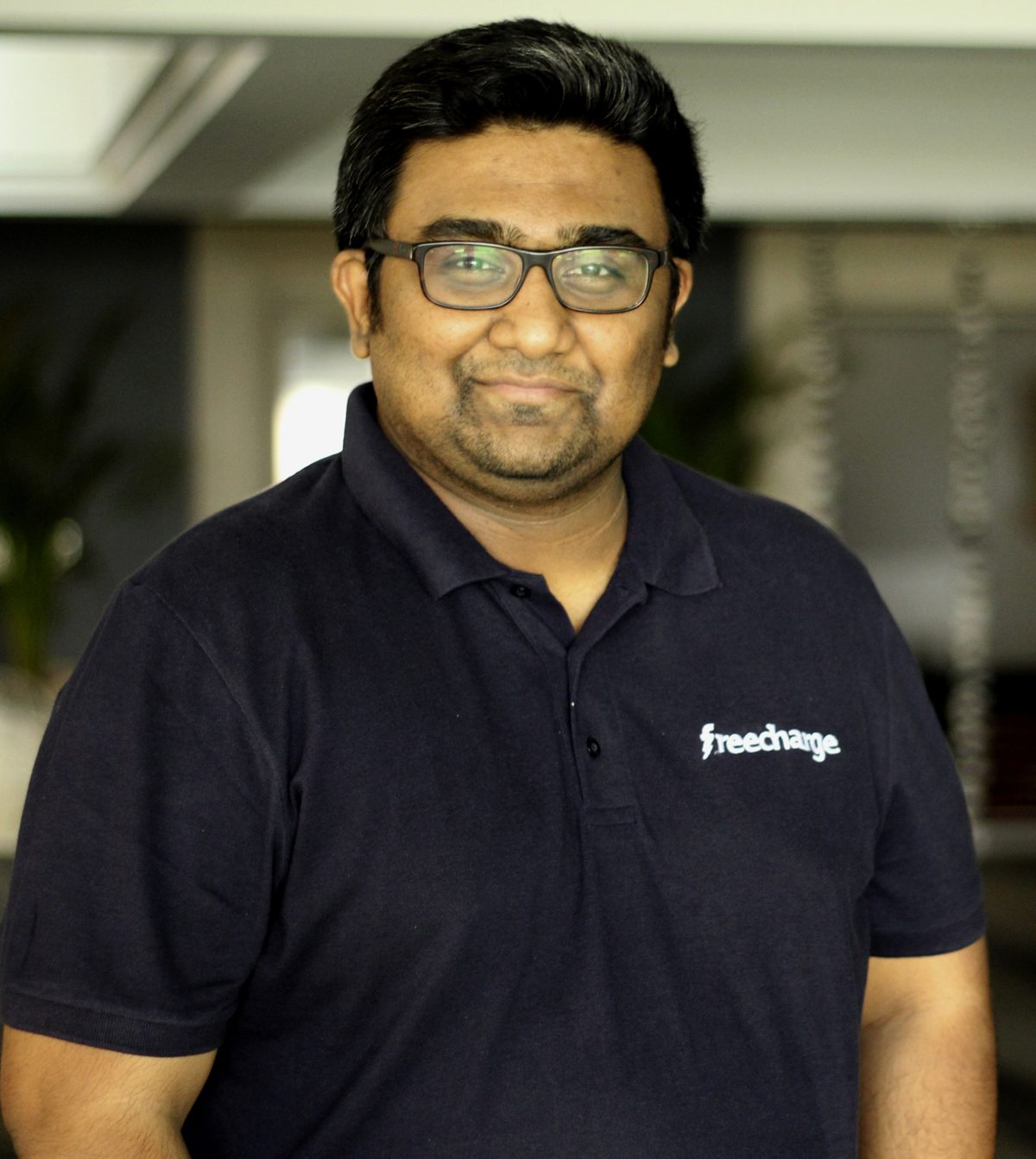
| Key facts | |
|---|---|
| Born | 30 May 1979, Mumbai (most profiles; a few give a later year) [1][73] |
| Family roots | Gujarati Jain business family, south Mumbai; father in pharmaceutical distribution [3][6] |
| Education | BA Philosophy, Wilson College, Mumbai (2000); left part-time MBA at NMIMS (2004) [8][1] |
| Company/Group | Co-founder of FreeCharge (2010); founder of CRED (Dreamplug Technologies, 2018); head of WhatsApp at Meta since June 2026 [14][32] |
| Wealth | Rs 4,005 crore (about US$428 million) per the 360 ONE Wealth Creators List 2026; not a Hurun top-10 name [67] |
| Known for | Selling FreeCharge to Snapdeal in 2015, then India’s biggest startup acquisition; building CRED; backing 260+ startups as an angel; being picked by Mark Zuckerberg to run WhatsApp [18][57][32] |
On 22 June 2026, a 47-year-old philosophy graduate from Mumbai posted a short note on X. “I’m stepping back with gratitude,” Kunal Shah wrote to the team at CRED, the credit-card app he had built over eight years. “As for me, I’ll be joining Meta to lead WhatsApp globally.” [71] The same day Meta said it was putting about US$900 million into CRED, more than all the money the startup had raised before [32][33].
The man now in charge of WhatsApp once sold pirated CDs and mehendi cones in Bombay because his family had lost almost everything. He has said he “could barely speak a sentence of English until I was about 23 or 24 years old” [5]. He never studied engineering and never finished his MBA. His first startup was sold for about Rs 2,800 crore and, two years later, resold for Rs 385 crore [17][19]. His second lost more than Rs 1,000 crore a year for several years before turning its first profitable quarter [40][33].
This is the story of how that happened: the luck, the grind, the big bets, and the criticism along the way.
Where it began
A Gujarati Jain family in Bombay
Kunal Shah was born in Mumbai, most sources say on 30 May 1979 [1][73]. (A few profiles give later years; his graduation from college in 2000 is consistent with 1979 [8].) He grew up speaking Gujarati, Marathi and Hindi, with English coming much later [73][5].
“I came from a Gujarati Jain family in Bombay,” he told an audience at South Park Commons in January 2026. “Most people in my family did business, doing a job is not normal at least in the Jain community.” [3] His father ran a pharmaceutical distribution business in south Mumbai [6][7].
That plan fell apart in his mid-teens. The family business ran into heavy debt and collapsed [5]. “By the time I grew up all the wealth was gone,” Shah said. The family “moved to a 100-foot chawl. I had to start working when I was 14, 15.” [3] Accounts differ on his exact age when the money ran out, between 14 and 16, but he tells the same story every time [3][4][73][74].
Financially independent at 16, “not out of choice”
“I became financially independent when I was 16, and not out of choice,” Shah said on The Ranveer Show. “The family went through a financial crisis so I had no choice but to find my way into it.” [4]
What followed was a run of small, scrappy jobs. He sold pirated CDs and TV series, mixtapes, T-shirts and mehendi (henna) cones. He ran a small cyber cafe and taught computer and internet classes, partly so that he could get online himself [3][4][8]. “I started teaching internet so that I can have access to the internet,” he said [3]. Over time he also imported and resold laptops and took freelance design work [9].
He later said these years taught him sales, because “when you have to make money and survive”, you have to learn to sell [3]. They also shaped how he thinks about money. “Somewhat of my family crisis came from not knowing how to deal with money better,” he told Rest of World in 2021. “When you have not had money all your life, the value that you have for money is what it can do to other people’s lives.” [5]
Why a future fintech founder studied philosophy
Shah had been on the science track but had to drop it [3]. At Wilson College in Mumbai he picked philosophy, not out of love for Kant but because of the timetable. Philosophy was the one course whose classes finished early in the morning, which let him work full time for the rest of the day [3][10]. (He has put the batch at 7 to 9 am; Info Edge founder Sanjeev Bikhchandani, retelling the story in 2024, said 8 to 10 am [3][10].) Bikhchandani wrote that Shah “had to work as a delivery boy and a data entry operator full time” while studying [10].
He finished his BA in 2000 [8]. In 2003 he joined a part-time MBA at NMIMS (Narsee Monjee) in Mumbai and left in 2004, after about a year [11][1]. “I did not attend all my MBA classes. I was completely bored by them. Eventually I dropped out,” he told Open magazine [6]. He did not miss the degree, but he did miss the network: when he started his first company, he said, “I had a hard time hiring two engineers… because I have no alumni to reach out to.” [11]
The first break
A junior programmer who asked too many questions
Around 2000, Shah took a job as a junior programmer at a BPO business owned by the Tandon Group, a Mumbai business family [73][12]. That is where he met Sandeep Tandon, who would become his mentor, backer and co-founder [7][12].
“I was not a very good employee. I always questioned the conventional,” Shah admitted in 2015. “I was lucky that my boss believed that I was headed somewhere. So, I did have some freedom to execute my own ideas.” [6] He rose to run the business for the group [12].
PaisaBack: profitable, but too small
In 2008 Shah and Tandon set up Accelyst Solutions Pvt Ltd in Mumbai, the company that would later run FreeCharge (incorporated 29 July 2008, according to Ministry of Corporate Affairs data) [75]. Its first product, launched around 2009, was PaisaBack, a cashback and discount scheme that sent shoppers to organised retailers such as McDonald’s, Barista, Domino’s and Croma [1][7].
PaisaBack made money from early on, and that profit later helped pay for the next idea [13]. But it was a small, crowded business, competing with coupon sites and group-buying startups. The insight that changed everything came from a client. One mobile phone shop made nearly all its revenue not from handsets but from prepaid recharges [14]. Shah also noticed that it was hard to pull shoppers into ordinary stores, yet phone shops were always crowded [6].
FreeCharge: free coupons for every recharge
What if topping up your prepaid phone online also got you coupons worth the same amount? Shah spent months testing the idea. “I stood in malls and surveyed more than 2,000 people,” he recalled, estimating about 500 hours of research before launch [13]. Signing on telecom operators and retail partners took “almost a year” [6].
FreeCharge.in went live on 15 August 2010, with four mobile operators and two coupon partners. In its first two months it handled 500 to 1,000 transactions a day [6][14]. Shah described it as “a marketing company that uses recharge as a medium” [14]. He saw something bigger, though: “I saw recharge as the gateway to a transacting India.” [9]
It was not smooth. The site crashed often, some operators blocked it, and the first technology head did not last. “Coming from a non-tech background, getting a good tech team in place was a herculean task,” Shah said [13]. By late 2012 the company was close to running out of money [12].
The break came from Sequoia Capital. Shailendra Singh of Sequoia India later wrote that his firm approached FreeCharge in December 2010 and January 2011, when it was already doing about 14,000 transactions a day without spending on marketing [12]. Sequoia and the Tandon Group put in seed money, and in January 2012 Sequoia led a Series A of about US$3.9 million (around Rs 20 crore) [14][1]. By November 2012 Shah was claiming about 40,000 transactions a day [14].
Building the empire
FreeCharge’s sprint to a big exit, 2013-2015
In 2013 FreeCharge moved its base from Mumbai to Bengaluru. Shah did something unusual: he stepped aside as CEO so that Alok Goel could run the company, giving up some of his own equity to make it work, and moved to marketing [12][14]. The money kept coming. In September 2014 FreeCharge raised US$33 million from Sequoia, Sofina and Ru-Net, and in February 2015 it raised US$80 million in a round led by Tybourne Capital and Valiant Capital [15][16].
By the spring of 2015 the app had more than 20 million registered users, and more than 85% of transactions came from mobile phones [17]. It had about 200 employees, had raised about US$120 million and still had more than US$80 million in the bank [18].
On 8 April 2015, the e-commerce company Snapdeal agreed to buy FreeCharge. The price was never officially disclosed. It was reported at about Rs 2,800 crore (roughly US$400-450 million), mostly in Snapdeal stock with a small cash portion [17][18][14]. It was the biggest acquisition India’s startup world had seen [14]. Shah, then in his mid-thirties, became a wealthy man on paper, and much of the payout was in shares of a company that was not listed.
After the sale: chairman, adviser, angel
Shah stayed on. When Goel left, he took back the CEO role; FreeCharge launched its wallet in October 2015 [14]. In May 2016 Govind Rajan became CEO and Shah became chairman [21][14]. In January 2016 he was also appointed chairman of the Internet and Mobile Association of India (IAMAI), the industry body [22]. In February 2017 he took an advisory role at Sequoia Capital India, mentoring its portfolio companies [23]. The Economic Times Startup Awards named him “Comeback Kid of the Year” in 2016 [1].
He also began writing cheques. By February 2017 he had made about 20 angel investments, including in Unacademy [23]. This would become one of the most prolific angel portfolios in India (more on that below).
Three quiet years, and a big idea about trust
FreeCharge’s decline under Snapdeal (see “The setbacks and failures”) left Shah, by his own description, adrift. “I felt my purpose was stolen and I had nothing to look forward to,” he told The Ken in 2020 [76]. He spent roughly 2015 to 2018 reading, investing and thinking about what India’s digital economy lacked [35][36].
The answer he arrived at was trust. In a country where people did not trust each other in transactions, he argued, the few signals of trust became valuable. A good credit score was one of them. “Credit scores democratize trust in some ways,” he said [5]. “In whichever nation there is mistrust, there is a concentration of trust.” [61] The plan was to gather India’s most creditworthy people, those who pay their bills on time, into one club, reward them, and then sell them financial products.
CRED launches, 2018
Shah founded CRED in 2018 through a Bengaluru company called Dreamplug Technologies, putting in about US$1 million of his own money to start [35][2]. Before the app opened, he raised a US$30 million seed round from Sequoia India, Ribbit Capital, DST Global, Ru-Net, Lakestar and Morningside, among others [24]. Early access opened in November 2018, with 38 brand partners and about 35 banks on board. Only people with a credit score above 750 could join [24].
The hook was simple: pay your credit-card bill through CRED and earn “CRED coins” that could be redeemed for rewards. The bill payments themselves made little money; the value lay in the members. “We are a lifestyle company,” Shah said in 2019 [61].
Raising money at speed, 2019-2022
Investors liked the idea that CRED had signed up India’s richest card users. The funding came quickly:
| Date | Round | Amount | Valuation (post-money) | Lead investors |
|---|---|---|---|---|
| 2018 | Seed | US$30 million | n/a | Sequoia India, Ribbit, DST and others [24] |
| Aug 2019 | Series B | US$120 million | about US$450 million | Sequoia, Ribbit, Gemini [25] |
| Jan 2021 | Series C | US$81 million | US$806 million | DST Global partners [26] |
| Apr 2021 | Series D | US$215 million | US$2.2 billion | Falcon Edge, Coatue [27] |
| Oct 2021 | Series E | US$251 million | US$4.01 billion | Tiger Global, Falcon Edge [28] |
| Jun 2022 | Series F | US$140 million | US$6.4 billion | GIC [29] |
| Jun 2025 | Series G | about US$72 million (Rs 617 crore) | about US$3.5 billion | GIC [30][31] |
| Jun 2026 | Series H | about US$900 million (Rs 8,550 crore) | about US$4.5 billion | Meta [32][33] |
In April 2021 CRED became a unicorn, with more than 6 million members, about 22% of India’s credit-card holders and 35% of premium card holders [27]. By October 2021 it had 7.5 million members and handled about a quarter of India’s credit-card bill payments [28]. Unusually for a young startup, CRED repeatedly bought back shares from employees; its first buyback, of about US$1.2 million, came with the January 2021 round, and by 2026 it had announced its fifth [26][33].
Rahul Dravid, “Indiranagar ka gunda” and the IPL
CRED spent heavily to become a household name. It was an official sponsor of the Indian Premier League from 2020 to 2023 [2]. Its ads used familiar faces in odd, funny roles: Anil Kapoor, Bappi Lahiri, Govinda and others. The most famous, released on 9 April 2021, showed the famously calm Rahul Dravid losing his temper in a traffic jam and shouting “I am the Indiranagar ka gunda!” [45] It became one of the most talked-about ads of that IPL season.
The marketing was expensive. In FY22, CRED spent about Rs 975 crore on marketing, including the IPL [37].
From bill payments to a financial supermarket
Bill payments alone could not pay the bills. So CRED kept adding things to sell to its members [2]:
- Payments: RentPay to pay rent by credit card (2020), CRED Pay for paying merchants, UPI payments and, in March 2026, biometric UPI.
- Credit: CRED Cash personal loans with partner lenders; CRED Mint, a peer-to-peer lending product with LiquiLoans; and personal loans with L&T Finance (2024).
- Shopping and lifestyle: CRED Store and travel offers.
- Insurance and cars: CRED Garage, with a motor insurance licence from IRDAI (2024).
- Investing: in February 2024 CRED bought Kuvera, a mutual fund platform with more than US$1.4 billion of assets and about 300,000 users [42].
It also bought companies. In December 2021 it agreed to acquire Happay, a corporate expense-management startup, for about US$180 million in cash and stock [41]. Happay was later sold to MakeMyTrip in November 2024 [2]. Smaller deals included HipBar, CreditVidya and Spenny [2].
The numbers: big growth, big losses
CRED’s accounts, filed with the Registrar of Companies, show a business that grew fast while losing a lot of money [37][38][39][40]:
| Year | Operating revenue | Net loss |
|---|---|---|
| FY20 | under Rs 1 crore | Rs 360 crore [2] |
| FY21 | Rs 88.6 crore | Rs 524 crore [37] |
| FY22 | Rs 393.5 crore | Rs 1,279 crore [37] |
| FY23 | Rs 1,400.6 crore | Rs 1,347 crore [38] |
| FY24 | Rs 2,473 crore | Rs 1,644 crore [39] |
| FY25 | Rs 2,735 crore | Rs 1,457 crore [40] |
The trend under the surface improved. The operating loss, which excludes items such as share-based pay and other accounting charges, fell from Rs 1,024 crore in FY23 to Rs 609 crore in FY24 and Rs 298 crore in FY25 [38][39][40]. (Data from Tofler cited by Outlook Business gives a different FY25 net loss of Rs 1,692 crore, probably reflecting a different set of accounts [36].) By FY25, CRED said it had 1.26 crore monthly transacting users, Rs 8.5 lakh crore of payments flowing through the app, and about Rs 22,000 crore of loans arranged through its platform [40].
In June 2026 the company said annual revenue had reached about Rs 3,200 crore and that it had made a profit for the first time in the January-March 2026 quarter [33]. Those FY26 figures were not yet in filed accounts as of October 2026.
In March 2026 the Reserve Bank of India gave CRED’s payments arm, Dreamplug Paytech Solutions, final authorisation as an online payment aggregator, letting it process merchant payments in its own right [44].
India’s busiest angel investor
Alongside CRED, Shah became the most active founder-investor in India. In FY22 alone he made 58 pre-Series A investments, the most of any angel in the country [58]. In June 2024, data firm Tracxn ranked him India’s top startup founder-investor, with more than 266 startups in his portfolio, including Razorpay, Unacademy and Spinny, and 11 unicorns [57]. Inc42 counted at least 309 startups and 14 unicorns by June 2026 [59]. Other reported holdings include Khatabook, Shiprocket, Rapido, CoinSwitch and Jupiter [57][68]. In August 2021 he joined the board of Pine Labs, the payments company [66].
Meta knocks: WhatsApp, 2026
On 22 June 2026 came the surprise. Meta said Shah would lead WhatsApp globally, succeeding Will Cathcart, who had run it since 2019 and moved to a new role at Meta [32]. In the same announcement Meta led a Rs 8,550 crore (about US$900 million) Series H in CRED, partly new money and partly buying out earlier investors such as Peak XV, Ribbit, RTP Global and Tiger Global, at a post-money valuation of about Rs 43,239 crore (about US$4.5 billion) [33][32]. Inc42 reported roughly US$500 million of the round as fresh capital [33].
Mark Zuckerberg said Shah had “built CRED into one of India’s most important technology companies” [32]. In October 2026, on the Cheeky Pint podcast, Zuckerberg called him “one of the top Indian entrepreneurs” and said he wanted to add “entrepreneurial energy” to WhatsApp, which he felt was underserved [70].
Shah and Meta both said Meta was a minority investor in CRED, with “no access to member data” [71][34]. Outlook Business reported that Meta did not take a board seat [69].
How the wealth is held
Shah’s fortune is mostly paper wealth in a private company. According to filings reported by Outlook Business in July 2026, he owns about 20% of CRED, partly in his own name and partly through his family office, QED Innovation Labs LLP [36]. On 22 June 2026 he reclassified his 11.14% personal holding from promoter to public shareholding and left the board, so CRED now has no promoter [36]. At the latest valuation, a stake of that size would be worth several thousand crore rupees, but it is not listed and cannot easily be sold.
The rest is spread across his angel portfolio and what remained of the FreeCharge payout. The 360 ONE Wealth Creators List 2026 put his wealth at Rs 4,005 crore (about US$428 million) [67]. Other figures circulating in the media, from “over US$500 million” to Rs 15,000 crore, have no named source; Business Today noted in June 2026 that there is “no authoritative public estimate” [68]. No evidence was found that he appears on the M3M Hurun India Rich List 2026.
The setbacks and failures
FreeCharge: from Rs 2,800 crore to Rs 385 crore
The FreeCharge sale made Shah’s name, but the company’s life inside Snapdeal went badly. Snapdeal itself ran short of cash in 2016-17, and FreeCharge lost ground to Paytm, which grew hugely after the November 2016 demonetisation [20]. Govind Rajan left as CEO in February 2017, and Snapdeal’s parent, Jasper Infotech, kept putting in money to keep FreeCharge going [21][14]. A planned sale to Paytm fell through [20].
On 27 July 2017 Axis Bank told the stock exchanges it was buying 100% of FreeCharge for Rs 385 crore in cash, about US$60 million [19][20]. Business Today called the price “almost 90 per cent lower” than what Snapdeal had paid two years earlier [19]. FreeCharge’s revenue at the time was Rs 67.2 crore [20].
Shah defended the company in a Facebook post. “We chose to merge,” he wrote; the merger “didn’t work out as planned for several reasons”, but FreeCharge “grew 3x on almost all metrics post exit with low capital at hand” [20]. Media critic Nikhil Pahwa of MediaNama wrote that FreeCharge had “failed to capitalise on demonetization growth” [20]. Because much of Shah’s payout was in Snapdeal shares, the collapse cut into his own winnings too.
Early stumbles
The FreeCharge years began with their own failures: a site that kept crashing, operators that blocked the service, and a near-empty bank account in late 2012 [12][13]. Shah has said that, as a non-engineer without a campus network, hiring was the hardest part [11].
Newtap Finance: a lending licence that did not come
In 2021 Shah bought a small non-banking finance company, Parfait Finance, renamed Newtap Finance, so that CRED could lend directly. CRED held 23.6% and applied to the RBI to raise its stake. In August 2023 the RBI rejected the application. Mint reported that the regulator cited “corporate governance/management” concerns [43]. CRED kept lending through partner banks and NBFCs instead. (Details are in the controversies section.)
Losing products to rule changes
Several of CRED’s products were hurt by industry-wide RBI rules. From 1 July 2024, credit-card bill payments had to run through the Bharat Bill Payment System; for a few weeks, cardholders of banks that had not yet joined, including HDFC Bank and Axis Bank, could not pay through CRED, PhonePe or Paytm [50][51]. In September 2025, new payment-aggregator rules led CRED, PhonePe and Paytm to stop rent payments by credit card, one of CRED’s early products [52][53]. These were not actions against CRED, but they hit its core business.
Happay layoffs and exit
In May 2023 Happay, the expense-management company CRED had bought for about US$180 million, laid off more than 150 people in a restructuring; CRED declined to comment [54]. Happay was sold to MakeMyTrip in November 2024 for an undisclosed price [2].
A down round
CRED’s valuation peaked at US$6.4 billion in June 2022 [29]. As startup funding dried up, it fell. In June 2025 CRED raised about Rs 617 crore (about US$72 million) at roughly US$3.5 billion, about 45% below the peak, according to filings reported by Inc42 and Entrackr [30][31]. Shah backed his own company in the round: his vehicle QED Innovation Labs put in Rs 162.1 crore [31]. The Meta-led round a year later lifted the valuation to about US$4.5 billion, still below the 2022 high [32].
Controversies and allegations
No court judgment, SEBI, ED, CBI or income-tax order against Kunal Shah personally was found in public records reviewed for this profile, and no RBI penalty against CRED’s operating company was found. The debates around him are about business strategy, a regulatory decision, and his public remarks.
CRED’s losses and the “where is the business model?” debate (2020-2025)
Allegation: Critics questioned whether CRED could ever make money. In October 2020 The Ken questioned the return on CRED’s IPL sponsorship, reported at about Rs 120 crore for three seasons, for a membership of a few million affluent users [46]. Net losses rose from Rs 524 crore in FY21 to Rs 1,644 crore in FY24 [37][39]. In 2023 Inc42 noted the irony of Shah defending loss-making fintechs while running one [49].
Response: Shah argued that loss-making companies had built the market. “Unless we had these loss-making companies, we would have not seen the fintech growth,” he said at the Global Fintech Fest in September 2023 [49]. CRED pointed to its falling operating losses and said growth came from “a sharp focus on high-quality users” [39].
What happened next:
- Operating losses fell by more than half between FY24 and FY25 [40].
- In June 2026 CRED said it had reported its first profitable quarter, January-March 2026 [33].
Status: CRED was still loss-making at the net level in its latest filed accounts (FY25). Its claimed first profitable quarter had not yet appeared in filed annual accounts as of 20 October 2026.
The Rs 15,000 salary row (2023)
Allegation: In February 2023 Shah said in an Instagram Q&A that his salary at CRED was Rs 15,000 a month [47]. Some users on social media called it a stunt or a tax-saving move, since founders gain mainly through shares; HR Katha and Business Today reported the criticism [48][47].
Response: Shah said, “I don’t believe I should get a good salary till the company is profitable,” adding that he could live on it because he had sold FreeCharge [47].
Status: No rule was broken and no regulator was involved. The debate was about optics.
The RBI rejects CRED’s bigger stake in Newtap Finance (2023)
Allegation: CRED applied to the RBI to raise its holding in Newtap Finance, an NBFC Shah had bought in 2021, in a deal that would have taken his holding to 76%. In August 2023 the RBI turned down the application. Mint reported that it cited “corporate governance/management” issues; the RBI did not publish detailed reasons [43].
Response: No detailed public response from CRED was found in the reports reviewed.
Status: Closed. The RBI did not impose any penalty. CRED continued to arrange loans through partner lenders, and in March 2026 it received a separate RBI authorisation as a payment aggregator [44].
RBI rule changes on card payments (2024-2025)
Allegation: This was not an allegation against CRED but a regulatory clampdown that hit its business. The RBI required credit-card bill payments to be routed through BBPS from 1 July 2024 [50], and its September 2025 payment-aggregator rules led apps including CRED to suspend credit-card rent payments, which needed landlords to be verified merchants [52][53].
Response: CRED did not comment to Entrackr or Inc42 on the rent-payment halt [52][53].
What happened next:
- Banks that had not yet joined BBPS were expected to go live within weeks of the July 2024 deadline [51].
- CRED received final RBI authorisation as an online payment aggregator in March 2026 [44].
Status: Industry-wide rules; no action specific to CRED. Whether CRED has restarted credit-card rent payments was not confirmed in public reporting as of 20 October 2026.
Public remarks that drew criticism (2023 and 2026)
Allegation: In October 2023, after Infosys founder N. R. Narayana Murthy suggested young Indians should work 70 hours a week, Shah said on a podcast that “no big achievement can come with work-life balance”, and spoke admiringly of China’s “9-9-6” work culture, as reported by Business Today [55]. In May 2026, remarks attributed to him at an investor event suggesting Indians did not value time, and that Indian languages lacked words for efficiency, were rebutted by author Nityananda Misra, ThePrint reported [56].
Response: No public response from Shah to these criticisms was found in the reports reviewed.
Status: Matters of opinion; no legal or regulatory issue.
As of 20 October 2026, none of these matters involves a pending case against Kunal Shah.
Giving back
Shah has not made a large, named personal philanthropic pledge, and no such pledge was found in public reporting; The CSR Journal noted in June 2026 that it had found no personal philanthropic activity on record [72].
CRED did run donation drives during the Covid-19 pandemic. In the first wave, members donated CRED coins to fund more than 300,000 masks. In April 2021, during the second wave, CRED partnered with crowdfunding platform Milaap so that members could turn coins into oxygen supplies; Shah tweeted that “when we come together as a collective force, we can emerge from this crisis” [64].
His larger contribution has been to other founders. Through hundreds of angel cheques, many of them at the earliest and riskiest stage, he has helped fund companies such as Razorpay, Unacademy and Khatabook [57][58]. He also shares ideas freely: his talks and podcasts, and CRED’s YouTube interview series CRED Curious, are widely watched by young Indian founders [59].
His ideas, in his own words
Shah is unusual among Indian founders for thinking out loud in public, and some of his ideas are now startup folklore.
The Delta 4 theory. At YourStory’s TechSparks in 2016 he explained a test for products that win. Rate the efficiency of the old way and the new way on a scale of one to ten. “And every time you hit a Delta of four, you’ve hit the perfect efficiency scale,” he said. Lenny’s Podcast later summed it up as a product at least four points better than what it replaces [65]. “Build products to solve an inefficiency,” he said, and “When you get an idea, don’t build the product. If you build it, you have a vested interest.” [60]
Insight as a unit of truth. On Shane Parrish’s The Knowledge Project in 2022 he said, “I believe the insight is the smallest unit of truth that is actionable.” [62] On trust and innovation: “If it becomes too similar, innovation dies. If it becomes too dissimilar, trust dies.” [62]
On India. “I say our country is going to be built by cohorts of 20 to 25 million people each,” he told Rest of World, and “High income doesn’t make you financially literate. High income is just high income.” [5]
On being different. “Founders that try to fit in don’t raise the bar,” he said in 2019. “If you want to be an outlier, don’t try to fit in.” And: “Fighting headwinds never creates value, you only burn fuel.” [9]
Succession
Shah’s move to Meta forced CRED’s succession question earlier than anyone expected. Miten Sampat, who had led CRED’s strategy and finance since 2020, became interim CEO with immediate effect in June 2026 [32]. Sampat called it a “generational opportunity to build on Kunal’s vision” [69]. CRED said its board and leaders were “in the process of constituting the right leadership structure towards eventual IPO” [32][69].
As recently as September 2025, Shah had said CRED was “too young” to think about listing [63]. As of 20 October 2026, no listing timeline, draft prospectus or bankers had been publicly reported. Shah keeps his shareholding, so CRED’s future will still matter a great deal to his own wealth [36].
What their journey teaches
Hardship can become an advantage, if you learn from it. Shah did not choose to start working at 15. But selling CDs and teaching internet classes taught him sales, cash management and how ordinary customers think, years before any business school could have [3][4]. His later focus on financial trust grew directly out of a family crisis that, he says, came partly from “not knowing how to deal with money better” [5].
Pick what lets you keep going. He chose philosophy because the classes ended early enough for him to work, not because it looked good on a CV [10]. That practical choice gave him a training in asking “why?” that he still credits for his ideas [3].
Look at where people already gather. FreeCharge came from noticing that phone shops were busy while other stores were empty, and that one client earned almost everything from recharges [6][14]. The best opportunities often hide in a customer’s own numbers.
Be willing to step aside. In 2013 he gave up the FreeCharge CEO job and some of his equity to bring in someone he thought could run it better [12]. In 2026 he handed CRED to his finance chief to take a bigger job [32]. Founders who confuse the title with the company rarely do either.
A big exit is not the finish line. FreeCharge’s resale at Rs 385 crore showed how fast value can vanish when the buyer struggles, and how much of a founder’s “wealth” can be paper [19][20]. Shah’s answer was to start again, and to put his own money into CRED’s down round in 2025 [31].
Growth and profit are different achievements. CRED became famous and valuable long before it made money, and its critics had a point [46][39]. Its first profitable quarter, eight years in, came only after it cut operating losses sharply [33][40]. Readers comparing businesses can explore more on reading company results in CapitalVia’s Insights section.
A profile for general reading, based on public records and reporting as of 20 October 2026. Not investment, tax or legal advice.
Sources (75)
- Kunal Shah - Wikipedia, Oct 2026
- Kunal Shah: How asking 'Why?' changes what you build (South Park Commons India talk transcript) - CEO Interviews, Jan 2026
- Kunal Shah on The Ranveer Show (transcript) - CEO Interviews, Jun 2026
- India, according to Kunal Shah - Rest of World, Jan 2021
- Kunal Shah, founder and CEO, FreeCharge - Open Magazine, Nov 2015
- Writing a success story - Man's World India, Sep 2015
- Podcast with Kunal Shah - Prime Venture Partners, Sep 2016
- Kunal Shah on his entrepreneurial journey (Insights Podcast) - YourStory, Mar 2019
- Why Kunal Shah studied philosophy - OfficeChai, Feb 2024
- I'm a philosophy major, had a hard time hiring engineers: CRED's Kunal Shah - Business Today, Oct 2023
- How FreeCharge found its mojo - Founding Fuel, Apr 2015
- #NaaSeHaanTak: Kunal Shah - YourStory, May 2016
- The FreeCharge story - YourStory, Aug 2017
- FreeCharge raises Series B funding - YourStory, Sep 2014
- FreeCharge raises $80 million from Valiant and Tybourne - MediaNama, Feb 2015
- Deal done: Snapdeal proposes, FreeCharge accepts - MediaNama, Apr 2015
- Snapdeal acquires FreeCharge - YourStory, Apr 2015
- Axis Bank acquires FreeCharge for Rs 385 crore - Business Today, Jul 2017
- Axis Bank buys FreeCharge for $60 million cash: our take - MediaNama, Jul 2017
- Govind Rajan quits FreeCharge - Inc42, Feb 2017
- IAMAI appoints FreeCharge's Kunal Shah as chairman - MediaNama, Jan 2016
- Kunal Shah joins Sequoia Capital as advisor - YourStory, Feb 2017
- How CRED started: the backstory - YourStory, Nov 2018
- Kunal Shah's CRED raises US$120 million in Series B - Entrepreneur India, Aug 2019
- India's CRED raises $81 million, buys back shares from employees - TechCrunch, Jan 2021
- India's CRED valued at $2.2 billion in new $215 million fundraise - TechCrunch, Apr 2021
- CRED raises $251 million in Series E, valuation doubles to $4.01 billion - Business Today, Oct 2021
- CRED raises Series F funding led by GIC - YourStory, Jun 2022
- CRED set to raise $75 million at $3.5 billion valuation led by GIC - Entrackr, May 2025
- CRED raises Rs 617 crore in down round - Inc42, Jun 2025
- WhatsApp gets new chief as Meta taps India's CRED founder Kunal Shah and invests $900M in startup - TechCrunch, Jun 2026
- Meta's $900 Mn CRED deal and why Kunal Shah stepped away - Inc42, Jun 2026
- Kunal Shah leaves CRED for top role at WhatsApp - Inc42, Jun 2026
- WhatsApp gets a new boss: Kunal Shah to lead platform as Meta bets $900 million on CRED - Business Today, Jun 2026
- WhatsApp global CEO Kunal Shah exits CRED promoter role - Outlook Business, Jul 2026
- CRED's FY22 loss surges 2.4x to Rs 1,279 crore - Inc42, Feb 2023
- CRED's revenue spikes 3.5x to Rs 1,400 crore in FY23 - Entrackr, Oct 2023
- CRED nears Rs 2,500 crore revenue in FY24, cuts operating losses by 41% - Entrackr, Sep 2024
- CRED reports Rs 2,735 crore revenue in FY25, operating losses fall 51% - Entrackr, Jan 2026
- CRED to acquire corporate spend management platform Happay - Business Today, Dec 2021
- CRED acquires mutual fund startup Kuvera in wealth management push - TechCrunch, Feb 2024
- RBI blocks CRED's attempt to increase stake in Newtap Finance - Inc42, Aug 2023
- RBI clears CRED to become payments aggregator - The Week, Mar 2026
- Rahul Dravid aka 'Indiranagar ka gunda' hits it out of the park in CRED's new IPL ad - exchange4media, Apr 2021
- CRED in the IPL: sixer or hit wicket? - The Ken, Oct 2020
- My salary is...: CRED's Kunal Shah reveals how much he earns per month - Business Today, Feb 2023
- CEO of CRED reveals salary, gets criticised - HR Katha, Feb 2023
- Fintech sector wouldn't have achieved current growth without loss-making companies: Kunal Shah - Inc42, Sep 2023
- Credit card users can still use third-party apps for repayment - Business Standard, Jul 2024
- BBPS credit card activation: banks expect 3-4 weeks for integration - Business Standard, Jul 2024
- CRED, PhonePe, Paytm stop rent payments via credit cards - Entrackr, Sep 2025
- PhonePe, Paytm, CRED halt rent payments via credit cards - Inc42, Sep 2025
- Startup layoffs: CRED-owned Happay fires over 150 employees - Business Today, May 2023
- No big achievement can come with work-life balance: CRED's Kunal Shah - Business Today, Oct 2023
- WhatsApp CEO Kunal Shah and Nityananda Misra - ThePrint, Jun 2026
- CRED's Kunal Shah is India's top startup founder-investor - Business Standard, Jun 2024
- Kunal Shah leads pre-Series A angel investments in FY2022 - YourStory, Apr 2022
- Kunal Shah and the WhatsApp acid test - Inc42, Jun 2026
- Kunal Shah at TechSparks: the Delta 4 theory - YourStory, Oct 2016
- Kunal Shah on CRED's funding and building a high-trust community - YourStory, Aug 2019
- Kunal Shah: Core human motivations (The Knowledge Project #141) - Farnam Street, Jun 2022
- CRED too young for IPO, says Kunal Shah - BestMediaInfo, Sep 2025
- CRED partners with Milaap for Covid oxygen drive - Inc42, Apr 2021
- Kunal Shah on winning in India, second-order thinking and the philosophy of startups - Lenny's Podcast, Mar 2024
- CRED founder Kunal Shah joins the board of Pine Labs - People Matters, Aug 2021
- Kunal Shah - 360 ONE Wealth Creators List 2026: Future Business Leaders India - 360 ONE, Oct 2026
- Kunal Shah net worth: CRED founder takes charge of WhatsApp globally - Business Today, Jun 2026
- CRED gets $900 million and loses its founder: what comes next - Outlook Business, Jun 2026
- Mark Zuckerberg reveals why he hired Kunal Shah to lead WhatsApp - Inshorts, Oct 2026
- CRED founder Kunal Shah to join as WhatsApp's next global CEO - NewsGram (IANS), Jun 2026
- What WhatsApp's new chief Kunal Shah is worth - The CSR Journal, Jun 2026
- Kunal Shah named global head of WhatsApp - The Global Indian, Jun 2026
- From delivery boy to WhatsApp chief: the journey of Kunal Shah - Business Today, Jun 2026
- Accelyst Solutions Private Limited company details (MCA data) - RegisterKaro, Oct 2026
- The Interview: Kunal Shah - The Ken, Aug 2020