
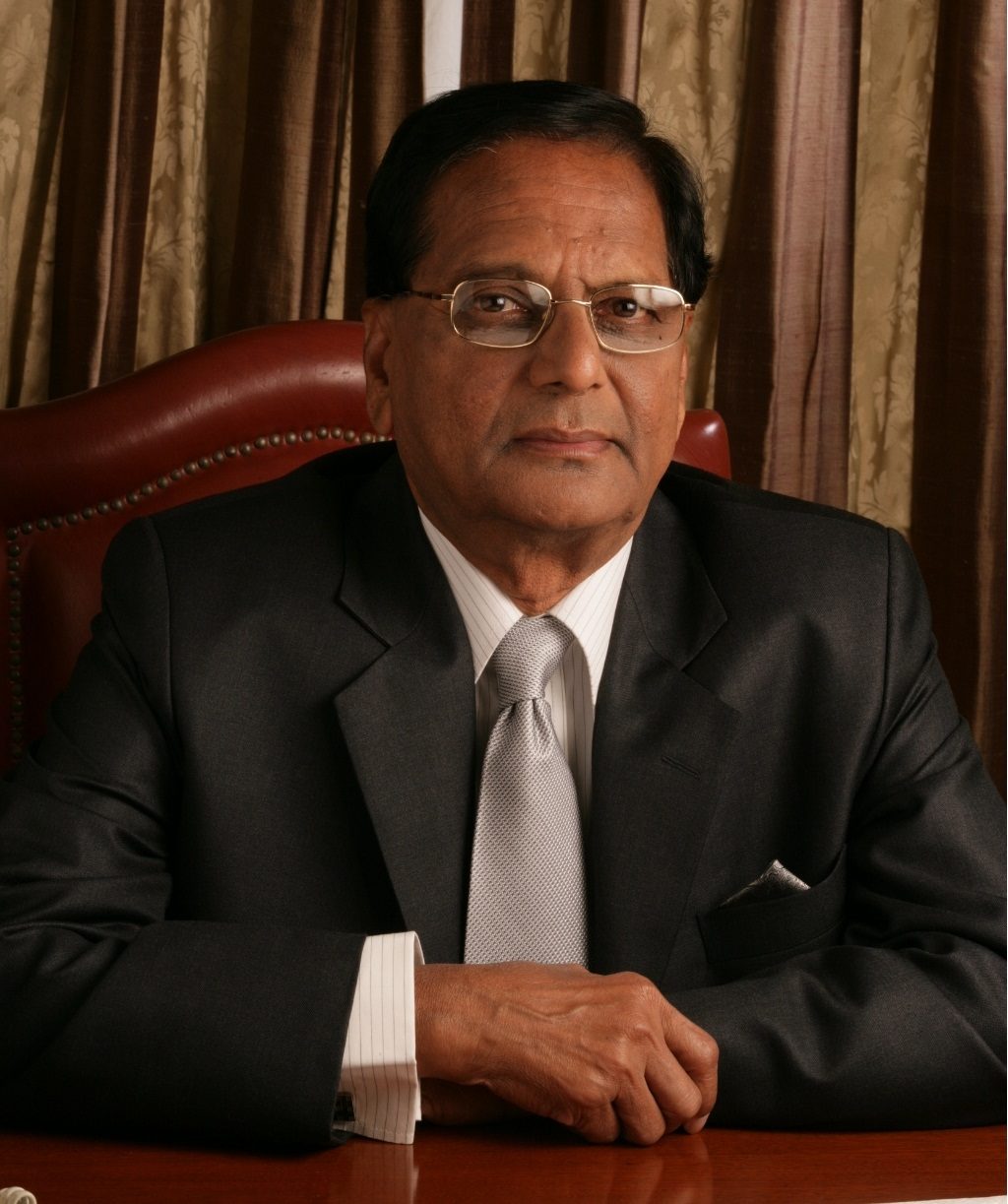
| Key facts | |
|---|---|
| Born | 1941, Tadepalli, Guntur district, Andhra Pradesh (sources give 1939 to 1941) [22] [14] [19] |
| Died | 15 March 2013, Hyderabad [1] [54] |
| Family roots | Son of a turmeric farmer in the Krishna delta [22] [26] |
| Education | B.Sc., Andhra Christian College, Guntur; B.Sc. (Tech), UDCT Bombay; PhD, chemical engineering, National Chemical Laboratory, Pune (University of Bombay) [26] [1] [5] |
| Family | Wife Samrajyam; son K. Satish Reddy (chairman, Dr. Reddy’s); daughter Anuradha, married to G.V. Prasad (co-chairman and MD) [54] [57] |
| Company | Dr. Reddy’s Laboratories, Hyderabad: founder (1984) and chairman until 2013 [1] |
| Wealth | US$1.4 billion, No. 37, Hurun India Rich List 2012 [14]; US$1.5 billion with family, Forbes, March 2013 [15] |
| Known for | Taking an Indian generic drug maker global, and betting early that India could discover its own medicines |
In July 1969, men walked on the moon. In Hyderabad, a young chemist a year or so out of his PhD, working at the state-owned Indian Drugs and Pharmaceuticals Ltd, followed the news closely. He later wrote that watching men walk into the unknown made him want to do the same [27].
His reasoning was practical as well as romantic. “I am doing all this hard work for a few rupees,” he said years later, “but if I become an entrepreneur… and if my technology is as good as western technology, then I could make money from day one” [24].
That chemist was Kallam Anji Reddy. The company he started in 1984 with about Rs 25 lakh [22] [24] became Dr. Reddy’s Laboratories. By the year he died, it had revenue of Rs 11,626 crore [25]. It was the first Indian company to license a new drug molecule to a foreign drug maker [24] [22], and the first drug maker from Asia-Pacific outside Japan to list on the New York Stock Exchange [24] [1].
He was also a man who never quite got what he most wanted. He dreamed of an Indian company discovering a new medicine from scratch. His molecules came close, then failed in trials, one after another. He called his memoir An Unfinished Agenda [19].
This is the story of how a turmeric farmer’s son built one of India’s best-known drug companies, what went wrong along the way, and what the public record says.
Where it began
Turmeric fields and a first light bulb
Anji Reddy was born in Tadepalli, a village in Guntur district on the banks of the Krishna, across the river from Vijayawada [67] [27]. Sources disagree on the year. His publisher, Penguin, and the Business Today obituary give 1941 [19] [22]. The Hurun India Rich List 2012 listed him as 71 that September, which fits 1941 [14]. Business Standard’s review of his memoir gives 1940 [28].
His father grew turmeric [22] [15]. “I grew up playing in turmeric fields,” Reddy told BioSpectrum in 2012 [26]. Dr. Reddy’s own account adds that his father also made herbal pills and gave them to people who needed them [3]. Reddy said he first saw electricity at the age of 12 [26].
From chemistry to chemical engineering
He went to the local high school and then to Andhra Christian College in Guntur, where he finished a B.Sc. in 1958 [26]. Chemistry caught him there [27].
He moved to Bombay for a B.Sc. (Tech) in pharmaceuticals and fine chemicals at the University Department of Chemical Technology (UDCT), now the Institute of Chemical Technology [1] [3]. As a student, he later wrote, he dreamed of building a factory like Pfizer’s [27].
Next came a doctorate at the National Chemical Laboratory in Pune. The NCL library’s thesis record lists “Kinetic study of the catalytic oxidation of toluene” by K.A. Reddy, submitted to the University of Bombay in March 1968 in chemical engineering. His supervisor was L.K. Doraiswamy, one of India’s leading chemical engineers [5]. Several later profiles give 1969 as the year [26].
The training mattered. Most Indian drug companies then were run by traders or pharmacists. Reddy was a process engineer. He knew how to take a chemical reaction from a flask to a reactor, and how to make it cheaper at each step. That skill became the foundation of everything he built.
Six years at IDPL
After his PhD he joined Indian Drugs and Pharmaceuticals Ltd (IDPL) in Hyderabad, the government drug maker set up with Soviet help [25] [22]. Accounts give the dates as roughly 1969 to 1975 [25]; Dr. Reddy’s own account says he spent six years there [3].
“My experience in IDPL formed the bedrock of my career,” he said [26]. In his memoir he wrote that he “learnt the tricks of the trade” there [27]. IDPL trained a whole generation of Hyderabad chemists. Many of them, including some who worked with Reddy, later set up their own firms. That is a large part of why Hyderabad became India’s bulk-drug capital.
The first break
Two ventures, two bitter splits
Reddy’s first company was Uniloids, set up in the mid-1970s (accounts give 1974 or 1976) [24] [22]. It made metronidazole, an anti-infective, from basic raw materials and sold it to the makers of popular brands [27]. B. Parthasaradhi Reddy, who later founded Hetero, joined Uniloids as a research trainee in 1979 [25].
His second was Standard Organics, set up in 1980 to make sulphamethoxazole [22] [24].
Neither partnership lasted. In his memoir he describes a “bitter split” with his partners in both companies [27]. The lesson stayed with him. Rediff, drawing on a CNBC-TV18 profile, noted in 2007 that “retaining joint venture partners was a niggling worry for Reddy” from his early days [24].
Cheminor and Dr. Reddy’s
His third attempt began with Cheminor Drugs, promoted with Murali Divi, a chemist who had returned from the United States, and Purushotama Chary. “It seemed to be a good augury for my third foray as an entrepreneur,” Reddy wrote [27]. (The Murali Divi story tells his side of those years.)
In 1984 he set up Dr. Reddy’s Laboratories with about Rs 25 lakh [22] [24] [25]. Business Standard put it as US$40,000 of his own money and a US$120,000 bank loan [29] [30]. The first factory, making active pharmaceutical ingredients (APIs), opened at Bollaram near Hyderabad in 1985 [4]. “I did not set upon an office, but a laboratory,” he said later [26].
The methyldopa test
The break came from a shortage. Merck’s Indian company, Merind, needed methyldopa, a blood-pressure drug. The government’s imports from Hungary had failed Merck’s quality checks, and Merind could not get supply [24].
Reddy took the job. “I took it as a challenge and within three months, we produced Methyldopa equal to Merck’s quality and acceptable to them,” he said [24]. Dr. Reddy’s became Merck’s biggest supplier of the drug [25] [66].
That was the model. Find a molecule that India needed, work out a cheaper and cleaner way to make it, and meet the quality of the multinationals.
Listing early, exporting early
Dr. Reddy’s listed on the Bombay Stock Exchange in 1986. It raised Rs 2.46 crore through an equity-linked debenture issue, an idea Reddy said was inspired by Dhirubhai Ambani [24] [67]. (See the Dhirubhai Ambani story for how that playbook began.)
In 1987 the US Food and Drug Administration approved its ibuprofen, which opened the American market [24] [30]. It was a small step then. Later it became the biggest part of the business.
Building the empire
Cheap medicines at home (late 1980s to early 1990s)
India’s 1970 Patents Act allowed only process patents on medicines. Any Indian company that found a new way to make a drug could sell it, even while the original was under patent abroad. Reddy’s engineering skill was perfectly suited to that rule.
In 1989 Dr. Reddy’s cut the price of norfloxacin, an antibiotic, by about half [23]. His rule of thumb, a former adviser recalled, was “one dollar is one rupee”: a drug costing a dollar in the West should cost a rupee in India [23].
He wrote that he had set down “the mission of my life: to bring new molecules into the country at a price the common man could afford” [23] [68].
In 1990 the company moved from bulk ingredients into finished medicines for overseas markets [4] [25]. Its omeprazole brand, Omez, launched in 1991 for ulcers and acidity. It became the company’s first Rs 100-crore brand [4]. Ciprofloxacin, sold as Ciprolet, was another early winner [30].
Russia
In 1991-92 Dr. Reddy’s went into Russia, just as the Soviet Union broke up [4] [25]. In 1998, when the rouble collapsed and many foreign firms pulled out, Reddy chose to stay [25]. Russia became one of the company’s most loyal markets. He felt a strong personal attachment to the country [26].
The discovery bet (1993 onwards)
The big turn came in January 1993. India was preparing to join the World Trade Organization, which would require product patents on medicines. Most of the Indian industry was alarmed. Reddy was then president of an industry association. “The issue before us is not whether to accept the patent regime but a question of when it will be accepted,” he told them [23].
He argued that copying would no longer be enough. “Do you want the world to think we are brainless?” he asked in speeches of that period [23]. “Don’t think that because we don’t have millions of dollars we cannot invent new drugs,” he told the Financial Times [30]. “I always believed that whatever the West has done, we could do as well,” he said later [60]. He disliked the label “Third World” for India and said so in public lectures [61].
In 1993 Dr. Reddy’s became the first Indian company to start basic drug discovery research [1]. It filed its first patent application in 1995 [30]. Around 1993-94 it raised about US$50 million through global depositary receipts in Europe. “My primary concern was my scientists,” he said. “I need to have enough corpuses to keep them going” [24].
The research team chose diabetes. In March 1997, Dr. Reddy’s licensed a molecule, DRF-2593, to Denmark’s Novo Nordisk [24] [22]. It was the first time an Indian company had out-licensed a new chemical entity. A devotee of Lord Venkateswara of Tirupati, Reddy wanted to name it “Venglitazone”. The World Health Organization turned that down, and it became balaglitazone, after Balaji [25] [23].
A second molecule, ragaglitazar, went to Novo in August 1998 [23]. A third, DRF 4158, went to Novartis in May 2001 in a deal worth up to US$55 million, with US$5 million upfront [37] [22].
Mergers and New York (1999-2001)
The company was growing through mergers as well. In 1999 Dr. Reddy’s bought a majority of American Remedies, a formulations maker, and merged it in [31]. In 2000 it absorbed Cheminor Drugs [30]. That made it one of India’s three largest drug companies [30].
On 11 April 2001, Dr. Reddy’s listed American depositary shares on the New York Stock Exchange. It raised about US$133 million and became the first pharmaceutical company from Asia-Pacific outside Japan to list there [24] [1].
The Prozac moment (2001)
Months later came the deal that made its name in America. Eli Lilly’s patent fight over Prozac (fluoxetine) had ended in Lilly’s defeat in a US court. Dr. Reddy’s had filed first for the 40 mg strength and won 180 days of exclusive sales as a generic. It was the first Indian company to earn that exclusivity [32] [69].
The FDA gave final approval on 2 August 2001, and the drug launched the next day with its US partner [32]. In a single quarter it brought in Rs 163.9 crore, about 35% of the company’s sales [33]. Other estimates of the total vary, from US$56 million over the exclusivity period [25] to “$100 million profits” in Reddy’s own words [24].
The lesson for the company was clear. Patent challenges in the US could be very profitable. They could also be very costly, as the next few years showed.
Buying abroad (2002-2008)
In the 2000s Dr. Reddy’s bought companies across the world:
- 2002: BMS Laboratories and Meridian Healthcare in the UK, for £9 million [30].
- 2004: Trigenesis Therapeutics, a US dermatology company, for US$11 million [34].
- 2005: Roche’s API plant at Cuernavaca, Mexico, with about 340 staff, for US$59 million [35].
- 2006: betapharm, a German generics company, for an enterprise value of €480 million, then up to US$572 million [13]. It was the biggest bet of his chairmanship.
- 2008: Part of Dow Chemical’s Dowpharma small-molecule business in the UK [36].
In June 2009 GlaxoSmithKline signed an alliance giving it access to more than 100 Dr. Reddy’s branded medicines for emerging markets outside India [12]. In 2002 the company had also set up Aurigene, a research subsidiary in Bengaluru [4]. Around 2005, Dr. Reddy’s moved some drug-development risk into Perlecan Pharma, a separate company co-funded by ICICI Venture and others [29].
The numbers
The scale grew quickly. Revenue was Rs 1,947 crore in 2004-05 [29]. Annual revenue passed US$500 million in 2006 [4] and reached about Rs 9,600 crore in 2011-12 [22]. In 2012-13, the year he died, revenue was Rs 11,626 crore and net profit Rs 1,545 crore [25].
How the wealth was held
Reddy never owned most of the company directly. His stake sat in Dr. Reddy’s Holdings, a promoter company that owned about 24% of Dr. Reddy’s Laboratories. He held 40% of that holding company. By late 2011 he had transferred his last small direct stake, worth about Rs 90 crore [58]. Before his death he moved almost all his share of the holding company to a family trust [56] [15].
The Hurun India Rich List 2012 ranked him 37th, with US$1.4 billion [14]. Forbes put K. Anji Reddy and family at US$1.5 billion in March 2013 [15]. In 2022 Dr. Reddy’s Holdings was merged into the listed company, so the family now holds its shares directly. That merger later led to a tax dispute, described below [50].
Stepping back from daily work
From the 1980s he had handed daily operations to professional managers [66]. In the 2000s two family members took over. His son-in-law G.V. Prasad, a chemical engineer married to his daughter Anuradha, became vice-chairman and CEO. His son Satish Reddy became managing director and COO [58]. Reddy remained chairman and gave more of his time to science and social work.
In 2009, at about 68, he started a new research company, Kareus Therapeutics, with his own money [3].
The setbacks and failures
The graveyard of the glitazars
Reddy’s deepest disappointment was drug discovery. In July 2002, Novo Nordisk stopped all clinical trials of ragaglitazar after animal studies found bladder tumours in rodents. About 2,500 patients were in late-stage trials [38]. In January 2003 Novartis dropped DRF 4158 [37] [22]. Balaglitazone did not reach the market either [25].
“The drug discovery process is painful,” Reddy said in 2003. “It is just that the molecule couldn’t meet certain benchmarks” [37]. His memoir calls this chapter “The Graveyard of the Glitazars” [28].
He did not lose faith. “Even if I have Rs 10,000 crore, I cannot discover molecules so easily,” he said in 2011. “If that was the case the Sultan of Brunei could develop at least three molecules every year” [59]. But investors were less patient. Dr. Reddy’s scaled back discovery research after the failures [66]. In 2016 G.V. Prasad publicly criticised the old model as too science-focused [63].
A costly court loss: Norvasc
The patent-challenge strategy also brought losses. Dr. Reddy’s tried to sell amlodipine maleate, a different salt of Pfizer’s blood-pressure drug Norvasc. It argued that Pfizer’s patent extension covered only the original salt. A New Jersey court agreed. On 27 February 2004, the US Court of Appeals for the Federal Circuit reversed that ruling [6]. Dr. Reddy’s shares fell as much as 18% that day, and it was kept out of the market until the patent expired [42].
betapharm
The biggest business mistake of his era was in Germany. Soon after Dr. Reddy’s bought betapharm, Germany moved generic medicine purchases to tenders run by health insurers, and prices fell sharply [39].
In May 2009 Dr. Reddy’s wrote down Rs 1,402 crore of betapharm’s value and reported a net loss of Rs 917 crore for 2008-09 [40]. In January 2010 it took a further Rs 860 crore charge [41]. Business Today reported that betapharm’s carrying value fell from €480 million to €90 million over four impairment rounds, and its staff from about 400 to 80 [39]. The memoir does not hide this [28].
Partners who left
Reddy’s partnerships kept ending. After Uniloids and Standard Organics, Murali Divi left Cheminor in 1990 to start Divi’s Laboratories [24]. After that, Rediff noted, Reddy put key management roles in the hands of family members [24]. That decision shaped the company’s succession.
Other setbacks
There were other setbacks too. In 1991 a US anti-dumping complaint about ibuprofen pushed Cheminor out of the American market [24]. After 2008 Dr. Reddy’s pulled out of more than 30 of the roughly 48 countries it had entered [25].
Controversies and allegations
No court, regulator or major publication has made any allegation of wrongdoing against Anji Reddy personally. The matters below concern Dr. Reddy’s Laboratories, during his chairmanship and after it.
US child-resistant packaging (conduct 2002-2012)
Allegation: The US Consumer Product Safety Commission alleged that Dr. Reddy’s US subsidiary sold six prescription medicines in blister packs that were not child-resistant, from 2002 to 2011. It also alleged that the company kept selling them after its own staff raised concerns. The US Department of Justice filed a complaint in December 2017 [7] [44].
Response: Dr. Reddy’s disputed the allegations and settled without admitting liability [7] [44].
Status: Closed. In January 2018 a US federal court imposed a US$5 million civil penalty and a permanent injunction under a consent decree [7].
Patent challenges and the AaiPharma suit (2001)
Allegation: In November 2001, AaiPharma sued Dr. Reddy’s and Barr Laboratories in the US, alleging that their generic fluoxetine infringed two patents it had just been granted. Dr. Reddy’s shares fell Rs 49 on the news [43].
Response: Dr. Reddy’s called the suit “not very significant”, said the patents were invalid, and planned to countersue [43].
Status: This was commercial patent litigation, not an allegation of misconduct. We could not verify the final outcome in public records.
US FDA warning letter (2015, after his death)
Allegation: On 5 November 2015, the US FDA sent a warning letter covering three plants: the API units at Srikakulam and Miryalaguda, and the cancer-drug plant at Duvvada. Among its findings, it said a quality-control laboratory at Srikakulam had not been disclosed to the agency, and that failing test results had not been properly recorded [45].
Response: CEO G.V. Prasad said the company would submit a remediation plan and overhaul its quality systems [45]. The shares fell about 15% [45].
What happened next:
- A US securities class action over the company’s quality-related statements was filed in 2017 and settled for US$9 million in 2020 [47].
- Separately, Korea’s Mezzion Pharma sued in a New Jersey state court in 2017. It alleged that Dr. Reddy’s hid manufacturing problems that led the FDA to reject Mezzion’s drug application. Dr. Reddy’s said it would defend itself vigorously [70].
Status: In August 2020 Dr. Reddy’s said the FDA had closed the warning letter for all three sites [46]. The class action is settled. We could not confirm a final outcome in the Mezzion case.
US anti-bribery inquiry (2020-2026)
Allegation: In November 2020, Dr. Reddy’s disclosed that it had received an anonymous complaint. The complaint alleged improper payments to healthcare professionals in Ukraine and possibly other countries, which could breach US anti-corruption law (the FCPA). The company informed the US SEC, the DOJ and SEBI [49]. In July 2021 the SEC subpoenaed documents about some former Soviet markets, and the shares fell 10% [48].
Response: A board committee hired an outside US law firm to investigate, and the company cooperated with the authorities [49].
Status: Closed without action. Dr. Reddy’s told the stock exchanges that the SEC had concluded its investigation with no enforcement action recommended (letter dated 23 February 2026) [8] [71]. It later disclosed that the DOJ had closed its inquiry, also with no action (letter dated 5 March 2026) [9]. The SEC’s standard wording says such a closure is not a finding that no violation occurred.
Tax demand on the promoter merger (2025-present)
Allegation: In April 2025, the Income Tax department issued a show-cause notice proposing about Rs 2,395.8 crore. It alleged that income had escaped tax for assessment year 2020-21 when Dr. Reddy’s Holdings, the promoter company, merged into Dr. Reddy’s Laboratories [50] [10].
Response: Dr. Reddy’s said no income had escaped tax and that the promoters are contractually bound to indemnify the company for any liability from the merger [50].
Status: Pending. The Telangana High Court granted an interim stay in August 2025 [11]. We found no final ruling as of 12 November 2026.
Competition Commission case (2012-2026)
Allegation: A 2012 complaint to the Competition Commission of India (CCI) alleged that the chemists’ association AIOCD, with several drug makers including Dr. Reddy’s, used unfair trade practices with stockists [65].
Response: Dr. Reddy’s said any such conduct arose from pressure by the trade body [65].
Status: Closed. On 29 June 2026 the CCI rejected its Director General’s findings and closed the case for all parties [65].
As of 12 November 2026, no matter listed here involves any finding against Anji Reddy personally.
Giving back
Paying for the work himself
Reddy took his philanthropy as seriously as his science. “Philanthropy is not about giving away a cheque,” he told Business Today in 2008. “For me, it involves taking up an issue and solving it single-handedly” [51]. He said he had given away almost all the salary he drew, which was over Rs 2 crore a year [51].
Dr. Reddy’s Foundation
He set up the Dr. Reddy’s Foundation in 1996 [17]. Its best-known programme, the Livelihood Advancement Business School (LABS), began in 2000. It gave poor young people about three months of job training and helped them find work [17]. By 2008 it had trained more than 1.5 lakh young people, over half of them women, through about 160 centres [52]. That year it won The Economic Times’ Corporate Citizen of the Year award [52]. “Each one of them broke down when they recounted their past,” Reddy said of the graduates he met [52].
The foundation also started the Kallam Anji Reddy Vidyalaya, a school for children from poor families, in 2001 [17].
Naandi
In 1998, with three other Hyderabad business leaders, he set up the Naandi Foundation as a public charitable trust and became its founding chairman [53] [18]. Naandi ran large kitchens for government school midday meals, feeding 1.5 lakh children from one Hyderabad kitchen alone by 2004 [53]. In 2008 Business Today reported 6.5 lakh meals a day from 14 kitchens [51]. Naandi also sold safe drinking water in villages for about Re 1 for 12 to 15 litres [51].
Science and health
He also funded science and health. He pledged Rs 1 crore a year for 10 years to the L.V. Prasad Eye Institute and gave Rs 15 crore to the NICE neonatal hospital [51]. He was the founding chairman of the Dr. Reddy’s Institute of Life Sciences in Hyderabad, set up with the state government [1] [68]. He also sat on the boards of global health groups including the TB Alliance and GAIN [1].
Honours
He received the Padma Shri in 2001 and the Padma Bhushan in 2011 [1]. He was EY Entrepreneur of the Year in 2001 for healthcare and life sciences [21] and received the CNBC-TV18 IBLA Lifetime Achievement Award in 2012 [1]. He served on the Prime Minister’s Council on Trade and Industry and chaired the Andhra Pradesh Industrial Development Corporation [1].
Succession
The handover
Succession was planned years before it was needed. By February 2012, Business Today reported, G.V. Prasad and Satish Reddy had run the business day to day for about three years [58].
Anji Reddy died on 15 March 2013 at Apollo Hospital, Hyderabad, after a long illness [54]. Fellow founders called him “a father figure to all the entrepreneurs of Hyderabad” [55]. Glenmark’s Glenn Saldanha said that without him “drug discovery and research would not have gone anywhere in India” [22]. Apollo’s Prathap C. Reddy remembered “a very persuasive person” [22].
On 30 March 2013, G.V. Prasad became chairman and CEO, and Satish Reddy became vice-chairman and managing director [2] [56]. In May 2014 they switched: Satish Reddy became chairman and Prasad co-chairman and CEO. “It was about separating the role of chairman and the CEO,” Satish Reddy said [57]. We found no reports of a family dispute. “The two of us work as a team,” Satish said [57].
The memoir
He dictated his memoir from his sickbed to Raghu Cidambi, a long-time adviser [62]. An Unfinished Agenda was published by Penguin in January 2015 and released in Hyderabad by Sun Pharma’s Dilip Shanghvi [62] [19]. Business Standard’s reviewer praised its “rare candour” [28]. Since 2023, Dr. Reddy’s has held an annual memorial lecture on 15 March. Nobel laureates Ada Yonath and Jack Szostak gave the first two [20].
The company today
Dr. Reddy’s has kept growing. In 2025-26 it reported revenue of Rs 33,593 crore and net profit of Rs 4,285 crore [64]. Forbes valued the Reddy family’s wealth at about US$3.45 billion in October 2025 [16].
What his journey teaches
Third time can be the charm. Uniloids and Standard Organics both ended in splits with partners [27]. Reddy did not stop being an entrepreneur. He took what he had learned about process chemistry and about people into his third venture.
Turn a problem for a big customer into your opening. Methyldopa was not a glamorous product. But solving Merck’s supply problem in three months won Dr. Reddy’s a world-class customer, and proof that an Indian factory could meet global standards [24].
See a rule change early, and prepare for it. In 1993, while much of the industry was fighting the coming patent regime, Reddy told them it was a question of “when”, not “whether” [23]. That gave his company years of head start in research, in US patent challenges, and in thinking globally.
A big bet can fail and still be worth making. None of his diabetes molecules reached the market [25]. But the effort trained Indian scientists, showed that Indian labs could produce licensable molecules, and helped other Indian companies follow [22]. Failing at the frontier is different from failing at the basics.
Price the deal for what can go wrong. betapharm was bought at a full price just before German health policy changed, and most of its value was written off [39] [40]. Overseas buys depend on the target country’s policy as much as on the company itself.
Plan the handover while you are still in charge. Reddy gave daily control to the next generation years before his death and put his holdings into a family trust [58] [56]. When he died, the company had a leadership team already in place.
For more on how companies are built, and the risks and rewards of investing in them, read CapitalVia Insights. For another founder from the same era, see Yusuf Hamied of Cipla.
A profile for general reading, based on public records and reporting as of 12 November 2026. Not investment, tax or legal advice.
Sources (71)
- Dr. Kallam Anji Reddy, Founder-Chairman, passes away (press release) - Dr. Reddy's Laboratories, Mar 2013
- Dr. Reddy's announces leadership changes (press release) - Dr. Reddy's Laboratories, Apr 2013
- Our Founder - Dr. Reddy's Laboratories, Nov 2026
- Our Journey - Dr. Reddy's Laboratories, Nov 2026
- Theses by year, 1968: Kinetic study of the catalytic oxidation of toluene - CSIR-National Chemical Laboratory Library, Nov 2026
- Pfizer Inc. v. Dr. Reddy's Laboratories, 359 F.3d 1361 - US Court of Appeals for the Federal Circuit (via Justia), Feb 2004
- District Court awards $5 million civil penalties and enters permanent injunction against Dr. Reddy's - US Department of Justice, Jan 2018
- Intimation to stock exchanges: SEC concludes investigation - Dr. Reddy's Laboratories via NSE, Feb 2026
- Intimation to stock exchanges: DOJ closes inquiry - Dr. Reddy's Laboratories via NSE, Mar 2026
- Intimation to stock exchanges on income tax notice - Dr. Reddy's Laboratories via NSE, May 2025
- Intimation to stock exchanges on Telangana High Court stay - Dr. Reddy's Laboratories via NSE, Aug 2025
- GSK announces a strategic alliance with Dr. Reddy's to accelerate sales growth in emerging markets - GSK, Jun 2009
- Dr. Reddy's signs definitive agreement with 3i for acquisition of betapharm for up to $572 million - BioSpace, Feb 2006
- Hurun India Rich List 2012 - Hurun Report, Oct 2012
- K. Anji Reddy and family profile - Forbes, Mar 2013
- Reddy family profile - Forbes, Oct 2025
- History - Dr. Reddy's Foundation, Nov 2026
- The Board - Naandi Foundation, Nov 2026
- An Unfinished Agenda: My Life in the Pharmaceutical Industry - Penguin India, Jan 2015
- Dr. Anji Reddy Memorial Lecture - Dr. Reddy's Laboratories, Mar 2024
- Entrepreneur of the Year 2001 winners - EY India, Nov 2026
- Obituary: K. Anji Reddy - Business Today, Mar 2013
- Guest post: Kallam Anji Reddy (1941-2013), by Raghu Cidambi - SpicyIP, Mar 2013
- Dr Reddy's: From Rs 25 lakh to Rs 5,800 crore - Rediff, Jun 2007
- Inside Dr Reddy's - Outlook Business, Aug 2013
- People's doctor Anji Reddy - BioSpectrum Asia, Mar 2012
- Hyderabad Blues (Pharma big daddy pens his memoirs) - Outlook, Jan 2015
- Medicine man (review of An Unfinished Agenda) - Business Standard, Feb 2015
- Driven by a vision to become discovery-led global company - Business Standard, Oct 2005
- Dr. Reddy's Laboratories Ltd. history (International Directory of Company Histories, Vol. 59) - FundingUniverse, Jan 2004
- Dr Reddy's merger with American Remedies sewn up - Business Standard, Jul 2001
- Another laurel for Reddy's - Business Standard, Aug 2001
- Dr Reddy's gifts 100% interim dividend as profits surge - Business Standard, Nov 2001
- Dr Reddy's buys US firm Trigenesis - Business Standard, May 2004
- DRL buys Roche unit for $59 mn - Business Standard, Nov 2005
- India's Dr. Reddy's says to buy Dowpharma units - FierceBiotech, Apr 2008
- Where did I put that Prozac? - Business Today, Mar 2003
- Novo Nordisk cancels clinical trials - Pharmaceutical Executive, Sep 2002
- Beyond betapharm - Business Today, Mar 2010
- Dr Reddy's takes an earnings hit, terms it as a one-off event - Business Standard, May 2009
- Dr Reddy's posts Rs 522-crore net loss - Business Standard, Jan 2010
- US court ruling scuttles Dr Reddy's - Business Standard, Mar 2004
- Dr Reddy's scrip slumps Rs 49 over US suit - Business Standard, Nov 2001
- Dr Reddy's under scanner for packaging violations - Business Standard (PTI), Aug 2014
- Dr Reddy's hit by FDA warning, shares fall 15 percent - Reuters via Business Standard, Nov 2015
- Dr Reddy's Laboratories addresses USFDA concern for three sites - Business Standard, Aug 2020
- Dr Reddy's Laboratories settles a class action for USD 9 mn - Business Standard, May 2020
- DRL stock falls 10% after missing Q1 estimates, probe by US SEC - Business Standard, Jul 2021
- Dr Reddy's to probe anonymous complaint regarding healthcare professionals in Ukraine - Medical Dialogues, Nov 2020
- Here's why Dr Reddy's share slipped 8%, hit 52-week low - Business Standard, Apr 2025
- Meet Anji Reddy, the philanthropist - Business Today, Mar 2008
- Helping hand of a medicine man - The Economic Times (via Dr. Reddy's), Sep 2008
- Mammoth meal for thought - The Tribune, Oct 2004
- K Anji Reddy is no more - Business Standard (PTI), Mar 2013
- Peers say he was a father figure for entrepreneurs - Business Standard, Mar 2013
- G V Prasad is chairman of Dr Reddy's - Business Standard, Apr 2013
- Dr Reddy's inheritors switch jobs - Business Standard, May 2014
- Dr Reddy's Laboratories succession plan - Business Today, Feb 2012
- Of molecules and money - Business Standard, Feb 2011
- K Anji Reddy: Innovator forever - Forbes India, Nov 2013
- Obituary: India loses R&D champion as Dr Anji Reddy dies aged 72 - Scrip, Mar 2013
- Dr Reddy's Anji Reddy's memoirs released - Business Today, Jan 2015
- G V Prasad disapproves DRL founder's R&D methods - Deccan Chronicle, Mar 2016
- Dr. Reddy's Laboratories Q4 and full-year FY26 financial results - MarketScreener, May 2026
- Competition Commission of India closes long-pending case against AIOCD, pharma companies - LiveLaw, Jun 2026
- Dr Kallam Anji Reddy: A drug called innovation - The Economic Times (via Dr. Reddy's), Mar 2013
- An entrepreneur par excellence - The Hans India, Jul 2013
- Our Founder - Dr. Reddy's Institute of Life Sciences, Nov 2026
- Generic Prozac hits market - CNN Money, Aug 2001
- Korean firm sues Dr Reddy's in US court - Business Standard, Jan 2017
- Dr Reddy's share price in focus; SEC closes probe with no enforcement action - Angel One, Feb 2026