
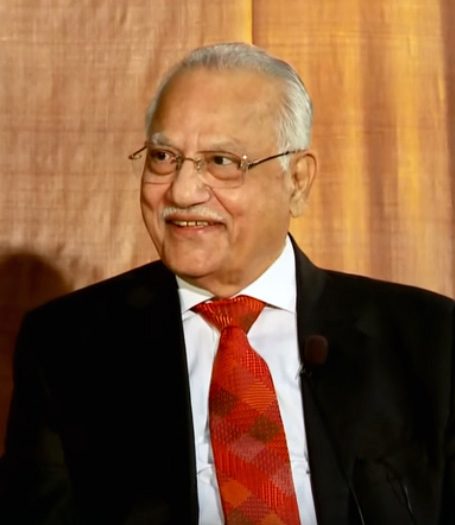
| Key facts | |
|---|---|
| Born | 5 February 1933 according to most accounts (Apollo’s 2026 AGM notice and Forbes point to 1932), Aragonda, Chittoor district, Andhra Pradesh [1] [12] [31] |
| Family roots | Farming family in Aragonda, Thavanampalle mandal; father was the village head [17] [27] |
| Education | Madras Christian College (pre-medical); MBBS, Stanley Medical College, Madras; cardiology fellowship, Massachusetts General Hospital, Boston [11] [19] |
| Family | Wife Sucharitha Reddy; four daughters, Preetha, Suneeta, Shobana and Sangita, who all hold senior roles at Apollo [1] [29] |
| Company | Apollo Hospitals Enterprise Ltd (founded 1979; first hospital 1983), Executive Chairman [1] |
| Wealth | About US$3.8 billion (Forbes real-time, 30 October 2026); Rs 29,890 crore for “Prathap C Reddy and family” (360 ONE Wealth Creators List 2026) [12] [83] |
| Known for | Building India’s first corporate hospital and its largest private healthcare group, now about 78 hospitals and more than 7,000 pharmacies [43] [84] |
In Madras in 1979, a 38-year-old man with a wife and two young children needed heart surgery. In practice that meant going to Texas, at a cost of about US$50,000. The family could not raise the money, and he died [22] [21].
His doctor, a cardiologist then in his mid-forties who had come home from America a decade earlier, kept thinking about that case. “I can still recall the devastated faces of his wife and young children,” Dr Prathap Chandra Reddy said decades later [19]. “I decided to establish a world-class health care organisation designed to suit the needs of our people” [21].
At that point India had no corporate hospitals. Private hospitals were limited by law to about 30 beds unless they were run by the government or a trust [26]. Medical equipment carried heavy import duties, as if it were a luxury good [20]. Friends called him a fool. “So that became my strength,” he said [23].
Apollo Hospitals opened in Chennai in September 1983, when Reddy was 50 [3] [75]. Forty-three years later the group runs about 78 hospitals with more than 10,900 beds and over 7,000 pharmacies, and it reported Rs 25,229 crore of revenue in FY26 [43] [44]. Forbes counts the founder among India’s billionaires [12]. At 93 or 94, depending on which birth year you accept, he still chairs the company and attended all eight of its board meetings in 2025-26 [1].
This is the story of how a village boy from Chittoor came to define private healthcare in India: the bureaucratic marathon, the debt that once put most of the family’s shares under pledge, the court cases that still follow the company, and the family handover still under way.
Where it began
Prathap Chandra Reddy was born in Aragonda, a village in Chittoor district, in what was then the Madras Presidency and is now Andhra Pradesh. Most sources give his date of birth as 5 February 1933 [31] [30]. Not all agree. Harvard Business School’s oral-history archive says he was “born in 1932” [11], Apollo’s 2026 AGM notice reportedly prints his birth date as 5 February 1932 [1], and Forbes lists his age as 94 in October 2026 [12], which only fits 1932. We give the commonly cited year and flag the difference.
He was the fifth of seven children in a well-off farming family, and his father was the village head [17]. In his own words he was “a serious student and the first person from my village to leave for a higher education” [19]. He has said little publicly about his mother. Madras Musings, the Chennai heritage journal, records that she died in 1970, soon after he came home [17].
Aragonda stayed with him. “I sometimes feel that being from Aragonda had a large part to play in my destiny of being in healthcare,” he said in 2015 [19]. He says nobody shaped him more than his father: “The person I have to thank the most for being a vital beacon in my life is my father” [19].
He started school in Chittoor in Class 6 [27], then did his pre-medical course at Madras Christian College, one of the most respected colleges in south India [19] [11]. He took his medical degree at Stanley Medical College in Madras. Madras Musings gives his graduation year as 1957 [17]. We could not confirm that date anywhere else.
Around the same time he married Sucharitha, who comes from Khammam in today’s Telangana [24]. They signed the Apollo family constitution on 1 February 2017, their 60th wedding anniversary, which puts the wedding in 1957 [75]. He calls her his “best friend” and says he consults her before big decisions [25].
The American years
Like many ambitious Indian doctors of his generation, Reddy went abroad to train. Madras Musings says he went to Britain in 1963 and then moved to the United States [17]. In America he was a resident and later chief resident at Worcester City Hospital in Massachusetts. He did a cardiology fellowship at Massachusetts General Hospital in Boston and went on to head research programmes at the Missouri State Chest Hospital [23] [30]. “After receiving my Fellowship from the Massachusetts General Hospital, Boston, USA… I went on to head research programmes at the Missouri State Chest Hospital,” he recalled [19].
Sources disagree on how long he was away: “seven years”, “nine years” and “about a decade” all appear [17] [22] [23]. His four daughters were all under 12 when the family came back [29].
One story from those years shows what he was thinking about. At a 1969 party in the US to celebrate the moon landing, he noticed how many of the NASA engineers in the room were Indian [21]. India was losing talent, and he was part of that loss.
The letter
Every telling of the Reddy story includes a letter from his father. Accounts differ on what it said. Some say his father asked him outright to come home and serve his “Desam and Samajam”, his country and his community [17]. Reddy’s own recent version is more careful: “Although it didn’t explicitly suggest returning (to India), my wife and I decided to go back” [20].
In a 2015 interview he described its effect: “We were very happy and settled abroad, when a letter from him changed my life… while they were extremely proud of my success in the USA… it was time to think about my responsibility to my motherland” [19]. In 2011 he quoted a line he connected to his father’s thinking: “Of what use is your expertise if your country does not benefit from it” [28].
He came home around 1970. Pranay Gupte’s biography Healer (Penguin, 2013) gives January 1970 [14] [25], and other accounts say 1970 or 1971 [24] [31].
The first break
A cardiologist in Madras
Back in Madras, Reddy joined HM Hospital as head of its cardiac division and practised there for about a decade [17] [30]. He built a strong cardiology practice. He also brought in an idea from American medicine: the Master Health Check, a packaged preventive screening that Apollo says he introduced in the mid-1970s [2]. It later became one of Apollo’s best-known products.
Still, there was a limit to what he could do. When a patient needed open-heart surgery, Indian options were few. Harvard’s oral history notes that coronary bypass was offered at only two Indian institutions at the time, with poor results [11]. “I was forced to refer my patients who needed complex surgeries to friends in the US,” he said [20]. Many went to Dr Denton Cooley in Houston [29].
The patient who changed everything
That is where the 38-year-old patient comes in. Most accounts, including Business Standard and Fortune India, date his death to 1979, just before Apollo was incorporated [21] [22]. In one Outlook interview, however, Reddy places it in November 1971 [27]. Whatever the date, he describes it as the moment an idea became a duty: “This idea became an imperative for me when I lost a patient who could not make it to Texas for an open heart surgery” [19].
There is a more sceptical view of this founding story. In a 2013 paper in the Indian Journal of Medical Ethics, the historian Sarah Hodges argued that Madras was already a medical hub and noted that Apollo’s 1982 share-issue publicity talked about attracting “rich Arab clients”. She suggested that Apollo “did not create a market, but stumbled into one” when a weaker rupee made treatment abroad too expensive for many Indians [26]. Both things can be true. A doctor can be moved by a death and also see a business opportunity.
Three years in the corridors of Delhi
Apollo Hospitals Enterprise Ltd was incorporated as a public limited company in Madras on 5 December 1979 [13]. The Healer biography, as summarised by Business Today, says Reddy won the Greams Road plot at an auction on 10 October 1979 with a bid of Rs 17.4 lakh, a figure his numerologist suggested [24].
The paperwork took far longer than the land. Reddy says he made about 60 trips to Delhi [22]. “I used to go every Thursday evening to Delhi from Chennai and come back on Sunday morning, week after week,” he said in 2025. “I never gave up” [20]. Madras Musings counts 12 applications to 20 officials, and says the permissions took three years [18]. Each of the 370-odd pieces of equipment needed about a dozen applications [25]. One official told him to build a hotel instead [19]. Reddy’s own summary of that era: “The best of intentions could get lost in the quagmire of licensing and bureaucracy” [19].
Gupte’s biography records one exchange with an official who was holding up a CT scanner, which cost about Rs 1.5 crore at the time [18]. Reddy asked him: “If your child had an accident, wouldn’t you want the very best treatment?” [25]
Help came from the top. Prime Minister Indira Gandhi was keen to reverse the brain drain and backed the project [11] [21]. In 1982 Finance Minister Pranab Mukherjee cleared funding. Harvard’s account says he allowed half the loan to come from a state-owned bank and half as foreign-exchange borrowing [11]. Fortune India quotes Reddy recalling that “six banks will fund you ₹5 crore each” [22]. The money still did not arrive until 1983 [11].
Apollo also went to the public. In December 1982 it offered 12 lakh shares, which Hodges, citing the Times of India, describes as the first public offering of its kind for a corporate-run multi-speciality hospital in India [13] [26]. The response was not enthusiastic at first: a 1984 issue of partly convertible debentures found takers for only 15,537 debentures [13].
Opening day
On 18 September 1983 President Giani Zail Singh opened Apollo Hospitals on Greams Road, Chennai. He called it “an American hospital in India” [17] [3]. Most sources say it had 150 beds [23] [17]. Hodges notes that it began admitting patients in February 1984 [26]. The same year, Apollo opened a pharmacy inside the hospital. It would eventually become the country’s largest pharmacy chain [3].
The economics showed why it could work. Business Standard reports that heart surgery at Apollo cost about US$5,000, against US$50,000 in the US, and less for poorer patients [21]. By 1987 Apollo had done more than 700 open-heart operations with what it says was a 98% success rate, and it declared its first dividend, 10% [3]. In 1988 it opened a hospital in Hyderabad [3].
Reddy was 50 when the Chennai hospital opened. “I was 50 years of age then, typically a point in time when most people start contemplating retirement,” he said later [75]. He still refuses the word “entrepreneur”: “I was not then, and even now I’m not an entrepreneur” [22].
Building the empire
The 1990s: Delhi, and a national brand
The 1990s made Apollo a national name. In 1991 Reddy received the Padma Bhushan, together with Apollo’s chief nephrologist Dr M.K. Mani [4]. In 1992 Apollo says it was the first in India to use coronary artery stenting, and on 25 December 1995 it says it performed India’s first multi-organ transplant [4]. Harvard Business School began teaching a case study on Apollo in 1995 [4].
The biggest move was Delhi. Indraprastha Apollo Hospital opened in 1996 at Sarita Vihar, as a joint venture with the Delhi government [4]. The company that runs it, Indraprastha Medical Corporation Ltd (IMCL), received about 15 acres on lease for a nominal rent. In return it promised free treatment for one-third of its beds and 40% of its outpatients from poor families. The Delhi government put in Rs 23.83 crore for a 26% stake [49] [47]. That bargain is still being fought over in the Supreme Court (see Controversies). In July 2005 Indraprastha Apollo became the first hospital in India to win Joint Commission International (JCI) accreditation, the American gold standard for hospital quality [9].
Hospitals followed in Madurai (1997) and Visakhapatnam (1999) [4]. In 2000 US President Bill Clinton opened Apollo’s telemedicine centre in Aragonda, which Apollo calls the first in the country, linking Reddy’s home village by satellite to specialists in the cities [4].
The 2000s: capital, insurance and smaller towns
In 2007 the private equity firm Apax Partners invested about US$104 million for roughly 11% of Apollo, later raising its stake to about 19% for about US$170 million in total. It sold out in 2012-13 at about 2.5 times its money [37]. Around the same time the group built a health-insurance joint venture, Apollo Munich [33], and launched “Apollo Reach” hospitals for smaller towns [2]. In 2010 Reddy received the Padma Vibhushan, India’s second-highest civilian honour [2].
He kept the founder’s chair as the business grew, and his daughters took on more of the running of it. In 2014 the company redrew their roles. Preetha became Executive Vice Chairperson; Suneeta, Managing Director, covering strategy and finance; Shobana, Executive Vice Chairperson for pharmacy and insurance; and Sangita, Joint Managing Director for IT, retail health and HR [8]. Announcing the change, Reddy said: “Our greatest asset is the trust that 40 million patients from 120 countries have reposed” [8].
The 2010s: protons and pharmacies
The most expensive project of the decade was the Apollo Proton Cancer Centre in Chennai. Vice President Venkaiah Naidu opened it on 25 January 2019, and Apollo said it had cost Rs 1,300 crore [32]. “It is with a sense of pride that we dedicate the Apollo Proton Cancer Centre to the health of the nation!” Reddy said [32].
Meanwhile the pharmacy arm, the least glamorous part of the business, grew into its main engine. By FY25 it had 6,626 stores [5]. The 7,000th opened in Ayodhya in November 2025, and Shobana Kamineni said: “Today, almost 80% of Indians stay within 40 minutes of an Apollo Pharmacy” [84].
The 2020s: digital, Advent and the great split
In 2020 Apollo launched Apollo 24/7, an online platform for consultations and medicine delivery. It cost a lot of money to run. In April 2024 the US private equity firm Advent International agreed to invest Rs 2,475 crore for a 12.1% stake in a combined entity made up of Apollo HealthCo (pharmacy and digital) and Keimed, the family-linked wholesale medicine distributor [38]. The combined business was valued at an enterprise value of about Rs 22,481 crore [38]. The market had hoped for more, and Apollo’s shares fell as much as 8.4% on the day [39].
In July 2025 Apollo announced a bigger restructuring. Its pharmacy and digital businesses would be demerged into a new company, HealthCo and Keimed merged into it, and the new company listed separately, with Apollo Hospitals keeping 15% [40]. Reddy called it “a unique model to enable access to high-quality healthcare for millions of Indians” [40]. The Competition Commission cleared it in September 2025 [41]. On 24 June 2026, at meetings ordered by the company-law tribunal (NCLT), about 90.44% of shareholder votes cast were in favour, and creditors approved it too [42]. As of late October 2026 the scheme was still waiting for final sanction from the NCLT’s Chennai bench, with listing targeted for the final quarter of FY27 [42] [41]. In May 2026 Apollo also agreed to sell its Cradle maternity and fertility businesses to Cloudnine in a deal valued at about Rs 1,550 crore, keeping a minority stake [43].
The numbers today
| Year | Revenue | Net profit | Hospitals | Pharmacies |
|---|---|---|---|---|
| FY25 | Rs 21,794 crore | Rs 1,446 crore | 73 | 6,626 |
| FY26 | Rs 25,229 crore | Rs 1,942 crore | 78 | 7,289 |
Sources: Apollo results releases and reports [5] [43] [44].
Reddy’s own claim is bigger than any line in the accounts: in 2025 he said Apollo had treated “more than 100 million patients from 160 countries” [20].
How the wealth is held
The family’s fortune is almost entirely Apollo stock, and very little of it is in Reddy’s own name. At 30 September 2025 the promoter group owned 28.02% of Apollo Hospitals Enterprise [6]. The biggest part, 18.93%, sat in PCR Investments Ltd, a family holding company whose significant beneficial owners are Reddy, his wife and their four daughters. Reddy held only 0.17% directly; the daughters held between 0.73% and 2.04% each [6]. Apollo’s 2026 AGM notice puts his personal holding at 2,45,464 shares [1]. For FY26 he drew fixed pay of Rs 8.5 crore a year plus variable pay and commission [1].
At Apollo’s share price in September-October 2026, a market value of about Rs 1.1-1.25 lakh crore [46], the family stake is worth roughly Rs 32,000-35,000 crore before any discount. That is broadly consistent with Forbes’ figure of about US$3.8 billion (30 October 2026) [12]. The 360 ONE Wealth Creators List 2026 values “Prathap C Reddy and family” at Rs 29,890 crore [83]. The family first entered the top 100 of the Hurun India Rich List in 2021, at No. 78 with Rs 21,000 crore [82]. We could not find Reddy in the published coverage of the M3M Hurun India Rich List 2026, so we do not quote a Hurun figure.
The setbacks and failures
A slow start with investors
Apollo’s first fundraising did not go smoothly. Only a small part of the 1984 debenture issue was taken up [13], and Hodges notes that the company paid no dividend for at least its first five years [26]. Reddy and his team had to show that a hospital could be run as a business before investors believed it.
The pledge years
The most dangerous period for the family’s control came in 2019. In 2013 KKR had invested about Rs 550 crore in PCR Investments, the family holding company [35]. Buying KKR out, along with putting more capital into Apollo Munich, left the family heavily in debt. By mid-2019 promoters had pledged about 75-78% of their roughly 34% stake [35] [36]. Bloomberg reported that the group was looking for investors and asset sales to cut debt, including possibly selling its nursing and medical colleges [36].
The family sold its 51.2% of Apollo Munich to HDFC for about Rs 1,347 crore. HDFC agreed the deal in June 2019 and the insurance regulator approved it in January 2020 [33]. “This was not a forced sale, this is a strategic exit,” Shobana Kamineni said, while admitting that the pledge “was too high” [34]. The family also sold a small part of its Apollo stake. In August 2025 Suneeta Reddy sold about 1.3% of the company for about Rs 1,489 crore. Apollo said the sale “fulfils a commitment made to investors to reduce the pledge” and that no further sales were planned [45]. By 30 September 2025 pledged shares had fallen to 8.58% of the promoter holding [6].
Covid
The pandemic hit Apollo hard at first. In April-June 2020 elective surgery stopped and international patients disappeared. The company reported a consolidated net loss of Rs 208 crore, and revenue from its hospitals fell 42% [70]. It recovered fast. By November 2021 Reddy said Apollo had given “over 5 million vaccinations”, making it the largest private-sector vaccinator [7].
Digital growing pains
Apollo 24/7 lost money for years, and the Advent valuation in 2024 disappointed investors [39]. The digital bet will only be fully tested when the new company lists [41].
Controversies and allegations
Apollo is India’s best-known private hospital chain, and it has faced matching scrutiny from courts, governments and the press. Below are the main documented matters, with the company’s responses and where each stood as of 31 October 2026. None has resulted in a criminal conviction of Dr Reddy, and in most of them he is not personally a party.
Free beds for the poor at Indraprastha Apollo, Delhi
Allegation: IMCL got about 15 acres of land in Delhi on a nominal lease in return for promising free treatment to one-third of inpatients and 40% of outpatients from poor families. Critics say the hospital has not kept that promise. The All India Lawyers’ Union filed a public interest case, and on 22 September 2009 the Delhi High Court found “hardly any implementation” of the conditions and ordered the free beds provided [47]. In March 2025 the Supreme Court said: “We are not sure whether even that benefit to the poor patients has been granted so far,” and noted that the lease appeared to have expired [10]. In oral remarks the bench said it might ask AIIMS to run the hospital if the terms had been broken [47] [48]. In November 2025 the Delhi government told the court in an affidavit that over five years the hospital had treated only about 9-10% of outpatients and 7-9% of inpatients from the economically weaker sections, and that treatment was “not fully free” [50] [51].
Response: IMCL argues that the hospital is a joint venture in which the Delhi government holds 26% and has shared in the profits [47]. In 2016 it offered 10% free beds with medicines and consumables included [49]. In a May 2025 affidavit it asked to lower the obligation to 10% of inpatients and 25% of outpatients, with fully free care. It said the original terms had become unsustainable after tax and customs exemptions were withdrawn, and that the Delhi government had received more than Rs 87 crore in dividends [52].
What happened next:
- The 30-year lease expired on 31 July 2023 and has not been renewed. IMCL applied in May 2025 for a 30-year renewal [50].
- A trade publication reported in February 2026 that the Delhi government had told the court it had been advised not to renew the lease on the old terms, and proposed a fresh tender in which IMCL would have a right of first refusal [53]. We could not confirm this in a second publication.
Status: Pending before the Supreme Court (IMCL v. All India Lawyers Union, SLP(C) 29482/2009). We found no final order as of 31 October 2026. The hospital continues to operate under Apollo management.
The kidney transplant allegations
Allegation: There are three separate matters.
- In June 2016 Delhi Police arrested people, including personal secretaries of Apollo doctors, over a kidney racket that police alleged was run from Indraprastha Apollo’s premises [54].
- In December 2023 The Telegraph (UK) alleged that poor villagers from Myanmar were paid to donate kidneys to rich Myanmar patients at Indraprastha Apollo, using forged family documents [56] [57].
- In July 2024 Delhi Police arrested Dr D. Vijaya Rajakumari, a visiting consultant at Indraprastha Apollo, in a separate case involving Bangladeshi donors. Police said the surgeries took place at Yatharth Hospital in Noida [59].
Response: In 2016 Apollo said it was “a victim of a well-orchestrated operation to cheat patients and the hospital” and was co-operating with police [54]. It called the 2023 report “absolutely false, ill-informed and misleading.” It said every donor is interviewed by a government authorisation committee, documents are checked with embassies and genetic tests are done [56] [57]. In 2024 it said “at no point did this doctor or any other provider perform illegal surgeries at our hospital,” and that it had suspended her [59].
What happened next:
- August 2016: police charge-sheeted 17 people under the Transplantation of Human Organs Act. Doctors were not accused [55].
- December 2023: the national transplant body, NOTTO, asked the Delhi government to investigate the Telegraph allegations [56], and Apollo’s shares fell that day [58].
- July 2024: The Telegraph reported Apollo’s understanding that the inquiry committee had found its processes in order. No official findings have been published [59].
- August 2024: police filed a charge sheet of about 7,000 pages in the 2024 case [60].
Status: In the 2016 case, staff and middlemen were charged and no Apollo doctor was accused. For the 2023 allegations, no adverse official finding has been made public. In the 2024 case, the trial is pending; Dr Rajakumari is an accused, not convicted, and police allege the surgeries took place at another hospital.
Jayalalithaa’s treatment and the Arumughaswamy Commission
Allegation: Tamil Nadu Chief Minister J. Jayalalithaa was treated at Apollo Chennai from 22 September 2016 until her death on 5 December 2016. In 2017 the state set up the Justice A. Arumughaswamy Commission to examine the circumstances. Its report was tabled in October 2022. It criticised the handling of a recommended angiogram and questioned the timing of death, and reports said it described Dr Reddy as giving briefings “without disclosing the real fact” [66]. News outlets described its recommendations on Apollo differently. PTI, as carried by ThePrint, reported that the government “may ‘decide and investigate’” the matter against the hospital’s chairman [65]. The News Minute reported that the report recommended an investigation against Dr Reddy and two Apollo doctors [66]. The commission’s formal list of people to be investigated named V.K. Sasikala, Dr K.S. Sivakumar, former health secretary J. Radhakrishnan and former health minister C. Vijayabaskar [65].
Response: Apollo challenged the inquiry in court. It argued that the commission was going beyond its terms of reference and that it “was not to go into the efficacy, correctness and adequacy or inadequacy of treatment” [61]. It called the commission biased and said only medical experts could judge the records [61] [62].
What happened next:
- April 2019: the Supreme Court stayed the commission’s proceedings on Apollo’s appeal [62].
- November 2021: the Supreme Court let the inquiry resume. It gave Apollo the right to cross-examine witnesses and directed that an AIIMS medical board assist the commission [63].
- August 2022: the AIIMS board found that treatment followed “correct medical practice” with “no errors” [64].
- October 2022: the Tamil Nadu government said it would act after taking legal opinion [65].
Status: The commission’s findings are advisory. We found no report of any case being filed against Dr Reddy or Apollo in connection with Jayalalithaa’s death as of 31 October 2026.
The FEMA case on foreign investment
Allegation: The Enforcement Directorate (ED) alleged four breaches of India’s foreign exchange law (FEMA) involving more than Rs 2,424 crore. They included foreign investment into retail trading, a sector closed to foreign investment, without approval; foreign currency convertible bonds issued in breach of the rules; and foreign holdings above sectoral limits [67] [68].
Response: The company chose compounding, a procedure under FEMA that lets a party settle an alleged contravention by paying a sum, without any finding of guilt. We found no further public statement from Apollo.
What happened next:
- June 2026: after the ED issued a no-objection, the RBI passed a compounding order. Apollo Hospitals Enterprise paid about Rs 17.77 crore, and five directors and officers, including Preetha Reddy and Suneeta Reddy, paid Rs 18 lakh each [67] [68].
- Dr Prathap C. Reddy was not among the individuals named [67].
Status: Settled and closed through compounding in June 2026, with no finding of guilt.
Other matters
Allegation: In January 2016 income-tax officials searched group offices in Chennai, Hyderabad and Delhi [69]. In 2020 a public interest case in the Telangana High Court alleged that Apollo’s Jubilee Hills hospital in Hyderabad, built on subsidised land, had not reserved the 15% of beds for the poor that the allotment required. The court sharply questioned the state government about why it had not acted against such hospitals [86].
Response: On the 2016 search, Apollo said “we extended our complete cooperation” [69]. We did not find a public response from Apollo to the Telangana petition.
Status: We found no reported outcome of the 2016 search. No order against Apollo has been reported in the Telangana matter.
Giving back
Reddy’s philanthropy is closely tied to Apollo itself, with Aragonda at the centre.
Total Health, Aragonda. Through the Apollo Foundation, Apollo has run a health programme in his home mandal of Thavanampalle since about 2013-14. It covers screening, nutrition, sanitation and chronic disease care across nearly 200 villages [27] [79]. In 2021-22 it reported about 3.47 lakh beneficiaries [79]. “I thought I must do something for my village,” he said. “My hope is to leave back much more than what I had got from my parents” [27]. Apollo’s chairman profile says a “Re 1 a day” insurance pilot in his village became a model for a government health insurance scheme for families below the poverty line [2].
Hearts and children. SACHi (Save a Child’s Heart initiative), set up in 2003, funds heart surgery for children from poor families [16]. Billion Hearts Beating, launched in 2010, runs public awareness campaigns on heart disease [2].
Education. The Apollo University in Chittoor, with Reddy as Chancellor, began operating in November 2021. It sits alongside medical, nursing and pharmacy colleges on the Apollo Knowledge City campus [15].
Covid vaccination. Apollo ran one of India’s largest private vaccination drives in 2021. “We believe that no one is safe till everyone is vaccinated,” Shobana Kamineni said [87] [7].
Apollo publishes no single figure for Reddy’s personal giving, and he has not appeared on the main Indian philanthropy rankings that publish amounts.
In his nineties his public message has been about prevention rather than surgery. “Prevention is not just better than cure; it is the foundation of a healthier society,” he wrote in 2024, noting that non-communicable diseases cause about 71% of deaths worldwide [80]. He has also argued that India must “double the number of doctors, triple the number of nurses and quadruple the number of paramedics” [81].
His honours include the Padma Bhushan (1991) and Padma Vibhushan (2010); the Citizen of the Year award presented by Mother Teresa (1993); EY’s Entrepreneur of the Year (2001) and Lifetime Achievement award (2020); and a string of lifetime-achievement awards from Indian business bodies [2] [85].
Succession
Reddy has thought about succession earlier and more publicly than most Indian founders.
In 2013 he set up a family council of seven people: himself, his four daughters and two outside advisers. Bloomberg reported that the aim was to avoid an Ambani-style dispute over the inheritance [71] [72]. Asked about Preetha, the eldest, he said: “Whenever I step down, she is ready to take on the mantle” [71]. In 2014 he told CNBC-TV18 that “as things stand today, Preetha is most likely to succeed me as Chairman” [76]. In public, though, he refuses to rank his daughters. “I cannot give each one marks. Can I give Preetha 51 and the others 49? No. All get 50,” he told Express Healthcare in 2014 [73].
The family signed a family constitution on 1 February 2017 [75]. Reports at the time said it would rotate the chairmanship among the daughters and, after them, choose the next generation on merit [74] [75]. “The roles will depend on interest, performance and achievements,” Reddy said of the grandchildren [75].
The next generation is already working in the group. Sindoori Reddy, Karthik Reddy and Upasana Kamineni Konidela have held operating roles [75]. In September 2026 Upasana was named Director - Projects, overseeing an expansion plan of about Rs 8,600 crore. She said: “My goal is to carry forward the vision of my grandfather” [78].
For now the founder remains in charge. In August 2026 shareholders re-appointed him Executive Chairman until 24 June 2028. The board said it wanted his “responsible and prudent oversight” of the demerger [1]. Apollo has proposed Shobana Kamineni as executive chairperson of the planned pharmacy-and-digital company [77]. Suneeta Reddy has rejected talk of a family split: “Let’s not think about it from a family lens. Every decision is taken on what is right for the business and shareholders” [88].
Reddy sums up his approach in his own words: “My strength is stree shakti — women power” [20].
What their journey teaches
Your real career can start late. Reddy opened his first hospital at 50, an age when, as he put it, most people start thinking about retirement [75]. Everything before that, the American training and the decade of practice in Madras, was preparation he could not have skipped.
Count the cost of the problem, not only of the solution. The case for Apollo was a simple comparison: about US$50,000 for heart surgery in Houston against about US$5,000 in Chennai [21]. If you can show customers a gap that large, you have a business.
Persistence wins more often than charm. Sixty trips to Delhi, a dozen applications for each machine, and three years to get permissions [22] [18]. Reddy’s own rule is “purity, patience, persistence”, and he adds, “provided your first P is right” [11].
Debt can threaten what you own even when the business is fine. In 2019 Apollo’s hospitals were doing well, but borrowing at the family holding company put most of the family’s shares under pledge. Getting free took an insurance sale and stake sales [35] [33] [45].
A public bargain lasts longer than the people who made it. The free-bed promise made for cheap land in Delhi in the 1990s is still in the Supreme Court three decades later [10] [50]. If you take something from the state, you should expect to be held to the terms for decades.
Plan the handover in public, and plan it early. A family council in 2013, a constitution in 2017 and clearly divided roles for four daughters have kept Apollo out of the kind of feuds that broke apart other Indian business families [71] [75].
Read more founder stories: Kiran Mazumdar-Shaw, who built Biocon; Dilip Shanghvi of Sun Pharma; Cyrus Poonawalla of the Serum Institute; and Murali Divi of Divi’s Laboratories. For data on Indian money and markets, see CapitalVia Insights.
A profile for general reading, based on public records and reporting as of 31 October 2026. Not investment, tax or legal advice.
Sources (88)
- Notice of the 45th Annual General Meeting - Apollo Hospitals Enterprise Ltd, Jul 2026
- Dr Prathap C Reddy - Bio Profile - Apollo Hospitals, Feb 2025
- Growth Story: 1980s - Apollo Hospitals, accessed Oct 2026
- Growth Story: 1991 to 2000 - Apollo Hospitals, accessed Oct 2026
- Q4 FY25 Results Release - Apollo Hospitals Enterprise Ltd, May 2025
- Shareholding Pattern as of 30 September 2025 - Apollo Hospitals Enterprise Ltd, Nov 2025
- Q2 FY22 Results Release - Apollo Hospitals Enterprise Ltd, Nov 2021
- Apollo Hospitals announces reorganization to drive next wave of growth - Apollo Hospitals, Jul 2014
- 10 years of JCI accreditation in India celebrated at Indraprastha Apollo - Apollo Hospitals, Jul 2015
- Order in Indraprastha Medical Corporation Ltd v. All India Lawyers Union, SLP(C) 29482/2009 - Supreme Court of India, Mar 2025
- Dr. Prathap C. Reddy - Creating Emerging Markets oral history - Harvard Business School, Apr 2014
- Prathap Reddy - Forbes profile, Oct 2026
- Apollo Hospitals Enterprise company history - Goodreturns, accessed Oct 2026
- Healer: Dr Prathap Chandra Reddy and the Transformation of India - Penguin Random House India, Dec 2013
- Prospectus - The Apollo University, Nov 2025
- Saving a Child's Heart initiative (SACHi) - Apollo Hospitals, accessed Oct 2026
- He transformed medicare in India - Madras Musings, Nov 2016
- Apollo Hospitals: early struggles - Madras Musings, Feb 2023
- My dream has always been to heal the sick - Prathap Reddy - Vanguard, Jun 2015
- Bringing the World to India: Dr Prathap C Reddy and the rise of Heal in India - The Global Indian, Oct 2025
- How Prathap Chandra Reddy propelled Apollo Hospitals into a new orbit - Business Standard, May 2022
- Apollo's Healthcare Architect - Fortune India, 2024
- Starting Apollo Hospitals at the age of 50, Dr Prathap Reddy was called a 'fool' - YourStory, Aug 2020
- Book review: Healer - Business Today, Feb 2014
- Medicine man and his journeys - Deccan Chronicle, Mar 2014
- 'It all changed after Apollo': healthcare myths and their making in contemporary India - Indian Journal of Medical Ethics, 2013
- Repaying a debt of gratitude: Apollo Hospitals - Outlook Spotlight, 2020
- Financial Express interviews Dr Prathap C Reddy - Financial Express (via Apollo Hospitals), Aug 2011
- Doctor, father, entrepreneur: what makes Dr Prathap C Reddy one of India's best-known tycoons - Business Today, Mar 2024
- Prathap Chandra Reddy, a meticulous healer of our time - The Hans India, Jun 2016
- The visionary who transformed private health care in India - Indian Journal of Medical Sciences, Sep 2021
- South Asia's first proton therapy centre opened in Chennai - The Week, Jan 2019
- HDFC to acquire 51 per cent stake in Apollo Munich Health Insurance - The Week, Jun 2019
- HDFC Ergo-Apollo Munich merger isn't a forced sale but a strategic exit, says Shobana Kamineni - BloombergQuint, Jun 2019
- Apollo Hospitals Enterprise's promoter pledging likely to hit 75% - Business Standard, Jul 2019
- Apollo Hospitals seeks investors and assets sale to cut debt - ThePrint (Bloomberg), Jul 2019
- India Awards: Exit of the year - Apollo Hospitals - AVCJ, 2013
- Apollo 24/7 secures Rs 2,475 cr investment, 12.1% Advent stake in mega merger with Keimed - Business Today, Apr 2024
- India's Apollo Hospitals stock slides as unit's valuation underwhelms - ThePrint (Reuters), Apr 2024
- Apollo Hospitals to list pharmacy, digital health biz via reorganisation - Business Today, Jul 2025
- Apollo Hospitals restructuring by FY27, says CFO - Business Standard, Nov 2025
- Apollo Hospitals' restructuring scheme gets shareholder, creditor approval - Whalesbook, Jun 2026
- Apollo Hospitals posts 16% revenue growth to Rs 25,229 cr, approves Rs 1,550 cr divestment - Whalesbook, May 2026
- Apollo Hospitals sees 36% rise in Q4 net, expansion on track - DT Next, May 2026
- Apollo Hospitals block deal: promoter to trim debt, rules out more stake sale - Business Today, Aug 2025
- Apollo Hospitals Enterprise stock update - 5paisa, Sep 2026
- Supreme Court warns Indraprastha Apollo Hospital on free treatment to poor patients, joint inspection ordered - LiveLaw, Mar 2025
- SC may hand over Apollo Hospital to AIIMS if free care clauses found unmet - Business Standard, Mar 2025
- Two decades on, Apollo agrees on 10% beds for EWS instead of 33% - Millennium Post, Feb 2016
- Indraprastha Apollo Hospital attended only 9-10 percent EWS OPD patients in 5 yrs: Delhi govt to SC - ThePrint, Nov 2025
- SC: Apollo Hospital (PTI) - The Week, Nov 2025
- Indraprastha Apollo Hospital seeks SC relief to reduce EWS treatment obligation - Medical Dialogues, May 2025
- Apollo Hospital faces lease denial for ignoring EWS treatment mandate - Medical Buyer, Feb 2026
- Apollo kidney racket: hospital denies role, says cooperating with police - BioVoice, Jun 2016
- Police charge-sheet 17 in Apollo kidney racket - DNA, Aug 2016
- Centre orders probe into cash-for-kidney allegations against Apollo Hospitals - Scroll, Dec 2023
- Govt orders probe into cash-for-kidney charge against Apollo hospital - ThePrint, Dec 2023
- Cash for kidney scam: health ministry body orders probe against Apollo Hospitals, shares drop - Business Today, Dec 2023
- Surgeon in cash-for-kidneys case linked to hospital - The Telegraph (via Yahoo News), Jul 2024
- Delhi Police files 7,000-page charge sheet in kidney transplant racket - Deccan Herald, Aug 2024
- Going beyond its ambit: Apollo slams Jaya death probe panel, seeks stay - The News Minute, Feb 2019
- SC stays Arumughaswamy Commission's probe into Jayalalithaa's death - LiveLaw, Apr 2019
- Supreme Court allows Jayalalithaa death probe, AIIMS expert panel to assist commission - LiveLaw, Dec 2021
- Correct medical practice and no errors: AIIMS panel absolves Apollo Hospital in Jayalalithaa death probe - Medical Dialogues, Aug 2022
- TN panel indicts Sasikala over Jaya's death, govt says action after getting legal opinion - ThePrint (PTI), Oct 2022
- Jaya death probe: commission says critical angiogram and surgery not done - The News Minute, Oct 2022
- Settled at Rs 17.76 crore: RBI closes FEMA proceedings against Apollo Hospitals - Business Today, Jun 2026
- FEMA case against Apollo Hospitals closed after RBI's compounding order - The South First, Jun 2026
- Income tax search in Apollo Hospitals group - Medical Dialogues (IANS), Jan 2016
- Apollo Hospitals reports Q1 pre-tax loss of Rs 267 cr, revenue down 16% - Business Standard, Sep 2020
- Apollo forms family council to pave way for gen next - Business Standard, Feb 2013
- Reddy plans will to avoid Ambani-like dispute - Bloomberg, Jan 2013
- Dr Prathap C Reddy on the Apollo gen next - Express Healthcare (via Apollo Hospitals), Oct 2014
- Apollo's family constitution to be finalised soon: Prathap C Reddy - Business Standard, Aug 2017
- Apollo's acid test - Business Today, Jan 2018
- Apollo: Prathap Reddy's successor is Preetha Reddy - The Hans India, Jul 2014
- India's Apollo Hospitals proposes Kamineni as exec chair of healthtech spin-off - Reuters (via WMBD), Jun 2026
- Apollo Hospitals appoints Upasana Kamineni Konidela as Director - Projects - Entrepreneur India, Sep 2026
- People and the planet are at the heart of all our health interventions: Upasana Kamineni Konidela - The CSR Universe, Dec 2022
- Prathap C Reddy on why India needs a holistic outlook towards healthcare - Business Today, Feb 2024
- Make health care a national priority: Dr Prathap C Reddy - The Week, Jan 2022
- Apollo Group chairman Prathap Reddy, family are India's new billionaires - NewsMeter, Oct 2021
- Prathap C Reddy and family - 360 ONE Wealth Creators List 2026
- Apollo Pharmacy becomes 7,000-store strong - Indian Pharma Post, Nov 2025
- Prathap Chandra Reddy - EY Entrepreneur of the Year India 2020
- No COVID-19 treatment: HC pulls up government for inaction against Apollo, Basavatarakam cancer hospitals - Medical Dialogues, Aug 2020
- Apollo Hospitals says completed 10 lakh COVID-19 vaccinations across 80 locations - LatestLY (PTI), May 2021
- Apollo Hospitals demerger a strategic business decision, not family rift: Suneeta Reddy - ScanX, Jan 2026