
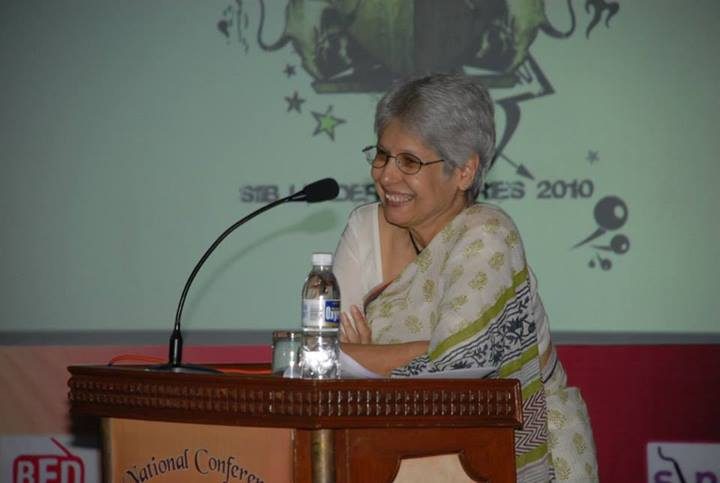
| Key facts | |
|---|---|
| Born | 3 August 1942, Bombay (now Mumbai) [27] [11] |
| Family roots | Parsi family; father A. S. Bhathena founded Wanson (India), the company that became Thermax [11] [13] |
| Education | BA Economics, St Xavier’s College, Mumbai; postgraduate training in medical and psychiatric social work, Tata Institute of Social Sciences [11] [25] |
| Family | Married Rohinton D. Aga (1965; he died in 1996); daughter Meher Pudumjee (Thermax chairperson); son Kurush (died 1997) [25] [3] |
| Company | Thermax Ltd, Pune: executive chairperson 1996-2004; non-executive director until 2018 [1] [3] |
| Wealth | About US$2.5 billion (Forbes real-time, 2 November 2026; #1611 on Forbes’ 2026 billionaires list) [44] |
| Known for | Turning around Thermax after 1996; handing over to a professional management; education philanthropy (Akanksha, Teach For India); Padma Shri (2010); nominated Rajya Sabha MP (2012-2018) |
Where it began
The anonymous letter arrived in 2000. Its writer was a Thermax shareholder, and the message was blunt: the company was sinking, and the woman in the chairperson’s office was doing nothing about it. It stung. “Letting down, for us, is a dirty word. I couldn’t sleep,” she later told Mint [56].
She had not asked for the job. Four years earlier she had been the head of human resources at a mid-sized Pune engineering firm, a trained social worker who, by her own account, was “not fond of technology or finance” [16]. Then her husband died, and within days the board made her executive chairperson. Now a stranger was holding her to account for a share price that had collapsed and a business that, on its operating numbers, was losing money.
What she did next — calling in consultants her own executives did not want, sacking her entire board, and cutting jobs, which she later called the toughest and most painful part — pulled Thermax back to operating profit and set it up for two decades of growth. It also made a reluctant heiress into one of the most quoted voices in Indian boardrooms on governance, grief and giving away money.
A Parsi girl told to marry
Arnavaz “Anu” Bhathena was born in Bombay on 3 August 1942 [27], the youngest of three children and the only daughter in an upper-middle-class Parsi family [25] [30]. Her father, A. S. Bhathena, was what Thermax’s own history calls a “worker-entrepreneur”. In 1947 he started a partnership firm, National Steel, that made sterilisers, autoclaves and hospital equipment [2].
The family’s expectations were clear and, she would later say, unequal. Her two older brothers were told they would run the business. She was taught cooking and sewing and told to get married [29]. “I had two older brothers and though academically I did better, I was not encouraged to pursue a career,” she said in a 2015 convocation address [10].
She studied economics at St Xavier’s College in Bombay, where she volunteered with the college’s Social Service League [11] [25]. She then went to the Tata Institute of Social Sciences (TISS) to train in medical and psychiatric social work [11] [25]. YourStory, which interviewed her in 2016, reported that her TISS degree could have taken her to a university in the US, “but the message was drummed in my mind that as a woman, I ought to marry and start a family first” [26].
Marriage, and a move to Pune
In 1965 she married Rohinton D. Aga [25], a Cambridge-educated economist and Harvard Business School alumnus born in Bombay in 1935 [2]. He was her eldest brother’s best friend [26]. He had also become her father’s closest business partner.
A year later, in 1966, Bhathena set up Wanson (India) in Pune with the Belgian company Wanson to make small “Vaporax” packaged boilers. Thermax’s own timeline says the venture started with Rs 3 lakh of equity and a 5,000 sq ft shed, and had 145 employees and Rs 20 lakh of turnover in its first year [1]. Thermax’s history page describes Rohinton as a co-founder alongside Bhathena [2]; Anu Aga herself has said the company was built by “my father and my husband” [13], while the Harvard oral history describes Rohinton as having worked with Bhathena “for years” [11]. Either way, neither man was an engineer. “Both my father and my husband were not engineers, and yet they built an engineering company,” she wrote [13].
The couple settled in Pune, where the factory was. She raised two children, Meher and Kurush, and worked at a child guidance clinic [26]. “I was lucky in marrying a wonderful man who encouraged me to be myself and pushed me to be a career woman,” she said [10].
The first break
From Wanson to Thermax
The boiler business grew through the 1970s. Thermax’s timeline records thermal oil heaters in 1967, water treatment from 1975 and a pollution-control (enviro) division from 1979 [1]. In 1980 the Indian company broke away from its Belgian partner and renamed itself Thermax Private Limited [1] [11]. Bhathena retired around then, and Rohinton Aga became chairman and managing director in 1981 [1] [11]. Bhathena died in 1991 [2].
Under Rohinton, Thermax added a joint venture with the American boiler maker Babcock & Wilcox in 1989, absorption chillers, and a power division in 1994 [1]. It also spread itself across businesses that had little to do with heating and cooling. “We got into software even before Infosys,” Anu Aga later said, listing electronics, software, grain silos and paint booths among the side ventures [16].
Joining the company — on her own terms
Anu Aga joined Thermax in 1985, in human resources [11] [13] [24]. It was not a comfortable position. She has described struggling with “how I should be accepted in my own right, rather than as an Aga” [26]. She worked in the department for several years and became its head in 1991 [2] [24]. “I had joined the company in 1985 and for five years preceding 1996, was heading the HR function,” she wrote [13].
Her daughter, Meher, a chemical engineer with a master’s degree from Imperial College London, joined Thermax as a trainee engineer in 1990 [58]. Meher and her husband, Pheroz Pudumjee, were later sent to Britain to turn around a small Thermax unit there [10] [58].
In 1995 Thermax went public [1] [10]. On paper the family had arrived: it held 62% of a listed company [13].
February 1996: the chair nobody planned
Rohinton Aga died in 1996, aged 60 [16] [30]. Within days — she has said both “two days” and “the third day” in different tellings — the Thermax board asked her to become executive chairperson [10] [30]. At the same meeting, the executive director was made managing director [13]. Thermax dates her appointment to February 1996 [1].
“I had not envisaged myself in that role, nor was I groomed for a corporate career,” she wrote [13]. She was 53, had never run a large corporation, and doubted herself. “I kept devaluing myself by saying the only reason I was given this position was because the family owns 62% of the shares,” she later admitted [10]. She also understood that she could not simply imitate the man she had replaced: “I can’t be my husband. It would be like going to an apple tree and asking for oranges” [31].
A little over a year later, her son Kurush, then 25, was killed in a road accident [25] [27]. She has spoken publicly about both losses, and about choosing not to let them define her. “I am not a quitter and considered the business as a family legacy,” she said [10].
Building the empire
The slump (1996-2000)
The company she inherited was weaker than its listing suggested. Mint reported that Thermax’s shares “more than halved in value between 1996 and 1998” [56]. Business Today, writing in August 2000, put the fall at Rs 430 in 1995 to Rs 94 [15]; in later retellings Anu Aga and Business Today have cited a low of Rs 36 from a peak of about Rs 400 [16] [25]. (The two figures likely refer to different dates and are not directly comparable.)
Sales were flat at best. Turnover peaked at about Rs 530 crore in 1997-98 with a profit of about Rs 45 crore, then slipped to about Rs 508 crore and a net profit of about Rs 38 crore in 1998-99, according to domain-b [21]. The profit figures hid a worse truth. In 1999-2000, Business Today reported, Thermax made an operating loss of Rs 14 crore; its Rs 32 crore net profit came only from Rs 92 crore of treasury income [15]. (Other contemporary reports put the operating loss higher, at Rs 21 crore to “over Rs 30 crore”, depending on the period and definition [18] [21].) Three independent power project bids that might have brought in Rs 250 crore of business fell through [15].
Anu Aga later borrowed a phrase from the management thinker Sumantra Ghoshal to describe the culture: “We had got used to what Sumantra Ghoshal termed as ‘satisfactory underperformance’” [13].
The letter and the consultants
The anonymous shareholder’s letter was the turning point. “It was an anonymous letter I received from a shareholder blaming me for my inaction,” she wrote in Business Today in 2012 [14]. She showed it to Arun Maira, then chairman of the Boston Consulting Group (BCG) in India, over dinner. “I showed him the shareholder’s letter and he said, just engage us” [16].
Her senior team did not want outsiders. “My senior executives resisted the idea,” she wrote [14], and Business Today reported in 2025 that Thermax could barely afford BCG’s fees [16]. She went ahead anyway. “I was convinced that our management was out of its depth and needed outside help,” she said [14]. She has also suggested that being a woman made it easier to ask for help: “I think, men find it difficult to seek help. Perhaps, it comes in the way of their macho image” [10].
BCG’s advice was to reconstitute an executive-heavy board and get out of businesses that had nothing to do with energy and environment [22].
21 July 2000: the board goes
On 21 July 2000, Anu Aga dismissed Thermax’s entire 13-member board. The chief executive and managing director, Abhay Nalwade, was asked to step down, and joint MD Prakash Kulkarni was asked to step in [15]. She did not hide behind euphemism. “I see it as a failure of the top management,” she told Business Today. “So far we had been lenient towards non-performers” [15].
She also moved family members out of executive roles and onto the board, according to the Harvard Business School oral history [11]. The new board formed in 2001 had four independent directors, three non-executive promoter directors and only one full-time director [1]. “We reconstituted our board to bring in more independent directors,” she said [14].
Cutting back to the core
The cleanup was expensive. For 2000-01, Thermax’s sales rose 16% to Rs 473 crore, but after a Rs 31 crore provision for extraordinary items it reported a net loss of Rs 13 crore and cut its dividend from 35% to 10% [18]. It exited transmitters, fans, lease financing, software and electronics [18]. The instrumentation joint venture with Fuji Electric was dissolved and the software arm was sold [21] [22]. A water-purifier venture, Thermax Culligan, was sold to Coca-Cola, and Thermax Electronics was shut [22].
Then came the part she found hardest. In August 2001 Thermax announced a voluntary retirement scheme. About 250 people took it, cutting staff from about 1,350 to about 1,100 [19] [20]. The cost, first estimated at “close to Rs 15 crore”, came in at around Rs 10 crore [19] [20]. Over the turnaround, employee costs fell from 16% of turnover to under 7.5% [14]. “Tougher and more painful was the challenge of asking some of our employees to leave,” she wrote [13].
Thermax narrowed its focus to six businesses in energy and environment [14] and set up an American front office, Thermax Inc., in 2001 [1]. Its revenue was about Rs 780 crore by early 2002 [24] and about Rs 830 crore by 2004 [17]. Writing in 2002, the IIMB Management Review described her as having built “a culture of innovation and openness” [24].
October 2004: letting go
In October 2004, at 62, she handed the chair to Meher. The domain-b report of 5 October 2004 recorded Meher Pudumjee formally taking over as non-executive chairperson [23]. Day-to-day leadership was left to professional managers; M. S. Unnikrishnan, who had joined Thermax in 1997, later ran it as MD and CEO for about 13 years [7] [16].
Her reasons were practical and personal. “Being from the HR background and having experienced the trauma of [a] dropped succession, I wanted a smooth well planned succession,” she said. “I wanted to change gears and move to social work while I had the energy.” And there was pride: “I did not want to undignify myself. I have seen many people, specially men stay on till they are 80, 85” [10]. Harvard Business School later used the family’s three generations of leadership — Rohinton, Anu and Meher — as a teaching case, “Thermax: Changing of the Guard” [59].
She stayed on the Thermax board as a non-executive director until August 2018 [3] [57].
What Thermax became
Thermax’s revenue has grown roughly thirteenfold since 2004 [17] [4]. Thermax went on to buy the Danish boiler maker Danstoker (with its German subsidiary Omnical) in 2010 for €29.5 million [40], and to take full control of the renewable-energy firm First Energy in stages between 2015 and 2020 [41]. In 2018 Babcock & Wilcox sold its stake in the joint boiler company to Thermax [55]. In 2020 the board brought in Ashish Bhandari, formerly of Baker Hughes, as MD and CEO [7].
In 2025-26, its 60th year, Thermax reported consolidated revenue of Rs 10,694 crore and a profit after tax of Rs 720 crore, with an order book of Rs 13,604 crore [4]. Industrial products made up 45% of revenue, industrial infrastructure 41%, green solutions 7% and chemicals 7% [4]. It now runs 16 factories, 12 of them in India [1].
The family’s stake has barely moved in three decades. Promoters hold 61.98% of Thermax, almost all of it through two family holding companies, RDA Holdings (53.99%) and ARA Trusteeship (7.99%) [61]. That stake is the source of Anu Aga’s wealth. Forbes’ real-time tracker valued her at about US$2.5 billion on 2 November 2026 and ranked her #1611 on its 2026 billionaires list, citing her “majority stake in listed engineering firm Thermax” [44]. The figure swings with Thermax’s share price; Forbes India had valued her at about US$730 million in 2013, calling her a “onetime billionaire” [45].
The setbacks and failures
Anu Aga’s biggest professional failure is the one she talks about most: the four years between 1996 and 2000 when, by her own account, she and her managers let Thermax drift. “There are many things we could have done differently to avoid this situation,” she told Business Today in 2000 [15]. She has never claimed the diversification mistakes were hers alone — many dated from before 1996 — but she accepted that inaction on her watch let them fester.
The turnaround itself was not painless. Shareholders took a loss year and a dividend cut in 2000-01 [18]. Around 250 employees left under the VRS [20].
The personal setbacks were heavier. She lost her husband in 1996 and her son in 1997 [25]. In her 2015 IRMA speech she described how she learned to live with that grief: “pain is inevitable but suffering is optional. Suffering happens when you keep asking why did this happen to me. ‘Why’ has no answer and adds to our misery” [10]. She turned to Vipassana, a ten-day silent Buddhist meditation retreat. “Since you cannot distract yourself, you are forced to turn inwards and tap your inner resources and strengths. I have found meditating on a daily basis has been most helpful for me,” she said [10].
Thermax, too, has had rough patches since she left the chair. In 2024-25 profit slipped about 2% even as revenue grew 11% [6]; in the October-December 2024 quarter, profit fell 51% on lower margins in some industrial-infrastructure orders [43]. Several quarters since have been hit by cost overruns on individual industrial-infrastructure projects; in the April-June 2026 quarter a Rs 91 crore rise in the estimated cost of completing one project cut profit sharply, and the shares fell as much as 16% in a day [9] [42] [60].
Controversies and allegations
There is no court judgment, regulatory order or criminal case against Anu Aga personally. Searches of SEBI orders and court databases, and of major Indian publications, found no SEBI, CCI, insider-trading or enforcement action naming her. The matters below are the criticisms and disputes that have been documented.
Shareholder criticism over Thermax’s late-1990s slump
Allegation: In 2000, an anonymous shareholder wrote to Anu Aga blaming her for “inaction” as Thermax’s share price collapsed and its core business slipped into an operating loss [14] [15].
Response: She accepted the criticism publicly. “I see it as a failure of the top management,” she told Business Today in August 2000 [15]. She later said the letter cost her sleep and prompted her to hire BCG [16].
What happened next:
- BCG was engaged in 2000 despite resistance from senior executives [14].
- She dismissed the 13-member board on 21 July 2000, and the MD stepped down [15].
- Non-core businesses were sold or closed, and about 250 employees left under a 2001 VRS [18] [20].
Status: Resolved. Thermax returned to operating profit in 2000-01 [18] and grew to Rs 10,694 crore in revenue by 2025-26 [4].
Her record as a nominated Rajya Sabha member (2012-2018)
Allegation: President Pratibha Patil nominated Anu Aga to the Rajya Sabha on 27 April 2012, alongside cricketer Sachin Tendulkar and actor Rekha [32]. She was then a member of the Sonia Gandhi-led National Advisory Council [32], which linked her in the public eye to the UPA government. Data journalists later criticised the nominated members’ participation. IndiaSpend reported in April 2017 that she had “not asked a single question till date” [34]. PRS Legislative Research records her final attendance at 69% against a national average of 80%, with zero questions, zero private member bills and participation in 16 debates [12].
Response: No direct public response from her to this criticism was found. Her debate record shows her speaking on social legislation, including the Juvenile Justice Bill (2015), the Maternity Benefit (Amendment) Bill (2016), the draft National Education Policy (2016) and a private member’s bill on transgender rights [12].
Status: Her term ended on 26 April 2018 [12]. No published criticism of the nomination itself, as distinct from her participation, was found in major publications.
Thermax’s arbitration dispute with RCF (company matter, after her tenure)
Allegation: In 2016 Thermax won a contract worth about Rs 353 crore to build two 25 MW gas turbine generators at state-owned Rashtriya Chemicals & Fertilizers’ (RCF) Thal plant. Both turbines broke down in March 2019. RCF went to arbitration, alleging they were defective, and a sole arbitrator in June 2023 awarded it Rs 173.72 crore plus interest; Thermax deposited Rs 218.45 crore to stay the award [37] [39].
Response: Thermax challenged the award in the Bombay High Court [8].
What happened next:
- On 9 December 2025, Justice R. I. Chagla set the award aside as “perverse, patently illegal and based on no evidence” and ordered the deposit refunded with 6% interest [37] [38].
- On 28 January 2026, a division bench refused to let RCF keep the money while its appeal was pending [39].
- In February 2026 the Supreme Court declined to interfere and directed the refund within four weeks [39].
Status: RCF’s appeal against the December 2025 judgment was reported as pending before the Bombay High Court’s division bench; no final outcome had been reported as of 2 November 2026. Anu Aga left the Thermax board in 2018 and is not a party.
A public stand on the 2002 Gujarat riots
This was not an allegation against her, but it was one of the most talked-about moments of her public life. In April 2002, a month after the Gujarat riots, she spoke at a Confederation of Indian Industry (CII) meeting in Delhi about the violence and received a standing ovation, Business Standard reported [35] [36]. Business Standard named her, with Deepak Parekh, Azim Premji and N. R. Narayana Murthy, among business leaders who were openly angered by the riots at a time when few industrialists spoke out [35]. No major-publication record was found of her making later direct statements about Narendra Modi.
The position as of 2 November 2026: no legal or regulatory finding against Anu Aga, and no pending case naming her.
Giving back
A promise made for her son
Anu Aga traces her philanthropy to Kurush. “My late son was very keen that a part of our personal wealth be used for social causes,” she said [10]. She has recalled him saying he would leave for England unless the family gave away 90% — and later explaining he meant they should give substantially [48]. Until the 1995 listing, there was little cash to give. “It was only after Thermax went public — a year after my husband passed away — that we started having money in hand,” she wrote [28].
The family committed 30% of its Thermax dividend income to philanthropy, according to her 2017 Mint interview and later profiles [46] [48]; Business Today reported in 2025 that she had set the share at 50% of dividends [16].
Akanksha and the Pune schools
After Kurush’s death she went looking for a credible education NGO and found Shaheen Mistri’s Akanksha Foundation in Mumbai. She first funded its centres, helped it expand to Pune and then joined its board [10]. In 2010 Thermax set up the Thermax Foundation, which with Akanksha signed agreements with the Pune and Pimpri-Chinchwad municipal corporations to run government schools as public-private partnerships [10]. By 2015 the foundation was supporting seven schools; in the Class X exams of 2013 and 2014, she said, every child passed [10]. Later profiles put Thermax’s support at five of Akanksha’s 21 schools [46] [47]. Anu Aga and Meher Pudumjee both sit on Akanksha’s board [52].
Teach For India
When Mistri set up Teach For India in 2008, modelled on Teach for America, she asked Anu Aga to partner her. “I readily agreed,” Aga said [10]. Forbes lists her as a co-founder of Teach For India [44], and she chaired its board for about ten years [46].
On the philanthropy lists
On the EdelGive Hurun India Philanthropy List, “Anu Aga & family” gave Rs 23 crore in the 2023 list, second among Indian women after Rohini Nilekani [49], Rs 48 crore in the 2024 list [51] and Rs 56 crore in the 2025 list, mostly for education [50].
She insists the cheque is the easy part. “Philanthropy isn’t just about writing a cheque. That’s the easiest thing,” she said in 2023 [47]. “Everybody — even the poor — will have something to give” [28]. She is also wary of companies calling compliance charity: “it’s still not philanthropy, it’s CSR” [48].
Honours and public roles
She received the Padma Shri for social work in 2010 [47] [62]. She served on the National Advisory Council and, after taking her oath on 13 May 2012, in the Rajya Sabha until 2018 [12] [32] [33]. XLRI awarded her its Sir Jehangir Ghandy Medal for Social and Industrial Peace in 2019 [53], and the Bombay Management Association gave her its Dr K. S. Basu Lifetime Achievement Award in 2024 [54]. She has also chaired the CII’s Western Region [46].
Among her friends was the late Rahul Bajaj, who recorded a birthday message for her 75th in 2017 [27]. (Read CapitalVia’s profile of Rahul Bajaj.)
Succession
Anu Aga’s own handover is often cited as a model for Indian family firms because it separated ownership from management early. The family kept control through its holding companies [61], Meher Pudumjee took the non-executive chair in 2004 [23], and professional managing directors — first Prakash Kulkarni, then M. S. Unnikrishnan, now Ashish Bhandari — have run the business [7] [22].
Meher’s husband, Pheroz Pudumjee, has been a non-executive director of Thermax since January 2001 [5]. No member of the next generation has been publicly named to an executive role. Thermax’s 2019 Harvard case study framed the open question plainly as one of “changing of the guard” [59].
At 84, Anu Aga lives in Pune [44] and has largely stepped back from public life, though she continues to back education causes through the family’s giving [50].
What their journey teaches
Read criticism as data, not as an insult. An anonymous letter could have been binned. She used it as the trigger to bring in outside help and fix a company drifting into losses [14] [16].
Ask for help early, even if it costs. She hired BCG when Thermax could barely afford it and over her own executives’ objections [14] [16]. Many owners wait until the bank does the asking.
Independent boards are a strength, not a loss of control. She sacked a loyal board and replaced most of it with independent and non-executive directors in 2000-01 [1] [15] — and the family still holds 62% [61].
Plan your own exit while you still have the energy. She left the chair at 62, on her own timetable, and set up a professional management under the family’s ownership [10] [23].
Decide what money is for. A rule — a fixed share of dividends for social causes — turned a family promise into a habit that has lasted decades [46] [48].
Grief does not have to end a career. She took on a company she did not want, through two of the hardest losses a person can face, and found a way through with structure, help and stubbornness [10] [13].
For more on markets, companies and money, see CapitalVia Insights. You can also read the life stories of Azim Premji, N. R. Narayana Murthy and Kiran Mazumdar-Shaw.
A profile for general reading, based on public records and reporting as of 2 November 2026. Not investment, tax or legal advice.
Sources (62)
- A Timeless Legacy: milestones - Thermax Ltd, Nov 2026
- Company overview - Thermax Ltd, Nov 2026
- Anu Aga - Thermax Ltd, Nov 2026
- Digital Annual Report 2025-26: Corporate overview - Thermax Ltd, Jun 2026
- Annual Report 2024-25: Board of Directors - Thermax Ltd, Jun 2025
- Press release: Q4 FY2024-25 results - Thermax Ltd, May 2025
- Thermax announces its new Managing Director - Thermax Ltd, Feb 2020
- Disclosure: update on RCF arbitration - Thermax Ltd / NSE, Dec 2025
- Press release: Q1 FY27 results - Thermax Ltd, Jul 2026
- 34th Convocation Address by Anu Aga - Institute of Rural Management Anand, Apr 2015
- Anu Aga: Creating Emerging Markets oral history - Harvard Business School, Feb 2017
- Anu Aga: MP Track - PRS Legislative Research, Apr 2018
- Unless one taps the personal power within, one cannot lead (Anu Aga) - The Weekend Leader, Aug 2012
- Anu Aga on turning around Thermax - Business Today, Jul 2012
- Thermax: cleaning house - Business Today, Aug 2000
- Captain Courage: For Anu Aga, reviving Thermax was fulfilling - Business Today, Mar 2025
- Stateswoman: Arnavaz 'Anu' Aga - Business Today, Sep 2004
- Thermax posts Rs 13 cr loss in 2000-01 - Business Standard, Jun 2001
- Thermax unveils VRS, Rs 15 crore outgo seen - Business Standard, Aug 2001
- 250 mid-rung staffers opt for Thermax VRS - Business Standard, Aug 2001
- Thermax to restructure operations - domain-b, Feb 2000
- Thermax cuts deadwood - domain-b, Sep 2001
- Meher Pudumjee takes over as Thermax chairperson - domain-b, Oct 2004
- Anu Aga: A Culture of Innovation and Openness - IIMB Management Review, Mar 2002
- Anu Aga: A life shaped by tragedy, and the courage to face it - Forbes India, Aug 2016
- Anu Aga, India's eighth richest woman, says she is no different from you - YourStory, Mar 2016
- On Anu Aga's birthday, a message from her close friend Rahul Bajaj - The Quint, Aug 2017
- Businesswoman Anu Aga writes on her philanthropic journey - The Quint, Dec 2017
- Affectionate counsel (Meet the Parents) - Outlook Business, Dec 2017
- Learning Life's Lessons - SeniorsToday, Jul 2025
- Lessons from one of the world's wealthiest businesswomen - Northeastern Global News, Jun 2020
- Tendulkar, Rekha, Aga nominated to Rajya Sabha - Business Standard (PTI), Apr 2012
- Anu Aga takes oath in RS - Business Standard (PTI), May 2012
- Tendulkar, Rekha worst in attendance among 12 nominated Rajya Sabha MPs - IndiaSpend, Apr 2017
- Modi wasn't always India Inc's Narendrabhai - Business Standard, Sep 2013
- Tarun Das' capitalism - Business Standard, May 2015
- Bombay HC quashes Rs 173.72 cr arbitral award against Thermax - LiveLaw, Dec 2025
- Bombay High Court sets aside Rs 173 crore arbitral award in Thermax-RCF dispute - Bar & Bench, Dec 2025
- Supreme Court refuses to interfere with order denying RCF right to retain Rs 218 crore deposited by Thermax - LiveLaw Biz, Feb 2026
- Thermax buys Danish boiler maker - Business Standard, Nov 2010
- Thermax acquires balance 24% stake in First Energy - Business Standard, Dec 2020
- Thermax Q1 net profit plunges on project cost overrun - Free Press Journal, Jul 2026
- Thermax slides after Q3 PAT tumbles 51% - Business Standard, Feb 2025
- Anu Aga profile - Forbes, Nov 2026
- Anu Aga: India Rich List 2013 - Forbes India, Oct 2013
- Anu Aga: philanthropy leader - Indiaspora, Nov 2026
- Padma Shri Anu Aga thinks beyond chequebook philanthropy - The Global Indian, Jan 2023
- The Agas on the dynamics of giving (Mint interview) - Parsi Khabar, Oct 2017
- Key highlights from EdelGive Hurun India Philanthropy List 2023 - Business Today, Nov 2023
- Rohini Nilekani named India's most generous woman philanthropist - Women Entrepreneurs Review, Nov 2025
- Rohini Nilekani top female on EdelGive-Hurun India Philanthropy List 2024 - Women Entrepreneurs Review, Nov 2024
- Board of Directors - Akanksha Foundation, Nov 2026
- Sir Jehangir Ghandy Medal awarded to Anu Aga at XLRI convocation - Careers360, Mar 2019
- Anu Aga honoured with Dr K S Basu Lifetime Achievement Award - The Machine Maker, Jun 2024
- Khaitan acts on Babcock & Wilcox exit from JV with Thermax - Legally India, Dec 2018
- Can Thermax make investors happy again? - Mint, Apr 2025
- Anu Aga - Ashoka University, Nov 2026
- Shadow a CEO: Meher Pudumjee - Indian School of Business, Nov 2026
- Thermax - Changing of the Guard (case) - Harvard Business School Publishing, Oct 2019
- Thermax shares plunge 16% after Q1 profit drops on one-time project cost overrun - Upstox, Jul 2026
- Thermax shareholding pattern - Trendlyne, Sep 2026
- Anu Aga - Krea University, Nov 2026