
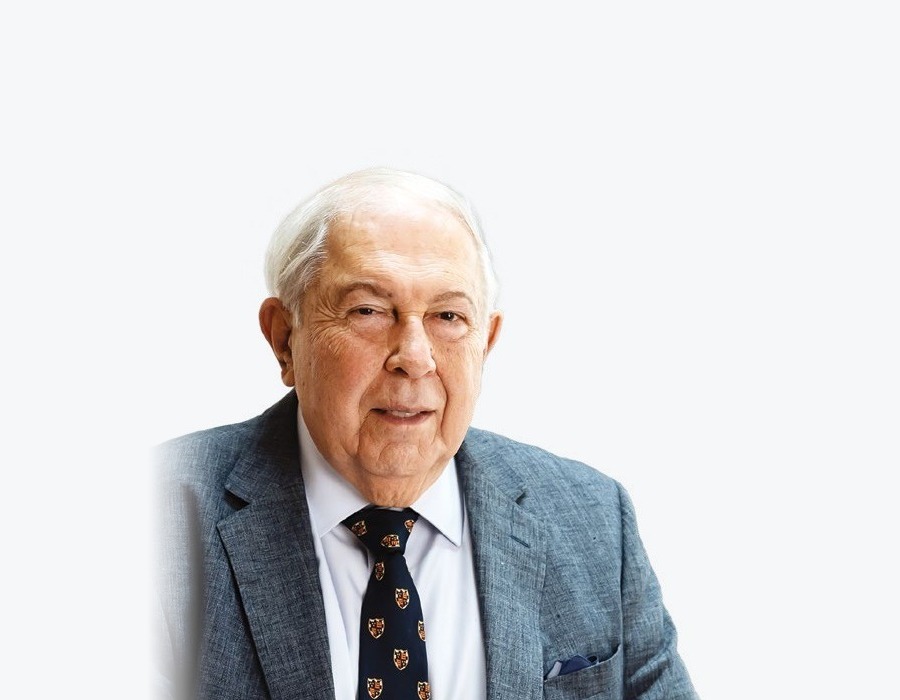
| Key facts | |
|---|---|
| Born | 25 July 1936, Wilno (now Vilnius, Lithuania); brought to Bombay as an infant [17][18] |
| Family roots | Father’s family from Aligarh, Uttar Pradesh; mother’s from Vilnius; raised in Bombay (Mumbai) [17][18] |
| Education | Cathedral and John Connon School, Bombay; BA (1957) and PhD in organic chemistry (1960), Christ’s College, University of Cambridge [20][13][9] |
| Family | Son of Cipla founder Dr Khwaja Abdul Hamied and Luba Derczanska; wife Farida; no children; younger brother M. K. Hamied [18][20][30] |
| Company | Cipla Ltd - joined 1960, Managing Director 1976, Chairman 1989, non-executive Chairman since April 2013 [9][29] |
| Wealth | About US$2.5 billion, Forbes real-time estimate, 9 November 2026 [63] |
| Known for | Offering a three-drug AIDS treatment for US$350 a year in 2001, when Western prices were US$10,000 or more [15] |
On 28 September 2000, a 64-year-old chemist from Bombay stood up at a European Commission conference in Brussels. He had been given three minutes. In front of him sat health ministers, officials and the men who ran the world’s biggest drug companies.
“Friends,” he began, “I represent the needs and aspirations of the third world.” [26]
Then Dr Yusuf Khwaja Hamied made three offers. His company, Cipla, would sell a three-drug AIDS treatment for US$800 a patient a year, and US$600 to governments that bought in bulk. It would give the technology free to any government that wanted to make the drugs itself. And it would give away, free, the medicine that stops a mother passing HIV to her baby. He ended with a line aimed at the room: “We call upon the participants of this conference to do what their conscience dictates.” [26][25]
Nobody took him up on it. “I was so disappointed, there were no takers and nobody wrote to us,” he said years later. [25]
Five months after that silence, he cut the price again, to US$350, less than a dollar a day. That offer landed on the front page of The New York Times and changed how the world treats AIDS. [15][26] It also made Hamied a hero to some and, in the words of one rival chief executive, a “pirate” to others. [26]
This is the story of how a boy born in Vilnius, raised in a nationalist household in Bombay and trained at Cambridge came to run India’s most argued-about drug company for half a century, and of what he got right and wrong along the way.
Where it began
Yusuf Hamied’s life begins with an unlikely marriage.
His father, Khwaja Abdul Hamied, was born in Aligarh on 31 October 1898. He took a BSc at Allahabad in 1920, then walked out of his master’s course to join Gandhi’s Non-Cooperation movement. He taught chemistry at the new Jamia Millia Islamia, and in the 1920s sailed for Germany with his friend Zakir Husain, later President of India. In Berlin he earned a doctorate in chemistry, working on barium compounds. [17]
On a lake cruise near Berlin in 1925 he met Luba Derczanska, a Jewish student from Wilno, the city now called Vilnius. She moved in Communist circles; he was a devout Muslim and an Indian nationalist. According to a family history by the scholars Kenneth Robbins and John McLeod, they married in Berlin’s mosque in 1928 and again the next year in the Choral Synagogue in Wilno. [18][17]
The couple settled in Bombay in the early 1930s. Abdul Hamied sold typewriters and imported tonics to make a living. Then, on 17 August 1935, he registered The Chemical, Industrial and Pharmaceutical Laboratories, with an authorised capital of Rs 6 lakh. The name was soon shortened to Cipla. It worked out of a rented bungalow on Bellasis Road in Byculla. [17][19][1]
The next summer the Hamieds went to see Luba’s parents in Wilno. Their second child, Yusuf, was born there on 25 July 1936. He was carried to Bombay about a month later. [17][18]
It was the family’s last visit. After the Nazis occupied Wilno in June 1941, Luba’s elderly parents were murdered. The same family history says the emigration papers that Abdul Hamied had been trying to arrange came through two weeks too late. Yusuf Hamied visited the killing site at Ponary, outside Vilnius, in 2008. [18]
He has described his own inheritance simply. His father, he told the Financial Times, was a Muslim who knew the Koran by heart, and his mother was Jewish. [21]
A house full of freedom fighters
The Bombay home was political. Abdul Hamied sat in the Bombay Legislative Council from 1937 to 1962 and later served as Sheriff of Bombay. Leaders of the freedom movement came and went. [17][20]
On 4 July 1939, Mahatma Gandhi visited the Cipla factory with Sardar Patel. [17] Cipla’s own annual report says the visit inspired the founder “to produce vital and life-saving medicines for India”. [1] Yusuf Hamied, who was not yet three that day, tells a sharper version passed down in the family: that Gandhi told his father the British were offering independence in return for support in the war, and that medicines would be needed. [21] The visit came two months before the war broke out, so the family account cannot be checked against the record. What is documented is what followed. War cut off imported drugs, orders poured into Cipla, and by 1941 the young company’s profits had wiped out its early losses. [17]
Yusuf went to Cathedral and John Connon School and finished his O Levels there. [20] Among his childhood friends was a boy named Zubin Mehta, who grew up to be a famous conductor. [20][18]
The first break
The break came in 1953, and it came through his father.
Alexander Todd, professor of organic chemistry at Cambridge and a future Nobel laureate, was visiting Bombay. Abdul Hamied asked him what qualifications a student needed to get in. Todd’s reply, as Yusuf Hamied has often retold it: “We have no rules, we admit anyone whom we consider suitable to be a student.” The father asked if he could send his son. “He can join in October 1954.” [24]
So an 18-year-old with only O Levels arrived at Christ’s College, Cambridge, in 1954 to read Natural Sciences. He took his BA in 1957 and stayed on for a PhD in organic chemistry under Todd, finishing in 1960 at the age of 23. [13][9][22]
He has never pretended it was merit alone. “If I had not met Todd, I would not have been here today; luck and fortune play a very important role in life,” he told Forbes India. [20]
The PhD who cleaned floors
He came home in 1960 expecting to start work. Indian company law had other ideas.
Because he was related to a director, the government had to approve his appointment and his pay. The approval took a long time. Accounts of exactly how long differ: one profile says a year, another about 18 months. [22][20] In his own telling to Mint Lounge, “for one-and-a-half years, I worked almost as a trainee with no salary, with a PhD degree, cleaning the floors.” When the salary finally came it was Rs 1,500. [23][22]
He used the wait. He decided, he said, to “learn the pharma industry backwards”, tablets, injections, everything on the shop floor. [23] He also set up Cipla’s chemical division to make the basic ingredients of medicines, known as bulk drugs, instead of importing them. [17]
Cipla was tiny. Sales in 1960 were Rs 48 lakh, and it did not figure among India’s top 50 drug companies. Foreign multinationals held roughly 80 to 85% of the Indian market. [20][22]
Taking on the patent law
The reason was the law. India still ran on a patent act written under British rule in 1911. A foreign company with a patent on a medicine could stop anyone in India making it, by any method, and charge what it liked.
In 1961 Hamied helped found the Indian Drug Manufacturers’ Association to lobby for change. “It took 11 years to achieve this objective,” he said. [22] The Patents Act of 1970, which took effect in 1972, ended patents on medicines as products. Only the process of making a drug could be patented. If an Indian chemist found a different route to the same molecule, he could sell it. [20][21]
Hamied tells a story about that fight. Cipla had made a copy of propranolol, a heart drug then sold by Britain’s ICI. He says a message went to Prime Minister Indira Gandhi asking why millions should be denied a life-saving drug “just because the patent holder doesn’t like the colour of our skin”, and that she then moved quickly. [21][75] This is his recollection; the dates of the law do not fit a week-long turnaround, and no independent record of the exchange has been published.
What is not in doubt is the result. For 33 years, until India brought back product patents in 2005 under world trade rules, Indian companies could legally copy almost any medicine. An entire industry grew in that window, from Sun Pharma under Dilip Shanghvi to Dr Reddy’s and Lupin. Cipla was there first.
His position has stayed the same for 50 years. “I am not against patents, but India cannot afford them. I am against monopolies.” [21][71]
Building the empire
On 23 June 1972, Abdul Hamied died in Tehran while visiting his daughter. He was 73. [17] Yusuf, then 35, took charge of a company with annual sales of Rs 1.66 crore. [28]
He became Managing Director in 1976 and Chairman in 1989. [9][29] By the time he gave up the managing director’s chair in 2013, sales had crossed Rs 8,000 crore. [29][30]
A chemist’s company
For four decades Cipla was run the way a laboratory is run, by one head scientist who knew every reaction. Business Standard called him a “one-man army”. [29]
The method was simple. Find an important medicine sold at a high price. Work out a new way to make it. Make the bulk drug in-house. Sell it for a fraction of the price. Repeat. By 2011 Cipla sold about 2,000 products. [31]
Two bets stand out. One was breathing. Cipla built India’s largest business in asthma inhalers, with about 45% of the anti-asthma market by 2013. [28] Hamied still lists it first. “First and foremost is our leadership in respiratory medicine,” he told shareholders in July 2025. [4]
The other was caution about going abroad. Rivals bought companies and set up sales offices in America. Hamied preferred to supply partners and let them do the selling. “If I have my own establishment abroad, you will see an increase in the top line but not in the bottom line,” he said in 2011. [31] It kept Cipla debt-light. It also meant Cipla arrived late in the United States, a point its later managers set about correcting.
The drug nobody wanted
The AIDS story began with a failure.
In the early 1990s an Indian government scientist, Dr A. V. Rama Rao, worked out a way to make AZT, then the only AIDS drug. Cipla launched it in 1993 at about US$2 a day, against roughly US$12 internationally. Almost nobody bought it. Some 200,000 capsules went unsold. [25]
Hamied went to the government. An official at the Indian Council of Medical Research told him, by his account: “We have no money for treatment. We only have money to detect and prevent.” [25]
By the late 1990s, treatment had changed. A “cocktail” of three drugs taken together could turn HIV from a death sentence into a manageable illness. But the cocktail cost US$10,000 to US$15,000 a year in the West, and the drugs were patented in most countries. In Africa, where millions were infected, hardly anyone was treated. [15][30]
In August 2000 an American activist, Bill Haddad, telephoned Hamied. That call led to the three-minute speech in Brussels, and to the silence that followed it. [26][25]
US$350
On 6 February 2001, the campaigner Jamie Love asked Hamied a blunt question: could he make the cocktail for a dollar a day? [25]
Hamied did the arithmetic and said yes. Cipla offered its combination of stavudine, lamivudine and nevirapine to the medical charity Médecins Sans Frontières (MSF) for US$350 a patient a year, and to governments for US$600. MSF pointed out that this was a discount of 96.6% on the US price of about US$10,400. [15]
The reporter Donald McNeil put the story on the front page of The New York Times on 7 February. He is said to have warned Hamied the night before: “Dr. Hamied, your life will not be the same from tomorrow.” [26] Hamied later told him, “Donald, you’ve changed my life and I don’t know whether it’s been for the good or the bad.” [25]
The offer did not, by itself, treat anyone. What it did was destroy the argument that AIDS drugs had to cost thousands of dollars. Ten weeks later, on 19 April 2001, 39 drug companies dropped their lawsuit against a South African law that allowed cheaper medicines. [16] Western makers slashed their own prices. Donors who had said treatment in Africa was unaffordable began paying for it.
Cipla then put the three drugs into a single pill taken twice a day, which made treatment far simpler in places without many doctors. [26]
The numbers moved slowly, then fast. In 2001, Hamied has said, hardly 2,000 people in all of Africa could afford treatment. [30] TIME magazine reported in September 2003 that Cipla was still supplying no more than 30,000 patients there. [32] By February 2013 he could say that more than eight million Africans were being treated with Cipla’s drug, and the cocktail cost under US$100 a year. [28][25]
Critics said he was after publicity or market share. His answer is the most quoted line of his life: “Of course I have an ulterior motive: before I die, I want to do some good.” [26]
He is clear that the episode also made the company. “The whole course of Cipla’s destiny and history changed on that day when we took the lead in AIDS drugs.” [30] Before 2000 about nine-tenths of Cipla’s sales were in India; by 2013 more than half came from abroad. [27][28]
The same play, again and again
Hamied repeated the move whenever a health scare met a high price.
When bird flu spread in 2005, Cipla made its own version of the antiviral oseltamivir, sold by Roche as Tamiflu. Hamied offered to pay Roche a 4% royalty wherever its patents were valid. [70]
In May 2012 Cipla cut the prices of three cancer drugs by up to 76%. A month’s supply of its kidney-cancer drug Soranib fell from Rs 6,990 to Rs 1,710. Hamied called it “a humanitarian approach”. [69]
His proposed rule is the same every time: let any capable company make a patented drug, and pay the inventor a royalty of around 4%. [72][71] In 2009 he went further, saying India should walk out of the World Trade Organization if its patent rules were not changed. [71]
He is also a realist about what his method cannot do. During Covid-19 Cipla took the cooperative route, selling the antiviral remdesivir under a licence from Gilead and distributing Roche’s antibody cocktail. [73][74] Asked about waiving vaccine patents, he said: “You can pick up a patent of a vaccine manufacturer, and you still won’t be able to produce it.” [27]
Handing over the lab
By 2011 Cipla had revenue of more than Rs 6,300 crore and about 40 factories. That year its long-serving joint managing director, Amar Lulla, died. [31] Hamied was 75 and still signing off on most things himself.
On 6 February 2013 he announced that he would step down as Managing Director and become non-executive Chairman from 1 April. “I can’t manage a Rs 8,000 crore company individually,” he said. Cipla hired its first outside chief executive, Subhanu Saxena. [29][30]
The professionals changed the company’s shape. Cipla bought South Africa’s Cipla Medpro for US$512 million in 2013, and the American firms InvaGen and Exelan for US$550 million in 2015, its first factories in the United States. [64][65] Saxena left in 2016. Umang Vohra, who had joined as finance chief, ran Cipla for the next decade. [58][59]
Under Vohra the company went after difficult generic drugs in America, especially inhalers. In July 2026 the US Food and Drug Administration approved Cipla’s copy of the asthma inhaler Advair Diskus, a product years in the making. [66]
Cipla today
Cipla’s revenue in the year to March 2026 was Rs 28,163 crore, its highest ever. Net profit was Rs 3,879 crore, down from Rs 5,273 crore the year before. [60][61] In the quarter to September 2026, revenue was Rs 7,404 crore and profit Rs 878 crore, a fall of 35% on a year earlier as North American sales dropped 19%. India, by contrast, had a record quarter. [62]
The company employs about 30,000 people. [4] Achin Gupta took over as Managing Director and Global CEO on 1 April 2026. [59][3]
Hamied remains non-executive Chairman. He presided over Cipla’s 90th annual general meeting on 25 June 2026, a month before his own 90th birthday, and told shareholders: “We are moving forward to our century in the year 2035.” [5]
Forbes estimated his fortune at about US$2.5 billion on 9 November 2026. [63]
The setbacks and failures
Hamied’s career has more misses in it than the legend allows.
The 1993 AZT launch flopped. Cipla was a decade early with an AIDS drug that neither patients nor the Indian government could pay for. [25]
The Brussels offer met silence. It took a second, lower price and a newspaper front page to get the world’s attention. [25]
Quality paperwork tripped the AIDS programme. In May 2004 the World Health Organization removed two Cipla AIDS medicines from its approved list. They returned six months later. The episode is covered in the next section. [8]
The biotech bet was written off. Cipla had invested in biosimilars, copies of complex biological drugs. In May 2017 it took an impairment of Rs 260 crore, said it would not manufacture biosimilars itself, and put a planned South African plant on hold. [67]
The African manufacturing dream shrank. Cipla’s Ugandan subsidiary, set up to make AIDS and malaria drugs in Africa, was listed in Kampala in 2018. In November 2023 Cipla sold its 51.18% stake for US$25 million. [68]
American regulators found serious faults. Warning letters to the Goa plant in 2020 and the Pithampur plant in 2023 delayed important launches, including generic Advair. [41][6][44]
Profit fell in 2025-26. After a record year, net profit dropped by about a quarter, and the slide continued into the September 2026 quarter as a key US product faced competition. [60][62]
There is also a cost that is harder to count. For decades Cipla depended on one man’s judgment. The move to professional management came when he was 76.
Controversies and allegations
Every matter below concerns Cipla as a company. No court, regulator or tax authority finding against Yusuf Hamied personally was found in the public record reviewed for this profile.
The “pirate” charge and Glaxo’s Ghana letter (2000-01)
Allegation: In 2000 Glaxo wrote to Cipla and its distributor in Ghana saying that imports of Duovir, Cipla’s copy of the AIDS drug Combivir, infringed Glaxo’s patents. [33][34] Glaxo’s leaders went on to describe Indian generic makers as “pirates”; the journalist Katherine Eban quotes chief executive Jean-Pierre Garnier saying they had “never done a day of research in their lives”. [35][26]
Response: Officials at the African regional patent office told reporters that the patents Glaxo cited were not valid in Ghana. [33][34] Hamied said: “We have never been against patents. We have been against monopoly.” [35] On the pirate label, he said two decades later: “Take me to court. If I’m a pirate, prosecute me.” [27]
What happened next: Cipla stopped selling Duovir in Ghana. [33] In March 2001 it applied in South Africa for compulsory licences on eight AIDS drugs. [36]
Status: Historical. No lawsuit by Glaxo against Cipla over Ghana was found. The outcome of Cipla’s South African application could not be established from the sources read.
Roche v Cipla: the cancer-drug patent
Allegation: In 2008 Roche sued Cipla in the Delhi High Court, saying Cipla’s lung-cancer drug Erlocip infringed its patent on erlotinib, sold as Tarceva. Tarceva was reported to cost Rs 4,800 a tablet and Erlocip Rs 1,600. [38]
Response: Cipla challenged the patent’s validity and argued that the public interest in an affordable cancer drug weighed against stopping its sale. The court refused Roche an interim injunction, and in 2012 a single judge held the patent valid but not infringed. [37]
What happened next:
- On 27 November 2015 a two-judge bench of the Delhi High Court reversed that and held that Cipla had infringed Roche’s patent. It did not order an injunction, because the patent was due to expire in March 2016, but ordered costs of Rs 5 lakh and an account of Cipla’s sales. [37]
- Cipla appealed to the Supreme Court. In 2017 the two companies settled, and on 16 June 2017 the appeals were dismissed as withdrawn. Cipla acknowledged the validity of Roche’s patent rights. The terms were not made public. [38]
Status: Closed. The 2015 finding of infringement was not overturned.
Novartis and the Onbrez injunction
Allegation: Novartis sued Cipla for infringing its Indian patent on indacaterol, a lung-disease drug sold as Onbrez, after Cipla launched a copy.
Response: Cipla had asked the government to revoke Novartis’s patents in the public interest, saying Novartis imported too little to meet demand and that its own version cost far less. It later withdrew that request. [39]
What happened next: The Delhi High Court granted a temporary injunction against Cipla on 9 January 2015. A two-judge bench upheld it on 9 March 2017, holding that a patent does not have to be manufactured in India to count as “worked” here. [39]
Status: The injunction was upheld in 2017. A final judgment in the suit was not found in the sources read.
The drug-price overcharging demands
Allegation: Since 1998 the National Pharmaceutical Pricing Authority (NPPA) has issued demand notices saying Cipla charged more than the government-fixed price for certain medicines under the Drugs (Prices Control) Order of 1995. [2]
Response: Cipla disputes the notices. It says it has been legally advised that the demands are unlikely to stand, and it has made no provision for them in its accounts. [40][2]
What happened next:
- The Bombay High Court ruled for Cipla in 2001. The Supreme Court set that aside in 2003 and sent the case back. [2]
- In October 2016 the Supreme Court ruled for the government in a connected appeal. Cipla deposited about Rs 175 crore, half the amount then claimed. [40][2]
- In February 2024 the Bombay High Court allowed Cipla to amend its petition on condition that it deposit half of later demands. Cipla appealed; the Supreme Court issued notice in April 2024. Cipla deposited a further Rs 27.07 crore in July 2025. [2]
Status: Pending. Cipla’s July 2026 results filing puts the amount under litigation at Rs 2,011 crore, made up of Rs 863 crore of principal and Rs 1,148 crore of interest. [2]
US FDA warning letters: Goa and Pithampur
Allegation: The US Food and Drug Administration issued a warning letter for Cipla’s Goa plant in February 2020, citing failures in cleaning equipment and in procedures to prevent contamination. [41] A second letter, for the Pithampur plant near Indore, followed on 17 November 2023. It recorded about 3,000 complaints about Cipla’s albuterol asthma inhaler between April 2020 and December 2022, mostly that the inhaler did not spray or was empty. The agency wrote: “Your complaint system was ineffective.” It also cited failed sterility simulations and torn records found in scrap bags. [6]
Response: Cipla recalled six batches of the inhaler in the US in July 2023 and said no adverse events had been reported in connection with the recall. [7] It has said it will work closely with the agency and address every observation. [43]
What happened next: The Pithampur letter delayed approvals from that site, and Cipla shifted work on generic Advair towards its American factory. [44] The Goa plant was re-inspected in April 2026 and classified “Voluntary Action Indicated”, a category that does not call for regulatory action. [42] A follow-up inspection at Pithampur in August 2026 ended with seven fresh observations. [43]
Status: Open. As of 9 November 2026, no public notice that either warning letter has been formally closed was found.
WHO removes two AIDS medicines from its list (2004)
Allegation: In May 2004 the World Health Organization took two Cipla AIDS medicines, lamivudine and a lamivudine-zidovudine combination, off its list of prequalified products. The fault lay in studies run by outside contract laboratories that were meant to show the drugs behaved like the originals. It was not a finding that the medicines were unsafe. [8][45]
Response: Cipla commissioned new studies. Hamied has said in general terms that multinationals use quality questions to belittle generic companies.
What happened next: WHO restored both products on 30 November 2004 after inspecting the laboratories and reviewing the new data, saying the process showed generic makers “reacting responsibly”. [8]
Status: Closed in 2004.
Income-tax demands
Allegation: The Income Tax Department carried out a survey at Cipla on 31 January 2023. [46] In July 2024 Cipla disclosed tax demands of Rs 773.44 crore covering assessment years 2015-16 to 2022-23. [47]
Response: After the survey Cipla said it had cooperated fully and that “there is no claim or demand made on us”. Of the 2024 orders it said the demands were “not tenable in law”. [46][47]
What happened next: Cipla said it would appeal against the 2024 orders. [47] No public ruling on those appeals was found.
Status: Under appeal, by Cipla’s account. The position in 2026 could not be confirmed from the sources read.
Competition cases in India and a US antitrust suit
Allegation: In a case filed in 2012, the Competition Commission of India examined trade practices in medicine distribution involving the chemists’ association AIOCD and several drug companies, Cipla among them. Separately, in November 2022, American pension funds filed a class action alleging that Bristol Myers Squibb and a group of generic makers, with Cipla named among them, delayed cheaper versions of the cancer drug Revlimid. [48][49]
Response: No public statement by Cipla on the US suit was found.
What happened next: In June 2026 the Competition Commission closed the Indian case, finding no contravention by any party. [48] In the US, the litigation is continuing.
Status: The Indian case is closed with no finding against Cipla. The US claims are allegations that have not been tested at trial; whether Cipla remains a defendant could not be verified.
The 2023 stake-sale reports
Allegation: In July 2023 Reuters, citing Moneycontrol, reported that the Hamied family was in talks to sell its entire holding of about 33% in Cipla to private equity firms. Later reports named Blackstone and Torrent Pharma, led by Samir Mehta, among the suitors, and said talks stalled over price. [50][51]
Response: Cipla told the stock exchanges it was not aware of anything requiring disclosure. At the annual general meeting in August 2023 Hamied said: “All the news you are hearing is speculative.” [50][52]
What happened next: No sale of control took place. Family members other than Yusuf Hamied sold 2.53% in May 2024, saying the money was for specific needs “including philanthropy”, and a further 1.72% in December 2024, taking the promoter group’s holding to about 29.2%. [53][54]
Status: These were media reports, not regulatory matters. As of 9 November 2026 the family remains Cipla’s promoter and Hamied its Chairman.
Giving back
Hamied’s giving follows two loyalties: chemistry and the dying.
In 1997 he set up the Cipla Palliative Care Centre in Pune, which looks after people with advanced cancer free of charge. It has served more than 26,000 patients. The Cipla Foundation now supports palliative care projects reaching about 65,900 patients a year. [76]
The rest goes largely to Cambridge and to science teaching. He has funded a student centre, laboratories and a professorship. In December 2020, after a further gift whose size was not disclosed, the university renamed its chemistry department the Yusuf Hamied Department of Chemistry until 2050. [11][13] On 31 July 2026, days after turning 90, he opened two more laboratories there. “I wish I was a student again,” he said. [12][79]
In India, he gave Rs 8 crore to the Royal Society of Chemistry in 2014 to train school chemistry teachers. By September 2023 the programme had trained its 40,000th teacher. [77][14] The Royal Society, which elected him a Fellow in 2019, runs a Yusuf Hamied programme linking British and Indian researchers. [10]
He has also honoured his mother’s side. In 2015 the Yusuf and Farida Hamied Foundation helped put up a monument in Rusne, Lithuania, to Gandhi and his Lithuanian-born Jewish friend Hermann Kallenbach. [81]
India gave him the Padma Bhushan in 2005, and Cambridge an honorary doctorate in 2014. [80][9]
His giving is not on the scale of Azim Premji’s, and no published philanthropy ranking for him was found. His own summary, at 90: “that is what I’ve been doing all my life: helping education, helping in health care, and helping society in general.” [78]
Succession
Yusuf and Farida Hamied have no children. [30] Succession at Cipla has therefore meant two things: who runs it, and who owns it.
On running it, the answer since 2013 has been professionals. Three outsiders in a row have held the chief executive’s job: Subhanu Saxena, Umang Vohra and, from April 2026, Achin Gupta. [30][59]
The family’s next generation has stepped back from management. Hamied’s nephew Kamil, once described as heir apparent, left his executive role in 2015. [57] His niece Samina was executive vice-chairperson from 2016 until 31 March 2024. [58][56] His brother M. K. Hamied retired as vice-chairman in October 2024 after 47 years, citing his age, and Kamil returned to the board as a non-executive director. [55]
On ownership, the promoter group’s holding has fallen from about 33.5% in 2023 to about 29.2% after the two share sales of 2024. [53][54] The 2023 buyout talk came to nothing, but it showed that a sale is no longer unthinkable.
Hamied himself has not named a successor as Chairman. At the June 2026 meeting he said he hoped to be there for Cipla’s centenary in 2035, and added that he could not guarantee it. [5]
What their journey teaches
Know the work from the floor up. Hamied spent his first unpaid months learning to make tablets and injections. Forty years later he could cost an AIDS cocktail in his head, because he knew what every step actually cost.
A fair price can be a strategy, not only a charity. The US$350 offer did good, and it also opened export markets that made Cipla several times larger. He never claimed the two were separate.
Laws shape industries. Cipla’s rise, and that of Indian pharma, rested on the 1970 patent law that Hamied lobbied for. When the law changed in 2005, the easy years ended. Readers who follow companies can find more on how policy drives sectors in our insights.
Being right on principle does not excuse being wrong on detail. Cipla lost the Roche case, was restrained in the Novartis one and drew two FDA warning letters. Cheap medicine still has to be made to standard and within the law.
Let go before you have to. Hamied ran Cipla personally until he was 76. The company’s biggest leaps in America and South Africa came after he handed over, and he has said himself that one person cannot manage a business of that size.
A profile for general reading, based on public records and reporting as of 9 November 2026. Not investment, tax or legal advice.
Sources (81)
- Cipla Annual Report 2019-20 - Cipla Ltd, Aug 2020
- Cipla integrated filing, results for quarter ended 30 June 2026 - NSE, Jul 2026
- Cipla outcome of board meeting - NSE filing, Oct 2025
- Cipla AGM transcript 16 July 2025 - NSE filing, Jul 2025
- Cipla 90th AGM transcript - Financial Filings, Jul 2026
- Warning Letter: Cipla Limited 660904 - US FDA, Nov 2023
- Cipla Issues Voluntary Nationwide Recall of Six Batches of Albuterol Sulfate Inhalation Aerosol - US FDA, Jul 2023
- Two Cipla AIDS medicines back on WHO's list of prequalified medicines - WHO Prequalification, Nov 2004
- Honorary degrees 2014 - University of Cambridge, Jun 2014
- Dr Yusuf Hamied FRS - The Royal Society, Nov 2026
- Major gift secures the Department's future - Yusuf Hamied Department of Chemistry, Dec 2020
- Honouring the past, inspiring the future: new laboratories open - Yusuf Hamied Department of Chemistry, Aug 2026
- Department of Chemistry to be named in honour of Dr Yusuf Hamied - Christ's College Cambridge, Dec 2020
- Royal Society of Chemistry celebrate 40,000th Indian teacher trained - Royal Society of Chemistry, Sep 2023
- AIDS Triple Therapy for Less than $1 a Day - Doctors Without Borders, Feb 2001
- Drug Companies in South Africa Capitulate Under Barrage of Public Pressure - Doctors Without Borders, Apr 2001
- Khwaja Abdul Hamied (1898-1972): Pioneer Scientist and Industrialist - Indian Journal of History of Science, Dec 2010
- A Story of the Holocaust and the AIDS Epidemic - Lithuanian Jewish Community, Jan 2016
- Only boycott of British goods won't do: Why Abdul Hamied went on to create Cipla - ThePrint, Feb 2021
- YK Hamied: Cipla's fearless crusader - Forbes India, Nov 2016
- The man who battled big pharma - Financial Times (repost), Mar 2008
- Dr Yusuf K Hamied: India's generics king - BioSpectrum Asia, Mar 2012
- Cipla's Yusuf K Hamied is India's medicine man - Mint Lounge (via Marcellus), Jan 2021
- Cambridge formalises chemistry with Hamied - Eastern Eye, Nov 2018
- How Yusuf Hamied's Cipla developed an affordable generic medicine for AIDS - Scroll.in, Jan 2022
- How Indian pharma giant Cipla made AIDS drugs affordable - Quartz India, Jul 2019
- Maverick medicine man - Hindustan Times, Mar 2021
- Time has now come to say goodbye to India: Yusuf Hamied - Business Standard, Feb 2013
- Cipla's one-man army steps down as MD - Business Standard, Feb 2013
- What prompted Y.K. Hamied to go for a management change at Cipla - Business Today, May 2013
- Cipla's chairman faces tough challenges that are different from the past - Business Today, Aug 2011
- Prescription for Profits - TIME, Sep 2003
- Glaxo Attempts to Block Access To Generic AIDS Drugs in Ghana - Wall Street Journal (via PNHP), Dec 2000
- Glaxo blocks importation of generic Combivir into Ghana - HIV i-Base, Jan 2001
- Crusading Indian firm takes on might of Glaxo SmithKline - The Guardian (via HIV i-Base), Mar 2001
- Generics manufacturer enters the fray - Mail & Guardian, Mar 2001
- Delhi HC rules infringement by Cipla of Roche's lung Cancer Drug Patent - LiveLaw, Nov 2015
- Patent Battle Over Lung Cancer Drug: SC Disposes Of Cipla's Appeal Against Roche As Withdrawn - LiveLaw, Jun 2017
- Del HC Upholds Interim Injunction Against Sale of Cipla's Copy of Novartis' Respiratory Drug Onbrez - SpicyIP, Mar 2017
- Blow to Cipla; company loses court battle in drug-overcharging case - Business Standard, Oct 2016
- USFDA issues warning letter to Cipla for Goa plant - Business Standard, Mar 2020
- Cipla Secures VAI Status for Goa Plant After USFDA Inspection - Outlook Business, Jun 2026
- Cipla Pithampur Facility Gets 7 USFDA Observations in Follow-Up cGMP Inspection - Medical Dialogues, Aug 2026
- Cipla stocks slump 8% after US FDA warning letter - Business Today, Nov 2023
- Two Cipla antiretrovirals return to WHO prequalification list - aidsmap, Nov 2004
- I-T Department Investigates Cipla For Alleged Tax Violations, Company Responds - Outlook Business, Mar 2023
- IT Department sends Rs 773 crore demand notice to Cipla - Medical Dialogues, Jul 2024
- CCI Closes 14-Year Antitrust Case Against AIOCD, Cipla, Sun Pharma And Other Drugmakers - LiveLaw Biz, Jun 2026
- Monopoly allowed Bristol Myers and generics makers to steal from Revlimid purchasers, lawsuit says - FiercePharma, Nov 2022
- Top shareholders of drugmaker Cipla looking to sell stake: Report - Reuters via Business Standard, Jul 2023
- Why Cipla's potential sale is getting delayed - Business Today, Oct 2023
- Evergreen Cipla: Chair Hamied Talks New Technologies Amid Speculative Sale News - Scrip, Aug 2023
- Cipla zooms 5% on 2.53% stake sale by Hamied family, Okasa Pharma - Business Standard, May 2024
- Promoters Samina, Rumana Hamied exit Cipla by selling 1.72 percent stake - Medical Dialogues, Dec 2024
- Cipla vice-chairman M.K. Hamied resigns - Business Standard, Sep 2024
- Cipla's Samina Hamied steps down citing personal commitments - Business Today, Jan 2024
- Cipla heir apparent Kamil steps down - Business Standard, Jun 2015
- Cipla Names Umang Vohra As MD And Global CEO; Samina Vaziralli Is Executive Vice-Chairman - BioSpace, Aug 2016
- Umang Vohra exits Cipla as Achin Gupta takes over as MD & CEO - Storyboard18, Apr 2026
- Cipla achieves highest-ever annual revenue of Rs. 28,163 crore in FY26 - Indian Pharma Post, May 2026
- Cipla reports FY25 PAT higher 28.4% at Rs. 5,273 Cr - Indian Pharma Post, May 2025
- Cipla Q2 profit falls 35 per cent to Rs 878 crore as revenue declines 2 per cent - The Week, Oct 2026
- Yusuf Hamied profile - Forbes, Nov 2026
- Cipla completes acquisition of Cipla Medpro - Business Standard, Jul 2013
- Cipla Acquires US Companies InvaGen and Exelan - Pharmaceutical Technology, Sep 2015
- Cipla Receives U.S. FDA Approval for Generic Advair Diskus - BioSpace, Jul 2026
- Cipla's Q4 loss narrows to Rs 62 crore, scales down biotech business - Business Standard, May 2017
- Cipla completes stake sale in Uganda-based unit - Devdiscourse, Nov 2023
- Cipla slashes cancer drug prices by up to 76 pc - Business Standard, May 2012
- Interview with Yusuf Hamied - Multinational Monitor, Mar 2006
- Cipla Pharmaceuticals' Yusuf Hamied: I Am Not Against Patents, I Am Against Monopolies - Knowledge at Wharton, May 2009
- The man who saved millions with cheap medicines - South Centre, Jul 2013
- Cipla launches CIPREMI (remdesivir lyophilised powder for injection 100 mg) - PR Newswire, Jun 2020
- Cipla launches Roche's Covid antibody cocktail in India for Rs 60k per dose - Business Standard, May 2021
- The India story: The journey to becoming the pharmacy of the world - Business Standard, Dec 2024
- A Circle of Care: How Cipla Foundation Is Advancing Access to Palliative Care Across India - The Logical Indian, Oct 2026
- Cipla head donates Rs.8 crore to promote chemistry in India - Business Standard, Feb 2014
- Cipla chief Yusuf Hamied is 90 not out, still batting for affordable medicines - Eastern Eye, Jul 2026
- Cipla's Yusuf Hamied helps modernise Cambridge chemistry labs - Eastern Eye, Aug 2026
- Padma Awards 2005 - Outlook India, Jan 2005
- Monument for Gandhi and his Litvak friend unveiled in west Lithuania - LRT, Oct 2015