
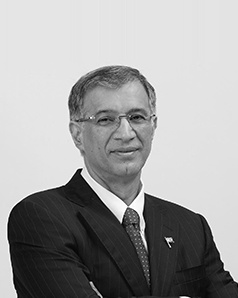
| Key facts | |
|---|---|
| Born | 8 March 1950, Mumbai [8][9] |
| Family roots | Sindhi; father Dr Lakhumal H. Hiranandani, ENT surgeon and Padma Bhushan (1972), born in Thatta, Sindh, settled in Bombay in 1937 [10][11] |
| Education | Campion School, Mumbai; B.Com (Hons), Sydenham College (second rank, Mumbai University); chartered accountant [74][3][9] |
| Family | Brother and co-founder Surendra Hiranandani; son Darshan (group CEO); daughter Priya Hiranandani-Vandrevala [36][12] |
| Company/Group | Hiranandani Group (Hiranandani Communities), with Yotta data centres, H-Energy and Greenbase under the wider group [4][36][45] |
| Wealth | About Rs 26,900 crore, eighth on the GROHE-Hurun India Real Estate Rich List 2026 (July 2026) [70]; Forbes estimated US$1.4 billion in April 2024 [7] |
| Known for | Turning Powai’s quarry land into Hiranandani Gardens, one of Mumbai’s best-known private townships |
In January 1981, Niranjan Hiranandani’s workers walked in with a demand: double our wages. The 30-year-old chartered accountant was then running a small powerloom unit in Charkop, Kandivali, and losing money on it, just as he was losing money on the few flats he and his younger brother Surendra had started to sell. He could have bargained. Instead he shut the factory. “For me, it was divine intervention,” he told Outlook Business three decades later, “as we were undecided about pursuing real estate or textiles” [12][14].
That decision pushed a surgeon’s son, who had never planned to be a builder, into Mumbai property. Within five years he was signing a lease on about 230 acres of scarred quarry land in Powai, on terms so generous to the developers that one newspaper later summed them up as “40 paise per acre” [18]. Out of that land came Hiranandani Gardens, with its domes, columns and tree-lined roads. It made his name and his fortune, and it also kept him in court for the better part of 15 years.
This is the story of how Niranjan Hiranandani built one of Mumbai’s best-known real estate brands, how the family business moved into LNG, warehousing and AI data centres, and the disputes and investigations that have followed the family along the way.
Where it began
Niranjan Hiranandani was born in Bombay on 8 March 1950 [8][9]. He was not born into business. “I wasn’t born into a business family,” he told students at HSNC University in 2026 [69].
His father, Dr Lakhumal Hiranand Hiranandani, was born on 17 September 1917 in Thatta, in Sindh, the eldest son of a small trader who died young. His mother is said to have sold her gold ornaments to pay for his studies [10]. Dr Hiranandani arrived in Bombay in 1937 with, by his own account, Rs 100 in his pocket. He qualified in medicine from Topiwala National Medical College in 1942, earned his FRCS in London and built India’s first ENT department with head-and-neck surgery at BYL Nair Hospital [10][11]. The government awarded him the Padma Bhushan in 1972 [11]. He died in September 2013, aged 96 [10].
The family is often described as having come to India at Partition [12]. The more detailed accounts say otherwise: Dr Hiranandani and his wife Kanta had settled in Bombay a decade earlier, in 1937, and Niranjan grew up a Bombay boy, in Malabar Hill [10][11][12]. He had two brothers: Navin, an ENT surgeon who died before their father, and Surendra, who would become his business partner [11][12].
The surgeon’s practice gave the boy his first look at business. “My father had the biggest Indian business tycoons as his patients,” he said in 2024. “When I used to see these big business men, I used to be overwhelmed” [16]. Outlook Business reported that the Birla and Mafatlal families were among those patients [12]. “It was always there in the back of my mind,” he said; “the world of business looks very attractive” [16].
His father wanted him to become a professional [14]. He studied at Campion School in Mumbai and then at Sydenham College, where he took a B.Com (Hons) and ranked second in Mumbai University [74][3]. He qualified as a chartered accountant and began working life teaching accountancy [9][74]. Much later he also earned a PhD in management, with a thesis titled “Housing Revolution in India: Challenges and Prospects” [14].
The first break
Textiles and a hard lesson in money
The Hiranandani brothers did not start in property. Forbes India reported that between 1976 and 1980 they “dabbled unsuccessfully” in several ventures, including food exports [13]. A family friend, Durga Prasad Mandelia, a long-time Birla executive who knew their father, suggested textiles. The brothers began supplying grey cloth to Gwalior Mills, and Niranjan set up a powerloom unit at Charkop in Kandivali [12].
Money was the constant problem. The brothers were borrowing on hundis (informal bills of exchange) at 2.5% a month, which works out to more than 30% a year [12]. Builders in those years, he recalled, were widely seen as “black marketeers and smugglers”, and a small firm found it hard to raise funds [9]. “For me, being an entrepreneur was a jump in the dark,” he said in 2019 [9].
Accounts differ on dates. Several profiles say he set up the weaving unit in 1981 [74][8]; Outlook Business, Realty+ and the Free Press Journal say he closed it in early 1981, after the union demanded a 100% wage increase [12][14][9]. The second version fits better with the brothers’ own founding date for the property business, which the group gives as 1978 [3][36]. A 2026 report of one of his talks named the union leader as Datta Samant, the trade unionist who dominated Mumbai’s mill disputes of that era; we found that name in only one source [69].
Whatever the exact sequence, by early 1981 both businesses were losing money and he chose one [14][16]. “Every setback became my classroom,” he would say decades later [69].
Rs 63 a square foot, and a four-year wait
The first real estate deal nearly sank them. In 1980, Forbes India reported, the brothers took up a plot on deferred payment and began selling flats at Rs 63 per sq ft. They sold about 40,000 sq ft. Then they found the seller had been dishonest about the title. Sorting it out took four years. When it was done, they sold the land for about Rs 75 lakh, and that sum became their working capital for real estate [13]. Forbes India said the brothers had started the company “with no capital” [13].
The early projects were small and suburban. The first was a joint development in Malad, followed by buildings in Malad, Hira Nagar in Mulund, and a Versova plot bought from Kamlakarpant Walawalkar of Samarth Developers, on which they built 11 buildings [12]. Niranjan handled finance and commercial work; Surendra ran construction [12]. In Versova they hired a young architect, Hafeez Contractor, to design Beach Classic, beginning a partnership that would shape Powai [14]. Short of money, Niranjan hired young professionals because, he said, “I could not afford the experienced experts” [14].
The Andheri West projects also planted the idea that would define his career. He lived in the Lokhandwala area and had built 11 buildings there, “but when I looked out, the roads were bad,” he told an interviewer in 2025. There were “no streetlights, no water supply, no drainage” [17]. “Every time I finished a project, I would look out of the window,” he told Realty+ [15]. He wanted to build not just buildings but a whole neighbourhood, something “much better than Malabar Hill, where I grew up” [12].
Building the empire
Powai: quarry land at 40 paise an acre
Powai in the early 1980s was on the city’s eastern edge: a lake, the IIT Bombay campus, hills and quarries. In 1977 the Maharashtra government had drawn up a scheme to build low- and middle-income housing there, approved in June 1979, but the Bombay Metropolitan Region Development Authority (BMRDA, later MMRDA) said it had no money to carry it out [18].
The Hiranandanis offered to do it. In 1985 they began buying land in Powai, which Niranjan later described as “quarry land with just 20 trees” [12][27]. On 19 November 1986 the developers, the state government and MMRDA signed a tripartite agreement under what became the Powai Area Development Scheme (PADS), covering about 230 acres [1][21]. Nineteen landholders signed, with “N. Hiranandani” as their power of attorney [18].
The terms explain both the township’s success and the fights that followed:
- the land came on an 80-year lease at a nominal rent, reported as 40 paise per acre (Open magazine said Re 1 per hectare, which is roughly the same) [18][19];
- it was exempted from the Urban Land Ceiling Act, which otherwise capped how much urban land one party could hold [18];
- half the flats were to be no larger than 40 sq m and the rest no larger than 80 sq m, and 15% were to go to the state at Rs 135 per sq ft [18][1][21].
Sources give the township’s size as anything from about 200 to 250 acres. The developers’ own figure is about 250 acres; the court record covers 230 acres under the agreement [4][1][12].
Neo-classical Powai
Construction began in the late 1980s; Realty+ dates it to 1987 and Business Today to 1989 [14][36]. Niranjan’s family thought the plan was “crazy” [17]. “Most people were cynical of what I was doing and it was a huge risk for us,” he said [15].
The look of the place was his bet. With Hafeez Contractor he chose a European, neo-classical style of domes, columns and pediments. “I wanted the building design to be timeless,” he told Realty+ in 2018. “This is perennial and attractive architecture” [14]. The developers laid their own roads, drainage and water supply, the things he had missed at Lokhandwala [17], and planted trees on the bare quarry land. A school followed in 1990 [6], then offices: Scorpio House in 1995, and later buildings let to companies such as CRISIL [8].
By the 2000s Hiranandani Gardens had become a by-word for upmarket suburban Mumbai, with dozens of residential towers and a commercial district that drew multinationals. Activist Medha Patkar counted 42 residential and 23 commercial buildings in 2008 and said none of the flats was smaller than 1,800 sq ft [18]. That claim, that a scheme meant for small flats had become a luxury enclave, became the centre of the legal fight described below.
Thane, Panvel, Chennai and the Hirco years
Powai’s success financed the next townships. The brothers built Hiranandani Estate in Thane, on Ghodbunder Road, at a scale of about 350 acres [46][4]. In the mid-2000s, during the global property boom, the family looked to London for money. Hirco plc, a vehicle linked to the family and led for a time by Niranjan’s daughter Priya, listed on London’s AIM market and put about £350 million into Hiranandani-linked townships at Panvel near Navi Mumbai and Oragadam near Chennai [12][32]. In October 2007 alone it invested about Rs 783 crore in the Panvel project [28].
That venture turned into the group’s worst setback, described in the next section. But the land stayed with the Hiranandanis, and both sites are now among the group’s main projects: Hiranandani Fortune City at Panvel and Hiranandani Parks at Oragadam, which the company describes as a 360-acre township with a golf course [4].
The US$1 billion Brookfield deal
In October 2016 the brothers made the largest commercial property sale India had seen. Canada’s Brookfield bought about 4 million sq ft of the Powai office and retail portfolio for an estimated US$1 billion (about Rs 6,700 crore) [26]. Business Standard reported that the assets were demerged so that each brother received about US$500 million within five months, and that the deal was part of succession planning [27]. The group still kept about 3,000 flats under construction and roughly 2,000 acres of land [26].
Dividing the empire with Surendra
The brothers had been drifting into separate businesses for years. Surendra ran House of Hiranandani, his own company, with his daughter Neha [12]. In 2012 Niranjan spoke of an informal “yours, mine and ours” arrangement; Surendra said “there is no such paper” and “ultimately, they started on their own and I started on my own” [12].
The formal split came in March 2022. The brothers divided about 90% of their jointly held Mumbai-region assets, valued by market experts at about Rs 20,000 crore, keeping about 10% jointly. Niranjan took the roughly 250-acre Powai township; Surendra took the roughly 350-acre Thane township. “We have done it peacefully and happily after 40 years,” Niranjan said [46][47]. House of Hiranandani declined to comment [46]. Readers should note that Surendra’s House of Hiranandani runs its own projects under the family name, separate from Niranjan’s business [12][46].
LNG, warehousing and a son’s new businesses
The next stage of growth was led by Niranjan’s son, Darshan. He began in Dubai, building the Marina 23 tower with a Rs 2 crore loan from his father [12]. Back in India he set up H-Energy, which built a floating LNG import terminal at JSW’s Jaigarh port in Ratnagiri. Maharashtra Chief Minister Devendra Fadnavis inaugurated it on 1 May 2018; the floating storage unit cost Rs 1,663 crore and the terminal had a planned capacity of 4 million tonnes a year [38]. In April 2021 the chartered vessel Höegh Giant arrived for a 10-year contract, and the terminal was described as Maharashtra’s first year-round LNG facility [39].
In December 2019 the group’s warehousing arm, Greenbase, formed a 50:50 joint venture with Blackstone, with each side committing more than Rs 2,500 crore for about 12 million sq ft of industrial and logistics parks [37]. By 2026 the original parks had passed largely to the Blackstone side; BusinessLine reported in September 2026 that Hiranandani was relaunching on its own as “Greenbase 2.0”, with Rs 2,000 crore planned for 5 million sq ft across 215 acres in Tamil Nadu [45]. In 2022 the group also announced a consumer-technology venture, Tez Platforms, with an initial Rs 1,000 crore [73], and in November 2024 the Uttar Pradesh cabinet approved a semiconductor plant proposed by its company Tarq near Jewar airport, at an estimated Rs 27,000 crore or more [72].
Yotta: from Powai builder to AI infrastructure
The most striking bet is Yotta. On 18 July 2019, the same day Niranjan named Darshan his successor, the group launched Yotta to build data-centre parks [5][36]. Its first building, NM1 at Panvel, opened in July 2020 with 820,000 sq ft and space for about 7,200 server racks [40].
When the generative-AI boom arrived, Yotta moved quickly. After Nvidia chief Jensen Huang met Prime Minister Narendra Modi in September 2023, Yotta placed an order for 16,000 Nvidia H100 chips, one of the largest in India at the time [41]. In February 2026 Reuters reported that it was spending more than US$2 billion on over 20,000 of Nvidia’s newer Blackwell Ultra chips, with Nvidia itself using half of them for its DGX Cloud service [42]. Bloomberg reported in March 2026 that Yotta sought a valuation of about US$4 billion before a planned IPO [43], and in August 2026 Darshan, now Yotta’s chairman, told Bloomberg Television the listing would come “very soon” [44]. As of 10 November 2026 we could not confirm that a draft prospectus had been filed.
For Niranjan the change of generation is clear. “The data centre business is actually run by my son, Darshan,” he said in 2024 [16].
How the wealth is held
Almost all of the family’s wealth sits in unlisted private companies: the real estate business (Hiranandani Communities), Yotta, H-Energy, Greenbase and a family office [7][4]. That makes estimates uncertain. Hurun put Niranjan’s wealth at Rs 17,030 crore in 2019 [71]; Forbes estimated US$1.4 billion in April 2024 [7]; and the GROHE-Hurun India Real Estate Rich List 2026, released in July 2026, ranked him eighth among real estate entrepreneurs with about Rs 26,900 crore [70]. A Yotta listing, if it happens, would be the first time any part of the family’s holdings is valued daily by the market.
Two other developers in this series, Mangal Prabhat Lodha and DLF’s Kushal Pal Singh, built their fortunes in Mumbai and Gurugram in the same decades; their profiles are here and here.
The setbacks and failures
The Hirco collapse
Hirco was meant to bring global capital to Indian townships. It ended in losses and lawsuits. As early as January 2009, shareholders including Laxey Partners opposed a plan for Hirco to take over the family’s Panvel and Chennai project companies [29]. Niranjan left as Hirco’s non-executive chairman in late 2010 [31].
Work on both townships stalled. By late 2013 the project companies had defaulted on loans, including about Rs 500 crore from HDFC and Rs 76 crore from Tata Capital, and in December 2013 the Bombay High Court appointed a court receiver over the Chennai project company on Tata Capital’s plea [33][30]. In April 2014 Hirco wrote its roughly £350 million investment in India down to nil [32]. Hundreds of buyers and investors in the Chennai project were left waiting [33].
Hirco blamed the Hiranandanis. In February 2013 it sued Niranjan and his daughter Priya in the Isle of Man alleging fraud, saying costs and timelines had been concealed [33]. Niranjan said he had had no involvement with Hirco for about three years, that the projects had been sub-leased to contractors and that a market slowdown was to blame [31]. The outcome is set out in the controversies section below.
A smaller footnote came later: in 2019 the National Company Law Tribunal admitted an insolvency petition by Dalmia Cement against Hiranandani Palace Gardens, the old Chennai project company, over an unpaid Rs 11.2 lakh, and the company was later ordered into liquidation [2].
A family split and a daughter’s arbitration
The family’s most painful dispute was internal. In 2010 Priya Hiranandani-Vandrevala, who had built and sold her own outsourcing company before helping list Hirco, began arbitration in the London Court of International Arbitration (LCIA) against her father and brother [35], alleging breach of a 2006 business agreement under which, she said, she was entitled to more projects. “Her contention is that she is entitled to many more projects,” Niranjan said at the time [12]. Business Today reported that in 2016 the tribunal ruled in her favour, ordering about Rs 360 crore to be paid, and that the matter had since been settled [36].
Slow years
Mumbai real estate went through a long slump in the mid-2010s, and the Powai litigation froze new construction and sales there between 2012 and 2023 [20][21]. Niranjan has also been frank about the market’s newer weak spot. “I’ve never seen in my 45 years plus of business the downfall of affordable housing,” he said in May 2026 [66].
Controversies and allegations
Powai: were affordable-housing terms broken?
Allegation: Public interest litigation filed from 2008 by Kamlakar Satve, Rajendra Thacker and Medha Patkar’s National Alliance of People’s Movements alleged that the developers had used land leased cheaply in 1986 for small affordable flats to build large luxury apartments, merged flats and commercial buildings, in breach of the PADS agreement [1][20][19]. Critics said the state had lost heavily; in a related criminal complaint, figures as high as Rs 30,000 crore were alleged [23].
Response: Niranjan has denied wrongdoing. He said the state government and MMRDA had approved larger flats in 1989 [12], and the court record notes a 1989 exemption allowing some merging of flats, capped at 15% of the development [21].
What happened next:
- In February 2012 the Bombay High Court stopped further construction and sales in the scheme until housing for weaker sections was provided, directing about 3,100 small flats (1,593 of 40 sq m and 1,511 of 80 sq m) to be built and handed to the state at the 1985 rate of Rs 135 per sq ft [20][21]. The developers recorded undertakings to comply [1].
- Moneylife reported that the Supreme Court declined to interfere with the High Court’s order in 2012 [22].
- In April 2021 a bench led by Chief Justice Dipankar Datta said the developers were “certainly bound” by their undertakings, said it was “not fully convinced” by the reasons for delay, and granted final extensions [1].
- By May 2022 the developers had handed over flats totalling about 17,146 sq m to the state [21].
- On 11 January 2023 the High Court lifted all restrictions after finding the interim obligations met, allowing the developer to proceed and to withdraw about Rs 112.35 crore of sale proceeds held under the court’s control [21].
- In a separate criminal case registered by Maharashtra’s Anti-Corruption Bureau in 2012, the bureau twice sought closure. On 2 June 2025 a special court accepted the closure report, holding that “no criminal offence warranting prosecution is made out” [23][24][25].
Status: The High Court treated the civil obligations as discharged in January 2023, and the criminal case was closed in June 2025. The complainant’s lawyer said the issues could only be settled by the higher courts [25]; we found no report of a further challenge as of 10 November 2026. The large “scam” figures were complainants’ allegations, not court findings.
Hirco fraud claim
Allegation: Hirco plc alleged in 2013 that Niranjan Hiranandani and Priya Hiranandani-Vandrevala had concealed the true costs and timelines of the Panvel and Chennai projects, and sought several hundred million pounds in damages; reported figures range from £303 million to £450 million [33][34].
Response: Niranjan denied any link to the problems, saying he had left Hirco years earlier and that the slowdown was to blame. He also offered to recapitalise or buy the projects [31][33].
Status: Global Arbitration Review reported in August 2016 that an LCIA tribunal seated in Singapore had rejected the fraud claim against him [34]. Hirco was subsequently wound up.
Pandora Papers, income tax searches and the ED’s FEMA probe
Allegation: In October 2021 the Pandora Papers investigation, published in India by The Indian Express with the ICIJ, reported that Darshan Hiranandani had set up British Virgin Islands companies and a trust, and that Niranjan and family members were beneficiaries of a trust with assets of over US$60 million [48][49]. In March 2022 the Income Tax Department searched about 24 group premises in Mumbai, Chennai and Bengaluru over alleged tax evasion, including foreign assets linked to a family trust [50][51]. In February 2024 the Enforcement Directorate searched group premises under the foreign exchange law (FEMA) [52][53]; the Free Press Journal, citing the agency, reported allegations about the use of more than Rs 400 crore of foreign investment, a detail we found in only that source [54].
Response: Niranjan said the offshore money was his son’s. “Unfortunately, the money does not belong to me. I wish it did,” he told CNBC [49]. Darshan said it was his personal trust and “any money routed to the trust is money sent by me” [48]. On the tax searches, the group said its offshore trust and assets were “fully bonafide and compliant with all laws” and that it had cooperated fully [51]. After about 10 hours of questioning by the ED on 4 March 2024, Niranjan said: “I am cooperating with the agencies,” adding that the matter concerned foreign investment from about 15 years earlier [54].
Status: As of 10 November 2026 we found no public tax demand, ED complaint, adjudication order or penalty arising from these matters. They remain investigations without a reported outcome, and no wrongdoing has been established.
The “cash-for-query” affair
Allegation: In October 2023 BJP MP Nishikant Dubey accused Trinamool Congress MP Mahua Moitra of asking questions in Parliament in exchange for cash and gifts from Darshan Hiranandani. Darshan then gave the Lok Sabha Ethics Committee a sworn affidavit saying Moitra had shared her parliamentary login so that questions could be posted, including questions aimed at Gautam Adani, and that he had given her gifts and favours [55]. Moitra called the affidavit “a joke” and alleged that the Hiranandanis had been pressured into writing it, a claim she did not substantiate publicly [55]. The Hiranandani Group initially said the allegations had “no merit” and that it was “in the business of business and not in the business of politics” [55].
What happened next:
- Moitra was expelled from the Lok Sabha in December 2023 and re-elected in 2024 [57].
- On a reference from the Lokpal, the CBI registered a case under the Prevention of Corruption Act in March 2024, naming Darshan Hiranandani among the accused [56].
- The Lokpal sanctioned a chargesheet against Moitra in November 2025; the Delhi High Court quashed that sanction in December 2025 [57][58].
- On 13 March 2026 the Supreme Court stayed the High Court’s direction and put the probe on hold pending a ruling on the Lokpal’s sanction powers [59]. In September 2026 it deferred the hearing again [60].
Status: Pending in the Supreme Court as of 10 November 2026. No chargesheet has been filed and no court has made any finding against Darshan Hiranandani. The matter concerns Darshan personally; no allegation in it has been made against Niranjan.
As of 10 November 2026, we found no orders against Niranjan Hiranandani or his group companies by SEBI, the RBI or the Competition Commission of India.
Giving back
The family’s charitable work is built around its founder’s father. The Hiranandani Foundation Trust, chaired by Dr L.H. Hiranandani, opened two schools in Powai in 1990 and one in Thane in 1999 [6]. The Dr L.H. Hiranandani Hospital in Powai was commissioned in February 2004; it says it was the first hospital in western India to get NABH accreditation, in 2007, and that it treated about 10,500 Covid-19 patients over 18 months [64]. Niranjan keeps these separate from the business: “these sectors are not for profit, they are in charitable institutions and kept separately,” he said [16].
His wider community role is in education. He has been involved with the HSNC Board, a Sindhi education trust running about 22 institutions, and HSNC University in Mumbai, and he is a trustee of several temples [8][69]. In 2013 DNA reported that he helped manage 17 colleges, eight schools and two hospitals [65]. We found no reliable public figure for his personal donations.
He has also been a long-serving voice for his industry. He was elected national president of the National Real Estate Development Council (NAREDCO) in 2017 and its chairman in October 2025 [62][63], and was president of the industry chamber ASSOCHAM from December 2019 [61]. His recurring theme is housing for the bottom of the market. “How can you have Atmanirbhar Bharat and growth and prosperity that we see without this segment taking place?” he asked in May 2026, calling for rental housing funded partly by CSR money and charitable trusts [66]. “This is the first time I have seen the bottom of the pyramid not growing and instead declining,” he said a month later [67]. Coming from the developer whose own affordable-housing obligations were fought over for 15 years, those remarks have drawn attention to his record as well as his advocacy.
He is often called “Dr Niranjan Hiranandani” [63]. Note that the Padma Bhushan belongs to his father; we found no record of a Padma award to Niranjan himself [8][11].
Succession
Niranjan settled the question in public. On 18 July 2019, at a Mumbai press conference, he named Darshan, then 36 and a graduate of the Rochester Institute of Technology, as his successor and group CEO. “Darshan will be my successor in real estate. He is going to be the second best till I am around,” he said [36].
In practice the roles have divided along generational lines. Niranjan, as founder and managing director, remains the face of the real estate business and the industry bodies; Darshan runs the newer, capital-hungry businesses: Yotta, H-Energy and the semiconductor plan [16][44]. Niranjan’s 2024 summary of the semiconductor venture applies to all of them: “In terms of working and actually doing the operations, I will not be in the picture, it will be by my son” [16].
He shows no sign of stepping back himself. On turning 75 in 2025 he posted that he was “not retiring at 75 — just re-tyre-ing for the road ahead” [68]. “After a point, money becomes meaningless and it’s all about happiness,” he had said in 2013 [65].
What their journey teaches
Close a losing business quickly. In 1981, faced with a union demand he could not meet, Hiranandani shut the textile unit and put everything into property. Choosing one business early freed both money and attention.
A bad deal can still teach you something. The first plot’s title problem cost four years, but the brothers came out with Rs 75 lakh and a lesson in due diligence that mattered when they assembled hundreds of acres in Powai.
Sell a way of life, not just a flat. The Powai idea came from looking out of his own building at broken roads. Roads, drains, trees, schools and a hospital, plus a distinctive look, made Hiranandani Gardens a brand that still sells.
The terms of a public deal outlast the deal itself. The 1986 lease made Powai possible, and its affordable-housing conditions then shaped 15 years of litigation, stalled sales and reputational cost. Any business built on public land or public concessions should expect its promises to be checked, sometimes decades later.
Selling assets at the top can pay for the next generation. The US$1 billion Brookfield sale in 2016 turned rental buildings into cash, which helped the family fund energy, warehousing and data centres. That move is why a Mumbai builder’s family now runs one of India’s largest AI computing businesses.
Settle the succession question while you can. Naming Darshan in 2019, while staying on to guide the property business, gave the group a clear chain of command. The family’s earlier disputes show what can happen when expectations are left unwritten.
For more stories on markets, money and India’s business builders, see CapitalVia Insights.
A profile for general reading, based on public records and reporting as of 10 November 2026. Not investment, tax or legal advice.
Sources (74)
- Classique Associates v. Kamlakar Motiram Satve, Bombay High Court order - Indian Kanoon, Apr 2021
- NCLT Mumbai order, Dalmia Cement v. Hiranandani Palace Gardens Pvt Ltd - IBBI, Jan 2019
- About Hiranandani - Hiranandani Group, Nov 2026
- Hiranandani Communities: projects and about us - Hiranandani Communities, Nov 2026
- Hiranandani Group forays into data center parks with Yotta - Yotta press release, Jul 2019
- Dr L H Hiranandani - Hiranandani Foundation Schools, Nov 2026
- Niranjan Hiranandani profile - Forbes, Apr 2024
- Niranjan Hiranandani - Wikipedia, Nov 2026
- 'You have to be world-class' - Free Press Journal, Jun 2019
- Dr Lakhumal Hiranandani, India's surgeon of the millennium - Sindh Courier, Apr 2021
- Hiranandani family celebrates 108th birth anniversary of Dr LH Hiranandani - Free Press Journal, Sep 2025
- Row House - Outlook Business, May 2012
- Today, the heroes of the industry are moneylenders, not engineers - Forbes India, Feb 2017
- The Builder Extraordinaire - Realty+, Feb 2018
- Interview with Dr Niranjan Hiranandani, co-founder and MD - Realty+, Feb 2018
- How Niranjan Hiranandani created the 'real' estate business - Entrepreneur India, Aug 2024
- 'My family thought I was crazy': How Niranjan Hiranandani built Powai township - Business Today, Jan 2025
- Hiranandani Gardens land 'bought at 40 paise per acre' - Gulf News, Jan 2008
- When a lie scrapes the sky - Open magazine, May 2012
- Bombay HC halts construction by Hiranandani Developers in Powai - Down To Earth, Feb 2012
- High Court allows Hiranandani Developers to proceed with development of Powai Area Development Scheme - Free Press Journal, Jan 2023
- Supreme Court rejects Hiranandani's petition regarding Powai project - Moneylife, May 2012
- Mumbai court accepts closure report in Powai land development case - The Week (PTI), Jun 2025
- Mumbai court accepts closure report in Powai land development case - ThePrint, Jun 2025
- Special court accepts ACB's closure report in Powai Area Development Scheme probe - Free Press Journal, Jun 2025
- Brookfield, Hiranandani in India's largest commercial space deal - Business Standard, Oct 2016
- Niranjan Hiranandani spoilt for choice after $1-bn sell-off - Business Standard, Oct 2016
- Hiranandanis invest Rs 783 cr in Navi Mumbai - Business Standard, Oct 2007
- Hiranandani's problems at AIM mount - Business Standard, Jan 2009
- Hirco threatens action against Hiranandanis - Business Standard, Jan 2014
- Hiranandani denies link to Hirco townships - Business Standard, Jan 2014
- Hirco books $350-mn loss in India - Business Standard, Apr 2014
- Hirco deals fresh blow to battered realty sector - Business Standard, Apr 2014
- Indian property tycoon cleared of fraud - Global Arbitration Review, Aug 2016
- Karanjawala & Co. pulls off first LCIA arbitration in India in Hiranandani family dispute - Bar & Bench, Aug 2013
- Niranjan Hiranandani announces son Darshan as successor to his real estate empire - Business Today, Jul 2019
- Hiranandani inks JV with Blackstone to invest Rs 2,500 cr for industrial, warehousing space - Business Standard, Dec 2019
- H-Energy's floating LNG terminal at Jaigarh inaugurated - Business Standard, May 2018
- Maharashtra gets India's first floating LNG storage and regasification unit - Business Standard, Apr 2021
- Yotta Infra unveils gigantic data centre in Mumbai - Business Insider India, Jul 2020
- How PM Modi's meeting with Nvidia CEO Jensen Huang helped Yotta obtain large H100 order - Business Today, Jan 2024
- India's Yotta to build $2 billion AI hub with Nvidia chips - Reuters via Yahoo Finance, Feb 2026
- AI startup Yotta seeks $4 billion valuation ahead of planned IPO - Bloomberg, Mar 2026
- Yotta plans IPO 'very soon' to keep up with AI demand - Bloomberg via Yahoo Finance, Aug 2026
- Hiranandani goes solo with industrial platform Greenbase 2.0 - BusinessLine via TradingView, Sep 2026
- Hiranandani brothers divide large joint realty projects in MMR region - Free Press Journal (PTI), Mar 2022
- Hiranandani brothers amicably divide their Mumbai real estate assets - Realty+, Mar 2022
- Niranjan Hiranandani beneficiary of trust with assets of $60 million: Pandora Papers - Deccan Herald, Oct 2021
- Pandora Papers: Niranjan Hiranandani says assets belonged to son Darshan - Business Insider India, Oct 2021
- Income Tax department searches 24 premises of Hiranandani Group - Business Standard, Mar 2022
- Offshore trusts, assets 'fully bonafide': Hiranandani Group on I-T raids - Business Today, Mar 2022
- ED raids office, other locations of Hiranandani Group over FEMA violation - Business Today, Feb 2024
- ED searches against Hiranandani group in FEMA probe - Deccan Herald, Feb 2024
- Niranjan Hiranandani quizzed for over 10 hours by ED in FEMA case - Free Press Journal, Mar 2024
- 'Letter drafted by PMO': Mahua Moitra dismisses businessman's allegations - Scroll, Oct 2023
- CBI includes Darshan Hiranandani as accused in FIR against Moitra - Business Standard, Mar 2024
- CBI gets Lokpal nod to file chargesheet against Moitra in cash-for-query case - The Tribune, Nov 2025
- Delhi High Court quashes Lokpal order against Mahua Moitra - ETV Bharat, Dec 2025
- Cash-for-query case: Supreme Court stays Delhi HC order, issues notices - India TV, Mar 2026
- SC defers hearing on Lokpal plea in cash-for-query case - ETV Bharat, Sep 2026
- Niranjan Hiranandani takes over as Assocham president - Business Standard, Dec 2019
- NAREDCO elects Niranjan Hiranandani as new president - Business Standard, Sep 2017
- NAREDCO elects Parveen Jain as president and Dr Niranjan Hiranandani as chairman - NBM&CW, Oct 2025
- Dr L H Hiranandani Hospital completes 20 years of service - The Week (PTI/NewsVoir), Mar 2024
- After a point, money becomes meaningless, says Niranjan Hiranandani - DNA, Nov 2013
- 'Never seen in my 45 years plus of business': Niranjan Hiranandani says affordable housing is in deep trouble - Business Today, May 2026
- 'Bottom of the pyramid is not growing': Niranjan Hiranandani sounds alarm on affordable housing - Business Today, Jun 2026
- 'Did we become what we dreamed?' 75-year-old Niranjan Hiranandani's chat with younger self goes viral - Business Today, Nov 2025
- Master Induction Series 2026: Dr Niranjan Hiranandani inspires HSNC University students - Free Press Journal, Jul 2026
- GROHE-Hurun India Real Estate Rich List 2026: Gautam Adani overtakes DLF's Rajiv Singh - Free Press Journal, Jul 2026
- M P Lodha India's richest realty tycoon, DLF's Rajiv at second spot - Business Standard (PTI), Dec 2019
- Noida's semiconductor surge: UP cabinet greenlights projects by Hiranandani and HCL - Swarajya, Nov 2024
- Hiranandani Group eyes consumer tech play with Rs 3.5k cr investment - Business Standard, Feb 2022
- Spotlight: Niranjan Hiranandani - Campion School alumni, Nov 2026