
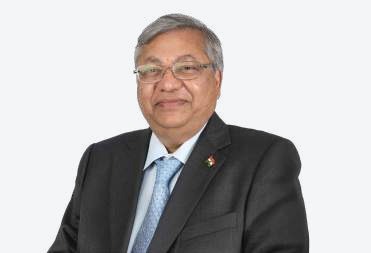
| Key facts | |
|---|---|
| Born | 28 November 1954 [2] |
| Hometown/Family roots | A Marwari family with roots in Rajasthan; grew up in the family home on Prithviraj Road, New Delhi [26] [24] |
| Education | Delhi Public School, Mathura Road, New Delhi; studied business management in New York [1] [26] |
| Family | Father Chunni Lal (CL) Jaipuria; brothers C.K. and S.K. Jaipuria; wife Dhara; daughter Devyani and son Varun (Executive Vice-Chairman, Varun Beverages) [1] [24] [18] |
| Company/Group | RJ Corp: Varun Beverages (PepsiCo bottler), Devyani International (KFC, Pizza Hut, Costa Coffee franchisee), Cream Bell, healthcare and education [17] [28] |
| Wealth | US$10.7 billion, No. 20 on the Forbes India Rich List (September 2026) [29]; Rs 1,09,260 crore with family, No. 17 on the M3M Hurun India Rich List 2025 [59] [60] |
| Known for | Turning one unwanted Thums Up plant in Agra into PepsiCo’s largest bottler outside the United States |
In 1987, Ravi Jaipuria moved into a two-bedroom flat on the terrace of a soft-drink factory in Agra. Two years earlier he had been a 30-year-old businessman in Montreal with textile, retail and property interests. Now he was a widower with a baby daughter in Delhi, running a single bottling plant that neither of his elder brothers had wanted.
“Agra depressed me,” he later recalled. “There were no friends, no family, those were not the days of mobile phones… not even landlines… It was just me and the factory.” Most nights he stayed in the shipping department until two in the morning, making sure the trucks were loaded [24]. A PepsiCo India chief who watched him in those years remembered the same thing: “He was tireless and used to ensure till late at night that all trucks have been loaded” [35].
Almost four decades later, the company that grew out of that plant, Varun Beverages Ltd (VBL), bottles roughly 90% of PepsiCo’s beverage volume in India and runs franchises across Africa and South Asia [16]. It sold 1,213 million cases in calendar 2025 on net revenue of Rs 21,685 crore [5]. His other listed company, Devyani International, runs more than 2,300 KFC, Pizza Hut and other restaurants [7]. Forbes put his net worth at US$10.7 billion in September 2026 [29].
The story in between has no single big invention. It is built on unglamorous work: loading trucks, buying territories, cutting costs, and staying close to one partner for 35 years. It also has its losses: a personal tragedy, failed ventures, a regulatory settlement, and a 2025 share-price slump. This is that story.
Where it began
A Marwari bottling family in Delhi
Ravi Kant Jaipuria was born on 28 November 1954, the youngest of three sons of Chunni Lal Jaipuria, whom the family called “Bauji” [2] [30]. The Jaipurias are a vegetarian Marwari family with roots in Rajasthan. CL Jaipuria and his brother traded textiles, including as distributors for Raymond, and CL co-founded the Bank of Rajasthan [26] [27].
The family’s link to soft drinks began in the 1960s, when CL won a Coca-Cola bottling franchise. Forbes reported it came after a chance meeting with a Coke executive in Atlanta [26]. When Coca-Cola left India in 1977 rather than meet the government’s conditions, the Jaipurias switched to bottling Parle’s Thums Up [30] [27].
Ravi grew up in the family mansion at 8 Prithviraj Road in Lutyens’ Delhi, and finished his higher secondary schooling at Delhi Public School, Mathura Road [1] [31]. VBL’s 1995 registered office was at that same address [1].
Fifteen years abroad
At about 16 he left India to study in New York [30]. Forbes reported that he earned an undergraduate degree in business management there [26]. His IPO prospectuses, which are legally vetted, list only his higher secondary schooling, so the degree is less certain than the schooling [1] [2].
At 20 he moved from New York to Montreal. “Brick by brick, I had built a decent business in Montreal – expanding the family textiles business there, adding some retail assets, and real estate,” he said in a long first-person interview with Outlook Business [24]. He later told Forbes India he lived there “for about 12 years” and that “as a kid, I enjoyed the western part of the world” [27]. He kept his Indian citizenship throughout [26].
23 June 1985
That life ended suddenly. His first wife, Mala, aged 27, was among the 329 people killed when Air India Flight 182, flying from Montreal via London to Delhi, was destroyed by a bomb off the coast of Ireland on 23 June 1985 [23]. She was on her way to India to bring back their daughter Devyani, then about four months old.
“My life came crumbling down that day,” Jaipuria said. “I was so blank, broken. I was drowning in grief – married for just two years, now left with a little baby girl” [24]. At his family’s urging he married Dhara, Mala’s sister. Dhara did not want to live in Canada, so he “sold off everything, all I had created, except our home” and moved back to India [24]. Their son, Varun, was born in November 1987 [2].
Sources differ on exactly when he rejoined the family business: Bloomberg and others say 1985, while Forbes India says he moved his base to India in 1987 [27].
The first break
Taking what was left
When Ravi came home, his brothers C.K. (Chandra Kant) and S.K. (Surya Kant) were already running the bottling plants. In 1987 their father divided the business between his three sons [26] [30].
Jaipuria has always called the split fair, even though he came last. “It happened because of me,” he said. “I was the one who came in suddenly and wanted a piece of the pie, but they were graceful. Bauji was clear – CK and SK would have the first right to choose, I will have to accept whatever remained” [24]. S.K. took Nagpur and C.K. took Delhi. “The unloved one was Agra, despite being the city that epitomises love!” [24]
The paperwork tells the same modest story. The company now called RJ Corp was first registered in 1980 as Cheers Beverages Pvt Ltd and renamed Arctic Drinks in 1985 [1]. Chris White, a former Nestle executive who later ran RJ Corp, said: “I’ve known Ravi since he had just one shed in Agra and was loading trucks himself” [25].
The 1991 switch to Pepsi
PepsiCo entered India at the end of the 1980s. In 1991 Jaipuria made the decision that shaped the rest of his career: he dropped Thums Up, which then held most of the Indian cola market, and signed with Pepsi, which held about 10% [24] [27].
He credits his brother C.K. with moving first. “Among their 60 bottlers, our tie-up was just for three territories. The runway for growth seemed limited. I was stuck in that 100 kilometre territory for so long – I was raring to go” [24]. PepsiCo’s version stresses its own persuasion. Ravi Dhariwal, then running PepsiCo India, told Fortune India: “Within an hour, we had an agreement, as Ravi realised he had much more growth potential with PepsiCo” [35].
The break with Parle’s Ramesh Chauhan was uncomfortable. “He said Thums Up’s story was still very strong. I replied Pepsi was the choice of the new generation… It was a business decision – there was no role for emotions” [24]. Selling to distributors was harder still: “Suddenly, we had to switch, and say, ‘this 10% market share product is the best, it is the future. Now, try and sell it’” [24]. About 75% of his distributors stayed.
Borrowing from the brand owner
Growth needed money the brothers did not have. “I needed about Rs 150 crore for my territories alone,” Jaipuria said. PepsiCo offered to put in the funds and convert them to equity later. His father settled the argument: “If you want to grow you have to get this partnership going and learn to deal with them” [24]. Jaipuria says he bought back that equity about four years later [24]. The documents show PepsiCo India held some VBL equity and preference shares, with the preference shares redeemed only in 2011, so the timing in his memory and the filings do not quite match [1].
The territories came one after another. “We got our second territory – western UP, then we got Meerut. We put up the second plant in 1994. Then came Rajasthan and a third plant in 1995. By 1997, we were catering to half of UP and Haryana, part of Delhi and all of Rajasthan” [24].
Varun Beverages Ltd, named after his son, was incorporated in New Delhi on 16 June 1995 [1] [16]. In March 1996 it raised about Rs 5 crore of share capital, including Rs 1 crore from his parents and a small stake from PepsiCo India [1]. Its first plant began work in Jaipur in 1996, followed by Alwar, Jodhpur and Kosi in 1999 [16].
The recognition came quickly. PepsiCo named him International Bottler of the Year; the company’s prospectus and website date the award to 1997, while a 2019 Business Standard profile dates it to 1999, and he remains the only Indian bottler to win it [1] [34]. He received it from former US President George H.W. Bush in Hawaii, with 16 family members in the audience. “I had to pause and compose myself before walking up the stage,” he said. “That day I felt like I achieved something. Bauji was proud” [24].
Building the empire
Restaurants against his father’s wishes
The second business came through the same partner. In the mid-1990s PepsiCo also owned Pizza Hut and KFC, and a PepsiCo executive asked Jaipuria: “Why don’t you give it a shot?” [24] The company that became Devyani International, first registered in 1991 as Universal Ice Creams, signed a development agreement with PepsiCo’s restaurant arm and opened its first Pizza Hut in Jaipur in fiscal 1997 [2].
For a strictly vegetarian family it was a painful choice. Bauji was “dead-against getting into a business that served non-veg,” Jaipuria said, and once asked PepsiCo people to “please sell this business for Ravi and give away the money to charity” [24]. Twenty years later Jaipuria told Forbes India: “Sometimes I wonder if I did the right thing… For me, it was a business. I said as long as I am continuing with my tradition and not doing it myself, how does it matter.” And: “My father was very proud of me except for this” [27].
Growth was slow. Devyani opened eight restaurants in its first seven years [24]. When KFC opened its first Indian outlet in Bengaluru in 1995, protesters attacked it. “It jolted us,” Jaipuria said later. “You might call it growth pangs” [36] [26].
The 2000s: many bets, one core
Through the 2000s Jaipuria behaved like what Business Standard called “a compulsive risk-taker” [34]. Alongside bottling he launched Cream Bell ice cream with his brother C.K. in the early 2000s, after years of making ice cream for other brands [24]. He also ran Costa Coffee in India, a Disney retail venture, J-Mart grocery stores, real estate, FM radio, a beer joint venture with AB InBev, schools, and healthcare [34] [26]. RJ Corp became the holding company for all of it.
The bottling business kept growing in the background. In 2004 VBL merged with Devyani Beverages, and in 2013 it took over the Delhi Pepsi business of his brother C.K. [16] [26]. Abroad, he moved into Nepal, Sri Lanka, Morocco, Zambia and Mozambique [3]. In 2013 Forbes counted him among India’s billionaires for the first time, with about US$1.5 billion [25].
The style became legendary. Forbes India reported in 2013 that he avoided computers and smartphones, carried an old-fashioned mobile, and had reports faxed to him [26]. “Only when I see something amiss in the daily report, is when I pick up the phone and ask the CEO what the hell is going on,” he told The Economic Times [30].
The 2016 IPO
By 2016 VBL needed to cut debt. Before the listing Jaipuria told Business Standard that consolidated debt stood at Rs 1,690 crore [33]. The initial public offering (IPO) raised Rs 1,113 crore at Rs 445 a share, was subscribed 1.86 times, and listed on 8 November 2016 at Rs 430, about 3% below the issue price [37]. Proceeds went mainly to repaying loans [37].
It was an unremarkable start. For calendar 2016 VBL reported net revenue of Rs 3,852 crore and profit of Rs 151 crore, across 17 Indian states and two union territories [3].
Becoming PepsiCo India’s main bottler
The real transformation came over the next three years, as PepsiCo stepped back from bottling to focus on brands and marketing. “There is a move by PepsiCo and Coca-Cola to focus on what they think is core, which is brand building, marketing, product development,” Jaipuria said in 2016 [33].
- 2017: VBL took over Odisha and parts of Madhya Pradesh from PepsiCo, and raised its stake in Zambia from 60% to 90% [16].
- December 2017: it agreed to buy Jharkhand and Chhattisgarh. The stock rose 48% in nine sessions [38].
- February 2019: it signed for Gujarat, Kerala, Tamil Nadu, Telangana, parts of Maharashtra, Karnataka and Andhra Pradesh, and five union territories [39]. Business Standard put the price at about Rs 1,850 crore and estimated it lifted VBL’s share of PepsiCo India’s sales from 51% to over 80% [40]. Neither company disclosed the price.
VBL today says it handles about 90% of PepsiCo’s beverage volume in India [16].
The numbers followed. Net revenue rose to Rs 5,105 crore in 2018 [4], and to Rs 16,043 crore in 2023 [41]. VBL’s market value crossed Rs 1 lakh crore in May 2023 [42] and Rs 2 lakh crore in February 2024 [43].
Africa
Jaipuria personally oversees Africa, while his son Varun runs India. “Africa is where India was 15 years ago,” he told Forbes in 2026 [28]. The push was not new: VBL had territories in Morocco, Zambia and Zimbabwe for years, and set up a Democratic Republic of Congo unit in 2021 [16].
The step change came in South Africa:
- December 2023: VBL agreed to buy The Beverage Company (BevCo), PepsiCo’s franchisee for South Africa, Lesotho and Eswatini, at an enterprise value of Rs 1,320 crore [44]. The deal closed in March 2024 [45].
- December 2025: VBL agreed to buy Twizza, a South African soft-drink maker, at an enterprise value of about Rs 1,119 crore (ZAR 2,095 million) [46].
- May 2026: it opened a US$40 million plant complex in Harare, Zimbabwe [47].
Not every African deal worked. Agreements to buy PepsiCo bottlers in Tanzania and Ghana, announced in November 2024, lapsed in March 2025 (see the controversies below) [73]. A planned South African dairy acquisition, Crickley Dairy, lapsed in 2026 and went to arbitration in October 2026 [48].
Money to grow, and a new contract
In November 2024 VBL launched a qualified institutional placement (QIP), a share sale to institutions, of up to Rs 7,500 crore, to fund subsidiaries and cut debt [49].
In calendar 2025, VBL’s volume rose 7.9% to 1,213 million cases, net revenue rose 8.4% to Rs 21,685 crore, and profit rose 16.2% to Rs 3,062 crore [5].
Two 2026 decisions may matter even more than the numbers. In May 2026, PepsiCo and VBL extended their Indian bottling agreement to 30 April 2049 and removed a clause that had required VBL to act solely as a vehicle for PepsiCo’s business [6]. The company had already amended its charter in October 2025 to allow alcoholic drinks and signed a deal to distribute Carlsberg beer in parts of Africa [50]. In August 2026 it set up KIVA Spirits, a ready-to-drink alcohol subsidiary in India led by a former Diageo executive [51]. Jaipuria has said “we are not going to jump the gun” on alcohol [13].
In the July-September 2026 quarter, VBL’s net revenue rose 33% to Rs 6,608 crore and profit rose 13.5% to Rs 831 crore [52].
Devyani grows up
Devyani International went public in August 2021, raising Rs 1,838 crore at Rs 90 a share [53]. Since then it has expanded by acquisition: 274 KFC outlets in Thailand in a US$128.9 million deal with Temasek as partner, announced in December 2023 [54]; and up to 80.72% of Biryani By Kilo’s parent for Rs 419.6 crore in April 2025 [55].
The biggest move came on 1 January 2026, when Devyani and Sapphire Foods, the other large KFC and Pizza Hut franchisee in India, announced a merger at 177 Devyani shares for every 100 Sapphire shares [56]. Jaipuria called it “far more than combining two businesses” and said it was “about creating one of the largest F&B platforms in India” [57]. The Competition Commission approved it by November 2026 [7].
How the wealth is held
Most of Jaipuria’s fortune sits in two listed companies:
- Varun Beverages (September 2026): the promoter group owns 59.43%, made up of RJ Corp 25.28%, Ravi Jaipuria 16.71%, Varun Jaipuria 15.43% and Devyani Jaipuria 1.94%, with almost nothing pledged [14].
- Devyani International (June 2026): the promoters hold 61.36%, mostly through RJ Corp (57.98%). After the Sapphire merger this would fall to about 42% [15].
RJ Corp also owns unlisted businesses such as Cream Bell ice cream [22], and a stake in Medanta hospitals’ parent, Global Health, where Jaipuria is a board member [58] [20].
Because his wealth tracks VBL’s share price, it swings. Forbes put him at US$10.7 billion, No. 20 in India, in September 2026, about 20% lower than a year earlier [29] [28]. The M3M Hurun India Rich List 2025 ranked “Ravi Jaipuria & family” No. 17 with Rs 1,09,260 crore [59] [60].
The setbacks and failures
Ventures that did not work. Jaipuria is unusually open about these. Costa Coffee was cut from about 100 outlets to 46 to curb losses; he called the Disney retail venture “a disaster”; real estate and FM radio “came a cropper”; and J-Mart groceries were “limping along” [34] [24]. He also exited the beer joint venture with AB InBev [24]. His own verdict: “I wasn’t disciplined, I was in a hurry” [34].
The 2006 pesticide scare. In 2006, a report claiming pesticide residues in colas hit soft-drink sales across India. Jaipuria called it a “tough time” that pushed him to diversify [26].
Angola, 2003. Exploring Africa, he travelled to Angola with a prospective partner who was shot dead in his hotel room the next day. Jaipuria sheltered at the Indian ambassador’s residence. “Never went back,” he said [26] [24].
Debt. VBL slipped into losses in 2013-14 when interest costs jumped about 50% in a year, and the 2016 IPO was partly a way to repay loans [34]. “As you grow old, you also become a little averse to taking on debt,” he said in 2019 [27].
COVID-19. In the April-June 2020 quarter, VBL’s revenue fell 42% and profit 65% [61]. That September it applied to close its two-decade-old plant at Kanjikode in Kerala, which had 112 permanent workers and over 500 contract staff, and workers protested over compensation [62].
The 2025 slump. VBL shares fell about 30% in the first half of 2025, hurt by price competition from Reliance’s Campa Cola and Coca-Cola, unseasonal rain and lapsed African deals [63]. (Read our profile of Mukesh Ambani, whose Reliance relaunched Campa.) In September 2025 the GST Council moved carbonated and caffeinated drinks to a 40% rate [64]. The stock ended 2025 down about 27.5%, breaking an eight-year rally [65]. Jaipuria’s public line was calm: “We believe competition is good and healthy and will only grow the market for all of us” [13].
Devyani’s losses. The restaurant business has struggled with weak demand. Devyani reported a consolidated net loss of Rs 109.78 crore in the October-December 2025 quarter [66], and a loss of Rs 42.5 crore for the year to March 2026 [67].
Controversies and allegations
Jaipuria’s record is far quieter than that of many Indian tycoons, but it is not blank. The matters below come from regulators, courts and company filings. In our review of public reporting we did not find any ED or Income Tax search against him or his companies, or any short-seller report on them. This section is current as of 10 November 2026.
SEBI insider-trading case (2021-22)
Allegation: The Securities and Exchange Board of India (SEBI) issued a show-cause notice in December 2021 alleging that Jaipuria passed unpublished price-sensitive information about a VBL deal with PepsiCo India, announced in early January 2018, to two people connected to him through Lemon Tree Hotels, where he was then a director. SEBI said both bought VBL shares before the announcement and sold after it, and noted all three were in Bangkok when the orders were placed [68] [69].
Response: Jaipuria applied to settle without admitting or denying the findings, as SEBI rules allow [68].
What happened next:
- In June 2022 he settled by paying about Rs 56 lakh [68].
- In July 2022 the other two parties settled separately for about Rs 73 lakh, including disgorgement and interest, also without admission [69].
Status: Closed by settlement. There was no finding of guilt.
Nepal tax case (2019-20)
Allegation: In December 2019, Nepal’s Department of Revenue Investigation filed a case in Kathmandu District Court against Varun Beverages (Nepal), alleging it used fake VAT bills between 2013-14 and 2018-19 to evade about NPR 649.6 million in taxes. It sought about NPR 1.95 billion including penalties, and jail terms for seven present and past promoters and directors, including Jaipuria [70] [71].
Response: VBL told the stock exchanges that the issue related to VAT collected by suppliers of promotional material but not deposited by them, that it had co-operated fully, and that it believed it had complied with the law [8]. The Nepal unit deposited a bank guarantee of about NPR 1.6 billion to avoid arrests [71]. In March 2020, VBL said the charge sheet sought NPR 64.96 crore (about Rs 40.6 crore) including interest and penalty, and that it was confident of a waiver or reduction in court [9].
Status: The figures reported in the media and by the company differ. We found no public court outcome; the case appears to be pending.
Groundwater penalty at Greater Noida (2022)
Allegation: On 25 February 2022, the National Green Tribunal (NGT) found that VBL’s Greater Noida plant had drawn groundwater without a valid clearance in an over-exploited area. It ordered the company to pay Rs 9.71 crore in environmental compensation. The same order fined two Coca-Cola bottling units [72].
Response: VBL appealed to the Supreme Court in April 2022 (Civil Appeal 2907 of 2022) [11].
Status: The Supreme Court stayed the order in a parallel appeal by one of the Coca-Cola bottlers in May 2022. We found no final ruling on VBL’s appeal; it appears to be pending.
Disclosure of the lapsed African deals (2025-26)
Allegation: VBL announced deals to buy PepsiCo bottlers in Tanzania and Ghana in November 2024. When the agreements ended on 31 March 2025, it disclosed this only in a note to its quarterly results. In August 2025 SEBI issued an administrative warning that the disclosure was “not adequate and timely”. The Tanzanian seller complained, and on 9 January 2026 the Securities Appellate Tribunal (SAT) described the small-print note as “no disclosure at all” and directed SEBI and NSE to re-examine the matter [73].
Response: At SEBI’s direction, VBL filed a revised disclosure on 23 January 2026, saying the termination had no material impact on the company [10].
Status: No penalty had been reported as of November 2026. The outcome of the regulators’ re-examination is not public.
Trademark dispute with Parle Agro (2026)
Allegation: Parle Agro sued VBL in the Delhi High Court, alleging that the name “SMOOTH” on a yogurt drink infringed its “SMOODH” trademark. On 18 August 2026 the court granted an interim injunction stopping VBL from using the mark, finding a prima facie case for Parle Agro [12].
Response: No public statement from VBL was found. The order was passed before VBL had been heard.
Status: Pending. The next hearing is listed for 17 December 2026.
Giving back
The group’s giving runs mainly through company CSR spending and the RJ Foundation, rather than large personal pledges. The RJ Foundation works on skills, education and healthcare, and the group’s KFC and Costa outlets employ people with speech and hearing impairments [21].
VBL’s legal CSR obligation for 2025 was about Rs 46 crore [74]. Its programmes include:
- AARU Care clinics in Uttar Pradesh, Bihar and Haryana, which the company says have served more than 5.38 lakh patients.
- Shiksha Kendra education centres.
- Pravah skill-development centres.
- Groundwater recharge and tree-planting, which the company says now return more water than it uses.
Education is a family affair. Delhi Public School Sector-45 in Gurugram was set up in memory of Mala Jaipuria and is headed by his daughter Devyani, who also chairs other schools [75]. The group also runs healthcare businesses, and Jaipuria has been a nominee director of Global Health (Medanta) since 2015 [20].
His personal motto, from the Outlook Business interview: “Gain some, give some” [24]. We found no listing for him in major Indian philanthropy rankings.
Succession
The succession plan is already in place. Varun Jaipuria joined VBL in 2009 and is now its Executive Vice-Chairman and a whole-time director. He is also a non-executive director of Devyani [18]. Ravi Jaipuria is non-executive chairman of both VBL and Devyani [17] [19].
“I’m going to slow down and I am also grooming my son,” Jaipuria said in 2019 [27]. By 2026 the roles had reversed: “Four or five years back, I was still training him… now he’s training me” [28]. Varun, posted to Sri Lanka in 2012 in what he called “a baptism by fire”, says: “It took me 13 years to get here… I wanted to grow into the role” [28].
Between them, Ravi and Varun Jaipuria hold about 32% of VBL directly, and RJ Corp a further 25% [14]. Devyani Jaipuria holds a small stake and sits on the RJ Corp board [14].
What their journey teaches
Take the smallest piece if it is the only piece on offer. Jaipuria got the plant nobody wanted and built from it. Agra was not a prize. It was a place to prove himself.
Choose your partner, then commit completely. Leaving a brand with an 80-90% share for a 10% challenger in 1991 looked reckless. But once he chose PepsiCo, he never hedged. “You could only be part of one camp,” he said [24]. That loyalty is why PepsiCo kept handing him territories, and in 2026 extended the deal to 2049 [6].
Execution can be a whole business model. VBL does not own the brands it sells. It earns its living through plants, trucks, coolers and costs. Business Standard once called him a “backroom man” who builds bottling operations rather than brands [32]. Being the best operator for a global brand can create more wealth than owning a mediocre brand.
Admit the failed bets, and stop making them. Costa, Disney, J-Mart, radio and real estate did not work. Jaipuria said so publicly and moved money back to what did. “I wasn’t disciplined, I was in a hurry” [34] is a rare admission from an Indian billionaire.
Plan succession while you are still in charge. Varun spent 13 years rising through the business before taking the operating lead in India. That gave investors and PepsiCo time to trust him.
Fast growth still carries governance risk. The SEBI settlement and the SAT criticism over disclosure show that growing quickly through deals also means getting smaller compliance details right.
A profile for general reading, based on public records and reporting as of 10 November 2026. Not investment, tax or legal advice.
Sources (75)
- Varun Beverages Ltd Draft Red Herring Prospectus - SEBI, Jun 2016
- Devyani International Ltd Red Herring Prospectus - NSE, Jul 2021
- Varun Beverages Q4 and CY2016 results press release - Varun Beverages, Feb 2017
- Varun Beverages Q4 2018 earnings presentation - Varun Beverages, Feb 2019
- Varun Beverages Q4 and CY2025 results press release - Varun Beverages, Feb 2026
- Varun Beverages Q2 CY2026 press release - NSE filing, Jul 2026
- Devyani International Q2 FY27 press release - NSE filing, Nov 2026
- Varun Beverages clarification on Nepal tax case - BSE filing, Dec 2019
- Varun Beverages update on Nepal tax case - BSE filing, Mar 2020
- Varun Beverages Regulation 30 disclosure on terminated African agreements - Varun Beverages, Jan 2026
- Office report, Civil Appeal 2907/2022, Varun Beverages Ltd v. Sushil Bhatt - Supreme Court of India, Apr 2022
- Parle Agro v. Varun Beverages, CS(COMM) 897/2026 - Delhi High Court via Indian Kanoon, Aug 2026
- Varun Beverages Q3 CY2025 earnings call transcript - Varun Beverages, Oct 2025
- Varun Beverages shareholding pattern, September 2026 - Trendlyne, Oct 2026
- Devyani International shareholding pattern, 30 June 2026 - Devyani International, Jul 2026
- VBL at a glance - Varun Beverages, Nov 2026
- About the Founder Chairman - Varun Beverages, Nov 2026
- Varun Jaipuria, Executive Vice Chairman - Varun Beverages, Nov 2026
- Ravi Kant Jaipuria, Chairman - Devyani International, Nov 2026
- Ravi Kant Jaipuria, Leadership - Medanta, Nov 2026
- RJ Foundation - RJ Corp, Nov 2026
- Devyani Food Industries Ltd rating rationale - CARE Ratings, Feb 2024
- Lost Lives: Air India Flight 182 - McMaster University, Nov 2026
- Walk together or walk out (Secret Diary of an Entrepreneur) - Outlook Business, Aug 2016
- Pepsi Bottler Ravi Jaipuria Is Newest Indian Billionaire - Forbes, Feb 2013
- Ravi Jaipuria: India's Bottler-Billionaire - Forbes India, Mar 2013
- India's Richest 2019: KFC's Ravi Jaipuria chicken wings-bet - Forbes India, Nov 2019
- Indian Beverage Heir Builds For Tomorrow Amid The Cola Wars - Forbes, Sep 2026
- Ravi Jaipuria profile, India's 100 Richest 2026 - Forbes, Sep 2026
- Living in fast lane is not so tough for Ravi Jaipuria - The Economic Times, Nov 2009
- Jaipuria Uncorked - Business Today, Oct 2005
- Ravi Jaipuria: Cola king of bottling operations - Business Standard, Apr 2014
- Buying new territories will depend on what PepsiCo gives: Ravi Jaipuria - Business Standard, Oct 2016
- No bottling up: What makes Ravi Jaipuria take new challenges in business - Business Standard, Feb 2019
- Varun Beverages' Master Bottler - Fortune India, Oct 2024
- KFC, Pizza Hut and Costa Coffee: Ravi Jaipuria's Devyani International and its insatiable appetite for growth - Devyani International, Apr 2024
- Varun Beverages lists below issue price - Business Standard, Nov 2016
- Varun Beverages zooms 48% in 9 days post PepsiCo franchises deal - Business Standard, Jan 2018
- VBL to acquire PepsiCo franchise rights in South, West India - Business Standard (PTI), Feb 2019
- Varun Beverages rises 39%; territory acquisition to boost volume, earnings - Business Standard, Feb 2019
- Varun Beverages consolidated financials - Screener.in, Nov 2026
- Varun Beverages joins Rs 1-trillion market cap club - Business Standard, May 2023
- This beverages stock has zoomed 107% in 8 months, hits Rs 2-trn market cap - Business Standard, Feb 2024
- Varun Beverages to acquire The Beverage Company for Rs 1,320 crore - Business Standard, Dec 2023
- Varun Beverages completes acquisition of South Africa's BevCo - Food Business MEA, Mar 2024
- Varun Beverages to acquire South African beverage firm Twizza - Outlook Business, Dec 2025
- Varun Beverages opens $40 million manufacturing complex in Zimbabwe - Billionaires.Africa, May 2026
- Ravi Jaipuria scraps South African dairy deal, heads to arbitration - Billionaires.Africa, Oct 2026
- Varun Beverages up 5% on launching QIP to raise up to Rs 7,500 crore - Business Standard, Nov 2024
- Varun Beverages adds alcobev to MoA, signs exclusive Carlsberg deal in Africa - Storyboard18, Oct 2025
- PepsiCo bottler Varun Beverages enters alcohol business, names ex-Diageo exec as CEO - Outlook Business, Aug 2026
- Varun Beverages Q3 CY2026 profit rises 14% to Rs 831 crore, revenue jumps 33% - Free Press Journal, Oct 2026
- Devyani International IPO subscription status - Chittorgarh, Aug 2021
- India KFC operator Devyani International enters Thailand with $129 mn deal - Business Standard (Reuters), Dec 2023
- Devyani International to acquire 80.72% stake in Sky Gate Hospitality for Rs 419.6 crore - Outlook Business, Apr 2025
- Sapphire Foods to merge with Devyani International - The Week (PTI), Jan 2026
- Merged Sapphire Foods and Devyani entity seen crossing $1 billion in annual revenue - Best Media Info, Jan 2026
- Saraf and Partners advise on Carlyle Group, RJ Corp, SBI MF and Novo deal - LiveLaw, Nov 2022
- Hurun Rich List India 2025: List of 50 richest Indians and their net worth - The Daily Jagran, Oct 2025
- Hurun India Rich List 2025: top 100 richest Indians - Trak.in, Oct 2025
- Varun Beverages Q2 profit plunges 65% to Rs 143 crore due to lockdown - Business Standard, Aug 2020
- Two-decade-old Pepsi unit in Kerala closes down, protesting staff demand salaries - The News Minute, Sep 2020
- Varun Beverages slips 5%, stock tanks 30% thus far in CY25; here's why - Business Standard, Jun 2025
- Sin tax effect: Varun Beverages shares lose fizz - Business Today, Sep 2025
- Varun Beverages stock slumps 27.5 per cent in 2025 - Free Press Journal, Dec 2025
- Devyani International posts Rs 109.78 crore loss in Q3 FY26 - Indian Retailer, Feb 2026
- Devyani International Q4 revenue rises to Rs 1,437 crore, loss narrows - Free Press Journal, May 2026
- Varun Beverages' Jaipuria settles case with Sebi after paying Rs 56 lakh - Business Standard, Jun 2022
- Varun Beverages: Two entities settle insider trading case with Sebi - Outlook Business, Jul 2022
- DRI seeks Rs 1.95bn from Varun Beverages - The Himalayan Times, Dec 2019
- Varun Beverages pays Rs1.6 billion bail to prevent arrest of its officials over tax fraud case - The Kathmandu Post, Dec 2019
- National Green Tribunal imposes more than Rs 25 crore fine on two bottling plants in UP - Business Today, Mar 2022
- SAT Mumbai: Termination of SPA in financial notes is 'no disclosure' - LiveLaw, Jan 2026
- Varun Beverages CSR spending report Rs 46.53 crore FY25 - India CSR, Mar 2026
- Schools spearheaded by Ms Devyani Jaipuria - EducationWorld, Sep 2022