
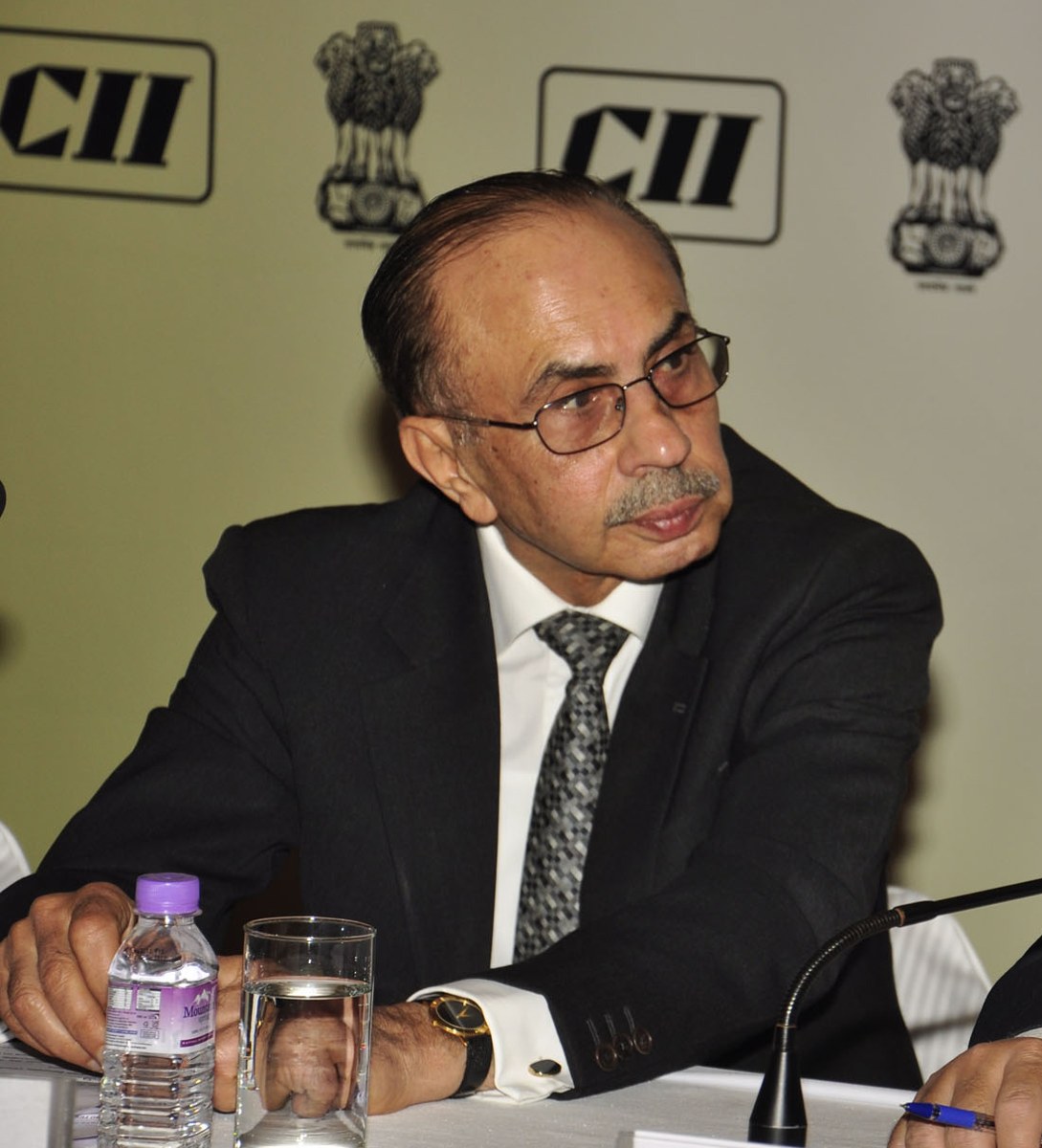
| Key facts | |
|---|---|
| Born | April 1942, Bombay (most sources give 3 April) [88][89] |
| Family roots | Parsi family that founded Godrej in 1897; grandson of co-founder Pirojsha Godrej [2][14] |
| Education | St. Xavier’s, Mumbai; bachelor’s and master’s in management, MIT Sloan School, 1963 [2][4][30] |
| Family | Late wife Parmeshwar Godrej; children Tanya Dubash, Nisaba Godrej and Pirojsha Godrej; brother Nadir Godrej [2][90] |
| Group | Godrej Industries Group: Godrej Industries, Godrej Consumer Products, Godrej Properties, Godrej Agrovet, Astec LifeSciences [20] |
| Wealth | Forbes India’s Richest 2026: “Adi & Nadir Godrej”, No. 36, US$7.15 billion combined (30 Sep 2026) [20]; M3M Hurun India Rich List 2025: “Adi Godrej & family”, No. 41, Rs 55,580 crore [86][87] |
| Known for | Turning a loss-making soap company into a multinational consumer-goods business, and steering a 127-year-old family group through an amicable split |
In 1963 a 21-year-old came home to Bombay from the Massachusetts Institute of Technology with two management degrees and a choice to make. His family’s group then had two companies and a turnover of about Rs 10 crore [26]. One of them, Godrej Soaps, was losing money. Adi Godrej was given the job of turning it around.
“The ideas I introduced yielded results pretty fast and the first year I joined the company, it made a profit,” he said fifty years later [25]. He was the first management graduate the Godrej group had ever hired, and he used that edge to win more and more responsibility from his father and uncles [2].
Over the next six decades he turned that soap company into Godrej Consumer Products (GCPL), a multinational that sells hair colour in Lagos, household insecticides in Jakarta and hair sprays in Buenos Aires. He chaired the whole Godrej Group from 2000 to 2024 [4]. And in his eighties he presided over something most Indian business families handle badly: dividing a 127-year-old empire among cousins without a court fight [62].
This is the story of how a third-generation heir became a builder in his own right, what went wrong along the way, and what his long career teaches.
Where it began
A lawyer who would not bend the truth
The Godrej story starts with Adi’s grandfather’s elder brother, Ardeshir Godrej. Born in 1868, Ardeshir trained as a lawyer, and his legal career ended in 1894 over a case in Zanzibar in which he refused to argue something he could not honestly support. “Instead of seeing my side of the case, I saw both sides,” he is recorded as saying [14].
His first business, making surgical instruments with Rs 3,000 borrowed from a Parsi family friend, Merwanji Cama, failed, partly because he insisted on stamping his products “Made in India” [14][35]. His second worked. On 7 May 1897 he began making locks in a small shed next to the Bombay Gas Works at Lalbaug [14]. Safes followed in the early 1900s.
Adi has described his great-uncle as a nationalist who believed India could not win political independence without economic independence. “He was a lawyer by profession, but an inventor,” he told Harvard Business School professor Tarun Khanna in 2013. “Some of them failed. But he succeeded in making locks, and from that our enterprise grew” [2].
In 1918 Ardeshir launched a soap made entirely from vegetable oil rather than animal tallow, which some Indian consumers would not use [14][2]. The company has long marketed it as the world’s first such soap; Adi himself is more careful, noting that olive-oil soaps existed in the Mediterranean [2][36]. Rabindranath Tagore appeared in an advertisement endorsing Godrej soap, and Annie Besant also backed the brand in the swadeshi years [36][35].
The grandfather who built, and the land that changed everything
Ardeshir had no children. His much younger brother, Pirojsha Burjorji Godrej, Adi’s grandfather, joined the business in 1906 and became what Adi calls “the builder” [2]. Accounts differ on exactly how control passed from one brother to the other, and we have not tried to settle that here.
Pirojsha’s most consequential decision came during the Second World War, when he bought a large tract of marshy land at Vikhroli, then outside Bombay. Business Today, citing family history, says about 3,000 acres were bought from the British for Rs 30 lakh, later rising to about 3,400 acres [38]. Adi has put the figure at about 3,500 acres, roughly half of it mangrove forest: “It’s like Bombay’s lung today” [2]. That land, which Business Today estimated in 2019 could generate revenue of Rs 4.35 lakh crore if developed, would shape the family’s fortunes and, eventually, its split [38].
A chemist father and an allowance
Adi Burjorji Godrej was born in Bombay in April 1942. Wikidata and the body of his Wikipedia biography give 3 April; the Wikipedia infobox says 5 April, and we found no official Godrej source that settles it [88][89]. He was the elder of two sons of Burjor Godrej, a chemical engineer who had studied in Germany, and his wife Jai [29]. Adi’s brother Nadir, nine years younger, would later become his closest business partner [29].
Burjor ran the soaps business and was known for punctuality bordering on the obsessive. Nadir has called him “very deliberate, precise, punctual – very German” [29]. A former colleague recalled Burjor setting a meeting for 3:47 pm and expecting people to arrive on the minute [26].
Adi says the best advice he ever got came from his mother, who put him on a fixed allowance as a boy. It had to cover “everything, from my school fees and books to pocket money and transport,” he told Business Today. “I could not ask for any further money from anyone for anything. It taught me the value of money and the need to plan” [28].
He finished school at 15, spent two years at university in Bombay (Wikipedia names St. Xavier’s), and at 17 left for MIT [2][88]. He began in mechanical engineering, then changed course. “I soon realized that I was not exposed too much to economics or other subjects like philosophy or business in India,” he recalled. MIT let him combine a bachelor’s and a master’s degree, and he studied at the Sloan School of Management, keeping mechanical engineering as a minor [2]. He graduated in 1963 [3][30]. (Many profiles call it an MBA; the degrees were in fact a combined bachelor’s and master’s in management.)
The first break
The first professional in the room
The India Adi came back to in 1963 was not friendly to business. “India was a pretty closed economy by that time. It was very socialist. Growth rates were like 3% per annum,” he said. “You needed a license to make anything new; you needed a license to expand” [2]. Government, he told Outlook Business, “distrusted business in those days” [25].
His advantage was training. “I was the first management graduate to join our group,” he said. “I was able to bring in a lot of management input into our operations across the board. That enabled me, at a young age, to distinguish myself in the group” [2]. At Godrej Soaps he introduced cost accounting and modern management practices, and the company turned a profit within a year [25].
He then began hiring the kind of people he wanted to work with. Godrej recruited management trainees from the first graduating batches of the Indian Institutes of Management in Ahmedabad and Calcutta [2][25]. A rule followed that the family still cites: anybody in the family who joins the business must be at least as professionally qualified as outside talent [2]. “Only those family members who are qualified are invited to join the business,” he said in 2015. “If some family members aren’t adequately qualified, they can remain shareholders, but not join the business” [24].
He married Parmeshwar Godrej, a former Air India air hostess who later became widely known as a philanthropist and HIV/AIDS awareness campaigner; she died in October 2016 [90]. They had three children, Tanya, Nisaba and Pirojsha, who all went on to senior roles in the group [2][4].
Surviving the licence raj
For thirty years the group grew within the limits the state allowed. Taxes were punitive, Adi recalls, yet the family managed to pay them “without diluting our hold on the companies by selling the shares”, and the group stayed privately held, with no listed companies, until 1993 [2]. Rules under the Monopolies and Restrictive Trade Practices Act pushed Godrej to put new plants in backward districts, which in turn nudged it into new businesses [25].
One of those businesses was animal feed. Godrej Agrovet, the company that grew out of it, was incorporated in 1991 [93]. Another was real estate: Godrej Properties was set up in 1990 [93].
Building the empire
1991: open doors, and a string of foreign marriages
When India liberalised in 1991, Adi welcomed it. “We welcomed the opening up of the economy as it helped us do a lot more,” he told Forbes India [22]. His first instinct, like that of many Indian promoters at the time, was to partner with multinationals.
The biggest of those deals was with Procter & Gamble. Announced in December 1992, it created a joint venture in which P&G held 51% and put in US$22 million [41]. The venture took over the marketing and distribution of Godrej’s soaps, while Godrej kept manufacturing; Godrej also sold its detergent brands Key, Trilo and Ezee to P&G, reportedly for Rs 40 crore [42][44].
Other alliances followed: with GE in appliances, Pillsbury in foods, and Sara Lee in household insecticides [44]. The Sara Lee deal showed Adi’s deal-making style. According to Forbes India, in 1994 Godrej bought Transelektra, maker of Good Knight mosquito repellents, for about Rs 80 crore and then sold half of it to Sara Lee for roughly the same amount, leaving Godrej with half the business “at effectively no cost” [22].
Most of these marriages did not last; how they ended is told in the setbacks section below. But Godrej took valuable brands back from several of them.
2000: chairman of the group
Adi’s uncle Sohrab Godrej, who had chaired the group since 1972, died in May 2000 [91]. Adi became chairman of the Godrej Group that year, a role he would hold until 2024 [4]. (Many profiles say 2001; the company’s own leadership page says 2000.) His cousin Jamshyd, son of his uncle Naval, became chairman of Godrej & Boyce, the original locks-and-safes company [92].
Almost at once Adi reorganised the soaps business. Godrej Consumer Products was incorporated in November 2000, and from 1 April 2001 Godrej Soaps transferred its consumer business to it; the rest of the old company became Godrej Industries, which went on to serve as the family’s holding company for the listed businesses [51][59].
The “3x3” bet on emerging markets
His defining strategy came next. Instead of chasing the US or Europe, where giants such as P&G and Unilever dominated, GCPL would go to three emerging regions, Asia, Africa and Latin America, and focus on three categories: home care (chiefly household insecticides), hair care and personal care [49][50]. “Close to 80 per cent of the world’s population lives and works in emerging markets,” Adi said in 2013 [50].
He also had a view on whom to buy from. “Family-controlled companies have an affinity towards us,” he told Family Capital, because sellers felt their brands and staff would be respected [31].
The shopping list, based on the company’s corporate history and contemporary reporting [51][49]:
- 2005: Keyline Brands, UK (Cuticura, Erasmic), GCPL’s first overseas acquisition
- 2006: Rapidol, South Africa
- 2008: Kinky Group, South Africa
- 2010: Tura (Nigeria); PT Megasari Makmur (Indonesia); Issue Group and Argencos (Argentina)
- 2011: a 51% stake in the Darling Group, operating in 14 sub-Saharan African countries, later raised further
- 2012: 60% of Cosmetica Nacional, Chile
- 2016: Strength of Nature, a US-based maker of ethnic hair-care products
“Acquiring an established business is a much quicker way of growth and we can add a lot of value,” he told Knowledge at Wharton in 2013, adding: “We would like to be very clear that we are not overly leveraged” [34]. On Darling, he said in 2011 that the aim was “to touch the lives of at least 100 million consumers across Africa in the next five years” [49].
Buying back the household business
At home, the most important deal was buying out Sara Lee. In May 2010 GCPL agreed to buy Sara Lee’s 51% of their joint venture for EUR 185 million, about Rs 1,050 crore, as Sara Lee exited businesses it no longer considered core [45][43]. The venture, whose brands included Good Knight, was renamed Godrej Household Products and merged into GCPL [51].
By October 2013, Business Today reported, GCPL’s revenue had reached Rs 6,391 crore, sales had grown 42% a year over five years, about 48% of revenue came from international acquisitions, and the company was worth Rs 28,317 crore on the stock market [50].
Listing the rest of the group
Adi also brought the newer businesses to the stock market. Godrej Properties raised Rs 469 crore in an IPO in December 2009 and listed in January 2010 [52]. In 2017 Godrej Agrovet’s Rs 1,157 crore IPO, which included shares sold by Godrej Industries and by Temasek’s V-Sciences, was subscribed more than 95 times; the stock listed on 16 October 2017 at Rs 621, about 35% above the issue price [53][54].
In 2015 Godrej Agrovet agreed to buy 45.29% of the agrochemicals maker Astec LifeSciences for Rs 167.41 crore, making it the group’s fifth listed company [55]. In 2008 Tyson Foods had taken 51% of Godrej’s poultry business, Godrej Foods; in September 2024 Godrej Agrovet bought out Tyson’s remaining stake [47][48].
The 2017 Forbes India Leadership Awards, which gave him a lifetime achievement award, put the scale in perspective: from a group with Rs 10 crore of turnover when he joined, Godrej had grown to roughly Rs 32,000 crore a year, and its listed companies were worth about Rs 1.07 lakh crore [22].
Handing over, one company at a time
Adi began passing the baton early. In May 2017 he handed the chair of GCPL to his daughter Nisaba and became chairman emeritus of the company [6]. In August 2021, aged 79, he announced that he would step down as chairman of Godrej Industries from 1 October 2021, handing over to his brother Nadir. “It has been a privilege to serve Godrej Industries for over four decades,” he said. “I am very confident that our best years are ahead of us” [56]. He remained chairman of the overall Godrej Group.
By then GCPL had moved on to a second wave of growth under professional management. In 2023 it agreed to buy Raymond’s consumer-products business, including Park Avenue and KamaSutra, for Rs 2,825 crore [57]. In FY26 GCPL reported consolidated revenue from operations of Rs 15,177.90 crore and net profit of Rs 1,861.47 crore [58][8].
How the wealth is held
Adi’s fortune sits mostly in shares of the listed Godrej companies, held through Godrej Industries, family members and family trusts, rather than in his own name. After the 2024 settlement, Godrej Industries became the main holding company for the Adi and Nadir families. It held about 23.7% of GCPL, 47.3% of Godrej Properties and about 65% of Godrej Agrovet, which in turn controlled Astec [59][60].
The family shares are spread widely. A Business Standard analysis of the 2024 share transfers showed Adi himself holding just 0.18% of Godrej Industries directly, while each of his three children held about 4.11% [60]. On 30 April 2024, the day the split was announced, the five listed companies were worth Rs 2.44 lakh crore in total, and the family’s stake in them about Rs 1.53 lakh crore [59].
Forbes’s India’s Richest list of September 2026 ranked “Adi & Nadir Godrej” No. 36 with a combined US$7.15 billion, or roughly Rs 68,000 crore at about Rs 95.6 to the dollar [20]. The M3M Hurun India Rich List 2025 placed “Adi Godrej & family” at No. 41 with Rs 55,580 crore, and Nadir Godrej & family at No. 50 with Rs 49,000 crore [86][87]. We could not find a verified figure for Adi Godrej in the Hurun 2026 list, so we do not give one.
The setbacks and failures
The P&G divorce
The P&G alliance, the most ambitious of the 1990s tie-ups, unravelled within about three years. Business Standard later reported disputes over how P&G handled Godrej brands such as Cinthol, and that P&G “wasn’t really interested in soaps” [44][43]. In 1996 the two restructured: nine soap brands, including Cinthol, came back to Godrej, while P&G kept the detergents [42].
Adi’s own account was characteristically low-key. “They suggested we restructure the joint venture and we happily did,” he told Knowledge at Wharton in 2006 [33]. Godrej declined an offer to buy back Trilo and Ezee in 1997 [42], and instead relaunched Godrej No. 1, which by FY15 had become a Rs 1,000 crore brand [27].
Serial “divorces”
The P&G deal was not unique. Business Standard counted eight foreign joint ventures over about two decades: P&G, GE, Pillsbury, Sara Lee, SCA Hygiene, Hershey, IJM Plantations and Tyson. By 2014 only the Tyson venture survived [44]. In the GE case, Adi said, “they wanted to get out, so we bought out their share” [33]. Godrej left its Hershey venture after Hershey launched only one product in about five years, and Hershey bought out Godrej’s stake in 2012 [44][46].
The lesson Godrej drew, according to Business Standard, was to stop relying on partners and buy companies outright instead [43].
Nature’s Basket
Not every bet paid off. Godrej Nature’s Basket, the group’s premium grocery chain, never became the business it was meant to be. The Ken reported accumulated losses of more than Rs 350 crore over about a decade [69]. In May 2019 Godrej Industries sold the chain, which then had 36 stores and Rs 338 crore of turnover, to Spencer’s Retail for Rs 300 crore. Tanya Dubash said it was time to “pass on the torch to owners who have prioritised retail” [68].
Africa: the costly part of 3x3
The emerging-markets strategy also carried emerging-markets risk. In early 2024 a sharp devaluation of the Nigerian naira caused a double-digit fall in rupee terms in GCPL’s sales there, Reuters reported [66]. In the March 2024 quarter GCPL booked an exceptional loss of Rs 2,375.65 crore, including Rs 1,390.8 crore of impairment on African brands and goodwill, among them Strength of Nature, and a Rs 927.2 crore loss on selling its East African business [7]. The result was a quarterly consolidated net loss of Rs 1,893 crore, against a profit of Rs 452 crore a year earlier [65]. The company called it a reset towards “profitable” growth in Africa [7].
Indonesia, once a star acquisition, has also struggled. Reuters reported in January 2026 that GCPL’s Indonesian sales had fallen amid intense competition and a slowing economy, with the company expecting recovery from FY27 [67].
Ambitions that ran ahead of results
In 2015 Adi said GCPL and the group had a “10-by-10” objective: to become ten times their size by revenue in ten years [24]. That did not happen. GCPL’s FY26 revenue of about Rs 15,178 crore was a little more than double its 2013 level [58][50]. Big targets helped Godrej think big; they did not guarantee the numbers.
Controversies and allegations
We found no court judgment, regulatory order or criminal case making a finding of wrongdoing against Adi Godrej personally. The disputes below involve Godrej companies or the wider family, and we explain his link to each.
The 2019 reports of a family rift, and the 2024 split
Allegation: In June 2019 several outlets reported that the family was divided over how much of the Vikhroli land to develop. According to these reports, which relied on unnamed sources, Adi and Nadir favoured commercial development of the land owned by Godrej & Boyce, while Jamshyd Godrej opposed excessive development, and each side had hired advisers [38][40].
Response: Adi and Jamshyd issued a joint statement saying the group had been working on a long-term strategic plan and had “sought advice from external partners to help us think through options”. The group described the talks as normal, private family discussions and denied a dispute over the land [39].
What happened next:
- On 30 April 2024 the family signed a settlement splitting the group. Adi, Nadir and their families kept Godrej Industries Group, with five listed companies; Jamshyd Godrej and Smita Godrej Crishna took Godrej Enterprises Group, built around the unlisted Godrej & Boyce, and the land bank, including Vikhroli [62][61].
- The statement called it an ownership realignment “arrived at respectfully and mindfully to maintain harmony”, in acknowledgement of “the differing visions” of family members [63].
- Adi and Nadir left the Godrej & Boyce board, and Jamshyd left the boards of GCPL and Godrej Properties. The two sides divided use of the Godrej brand by sector and agreed non-compete terms [62][60].
- Godrej Properties continues as development manager for Godrej & Boyce’s Vikhroli land [61].
Status: Settled. We found no litigation between the two branches as of 17 October 2026.
Vikhroli land and the “private forest” case (Godrej & Boyce)
Allegation: The Maharashtra government claimed that about 134 acres of Godrej & Boyce land at Vikhroli, on which Godrej had built more than 40 residential buildings with state permissions, was “private forest” that had vested in the state under a 1975 law. It relied on a notice issued in 1956 and issued stop-work notices in 2006. The Bombay High Court dismissed Godrej’s petitions in 2008 [1].
Response: Godrej argued that the 1956 notice had never been served or acted upon, and that the state had for decades treated the land as private property [1].
What happened next:
- On 30 January 2014 the Supreme Court allowed Godrej’s appeals and quashed the notices, holding that the notice had to be actually served and stressing the state’s long inaction [1].
- The judgment remains a leading precedent; in August 2026 the Bombay High Court relied on it in a batch of private-forest cases [76].
Status: Decided in Godrej & Boyce’s favour in 2014. Adi Godrej was a director and part-owner of Godrej & Boyce at the time; since 2024 the land belongs to the Jamshyd and Smita branch.
The bullet train land acquisition (Godrej & Boyce)
Allegation: In a 2022 affidavit in the Bombay High Court, the Maharashtra government accused Godrej & Boyce of creating “unnecessary hurdles” to the acquisition of about 9.69 acres of its Vikhroli land for the Mumbai–Ahmedabad bullet train, and said the delays had raised project costs by more than Rs 1,000 crore [70].
Response: Godrej & Boyce challenged the acquisition process and the compensation award of Rs 264 crore, saying it had initially been offered Rs 572 crore. It told the court it had cooperated in eight earlier acquisitions since 1961, covering more than 500 acres [71][72].
What happened next:
- On 9 February 2023 the Bombay High Court upheld the acquisition, finding no irregularities and saying the project was of national importance [71][73].
- On 24 February 2023 the Supreme Court declined to hear Godrej’s appeal, noting that possession had been taken and the only remaining issue was compensation [74].
- Godrej & Boyce’s claim for higher compensation, amended to about Rs 1,972 crore, is before a land-acquisition authority; in April 2026 the Bombay High Court dismissed two procedural petitions and asked the authority to decide within about six months [75].
Status: Acquisition final; compensation claim pending as of 17 October 2026. This is a Godrej & Boyce matter, which since 2024 belongs to the other branch of the family.
Godrej Properties: project and partner disputes
Allegation: As a large developer, Godrej Properties has faced several disputes. In 2021 the National Green Tribunal cancelled the environmental clearance for a Godrej Properties–Wonder Projects development near Bengaluru’s Kaikondrahalli lake, ordered demolition and imposed Rs 31 crore in compensation [77]. Separately, joint-venture partner GoldBricks claimed about Rs 1,366 crore in arbitration over a Nagpur project [11].
Response: Godrej Properties said the NGT order did not take its arguments into account and appealed [77]. On the GoldBricks award, which granted Rs 240.8 crore plus interest, the company said the award had “shortcomings” and planned to challenge it [11]. In a separate Gurugram dispute, Godrej Properties itself filed a criminal complaint alleging that its partner Orris Infrastructure had altered records to remove its interest; Orris’s managing director was arrested in August 2026 [78].
What happened next:
- The Supreme Court ordered status quo on the Bengaluru project in 2021 [77].
- Godrej Properties and Orris settled in August 2026, with an estimated impact of about Rs 70 crore on Godrej Properties [79].
Status: Mixed: the Bengaluru appeal and the GoldBricks challenge were pending at last report; the Orris dispute is settled. These are company matters during the tenure of Pirojsha Godrej as head of Godrej Properties; none names Adi Godrej personally.
As of 17 October 2026, none of these matters has produced a finding against Adi Godrej.
Giving back
A charity that owns part of the company
The Godrej family’s philanthropy is built into the ownership structure. Before the 2024 split, Adi, Nadir, Jamshyd, Smita and their cousin Rishad Naoroji each owned 15.3% of Godrej & Boyce, and the Pirojsha Godrej Foundation, set up in 1972, owned the rest, roughly 23% [64][15]. Its dividend income funds education, health care and environmental work. “Philanthropy is done by the charitable foundation which is entirely supported by the family members,” Adi said in 2013. “The foundation works in Education, health care and other such activities but big focus is the Environment” [32].
The most visible result is the Vikhroli mangroves. The family has protected around 1,500 to 1,750 acres of mangroves there (Adi has cited 1,500; Forbes India 1,750), which Godrej Enterprises describes as the largest privately managed mangrove belt in Mumbai [32][22][15]. Formal conservation through the Soonabai Pirojsha Godrej Foundation began in 1985 [37]. Since 2024 these trusts sit with Godrej & Boyce in the Godrej Enterprises Group [15].
On the EdelGive Hurun India Philanthropy List, the Godrej family ranked 10th in 2019 with donations of Rs 84 crore, and 13th in 2021 with Rs 80 crore [18][19].
Good & Green, and public roles
In 2011 Adi launched “Godrej Good & Green”, a group-wide pledge with targets for 2020 that included training a million young people in job skills and becoming carbon neutral and water positive. “Our effort ‘Godrej Good & Green’ is a step in creating a more inclusive and greener India,” he said [12][13].
He served as president of the Confederation of Indian Industry in 2012–13 [16] and chaired the board of the Indian School of Business from 2011 to 2018 [17]. He received the Padma Bhushan, conferred in 2013 (an older Godrej biography dates it to 2012), along with lifetime achievement awards from Forbes India, The Economic Times and EY, among others [4][5][22].
A voice on intolerance
In July 2019, speaking at St Xavier’s College in Mumbai, Adi praised the government’s economic vision but warned that “rising intolerance, social instability, hate-crimes, violence against women, moral policing” and caste- or religion-based violence could “seriously damage” growth. He also flagged unemployment and the water crisis. It was unusually blunt language from a senior Indian industrialist, and it was widely reported [80][81].
Succession
Adi Godrej has talked about succession for decades. “Every succession is important, not just who replaces me,” he said in 2014 [31]. He has also predicted that “there will be fewer and fewer family businesses in the long term”, and said that “one shouldn’t distinguish by compartmentalising people as being either family members or professionals” [23].
His own handover was planned in stages:
- 2017: Nisaba Godrej became chairperson of GCPL, and Pirojsha took over the chair of Godrej Properties [6][22].
- 2021: Nadir Godrej succeeded Adi as chairman of Godrej Industries [56].
- 2024: The family settlement named Nadir chairperson of the new Godrej Industries Group, with Pirojsha as executive vice-chairperson and successor-designate [62].
- 2026: On 13 April 2026 Godrej Industries announced that Nadir would retire at 75, and on 14 August 2026 Pirojsha became chairperson of Godrej Industries and the group. Adi and Nadir are both Chairman Emeritus [82][83][10].
“I see this as a smooth and planned generational succession rather than the beginning of an entirely new direction,” Pirojsha told Forbes [21]. He has set a goal of a combined market value of Rs 5 lakh crore for the group’s listed companies by 2031 [21].
The next generation is at work across the group. Nisaba remains executive chairperson of GCPL, where Aasif Malbari became managing director and CEO in August 2026 after Sudhir Sitapati stepped down [9][84]. Tanya Dubash is an executive director and chief brand officer of Godrej Industries [4]. Nadir’s son Burjis now chairs Godrej Agrovet [82].
The Week summed up the 2026 transition as one with “no boardroom drama, no family feud” [85].
What their journey teaches
Bring a skill nobody else in the room has. Adi was not the first Godrej to run a business, but he was the first trained manager. Cost accounting turned a loss-making soap company profitable within a year and earned him the trust to do much more.
Partnerships need an exit plan. Eight foreign joint ventures, most of them dissolved, could look like failure. Godrej used the exits to take back brands such as Cinthol and to buy out partners such as Sara Lee, and ended up owning what it had once shared.
Go where the giants are not looking. The “3x3” strategy took Godrej to Lagos, Jakarta and Buenos Aires instead of New York or London, and bought from family owners who cared about who bought their companies.
Emerging-market growth carries emerging-market risk. The same strategy produced a Rs 2,375 crore exceptional loss in one quarter when African currencies and businesses turned against it. Being bold means being ready to write things down.
Plan succession in decades, not years. Adi handed over one company at a time, from 2017 to 2026, and the family agreed on a split while relations were still cordial. That is why a 127-year-old group could divide without a court fight.
Ownership can itself be philanthropy. By leaving about a quarter of Godrej & Boyce with a charitable foundation, the Godrej family made giving a permanent part of how the business is owned, not a decision taken year by year.
Further reading on CapitalVia: the life stories of Ratan Tata, another steward of a century-old Parsi-founded group; Azim Premji, who also inherited a vegetable-oil business and turned it into something much bigger; and Kumar Mangalam Birla and Anand Mahindra, two more heirs who became builders. For more on markets and companies, see CapitalVia Insights.
A profile for general reading, based on public records and reporting as of 17 October 2026. Not investment, tax or legal advice.
Sources (93)
- Godrej & Boyce Mfg. Co. Ltd. v. State of Maharashtra, judgment of 30 January 2014 - Supreme Court of India (via India Environment Portal), Jan 2014
- Interview with Adi Godrej by Tarun Khanna, Creating Emerging Markets oral history (transcript) - Harvard Business School, May 2013
- Adi Godrej: interview summary and biography - Harvard Business School Baker Library, May 2013
- Leadership: Adi Godrej, Chairman Emeritus - Godrej Industries, Oct 2026
- Adi Godrej (biography) - Godrej Consumer Products, n.d.
- Nisaba Godrej succeeds father Adi Godrej as head of GCPL - Godrej Consumer Products, May 2017
- Quarterly results Q4 FY2024 (exceptional items) - Godrej Consumer Products, May 2024
- Q4 and FY26 results press release - Godrej Consumer Products, May 2026
- Press release on change of MD and CEO (NSE filing) - Godrej Consumer Products, Aug 2026
- Intimation of change in designation of Pirojsha Godrej (NSE filing) - Godrej Properties, Aug 2026
- Disclosure of arbitral award in GoldBricks matter (BSE filing) - Godrej Properties, Sep 2025
- Media release, Q4 FY2010-11 results - Godrej Industries, May 2011
- Godrej Good & Green, Annual Report 2015-16 - Godrej Consumer Products, 2016
- Ardeshir Burjorji Sorabji Godrej - Godrej Enterprises Group, Jul 2026
- Our Trusts - Godrej Enterprises Group, Oct 2026
- Past Presidents - Confederation of Indian Industry, Oct 2026
- Harish Manwani is the new Chairman of the ISB Executive Board - Indian School of Business, Apr 2018
- EdelGive Hurun India Philanthropy List 2019 - EdelGive Foundation and Hurun India, 2019
- EdelGive Hurun India Philanthropy List 2021 - Hurun Report, Oct 2021
- Adi & Nadir Godrej profile, India's Richest 2026 - Forbes, Sep 2026
- Next generation drives growth at India's storied Godrej Industries Group - Forbes (via Yahoo Finance), Sep 2026
- Adi Godrej: An entrepreneur and a gentleman - Forbes India, Nov 2017
- There will be fewer family businesses in the long term: Adi Godrej - Forbes India, Mar 2017
- We put interest of the business ahead of that of the family: Adi Godrej - Forbes India, Dec 2015
- The Godrej guardian - Outlook Business, Jul 2013
- Adi Godrej (The Boss) - Outlook Business, Jul 2015
- The soap opera begins - Outlook Business, Jun 2015
- Best advice I ever got: Adi Godrej - Business Today, Sep 2012
- Nadir Godrej on the family legacy - YourStory, May 2015
- Adi Godrej '63, SM '63: Building global businesses in India - MIT Technology Review, Oct 2011
- Interview with Adi Godrej - Family Capital, Sep 2014
- Interview with Adi Godrej, Chairman, Godrej Group - India CSR, Dec 2013
- Godrej Group's Adi Godrej: We restructured our alliances for strategic reasons - Knowledge at Wharton, Dec 2006
- Indian consumer goods firms go shopping abroad: will it work? - Knowledge at Wharton, May 2013
- The untold Godrej story: from making locks to rockets - The Week, Jun 2023
- Indian firm made the world's first cruelty-free soap, got Tagore to model for it - The Better India, Aug 2020
- Initiative saving Mumbai's mangroves - The Better India, Aug 2021
- Godrej dispute: British-era land worth Rs 30 lakh can now fetch Rs 4.35 lakh crore - Business Today, Jun 2019
- Godrej family denies dispute over prime land in Mumbai - Business Today, Jun 2019
- Divergent views over land usage may end up splitting Godrej family (IANS) - The Quint, Jun 2019
- P&G to control joint venture in India - UPI, Dec 1992
- Godrej Soaps no to Ezee, Trilo buyback - Business Standard, Dec 1997
- Failed JVs force Godrej to go shopping - Business Standard, Jul 2011
- 40 years ago and now: Godrej group wiser after serial divorces - Business Standard, Oct 2014
- Sara Lee to sell 51% joint venture stake to Godrej for EUR185m - Cosmetics Business, May 2010
- Hershey buys the other half of Hershey India - Food Processing, Sep 2012
- Tyson moves to India with joint venture - The Poultry Site, Jul 2008
- JSA advises Tyson Foods on its full exit from Godrej Tyson Foods - Bar & Bench, Sep 2024
- Godrej Consumer Products buys 51% stake in Africa's Darling Group - Business Today, Jun 2011
- BT 500: Godrej Consumer Products' strategy pays off - Business Today, Oct 2013
- Godrej Consumer Products Ltd: company history - IIFL, Oct 2026
- Godrej Properties IPO subscription - Chittorgarh, Dec 2009
- Godrej Agrovet IPO to open Oct 4; price band Rs 450-460 - Business Standard, Sep 2017
- Godrej Agrovet shares soar 35 per cent in debut trade - Deccan Chronicle, Oct 2017
- Astec to sell 45.29% stake to Godrej Agrovet for Rs 167.41 cr - Business Standard, Aug 2015
- Adi Godrej to step down as Godrej Industries chairman - Outlook, Aug 2021
- Godrej Consumer to acquire Raymond's FMCG business for Rs 2,825 crore - Business Today, Apr 2023
- Godrej Consumer Products reports FY26 audited results - ScanX, May 2026
- Godrej Industries to be main holding company for Adi-Nadir Godrej family - Business Standard, May 2024
- Godrej family begins process to untangle cross-holdings in listed entities - Business Standard, May 2024
- G&B-Godrej Properties partnership to continue for Vikhroli land development - Business Standard, May 2024
- Godrej family reaches deal to amicably split group's businesses - The Week, May 2024
- Godrej family split: Adi, brother to keep listed firms (PTI) - Outlook Business, May 2024
- Godrej family trusts increase stake by about 2% in group company - Business Standard, Nov 2021
- Godrej Consumer records net loss of Rs 1,893 cr in Q4 - Business Standard, May 2024
- Operating conditions remain subdued, Africa sales sting: Godrej Consumer (Reuters) - Business Standard, Apr 2024
- India's Godrej Consumer profit edges lower on Indonesia weakness, one-off charge - Reuters (via MarketScreener), Jan 2026
- Spencer's Retail to acquire Nature's Basket for Rs 300 crore - Business Today, May 2019
- Godrej Nature's Basket and the perils of premium mediocre - The Ken, Jun 2019
- Godrej & Boyce creating unnecessary hurdles in land acquisition for bullet train: Maha govt to HC - Business Standard, Oct 2022
- Bombay High Court upholds acquisition of Godrej & Boyce's plot at Vikhroli - LiveLaw, Feb 2023
- Court quashes Godrej plea in win for India's first bullet train - Bloomberg (via BNN Bloomberg), Feb 2023
- Mumbai-Ahmedabad bullet train project can proceed as HC rejects plea - Scroll, Feb 2023
- SC refuses to entertain plea by firm against acquisition of its plot for bullet train - Verdictum, Feb 2023
- Bombay HC clears way for full hearing in Vikhroli land compensation dispute - Free Press Journal, Apr 2026
- Explained: what the Bombay HC ruling means for Maharashtra's private forest land claims - Outlook, Aug 2026
- NGT orders razing of Godrej Properties and Wonder projects in Bengaluru - Construction World, Aug 2021
- Orris Infrastructure MD Amit Gupta arrested in cheating case (PTI) - Outlook Business, Aug 2026
- Godrej Properties faces Rs 700 mn impact from Gurugram settlement - Construction World, Sep 2026
- Rising intolerance, hate crimes can seriously damage economic growth: Adi Godrej - Outlook, Jul 2019
- Rising hate-crimes, intolerance to seriously damage growth, warns Adi Godrej (PTI) - Business Today, Jul 2019
- Nadir Godrej to retire in August; Pirojsha Godrej to succeed as chairman - Business Standard, Apr 2026
- Who is Pirojsha Godrej? The 45-year-old taking over Godrej Industries - Outlook Business, Aug 2026
- Sudhir Sitapati steps down as GCPL chief executive days after reappointment - Moneylife, Aug 2026
- Beyond boardrooms: the Pirojsha Adi Godrej story - The Week, Apr 2026
- Hurun India Rich List 2025: names of top 100 richest Indian tycoons - LatestLY, Oct 2025
- Ambani tops Hurun India Rich List 2025: top 100 rich Indians - Trak.in, Oct 2025
- Adi Godrej - Wikipedia, Oct 2026
- Adi Godrej (Q2824374) - Wikidata, Oct 2026
- Parmeshwar Godrej - Wikipedia, Oct 2026
- Sohrab Pirojsha Godrej - Wikipedia, Oct 2026
- Jamshyd Godrej - Wikipedia, Oct 2026
- Godrej Industries Group - Wikipedia, Oct 2026