
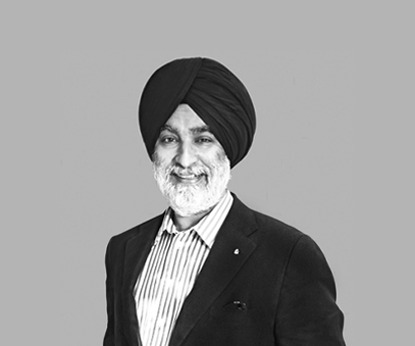
| Key facts | |
|---|---|
| Born | 11 January 1954, New Delhi [69][12] |
| Hometown/Family roots | Delhi; father’s family from Rawalpindi (now in Pakistan) [18][22] |
| Education | The Doon School; Shri Ram College of Commerce; BSBA (1977) and MBA (1979), Boston University [4][24] |
| Family | Youngest of three sons of Ranbaxy founder Bhai Mohan Singh and Avtar Kaur; children Veer, Piya and Tara; son-in-law Sahil Vachani [13][19][23][64] |
| Company/Group | Max Group: Max Financial Services (Axis Max Life Insurance), Max Estates, Max India (Antara Senior Living); Leeu Collection hotels and wine [3][4][62] |
| Wealth | About US$994 million, Forbes real-time estimate, 25 September 2026 [66] |
| Known for | Building India’s Max Group through a string of joint ventures, and selling businesses at the right price |
On a spring morning in 1998, Analjit Singh signed away the most valuable thing he had built. Hutchison Max, the Mumbai mobile-phone company he had launched three years earlier, was the jewel of the Max Group. He sold his 41% holding to a company backed by Hutchison and Kotak for about Rs 563 crore, in what Business Standard called India’s first known leveraged buy-out [20].
People who knew him said he felt “the company was running me” [21]. Over the next two years he sold nine more businesses [14]. To outsiders it looked like a retreat. To Singh it was a way of choosing what to build next. “This transaction opens up a world of opportunity for Max,” he said at the time [20].
That pattern runs through his whole life. Singh is the son of the man who built Ranbaxy, but he did not get Ranbaxy. He got a factory. Over four decades he built and sold telecom, pharma, packaging, health insurance and hospital businesses, usually with a foreign partner at his side. His bets on life insurance and hospitals grew into two of India’s most valuable financial and healthcare franchises. Along the way he came through a family split, government questions over his Vodafone stake, heavy share pledges and a two-year SEBI case. This is that story.
Where it began
A father from Rawalpindi
Analjit Singh’s story starts with his father. Bhai Mohan Singh came from Rawalpindi. During the Second World War he made his first fortune building roads in the North East for the British as Japanese forces advanced through Burma [18][22]. After Partition he moved to New Delhi and became a moneylender [18].
One of his borrowers was a small pharmaceutical distributor called Ranbaxy. It had been set up in Amritsar in 1937 by two cousins, Ranjit Singh and Gurbax Singh; the company’s name joined their first names [18]. In 1952, according to journalist Shyamal Majumdar’s account, the cousins defaulted on a loan and Bhai Mohan Singh took the company over for about Rs 2.5 lakh [22]. Over the next decades he fought off takeover attempts, first by Gurbax Singh and later by the Italian drugmaker Lepetit, and built Ranbaxy into a major Indian drug company [18].
He liked to say he had four children: “Parvinder, Manjit, Analjit and Ranbaxy” [18].
The youngest son
Analjit, born on 11 January 1954 in New Delhi, was the youngest of the three boys [69][12]. His mother was Avtar Kaur [13]. Years later, when he named his own company, he built his parents into it: “The M in Max stands for his father (Mohan), A for Avtar Kaur (his mother) and X for everybody else,” Business Standard explained [19].
His eldest brother Parvinder Singh earned a PhD at the University of Michigan and became Ranbaxy’s managing director in 1982. The middle brother was Bhai Manjit Singh [22][19].
Analjit went to The Doon School in Dehradun, then studied at Shri Ram College of Commerce in Delhi [4][69]. He went on to Boston University, which records a bachelor’s degree in business administration in 1977 and an MBA in 1979 [24]. Two people from those years mattered later. Pervez Ahmed, a senior at BU, would run Max Healthcare. The management thinker Ram Charan became, in Forbes India’s words, his “teacher, mentor and now personal coach” [23].
Back home, in his father’s shadow
Business Standard reported that his first venture was Dove Corporation, which represented liquor and fashion brands in duty-free shops and later imported electronic components [19]. In 1981 he joined Ranbaxy as “director (projects)”. He sat on the executive committee but not on the board [19][14].
The first break
A Rs 5 crore penicillin plant
The real start came from an assignment his father gave him. Ranbaxy needed 6-APA, a key raw material for penicillin-based antibiotics, and Bhai Mohan Singh asked his youngest son to set up a plant to make it [16]. Analjit formed a company for the job: Max India [12].
The project cost Rs 5 crore. The family put in Rs 25 lakh, Ranbaxy Rs 40 lakh, and he borrowed the rest personally [16]. Business Standard later reported that the loans took 18 years to repay after the factory started in 1985 [12]. Max India says its foundations were laid at Railmajra in Punjab [6].
Sources give different founding years (1982, 1984 and 1985), which reflects the gap between taking on the project and starting production [14][6][12]. Singh himself counts from 1985: “Starting in 1985, it took me 15 years to figure out where my heart really lies” [14].
The family splits
Then the family business broke apart. On 30 December 1989 the Singh family recorded an oral settlement that divided its property and businesses [17]. Ranbaxy went to Parvinder [17][22].
Analjit was bitter about his share for years. “In the family settlement, the family gold, Ranbaxy, went to my eldest brother,” he told Business Standard in 2006. “All I got was a factory at Okhla where I had to offer VRS to the workers out of my own pocket” [13]. Business Standard called the split “perhaps the most defining event” of his life [14].
The split also hit his young company. Ranbaxy had been about 60% of Max India’s business. In 1991, two years after the settlement, it stopped buying from Max [12]. The worst came in 1993, when Parvinder ousted their father from Ranbaxy after a boardroom battle [17]. Litigation between father and eldest son began in 1995 [17].
Singh’s daughter Tara later explained what this did to him: “He created the Max Group to give his family financial autonomy… For him, it was all or nothing. He had no choice but to make it work” [63].
Building the empire
The joint-venture machine (1988-1995)
Max India found its method early: pair a local promoter who knew India with a foreign partner who had technology or capital.
In 1988 Maxxon India was set up to make BOPP packaging film; the old Max India later merged into it and kept the Max India name [6][14]. In pharma, Max partnered Dutch firm Gist-Brocades to make penicillin intermediates at Toansa, Punjab [16]. It distributed Upjohn products and expanded the Okhla plant into formulations [16]. With Motorola it started a paging business in 1991, and with Comsat of the US it built VSAT satellite links [16][6].
Not all of it worked. The film business was pushed into losses by the Gulf War [19]. Singh later called the Motorola tie-up a mistake, because pairing with an equipment maker did not suit a services business [14]. Over two decades he entered and left about ten joint ventures [23][14].
Hutchison Max: the mobile bet
The biggest bet came in 1992. Max formed a 51:49 joint venture with Hong Kong’s Hutchison Whampoa to bid for mobile licences [23][26]. It won Mumbai in 1994 [26]. The service, branded Max Touch, launched in 1995 with a “Hello Bombay” campaign. Cricketer Sunil Gavaskar made the first call, to Singh as chairman [25].
Running telecom changed how Singh saw his own role. “It was during the Hutchison Max days that I first made the decision of separating myself from day-to-day operations. The telecom business was complex and it needed a professional,” he told Forbes India [23].
In April 1998 he sold 41% of Hutchison Max to Telecom Investments India, a Hutchison and Kotak vehicle, for about Rs 563 crore [20]. He did not leave telecom completely, though. In 2005 he sold a residual 3.16% stake in what was by then Hutchison Essar to Essar for Rs 657 crore. In 2006 he bought back in, paying Rs 1,019 crore for an 8.3% stake from Kotak-linked entities [26].
When Vodafone bought control of Hutchison Essar in 2007, Singh and former Hutch executive Asim Ghosh held large indirect stakes that kept the company within India’s foreign-ownership cap. Those stakes drew government scrutiny (see Controversies). Singh became non-executive chairman of Vodafone India in 2012 [4][69]. In 2014 Vodafone bought out its Indian minority partners, Singh and Ajay Piramal, and paid Singh a reported Rs 1,241 crore [27]. Business Standard estimated he made more than Rs 2,900 crore from Hutch and Vodafone deals over the years [26].
Finding his heart: life insurance and hospitals (2000s)
With the telecom money, Singh moved into two businesses that would define the group: insurance and hospitals. “It took me 15 years to figure out where my heart really lies,” he said [14].
Max New York Life. When India opened insurance to private players at the turn of the millennium, Max teamed up with New York Life, which took 26% [36]. Its founding chief executive was Singh’s Doon School batchmate Anuroop “Tony” Singh [23].
In 2012 New York Life exited. Japan’s Mitsui Sumitomo paid Rs 2,731 crore for 26%, valuing the insurer at Rs 10,504 crore, and the company was renamed Max Life [36]. Singh said the price “reflects the strong confidence in the company and its superior performance” [36].
Max Healthcare. Singh’s other love was hospitals. “I had this deep, personal desire to get involved in something where business meant more than business,” he told his alma mater’s magazine [24]. He built a chain of hospitals across Delhi NCR and north India. He also believed that “in the health care sector one should aim to be reasonably profitable, never profiteer” [24]. “If you want to make super profits, you shouldn’t be in healthcare,” he said in 2011 [12].
In 2011 South Africa’s Life Healthcare bought 26% of Max Healthcare for Rs 516.5 crore [37]. In 2014 it raised its stake to match Max India’s, in a Rs 766 crore deal that valued Max Healthcare at an enterprise value of Rs 3,650 crore [9].
Max Bupa. In the late 2000s Max India set up a health-insurance venture with Britain’s Bupa [6]. Max Bupa never became a big profit-maker for Max, and in 2019 Max India sold its entire 51% to private equity firm True North for Rs 510.51 crore. The business was later renamed Niva Bupa [49].
Stepping back from the corner office (2011)
In 2011 Singh did something unusual for an Indian promoter. He gave up the managing director’s job at Max India and handed it to Rahul Khosla, a former Visa executive, while staying on as chairman [38]. “It is a business move. It is a voluntary choice of how I want to spend my business life,” he said [38].
He wanted the group to be “promoter-governed and not promoter-managed” [23]. He also set up a family trust, the Neeman Foundation, with independent trustees who could overrule him. “Even if I suddenly go mad and do something crazy, the independent trustees have the veto power to over-ride my decisions,” he told Forbes India [23]. He said his children would not come into mainstream operations of Max companies, at least then [23].
That same year the government awarded him the Padma Bhushan, India’s third-highest civilian honour [7][12].
The three-way split (2016)
In June 2016 Max announced a merger of Max Life with HDFC Life, which would have created one of India’s largest private life insurers. It collapsed in 2017 when the insurance regulator would not approve the structure [43]. (See Setbacks.)
Before that, in January 2016, Singh had broken Max India into three listed companies: Max Financial Services (the holding company for Max Life), Max India (hospitals, health insurance, senior living) and Max Ventures & Industries (packaging films and real estate) [39]. “The momentum of these three businesses is such that if you put them all under one company the market punishes you,” he said [39]. He stepped off the main boards and took the title “Founder & Chairman Emeritus” [8].
Retirement did not last. In July 2018 he returned as non-executive chairman of Max Financial Services, replacing banker Naina Lal Kidwai [40].
The great harvest (2018-2025)
The next seven years were mostly about selling, to partners who could take the businesses further.
Hospitals to KKR. In December 2018 Life Healthcare agreed to sell its stake to Radiant Life Care, controlled by Abhay Soi and backed by KKR. Max Healthcare was folded into Max India, giving the combined business an equity value of Rs 7,242 crore. The Max family’s holding was expected to fall to about 7%, and it would no longer be a promoter [10]. “I can’t think of better partners than Radiant, backed by KKR, to carry forward this legacy,” Singh said [10]. In September 2020 Singh and a family investment company sold about Rs 516 crore of Max Healthcare shares [52]. Max Healthcare has since grown into one of India’s most valuable listed hospital chains, under its new owners.
Life insurance to Axis Bank. In April 2020 Max agreed to sell 29% of Max Life to Axis Bank, its main sales partner [45]. Singh called it “an emphatic signal that Max Life will become an even more formidable player” [45]. Regulators objected to parts of the structure, and the deal was cut down. In April 2021 Axis entities bought 12.99% and became co-promoters, and they later raised their stake to just under 20% [44][46]. Singh stepped down as Max Life’s chairman on 4 December 2023 [2]. In December 2024 the company was renamed Axis Max Life Insurance.
Packaging to Toppan. Japan’s Toppan bought 49% of Max Speciality Films in 2017, and in 2021 agreed to buy the remaining 51% at an enterprise value of Rs 1,350 crore [67].
Selling down Max Financial. Between 2022 and 2025 the family investment company Max Ventures Investment Holdings sold most of its Max Financial shares, including 3.18% for Rs 1,218 crore in September 2024 and 1.59% for Rs 611.6 crore in March 2025 [53][54]. By September 2026 the promoter group held only about 1.25% of Max Financial [74]. Singh personally held 1,10,000 shares [3].
What is left: real estate and senior living
Two businesses now carry the family name forward.
Max Estates came out of Max Ventures & Industries and listed on the stock exchanges in late 2023, with Sahil Vachani, Singh’s son-in-law, as Managing Director [68]. It develops offices and homes in Delhi NCR. It is now the family’s largest listed holding: promoter entities owned 45.27% as of March 2026. That stake is held mainly through Max Ventures Investment Holdings (21.91%) and Siva Finvest (20.80%), with Singh holding 0.27% directly [5].
Max India now houses Antara Senior Living, founded in 2010 by his youngest daughter Tara Singh Vachani [63]. Singh chairs all three listed companies, Max Financial Services, Max Estates and Max India [4]. At the August 2026 annual general meeting of Max Financial he was up for reappointment as “Chairman and Non-Executive Director” [3].
The lion of Franschhoek
His most personal venture is far from Delhi. In 2010 he went to South Africa for the football World Cup and drove into Franschhoek, a wine valley near Cape Town [62][58]. “I was entering a phase in my life where I was looking for some stillness,” he told Forbes Africa [58].
He bought farms, then more. In 2015 he bought Le Quartier Français, a well-known hotel in the town [60]. His Leeu Collection, from the Afrikaans word for lion, now includes Leeu Estates, Leeu House, a stake in the Mullineux & Leeu wine business, and an art gallery [62][59]. “Leeu is our name. In Afrikaans, it means lion, just as Singh in Sanskrit means lion,” he said [58]. In 2016 he bought Linthwaite House in England’s Lake District [61]. In Florence, the Collegio alla Querce, a former school bought in 2017, opened as a luxury hotel in 2025 [73].
“I am a citizen of the world. Why must I only be in India?” he told Forbes Africa in 2017 [59].
How the wealth is held
Unlike many founders on rich lists, Singh’s fortune is hard to measure. Much of it sits in private holding companies, in unlisted overseas hotels and vineyards, and in a family trust structure. Forbes’s real-time tracker put his net worth at about US$994 million on 25 September 2026 [66]. Other lists that count only directly held listed shares give far lower figures. The heavy pledging and sales of Max Financial shares mean his listed stakes are much smaller than they once were [50][74].
The setbacks and failures
The Ranbaxy legacy he never got
Singh spent years trying to undo what he saw as an injustice to his father. Bhai Mohan Singh was offered the Padma Vibhushan but declined it while the legal cases were pending [13]. “It is my mission in life to see that his honour is restored,” Analjit said after his father’s death on 27 March 2006 [13]. Parvinder had died in 1999 [22]. Ranbaxy was later sold by Parvinder’s sons, Malvinder and Shivinder, to Japan’s Daiichi Sankyo in 2008.
In 2018 Singh put it more bluntly: “I don’t want a Ranbaxy or a Vijay Mallya legacy” [72].
Early ventures that went nowhere
Many of Max’s early businesses did not last. The BOPP film unit lost money after the 1991 Gulf War [19]. The Motorola paging venture was, in his own view, the wrong kind of partnership [14]. Max eventually left pharma completely: it sold formulations to Rhone-Poulenc, bulk drugs to Jubilant, and control of Max-GB to its Dutch partners [16].
The HDFC Life merger that died
The 2016 plan to merge Max Life with HDFC Life was meant to be his biggest deal. The regulator, IRDAI, rejected the proposed structure under Section 35 of the Insurance Act, and Max called the deal off on 31 July 2017 [43]. Max Financial’s share price fell from Rs 683 in May 2017 to Rs 344 in October 2018 [51].
Debt and pledged shares
The overseas hotels and the group’s ambitions were partly funded with borrowed money. As of 31 January 2019, the promoters had pledged 75.59% of their Max Financial shares and 73.55% of their Max India shares, and planned asset sales to repay loans [50]. Analysts linked the borrowing to the overseas hospitality business. “We have a clear plan to reduce this,” Singh said [51]. Over the following years the family sold down its Max Healthcare and Max Financial stakes, partly to cut debt [52][53].
Max Bupa and the hospital crisis
The sale of Max Bupa in February 2019 surprised investors; Max India’s shares fell 13.5% that day [76]. In December 2017 the Delhi government cancelled the licence of Max Super Speciality Hospital in Shalimar Bagh after newborn twins were wrongly declared dead. Max said the decision was harsh and taken without a hearing. The cancellation was stayed and the hospital reopened within weeks [75].
Controversies and allegations
Singh has not been convicted of any offence, and no regulator has penalised him personally. The matters below are allegations, regulatory reviews and disputes, set out with what was alleged, the response and where each stands as of 12 November 2026.
SEBI case over the Max Financial-Axis Bank deals (2024-2026)
Allegation: On 24 October 2024 SEBI issued a show-cause notice alleging that Max Financial Services failed to disclose share deals with Axis Bank entities from 2010, 2015 and 2020. It also alleged an arrangement to compensate Axis Bank above IRDAI’s commission limits, which SEBI said had caused a loss of Rs 3,911.95 crore to Max Financial shareholders. Singh was one of 12 noticees. The notice said he had chaired the 2010 board meetings that approved the first arrangement, and charged him with fraud and disclosure violations [1].
Response: Singh and related noticees adopted Max Financial’s defence. They argued that personal liability could not arise without a primary violation by the company [1].
What happened next:
- On 24 August 2026 SEBI’s whole-time member disposed of the proceedings against all 12 noticees “without issuance of any direction or imposition of any penalty” [1][48].
- SEBI found that “active concealment… has not been established” and that the record did not show “any specific act, omission, participation, knowledge or conduct” attributable to the individual noticees [1].
- SEBI did note that the disclosures “could undoubtedly have been more comprehensive” [1].
Status: Closed for Singh, with no penalty. No appeal had been reported as of 12 November 2026.
IRDAI penalties over the Axis-Max Life deal (2022)
Allegation: IRDAI found misrepresentation and inconsistent share valuations in the Axis-Max Life transactions. Axis had sold Max Life shares at Rs 166 and, within 22 days, bought 12.002% at about Rs 32 [47].
Response: Neither company appealed the order [1].
Status: In October 2022 IRDAI fined Axis Bank Rs 2 crore and Max Life Rs 3 crore. The penalties are final [47][1]. Singh was not named personally.
The Hutch-Vodafone stake (2007)
Allegation: When Vodafone bought Hutchison Essar in 2007, government bodies asked whether Singh’s and Asim Ghosh’s indirect stakes were really foreign holdings in disguise. If they were, foreign ownership would have been about 89%, above the 74% telecom cap. In March 2007 the RBI said the deals, funded by a local finance company backed by a letter of credit arranged by Hutchison, circumvented foreign borrowing rules under FEMA, and sought a thorough investigation [28].
Response: Singh and Ghosh told the government they owned the shares through companies they controlled, with “unrestricted voting and dividend rights”, and had no voting arrangement with Hutch. They “strongly contested” the RBI view [29].
What happened next:
- The Department of Legal Affairs found the stakes “in conformity with norms” [30].
- The Foreign Investment Promotion Board approved Vodafone’s deal on 9 May 2007, on condition that Singh and Ghosh complied with Indian law and did not transfer their stakes to a foreign entity without approval [31].
Status: Resolved in 2007. Singh sold his stake to Vodafone in 2014 [27].
Enforcement Directorate summons (2012)
Allegation: In August 2012 the Enforcement Directorate summoned Singh, then Vodafone India’s non-executive chairman, in a foreign-exchange probe into Vodafone. It sought documents on his personal investments and overseas remittances [32][33].
Response: Vodafone declined to comment. No public response from Singh was reported [32].
Status: No charge or finding against Singh has been reported since.
Service tax on the Vodafone “call option fee” (2007-2026)
Allegation: The tax department demanded Rs 12.94 crore in service tax, plus interest and penalties, for 2007-08 to 2010-11. It treated a call-option fee Singh received under his Vodafone agreements as payment for a taxable service [34].
Response: Singh contested the demand. In 2024 the CESTAT tribunal in Delhi ruled for him, holding that granting a call option “is not an activity of rendering service” [34].
Status: The department appealed. The Supreme Court issued notice in January 2025, and the matter was pending as far as public records show [35].
The HDFC Life non-compete fee (2016)
Allegation: The proposed HDFC Life merger included about Rs 850 crore for Singh’s promoter group, including a Rs 501 crore non-compete fee. Proxy advisers IiAS and InGovern argued that minority shareholders would bear part of the cost of a payment to promoters [41].
Response: Max put the fee to a vote of minority shareholders only; the promoters did not vote [42].
Status: Minority shareholders approved it in September 2016, 64.67% to 35.33% [42]. The fee was never paid, because the merger was called off in 2017 [43].
The Ranbaxy family dispute and will (1989-2006)
Allegation: After Bhai Mohan Singh died in 2006, his will made Analjit the largest beneficiary. His nephews Malvinder and Shivinder Singh and his brother Manjit challenged it with legal notices [70].
Response: Singh applied for probate in a Delhi court in May 2006 [70].
Status: Singh settled with the nephews’ side out of court in August 2006. Manjit said at the time he would keep contesting the probate; no later outcome was reported [71].
Petitions by Neelu Singh (2022-2025)
Allegation: In March 2022 his wife Neelu Singh, a member of the promoter group, filed petitions before the NCLT and the Delhi High Court alleging oppression and mismanagement [56].
Response: Singh called the allegations “downright untruthful” [56].
Status: The parties reached a global settlement dated 13 January 2025, and all suits were withdrawn [55]. In April 2025 she applied to be reclassified as a public shareholder of Max Financial; the filing said control stays with Analjit Singh [57].
Status of all matters as of 12 November 2026.
Giving back
Singh launched the Max India Foundation in 2008. It started with healthcare for poor families, including immunisation, cancer screening and palliative care, and later moved to schools, through a Social Emotional Ethical (SEE) Learning programme. The foundation says its work has reached more than 42 million people across over 800 locations [11]. Tara Singh Vachani has served as its managing trustee [63].
He sees business and service as linked. “If we were hugely profitable, but didn’t do anything for the society, I would consider myself a failure,” he said in 2011 [15].
He has chaired the boards of governors of The Doon School and IIT Roorkee, served on the Prime Minister’s Indo-US and Indo-UK CEO forums, and has been Honorary Consul General of San Marino in India since 2007 [4][69]. Apart from the Padma Bhushan, he has received Boston University’s Distinguished Alumni Award [24][4]. In South Africa he has filled Leeu Estates with art and put up statues of Nelson Mandela and Mahatma Gandhi [62][58].
Succession
Singh has thought about succession for most of his career, and his answer has changed over time.
In 2011 he said his children would not run Max companies: “These businesses have to go after me, and not in my lifetime” [15]. Max would be run by professionals such as Rahul Khosla and long-time group vice-chairman Mohit Talwar, with the family as owners [23][38].
By 2020 the picture had shifted. Tara Singh Vachani, who built Antara, became Vice-Chairperson of Max India in October 2020, and Talwar left in January 2021 [65]. “I have high conviction that this succession planning will ensure resilience and longevity,” Singh said [65]. Tara has said he made his children “earn our stripes and prove ourselves” first [63].
Her husband, Sahil Vachani, has run the real-estate business since 2016 and is Vice Chairman and MD of Max Estates [64][68]. “We are very close – like best friends,” Vachani said of his father-in-law [64]. Singh’s son Veer runs a wellness venture [66].
The family’s future in the group is mainly in Max Estates and Antara. The insurance business, once the group’s crown, is now controlled with Axis Bank and largely sold by the family [53][54].
What their journey teaches
Your inheritance does not decide your ceiling. Singh came out of the family settlement with a factory, workers to pay off and a lot of bitterness. He built a group from it that, at its peak, owned stakes in some of India’s most valuable insurance, hospital and telecom businesses.
Pick partners who bring what you lack. Hutchison, New York Life, Mitsui Sumitomo, Bupa, Life Healthcare, KKR and Toppan each brought money or expertise Max did not have. Singh’s skill was choosing them and keeping them long enough for value to build.
Know when to sell. He sold Hutchison Max early in India’s mobile boom and nine businesses within two years. Some exits left money on the table, but each sale paid for the next bet.
Separate owning from managing. Handing the MD job to professionals in 2011, and setting up trustees who could overrule him, was unusual for an Indian promoter. It made Max easier for foreign partners to trust.
Borrowed money can force your hand. Heavy pledges against listed shares in 2018-19 meant that later sales were partly about paying off debt, not only about strategy.
Clear your name in the record. SEBI’s 2026 order closed the case against him without a penalty, but it took nearly two years. For any promoter, clean disclosures cost far less than defending incomplete ones.
You can read more founder stories on CapitalVia Stories, including the lives of Sunil Bharti Mittal, another telecom pioneer, and Deepak Parekh, who helped build HDFC. For market explainers, see CapitalVia Insights.
A profile for general reading, based on public records and reporting as of 12 November 2026. Not investment, tax or legal advice.
Sources (76)
- Final Order in the matter of Max Financial Services Limited - SEBI, Aug 2026
- Resignation of Mr. Analjit Singh as Chairman and Director - Max Life Insurance disclosure, Dec 2023
- Notice of 38th Annual General Meeting - Max Financial Services, Jul 2026
- Chairman Profile: Analjit Singh - Max Financial Services, Nov 2026
- Shareholding Pattern as on 31 March 2026 - Max Estates, Apr 2026
- Our Journey - Max India, Nov 2026
- Mr Analjit Singh to be conferred Padma Bhushan - Max India, Jan 2011
- Leadership Transformation in the Max Group - Max India, Jan 2016
- Life Healthcare completes stake increase in Max Healthcare - Max India, Nov 2014
- Radiant Life Care and KKR acquire majority stake in Max Healthcare - KKR, Dec 2018
- CSR: Max India Foundation - Max India, Nov 2026
- Out of the woods - Business Standard, Feb 2011
- Lunch with BS: Analjit Singh - Business Standard, May 2006
- The evolution of Analjit Singh - Business Standard, Nov 2011
- Q&A: Analjit Singh, Chairman, Max India - Business Standard, Nov 2011
- Analjit Singh's long journey - Business Standard, Aug 2016
- Ranbaxy-Max India feud turned bitter since '95 - Business Standard, Jul 2006
- For him, Ranbaxy was fourth child - Business Standard, Mar 2006
- Newsmaker: Analjit Singh - Business Standard, Oct 2009
- Max India in trend-setting deal - Business Standard, Apr 1998
- Life after the big sellout - Business Standard, May 1998
- The Ranbaxy clash (excerpt from Business Battles by Shyamal Majumdar) - Scroll.in, Jul 2014
- Analjit Singh's Future-Proof Strategy - Forbes India, Apr 2011
- The Life Saver - Boston University Questrom Magazine, Jun 2014
- Sphere No. 5: Hutchison in India timeline - CK Hutchison, Feb 2002
- Wherever Vodafone investors go, hefty returns follow - Business Standard, Apr 2014
- S&R, AZB and Amarchand act on Vodafone's buy out of Analjit Singh's, Piramal Enterprise's stake - Bar & Bench, Mar 2014
- Singh, Ghosh stakes in Hutch violate FEMA: RBI - Business Standard, Mar 2007
- Asim, Analjit come clean on Vodafone deal - Business Standard, Mar 2007
- Hutch shareholding okay: Dept - Business Standard, Apr 2007
- Vodafone gets final FIPB nod, but with riders - Business Standard, May 2007
- ED summons Vodafone's Analjit Singh in FEMA case - Business Standard, Aug 2012
- ED summons Vodafone's Analjit Singh - Business Today, Aug 2012
- Activity of granting call option doesn't qualify as rendering service: CESTAT Delhi - TaxGuru, Aug 2024
- SC issues notice to Vodafone India's former non-executive chairman in service tax case - Informist, Jan 2025
- Mitsui picks up 26% stake in MNYL for Rs 2,731 cr - Business Standard, Jun 2012
- Max India to sell 26% in unit for Rs 516 cr - Business Standard, Oct 2011
- Analjit steps down as Max India MD; professional to take over - Business Standard, Jun 2011
- Max India wraps up three-way demerger - Business Standard, Jan 2016
- Analjit Singh appointed as chairman of Max Financial Services - Business Standard, Jul 2018
- HDFC-Max deal: Proxy firms question non-compete fee - Business Standard, Aug 2016
- Max Financial shareholders approve non-compete fee - Business Standard, Sep 2016
- Max India pulls out of Max Life-HDFC Life deal - Business Standard, Jul 2017
- Axis Bank-Max Life deal: The long road riddled with regulatory concerns - Business Standard, Nov 2020
- Axis Bank to acquire an additional 29% stake in Max Life for Rs 1,592 cr - Business Standard, Apr 2020
- Axis Bank becomes a co-promoter of Max Life - Max Financial Services, Apr 2021
- Axis Bank fined for Max Life deal lapses - The Telegraph, Oct 2022
- Sebi drops case against Max Financial, Max Life, Axis entities in Rs 3,911 cr case - Outlook Business, Aug 2026
- True North buys 51% stake in Max Bupa from Max India for Rs 510.51 cr - Business Standard, Feb 2019
- Analjit Singh plans to sell stake in Max Financial Services to repay loans - Business Standard, Mar 2019
- Calm After the Storm - Outlook Business, Jul 2019
- Analjit Singh, Max Ventures sell Max Healthcare shares worth Rs 516 crore - Business Standard, Sep 2020
- Max Financial Services promoter sells 3.18% stake for Rs 1,218 cr - Business Standard, Sep 2024
- ICICI MF, Morgan Stanley, 6 others buy 1.6% stake in Max Financial Services - Business Standard, Mar 2025
- Max Group founder Analjit Singh and wife Neelu settle dispute - Bar & Bench, Feb 2025
- Allegations made in NCLT petition downright untruthful, says Max Group chairman - Outlook Business, Mar 2022
- Max Financial promoter seeks reclassification as public shareholder - The Week (PTI), Apr 2025
- The man pouring millions into a rich slice of Africa - Forbes Africa, Jul 2015
- Indian Billionaire Singh Not Done Yet In South Africa - Forbes Africa, Jun 2017
- New owners for Le Quartier Francais - Fin24, Jul 2015
- Leeu Collection acquires Linthwaite House - Leeu Collection, Apr 2016
- Our Founder - Leeu Collection, Nov 2026
- The Scion Advantage - Outlook Business, Aug 2022
- Son-in-law rises in the Max group - Business Standard, Aug 2016
- Max Group's Vice Chairman to step down in Jan 2021 - People Matters, Oct 2020
- Analjit Singh profile - Forbes, Sep 2026
- MaxVIL to sell remaining stake in Max Speciality Films to Toppan - Packaging Gateway, Nov 2021
- Max Estates Limited lists on stock exchanges - R&P Realty Plus, Oct 2023
- Analjit Singh - Wikipedia, Nov 2026
- Will row: Malvinder, Shivinder issue notices to Analjit - Business Standard, May 2006
- Bhai Mohan heirs settle will dispute - Business Standard, Aug 2006
- I don't want a Ranbaxy or a Vijay Mallya legacy, says Analjit Singh - Business Standard, Dec 2018
- Auberge Resorts Collection opens first Italian property - Leisure Opportunities, May 2025
- Max Financial Services shareholding - Screener, Nov 2026
- Delhi govt cancels licence of Max hospital for negligence - Business Standard, Dec 2017
- Max India shares drop 13.5% on exiting health insurance business - Business Standard, Feb 2019