
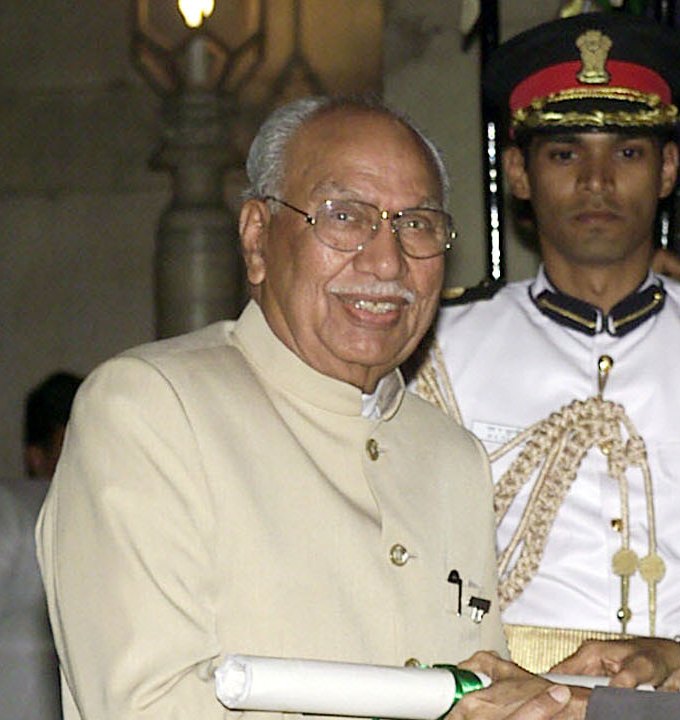
| Key facts | |
|---|---|
| Born | 1 July 1923, Kamalia, undivided Punjab (now Toba Tek Singh district, Pakistan) [1] [55] |
| Died | 1 November 2015, New Delhi, aged 92 [11] |
| Family roots | A Punjabi trading family from Kamalia; parents Bahadur Chand Munjal and Thakur Devi [15] [55] |
| Education | Gurukul schooling; no college [1] [17] |
| Family | Wife Santosh Munjal; sons Raman Kant (died before 1992), Pawan Kant, Suman Kant and Sunil Kant; daughter Geeta [55] [68] |
| Company/Group | Hero Cycles (co-founder, 1956); Hero Honda, now Hero MotoCorp (founder-chairman, 1984-2015) [1] [26] |
| Wealth | US$3 billion, No. 27 on the Forbes India Rich List (September 2015). Pawan Munjal & family: US$5.3 billion, No. 54 on Forbes India’s Richest 2026 (as of 30 September 2026) [52] [51] |
| Known for | Building the world’s largest bicycle and motorcycle makers from Ludhiana; the Hero Honda CD100 and Splendor; “Fill it, shut it, forget it” [5] [23] |
Sometime in the late 1990s, an elderly man walked into a Hero Honda showroom in Mahim, Mumbai, without warning anyone. The young staff did not recognise him. He looked at the motorcycles on the floor, took out his handkerchief and wiped the dust off one of them [22].
The visitor was Brijmohan Lall Munjal, chairman of what was by then the biggest motorcycle company in India. He did not shout. He did not send a memo. The dealer, Sundeep Bafna, remembered something else about him years later: “For him, relationship was above all. He remembered the names of my son and wife.” [22]
That handkerchief tells you most of what you need to know about the man everyone in the trade called “Babuji”. He came out of Partition with almost nothing, never went to college, and built two companies that became the largest of their kind in the world: Hero Cycles and Hero Honda, now Hero MotoCorp [11] [24]. He did it not with a single brilliant invention, but with an almost obsessive attention to the people around him: suppliers, dealers, workers, and the ordinary Indian buyer who wanted a machine that would not let him down.
This is his story, told in order, with the setbacks and the controversies around his family’s companies as well as the triumphs.
Where it began
Brijmohan Lall Munjal was born on 1 July 1923 in Kamalia, a small market town in what was then the Lyallpur district of undivided Punjab. Today it lies in Toba Tek Singh district of Pakistan [1] [55] [15]. His parents were Bahadur Chand Munjal and Thakur Devi [55]. Decades later, the main holding company through which the family owns Hero MotoCorp would carry his father’s name: Bahadur Chand Investments [3] [6].
The family were small traders. The Tribune, writing about his elder brother Satyanand, records that the family’s traditional business was trading in vegetables [15]. There were several brothers. Four of them, Dayanand, Satyanand, Brijmohan and Om Prakash, would go on to build the Hero business together [12] [13].
At about six, Brijmohan was sent to a newly opened gurukul near his home. Hero MotoCorp’s own account of his life says the frugal, disciplined values of that school stayed with him for life [1]. That was the end of his formal education. He never attended college [17] [12].
Counting sugarcane at 15
He started work early. According to Sunil Kant Munjal’s family history, The Making of Hero, as summarised in Business Standard’s review, Brijmohan took his first job at 15, in 1938, counting bundles of sugarcane as they were loaded at harvest time. He did it for about five years [12].
His next job was as a clerk at an army ordnance establishment. Accounts differ on exactly where. The Business Standard review of The Making of Hero places it in Quetta, where the brothers picked up a working knowledge of bicycle maintenance [12]. Outlook Business placed his ordnance job in Kamalia in 1944 [14]. A family oral history recorded by the 1947 Partition Archive says his brothers Satyanand and Om Prakash also started at an army store in Quetta before moving into bicycle repairs and trade in Lahore [16].
Amritsar and the bicycle trade
In the early 1940s the brothers moved into the business that would define their lives: bicycle parts. Around 1943-44 they set up in Amritsar as suppliers of bicycle components and spares to the local trade [15] [55] [62]. The Tribune dates the move to 1943, from Lahore; most other accounts say 1944, when Brijmohan was about 20 [15] [55].
It was not a smooth start. IANS, drawing on Priya Kumar’s biography of Om Prakash Munjal, reported that at one stage about 80% of the brothers’ business collapsed after they were supplied poor-quality parts. They rebuilt it with money borrowed from relatives and friends [62]. Om Prakash travelled from city to city by third-class rail, collecting orders [62].
Partition: starting again with nothing
Then came 1947. The Munjals were Punjabi Hindus in a town that would fall on the Pakistan side of the new border. Brijmohan’s nephew Yogesh Munjal told the 1947 Partition Archive that Satyanand’s family left Kamalia in July 1947 on the last train out and saw violence on the way [16].
Business Today later wrote that Brijmohan had “perhaps sensed” which way events were heading, which helped the family avoid the worst of Partition [19]. Still, the family arrived in India with, in the words of The Making of Hero, little more than the shirts on their backs [12] [13]. They tried Amritsar, Agra and Delhi before settling in Ludhiana, where Dayanand and Om Prakash had gone ahead [12] [13].
Ludhiana was already a hub for small engineering workshops. It would soon become India’s bicycle capital, and the Munjals would be a large reason why.
The first break
In Ludhiana the brothers began as middlemen, then opened a shop, then started making parts themselves: fork tops, handlebars, chains and front forks [16] [14]. By the early 1950s, Outlook Business reported, they were supplying components across the country [14].
Where the name “Hero” came from
The famous name was not invented by an advertising agency. According to The Making of Hero, it came from Kareem Deen, a Muslim maker of bicycle saddles who was leaving for Pakistan. He let Om Prakash Munjal use his brand name, “Hero” [13] [12]. The Business Standard review describes the permission as given “with a casual nod” [12]. No source we found says the name was bought.
So India’s most famous two-wheeler brand began as a gift from a man who crossed the border in the other direction.
The first forks fail
In the mid-1950s the brothers made their first serious attempt at manufacturing complete bicycle forks. It went badly. Faulty welding meant dealers returned whole consignments. Instead of arguing, the brothers pooled their own money and repaid every dealer [13]. They redesigned the forks, and the dealers came back [13].
The same book excerpt describes how the first complete Hero bicycle came together: handlebars made by Ramgarhia artisans, mudguards from Bahadurgarh, rims from another maker, tyres and tubes from Dunlop. That evening Brijmohan rode the first Hero bicycle home himself [13].
The 1956 licence
The real break came in 1956. The Punjab government, under Chief Minister Pratap Singh Kairon, was encouraging large-scale bicycle manufacturing, and it handed out a small number of licences for big plants in Ludhiana [62] [14]. Outlook Business reported that only 12 licences were issued and the Munjals won one of them [14]. (The family oral history remembers a much larger number of licences, so the exact count is disputed [16].)
The state also put money in. Outlook Business and Mint, as cited by Wikipedia, put the government’s support at Rs 6 lakh, alongside the brothers’ own pooled funds, for a plant on the GT Road in Ludhiana [14] [55]. Other accounts mention a much smaller bank loan of Rs 50,000, so the figures may describe different stages of the financing [63].
Hero Cycles started small: about 25 cycles a day [62] [16]. It made 639 bicycles in its first year [59].
Running a factory without a warehouse
What made Hero different was not the product, which was a standard roadster, but how the brothers ran the business. Capital was scarce, so they could not afford to hold stock. According to The Making of Hero, Hero ran a zero-inventory system with no warehouse: suppliers delivered what was needed each day, finished cycles were loaded onto trucks the same day, and vendors got no advances but were always paid on time [12].
PTI later described Brijmohan as one of the earliest Indian industrialists to use just-in-time production, backward integration and zero-inventory practices, long before these became management-school terms [11].
He also built the supplier base around him. Many ancillary contracts went to relatives and to fellow refugees from western Punjab, which bought loyalty that lasted decades [25]. Hero MotoCorp says around 40 former employees went on to start their own businesses, many of them suppliers to the group, and compares the network to a Japanese keiretsu [1].
Building the empire
Hero Cycles becomes the biggest in the world
The bicycle business grew steadily through the 1960s and 70s:
- 1960: the brothers began importing component and cycle-making machinery from Germany and Japan [23].
- 1963: first exports, to Indonesia [14].
- 1971: a rim-making unit was set up to supply Hero’s own cycles, an early step in backward integration [23].
- 1975: Hero became India’s largest bicycle maker, producing about 7,500 cycles a day [23] [63]. Outlook Business dates the moment it overtook Atlas to 1976 [14].
- 1979: cumulative production crossed one million cycles [14].
- 1986: Hero Cycles was listed in the Guinness Book of World Records as the world’s largest bicycle maker, producing more than 18,500 cycles a day [63] [11]. Outlook Business says it passed the American makers Huffy and Murray that year [14].
Through these years the brothers lived simply. In the 1960s and 70s, Brijmohan and Om Prakash shared one house in Ludhiana’s Model Town, with five children each and one car between them. They discussed business while brushing their teeth at wash basins facing opposite directions [21]. A Rotary colleague later wrote that Brijmohan refused to move to a bigger house until all his brothers’ families could live at the same standard [57].
The group also tried mopeds in the 1970s through Majestic Auto and its “Hero Majestic” brand [55], a smaller business that never matched the cycles.
The Honda bet
By the early 1980s Brijmohan was nearly 60 and looking for something bigger. India was beginning to allow foreign technical tie-ups in motor vehicles, and Japanese companies were looking for Indian partners.
He wanted to make scooters. Honda would not do it with him, because it was already tied to another partner for scooters, so he settled for motorcycles [24] [58]. It turned out to be the best “second choice” in Indian business history.
The courtship got off to an awkward start. According to The Making of Hero, when Brijmohan and his brother flew to Tokyo, nobody from Honda met them at the airport. They then reached a reception 10 minutes late, and were told that in Japan lateness signalled a lack of interest [12]. But Honda’s people were impressed by the efficiency of the Ludhiana operations and by Brijmohan’s humility [16] [21].
Hero Honda Motors was set up in January 1984 [3]. Honda and the Munjals each took 26% of the equity [3]. According to the ICMR case study, the rest was split between the public and financial institutions, the agreement ran for 10 years, and Honda received a 4% royalty plus a lump-sum fee of US$500,000 [59]. Brijmohan was chairman from the start [26].
Four strokes and “Fill it, shut it, forget it”
The key technical decision was his. In the early 1980s Indian motorcycles mostly ran on two-stroke engines: peppy, but thirsty and smoky. Brijmohan chose Honda’s four-stroke technology [1]. It was slower off the line, but it gave mileage that no Indian rival could match.
The first plant came up at Dharuhera in Haryana, and production of the Hero Honda CD100 began in 1985 [3] [23].
The mileage became the marketing. According to The Making of Hero, tests by the Automotive Research Association of India showed the CD100 giving about 94 km per litre. Brijmohan insisted the company advertise only 80 km [12]. Under-promise, over-deliver. The campaign line, “Fill it, shut it, forget it”, became one of the best-known in Indian advertising [23] [20].
The bike caught on with exactly the buyer Brijmohan was aiming for: the salaried man, the small shopkeeper, the travelling salesman counting every rupee. Hero Honda sold about 100,000 motorcycles within two years of launch [67].
Splendor and the climb to No. 1
The second great product was the Splendor, launched in 1994 [64] [67]. It became the workhorse of small-town India. In calendar 2000 alone Hero Honda sold 645,000 Splendors, and the Kathmandu Post later described it as the best-selling two-wheeler model in the world at the time [4] [64].
The volumes piled up. Hero MotoCorp’s own record of cumulative production shows how fast the company grew [5]:
| Cumulative two-wheelers produced | Year reached |
|---|---|
| 1 million | 1994 |
| 5 million | 2001 |
| 10 million | 2004 |
| 25 million | 2008 |
| 50 million | 2013 |
| 100 million | January 2021 |
In the year to March 2001, Hero Honda sold more than a million motorcycles in a single year for the first time, about 1.03 million units through 420 outlets [4]. In 2001 it overtook Bajaj Auto as India’s largest two-wheeler maker [24]. (For the Bajaj side of that rivalry, read our profile of Rahul Bajaj.) The company says it has been the world’s largest two-wheeler maker by annual volume since 2001; at Brijmohan’s death PTI reported it had held that position for 14 consecutive years [26] [11].
By 2009 Hero Honda was selling about 4.32 million motorcycles a year [3]. Between March 2000 and March 2011 its revenue grew roughly tenfold, from Rs 2,118 crore to Rs 20,787 crore, and its profit from Rs 192 crore to Rs 1,927 crore [24].
The man behind the numbers
Brijmohan’s management style was personal to the point of being old-fashioned. Vinnie Mehta of the auto-component makers’ association said he knew suppliers and dealers by their first names and asked after their families [21]. Outlook reported that he knew most employees and attended their weddings [17]. Entrepreneur India wrote that he phoned suppliers, dealers and staff on their birthdays, that anyone could meet the chairman, and that he went to the office every day even after turning 90 [58].
He was also hard-headed about quality. In the late 1990s he brought new local suppliers, such as Nipman Fastener, into the chain to replace imported parts, giving many first-generation entrepreneurs their start [21].
“These relationships have survived through generations - through bad times and good times,” he said of the Hero dealer and vendor network [1]. In a 2006 interview quoted by Outlook he put his philosophy more bluntly: “Our goal was never profit, but total devotion to the customer. Give him full return for his money and make him proud for choosing an Indian product.” [18]
Outside the company, he took on industry roles that most founders of his generation held: president of the Confederation of Indian Industry (CII) and the Society of Indian Automobile Manufacturers (SIAM), roles at the auto-component makers’ association and the PHD Chamber, and a seat on a regional board of the Reserve Bank of India [11]. In Ludhiana he helped set up the Ludhiana Stock Exchange, the Ludhiana Management Association and the Ludhiana Aviation Club [11].
Dividing the family empire, peacefully
By 2010 the Hero group was a tangle of more than 20 companies owned across four brothers’ families. Brijmohan, then in his late 80s, oversaw a formal family settlement in mid-2010 [32] [33]. The rule was simple: each branch kept what it already ran [32].
As reported by The Tribune and Business Standard [32] [33]:
- Brijmohan Lall’s family kept the 26% stake in Hero Honda, Rockman and several service companies, held jointly by his sons Pawan, Sunil and Suman and the family of his late eldest son Raman Kant.
- Om Prakash Munjal’s family kept Hero Cycles and Hero Motors.
- Satyanand’s sons kept Majestic Auto, Munjal Auto and Munjal Showa.
- Dayanand’s sons kept businesses including Sunbeam Auto and Hero Exports, with Hero Electric going to Vijay Munjal’s branch (sources differ on some of these allocations).
Outlook called the division “seamless and amicable” [17]. It became a case study in how an Indian business family can split without going to war, though, as we will see, the right to use the “Hero” name later went to arbitration and court.
Honda leaves: “a new beginning”
The bigger break came months later. By 2010 the partnership with Honda had become strained. Honda also owned its own Indian two-wheeler company, Honda Motorcycle & Scooter India, which competed with the joint venture [46]. Under the joint-venture terms Hero Honda could not export, except to a few neighbouring countries, and it depended on Honda for engine technology [47] [46].
Brijmohan put the problem in one line to Forbes India: “How can a competitor and principal be the same?” [24]
On 16 December 2010, Honda and the Munjals signed agreements under which Honda would sell its 26% stake to the Munjal family’s investment companies [3]. Brijmohan, then 87, told reporters: “Today is a new beginning to broaden our horizons.” [31]
The deal was struck at a steep discount. The family’s Hero Investments bought 51,918,750 shares from Honda at Rs 739.97 each, a total of about Rs 3,841.83 crore, at a time when the market price was about Rs 1,518 [27] [28]. To fund it, private equity firm Bain Capital and Singapore’s GIC invested in the family’s holding vehicle, taking an indirect stake of under 15% [28]. Honda licensed its existing products to the company until 2014 [47] [29].
Investors were nervous. Hero Honda’s shares fell about 9% in a week on fears that the company would struggle without Honda’s technology and that royalty payments might rise [47].
On 29 July 2011 Hero Honda became Hero MotoCorp [29]. A new logo was unveiled in London on 9 August 2011 with the tagline “Hum Mein Hai Hero” [30].
Handing over
Brijmohan had been stepping back for years. His son Pawan Munjal had been managing director and CEO since 2001 and became vice-chairman in August 2014 [26]. On 2 June 2015, Pawan became chairman; Brijmohan, who had chaired the company since 1984, became chairman emeritus and stayed on the board as a non-executive director [26]. In his last full year as chairman, FY2015, Hero MotoCorp sold a record 6.63 million two-wheelers [26], with total income of Rs 28,078 crore and a net profit of Rs 2,385.64 crore [49].
The setbacks and failures
The Hero story is often told as an unbroken climb. It was not.
The early years were close to collapse. The 1940s Amritsar business nearly went under after bad parts were supplied to it, and the first Hero forks were rejected by dealers [62] [13]. Partition wiped out whatever the family had built in western Punjab [12].
Scooters slipped away twice. Brijmohan wanted scooters in 1984 and could not get them from Honda [24]. Decades later, as city buyers moved from motorcycles to gearless scooters, Hero was slow to respond. BusinessWorld reported that before he stepped back he had urged heavy investment in new scooters [20]. After the split, Honda’s Activa took off: Honda’s Indian two-wheeler sales rose from 1.6 million in FY2011 to 4.45 million in FY2016, and in the first half of 2016 the Activa outsold the Splendor every month [46]. Hero remained the market leader, but its share has eroded: Autocar Professional reported it at 27.58% in the first nine months of 2025, against 24.50% for Honda [65].
Technology dependence. For 26 years Hero Honda relied on Honda’s engines. After the split the company had to build its own research and development almost from scratch, and some of its early scooters still used Honda-derived technology under licence [46].
Labour unrest. In April 2006 about 2,000 contract workers at Hero Honda’s Gurgaon plant stopped work for five days, demanding regular jobs and better pay; the strike ended with a 30% pay rise and better benefits, but without regularisation [48]. In 2013 the workers’ union at Gurgaon threatened a hunger strike over a wage dispute [70].
Regulatory shocks. After his death, the Supreme Court’s 2017 ban on the sale of BS-III vehicles forced Hero to give heavy discounts to clear stock, costing it Rs 193 crore in one quarter [69].
Controversies and allegations
No court, regulator or investigating agency has made any finding against Brijmohan Lall Munjal personally, and we found no case or regulatory order against him in his lifetime. Obituaries in Outlook, BusinessWorld and PTI contain no criticism of his conduct [17] [20] [11]. The matters below involve the companies he founded, his family’s branches and his son Pawan Munjal, mostly after his death in 2015. They are included because readers search for them, and because some relate to periods when he was still chairman.
The fight over the “Hero” name
Allegation: After the 2010 family settlement, the different Munjal branches clashed over who could use the “Hero” brand for new products. Hero Electric, owned by Vijay Munjal’s son Naveen Munjal, argued that the settlement gave its branch the right to the “Hero” name for electric vehicles, and that Hero MotoCorp could not use it for its own electric scooters [36].
Response: Hero MotoCorp argued it was entitled to use the brand it had spent heavily building [37].
What happened next:
- In February 2022 the Delhi High Court referred the family disputes to an arbitral tribunal of three retired judges [36].
- In June 2022, as reported by IIFL, the tribunal in an interim ruling allowed Hero MotoCorp to use the “Hero” mark for EVs; Hero MotoCorp sells its EVs under the Vida brand [37].
- In December 2024 the NCLT admitted Hero Electric into insolvency over unpaid dues to a supplier [38].
- A separate dispute between Hero Cycles (Om Prakash Munjal’s branch) and Hero Ecotech over use of the name on bicycles reached the Supreme Court, which in February 2026 restored contempt proceedings to the trial court [8].
Status: As of 28 October 2026, we found no final arbitral award in the Hero Electric dispute, and the Hero Cycles contempt application is pending before the trial court [8]. Brijmohan Lall’s branch is not a party to the Hero Cycles case.
Sunil Kant Munjal’s exit from Hero MotoCorp
Allegation: About nine months after Brijmohan’s death, his son Sunil Kant Munjal stepped down as joint managing director of Hero MotoCorp in August 2016. Business Today reported that management control was at the heart of the change [34].
Response: The company called it a “realignment of ownership” within the family [34]. In August 2023, Hero MotoCorp disclosed to the exchanges a family agreement dated 27 July 2016 that vested control in the family group and recorded an understanding with Sunil Kant Munjal on use of the “Hero” mark [35].
As part of the realignment, a family partnership firm sold about 57.5 lakh Hero MotoCorp shares to other promoter entities in August 2016 [66].
Status: Settled by agreement; we found no litigation between Brijmohan Lall’s sons. Sunil Kant Munjal runs his own group, Hero Enterprise [35] [34].
Income-tax searches, 2022
Allegation: In March 2022 the Income Tax Department searched Hero MotoCorp and premises linked to Pawan Munjal. Business Today, citing department sources, reported that officials suspected about Rs 1,000 crore of bogus expenses and a cash payment of about Rs 100 crore for a farmhouse in Delhi [39]. Business Standard later reported that the department alleged more than Rs 800 crore had been booked as payments to an event-management firm and moved through shell firms [40].
Response: Hero MotoCorp called it a “routine inquiry”, said it was a law-abiding company with robust internal financial controls, and said it had cooperated fully [39].
Status: We found no public assessment order or prosecution arising from the searches as of October 2026. These remain allegations reported through official sources.
Corporate affairs ministry probe, 2023
Allegation: In June 2023 Reuters reported, citing two government sources, that the Ministry of Corporate Affairs had ordered an investigation into Hero MotoCorp’s dealings with a third-party vendor and possible diversion of funds [43].
Response: Hero MotoCorp said it had not received any communication from the ministry [43].
Status: No order arising from the probe has been made public as of October 2026.
Customs and money-laundering cases against Pawan Munjal
Allegation: The Directorate of Revenue Intelligence (DRI) filed a complaint alleging that foreign currency was illegally carried out of India, naming Pawan Munjal, an event-management vendor and others [10]. In August 2023 the Enforcement Directorate (ED) registered a money-laundering case and raided his premises, alleging that about Rs 54 crore in foreign currency was taken abroad between 2014-15 and 2018-19 for his personal expenses, partly drawn in employees’ names [41]. ED said it seized about Rs 25 crore in cash, foreign currency and jewellery, and in November 2023 it provisionally attached Delhi land worth Rs 24.95 crore [41] [42].
Response: Pawan Munjal denied wrongdoing. His lawyers argued in the Delhi High Court that the customs tribunal (CESTAT) had already exonerated him and that the predicate customs case could not sustain a money-laundering case [9].
What happened next:
- On 17 November 2023 the Delhi High Court stayed the ED proceedings against Pawan Munjal [9].
- On 24 July 2024 the Delhi High Court quashed the trial court’s summons to him in the DRI case, noting the CESTAT ruling in his favour [10].
Status: As of 28 October 2026, the DRI summons against Pawan Munjal stands quashed and the ED proceedings against him remain stayed; we found no later ruling. He has not been convicted of any offence.
Forgery complaint by a former contractor
Allegation: In October 2023 Delhi Police registered an FIR, on a court’s order, on a complaint by a former manpower contractor, Brains Logistics, which alleged that false bills of about Rs 5.94 crore were created in 2009-10 and wrongly used to claim tax credit [44].
Response: Hero MotoCorp called the complainant a “disgruntled” service provider, said no company official was named in the FIR, and said it had itself filed a case against the firm in 2013 [44].
Status: On 12 October 2023 the Delhi High Court stayed the order directing the FIR and the proceedings [45]. We found no final outcome as of October 2026.
Giving back
Brijmohan’s philanthropy centred on medicine and education, mostly in Ludhiana and around the Hero plants in Haryana.
Dayanand Medical College & Hospital, Ludhiana. He served as president of DMCH for more than three decades and later as chairman emeritus [11]. The hospital’s Hero DMC Heart Institute bears the group’s name.
Raman Kant Munjal Foundation. Named after his eldest son, who died young, the foundation runs a school and a 100-bed hospital near the Dharuhera plant and works in villages the group adopted [1]. The Raman Munjal Vidya Mandir school was founded in 1992 [68].
BML Munjal University. In 2014 the family set up a not-for-profit university in his name at Sidhrawali near Gurgaon, mentored at launch by Imperial College Business School, London [56]. “There is no greater investment and no better return than that in education,” he once said [2].
Rotary and civic work. He was governor of Rotary District 3090 in 1977-78 and gave time and money to its projects [57].
His public honours included the Padma Bhushan in 2005, presented by President A.P.J. Abdul Kalam [7] [11], the EY Entrepreneur of the Year lifetime achievement award in 2001 [60], and a Forbes India Leadership Award for lifetime achievement in 2013 [24].
Death and legacy
Brijmohan Lall Munjal died at 7.05 pm on 1 November 2015 at a private hospital in south Delhi after a brief illness. He was 92 [11] [23]. His younger brother and partner Om Prakash had died less than three months earlier, on 13 August 2015 [62].
President Pranab Mukherjee wrote to the family that Munjal was an iconic industrialist whose vision and hard work had made Hero MotoCorp a benchmark for Indian industry [7]. The head of the auto-component makers’ association called him “a father figure to the industry” [21].
At his death, Forbes India’s 2015 Rich List ranked him No. 27 in India with a net worth of US$3 billion [52]; Forbes Asia separately ranked the Munjal family at No. 46 among Asia’s richest families with US$3.2 billion [53].
The company he founded has kept growing. In FY2026 Hero MotoCorp reported standalone revenue of Rs 46,830 crore and a profit of Rs 5,268 crore on sales of 64.69 lakh vehicles [50]. Forbes says it has sold more than 130 million two-wheelers in total [51]. The founding family’s promoter group held 34.73% of the company at 31 March 2026 [6]. Harshavardhan Chitale became CEO in January 2026 under executive chairman Pawan Munjal [54]. Two-wheelers remain how most of urban India gets to work: a 2026 government survey found that 52.3% of urban workers ride one as their main mode of commute (CapitalVia Insights).
In 2026 Forbes put Pawan Munjal and family at US$5.3 billion, No. 54 on its list of India’s richest [51].
Succession
Brijmohan planned his succession over two decades, which is one reason the transition was quiet.
- Raman Kant Munjal, his eldest son and a director of Hero Honda, died before 1992; Brijmohan encouraged Raman’s widow, Renu Munjal, to join the business, and the foundation in Raman’s name continues [57] [68].
- Pawan Kant Munjal became managing director and CEO in 2001, vice-chairman in 2014 and chairman in June 2015, and led the Honda exit [26] [18].
- Sunil Kant Munjal, joint managing director, left Hero MotoCorp in 2016 under a family agreement and runs Hero Enterprise; he wrote the family history The Making of Hero (2020), which won the business book award at Tata Literature Live! that year [34] [61].
- Suman Kant Munjal runs Rockman Industries [32].
- In the next generation, Rahul Munjal leads Hero Future Energies and Abhimanyu Munjal leads Hero FinCorp [34].
Business Standard cited the Munjals’ 2010 settlement as an example of succession planning that the rest of corporate India could learn from [33].
What their journey teaches
Promise less than you can deliver, then beat it. Brijmohan advertised 80 km per litre when the tests showed 94 [12]. Customers who got more than they were promised became the brand’s best salesmen. Most businesses do the opposite.
Your suppliers and dealers are your balance sheet. Hero ran without a warehouse because it trusted its vendors to deliver daily and paid them on time, every time [12]. In a country where small suppliers are routinely paid late, that discipline built a supply chain rivals could not copy.
When the first product fails, pay for the failure yourself. When the first Hero forks broke, the brothers refunded every dealer from their own pockets [13]. That decision, taken when they had little money, bought them a reputation that lasted 70 years.
A second choice can be the right choice. He wanted scooters and got motorcycles; he wanted Honda’s partnership and later had to build without it [24] [3]. Each time, he made the most of the option he had rather than waiting for the one he wanted.
Split before you fight. By dividing the family businesses while he was alive, and while relations were still good, he avoided the bitter disputes that destroyed other Indian business families. Even so, the later court battles over the “Hero” name show that a settlement needs to be precise about shared brands [32] [36].
Remember the names. The man who could recite his dealers’ children’s names built a network of thousands of showrooms on personal loyalty [22] [17]. Technology can be licensed; relationships cannot.
For other founders who built Indian manufacturing brands, read our profiles of Venu Srinivasan of TVS, Siddhartha Lal of Royal Enfield, and fellow Ludhiana-born entrepreneur Sunil Bharti Mittal.
A profile for general reading, based on public records and reporting as of 28 October 2026. Not investment, tax or legal advice.
Sources (70)
- Brijmohan Lall Munjal: The Chairman - Hero MotoCorp, Oct 2026
- Tribute to Dr. Brijmohan Lall, Annual Report 2015-16 - Hero MotoCorp, Oct 2026
- Honda and its Indian Partners Agree to Dissolve Motorcycle Joint Venture - Honda Motor Co., Dec 2010
- Hero Honda becomes India's top motorcycle maker - Honda Motor Co., Apr 2001
- Hero MotoCorp rolls out its 100 millionth two-wheeler - Hero MotoCorp press release, Jan 2021
- Promoter shareholding declaration under Regulation 31(4) - Hero MotoCorp filing on NSE, Apr 2026
- President of India condoles passing away of Shri Brijmohan Lall Munjal - Rashtrapati Bhavan, Nov 2015
- Supreme Court restores breach of injunction proceedings in Hero trademark dispute - LiveLaw, Feb 2026
- Delhi High Court stays ED proceedings against Hero Group chairman Pawan Munjal - Bar & Bench, Nov 2023
- Delhi High Court quashes summons to Hero MotoCorp chairman Pawan Munjal - Business Standard, Jul 2024
- End of an era: Brijmohan Lall Munjal dies after brief illness - Business Standard (PTI), Nov 2015
- Hero worship: review of The Making of Hero - Business Standard, Jan 2020
- Excerpt from The Making of Hero by Sunil Kant Munjal - Scroll, Jan 2020
- Pedalling ahead - Outlook Business, Feb 2012
- Hero Cycles co-founder Satyanand Munjal dies - The Tribune, Apr 2016
- Oral history of Yogesh Munjal - 1947 Partition Archive, Stanford Libraries, Sep 2016
- BM Munjal, the man behind Hero, passes away - Outlook, Nov 2015
- Brijmohan Lall Munjal (1923-2015) - Outlook, Mar 2017
- A prescient patriarch - Business Today, Aug 2008
- Farewell, Indian automobile hero - BusinessWorld, Nov 2015
- Hero's Dr Brijmohan Lall was about humility and human connect - Autocar Professional, Nov 2015
- Brijmohan Lall Munjal: a fatherly figure - Autocar Professional, Nov 2015
- Brijmohan Lall Munjal passes away - Autocar India, Nov 2015
- Brijmohan Lall Munjal: A Hero for Life - Forbes India, Oct 2013
- Five lessons for Indian business from Brijmohan Lall Munjal's legacy - Business Today, Nov 2015
- Pawan Munjal takes over as chairman of Hero MotoCorp - Business Today, Jun 2015
- Hero Group to pay Rs 3,841.83 crore for Honda's stake - Moneylife, Mar 2011
- Honda's exit gives Bain, GIC 15% in Hero Honda - Business Standard, Mar 2011
- Hero Honda changes name, becomes Hero MotoCorp - Business Today, Jul 2011
- Hero MotoCorp unveils new brand identity post its split with Honda - afaqs, Aug 2011
- Hero Group to buy Honda stake in joint venture - IndustryWeek (AFP), Dec 2010
- Munjal family divides Hero Group businesses - The Tribune, Jun 2010
- Succession planning that corporate India could learn from - Business Standard, Nov 2016
- Sunil Munjal fades away from Hero MotoCorp - Business Today, Jul 2016
- Sunil Kant Munjal exits Hero MotoCorp as company discloses family agreement - Autocar Professional, Aug 2023
- Munjal vs Munjal: The battle for the Hero brand name - Business Today, Jan 2022
- Tribunal allows Hero MotoCorp to use Hero trademark for its EV segment - IIFL, Jul 2022
- NCLT admits Hero Electric to insolvency process over unpaid dues - Bar & Bench, Dec 2024
- Rs 1,000 crore suspected bogus expenses at Hero MotoCorp under I-T scanner - Business Today, Mar 2022
- Hero Moto skids 6% as I-T dept finds Rs 800 crore siphoned off - Business Standard, Apr 2022
- ED raids Hero MotoCorp chairman Munjal's residence, PMLA case registered - Business Standard, Aug 2023
- ED attaches Rs 24.95 crore worth properties of Hero MotoCorp's Pawan Kant Munjal - The Tribune, Nov 2023
- Corporate affairs ministry orders probe into Hero MotoCorp - Deccan Herald (Reuters), Jun 2023
- FIR against Hero MotoCorp CEO Pawan Munjal for allegedly forging false bills - Moneylife, Oct 2023
- Delhi HC stays cheating case filed against Hero MotoCorp CEO Pawan Munjal - Moneylife, Oct 2023
- Inside story of how Honda Activa turned the tables - Business Today, Aug 2016
- Hero Honda: Parting ways - Business Standard, Dec 2010
- Hero Honda strike ends, production from Monday - OneIndia (UNI), Apr 2006
- Hero MotoCorp profit, income up in 2014-15 - Business Standard (IANS), May 2015
- Hero MotoCorp FY26 results - Groww, May 2026
- Pawan Munjal & family - Forbes India's Richest 2026, Sep 2026
- Five takeaways from the Forbes India Rich List - Business Insider India, Sep 2015
- 14 Indian families in Forbes Asia's richest list - Business Standard, Oct 2015
- Hero MotoCorp names Harshavardhan Chitale as CEO effective 5 Jan 2026 - Deccan Herald, Sep 2025
- Brijmohan Lall Munjal - Wikipedia, Oct 2026
- Imperial College London to mentor BML Munjal University - Business Today, Jan 2014
- Remembering Brijmohan Lall Munjal - Rotary News, Dec 2015
- Brijmohan Lall Munjal: lessons from India's Hero - Entrepreneur India, Nov 2015
- Hero Honda break-up case study - ICMR India, Oct 2026
- EY Entrepreneur of the Year 2001: Builders of a better India - EY India, Oct 2026
- The Making of Hero bags Tata Lit Fest's business book of the year title - PrintWeek, Nov 2020
- O.P. Munjal, father of cycle industry, passes away - Business Standard (IANS), Aug 2015
- How Hero Cycles gave wheels to a nation after Partition - The Better India, Jul 2019
- The great Indian Splendor - The Kathmandu Post, Feb 2015
- Hero, Ola, Honda and Bajaj see biggest losses in market share in 2025 - Autocar Professional, Oct 2025
- Hero MotoCorp moves north after promoter shareholding rejig - Business Standard, Aug 2016
- Hero-Honda split: end of a legend - IUP The Analyst, Jan 2011
- Raman Munjal Vidya Mandir - Wikipedia, Oct 2026
- Hero MotoCorp Q4 net down 14% as BS-III discounts take a toll - Business Standard (PTI), May 2017
- Hero MotoCorp workers to go on hunger strike from Thursday - Business Standard, Feb 2013