
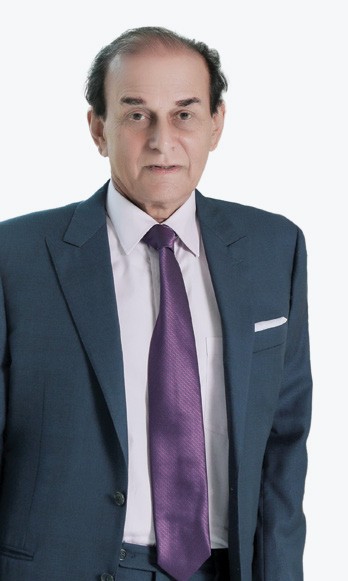
| Key facts | |
|---|---|
| Born | Early 1950s, Mumbai (sources differ between 1951 and 1953) |
| Family roots | Kutchi trading family; grandfather Vallabhdas Vasanji moved from Kutch to Bombay in 1862 |
| Education | B.Com, Sydenham College, Mumbai (1971) |
| Family | Wife Archana; son Rishabh (Marico director, Sharrp Ventures); daughter Rajvi (director, Mariwala Health Initiative) |
| Company | Marico Ltd (founder, chairman); Kaya Ltd (chairman) |
| Wealth | US$7.1 billion with family, No. 37 on Forbes India Rich List 2026 (Sep 2026) |
| Known for | Parachute, Saffola, beating Hindustan Lever in coconut oil, handing Marico to a professional CEO, ASCENT Foundation |
Somewhere in the early 1980s, a group of dealers in small-town Maharashtra were shown an unusual set of photographs. They showed rats locked in a cage with blue plastic bottles of Parachute coconut oil. The rats had been left there to do their worst. The bottles were unharmed [7][9].
The pictures were the answer to a problem that had killed a competitor’s plastic packs a few years earlier. Shopkeepers kept oil on open shelves; at night rats gnawed through the square plastic containers and the oil ran everywhere. Harsh Mariwala, then a young man in his family’s old-fashioned oil business, had chosen a round bottle that a rat could not grip, tested it, and offered dealers compensation for any damage [7][9]. Parachute’s share of the coconut-oil market, stuck at about 15%, climbed to about half over the following years [5].
That small, stubborn piece of problem-solving says a lot about the man who built Marico. Harsh Mariwala did not invent coconut oil, did not get into an IIM, and did not inherit a brand empire. He inherited a joint family, a trading firm at Masjid Bunder, and a product sold loose out of 15-litre tins. Over five decades he turned that into a company with revenue of Rs 13,611 crore in FY26 [26], fought off Hindustan Lever when it tried to crush him, and then did something few Indian promoters do: he handed the top job to a professional and stepped back.
Where it began
The Mariwala story starts with pepper. In 1862 the family’s forebears came from Kutch, in present-day Gujarat, to Bombay and traded spices and produce from the Malabar coast. Harsh’s grandfather, Vallabhdas Vasanji, dealt in pepper - mari in Gujarati - and so the family came to be called Mariwala [10][71]. Over the decades the trade grew to ginger, copra and coconut oil.
In 1948 the family set up Bombay Oil Industries Ltd (BOIL). Accounts differ on exactly who founded it - some credit grandfather Vallabhdas, others Harsh’s father Charandas and his brothers - but by Harsh’s own telling the company he joined was “managed by my father and three of his brothers” [1][10]. Over the next two decades BOIL built a coconut-oil plant at Sewri, an edible-oil refinery at Mazagaon, a chemicals unit at Bhandup and a spice-extraction plant near Kochi [10].
Harsh was born in Mumbai in the early 1950s. Sources differ on the year: the Harvard Business School oral history records 1953, while ages reported by Business Today and The Ken point to about 1951-52 [1][5][66]. He grew up in the crowded wholesale district of Masjid Bunder, near the docks, where the family office sat among commodity traders [4]. It was a large joint family; in his book he describes being one of eight boys of his generation and the eldest grandson of the senior-most Mariwala [12].
He studied accounting and economics at Sydenham College and graduated with a B.Com in 1971 [1]. He wanted to study further. “I wrote the tests and all, but I couldn’t make the cut,” he told Harvard’s Joseph Fuller in 2019, speaking of the entrance exams for IIM Ahmedabad, IIM Calcutta and Bombay’s Bajaj Institute [1]. He then asked to do an MBA abroad. “My father said no at that time. He was a very strict father; difficult to argue with him in the sense that I couldn’t rebel unlike today’s kids” [1].
So at about 20, he went to work in the family firm.
The first break
A business with no appointment letters
The Bombay Oil Industries that young Harsh joined in 1971 was a commodity company. Its turnover was about Rs 50 lakh a year [73]. Its coconut oil, sold under the old name Parachute, went out in 15-litre tins and barrels to traders, who sold it loose to shoppers [6][8]. Branded consumer goods were, in his words, a “minute” part of the business [1].
“I was just put into the company without any guidance and I literally had to learn everything,” he recalled. “There was nothing like an appointment letter in the organization” [1]. The staff were relatives or acquaintances; the family took every decision.
What he did have was freedom. His father told him to explore and decide what he wanted to do [70]. Before joining he had visited the United States and seen supermarket shelves stacked with branded products; Outlook Business, which reconstructed his early years, says “the seed of Marico was sown during that trip” [6].
On the road in small-town India
Harsh started travelling. He went by train and car to markets in Maharashtra, Madhya Pradesh, Uttar Pradesh and Karnataka - towns like Nagpur and Jalgaon that no one from the firm had visited before [6]. “There were no hotels for meetings. I often stayed with them at their homes,” he said of the distributors he met [13].
On these trips he noticed something. A Calcutta company was selling coconut oil in small packs at fatter margins, and some distributors in Vidarbha were already repacking Parachute into smaller containers [8]. “I saw an opportunity of converting loose to packed,” he later said [6]. Marico’s own timeline marks 1974 as the year he set out to build a branded market for coconut and refined edible oils in small consumer packs [2].
It was slow going. “In those days, one had to go very slowly, no one was ready to bear any additional cost,” he said [6]. Rolling out Parachute in 100, 200 and 500 ml packs across the country took eight to ten years [6].
Learning marketing at night
He had no marketing training and could not afford to hire people who did. So he borrowed expertise. He spent about a week at an advertising agency learning the basics. For marketing advice he found a professor at IIM Ahmedabad who could only meet on weekends or at night. “I would go by the evening flight to Ahmedabad, spend the whole night with him and come back on the morning flight,” he said [1].
The blue bottle
The big break was packaging. In 1980 the Parachute blue bottle appeared, and plastic began replacing tins - a shift the rest of the industry later followed [2]. Plastic was cheaper, did not rust, and did not leave oil solidified in a tin in winter. But traders resisted, because an earlier attempt by a rival had failed when rats chewed the packs [7]. The round bottle, the caged-rat demonstration and the promise to compensate retailers won them over [7][9]. “It took us five years to drive home the advantages of convenience,” Mariwala said [5]. Parachute’s share rose from about 15% to around 50% during the 1980s [5].
He also worked on Saffola, a safflower cooking oil BOIL had launched in the 1960s. When he took charge it was sold in only parts of Mumbai and Delhi [72]. He began positioning it around heart health, a positioning that still defines the brand.
Building the empire
Breaking away from the joint family
By the late 1980s, the consumer business was growing but trapped inside a family conglomerate. BOIL had three unrelated divisions - consumer products, fatty acids and chemicals, and spice extracts - with no way to allocate money between them [1]. And the family was growing. “My father’s three brothers, five of us from the next generation, nine of us and three more likely to join, would have led too many” people at the top, he said [1].
He spent two to three years persuading the family to separate the businesses, choosing consensus over confrontation [1]. A new company, Marico Foods Ltd, was incorporated on 13 October 1988 and renamed Marico Industries Ltd in 1989 [67]. Marico dates its own birth to 2 April 1990, when it began operating as the consumer products company [2]. The name stood for “Mariwala and Company” [6]. BOIL itself was split four ways: Marico took consumer products; Kancor took spices; Epro took seeds; and the chemicals business went elsewhere [10]. Marico first used Parachute and Saffola under a licence from BOIL, and bought the brands outright for Rs 30 crore in June 2000 [10].
He has called the carve-out “the most important decision in my life” [1].
200 employees walk out
Marico started with a turnover of about Rs 80 crore and roughly 200 staff inherited from BOIL [11]. It could not afford big-company salaries, and good candidates fled the cramped Masjid Bunder office. So Mariwala interviewed them at the Willingdon Sports Club instead [11][13]. He ran recruitment ads designed to look like news stories, with headlines such as “200 Employees Walk Out of Bombay Oil” [11][2].
His first senior professional hire was a head of HR [12]. He removed attendance registers and let employees approve their own expenses up to a limit. “We did away with attendance registers because ultimately we wanted to establish trust,” he said [7]. Marico adopted a five-day week early [7]. In 1991 the company wrote down its mission as the “3Ps”: people, products and profits [2]. Decades later he still pushes against India’s “Sir ji” culture, saying real respect is when people feel free to question the boss [51].
The buyout that nearly broke him
The family separation did not go smoothly. A family charter was signed in 1990, but in a 1992 meeting relatives found that one jointly owned business had lost far more money than had been disclosed [3]. Trust collapsed. Harsh, backed by his uncle Kishore Mariwala, decided to buy out the other branches’ stakes in Marico.
The family appointed the chartered accountant Y.H. Malegam as an independent valuer. Harsh and Kishore had 18 months to pay. In May 1994 Malegam’s valuation came in at roughly double what Harsh had expected, and then a second branch decided to sell too - doubling the money he had to raise [3]. Mariwala has described breaking down in front of colleagues at an offsite during this period [4].
He borrowed against the family’s shares. One lender was Uday Kotak, whose Kotak Mahindra was then a young finance firm (read our Uday Kotak profile); another was Sajjan Jindal [3]. “I must give credit to Harsh for his maturity,” Kotak later said [3].
The 1996 IPO
To repay the debt, Marico went public in March 1996, even though bankers advised that the market was weak. Kotak and Enam managed the issue at Rs 165 a share. The promoter families sold shares worth Rs 46 crore and Marico raised Rs 17.5 crore of fresh capital. After the IPO, the Harsh and Kishore families held about 65%. Marico’s market value at listing was Rs 236 crore; by mid-2020 it had grown about 190 times [3]. As of mid-October 2026 the company’s market value was a little over Rs 1 lakh crore [65].
The war with Hindustan Lever
The fight that made Marico’s reputation came next. Hindustan Lever (now Hindustan Unilever) had acquired the coconut-oil brand Nihar through its 1993 merger with Tata Oil Mills. In the late 1990s, HLL chairman Keki Dadiseth made Mariwala an offer to buy Marico. According to Mariwala’s account, Dadiseth promised “enough resources to take care of you and all your future generations” - and, when he refused, warned that “Marico will be history” [4][7].
In 1998 HLL relaunched Nihar against Parachute. In one quarter of FY2000, Open Magazine reported, HLL’s spending on coconut-oil promotion nearly matched Marico’s entire annual advertising budget of about Rs 30 crore. Marico’s price-to-earnings multiple fell from 13 at listing to about 7 [7]. Inside the company the fightback was called “Operation Parachute ki Kasam” [7].
Marico held on. HLL eventually put Nihar up for sale, and in March 2006 Marico bought it for Rs 216 crore - a brand that gave it about 40% of the perfumed hair-oil market [14]. In his book Mariwala credits a tip from an unexpected source on the Chembur golf course with helping him win the bid [4]. The company HLL had threatened to bury had bought the weapon HLL had used against it.
From oils to a house of brands
Through the 2000s Mariwala moved Marico away from low-margin commodity oils. It dropped or sold brands such as Sil (sold in 2008) and Sweekar (sold to Cargill in 2011), and in 2006 edible oils had fallen from 35% of revenue in 2001 to about 20% [45][67]. Revenue crossed Rs 1,000 crore around the middle of the decade; in December 2006 Business Standard described Marico as “a Rs 1,144 crore company” [15]. “Brands are what matter. Production can be outsourced,” Mariwala said then [15].
The main building blocks:
- Hair and personal care: Parachute Advansed, Hair & Care, Nihar; and in February 2012 the purchase of Paras Pharmaceuticals’ personal-care brands from Reckitt Benckiser - Set Wet, Zatak, Livon and others, with expected annual sales of over Rs 150 crore [17]. Marico did not disclose the price; Business Standard called it an “Rs 600-crore acquisition”, funded partly by a Rs 500 crore share sale to investors [18].
- Foods: Saffola Oats launched in 2010 as the 21st oats brand in India and went on to lead the market [19]. In 2026 Mariwala recalled that an earlier Saffola baked-snack launch had flopped because “we had focused too much on health”. The lesson led to masala oats and regional flavours such as a Pongal variant for Tamil Nadu [49].
- Digital-first brands: Beardo (2017-2020), Just Herbs and True Elements (2022) and Plix, where Marico agreed in October 2026 to buy a further 24.09% for Rs 1,012 crore on its way to full ownership [27][67].
Going global
Marico opened a Dubai office in 1992 and set up its first overseas plant, in Bangladesh, in 1999 [71][67]. Marico Bangladesh listed on the Dhaka and Chittagong exchanges in 2009, after an IPO that was oversubscribed more than 11 times [16]. In 2006 Marico bought the Egyptian hair brands Fiancée and HairCode; in 2007 it entered South African ethnic hair care; and in 2011 it agreed to buy 85% of Vietnam’s International Consumer Products, maker of X-Men shampoo [15][67]. Mariwala said Indian firms could understand emerging markets better than multinationals because they shared many of the same conditions [1]. Today overseas operations bring in about a quarter of group revenue, and Marico says about one in three Indians uses one of its products [74].
Letting go
In March 2014, Mariwala stepped down as managing director and made Saugata Gupta, who had joined as head of marketing in 2004, MD and CEO [23]. He stayed on as chairman. It was a hard call. “So though I was not ready to step down, I stepped down in the interests of the company,” he told Business Today in 2022 [52].
The bet has paid off. Under Gupta, Marico’s revenue went from Rs 9,653 crore in FY24 to Rs 10,831 crore in FY25 [25], and then grew 26% - its fastest in 14 years - to Rs 13,611 crore in FY26. Its foods business ended the year with sales running above Rs 1,000 crore a year, and the company set targets of more than Rs 15,000 crore for FY27 and Rs 20,000 crore for FY30 [26]. Gupta’s term was extended to March 2028 [24]. Harsh describes his own role since 2014 as “hands-off but mind-on” [5].
How the wealth is held
Mariwala’s fortune is mostly his family’s stake in Marico, where the promoter group held about 59% in mid-2026 [68], plus Kaya Ltd and a family office. He has said the promoter shares sit “mainly in other discretionary trusts, which are owned by the family”, not in charitable trusts [50].
Forbes India’s Rich List 2026, published on 30 September 2026 and based on share prices of 11 September, ranked Harsh Mariwala and family No. 37 in India with US$7.1 billion [28][29]. Forbes’s separate real-time figure, which counts only his own holding, is lower [30]. The Hurun India Rich List 2025 placed the family at No. 44 with Rs 53,990 crore [31].
A voice for industry
Mariwala also served as president of the industry body FICCI. In that role, Business Today reported in January 2012, he answered the Prime Minister’s criticism of business leaders by saying the real problem was a “trust deficit” between government and industry [63].
The setbacks and failures
Kaya: the business that never healed
Mariwala’s biggest disappointment is Kaya, the skin clinic chain Marico launched in 2003. At its peak it had 94 clinics in India and 23 in the Middle East [21]. But it never made Marico-style returns, and in January 2013 Marico announced it would demerge Kaya into a separate company, with Mariwala as chairman of both [20]. Kaya Ltd listed in 2015.
Things got worse. Outlook Business found that Kaya’s gross sales fell from Rs 409 crore in FY17 to Rs 377 crore in FY23 while its net loss widened from Rs 27 crore to Rs 116 crore and debt rose from Rs 30 crore to Rs 142 crore; the share price was down more than 75% from listing [21]. Mariwala has admitted mistakes: “Kaya wasn’t doing well, and in frustration, I decided to change the positioning” - a move away from skin treatments that hurt the core business [21]. In 2024 Kaya sold its Middle East business to Humania GCC Holding for an undisclosed sum [22].
Products that did not work
Not every launch landed. The Saffola baked snacks failed because Marico put health ahead of taste [49]. Mariwala treats such misses as tuition: “Unless you experiment, unless you fail, you’ll never learn because there are limitations to market research,” he said [52]. He also draws a line: “A well thought through experiment may still fail. Poor execution is a different matter” [49].
Shocks from outside
Marico’s dependence on copra and on Bangladesh have both bitten. When unrest broke out in Bangladesh in August 2024, Marico’s shares fell about 5% in a day; the country accounted for about Rs 1,103 crore, or roughly 11% of FY24 revenue. Factories were back at normal scale within days [46][47]. In 2025 a sharp rise in copra prices forced price increases and smaller packs and squeezed margins [48].
Controversies and allegations
There are no court findings, regulatory orders or criminal cases against Harsh Mariwala personally. The documented matters below concern Marico or Kaya as companies.
The coconut-oil tax case: “edible oil” or “hair oil”?
Allegation: Central Excise authorities claimed that pure coconut oil sold in small packs (5 ml to 2 litres) in 2005-07 was “hair oil”, taxable under the cosmetics heading, not tax-free “edible oil”. Show-cause notices went out in 2007 against Marico and its job-workers; reported demands ranged from about Rs 67 crore against Marico to about Rs 159 crore in total duty and penalties [33][35].
Response: Marico argued that coconut oil is edible oil whatever the size of the pack. The customs and excise tribunal agreed in 2008.
What happened next:
- In April 2018 a two-judge bench of the Supreme Court split: Justice Ranjan Gogoi held it was edible oil; Justice R. Banumathi held that oil packed for use on hair was hair oil. The case went to a larger bench [34].
- On 19 December 2024 a three-judge bench led by Chief Justice Sanjiv Khanna held that pure coconut oil in small packs is edible oil, unless the packaging shows it is meant as a cosmetic. Pack size or a film actress in the ads was not enough, and the tax department’s appeals were dismissed [33].
Status: Closed in Marico’s favour [33][35].
The 2025 income-tax survey
Allegation: On 17 September 2025, Income Tax officials visited Marico offices and plants and Kaya’s head office. Storyboard18 described it as a raid and, citing unnamed sources, said it related to “financial discrepancies” [37]. Marico’s filings described it as a survey under Section 133A of the Income Tax Act, which is less intrusive than a search.
Response: Marico said it was co-operating fully and that there was no material impact on operations [36][37].
Status: On 25 September 2025 Marico said the survey was complete and that there was nothing further to disclose. No tax demand or finding had been reported as of October 2026 [36].
Advertising wars with rivals
Allegation: Like most FMCG companies, Marico has fought rivals in court over advertising. In 2013 it accused Adani Wilmar’s Fortune oil ads of disparaging Saffola (see our Gautam Adani profile) [38]. In 2022 it accused Dabur of a WhatsApp ad that ran down Nihar Shanti Amla oil [39]. In 2020 Marico and Dabur traded complaints before the Advertising Standards Council of India over honey-purity claims [43][44].
Response: Each side defended its claims as fair comparison. Marico said its Saffola Honey met all regulatory standards [44].
What happened next:
- The Delhi High Court dismissed Marico’s applications against Adani Wilmar in April 2013, saying advertisers deserve “some latitude” [38].
- In July 2022 the Delhi High Court granted Marico an interim injunction against Dabur’s WhatsApp ad [39].
- ASCI upheld Marico’s complaint against Dabur’s “NMR-tested” honey claim in December 2020 [43].
Status: Mixed outcomes; none involved any penalty on Marico.
The YouTuber and the coconut oil video
Allegation: In 2019 Marico sued YouTuber Abhijeet Bhansali over a video questioning whether Parachute was 100% pure coconut oil, saying it was disparaging [41].
Response: Bhansali defended the video as an honest review. Critics saw the suit as a big brand silencing a reviewer.
What happened next:
- In January 2020 a single judge of the Bombay High Court ordered the video taken down and said influencers must take responsibility for what they publish [41].
- In February 2020 a Division Bench stayed that order, on condition that Bhansali removed certain words [42].
Status: No final judgment had been reported as of October 2026.
Giving back
Mariwala’s giving is personal and focused, funded, he says, from the family’s dividend income [50].
ASCENT Foundation (2012). His best-known initiative is a not-for-profit network for mid-sized entrepreneurs. Members join small “Trust Groups” of 8-12 owners of non-competing businesses who meet monthly to share problems in confidence [55]. “ASCENT was born out of the understanding that entrepreneurship can often be a lonely journey,” he said. By October 2025 it had more than 1,000 members in over 40 cities with a combined turnover of over Rs 1.28 lakh crore [56].
Marico Innovation Foundation (2003). It began with coconut-farmer productivity in Kerala and runs the Innovation for India Awards [5][71].
Mariwala Health Initiative (2015). A funder of mental-health work across India, directed by his daughter Raj Mariwala. It gives long-term, trust-based grants, often as a partner’s first institutional funder [57][58].
The Hurun India Philanthropy List 2016 ranked Harsh Mariwala and family No. 26 with donations of Rs 11 crore, mostly to education [59]. In 2021 he endowed the Ram Charan Chair in innovation and leadership at IIM Bangalore [61].
He was named EY Entrepreneur of the Year (India) for 2020 [60]. His memoir, Harsh Realities: The Making of Marico, written with Ram Charan, came out in 2021 [4], and in 2026 a film adaptation was announced [62].
Succession
Mariwala separated ownership from management in 2014, and he says that is the real succession plan. “The key question to ask is whether the business comes first or the family comes first,” he said in October 2025. “For me, it’s the company” [50]. He has criticised Indian promoters who “really want to have their children succeed them” [50].
His children built careers outside Marico’s management. His son Rishabh Mariwala worked at Kaya, founded a soap brand, and in 2015 started the family office Sharrp Ventures, which has backed about 40 companies and 18 funds, including early stakes in Nykaa and Honasa (Mamaearth) [53][54]. “I did not fit in” at Marico, Rishabh told The Week in 2026 [54]. He is a non-executive director on Marico’s board and was re-appointed at the 2026 AGM [64].
On ownership, Mariwala told Business Today in 2022: “I’m grooming Rishabh to be the Chairman of Marico,” with a gradual handover in mind [52]. As of October 2026, Harsh Mariwala remained chairman and no formal change had been announced; in 2025 shareholders approved a special resolution allowing him to stay on the board past 75 [64].
What their journey teaches
Small problems hide big markets. Parachute did not win because of a grand strategy. It won because Mariwala noticed that rats were eating plastic packs and fixed it with a round bottle and a cage of rats. Watch what your customers’ customers struggle with.
Get out of the office. No one from the family firm had been to Jalgaon or Nagpur before him. Staying at distributors’ homes gave him the “loose to packed” insight that built the company.
Separate what you can’t run together. He spent years persuading a joint family to split, then borrowed heavily to buy out relatives at a price he thought too high. Clarity of ownership was worth the debt.
When a giant comes, stay in the game. HLL could outspend Marico, but it could not outlast it. Marico protected its core brand, kept prices sharp, and ended up buying the rival brand.
Experiment, but be honest about failures. Kaya and Saffola snacks did not work. He admits it publicly and draws the line between a sensible bet that failed and poor execution.
The founder’s last great decision is to step aside. “I was not ready to step down,” he admitted - but handing Marico to a professional CEO set up its best growth in 14 years.
A profile for general reading, based on public records and reporting as of 17 October 2026. Not investment, tax or legal advice.
Sources (74)
- Harsh Mariwala oral history interview - Harvard Business School, Creating Emerging Markets, Nov 2019
- Marico history timeline - Marico Ltd, Oct 2026
- Something nearly tore Mariwala family apart (book excerpt) - ThePrint, Jul 2021
- Book review: Harsh truths, hard journey - Business Today, Sep 2021
- Harsh Mariwala: The businessman who never stopped learning - Business Today, Mar 2025
- The man who built Marico - Outlook Business, Nov 2021
- Harsh Mariwala: The Mentor - Open Magazine, Nov 2016
- How did Parachute become one of India's favourite hair oil brands? Ask the rats - Quartz, Nov 2017
- Rats: the Parachute story - Packaging South Asia, Mar 2024
- Bombay Oil Industries - Wikipedia, Oct 2026
- Harsh Mariwala on his family business (reproduced column) - Wealthy Matters, Jul 2012
- Book review: Harsh Realities - BCA Journal, Oct 2021
- Founders' corner: What old and young entrepreneurs can learn from each other - Forbes India, Mar 2022
- Marico buys HLL's Nihar for Rs 216 cr - Business Standard, Mar 2006
- Betting big on brands - Business Standard, Dec 2006
- Marico's Bangladesh unit starts public trading - Business Standard, Sep 2009
- Reckitt sells Paras personal care brands to Marico - Business Today, Feb 2012
- Marico eyes stake sale to raise Rs 500 cr for Paras deal - Business Standard, Apr 2012
- How Marico's Saffola won the battle for oats market in India - Storyboard18, Dec 2023
- Marico consolidates FMCG business, demerges Kaya - PR Newswire, Jan 2013
- Why Harsh Mariwala has failed to find cure for his lacklustre Kaya clinics - Outlook Business, Oct 2023
- Stephenson Harwood advises Kaya on divestment of its Middle East businesses - Bar & Bench, Jul 2024
- Marico MD steps down and CFO quits - People Matters, Mar 2014
- Marico board approves re-appointment of Saugata Gupta as MD & CEO - Marico Ltd, May 2025
- Marico Q4 results: profit rises 7.8% to Rs 345 cr - Business Standard, May 2025
- Media release, Q4 FY26 results - Marico Ltd, May 2026
- Marico acquires additional stake in Plix for Rs 1,012 cr - Inc42, Oct 2026
- India's 100 Richest 2026 - Forbes India, Sep 2026
- Gautam Adani returns to the No. 1 spot on Forbes list of India's 100 richest - Forbes, Sep 2026
- Harsh Mariwala profile - Forbes, Oct 2026
- Hurun India Rich List 2025: names of top 100 richest Indians - LatestLY, Oct 2025
- Hurun India Rich List 2026: Adani reclaims top spot - Business Today, Sep 2026
- Coconut oil classifiable as edible oil for central excise tariff - LiveLaw, Dec 2024
- A coconut oil conundrum lingers in Supreme Court - Bar & Bench, Apr 2018
- Marico wins long-running excise duty dispute in Supreme Court - Storyboard18, Dec 2024
- Marico says income tax department's survey completed - Business Today, Sep 2025
- Marico confirms I-T officials' visit to offices, says no impact on operations - Storyboard18, Sep 2025
- Marico case against Adani Wilmar's Fortune oil dismissed - Business Standard, Apr 2013
- Delhi High Court grants ad-interim injunction against Dabur over Nihar Shanti Amla WhatsApp message - SCC Online, Jul 2022
- Comparative advertising: Delhi HC on Marico v Adani Wilmar - SpicyIP, May 2013
- Bombay HC orders takedown of YouTube video on coconut oil - MediaNama, Jan 2020
- Bombay HC stays injunction against YouTuber over Parachute video - LiveLaw, Feb 2020
- Dabur, Marico spat over claims on honey; approach ASCI against each other - The Week, Dec 2020
- Marico releases statement on Saffola Honey being declared pure - afaqs, Dec 2020
- Marico puts Sweekar on the block - exchange4media, Oct 2006
- Marico stocks down as key Bangladesh business may get hit amid unrest - The News Minute, Aug 2024
- Marico's business operations in Bangladesh resume at normal scale - Storyboard18, Aug 2024
- Marico set for 30% Q2 surge on price hikes; margin under temporary pressure - Business Standard, Oct 2025
- Harsh Mariwala says failed Saffola snack launch taught Marico a lesson - Business Today, Sep 2026
- Tata is one story: Harsh Mariwala says promoters must put business before family - Storyboard18, Oct 2025
- No more 'Sir ji' culture: Harsh Mariwala on real respect - Storyboard18, Oct 2025
- How Harsh Mariwala built Marico as a labour of love and gave over management control - Business Today, Oct 2022
- Mariwala scions building careers outside Marico - Business Standard, Mar 2014
- 'I did not fit in with Marico': Rishabh Mariwala - The Week, Jan 2026
- Harsh Mariwala's 'Trust Groups' - YourStory, Nov 2016
- Celebrating India's entrepreneurial spirit: the 10th ASCENT Conclave 2025 - The People Management, Oct 2025
- About MHI - Mariwala Health Initiative, Oct 2026
- Funder profile: Mariwala Health Initiative - Bridgespan, Jul 2024
- Hurun Report launches fourth edition of Hurun India Philanthropy List - India CSR, 2016
- Harsh Mariwala is the EY Entrepreneur of the Year 2020 - EY India, Mar 2021
- Ram Charan Chair at IIM Bangalore - IIMB Digest, Jan 2023
- Harsh Mariwala's book Harsh Realities set for screen adaptation - Storyboard18, Mar 2026
- People who made news - Business Today, Jan 2012
- Marico's 38th AGM: 5 key takeaways on FY26 growth and Vision 2030 - Entrepreneur India, Aug 2026
- Marico share price and market cap - Tickertape, Oct 2026
- From Parachute to Saffola: Marico's Harsh Mariwala on building India's biggest consumer brands - The Ken, Mar 2024
- Marico Ltd company history - IIFL / India Infoline, Oct 2026
- Marico shareholding pattern - Craytheon, Jun 2026
- Harsh Realities by Harsh Mariwala and Ram Charan: book review - Vidhya Thakkar, 2021
- Harsh Mariwala on Harsh Realities - Seniors Today, Jul 2021
- Harsh Mariwala - Wikipedia, Oct 2026
- Interview with Harsh Mariwala - IIM Indore Management Journal, Oct 2009
- Interview: Harsh Mariwala - Tejas, IIM Bangalore, 2008
- About us - Marico Ltd, Oct 2026