
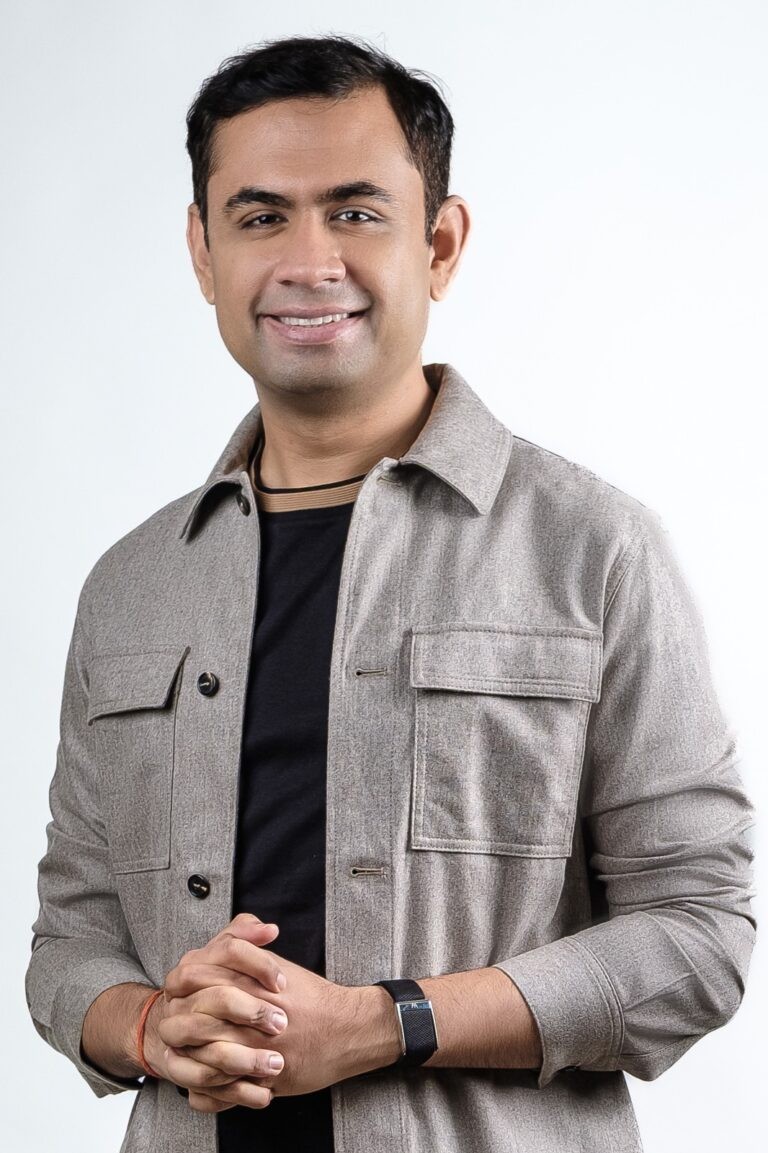
| Key facts | |
|---|---|
| Born | Around 1990-91 (exact date not publicly confirmed; Forbes listed him as 35 in 2026); grew up in Jaipur, Rajasthan [8] [9] |
| Family roots | A salaried, “service-oriented” Jaipur family; his father worked in a bank [9] |
| Education | B.Tech in Mechanical Engineering, IIT Roorkee, class of 2013 [3] |
| Company | Razorpay (Razorpay Software Ltd), Bengaluru: co-founder and CEO since 2014, with co-founder Shashank Kumar [3] [7] |
| Wealth | About US$1 billion (Forbes real-time estimate, October 2026) [8]; Rs 8,643 crore in the Hurun Global Rich List 2025 [71] |
| Known for | Building India’s best-known payment gateway for startups after being turned away by about 100 bankers |
In February 2014, a young field engineer on an oil-services payroll got the phone call he had been chasing for months. A private bank was willing, in principle, to let his unknown two-man company process online payments. There was a condition: a security deposit of Rs 25 lakh [9].
Harshil Mathur did not have Rs 25 lakh. Nor did his co-founder, Shashank Kumar, who was then writing code for Microsoft in the United States. The money eventually came as a loan from Shashank’s grandfather, out of the proceeds of a property sale. Mathur says he resigned from his job the day after the deposit was arranged [9] [10].
By then, by his own count, he had “met and mostly been rejected by almost 100 bankers” [11]. He had swapped his T-shirts for a blazer so that branch managers would stop treating him as a student [13] [17]. And he still had no product that could accept a single rupee. That would take another year [9].
Twelve years later the company that grew out of that deposit, Razorpay, says it serves more than 80 lakh businesses [39], processes payments at an annualised rate of about US$180 billion [37], and is preparing for one of the larger technology listings on the Indian stock market [47]. This is the story of how a mechanical engineer from Jaipur who only wanted “to sit and code” [11] ended up running it, and of the regulatory storms that nearly knocked it off course.
Where it began
Harshil Mathur grew up in Jaipur. His exact date of birth has not been published in any source we could verify; the ages given by Hurun and Forbes over the years point to a birth year of 1990 or 1991 [70] [8].
Nothing in his background pointed to business. He has described his family as middle-class and “service-oriented”, meaning salaried. “My dad worked in a bank. I think his dad also used to work in a bank,” he told the Blume Ventures podcast in 2025. The first person to suggest that he might one day run something of his own was a maternal uncle with a business, when Mathur was in class 8 or 9 [9].
Two interests shaped his school years. One was computers. The other was karate, which he took up in class 3 after his father picked it for him from the school’s hobby list. He earned a black belt and competed at the national level, winning a silver medal, suffering a setback at the 2006 nationals, sitting out a year and returning to win silver again in 2008 [16]. He has often said the sport taught him to lose and come back, a habit that would be tested later.
A mechanical engineer who wanted to code
In 2009 he entered IIT Roorkee. His rank did not get him the computer science seat he wanted. “Got into mechanical but was very deeply interested in computers and building something,” he said later [9]. He graduated with a B.Tech in mechanical engineering in 2013 [3].
His real education happened in a student group called SDSLabs, a software club that Shashank Kumar, a computer science student from Patna one year his senior, had started with a few friends. It began with four or five members [13] [15]. Mathur joined early and later led it. The group built things students actually used: a tool that pulled together JEE results [15], and a system that streamed cricket to the hostel TV room over the campus network [9].
It also got him into trouble. Mathur was fined Rs 5,000 by the dean for hacking the institute’s website. “The parents called up and said, we have sent you to IIT to study, what are you guys doing there?” he recalled in a 2021 conversation with his investors at Matrix Partners India [13].
SDSLabs gave him two things that mattered more than his degree: the ability to build software, and a partner. Kumar graduated in 2012 and went to Microsoft in Seattle, where he worked on the Windows team [15] [18]. Mathur was placed at the oilfield services company Schlumberger as a wireline field engineer [3] [11].
The first break
The Schlumberger job paid well and suited him badly. Accounts of where he was posted differ: one profile says Mumbai, Business Today says Abu Dhabi, and Mathur himself has spoken of being “in the Middle East” [18] [11] [9]. All agree it did not last long. “On day one I realized this is not the job I want to do for my life,” he said [9]. “I am a guy who wants to sit and code. I don’t want to step on the field” [11].
In their spare hours, across time zones, he and Kumar were building a side project: a crowdfunding site for India, “kind of like a GoFundMe”, where people could raise money for medical emergencies and other needs [14] [18]. They assumed collecting the money would be the simple bit.
“We thought payments should be the easiest part. It turned out to be the hardest part of building it,” Mathur said [11]. In 2013 an Indian startup that wanted to accept cards online faced weeks of paperwork, a deposit, clunky integration and, often, a flat refusal because the business was too small or too new. The two engineers decided that this was the real problem. The crowdfunding idea was dropped and the payment gateway became the company.
A hundred bankers
A payment gateway cannot exist without a bank behind it, and banks saw no reason to trust two engineers in their early twenties with no experience in finance. “Banks would tell us that since we were from non-financial backgrounds, we had no idea how this space operates,” Mathur told YourStory [17].
Over three to six months he met roughly 100 bankers, by his own estimate, and was turned down by most of them [11]. (The figure is his recollection of meetings, not a count of 100 separate banks; in another interview he said formal proposals went to 20 or 30 [14].) He learned to dress the part and to carry a business plan [13].
The yes finally came from a young regional head at a private bank, whom Mathur has not named [9]. A 2017 YourStory report identified the first bank partner as HDFC Bank [17]; the founders’ own accounts do not name it. The in-principle approval, the Rs 25 lakh deposit and Mathur’s resignation all came in February 2014 [9].
He moved back into his parents’ house in Jaipur, where his costs were “literally zero”; Kumar quit Microsoft and joined him there [13] [19]. They later worked out of Startup Oasis, a Jaipur incubator, where another tenant, a small children’s clothing website, became their first customer [9] [20]. The company dates its founding to 2014, though some profiles say 2013, when the work began [7] [19].
Y Combinator
In late 2014 they filled in the online application for Y Combinator, the Silicon Valley accelerator. “We had zero expectation of getting into YC. We just saw that form,” Mathur said [9]. After a ten-minute interview they were in the Winter 2015 batch, with US$120,000 of funding. YourStory reported at the time that Razorpay was only the second India-focused startup YC had selected, after ClearTax [20].
For three months the founders shared a one-bedroom flat in California and worked 16 to 18 hours a day across two time zones [13]. Razorpay launched publicly at YC’s Demo Day in March 2015 [7].
The seed round followed within weeks: US$2.5 million from Matrix Partners India, Y Combinator and 33 angel investors [21] [4]. The list of angels reads like a roll-call of Indian startup founders, among them Kunal Shah of FreeCharge and Snapdeal’s Kunal Bahl and Rohit Bansal, along with the Silicon Valley investor Ram Shriram [4] [21]. Matrix agreed after a single video call [13].
In October 2015 Tiger Global led a US$9 million Series A, taking the total raised to US$11.5 million. Razorpay had signed up more than 1,800 businesses in seven months [21] [4].
Building the empire
A house in Bengaluru
About 80% of Razorpay’s early customers were in Bengaluru, so after the seed round the company moved there [17] [19]. The first office was a rented house in which up to 11 people lived and worked for about a year [13]. The founders remained the only engineers until their first technical hire in April 2015 [15].
One early decision says a lot about how Mathur thinks. The first hire made after the team settled in the house was a human resources person, because he did not want the company to harden into a “boys’ club”. One of the first dozen hires was a senior banker, brought in to give the young firm credibility with the institutions that had once shown it the door [13].
The pitch to customers was simple. A developer could plug Razorpay into a website with a few lines of code and start accepting cards, net banking and wallets in days, not weeks. “We built our product from the merchant’s perspective, not the bank’s,” Mathur says [11]. Startups that had suffered the old gateways switched quickly, and they brought the next batch of startups with them.
From gateway to financial toolkit, 2017-2019
Demonetisation in November 2016 pushed millions of Indians towards digital payments, and UPI arrived the same year. Razorpay rode both. In September 2017 it launched what it called Razorpay 2.0, four products that went beyond the checkout page: Route (for splitting payments among sellers), Smart Collect (automatic reconciliation of bank transfers), Subscriptions (recurring billing) and Invoices. It then had more than 35,000 merchants [24].
Money followed the product. In January 2018 Tiger Global, Y Combinator and Matrix put in US$20 million, when Razorpay had about 65,000 active merchants and a team of 130 [22]. In June 2019 Ribbit Capital and Sequoia India led a US$75 million Series C; the customer count had passed 3.5 lakh businesses [23].
By then Mathur was already pushing into banking and lending. RazorpayX, a “neobanking” layer that lets companies automate payouts, payroll and current accounts on top of partner banks, and Razorpay Capital, a lending arm for merchants, were both rolled out around 2018-19 [23]. In 2019 came the first two acquisitions: Thirdwatch, an artificial-intelligence fraud-detection startup, and Opfin, a payroll software firm. By November 2019 the company was processing payments at an annualised US$10 billion for more than 6 lakh businesses [25].
The unicorn years, 2020-2021
The pandemic forced Indian business online, and Razorpay’s volumes soared. On 12 October 2020 it raised US$100 million in a round co-led by Singapore’s sovereign fund GIC and Sequoia India at a valuation of a little over US$1 billion, making it a unicorn six years after it was founded [26].
Then things moved very fast.
- April 2021: US$160 million, co-led by Sequoia Capital India and GIC, at a valuation of US$3 billion [27].
- December 2021: US$375 million, co-led by Lone Pine Capital, Alkeon Capital and TCV, at US$7.5 billion. Total capital raised reached US$741.5 million [28].
In fourteen months the company’s paper value had risen more than sevenfold. Annualised payment volume went from US$40 billion in July 2021 to US$60 billion that December [29] [28]. Razorpay has not raised primary capital since.
Buying its way offline and overseas, 2021-2023
Flush with cash, Mathur went shopping. Razorpay bought the lending-technology firm TERA Finlabs in July 2021 [29], took a majority stake in Malaysia’s Curlec in February 2022, its first step outside India [31], and acquired the banking-software company IZealiant, the loyalty startup PoshVine and, in August 2022, Ezetap, a maker of card-swipe and QR machines for shops [30] [32]. The Ezetap price was reported, from unnamed sources, at about US$200 million; the company did not confirm it. It was Razorpay’s biggest acquisition and took a purely online business into physical stores [30].
In May 2023 it launched Turbo UPI with the National Payments Corporation of India (NPCI) and Axis Bank, which lets a shopper pay by UPI without leaving the merchant’s app [33]. Singapore followed in March 2025 as the second international market [31], and in June 2025 Razorpay put US$30 million into POP, a rewards-led UPI app, for a majority stake, its first move towards consumers [32].
Coming home, and the road to an IPO
Like many Indian startups that passed through American accelerators, Razorpay’s parent company was incorporated in the United States. Listing in India meant moving it back, a “reverse flip”, which triggers tax in the US on the gain in value. Mathur was open about the timetable. “After we flip, we need at least 6-8 quarters of clean financials before we go public,” he told Mint in January 2025 [44].
The Indian entity became a public limited company in April 2025 [45], and the merger of the US parent into it was announced complete on 29 May 2025 [42]. The tax bill was reported at about US$150 million, or roughly Rs 1,245-1,280 crore [42] [43].
The numbers before and after tell the story of the cost.
| Year | Revenue | Result |
|---|---|---|
| FY23 | Rs 2,283 crore (operating) | Profit of Rs 7.2 crore [38] |
| FY24 | Rs 2,501 crore (total income) | Profit of about Rs 34 crore [38] |
| FY25 | Rs 3,783 crore (consolidated, up 65%) | Slipped into loss after a Rs 1,209 crore employee stock option expense and one-time redomiciling tax; net loss not disclosed [39] [40] |
(The FY25 growth rate is measured against a consolidated FY24 base of Rs 2,296 crore, which differs from the Rs 2,501 crore reported earlier for the Indian entity [39].) Gross profit in FY25 was Rs 1,277 crore [40]. By August 2025 payments still made up about three-quarters of revenue, and RazorpayX was handling an annualised US$30 billion [37].
In June 2026 Razorpay Software Ltd disclosed that it had filed draft IPO papers with SEBI through the confidential route, so its prospectus, and with it the founders’ exact shareholding, is not yet public. Reports put the planned issue at US$500-600 million [45] [46]. On 4 November 2026, Business Today and Inc42, citing unnamed sources, reported that SEBI had cleared an issue of Rs 5,000-6,000 crore, with a listing likely in early 2027 at a valuation of around US$5 billion, below the US$7.5 billion of 2021. The company did not comment [47] [48]. Rival Pine Labs listed in November 2025 [49]. (For how IPOs work and what a prospectus tells you, see CapitalVia Insights.)
The AI bet
Mathur’s newest wager is that software agents, not people, will soon do much of the world’s buying. In October 2025 Razorpay, NPCI and OpenAI began a pilot of “agentic payments”, letting a user complete a UPI purchase inside ChatGPT [34]. In March 2026 the company launched Agent Studio, a set of AI agents for business finance tasks built on Anthropic’s Claude Agent SDK [35]. “AI shouldn’t stop at recommendations — it should finish the job,” Mathur said at the India AI Impact Summit in February 2026 [36].
How the wealth is held
Mathur’s fortune is almost entirely his shareholding in Razorpay, an unlisted company, so every estimate depends on what value is put on the business. His stake has not been publicly disclosed.
The Hurun India Rich List 2024 valued him and Kumar at Rs 8,700 crore each and named them the youngest Indian billionaires on the list, at 33 [70]. The Hurun Global Rich List 2025 put each at Rs 8,643 crore [71]. Forbes shows him at about US$1 billion as of October 2026 [8]. A separate 2026 ranking by 360 ONE Wealth gives a much higher Rs 13,240 crore [72]; the gap shows how soft such numbers are for private companies. We could not find a figure for him in coverage of the M3M Hurun India Rich List 2026, so none is given here.
He has said he regards wealth as “a means to an end rather than the end itself” [12].
The setbacks and failures
The day the pipes were cut. In 2015, before its own bank integrations were fully live, Razorpay was reselling another gateway’s system. After the Y Combinator publicity made the tiny firm look like a competitor, that partner switched it off. Customers could not take payments. The five-person team phoned every one of them. “There were customers who literally abused us on phone, massively,” Mathur recalled [10] [9]. The lesson he took was never to depend on a single partner, and it shaped the many-bank architecture Razorpay later built.
A product nobody wanted. One early profile records that the founders’ first payments product was a fee-collection system for Jaipur schools, which found no takers [15].
The Rs 7.38 crore theft. On 16 May 2022 Razorpay filed a complaint with Bengaluru’s cyber-crime police saying that “certain unknown hackers and fraudulent customers” had manipulated its authorisation process. Over about ten weeks, 831 transactions that had actually failed were treated as successful, and Rs 7.38 crore was paid out to 16 merchants [68]. Razorpay was the victim and the complainant. No public report of arrests or recovery could be found.
A year without new customers. The longest setback, the Reserve Bank of India’s 2022-23 freeze on signing up merchants, is covered below.
A lost round in court. In March 2026 the Delhi High Court declined to grant Razorpay interim relief in a suit alleging that rival PayU had copied one of its advertising campaigns; the court found the two campaigns prima facie different [69].
Controversies and allegations
Payment companies sit in the path of every rupee that moves online, including the dishonest ones. Most of the controversies in Razorpay’s history arise from what its merchants did and how carefully it checked them. No court or regulator document that we found names Harshil Mathur personally as an accused in any matter. The position below is as of 9 November 2026.
The ED’s Chinese loan-app case
Allegation: In September 2022 the Enforcement Directorate (ED) searched premises in Bengaluru, including offices of Razorpay, Paytm and Cashfree, in a money-laundering probe into instant-loan apps that it alleged were controlled by Chinese nationals. It said it had seized Rs 17 crore held in the “merchant IDs and bank accounts” of those entities [57]. After a second search of Razorpay premises in October 2022, PTI reported a further Rs 78 crore frozen [59]. In March 2023 the ED filed a prosecution complaint against seven entities, including Razorpay Software Private Limited [1]. According to the later High Court order, the agency alleged that Razorpay had created merchant IDs for a non-banking finance company linked to the apps without proper due diligence, and had earned about Rs 86.44 lakh in commission [2].
Response: Razorpay said the merchants in question had been investigated about a year and a half earlier, that it had “fully cooperated and shared KYC and other details” [57], and that “no funds of Razorpay were frozen” [59]. It challenged the prosecution in the Karnataka High Court.
What happened next:
- A special court in Bengaluru took cognisance of the complaint in March 2023, with Razorpay as accused No. 7. No Razorpay director or officer was named as an accused [2].
- On 5 March 2024 the Karnataka High Court quashed the proceedings against Razorpay. The judge held that the material “at most” indicated the company “was negligent in setting up the merchant IDs”, that intent is essential to the offence of money laundering, and that continuing the case would be “an abuse of the process of the law” [2] [60].
- The ED appealed. On 26 February 2026 the Supreme Court dismissed the appeal [61] [62].
Status: Closed in Razorpay’s favour. The High Court’s order did observe possible negligence in onboarding, and the quashing applies only to Razorpay; the case against the other accused was not affected by it [2].
Funds frozen in the HPZ Token probe
Allegation: In a separate investigation into an app-based investment scheme called HPZ Token, the ED said in September 2022 that it had frozen Rs 46.67 crore lying in accounts with several payment gateways, of which Rs 8.21 crore was with Razorpay [58]. In January 2025 media reports said about Rs 500 crore had been frozen across eight gateways in the same probe [63].
Response: “None of the funds which have been directed to be frozen by the authorities belong to Razorpay,” the company said, adding that it had “proactively blocked all those suspicious entities” about a year and a half earlier [58]. In 2025 it said it had received no new notice from the ED [63].
Status: The frozen money belonged to merchants under investigation. We found no report of Razorpay being named as an accused in this case.
The RBI’s freeze on new merchants
Allegation: This was a regulatory direction, not an accusation of wrongdoing. Razorpay received in-principle approval for a payment aggregator licence in July 2022. In December 2022 it confirmed that the RBI had asked it “to temporarily withhold onboarding new online merchants” until it supplied additional details. Cashfree received a similar direction [50]. The RBI gave no public reason. The Ken, citing unnamed sources, linked the embargo to know-your-customer lapses that had let loan apps use payment gateways [52].
Response: Razorpay said the direction had “no impact on Razorpay’s existing business operations and current merchants” [50]. In April 2023 it set up an advisory board chaired by former RBI deputy governor N. S. Vishwanathan [54].
What happened next:
- The freeze lasted about a year. Final authorisation came in December 2023, and Razorpay resumed onboarding [51].
- The Ken reported a waiting list of up to 50,000 merchants, about 1.5 lakh signed up in the six weeks after the freeze lifted, and no job cuts during it [52]. Revenue growth slowed in FY24 [53].
- Razorpay later received the RBI’s cross-border payment aggregator licence (December 2025), and its point-of-sale arm received the offline licence (January 2026) [55] [56].
Status: Resolved. We found no report of an RBI monetary penalty on Razorpay.
The Alt News donor data
Allegation: On 5 July 2022 the fact-checking website Alt News said Razorpay had handed data about its donors to Delhi Police without informing it, during the police investigation of its co-founder Mohammed Zubair, and had briefly deactivated its account [64]. Privacy advocates criticised the company; one researcher argued it could have tested the legality of the police demand, while another said refusing was unrealistic for a licensed entity [66].
Response: Razorpay said it had received a written order under Section 91 of the Code of Criminal Procedure and was bound to comply [64]. Mathur wrote that “the specific scope was to determine whether there were any foreign donations or not”, that donors’ PAN and addresses were not shared, and that “our licence to do business places us under a strict obligation to abide by the laws of the country without any leeway” [65]. He conceded that Razorpay “could have tried to find other channels” to reach Alt News [66]. He also said only domestic payments had been enabled for the account, while the police claimed some donations were linked to foreign phone numbers or IP addresses [67].
Status: No legal action against Razorpay followed. The episode remains a reference point in India’s debate on how far payment firms should go in resisting, or questioning, police requests for user data.
Giving back
Mathur has no publicly documented foundation, pledge or large personal donation, and it would be wrong to dress up the record. He has told Business Today that philanthropy is a passion of his father’s [12], and a 2018 profile noted his support for karate academies [16]. He is in his mid-thirties and his wealth is locked in unlisted shares.
What can be documented is of three kinds.
Sharing the upside with employees. Razorpay has run four ESOP buybacks, in 2018, 2019, 2021 (US$10 million) and May 2022 (US$75 million, covering 650 current and former staff) [5]. In December 2024, to mark ten years, it granted stock options worth Rs 1 lakh to each of its more than 3,000 employees [41].
Covid relief. During the second wave in April 2021, Razorpay set up donation pages for NGOs within 24 hours, waived its fees on donations up to Rs 10 lakh and settled the money the same day [75]. The company says NGOs collected more than Rs 100 crore through its platform over three months. That is money routed through Razorpay, not donated by it [6].
Backing other founders. With Kumar he runs an early-stage investment vehicle, MarsShot Ventures [74], and Inc42’s database lists about two dozen startups he has personally backed [73]. Having been funded by 33 founders himself, he is returning the favour.
Succession
There is no succession question yet. Mathur is in his mid-thirties and remains chief executive; Kumar, who wrote much of the original payments code, is managing director [9]. The two have run the company together for twelve years without a public falling-out. Mathur calls his partner “quite pushy” about challenging his ideas [9], and means it as praise.
The real change ahead is of ownership, not leadership. Once Razorpay lists, the founders will answer to public shareholders every quarter, and their own stakes will be disclosed for the first time.
What their journey teaches
The problem you trip over may be bigger than the one you set out to solve. Mathur wanted to build a crowdfunding site. The payment gateway was meant to be a plug-in. Because he took his own frustration seriously, he found a market many times larger than the original idea.
Rejection is information, so change what the other side sees. A hundred bankers said no to two young men in T-shirts with no finance background. He did not change the idea. He changed the blazer, the business plan and, later, hired a senior banker, until the institution across the table could recognise something it trusted.
Never let one partner hold the off switch. The 2015 shutdown by a gateway partner nearly killed the company. Razorpay’s later design, with many banks behind every transaction, came from that day. “It’s okay to be slow, but it’s not okay to fail,” Mathur says [9].
In a regulated business, compliance is part of the product. Razorpay grew by making onboarding effortless. The ED case and the RBI freeze both turned on how carefully merchants were checked. A High Court cleared the company of money laundering but still used the word “negligent”. Speed that outruns checks is borrowed time.
Pay the bill to come home early. Moving the parent company to India cost about US$150 million in tax and pushed a profitable company into loss for a year. Mathur chose to pay it well before the listing, and told people in advance how long the clean-up would take.
Share ownership before you are asked to. Four buybacks and a Rs 1 lakh grant to every employee were not forced on the founders. They help explain why a company that could not sign a single new customer for a year reportedly did not lay off staff.
A profile for general reading, based on public records and reporting as of 9 November 2026. Not investment, tax or legal advice.
Sources (75)
- Press release on prosecution complaint in the loan apps case - Enforcement Directorate, Mar 2023
- Order in WP 10329/2023, Razorpay Software Pvt Ltd v. Union of India - Karnataka High Court (via LiveLaw), Mar 2024
- Harshil Mathur, CEO & Co-Founder: official profile - Razorpay Newsroom, Jan 2025
- Series A funding announcement - Razorpay Blog, Oct 2015
- Razorpay announces its 4th ESOP buyback sale for 650 employees - Razorpay Newsroom, May 2022
- Revisiting Razorpay's Covid Relief Initiative - Razorpay Blog, Aug 2021
- Razorpay (YC W15) offers Stripe-style payments focused on Indian e-commerce - Y Combinator Blog, Mar 2015
- Harshil Mathur profile - Forbes, Oct 2026
- How Two Coders Built a $7.5 Billion Fintech (transcript) - Blume Podcast, Aug 2025
- Razorpay: The Story Before the Billions - Blume Field Notes, Aug 2025
- I was rejected by nearly 100 banks: Razorpay's Harshil Mathur - Business Today, Jul 2026
- Co-founder and CEO of Razorpay on why it's never okay to be second - Business Today, Aug 2026
- The Journey of building Razorpay (transcript) - Z47 Moments, Aug 2021
- Meet the Mavericks: Harshil Mathur - YourStory, Jul 2019
- Techie Tuesday: How Razorpay's Shashank Kumar built a payment gateway for startups - YourStory, Jul 2019
- Kicking Back: the other side of Razorpay CEO Harshil Mathur - Entrepreneur India, Dec 2018
- Razorpay takes the pain out of digital payments - YourStory, Aug 2017
- Razorpay Was Initially Supposed To Be A Social Crowdsourcing Project - Inc42, Apr 2022
- Razorpay Co-founder Harshil Mathur On Funding and Accelerators - Inc42, Dec 2016
- Jaipur based Razorpay becomes the second India focused startup selected for Y Combinator - YourStory, Mar 2015
- Razorpay raises $9M Series A from Tiger Global and Matrix - MediaNama, Oct 2015
- Razorpay raises $20M in Series B - YourStory, Jan 2018
- Razorpay raises $75M Series C from Sequoia, Ribbit Capital - YourStory, Jun 2019
- Razorpay unveils version 2.0 - YourStory, Sep 2017
- Razorpay adds credit cards to neo-banking platform, acquires Opfin - YourStory, Nov 2019
- Razorpay becomes unicorn on the back of $100m round - FinTech Global, Oct 2020
- Razorpay raises $160 million, valuation hits $3 billion - TechCrunch, Apr 2021
- Razorpay's valuation soars to $7.5 Bn with $375 Mn new round - Entrackr, Dec 2021
- Razorpay acquires TERA Finlabs - Business Standard (PTI), Jul 2021
- Razorpay acquires offline payments platform Ezetap for $200 mn - The News Minute, Aug 2022
- Razorpay enters Singapore, its 2nd international foray after Malaysia - Business Standard, Mar 2025
- Razorpay acquires majority stake in POP with $30 Mn investment - Entrackr, Jun 2025
- Razorpay ties up with NPCI, Axis Bank to launch Turbo UPI - YourStory, May 2023
- Razorpay, NPCI, OpenAI launch pilot for Agentic Payments - Business Today, Oct 2025
- Razorpay launches AI Agent Studio - Business Standard, Mar 2026
- Razorpay's Harshil Mathur bets on AI - YourStory, Feb 2026
- Razorpay bets on AI-powered banking tools ahead of IPO - Business Standard, Aug 2025
- Razorpay's FY24 Profit Jumps 4.5X To INR 34 Cr - Inc42, Nov 2024
- Razorpay Slips Into Red In FY25, Revenue Zooms 65% YoY - Inc42, Oct 2025
- Razorpay revenue soars 65% in FY25, gross profit crosses Rs 1,200 Cr - Entrackr, Oct 2025
- Razorpay Allots ESOPs Worth INR 1 Lakh Each To 3K Employees - Inc42, Dec 2024
- Razorpay to pay $150 Mn in taxes for reverse flip to India - Entrackr, May 2025
- Razorpay To Pay INR 1,245 Cr In Taxes For Domicile Shift To India - Inc42, May 2025
- Razorpay Charts Return to India, Eyes Expansion, IPO - Mint (via Magzter), Jan 2025
- Razorpay confidentially files DRHP with SEBI for IPO - Entrackr, Jun 2026
- Razorpay files for $500 million IPO confidentially - ThePrint (Bloomberg), Jun 2026
- Razorpay IPO: SEBI approval secured for Rs 6,000 crore issue - Business Today, Nov 2026
- Razorpay Gets SEBI Nod For Rs 6,000 Cr IPO - Inc42, Nov 2026
- Pine Labs aims to raise Rs 3,900 Cr via IPO - Outlook Business, Nov 2025
- RBI asks Razorpay, Cashfree to temporarily stop onboarding of new customers - Business Standard, Dec 2022
- RBI approves Razorpay, Cashfree as payment aggregators - MediaNama, Dec 2023
- How Razorpay is climbing out of a regulatory pit - The Ken, Jul 2024
- Razorpay Walks The Tightrope Of Regulations And Profits - Inc42, Oct 2024
- Razorpay sets up advisory board with former RBI deputy governor - YourStory, Apr 2023
- Razorpay secures RBI's PA-CB licence to enable cross-border payments - Business Standard, Dec 2025
- Razorpay POS gets RBI approval for offline payment aggregator licence - Entrackr, Jan 2026
- Chinese loan apps case: ED raids Bengaluru offices of Razorpay, Cashfree and Paytm - Scroll, Sep 2022
- All our operations adhere to regulatory guidelines, no funds frozen: Razorpay on ED raids - The Statesman, Sep 2022
- Chinese loan apps: ED freezes fresh deposits worth Rs 78 crore after searches at Razorpay premises - OrissaPost (PTI), Oct 2022
- Loan apps: Karnataka HC quashes money-laundering case against Razorpay - Deccan Herald, Mar 2024
- Supreme Court Dismisses ED Appeal Against Quashing Of Money Laundering Case Against Razorpay - LiveLaw, Feb 2026
- Supreme Court upholds quashing of money laundering case against Razorpay, rejects ED's appeal - Bar and Bench, Feb 2026
- Paytm, Razorpay, Easebuzz Deny Reports Of ED Probe - Inc42, Jan 2025
- Alt News alleges Razorpay has shared donor data with police without informing it - Scroll, Jul 2022
- Alt News Data Sharing Controversy: Have To Comply With Legal Requests, Says Razorpay CEO - Inc42, Jul 2022
- Should Razorpay have shared Alt News donor data with cops? What experts say - The News Minute, Jul 2022
- Only domestic payments enabled for Alt News, says Razorpay, but cops claim foreign funds received - ThePrint, Jul 2022
- Hackers, fraudulent customers stole Rs 7.38 cr, complaint lodged: Razorpay - Business Standard (PTI), May 2022
- Delhi High Court declines interim relief to Razorpay in suit against PayU over ad campaign - Bar and Bench, Mar 2026
- Hurun India Rich List 2024: youngest rich entrepreneurs - India TV, Aug 2024
- Hurun Rich List 2025: India gets 13 new billionaires - Business Standard, Mar 2025
- Harshil Mathur: 360 ONE Wealth Creators List - 360 ONE Wealth, Nov 2026
- Harshil Mathur: investments - Inc42, Nov 2026
- Hype Luxury raises funding from Harshil Mathur, Shashank Kumar - YourStory, Sep 2021
- Razorpay, Zomato: startup industry rallies to help India fight COVID-19 - The News Minute, Apr 2021