
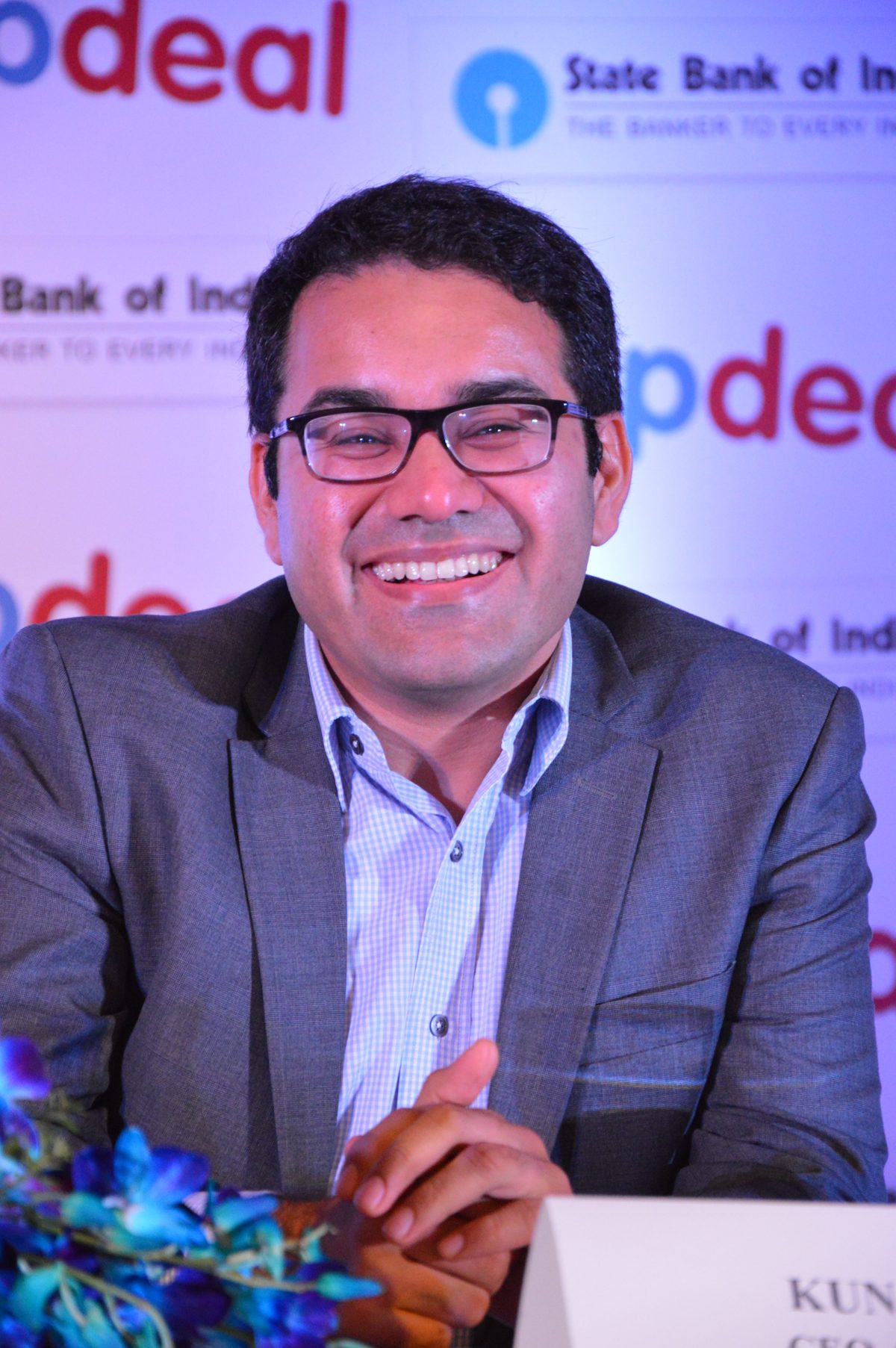
| Key facts | |
|---|---|
| Born | 1983, New Delhi (he was 31 when Fortune named him to its 40 Under 40 list in October 2014; no exact date is in the public record) [10] [75] |
| Hometown/Family roots | Greater Kailash, New Delhi; father worked in coal mining in Chhattisgarh before setting up a small plastics and auto-components factory near Delhi [13] |
| Education | Delhi Public School, R.K. Puram (Class of 2001); Jerome Fisher Program in Management & Technology, University of Pennsylvania (Wharton and Penn Engineering, 2006); executive marketing programme, Kellogg School of Management [9] [75] |
| Family | Wife Yashna Bahl, a designated partner of the family vehicle B2 Professional Services LLP; business partner Rohit Bansal, a school friend [54] [65] |
| Company/Group | AceVector Ltd (Snapdeal, Unicommerce eSolutions, Stellaro Brands), listed October 2026; Titan Capital, co-founded with Rohit Bansal [1] [62] |
| Wealth | Not on the M3M Hurun India Rich List 2026; last ranked in 2015 at No. 243 with Rs 2,314 crore. His disclosed 12.19% direct stake in AceVector was worth roughly Rs 110 crore at November 2026 prices (CapitalVia arithmetic from the prospectus and market price), plus Unicommerce and Titan Capital holdings [29] [74] [1] [82] |
| Known for | Co-founding Snapdeal, India’s one-time US$6.5 billion challenger to Flipkart and Amazon; surviving the 2017 collapse; 250-plus angel bets through Titan Capital; Shark Tank India |
One morning in 2007, a 24-year-old business development executive at Microsoft’s campus near Seattle opened an email that was one line long. His H-1B work visa had been rejected. He would have to leave the United States within months [15] [14].
“It was crushing and numbing at that moment,” Kunal Bahl wrote eighteen years later, when a new round of H-1B restrictions sent young Indians into the same panic, “but life-changing eventually when I moved back” [15].
What he moved back to was his parents’ house in Delhi, a best friend from school, and a business idea that would pivot three times before it worked. Within six years that idea, Snapdeal, was valued at more than US$6.5 billion and had taken money from SoftBank, Alibaba, eBay, Ratan Tata and the Ontario Teachers’ Pension Plan [25]. Within eight, it had lost almost all of that value, laid off most of its staff, and come within weeks of running out of cash [46].
Bahl’s story is unusual because the fall is as well documented as the rise, mostly by Bahl himself. This is how a boy who failed the IIT entrance exam built and nearly lost one of India’s first internet giants, how he and Rohit Bansal kept it alive, and where they stand today: promoters of a small listed company, and two of India’s most prolific angel investors.
Where it began
Kunal Bahl was born in New Delhi in 1983, into a family that had worked its way up through manufacturing [10] [13]. His father had spent his early career in the coal mines of what is now Chhattisgarh, then, around 1987-88, set up a small company making plastic spools, later moving into automobile components, with a factory in Ghaziabad. The family lived in Greater Kailash in south Delhi [13].
He went to Delhi Public School, R.K. Puram, one of the capital’s academic pressure cookers, and graduated in the batch of 2001 [75]. It was there, in classes eleven and twelve, that he became close to a boy from Malout in Punjab named Rohit Bansal. Both were preparing for the IIT joint entrance examination [13].
Bahl had wanted to study commerce after class ten. His parents said no. “I wanted to do commerce, but it wasn’t a decision that was mine,” he recalled in a 2021 podcast [16]. His elder brother Nikhil had made it to IIT Delhi, and the expectation was that Kunal would follow. He spent close to three years preparing [13] [16].
He cleared the screening round but missed the physics cut-off in the main exam. “It said ‘no rank’,” he said of the result [16]. Rohit Bansal, meanwhile, ranked in the top 100 and went to IIT Delhi [13].
“At 19, it really hits you when you spend a considerable amount of time on that one thing,” Bahl told Business Standard in 2014 [12]. What he did next was unusual for a south Delhi teenager with a professional family. For about a year he worked eight to ten hours a day doing physical labour at a manufacturing unit owned by a friend of his father’s, for Rs 6,550 a month [13]. He has since called that year the most transformational of his life: “nothing has likely been more transformational for me than that one year” [16].
Philadelphia on three jobs
Bahl applied to American universities and got into the University of Pennsylvania’s Jerome Fisher Program in Management and Technology, a selective dual-degree course that combines Wharton business school with Penn’s engineering school [9]. He arrived in Philadelphia at 18 “with two suitcases and never having spoken with a non-Indian person ever in my life,” he said [16].
Money was tight. “My parents were putting 100 percent of their savings into my college education,” he said; he worked three jobs through college and compressed the five-year programme into four to save a year of fees [16] [12] [13]. During the 2003 cricket World Cup he ran match screenings for Indian students, charging five dollars for a samosa and a cola [13].
He graduated in 2006 with a Wharton degree concentrating in operations, information management and entrepreneurship, and an engineering degree from Penn’s School of Engineering and Applied Science [9] [75]. In his final year he worked on a detergent start-up that got its products onto Walmart’s shelves, an early taste of selling something real to a mass retailer [12] [13].
One guest lecture at Wharton changed his direction more than any course. Ken Glass, a former Microsoft executive, asked the class what an entrepreneur needs most to succeed. His answer was passion. “I left the class completely and absolutely inspired,” Bahl wrote years later [77] [17]. He kept in touch; it would matter.
The first break
Bahl joined Microsoft in Seattle after graduation, working on business development for emerging markets [12]. His plan, as he described it later, was to spend a few years there, then move to Silicon Valley and start a company [14].
Then came the visa email. In 2007, at his desk at Microsoft, he learnt his H-1B had been rejected [15]. “If they want me here, I would love to be here because I can learn a lot,” he told CNN of his thinking at the time. “But if it’s going to be that hard for me, then I’m better off just going back to India and starting a company” [14]. Microsoft’s chief executive, Satya Nadella, later mentioned the episode in his book Hit Refresh, noting that Bahl “returned to India and then founded Snapdeal” [97].
Before he left, Bahl did one more thing. He cold-emailed Ken Glass, the man from the guest lecture, who agreed to meet him for lunch at a Malaysian restaurant within half an hour. When Bahl’s first business later could not pay its printing press, Glass invested without visiting India or seeing a business plan [77] [17]. “Ten years ago, I believed in Kunal and Rohit’s vision,” Glass said in 2017, when the two founders were fighting to keep their company independent [77].
Two desks in a bedroom
Back in Delhi in September 2007, Bahl called Rohit Bansal, who was working at Capital One in Bengaluru and had an H-1B of his own lined up. Bahl urged him not to go. Bansal agreed to stay and build something together [13] [18]. The pair had, as Bahl put it to a Wharton audience in 2012, “no capital, no family contacts, and 18 months of combined work experience” [17].
They set up Jasper Infotech and launched MoneySaver, a booklet of discount coupons for Delhi restaurants and shops, working from two desks in Bahl’s bedroom [13] [19]. Selling it meant persuading brand managers to give discounts to a company nobody had heard of. “We were just two guys with a PowerPoint presentation asking brands to come on board,” Bahl said [12]. One early tactic was a VoIP call to the chief marketing officer of a jeans brand, placed from Delhi but framed as if Bahl were at a New York airport and could change his flight to Bengaluru to meet him [13].
MoneySaver sold perhaps 20,000 coupon booklets [13]. An SMS-coupon follow-up failed; a discount card did somewhat better and helped them raise a little money [12] [78]. By 2009 they had pitched 15 venture funds and been turned down by all of them. The sixteenth, Vani Kola’s IndoUS Venture Partners, said yes after a cold call through its website; the round took six and a half months to close [18] [17].
Then the merchants who bought their coupons began asking for an online version. On 26 January 2010, the founders brainstormed a web product. “Eight days later, on February 4, 2010 we took the brave plunge and launched Snapdeal.com,” Bahl wrote [18]. It was a daily-deals site, in the mould of Groupon, which was then the fastest-growing company in America.
“It was the worst site ever, half the transactions would fail, but it was a start nonetheless,” he said [12]. Within eight months Snapdeal was the largest group-buying site in India, with roughly 65-70% of the market [17] [26]. In January 2011 Nexus Venture Partners and IndoUS put in US$12 million [19], and that July Bessemer Venture Partners led a US$40 million round (some reports say US$45 million) that closed in 30 days [20] [22].
Building the empire
From deals to a marketplace
The daily-deals model had a problem the founders could see faster than their investors: it was a low-margin, high-churn business in a country where most people had never bought anything online. A trip to China in 2011, where Bahl studied Alibaba’s Taobao, convinced him the future was a marketplace, where independent sellers list products and the platform takes a commission without holding inventory [26] [12].
In late 2011 Snapdeal walked away from the business that had made it number one and relaunched as an online marketplace. “Everyone thought we had gone mad,” Bahl said [12]. By then it had made its first acquisitions: the Bengaluru group-buying site Grabbon in June 2010 and the sports retailer eSportsBuy in 2012 [26].
The marketplace model worked, and it attracted a very particular investor. In April 2013 eBay led a US$50 million round, taking the total raised to US$102 million [21], and in February 2014 it led again with US$133.77 million alongside Kalaari Capital, Nexus, Bessemer, Intel Capital and Saama Capital [22]. Three months later Temasek, BlackRock, Myriad, Tybourne and Azim Premji’s PremjiInvest added US$105 million [26].
By Snapdeal’s fifth birthday in February 2015, it claimed 40 million registered users and more than 100,000 sellers [26].
The SoftBank year
In August 2014 came the endorsement that mattered most to Indian readers: Ratan Tata, then chairman emeritus of Tata Sons, invested personally in Snapdeal, for an undisclosed amount. Bahl called it “a very proud and exciting moment for the entire Snapdeal family” [23].
Two months later, on 28 October 2014, SoftBank announced it would invest US$627 million in Snapdeal, becoming its largest shareholder, with Nikesh Arora joining the board. SoftBank’s release described a company with more than 25 million registered users, 50,000 sellers, five million products in 500-plus categories, 600% year-on-year growth and more than 60% of orders coming from mobile phones [3]. Reuters reported the stake at about 30%, implying a valuation of roughly US$2 billion [3] [25].
The money changed everything about Snapdeal’s pace. In March 2015 it bought a 20% stake in the logistics firm GoJavas and acquired the warehouse-software company Unicommerce [26] [45]. In April 2015 it bought Freecharge, the mobile-recharge app founded by Kunal Shah, in a mostly-stock deal widely reported at around US$400 million, then India’s largest internet acquisition [27] [36]. It signed Aamir Khan as brand ambassador and in September 2015 launched a new logo and an advertising blitz reported at about Rs 200 crore [26] [33].
On 18 August 2015, Alibaba, Foxconn and SoftBank led a US$500 million round that Reuters’ sources said valued the company at more than US$5 billion; Foxconn’s unit alone paid US$200 million for a 4.27% stake [24]. Bahl said the value of goods sold on the platform had gone from a US$1 billion annual run-rate in July 2014 to US$4 billion, about Rs 26,000 crore, in August 2015, and told Business Insider he expected to be “decisively ahead” of Flipkart within six months [28].
That September the Hurun India Rich List placed Kunal Bahl at No. 243 with an estimated Rs 2,314 crore, one of four e-commerce founders to enter the list that year [29].
The last up-round came on 15 February 2016: US$200 million (Rs 1,367.6 crore) led by the Ontario Teachers’ Pension Plan, at a valuation “above US$6.5 billion”. Snapdeal said it had more than 275,000 sellers and had raised about US$2 billion in total [25]. In a separate 2015 transaction, Bahl and Bansal had each sold a small parcel of their own shares to Ontario Teachers’ for about US$12 million apiece [80].
Six years after launching “the worst site ever”, Bahl, 32, was the co-founder of a company whose paper value exceeded that of most of India’s listed conglomerates.
The numbers behind the valuation
The valuation rested on growth, and the growth rested on cash. Snapdeal’s filings for the year to March 2016 showed a consolidated loss of Rs 3,316 crore on revenue of Rs 1,457 crore [33]. (Business Standard, working from a different set of filings, reported the FY16 loss at Rs 2,960 crore, which appears to be the standalone figure [34].) Meanwhile Amazon, which had entered India in 2013 with far deeper pockets, was outspending everyone: RedSeer’s data for the January-March 2016 quarter showed it had overtaken Snapdeal for second place behind Flipkart [32]. SoftBank wrote down about US$550 million on its Indian bets, including Snapdeal, in late 2016 [34]. In the months that followed, SoftBank, now holding about a third of the company, began to resist putting in more money and to block other capital, according to FactorDaily’s reconstruction of the period [39].
Snapdeal 2.0: from near death to cash
On 22 February 2017 Bahl and Bansal wrote to employees to announce the layoff of hundreds of staff, reported at 600 by PTI and about 800 by Business Standard, and to say that they themselves would take a 100% salary cut [35] [36]. It was, they wrote, “by far, the hardest decision we have ever taken” [36].
The letter was unusually frank about what had gone wrong. “With all the capital coming into this market, our entire industry, including ourselves, started making mistakes,” they wrote. “We started growing our business much before the right economic model and market fit was figured out.” The new rule was simple: “focus on only your core, stop all non-core activities, reduce costs drastically, turn profitable as soon as you can” [35].
By then SoftBank was pushing a sale to Flipkart, run by Sachin Bansal and Binny Bansal, and six months of public boardroom conflict followed (see the controversies section below). Flipkart’s best offer, reported at US$900-950 million against a valuation of US$6.5 billion eighteen months earlier, came with indemnity and non-compete demands the board would not accept [40] [39]. On 31 July 2017 Snapdeal announced it would “pursue an independent path” [40] [100].
The founders’ letter to staff that day set out “Snapdeal 2.0”: a lean, seller-focused marketplace with no new outside funding, financed by selling non-core assets. It ended with a line borrowed from Churchill: “Success is never final, failure is rarely fatal; it is the courage to continue that counts” [41].
The asset sales were painful. Freecharge, bought for roughly US$400 million two years earlier, went to Axis Bank for Rs 385 crore, about US$60 million [42]. The logistics arm Vulcan Express, once handling 80% of Snapdeal’s orders, fetched Rs 35 crore from Future Supply Chain in January 2018 [44]. A Rs 120 crore sale of Unicommerce to Infibeam, agreed in May 2018, collapsed that December when conditions were not met [45], an accident that would matter a great deal later.
Bahl described the recovery in a widely read LinkedIn post in October 2018. “The date was July 31, 2017 and Snapdeal had just a few months of money left,” he wrote; many team members “were barely coming to work for just a few hours a day and I don’t blame them.” The company put screens across the office showing live dashboards of orders and cash. “For the first time in our history, our business generated cash in June ’18,” he wrote; monthly orders and revenue had more than doubled while cash burn fell to zero, and the company had “over $125 million in the bank” [46].
The accounts bear out the turn, if not the scale. Snapdeal’s loss fell from Rs 4,647 crore in FY17 (including a Rs 1,797 crore write-off of goodwill, mostly on Freecharge) to Rs 613 crore in FY18 [43], and to Rs 186 crore in FY19 on revenue that rose 73% to Rs 925 crore [47]. “Two years ago, we were coming off a challenging patch for our company,” Bahl said then, “in a year when the e-commerce companies in India burnt through about $2.5 billion in the pursuit of growth” [47].
The value-commerce bet, and an IPO that did not happen
Snapdeal 2.0 chose a different customer from Flipkart and Amazon: the value-conscious buyer in a smaller town. Its December 2021 draft prospectus, which reported 14.8 million annual transacting customers, sought Rs 1,250 crore in fresh capital plus a sale of shares by existing investors [54]. It also disclosed how the cap table had changed since the glory days: SoftBank held 35.41%, the founders’ family LLP, B2 Professional Services, 12.78%, Nexus 10.55%, eBay 5.68%, Kunal Bahl 4.56% and Rohit Bansal 2.94%. Snapdeal told SEBI it had no identifiable promoter [54] [2].
The IPO never happened. On 9 December 2022, after the crash in technology stocks, Snapdeal withdrew the filing, citing “prevailing market conditions” [55]; Bahl later said the company wanted to generate cash before listing and that the market was putting a ceiling on valuations [56]. The push for growth had cost it: the FY22 loss was Rs 510 crore on revenue of Rs 539.5 crore, with Rs 322 crore spent on advertising [98]. The company cut back hard, and the FY23 loss fell to Rs 282 crore on revenue down 31% to Rs 388 crore [57].
AceVector: three companies in one
In June 2022 Snapdeal Ltd, the old Jasper Infotech, was renamed AceVector Ltd, a holding group with three businesses: the Snapdeal marketplace, the software company Unicommerce, and Stellaro Brands, which makes private-label clothing [53].
Unicommerce was the hidden asset. Acquired in 2015 and nearly sold for Rs 120 crore in 2018, it sells software that online sellers use to manage inventory and orders across marketplaces. In August 2024 it went public in an offer for sale of Rs 276.57 crore at Rs 102-108 a share. The issue was subscribed 168 times, and on 13 August 2024 the stock listed at Rs 235 on the NSE, a 118% premium [60] [61]. AceVector sold shares at 4.59 times their cost and kept 2.93 crore shares; the founders’ vehicle B2 Capital Partners withdrew from the sale and kept its stake [60]. The stock has since fallen a long way, hitting Rs 97 in March 2025 and trading at about Rs 84.50 in early November 2026 [93] [81].
Snapdeal itself got a new chief executive in January 2025, Achint Setia, while Himanshu Chakrawarti moved to run Stellaro [83]. The AceVector accounts show why Unicommerce mattered: in the year to March 2026 the group’s revenue rose 29% to Rs 510 crore, and its net loss narrowed to Rs 45.5 crore (Business Today reported Rs 60.7 crore from the pre-restatement accounts). Within that, the Snapdeal marketplace made Rs 294 crore of revenue and an adjusted EBITDA loss of Rs 50 crore, while Unicommerce made Rs 204 crore of revenue and an adjusted EBITDA profit of Rs 41 crore [67] [66].
The IPO, second time
AceVector filed for an IPO confidentially in July 2025, received SEBI’s approval in November 2025 and published a draft in December [95] [65]. It showed Kunal Bahl and Rohit Bansal as named promoters and joint managing directors, with direct stakes of 12.42% and 11.14%, up from 4.56% and 2.94% in 2021, and salaries of Rs 27 lakh each in FY25 [65].
The red herring prospectus of 21 September 2026 set a price band of Rs 30-32 for a Rs 420 crore issue: Rs 287 crore of fresh shares and Rs 133 crore of sales by existing holders, led by SoftBank, with Nexus and Foxconn also selling. The founders did not sell [66] [1]. Pre-issue, SoftBank held 30.11%, Bahl 12.19%, Bansal 10.93% and B2 Professional Services 10.87% [66] [1]. At the top of the band the company was valued at about Rs 1,741 crore after the issue, roughly US$182 million, against US$6.5 billion in February 2016 [68].
The issue, which ran from 25 to 29 September 2026, was subscribed 4.93 times net of the anchor portion [68]. On 5 October 2026 AceVector listed at Rs 28.30 on the BSE, 11.6% below the issue price, and closed its first day at Rs 26.10 [68] [94]. Reuters described a “tepid” debut at about US$135 million [69]. SoftBank, which had put roughly US$1 billion into Snapdeal since 2014, realised Rs 88.3 crore on the 2.76 crore shares it sold, about 8% of its cost on that parcel [68].
Its first results as a listed company, on 26 October 2026, showed September-quarter revenue of Rs 151 crore and a net loss of Rs 16.2 crore, more than double a year earlier [70]. By 9 November 2026 the shares traded at about Rs 19.50-19.70, valuing AceVector at about Rs 1,072 crore [82].
Titan Capital: the other business
While Snapdeal was consuming their days, Bahl and Bansal were quietly building a second career with their own money. Their first angel cheque was US$60,000 into a Mumbai cab-booking start-up called Ola in 2011, founded by Bhavish Aggarwal; they exited fully in late 2021 at a return of more than 100 times [58] [59]. A Rs 57 lakh seed cheque into UrbanClap, now Urban Company, in 2015 returned Rs 111 crore in total by July 2024, about 200 times [59]. Stakes in Credgenics and in Ghazal Alagh’s Mamaearth also crossed 100 times on paper [58].
The vehicle for this is Titan Capital, which by 2024 had backed more than 250 companies, including Razorpay, OfBusiness, Shadowfax and Giva [62]. In October 2024 Titan closed its first outside fund, the Titan Capital Winners Fund, at Rs 333 crore (about US$40 million), to put follow-on money into existing winners [62]. In May 2025 it launched a vertical to back Indian defence and strategic-technology start-ups [64].
Bahl has used Titan’s platform to push an idea he calls “Indicorns”: profitable companies with more than Rs 100 crore of revenue, built for India, a counterpoint to the unicorn obsession he once personified. Titan’s 2025 list counted 202 of them [76] [88].
How the wealth is held
Unlike most people profiled in this series, Kunal Bahl has no reliable current net-worth figure. He appeared on the Hurun India Rich List in 2015 at Rs 2,314 crore, on paper, at Snapdeal’s peak [29]; Hurun’s 2017 release recorded that he had dropped off the list “due to ecommerce market competition” [11]. He does not appear in the coverage of the M3M Hurun India Rich List 2026, whose cut-off was Rs 1,000 crore [74].
What is disclosed is this. His direct 12.19% stake in AceVector, about 5.5 crore shares, was worth roughly Rs 110 crore at the November 2026 share price; the two founders and their family LLP together hold about 28% of the company after the IPO, worth around Rs 300 crore at those prices (CapitalVia arithmetic from the prospectus and market data) [1] [82]. B2 Capital Partners, the founders’ vehicle, held 9.80% of Unicommerce at the end of September 2026, worth roughly Rs 93 crore; the two bought a further 93,500 shares in the open market in March 2025 as the stock fell [81] [90]. On top of that sit Titan Capital’s 250-plus stakes, whose aggregate value has never been published, and the proceeds of the realised exits above [62] [59].
In FY15, at the peak, each founder received remuneration reported at about Rs 46 crore, almost all of it in stock options [99]. From February 2017 they drew no salary at all [36]. In FY25 they were paid Rs 27 lakh each [65].
The setbacks and failures
Few Indian founders talk about failure as often, or as specifically, as Bahl does. “I saw early on that my life is going to be a series of failures,” he told Business Standard in 2014, “but then failures help build character” [12]. The list is long.
The IIT exam and the H-1B rejection bookended his early twenties [16] [15]. MoneySaver sold only about 20,000 coupon booklets, the SMS-coupon product that followed failed outright, and fifteen venture funds turned Snapdeal down before one said yes [13] [12] [17].
The biggest failure followed the biggest success. Between February 2016 and July 2017 Snapdeal went from a US$6.5 billion valuation to a best offer of US$950 million, from roughly 10,000 employees to a little over a thousand, and from India’s number two e-commerce company to a distant third [25] [40] [36] [32]. The FY17 loss of Rs 4,647 crore remains one of the largest ever posted by an Indian start-up [43].
Bahl’s own diagnosis, delivered in the February 2017 letter, has become a standard text in Indian start-up circles: “a large amount of capital with ambition can be a potent mix that drives a company to defocus from its core. We feel that happened to us” [35]. At a conference in 2023 he added a nuance: “Not everything is a mistake. Some are circumstantial” [76].
Freecharge is the clearest single loss: bought for about US$400 million in April 2015, sold for Rs 385 crore, about US$60 million, in July 2017, with most of the Rs 1,797 crore FY17 goodwill write-off relating to it [27] [42] [43]. Vulcan Express fetched Rs 35 crore against expectations of Rs 100-120 crore [44] [39].
Then there are the two listings. The 2021 IPO was withdrawn after a year of waiting [55]. The 2026 IPO got done, but at about 3% of the 2016 valuation, and the stock fell 18% on its first day and a further quarter in the month after [68] [82]. Unicommerce, which listed at a 118% premium in August 2024, has since lost about two-thirds of its listing-day value [61] [81].
None of these is hidden. Bahl’s own summary, from 2018: “while success is not permanent, failure is also rarely fatal” [46].
Controversies and allegations
No court or regulator has found Kunal Bahl personally guilty of any offence. But a marketplace with hundreds of thousands of third-party sellers generates disputes, and several have named him as a director. Here is where each stands as of 9 November 2026.
The Aamir Khan boycott, 2015-16
Allegation: On 23 November 2015, Snapdeal’s brand ambassador Aamir Khan said at an awards event in Delhi that his wife had asked whether they should leave India because of a climate of “despondency”. A social-media campaign urged users to uninstall the Snapdeal app in protest, and the app received tens of thousands of one-star ratings within days [30] [104].
Response: Snapdeal said on 25 November 2015 that it “is neither connected nor plays a role in comments made by Aamir Khan in his personal capacity” and described itself as “a proud Indian company built by passionate young Indians” [30].
Status: Khan’s contract expired on 31 January 2016 and was not renewed; Snapdeal declined to comment on whether the two were linked [31].
Prescription drugs sold by third-party sellers, 2015-2026
Allegation: In April 2015 Maharashtra’s Food and Drug Administration found that sellers on Snapdeal were offering prescription-only medicines, including emergency contraceptives and a drug for erectile dysfunction, without prescriptions. On 1 May 2015 Navi Mumbai police registered a first information report under the Drugs and Cosmetics Act naming Kunal Bahl, other directors and the distributors [73]. Separately, drugs inspectors in Karnataka filed criminal complaints in Mysuru (2020), Belagavi (2019) and Hubballi (2021) over the sale of the prescription drug Suhagra-100 by third-party sellers through Snapdeal in late 2014, naming the company, Bahl and Bansal as accused [4] [5] [1].
Response: In 2015 Snapdeal said it was assisting the FDA, had delisted the products and sellers concerned, and had stopped their payments [73]. In the Karnataka cases, the company argued that it is an “intermediary” under Section 79 of the Information Technology Act, that it does not itself sell goods, and that directors cannot be made vicariously liable for a seller’s conduct [4] [5].
What happened next:
- On 7 January 2021 the Karnataka High Court quashed the Mysuru prosecution, holding that Snapdeal was an intermediary protected by Section 79, that there was no “sale” by Snapdeal, and that its directors could not be prosecuted for a seller’s listing [4].
- On 24 February 2022 the court’s Dharwad bench quashed the Belagavi case on the same reasoning [5]; the Hubballi case was quashed that March [1].
- On 15 July 2026 the Supreme Court issued notice to Snapdeal, Bahl and Bansal on the State of Karnataka’s appeal against the Belagavi ruling. Karnataka argues that the safe-harbour provision cannot shield platforms from public-health prosecutions [71] [72].
Status: The Supreme Court appeal is pending; AceVector’s September 2026 prospectus confirms this [1]. The outcome of the 2015 Maharashtra FIR is not on the public record, though the prospectus lists a Drugs and Cosmetics Act case in Raigad district that names the company and both promoters and is awaiting summons [1].
Counterfeits and the US “notorious markets” list, 2019-2021
Allegation: In July 2019 police in Kota, Rajasthan, registered a cheating case against Bahl and Bansal after a customer said a branded belt and wallet bought on Snapdeal were fake [48]. That month the Delhi High Court restrained Snapdeal and sellers from offering counterfeit Titan and Fastrack watches [85]. In April 2020 the Office of the US Trade Representative placed Snapdeal on its 2019 Review of Notorious Markets for Counterfeiting and Piracy, saying it “is known as a place to purchase counterfeit watches and shoes”, citing a survey in which 37% of respondents said they had received a counterfeit, and stating, wrongly, that the founders had been “arrested” in July 2019 [6]. Snapdeal stayed on the list in the January 2021 review [50].
Response: Snapdeal called the USTR report “factually incorrect in most aspects”, based on “unverified inputs”, “defamatory” and showing a “limited understanding of the business models of online marketplaces” [49]. In January 2021 it said the report repeated “falsehoods”, that the founders “have no criminal accusations for selling counterfeit goods”, and that USTR had relied on sites that had shut four years earlier [50]. It pointed to its Brand Shield programme and said it had delisted 8,000 sellers in eight months [85].
Status: Snapdeal was not on the 2021 list published in February 2022, nor on the 2022 list [7] [92]; the 2026 prospectus states it has not been listed since December 2020 [1]. No closure of the Kota FIR is on the public record, and it is not disclosed in either prospectus [1] [2]. A Rs 50 crore trademark suit by Khaitan against a seller and Snapdeal, filed in the Calcutta High Court in 2016, remains pending [1].
The Flipkart merger fight, 2017
Allegation: During the failed sale to Flipkart, early investors accused the founders and SoftBank of putting their own interests first. Vani Kola, whose Kalaari Capital had been Snapdeal’s first institutional backer, resigned from the board on 2 May 2017 [37] and later said she had learnt of key developments “at the same time as the media” [91]. News reports said the founders stood to receive about US$60 million from SoftBank for their roughly 6.5% stake [38], and that Kalaari and Nexus had negotiated extra payments that PremjiInvest and other minority investors questioned [39].
Response: In May 2017 the founders pledged about US$30 million, or Rs 193 crore, of their own expected proceeds to current and former employees, with Bahl writing that the team’s well-being was “mine and Rohit’s top and only priority” [38]. Snapdeal said the deal failed over valuation and over Flipkart’s demand that every shareholder indemnify it against future liabilities [40] [39]. Bahl wrote in 2018 that by July 2017 “any further delay in taking a categorical decision, one way or the other, was guaranteed to be fatal for the company” [46].
Status: No litigation followed. Because the sale collapsed, neither the founders’ US$60 million nor the employee pledge was ever paid. Nexus and Kalaari were reported to have backed the Snapdeal 2.0 plan [40]. Ken Glass, the first angel, publicly supported the founders [77].
RBI compounding over the Freecharge acquisition
Allegation: In January 2017 the Reserve Bank of India issued a notice to Jasper Infotech alleging contraventions of foreign-exchange rules in the way it had acquired Freecharge’s parent, Accelyst, in 2015 [2].
Response: The company applied to compound, that is to settle, the alleged contravention [2].
Status: RBI passed a compounding order on 25 October 2017 and the company paid a fee of about Rs 12.7 crore, as disclosed in the 2021 prospectus [2]. The matter is closed.
Cases naming the founders as directors, and regulatory notices
Allegation: Like most e-commerce companies, Snapdeal faces a steady flow of consumer complaints, some naming the founders as directors. In July 2019 a consumer forum in Mohali ordered Snapdeal, a seller and the courier to pay Rs 1 lakh to a customer who received soap bars instead of an iPhone [79]. AceVector’s 2026 prospectus discloses 72 pending consumer cases and several criminal complaints naming Bahl as chief executive, including one in Muzaffarpur, Bihar, stayed by the Patna High Court in November 2023, and a 2017 cheating FIR in Hathras, Uttar Pradesh, over a shoe refund, on which police issued a notice in February 2026 [1]. The Central Consumer Protection Authority fined Snapdeal Rs 1 lakh in 2022 over pressure cookers and Rs 5 lakh in February 2026 over sub-standard toys, both under challenge in the Delhi High Court; the Ministry of Corporate Affairs sent an inquiry letter in May 2024 to the company and five directors, including Bahl and Bansal; and three income-tax disputes carry notices in Bahl’s name as principal officer [1].
Response: The company has contested the consumer and criminal complaints, saying it is an intermediary and that the matters concern third-party sellers; it told SEBI it has cooperated with the MCA inquiry and filed the documents sought [1].
Status: All are pending as disclosed in the prospectus of 21 September 2026 [1]. None has resulted in a finding against Bahl personally.
Giving back
Bahl’s public contribution has been mostly to the start-up ecosystem rather than through a named foundation; we found no record of a personal charitable trust or large institutional gift. During the second COVID-19 wave in 2021 Snapdeal ran a platform called Sanjeevani to match plasma donors with patients [101]. In 2017, the founders’ Rs 193 crore pledge to employees was conditional on a sale that never happened [38].
His institutional roles are more extensive. In January 2019 he wrote to the commerce minister urging the government to implement its tighter foreign-investment rules for e-commerce marketplaces “without delay or dilution”, at a time when Amazon and Flipkart were seeking an extension [51]. He chaired the Confederation of Indian Industry’s National Committee on E-commerce from 2020 [87], later its National Startups Council [102], and was named to the government’s National Startup Advisory Council in January 2021 [86]. He has sat on the board of governors of ICRIER since 2015 and on NASSCOM’s executive council since 2019 [96]. In October 2020 Piramal Enterprises appointed him an independent director; he was re-appointed for a second five-year term from October 2025 [52] [8].
The honours tell the arc of the story: Fortune’s 40 Under 40 in 2014 at No. 25 [10]; The Economic Times’ Entrepreneur of the Year in December 2015, at the peak [84]; the Joseph Wharton Award for Young Leadership from the Wharton Club of New York in October 2018, during the rebuild [78]; and ET’s “Comeback” award in 2019 [96].
Since October 2024 his most public role has been as a shark on Sony’s Shark Tank India, where he replaced Deepinder Goyal of Zomato for the fourth season and returned for the fifth in January 2026 [63] [89]. He has used it, and a steady stream of LinkedIn posts, to argue for profitable “Indicorns” over unicorns, for Indian capital backing Indian founders, and for self-reliance in defence technology [88] [64].
Succession
In his early forties, Bahl is not planning a succession in the family-business sense, and this is not a family business. AceVector is run by professional chief executives at each of its three companies, Achint Setia at Snapdeal and Kapil Makhija at Unicommerce, under an independent chairman, K. Ullas Kamath; Bahl and Bansal are joint managing directors and promoters [65] [83]. The more interesting question is one of priorities. Titan Capital has grown from a side project into an institution with outside investors and a defence-technology arm, and Bahl’s public commentary is increasingly about the ecosystem rather than about Snapdeal [62] [64]. Investors in AceVector will watch how much of the founders’ attention the listed company commands.
What their journey teaches
Failure early can be an asset if you let it change you. Bahl missed IIT, lost his US visa and failed at his first two products. Each time he chose the harder path, a year of factory labour, a return to India, a pivot away from a market-leading business. “Our greatest powers will come from our greatest wounds,” he has said [103].
Capital is a drug; the dose matters. Snapdeal raised about US$2 billion and spent it on logistics, acquisitions, a Rs 200 crore rebrand and a race for GMV it could not win. Bahl’s own verdict is the sharpest: “a large amount of capital with ambition can be a potent mix that drives a company to defocus from its core” [35] [25].
Know who really controls your company. Snapdeal’s founders held about 6.5% by 2017; SoftBank held about a third and could block new money. When the crisis came, the decision was not theirs alone. The 2026 prospectus shows them with about 23% and formal promoter status, a lesson applied [39] [65].
When the end is near, decide fast and show everyone the numbers. The turnaround of 2017-18 was built on one decision taken in a weekend of board calls, and on dashboards in the office so that every employee could see orders and cash. “Culture is nothing but transparent communication,” Bahl says [46] [76].
A good business can hide inside a bad one. Unicommerce, bought for an undisclosed sum in 2015 and nearly sold for Rs 120 crore in 2018, listed at a 118% premium in 2024 and is now the profitable half of the group. The asset the founders could not sell turned out to be the one worth keeping [45] [61] [67].
Keep betting small while you are building big. The US$60,000 cheque into Ola in 2011 and the Rs 57 lakh into Urban Company in 2015 were written while Snapdeal consumed its founders’ days. They returned more than 100 and 200 times, and seeded a second career [58] [59].
A profile for general reading, based on public records and reporting as of 9 November 2026. Not investment, tax or legal advice.
Sources (104)
- AceVector Limited: Red Herring Prospectus dated 21 September 2026 - SEBI, Sep 2026
- Snapdeal Limited: Draft Red Herring Prospectus - SEBI, Dec 2021
- SoftBank to invest US$627 million in Snapdeal (press release) - SoftBank Corp., Oct 2014
- Kunal Bahl & Anr v State of Karnataka, Crl.P. 4676/2020 (judgment) - Karnataka High Court via LiveLaw, Jan 2021
- Sri Kunal Bahl vs State of Karnataka, Crl.P. 100653/2021 (judgment) - Karnataka High Court via Indian Kanoon, Feb 2022
- 2019 Review of Notorious Markets for Counterfeiting and Piracy - Office of the United States Trade Representative, Apr 2020
- 2021 Notorious Markets List - Office of the United States Trade Representative, Feb 2022
- Piramal Enterprises: outcome of board meeting, re-appointment of Kunal Bahl as independent director - NSE filing, May 2025
- Kunal Bahl, M&T '06 - Jerome Fisher Program in Management & Technology, University of Pennsylvania, Mar 2019
- 40 Under 40 2014: Kunal Bahl - Fortune, Oct 2014
- Hurun India Rich List 2017 (release) - Hurun Report, Sep 2017
- Lunch with BS: Kunal Bahl - Business Standard, Jul 2014
- Startup Dreams: Not getting into IIT was Snapdeal co-founder Kunal Bahl's biggest blessing - The News Minute, Aug 2016
- Kunal Bahl was denied an H-1B visa. Now he competes with Amazon - CNN Money, Feb 2017
- 'It was crushing and numbing': Kunal Bahl relives 2007 H-1B pain - Business Today, Sep 2025
- Matrix Moments: Kunal Bahl on not getting an IIT rank and the entrepreneurial spirit - YourStory, Mar 2021
- Snapdeal's Kunal Bahl on creating a 'discovery platform' - Knowledge at Wharton, Jan 2012
- Kunal Bahl shares his journey of founding Snapdeal and growing it really fast - YourStory, Nov 2012
- Jasper raises $12 million from Nexus and IndoUS - domain-b, Jan 2011
- Kunal Bahl of Snapdeal on raising $40 million in Series B funding - YourStory, Aug 2011
- Snapdeal raises $50M from eBay, others - MediaNama, Apr 2013
- Snapdeal raises $133 Mn led by eBay - Inc42, Feb 2014
- Ratan Tata invests in Snapdeal.com - Business Standard (PTI), Aug 2014
- Alibaba, Foxconn and SoftBank invest in Snapdeal - Reuters via Business Standard, Aug 2015
- Snapdeal raises $200 mn - Business Standard, Feb 2016
- Snapdeal turns 5 this month: a timeline - YourStory, Feb 2015
- Snapdeal acquires Freecharge: quick fact file - YourStory, Apr 2015
- Snapdeal aims to overthrow Flipkart, says CEO Kunal Bahl - Business Insider India, Sep 2015
- Four e-tail players join India's super-rich club (Hurun India Rich List 2015) - Business Standard, Sep 2015
- Snapdeal dissociates itself from Aamir's comment - Business Standard (IANS), Nov 2015
- Aamir Khan loses Snapdeal contract - Business Standard (PTI), Feb 2016
- Amazon narrows gap with Flipkart, tops Snapdeal - Business Standard, Jul 2016
- Snapdeal losses mount 150% to Rs 3,316 cr in FY16 - domain-b, Jan 2017
- Snapdeal FY16 losses mount 125%; co loses its second spot to Amazon - Business Standard, Jan 2017
- Snapdeal to cut 600 jobs; CEO admits 'mistake' in biz plan - Business Standard (PTI), Feb 2017
- Snapdeal orders mass lay-off; FreeCharge to be sold for $300 mn - Business Standard, Feb 2017
- Snapdeal board member Vani Kola resigns - Scroll.in (PTI), May 2017
- Snapdeal founders pledge $30 mn of payout for staff - Business Standard, May 2017
- How Kunal Bahl staved off once-ardent backer, the mighty SoftBank - FactorDaily, Aug 2017
- Snapdeal to remain independent, ends merger talks with Flipkart - Business Today, Jul 2017
- Full text: 'We believe in Snapdeal 2.0', says Bahl and Bansal's letter - Business Standard, Aug 2017
- Freecharge sold to Axis for $60 million - Business Standard, Jul 2017
- Snapdeal's shift in strategy pays off, trims losses by 87% in FY18 - Inc42, Nov 2018
- Future Group buys Snapdeal logistics arm Vulcan Express for Rs 35 crore - Business Today, Jan 2018
- Infibeam backs off from $17.1 Mn deal to acquire Unicommerce - Inc42, Dec 2018
- Near death to cash positive: Kunal Bahl shares Snapdeal's comeback story - Business Standard, Oct 2018
- Snapdeal pares FY19 losses by 70% to Rs 186 crore, revenue up 73% - Business Today, Jul 2019
- Snapdeal delivers 'fake' products; company founders booked - Business Standard (PTI), Jul 2019
- Snapdeal says USTR report based on unverified inputs and defamatory in nature - Business Standard (PTI), Apr 2020
- Snapdeal, four Indian complexes figure in US list of markets known for counterfeiting - Scroll.in, Jan 2021
- Snapdeal, ShopClues write to govt: support Feb 1 deadline for e-commerce FDI norms - PTI via India.com, Jan 2019
- Piramal Enterprises appoints two independent directors to its board - Business Standard (PTI), Oct 2020
- Snapdeal, Unicommerce and Stellaro Brands housed under AceVector - Entrackr, Jun 2022
- A look into the shareholding pattern of IPO-bound Snapdeal - Inc42, Dec 2021
- Snapdeal defers Rs 1,250 crore IPO plans, cites prevailing market conditions - Business Today, Dec 2022
- Here's why Snapdeal postponed its IPO; founder Kunal Bahl explains the reasons - Business Today, Apr 2023
- Snapdeal's FY23 consolidated loss narrows to Rs 282 cr from Rs 510 cr - Business Standard (PTI), Dec 2023
- Titan Capital's 100X return club: Mamaearth, Ola, Urban Company and Credgenics - Entrackr, Nov 2023
- Kunal Bahl and Rohit Bansal book 200X return from Urban Company - Entrackr, Jul 2024
- Unicommerce IPO: promoter AceVector to make 4.6X returns, SoftBank to mint 3.5X gains - Inc42, Aug 2024
- Unicommerce eSolutions shares turn multibagger on market debut, list at 118% premium - Business Today, Aug 2024
- Titan Capital marks final close of Winners Fund at $40 Mn - Entrackr, Oct 2024
- After Deepinder Goyal's exit, Kunal Bahl joins Shark Tank India - Inc42, Oct 2024
- Titan Capital launches investment vertical to back Indian defence-tech startups - Entrackr, May 2025
- AceVector DRHP: a look at shareholding pattern and key executives - Inc42, Dec 2025
- Snapdeal parent AceVector to launch IPO on September 25: price band and key details - Business Today, Sep 2026
- Snapdeal parent AceVector's FY26: loss declines 64% YoY to Rs 46 Cr - Inc42, Sep 2026
- Snapdeal parent AceVector lists at 11.6% discount on BSE - Inc42, Oct 2026
- Snapdeal parent AceVector sees tepid India debut at $135m valuation - Reuters via DealStreetAsia, Oct 2026
- AceVector Q2 loss surges 116% YoY to Rs 16.2 Cr, revenue up 17% - Inc42, Oct 2026
- Karnataka moves Supreme Court against Snapdeal over sale of erectile dysfunction tablets - Bar & Bench, Jul 2026
- Supreme Court seeks Snapdeal's reply in prescription drug sale case - Inc42, Jul 2026
- FIR filed against Snapdeal, its CEO among others - Business Standard (PTI), May 2015
- Hurun India Rich List 2026: Adani reclaims top spot with Rs 9.23 lakh crore - Business Today, Sep 2026
- Kunal Bahl - Wikipedia, Nov 2026
- Kunal Bahl on learnings from building Snapdeal, 'Indicorns' and work culture (TechSparks 2023) - YourStory, Nov 2023
- First investor Kenneth Glass backs Snapdeal founders - Business Standard (PTI), Aug 2017
- Kunal Bahl, ENG'06, W'06, Snapdeal: Failure, Focus and Family - Wharton Club of New York, Jan 2019
- Man who received soaps instead of iPhone from Snapdeal gets Rs 1 lakh compensation - Outlook India (PTI), Jul 2019
- Snapdeal founders pocketed $24 Mn in 2015 by selling shares to Ontario Teachers' - Inc42, Mar 2017
- Unicommerce eSolutions Ltd: shareholding pattern, September 2026 quarter - Trendlyne, Nov 2026
- AceVector Ltd share price and market capitalisation - IIFL Capital, Nov 2026
- Snapdeal appoints Achint Setia as CEO; Himanshu Chakrawarti to lead Stellaro Brands - YourStory, Jan 2025
- Snapdeal's Kunal Bahl named Entrepreneur of the Year - Fibre2Fashion, Dec 2015
- Snapdeal vs Titan: Delhi High Court restrains etailer from selling counterfeits - Inc42, Aug 2019
- National Startup Advisory Council nominates 28 members from the startup ecosystem - YourStory, Jan 2021
- Snapdeal's Kunal Bahl to lead CII's e-commerce committee - YourStory, Jul 2020
- Titan Capital launches 'Indicorns 2025' to highlight India's profitable startups - Entrackr, May 2025
- Shark Tank India Season 5: premiere date and full list of sharks - Business Today, Jan 2026
- Kunal Bahl and Rohit Bansal raise stake in SoftBank-backed Unicommerce - Entrepreneur India, Mar 2025
- YS Exclusive: Vani Kola on Snapdeal, the failed merger and lessons for investors - YourStory, Aug 2017
- IndiaMART and four Indian markets land on US Notorious Markets list again - Inc42, Feb 2023
- Unicommerce shares dip over 9% to hit fresh all-time low - Inc42, Mar 2025
- Snapdeal parent AceVector shares list at nearly 12% discount to IPO price - Business Standard, Oct 2026
- AceVector gets IPO approval from SEBI - Entrackr, Nov 2025
- Piramal Enterprises: press release on appointment of Kunal Bahl and Suhail Nathani as independent directors - BSE corporate filing, Oct 2020
- Microsoft's Satya Nadella once turned down green card for H-1B visa - The Hans India (PTI), Sep 2017
- Snapdeal's loss quadruples to INR 510 Cr in FY22, sales rise 14% to INR 540 Cr - Inc42, Jan 2023
- Death of a unicorn: inside the fall of Snapdeal - FactorDaily, Jun 2017
- Snapdeal ends merger talks with Flipkart, to go solo - Business Standard (PTI), Jul 2017
- Startups step up to help India fight COVID-19 - YourStory, May 2021
- CII Podcasts: Startups fostering innovation and growth in India, featuring Kunal Bahl - Confederation of Indian Industry, Mar 2024
- Challenges and failures are not signs of weakness but of maturity: Kunal Bahl - YourStory, Jan 2021
- Aamir Khan controversy catches up with Snapdeal, Godrej - exchange4media, Nov 2015