
| Key facts | |
|---|---|
| Born | 9 August 1961, Mumbai (Bombay), Maharashtra [6] [11] |
| Family roots | Marwari family from Rajasthan; grandfather Bansi Lal Biyani came to Bombay in 1935 and sold dhotis and saris [7] [11] |
| Education | B.Com, H.R. College of Commerce and Economics, Mumbai; no MBA [7] [12] |
| Family | Wife Sangita; daughters Ashni and Avni, both in retail and food businesses [7] [91] |
| Company/Group | Founder of Pantaloon Retail and Future Group (Big Bazaar, Central, Food Bazaar, Brand Factory, Foodhall); co-founder of The Foundery (2025) [87] |
| Wealth | No current Forbes or Hurun estimate; Forbes last put Kishore Biyani & family at US$1.78 billion in October 2019 [30] |
| Known for | Creating Big Bazaar and the “Sabse Sasta Din” sale, and one of Indian business’s most dramatic rises and falls |
One evening in 1997 Kishore Biyani was being driven to Kolkata airport when he asked to make a detour. It was close to 8 pm when the car stopped at a building in the Gariahat market. It had been meant to be a marriage hall. Biyani looked at it once and told his colleague: “Yeh property mujhe chahiye” (I want this property) [9]. The owners would only take rent day by day. He agreed.
That 10,000 sq ft hall became the first large Pantaloons store, at a time when the biggest shops in the city were no more than 4,000 sq ft. It sold about Rs 10 crore in its first year [7] [12]. Four years later, again in Kolkata, Biyani opened the first Big Bazaar, a noisy, crowded, deliberately messy hypermarket that he modelled on an Indian bazaar instead of an American supermarket [8] [18].
For the next two decades he was India’s “retail king”. At its peak in 2019 his flagship Future Retail ran about 1,550 stores across more than 400 cities [1], and Forbes counted him among India’s 100 richest people [29]. Then debt, a pandemic and a three-way fight between Amazon, Reliance and his lenders took almost all of it away. By 2024 Future Retail was being liquidated [49].
This is the story of how a restless son of a Marwari cloth family built modern Indian retail, why the empire fell, and what he did next.
Where it began
Kishore Biyani was born on 9 August 1961 in Bombay [6] [11]. His grandfather, Bansi Lal Biyani, had come to the city from Rajasthan in 1935 and opened a shop in the Vithalwadi cloth market selling dhotis and saris [11]. The National, which interviewed the family in 2009, named the ancestral village as Nimbi in Rajasthan [7].
The family firm grew into Bansi Silk Mills, a fabric trading business where his father Laxminarayan, his brothers and his cousins all worked [7]. Business Standard reported that the family business also supplied denim to Arvind Mills [13].
Biyani grew up in a crowded joint family. “My grandparents, their six sons, including my father and then my aunts and cousins, we all shared a small apartment in a building aptly called ‘Jeevan Vihar’ in Malabar Hill,” he wrote in 2018 [8]. About 20 people lived under one roof [11].
He was not a model student, and says so. “Education is never of great importance and that often came to the rescue of a mediocre student like me. I was more interested in gully cricket,” he recalled [8]. He studied commerce at H.R. College in Mumbai [7] [12]. After college he cleared the entrance exam for chartered accountancy but never pursued it; a textile course at the Synthetic and Art Silk Mills’ Research Association (SASMIRA), he said, “directed me towards my profession” [9].
What he did enjoy was organising things. In college he arranged “disco dandiya” nights and found sponsors for them, an early taste of putting on a show for a crowd [11] [12]. As a teenager, a visit to Mumbai’s Century Bazaar left him resolving to build “something similar, but better” one day [7]. He has said he treated Sam Walton and Dhirubhai Ambani as “mentors” from his late teens, though he never met either man [16].
He joined the family business near the end of college and was miserable. “That was also the time when I had turned into a rebel of sorts. And I’d even end up arguing a lot with my father,” he wrote. An uncle took him aside: “Beta, your father will not change at 50. You will have to change” [8]. His father later remembered that Kishore “would come to the office, and within two or three hours he would leave. He neither liked our attitude nor our approach towards the business” [7].
The first break
Stonewash fabric and a trouser factory
Biyani’s first real profit came from noticing what his friends were wearing. In the early 1980s stonewashed trousers were becoming fashionable. He found a mill that made the fabric and sold it to garment makers and shops in Mumbai [7]. A review of his memoir, drawing on the book, says he bought 200 metres to start and sold about Rs 6 lakh worth within six months [11]. He then created a fabric brand for men’s trousers called WBB (White, Brown, Blue), which at its peak sold 30,000 to 40,000 metres a month [7] [19].
In 1987, aged 26, he broke away from the family firm and raised Rs 7 lakh to set up a small plant that made 200 trousers a day [13] [12]. The company was Manz Wear Pvt Ltd, incorporated in October 1987 [7] [20]. He branded the trousers “Pantaloon”, a word that sounded vaguely like an Italian fashion house and close to “patloon”, the everyday Hindi word for trousers [7].
Brands, an IPO and a franchise mistake
Manz Wear became Pantaloon Fashions (India) in 1992 [20] and went public that year [14] [21]. Biyani later claimed: “We were the first retail company to go public” [15]. He launched the Bare jeans brand in 1991 and, later, John Miller shirts [17]. Bare taught him an expensive lesson in marketing. In its first year its sales were only about Rs 7 lakh, yet he spent far more than that on advertising (Business Standard has given two different figures for the ad bill, Rs 16 lakh and Rs 60 lakh). His takeaway: “To be heard, you need to shout louder than the rest” [13] [14].
The company’s first retail step was a franchised Pantaloon Shoppe in Panjim, Goa, chosen because it was a place “where we could make mistakes without anyone noticing them” [13]. Sources disagree on the year, with dates from 1991 to 1994 reported. By the mid-1990s there were about 70 such stores, mostly run by franchisees [20], and the model was creaking. “We had made the mistake of spreading ourselves too thin,” Biyani wrote in his book. “We were present across the length and breadth of the country, and that posed a logistical nightmare” [7].
The fix was to own bigger stores. That is what took him to Gariahat. The 1997 Kolkata store cost about Rs 5 crore, including a Rs 40 lakh launch campaign, and drew more than 1,200 shoppers a day [12]. “If you can conquer Calcutta, you can conquer other markets too,” he said [14]. Within months Pantaloons stores followed in Hyderabad and Nagpur [12].
The Big Bazaar idea, borrowed from Chennai
By the late 1990s Biyani wanted a much larger share of what Indian families spent. After six months of travelling the country, he found himself in September 2000 on Ranganathan Street in T. Nagar, Chennai, watching crowds pour into Saravana Stores, a sprawling local shop selling everything cheaply in apparent chaos. “Here was a local brand that not only questioned but disproved everything that modern retail stood for,” he wrote. “It was in sync with my own approach to life as a non-conformist” [8].
The first Big Bazaar opened in Kolkata in October 2001, and three were running within 22 days, each about 50,000 sq ft with tens of thousands of products [12] [7]. “The day the first outlet opened in October 2001 in Kolkata, I said a quiet thank you to Saravana,” he wrote [8]. The first store drew more than a lakh customers in its first week, according to a 2004 BusinessWorld account [17]. Pantaloon’s turnover rose from Rs 286 crore in 2001-02 to Rs 445 crore in 2002-03 [17].
Big Bazaar was designed to feel familiar to shoppers who had grown up in mandis and bazaars, with crowded aisles and piles of goods. “They should get a sense of victory,” Biyani told Foreign Policy, explaining why shoppers liked to rummage [18]. Years later he put it more bluntly to a colleague who wanted cleaner stores: “You don’t understand. The Indian shopper likes that chaos inside the store” [10].
Building the empire
Malls, food and “Sabse Sasta Din” (2002-2007)
Biyani rarely stopped at one format. Food Bazaar followed the first Big Bazaars. In May 2004 he opened Bangalore Central on MG Road, a six-storey “seamless mall” of about 120,000 sq ft with more than 300 brands and a single billing system [22].
On 26 January 2006 Big Bazaar ran a one-day “Maha Savings Day”, billed as the “sabse sasta din” (the cheapest day), from 8 am to midnight, with offers such as a pressure cooker for Rs 299 [23]. The crowds were so large at the Lower Parel store in Mumbai that police had to be called, The Quint later reported [24]. The Republic Day sale later grew into a multi-day event [24].
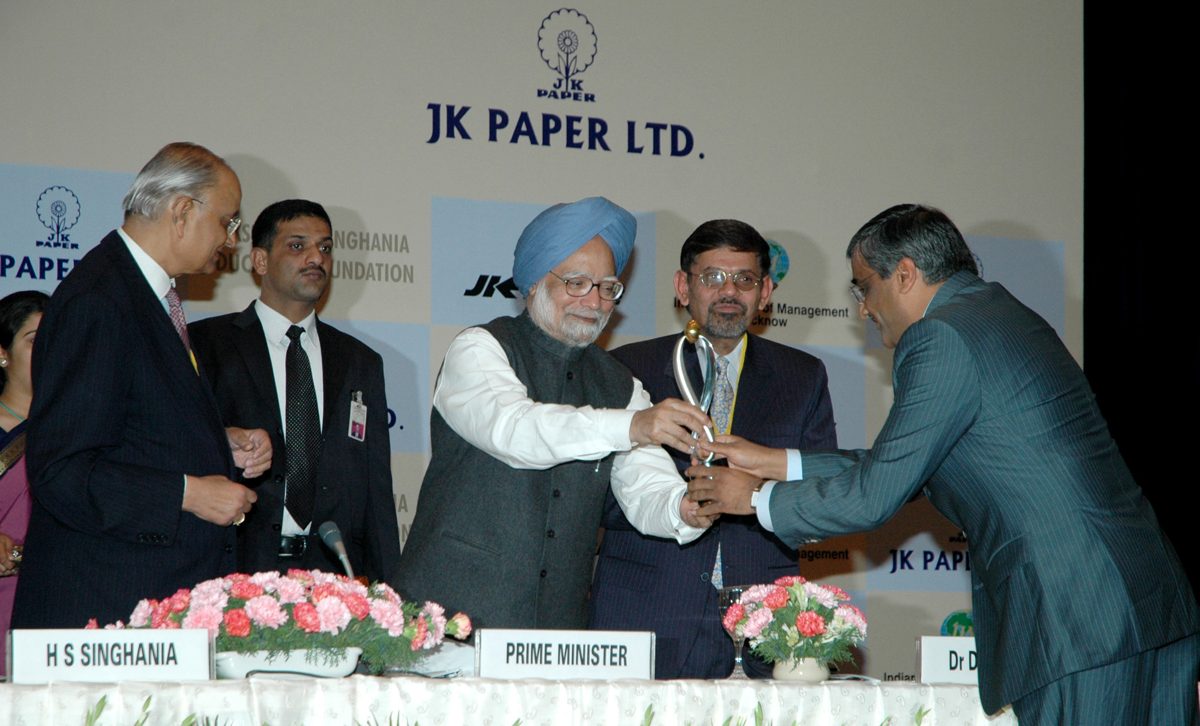
Recognition followed. Biyani won the EY Entrepreneur of the Year award (services) for 2006 [3]. In December 2006 Prime Minister Manmohan Singh presented him with IIM Lucknow’s Young Leadership Award for business [2]. In January 2007 the US National Retail Federation named Pantaloon its International Retailer of the Year, an honour earlier given to Metro, Carrefour and Zara. “We can take a person out of India but not India out of a person,” Biyani said [25].
His 2007 memoir, It Happened in India, written with Dipayan Baishya and published by Rupa, sold about 1,00,000 copies within months [15] [5]. In it and in interviews he set out a philosophy that sounded nothing like a business school. “We believe in destroying what we have created,” he told Knowledge at Wharton. “In our group, we don’t follow business principles. We follow the principles of nature” [15]. The group’s motto was “Rewrite rules, retain values”.
He even tried films. Pantaloon’s ad work led him to produce Na Tum Jaano Na Hum (2002), starring Hrithik Roshan, and Chura Liyaa Hai Tumne (2003); both failed at the box office [10] [94]. “The fate of the movie was sealed in just three hours,” he wrote. The morning after, he noted down a rule he would repeat for years: “One should not get attached to what one creates” [9].
Future Group: everything, everywhere (2006-2011)
By the late 2000s Biyani had reorganised his businesses under the Future Group banner and moved well beyond shops. He set up insurance joint ventures with Italy’s Generali [53], a consumer brands business, a logistics company and a finance arm. Future Capital Holdings raised Rs 491 crore in a January 2008 IPO that was subscribed about 132 times [26].
The timing was poor. The 2008 global crisis cut the group’s market value by about two-thirds in six months, and Biyani had to cut formats and roll short-term loans into longer ones, Outlook Business reported [10]. “I think you get greedy while doing many things, and I think India allows you to do many things,” he admitted years later [37].
By 2011 interest payments were eating most of the operating profit. Business Today reported that interest took about 61% of EBITDA in the December 2011 quarter [27].
Selling Pantaloons to save the rest (2012)
In April 2012 Biyani did what he had always said a founder must be willing to do: he gave up the brand he started with. In a deal sealed with a handshake in Kolkata, Kumar Mangalam Birla’s Aditya Birla Nuvo agreed to take control of the Pantaloons format business. (Read our profile of Kumar Mangalam Birla.) The deal was worth about Rs 1,600 crore to Future: Aditya Birla Nuvo put Rs 800 crore into convertible debentures, and about Rs 800 crore of debt moved out with the business [27] [28]. Group debt at the time was put at about Rs 7,800 crore by Business Standard and Rs 8,000 crore by Business Today [28] [27].
Biyani kept 157 Big Bazaars, 47 Food Bazaars, 20 Central malls and the eZone and HomeTown chains [27]. Forbes later reported that he also laid off about 3,000 people during this period [29].
The rebuild (2014-2018)
The second act was built mostly through acquisitions. In November 2014 Future Consumer bought the Bengaluru grocery chain Nilgiris for about Rs 300 crore [31]. In 2015 Future agreed to merge its retail business with Bharti Retail, owner of the Easyday chain, in an all-stock deal; the front-end stores became a new Future Retail Ltd and the rest became Future Enterprises, and Biyani became managing director of Bharti Retail in May 2016 [32]. (See our profile of Sunil Bharti Mittal.) In October 2017 Future Retail bought the HyperCity chain from the K Raheja group for Rs 655 crore, Rs 500 crore of it in shares [33].
It seemed to work. In October 2017 Forbes reported that Future Retail’s shares had risen 355% in a year, that the group’s stores covered about 20 million sq ft in 244 cities, and that Biyani was back among India’s 100 richest, with a net worth of US$2.1 billion [29]. He won EY’s Entrepreneur of the Year award again in 2018, in the business transformation category [4]. In January 2018 he forecast group retail turnover of about Rs 30,000 crore for that financial year [95].
The peak, and the pledges (2019)
In September 2019 Future Retail reported 1,550 stores covering 16.4 million sq ft in 432 cities, and revenue of about Rs 20,200 crore for 2018-19 [1]. Forbes ranked Kishore Biyani and family No. 80 on its India list that October, at US$1.78 billion [30].
In August 2019 Amazon bought 49% of Future Coupons, a promoter company that owned shares in Future Retail, for about Rs 1,430 crore (roughly US$200 million). That gave Amazon an indirect stake of about 3.58% in Future Retail and a contractual say in what the promoters could do with their shares [34] [35]. That contract would later matter a great deal.
Beneath the growth, the balance sheet was stretched. The group raised about Rs 4,600 crore of equity in 2019-20, including Amazon’s money and Rs 1,750 crore from Blackstone in Future Lifestyle Fashions, and some promoter borrowing cost as much as 26.5% a year [35]. Outlook Business estimated total group debt, including promoter holding companies, at about Rs 23,500 crore [10]. By March 2020 the promoters had pledged about 80% of their Future Retail shares and more than 90% in several other group companies [10] [36].
Covid and the Reliance deal (2020)
Then the country shut down. “We got into a trap to be very honest with Covid-19. In the first 3-4 months, we lost nearly Rs 7,000 crore of revenue,” Biyani said in October 2020 [38]. Lenders invoked pledges, and group share prices fell by half or more within a month [36].
On 29 August 2020 Future Group agreed to sell its retail, wholesale, logistics and warehousing businesses to Reliance Retail for Rs 24,713 crore, a figure that reportedly included about Rs 12,000 crore of debt [39]. Big Bazaar, Central, Brand Factory, Foodhall, Easyday and Nilgiris would all go to the company built by Mukesh Ambani, the son of one of Biyani’s boyhood heroes. (Read our profiles of Mukesh Ambani and Dhirubhai Ambani.) Biyani said the deal offered “a holistic solution to the challenges” the group faced, including those “caused by Covid-19” [96]. “We did too many acquisitions in the last six-seven years… I thought there was no other answer but to exit,” he said [38].
Amazon objected at once, and the fight that followed (covered in detail below) froze the deal for nearly two years.
The collapse (2022-2024)
While courts argued, the stores kept losing money. In February and March 2022, after Future Retail failed to pay rent, Reliance, which had signed leases directly with many landlords and sub-let the stores to Future, moved in and took control of the stores. Future Retail said more than 835 of its stores had gone, accounting for 55-60% of its retail revenue [43]; Reuters counted about 947 across Future Retail and Future Lifestyle [42].
On 31 March 2022 Future Retail defaulted on about Rs 5,322 crore owed to lenders [43]. In the April 2022 votes on the Reliance scheme, shareholders and unsecured creditors approved it, but 69.29% of Future Retail’s secured lenders voted against it, and Reliance called the deal off on 23 April [44].
On 20 July 2022 the National Company Law Tribunal (NCLT) in Mumbai admitted Future Retail into insolvency on a petition by Bank of India [46]. Financial creditors filed claims of about Rs 21,057 crore, of which Rs 17,512 crore was verified [47]. Forty-nine parties expressed interest, but SpaceMantra’s Rs 550 crore offer was the only bid for the whole company, less than 3% of what lenders were owed [48]. Lenders rejected it, and on 29 July 2024 the NCLT ordered Future Retail to be liquidated [49] [50]. In 2025 the liquidator put the Big Bazaar, Fashion@Big Bazaar and Foodhall trademarks up for auction with a reserve price of about Rs 155.85 crore [51].
The rest of the group followed. Future Enterprises entered insolvency in February 2023, with about Rs 12,265 crore of claims admitted [52]; its insurance stakes went to Central Bank of India [53]. Future Lifestyle Fashions was admitted in 2023 [55]. Reliance Retail’s Rs 171 crore plan for Future Supply Chain was approved in 2025 [54]. In July 2026 the NCLT admitted Future Consumer, the business his daughter Ashni once ran, over a Rs 263.77 crore default [56].
The setbacks and failures
Biyani’s career is a chain of falls and recoveries, and he has been unusually open about his mistakes.
The franchise sprawl of the 1990s spread a young company across India before it had systems to manage it [7].
The films of 2002-03 lost money and taught him not to get attached [9].
The 2008-2012 debt crunch forced him to sell Pantaloons, the brand that started it all [27].
The online miss. In 2017 he called it “stupid to be in the online space”; by 2019 he was saying, “I think we have made enough mistakes… We didn’t have that kind of bandwidth and we didn’t have that kind of resources” [21].
The final collapse. In a 2023 conversation with podcaster Raj Shamani, he summed it up: “During the journey of being the leader, we stretched our balance sheet… We were not able to handle the Covid event. When Covid happened we lost business of Rs 7,000 crore in three months.” Recovery was hard “because you are working on bank lines and everything gets into a jam.” And on Amazon and Reliance: “We were caught in between two leaders of the world and things didn’t work the way we wanted it to” [61].
In January 2023 he resigned as executive chairman of the suspended Future Retail board, writing, “The company was always my passion, and I have done everything in my power for its growth” [59]. The resolution professional objected to the letter’s contents, and Biyani withdrew the resignation in March 2023 [60].
His personal finances were tied up too. As is common in Indian business, he had personally guaranteed group loans. In September 2022 Central Bank of India filed personal insolvency cases against Kishore, Vijay and Sunil Biyani, including about Rs 513 crore of claims against Kishore [57]. In October 2023 the NCLT reportedly admitted a separate personal insolvency petition by Axis Trustee Services over about Rs 600 crore, which put a moratorium on his debts [58]. In April 2024 he cleared one large exposure, settling about Rs 476 crore with Canara Bank-led lenders through the sale of SOBO Central mall in Mumbai to K Raheja Corp [63].
Controversies and allegations
Biyani’s final years at Future Group drew regulators, courts and one of the world’s biggest companies. Below are the main matters, as of 26 October 2026. No criminal case against Kishore Biyani personally was found in the public reports we reviewed.
The SEBI insider trading case (2021-2023)
Allegation: In an order dated 3 February 2021, the Securities and Exchange Board of India (SEBI) said Future Corporate Resources, a promoter company, had traded Future Retail shares in early 2017 while in possession of unpublished price-sensitive information about a planned split of the company’s businesses, which was announced on 20 April 2017. It held that Kishore Biyani was privy to that information [64]. SEBI barred Kishore Biyani, Anil Biyani and others from the securities market for a year and from dealing in Future Retail shares for two years, fined Future Corporate Resources, Kishore and Anil Rs 1 crore each, and ordered disgorgement of about Rs 17.78 crore with interest [65].
Response: The company called the order “untenable”, arguing that it treated a “well-anticipated reorganisation” as secret information, and appealed [64].
What happened next:
- The Securities Appellate Tribunal (SAT) stayed the order on 15 February 2021, asking the promoters to deposit Rs 11 crore [66].
- On 20 December 2023 SAT quashed SEBI’s order, holding that the restructuring was already in the public domain through media reports and analyst notes [67] [68].
Status: Set aside by SAT in December 2023. We found no public report of a further appeal by SEBI.
Amazon v. Future (2020-2026)
Allegation: Amazon said that Future’s August 2020 agreement with Reliance breached the shareholder and subscription agreements it had signed in 2019 with Future Coupons and the promoters, which it said barred the sale of Future Retail’s assets to certain “restricted persons”, including Reliance [69]. After Reliance took over Future stores in 2022, Amazon published notices calling the transfers a “fraud” [42].
Response: Biyani said Amazon “always” knew of the talks with Reliance and never offered a workable alternative. In a January 2021 letter he wrote: “Being totally disillusioned and fed up with your lackadaisical attitude, we were left with no option,” adding that without the sale Future Retail “would inevitably have faced insolvency and/or liquidation” [40]. Amazon disputed his account [41]. Future called Amazon’s 2022 fraud allegations “baseless” and said it had disclosed the store transfers to the exchanges [45]. Future also complained to the Competition Commission of India (CCI) that Amazon had concealed the true purpose of its 2019 investment [72].
What happened next:
- On 25 October 2020 a Singapore International Arbitration Centre (SIAC) emergency arbitrator barred Future from going ahead with the Reliance deal [71].
- On 18 March 2021 a Delhi High Court judge ordered the attachment of the assets of Biyani and other respondents and asked why they should not be detained in civil prison; that order was stayed soon after [70] [71].
- On 6 August 2021 the Supreme Court ruled that the emergency award was enforceable in India, a major win for Amazon [69].
- On 17 December 2021 the CCI suspended its 2019 approval of Amazon’s deal and fined Amazon about Rs 202 crore [72]. In May 2026 the Supreme Court set aside that order and the NCLAT ruling that had upheld it [78].
- In June 2025 the SIAC tribunal found a breach but awarded Amazon only about Rs 23.7 crore in damages against a claim of about Rs 1,436 crore, plus costs, roughly Rs 105 crore in all [73] [74].
- The parties signed a settlement on 13 March 2026, and on 28 April 2026 the Delhi High Court recorded that the disputes “stand resolved” [75] [76]. Inc42, citing an Economic Times report, said Future Coupons would pay Amazon about Rs 11 crore; the court did not disclose the terms [77].
Status: Settled in 2026. The CCI penalty on Amazon was quashed by the Supreme Court in May 2026.
Forensic audits and lenders’ fraud classifications (2023-2026)
Allegation: A forensic audit by BDO India commissioned by Bank of India, dated August 2023, flagged certain Future Retail transactions as fraudulent [79]. Future Retail’s resolution professional separately asked the NCLT in 2023 to direct former and current directors to contribute about Rs 14,809 crore for alleged losses to creditors, and filed a smaller “fraudulent transaction” application of about Rs 40.5 lakh [60] [80]. In June 2025 Bank of India classified the Future Lifestyle Fashions loan account, and Kishore and Rakesh Biyani, as fraud [81]. In October 2026 it told the stock exchanges that it had classified its Rs 575.40 crore exposure to Future Enterprises as fraud and reported it to the RBI [83].
Response: Biyani challenged the BDO report in the Bombay High Court as based on “insufficient and unverified data and conjecture”; after BDO said the report was only interim, the court told the bank not to act on it against him until further hearings [79]. He also challenged the Future Lifestyle fraud tag. No response to the October 2026 classification had been reported.
What happened next:
- In July 2026 the Bombay High Court quashed Bank of India’s fraud classification of Future Lifestyle and its promoters as “wholly unreasoned”, while leaving the bank free to restart the process properly [81] [82].
Status: No court has found fraud by Kishore Biyani. The resolution professional’s applications and the Future Enterprises classification were pending as far as public reports show.
SEBI penalties for disclosure lapses (2023 and 2026)
Allegation: After a forensic audit it ordered in 2022, SEBI found that about Rs 1,347 crore of transactions routed through Future Enterprises and related entities between 2019-20 and 2021-22 should have been disclosed and approved as related-party transactions. Earlier, in 2023, it found that a promoter company had failed to make a required open offer in Praxis Home Retail [84] [86].
Response: Biyani argued, among other things, that the personal insolvency moratorium barred the proceedings and that the dealings were in the ordinary course of business; SEBI rejected those arguments but dropped several other charges [84].
What happened next:
- May 2023: SEBI fined Future Corporate Resources Rs 10 lakh and 14 promoter-group individuals, including Kishore Biyani, Rs 10 lakh jointly in the Praxis matter [86].
- 12 May 2026: SEBI fined Kishore Biyani Rs 20 lakh, Rakesh Biyani Rs 15 lakh and former CFO C.P. Toshniwal Rs 15 lakh. The order is about disclosure; it did not find siphoning of funds [84] [85].
Status: Penalties imposed. We found no report of an appeal.
Personal insolvency as guarantor
Allegation: Lenders say Biyani is liable under personal guarantees he gave for group loans, including about Rs 513 crore claimed by Central Bank of India and about Rs 600 crore claimed via Axis Trustee [57] [58].
Response: We found no detailed public response from Biyani to these petitions. They are civil recovery proceedings over guarantees, not allegations of wrongdoing.
Status: Pending before the NCLT as far as public reports show, as of 26 October 2026.
Giving back
Biyani’s public legacy is less in philanthropy than in people and ideas. We found no major personal foundation or large documented donations in credible sources. What he is known for is an obsession with understanding ordinary shoppers, which he tried to pass on to his staff: new Future Group hires were sent to Varanasi to study how India buys. “India ko samajhna hai toh Banaras jaiye,” he said in 2023 (to understand India, go to Banaras) [62].
His most direct attempt to pass on what he learned began in late 2025. On 22 December 2025 he and Nikhil Kamath, the Zerodha co-founder and brother of Nithin Kamath, launched The Foundery, a 90-day residential programme where would-be founders build companies, keep up to 25% of the equity and can get up to Rs 4 crore of seed funding [87]. “This isn’t a classroom or an incubator. It’s a live business-building environment where entrepreneurs learn by creating, testing, failing, and evolving,” Biyani said [88].
Succession
There was no formal handover, because there was little left to hand over. His cousin Rakesh Biyani, long the operations head, stepped down as managing director of Future Retail in May 2022 [90]. His elder daughter Ashni resigned as managing director of Future Consumer the same month, staying on as a non-executive director [89].
The next generation has started again from scratch. In March 2024 Ashni and her sister Avni, who had earlier led the Foodhall gourmet chain, opened Foodstories, a premium food store, at a Delhi mall [91]. In June 2026 Foodstories raised Rs 50 crore in a round led by Nikhil Kamath [92]. His nephew Vivek Biyani, who ran HomeTown, has launched a new store format called Broadway [93].
What their journey teaches
1. Design for the customer you have, not the one in a textbook. Big Bazaar worked because Biyani copied Saravana Stores and the Indian bazaar, not Walmart. He built for crowds, bargains and touch, and it changed how India shops.
2. Growth paid for with borrowed money has no shock absorber. Short-term loans, pledged promoter shares and a store base on leased property meant one bad quarter could become a death spiral. Covid was the shock; the balance sheet decided the outcome. Compare it with Radhakishan Damani’s far slower DMart.
3. Be willing to sell what you love, early. Selling Pantaloons in 2012 saved the group for another eight years. “One should not get attached to what one creates” was his best rule; in 2020 there was no longer anything left to sell on his own terms.
4. Read every clause before you take strategic money. Amazon’s minority investment in a small promoter company came with rights that, when tested, kept a rescue deal tied up in courts for 20 months. The terms you accept in good times decide your options in bad ones.
5. Personal guarantees make a company’s failure personal. Years after the stores went, Biyani was still dealing with insolvency cases over loans he had personally guaranteed.
6. A fall does not have to be the last chapter. At 64, with his listed companies in liquidation, he started again, this time teaching others to build. “We believe in destroying what we have created,” he said in 2007 [15]. Few people have had to live that line so literally.
Kishore Biyani did not invent shopping in India, but he did more than almost anyone to bring organised retail to small-town families, with the Republic Day sale, the hypermarket and the shopping mall. He also showed, more painfully than almost anyone, how quickly a retail empire built on debt can fall.
A profile for general reading, based on public records and reporting as of 26 October 2026. Not investment, tax or legal advice.
Sources (96)
- Future Retail investor presentation, December 2019 - BSE filing, Dec 2019
- PM Manmohan Singh presents Young Leadership Award to Kishore Biyani (PIB photo record) - Wikimedia Commons, Dec 2006
- EY Entrepreneur Of The Year 2006 winners - EY India, 2006
- EY Entrepreneur Of The Year 2018 winners - EY India, 2018
- It Happened in India by Kishore Biyani with Dipayan Baishya - Rupa Publications, Feb 2025
- Kishore Biyani (Q6416634) - Wikidata, Oct 2026
- The making of India's retail king - The National, Oct 2009
- Every business deal involves negotiation, but always with a human being on the other side - Outlook Business, Mar 2018
- One should not get attached to what one creates - Outlook Business, Mar 2018
- How Kishore Biyani's maverick moves pushed him to breaking point - Outlook Business, Jul 2020
- Book review: It Happened in India - IUP MBA Review, Feb 2008
- Rajah of Retail - Business Today, Mar 2005
- Meet India's king of retail - Business Standard, Jan 2005
- How Kishore Biyani lost his retail empire after 30 years at the helm - Business Standard, Aug 2020
- Retailer Kishore Biyani: 'We believe in destroying what we have created' - Knowledge at Wharton, Nov 2007
- Kishore Biyani: The never-say-die retailer - Forbes India, Dec 2010
- Kishore Biyani and Pantaloon (BusinessWorld cover story, reposted) - Third Eyesight, Jun 2004
- Indian grocery shoppers demand more chaos - Foreign Policy, Aug 2007
- Crazy after all these years (review of It Happened in India) - Business Today, May 2007
- Restructuring Pantaloon Retail (case study) - ICMR India
- From Pantaloons to Big Bazaar: How Kishore Biyani built and sold his iconic brands - The News Minute, Aug 2020
- Pantaloon launches Bangalore Central mall - afaqs!, May 2004
- Big Bazaar celebrates 'Maha Savings Day' - the 'sabse sasta din' - afaqs!, Jan 2006
- The story behind the event that changed how India shops - The Quint, Jan 2020
- Pantaloon's Kishore Biyani voted 'International Retailer of the Year' - exchange4media, Jan 2007
- Future Capital Holdings IPO details - Chittorgarh, Jan 2008
- A deal among friends helps Future Group's Kishore Biyani survive the debt ordeal - Business Today, May 2012
- Biyani books to get Birla breather - Business Standard, May 2012
- India's Richest 2017: How retail king Kishore Biyani rebuilt his empire - Forbes, Oct 2017
- Kishore Biyani & family profile - Forbes, Oct 2019
- Biyani's FCEL buys Nilgiris - The News Minute, Nov 2014
- Kishore Biyani is now MD at Bharti Retail - People Matters, May 2016
- Kishore Biyani snaps up Raheja group's loss-making HyperCity for Rs 655 crore - Business Today, Oct 2017
- Amazon picks up 49% stake in Kishore Biyani's Future Coupons - Business Today, Aug 2019
- Future Group: Retail king of India faces litmus test as debt soars - Business Standard, Apr 2020
- How Kishore Biyani's debt profile changed - BloombergQuint, Mar 2020
- Kishore Biyani on building Future Group and India's startup culture - Quartz, Jan 2020
- Future Group lost Rs 7,000 Cr revenue in first months of COVID-19: Kishore Biyani - YourStory, Oct 2020
- Reliance's Rs 24,713 crore deal with Future Retail includes Rs 12,000 crore debt - Business Today, Aug 2020
- We were fed up with your attitude, had to take RIL offer: Biyani to Amazon - Business Standard, Jan 2021
- Amazon was aware of talks with RIL for sale of retail assets: Biyani - Business Standard, Jan 2021
- Amazon calls Future store transfer to Reliance 'fraud' - The Week (Reuters), Mar 2022
- What next for Future Retail after Reliance deal falls through? - The Week, Apr 2022
- Reliance calls off deal with Future after secured creditors reject it - Business Standard, Apr 2022
- Future Retail denies Amazon's allegation of 'fraudulent stratagem' by independent directors - Outlook Business, May 2022
- NCLT orders insolvency proceeding against Future Retail, rejects Amazon's objection - The Pioneer (PTI), Jul 2022
- Financial creditors to Future Retail place claims worth Rs 21,000 cr - Business Standard, Aug 2022
- Future Retail bankruptcy: SpaceMantra emerges as the only bidder - Business Today, May 2023
- NCLT orders liquidation of Biyani-led Future Retail as resolution eludes - Business Standard, Jul 2024
- NCLT Mumbai orders liquidation of Future Retail - LiveLaw, Jul 2024
- Future Retail's iconic brands Big Bazaar, Foodhall up for auction with Rs 155 cr reserve price - Insolvency Tracker, Aug 2025
- Future Enterprises CoC re-constituted, claims over Rs 12,265 cr admitted - Business Standard, Jun 2023
- Central Bank of India gains CCI nod for Future Generali stakes - Angel One, Oct 2024
- Reliance Retail to acquire insolvent Future Supply Chain for Rs 171 crore - Insolvency Tracker, Oct 2025
- NCLT Mumbai initiates insolvency process against Future Lifestyle Fashions - LiveLaw, May 2023
- NCLT Mumbai admits Kishore Biyani-led Future Consumer into CIRP over Rs 263.77 crore default - LiveLaw Biz, Jul 2026
- Central Bank files a personal insolvency case against Biyanis - M&A Critique, Sep 2022
- NCLT admits personal insolvency application against Kishore Biyani - M&A Critique, Oct 2023
- 'The company was always my passion', says Kishore Biyani while stepping down - Insolvency Tracker, Jan 2023
- Kishore Biyani withdraws resignation from FRL's suspended board as chairman - Business Standard, Mar 2023
- Lost biz worth Rs 7,000 crore in 3 months: Kishore Biyani on how Covid-19 hit Big Bazaar - Business Today, Nov 2023
- 'India ko samajhna hai toh Banaras jaiye': Kishore Biyani's tip to retailers - Business Today, Nov 2023
- Kishore Biyani pays off creditors led by Canara Bank by selling SOBO mall to K Raheja Corp - Business Today, Apr 2024
- Insider trading case: Future Group's Kishore Biyani moves SAT against Sebi ban - Business Today, Feb 2021
- SEBI bans Kishore Biyani and other promoters of FRL from securities market - SCC Online, Feb 2021
- SAT stays SEBI order barring Future's Kishore Biyani from securities market - Bar & Bench, Feb 2021
- SAT quashes Sebi's order against Kishore Biyani, others in insider trading case - Outlook Business, Dec 2023
- SAT quashes Sebi's order against Biyani, others in insider trading case - Business Standard, Dec 2023
- Big relief for Amazon: Supreme Court upholds plea against RIL-Future deal - Business Today, Aug 2021
- Indian court restrains Future chief from selling assets in dispute with Amazon - FashionNetwork (Reuters), Mar 2021
- Amazon-Future dispute: Supreme Court stays enforcement proceedings in Delhi High Court - LiveLaw, Sep 2021
- CCI revokes approval for Amazon's deal with Future Group, imposes Rs 200 crore penalty - LiveLaw, Dec 2021
- Amazon wins arbitration case against Future Group, gets paltry compensation - Outlook Business, Jun 2025
- Amazon wins SIAC case against Future Group, awarded Rs 23 cr damages - Business Standard, Jun 2025
- Amazon, Future Coupons reach settlement; Delhi High Court disposes of challenge to SIAC award - LiveLaw Biz, Apr 2026
- Amazon-Future Group dispute settled; Delhi High Court closes challenge to arbitral award - Bar & Bench, Apr 2026
- Amazon, Future Coupons reach Rs 11 Cr settlement after multi-year battle - Inc42, May 2026
- SC sets aside NCLAT order upholding CCI's Rs 202 crore penalty on Amazon - ETV Bharat, May 2026
- Kishore Biyani moves Bombay High Court against forensic audit report alleging fraud in Future Retail accounts - Bar & Bench, Sep 2023
- Kishore Biyani moves Bombay HC against forensic audit of Future Retail - Business Standard, Sep 2023
- Bombay High Court quashes fraud tag against Future Lifestyle promoters Kishore, Rakesh Biyani - LiveLaw Biz, Jul 2026
- Bombay High Court quashes Bank of India's fraud tag on Kishore and Rakesh Biyani - Bar & Bench, Jul 2026
- Bank of India declares Future Enterprise Ltd account of Rs 575 crore as fraud - PSU Connect, Oct 2026
- SEBI penalises Kishore Biyani, Rakesh Biyani, ex-Future Retail CFO for related-party disclosure violations - LiveLaw Biz, May 2026
- Kishore Biyani, two other officials fined Rs 50 lakh for disclosure lapses - Business Standard, May 2026
- Sebi fines Future Corporate Resources, 14 others for open offer lapses - Business Standard, May 2023
- Nikhil Kamath and Kishore Biyani launch The Foundery to build early-stage startups in 90 days - Entrackr, Dec 2025
- Nikhil Kamath, Kishore Biyani start The Foundery to shape India's future entrepreneurs - exchange4media, Dec 2025
- Ashni Biyani resigns as MD of Future Consumer - Deccan Herald (PTI), May 2022
- Future Retail MD Rakesh Biyani steps down - Outlook Business, May 2022
- Foodstories opens at Ambience Mall, Delhi - India Retailing, Mar 2024
- Premium F&B brand Foodstories bags Rs 50 Cr to expand - Inc42, Jun 2026
- Vivek Biyani: The next heir in retail - Entrepreneur India, Aug 2024
- Na Tum Jaano Na Hum - Wikipedia, Oct 2026
- Future group eyes Rs 40,000-crore in FY19 - Deccan Chronicle, Jan 2018
- Far from over: the Reliance-Future deal - The Week, Sep 2020