
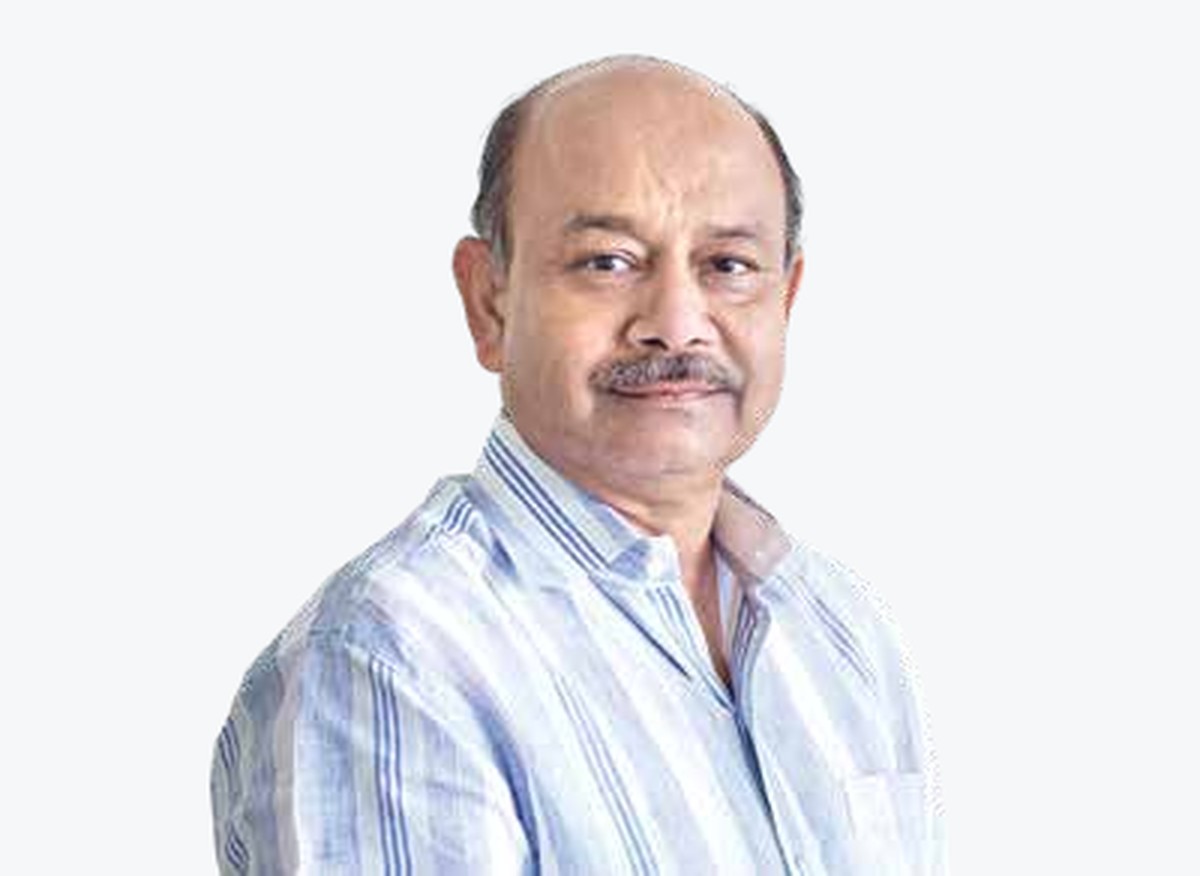
| Key facts | |
|---|---|
| Born | 1954 according to Business Today and Aaj Tak (Bloomberg says 1956). Aaj Tak gives the birthplace as Bikaner, Rajasthan; Bloomberg says Mumbai |
| Family roots | Marwari family; raised in a one-room home in Mumbai, where his father worked on Dalal Street |
| Education | Left the University of Mumbai’s commerce course after the first-year examination |
| Family | Wife Shrikantadevi Damani; three daughters, Madhu Chandak, Manjri Chandak and Jyoti Kabra; younger brother and co-promoter Gopikishan Damani |
| Company | Avenue Supermarts Ltd (DMart); investment company Bright Star Investments |
| Wealth | US$20.4 billion, No. 11 on Forbes India’s 100 Richest 2026 (family; prices as of 11 September 2026). M3M Hurun India Rich List 2025: No. 10, about Rs 1.83 lakh crore; outside the top 10 of the 2026 Hurun list |
| Known for | Founding DMart; value investing; his friendship with Rakesh Jhunjhunwala; dressing only in white; almost never speaking in public |
In 2014, when Forbes Asia first counted him among India’s 100 richest and contacted him, Radhakishan Damani gave a three-word answer: “I don’t qualify.” He offered no details. [26]
Three years later, on 21 March 2017, shares of his supermarket company, Avenue Supermarts, listed in Mumbai. They had been sold to the public at Rs 299. They opened at Rs 604.40 and closed at Rs 640.75, valuing a chain of about 130 plain, crowded stores at Rs 39,988 crore. [59][6] By the next day Forbes’s real-time tracker put the 61-year-old at US$5.1 billion, the 16th-richest Indian, ahead of Anil Ambani and Rahul Bajaj. [60]
He had never appeared on television. [34] When Forbes India profiled the company that year, he declined to be interviewed. [28] On Dalal Street he was known mostly for his clothes: a white shirt and white trousers, every day, which earned him the name “Mr White and White”. [33]
This is the story of a college dropout who came to the stock market late, took mounting losses betting against Harshad Mehta before the bet came right, became the quiet teacher of India’s best-known investor, and then spent 15 years building a grocery chain so slowly that almost nobody noticed until it listed at a value of nearly Rs 40,000 crore. It is also the story of what the record says about the allegations made against him along the way.
Where it began
Almost nothing about Damani’s early life comes from the man himself, and the published record does not even agree on where he was born. Aaj Tak and Business Today say 1954, and Aaj Tak names Bikaner in Rajasthan. [38][36] Bloomberg’s billionaire profile says Mumbai, in 1956. [27] The company’s 2017 prospectus gives only his age at the time, 61. [1]
What the accounts agree on is the setting. A Marwari family. A single room in a Mumbai tenement. A father, Shivkishan Damani, who worked on Dalal Street. [37][27][35][36]
He enrolled for a commerce degree at the University of Mumbai and stopped after one year. The prospectus records it without embarrassment: he “completed his first year commerce examination”. [1] His first business had nothing to do with shares. It was ball bearings. [1] Accounts differ on whether this was his own venture or a family one. [36][39]
The turn came with his father’s death. His younger brother Gopikishan was already in stockbroking, and Radhakishan left ball bearings to join him. Business Today puts his first market investment at the age of 32, which would place it in the second half of the 1980s. [36][27]
Business Standard tells a story, heard from people who know him, about why he agreed. He was reluctant. An uncle is said to have asked him three questions. Who was the most successful man in ball bearings? What was he worth? And how did that compare with the biggest names on Dalal Street? [35]
He founded Bright Star Investments in 1989 to trade and invest in shares, and was registered with SEBI as a stockbroker in 1992. [1]
In the trading ring he listened more than he spoke. Vallabh Bhanshali, the investment banker, remembered a man who stood at the corner of Dalal Street talking to everyone. “He would never try to mislead anybody,” Bhanshali told Business Standard. Deena Mehta, a former president of the Bombay Stock Exchange, said this network of conversations gave him “a fair idea of what exactly was happening in the market”. [35]
One of the people he met there was a young chartered accountant named Rakesh Jhunjhunwala. The Sensex was then around 150. [37] The press would later call Damani his guru. Jhunjhunwala’s own description, in a 2018 interview, was more careful: “He is not a mentor, he is a friend… He is a person from whom I learnt a lot by observation.” [40]
The first break
Damani’s first break looked, for a while, like a mistake.
In the early 1990s the broker Harshad Mehta was pushing share prices to levels nobody had seen. Damani was on the other side. Business Today describes him as part of “a so-called bear cartel” of that period, along with the veteran operator Manu Manek and the young Jhunjhunwala. [41]
The best-documented example is ACC, the cement company. According to Business Standard, Damani had at first been bullish on ACC, like Mehta, and sold with a profit at about Rs 3,000 a share. He then judged the stock overpriced and began shorting it. It kept rising, to around Rs 10,000. “Losses mounted for Damani as ACC and other stocks continued to climb,” the paper wrote. [35]
Then, in 1992, it emerged that Mehta’s buying had been financed with money taken out of the banking system. Prices collapsed. Damani, who had been selling all the way up, came out on top. [33][39] No credible account puts a rupee figure on what he lost before the turn or made after it.
The two men clashed once more. A few years later Mehta, by then acting as an adviser, was promoting BPL, Videocon and Sterlite. Damani shorted them until the prices fell. Even then, Deena Mehta recalled, he “was very helpful to traders in trouble”. [33]
From trader to owner of businesses
The larger fortune was built by buying, not selling.
Damani bought into companies with strong brands and franchises and held them for years. Business Standard and Business Today list Gillette India, VST Industries, Crisil and 3M India among his best investments. [33][93] Forbes India says Gillette and VST were the two “through which he made a small fortune”. [28]
The other famous bet was HDFC Bank. His view, as Business Standard put it, was that private banks were going to “eat the public sector for lunch”. He held a large position before the bank’s market value had reached Rs 1,000 crore. [35] Bloomberg’s profile says he became the bank’s largest individual shareholder in 1995, the year it listed; Business Standard calls this market folklore, and no stake size has been published. [27][34] Asked why he paid up for it when government banks were cheaper, he is said to have replied that you cannot live on Peddar Road at Dharavi’s rates. [34]
The cigarette company he could not win
The boldest move of his investing life was a takeover bid.
In September 1998 Damani told VST Industries, the Hyderabad cigarette maker managed by British American Tobacco (BAT), that he and his companies held more than 5% of it. VST disputed the figure. [45] By February 2001 Bright Star held 14.97%, and on 13 February it announced an open offer for another 20% at Rs 112 a share. [46]
ITC, India’s biggest cigarette company, answered through its subsidiary Russell Credit with a counter-offer. The bids climbed. By June 2001 Bright Star was offering Rs 151 a share against Russell’s Rs 125, and LIC and GIC, which together held 17.7%, were meeting to decide whom to sell to. [47] The offers got tangled in court orders from the Andhra Pradesh and Calcutta High Courts. [48] ITC’s chairman said his company did not want control, only to “prevent the present industry equation from being disturbed”. [49]
Damani did not get control. BAT still manages VST. But he never left either. In January 2024 his investment vehicles held 30.7% of VST against BAT’s 32.2%, and at the end of June 2026 they still held about 29%. [50][52]
Building the empire
A franchise in Nerul
By the late 1990s Damani was one of the best-known investors in Mumbai, and he wanted to do something else.
The reasons offered by people around him vary. Ramakant Baheti, his long-time finance chief, told Forbes India that Damani entered retail “with a view to create something other than stocks to leave behind for the next generation”. [28] Some people, Business Standard wrote, think he concluded that success as a speculator was not a scalable model. Deena Mehta’s guess was that online and high-frequency trading “killed the ground-level information flows” he relied on, and that this may have pushed him to diversify. [35]
His own explanation, given to The Economic Times in 2014 and quoted by Quartz, was simpler: “I liked the consumer business and I invested in such stocks too.” There was, he said, a “strong affinity to start something in the same sector”. [39]
He did not start with a big store. He started as somebody else’s franchisee. He took an Apna Bazaar franchise, a co-operative grocery format, in Nerul, Navi Mumbai. Outlook Business dates this to 1999 and says the store was 5,000 sq ft; Forbes India says he first tried retailing in 1995, ran two franchises and that the Nerul store was 7,000 sq ft. [29][28] The prospectus says he entered retail in 1999 through a company called Koop Consumer Services, which was later merged into Avenue Supermarts. [1] Damodar Mall, who had come from Unilever, was a co-promoter of that venture, with DMart’s promoters as its angel investors, according to his professional biography. [90]
He treated the shop as a laboratory. He would stand in it and watch which items moved, how customers behaved and how much discomfort they would accept; he ran it without air-conditioning. His complaint was that 60% of the range was dictated by Apna Bazaar. [28] He read about the world’s big retailers and drew his inspiration from Walmart’s founder Sam Walton. [29][35]
Three stores and three desks
Avenue Supermarts was incorporated on 12 May 2000. The first DMart opened in Powai, Mumbai, in 2002. [1] Kandivali and Malad followed. [28]
In those years Damani did the buying himself. Dheeraj Kampani, then a Hindustan Unilever sales supervisor and later DMart’s head of buying and merchandising, remembered a man in a white shirt, white trousers and sneakers who introduced himself as the purchase manager. He did not look like an employee, Kampani told Forbes India, but his manner was not that of an owner either. [28]
Kampani recalled two of his lines. One was: “In retail, everything is science. Assortment is art.” The other, in Hindi, was his standing offer to suppliers: “Price mera, quantity tumhara”, meaning I state the price and you decide how much to supply. [28]
In January 2004 he hired Neville Noronha, a Hindustan Unilever sales manager, as head of operations. The company had three working stores. [1] The whole DMart team worked from three desks in the Malad store. [28] Noronha became chief executive in 2007. Forbes India says Damani was actively involved in the business until 2006 and went on mentoring young buyers until 2011. [28]
Own the shop, pay the supplier early
The DMart model is easy to describe and hard to copy.
First, own the store. The prospectus says the company operates “predominantly on an ownership model” rather than renting, and admits this needs more capital. [1] In 2013 it owned 55 of its 65 stores. [57] Rent normally eats 3-7% of a retailer’s sales; DMart turned that saving into lower prices. [58][91]
Second, pay suppliers fast. Indian retailers typically took weeks or months to pay. DMart paid within 48 hours of delivery, Business Standard reported in 2013, and suppliers gave it an extra 2-3% margin in return. [57] Forbes India later put its average at 8 days against 60 for rivals. [28] “I get paid the day I supply my stock to the DMart stores,” a biscuit company executive said in 2020. [35]
Third, sell cheaper every day instead of running sales. Prices were 6-7% below competitors wherever it operated. [57] The target was the lower-middle and middle-income household doing its monthly shopping [1], a customer who counts for even more when prices keep rising.
Fourth, stock only what sells quickly. In 2017 DMart held 25 days of inventory against 80 for Future Retail, sold about Rs 29,000 of goods per square foot, more than twice its rivals, and employed half as many people per square foot. [28]
Fifth, grow in clusters. New stores went up near existing ones and near the warehouses, starting with Maharashtra and Gujarat. [1][91] Damani “would get the business model right in one geography and keep expanding to nearby catchment areas before venturing to nearby cities”, the industry observer Govind Shrikhande told Outlook Business. [30]
And spend nothing on show. On one trip to China, Business Standard reported, Damani shared a room at a budget hotel with his purchasing manager and others from his team. [35] “There are some 25 things that we possibly do differently and consistently,” he told The Economic Times. [39]
Eight years for ten stores, then 500
The pace was the strangest part. “DMart took eight years to start its first ten stores,” the company’s annual report says, not for want of opportunities but because the founder wanted the model proven for both profit and scale. [2] Baheti put it another way: “We have never faced any capital constraints. If we want to open a store, it has to make sense to begin with.” [29]
Then it compounded:
- FY2010: more than 25 stores; revenue crosses Rs 1,000 crore. [1]
- FY2012: 55 stores; total revenue Rs 2,222 crore; net profit about Rs 60 crore. [1]
- FY2017: 131 stores; revenue Rs 11,881 crore; net profit Rs 483 crore. [6]
- FY2020: 214 stores; revenue Rs 24,675 crore; net profit Rs 1,350 crore. [6]
- FY2023: 324 stores; revenue Rs 41,833 crore; net profit Rs 2,556 crore. [4]
- FY2025: 415 stores; revenue Rs 57,790 crore; net profit Rs 2,927 crore. [3]
- FY2026: 500 stores in 15 states, one Union Territory and the National Capital Region; revenue Rs 66,968 crore; net profit Rs 3,224 crore. [7][2]
(FY2010 and FY2012 figures are consolidated; the rest are standalone.) The 500th store opened on 31 March 2026, one of 12 opened that day. [72]
Employees shared in it. A stock option plan was introduced in 2009, and after the listing Forbes India counted more than 400 employees, mostly store staff, each worth over Rs 1 crore. [28] Noronha’s own stake of about 2% made him a dollar billionaire in October 2021. [66]
The listing
The March 2017 IPO raised Rs 1,870 crore, all of it fresh money for the company; Rs 1,080 crore was earmarked to repay debt. [59][1] It was subscribed 104 times. [59] Before the issue Damani held 43.80% in his own name. [1] He had also given away about 70 lakh shares, worth around Rs 425 crore by Business Standard’s count, to some 600 relatives and friends. [34]
Jhunjhunwala’s favourite question to him, by press accounts, had been: “When are you listing your company?” [93]
Listing brought a new obligation. SEBI requires at least 25% of a listed company to be in public hands, and the Damani family held about 82%. [28] He sold 47.30 lakh shares for Rs 643 crore in May 2018. [61] In February 2020 the company sold new shares worth Rs 4,098 crore to institutions at Rs 2,049 each, and the family sold a further 2.28%, taking the promoters to 74.99%. [62][63]
That same month the share price touched Rs 2,559 and Forbes’s real-time list showed Damani at US$17.8 billion, the second-richest Indian after Mukesh Ambani and ahead of Shiv Nadar and Gautam Adani. [36][64] The market value of the company had crossed Rs 1 lakh crore in June 2018. [92] In August 2021 he entered the top 100 of the Bloomberg Billionaires Index at US$19.2 billion, and that October Forbes ranked him the fourth-richest Indian at US$29.4 billion. [65][25] The shares touched a record of about Rs 5,899 on 18 October 2021, nearly 20 times the IPO price. [66] By late 2022 he was the third-richest Indian on Forbes’s count, at US$27.6 billion, Outlook Business noted. [30]
The other portfolio
Damani never stopped being an investor, and the filings show it.
- VST Industries. About 29% at June 2026 on Trendlyne’s tracker of exchange filings, held through Bright Star and in his own name. His group sold 2.40% in the weeks before a 10-for-1 bonus issue in 2024. [52][51]
- India Cements. The family lifted its stake from 4.73% to 19.89% in the first three months of 2020. [53] Bloomberg reported that June that he had informally approached the controlling shareholder, N. Srinivasan, about a friendly takeover; the company’s spokesperson said “the information isn’t correct”. [54] No bid followed. In June 2024 Damani and his associates sold about 23% to UltraTech Cement, part of Kumar Mangalam Birla’s group, for Rs 1,889 crore. [55]
- National Stock Exchange. He holds 3.91 crore shares, or 1.58%, and did not sell in the exchange’s September 2026 IPO. At the issue price of Rs 1,785 that stake was worth about Rs 6,980 crore. [76][77]
- Others. Holdings of over 1% shown by the same tracker for June 2026 include Sundaram Finance, 3M India, United Breweries and Blue Dart Express. [52]
- Private deals. Bright Star bought the beauty and pharmacy chain Health and Glow in July 2023 for Rs 700-750 crore. [78] He put about Rs 90 crore into Lenskart before its 2025 IPO, according to people quoted by PTI. [79]
Then there is property. In March 2021 he and his brother bought a bungalow on 5,752 sq m of land at Malabar Hill for Rs 1,001 crore, paying Rs 30 crore in stamp duty. [80] In February 2023, 28 apartments in the Three Sixty West tower in Worli were registered for about Rs 1,238 crore; reports variously named the buyers as Damani, his family and friends, or his associates. [81][82][83] Business Today noted that the deal came weeks before a Rs 10 crore cap on reinvesting capital gains in housing took effect on 1 April 2023, and analysts expected a rush of luxury registrations before that date; no report says what tax treatment, if any, these buyers claimed. [81][83] Forbes also lists the 156-room Radisson Blu resort in Alibaug among his properties. [21]
How the wealth is held
Nearly all of it is DMart. At 31 March 2026 the promoter group held about 74.5% of Avenue Supermarts: Damani 22.98% in his own name, Bright Star 13.61%, his brother Gopikishan 5.59%, five family trusts 4.75% each, his three daughters about 2.5% each and his wife 1.00%, with the small remainder held by other relatives. [2]
Rich lists count this differently. Forbes India’s 2026 list puts “Radhakishan Damani & family” at US$20.4 billion, No. 11, down from US$28.2 billion and No. 6 a year earlier. [21][22][24] Forbes’s world list in March 2026 counted him alone at US$15.7 billion. [23] Bloomberg showed US$16.3 billion in early October 2026. [27] Hurun ranked the family No. 10 in India in 2025 at about Rs 1.83 lakh crore; in the 2026 list, released on 23 September, the tenth place went to Samir Mehta at Rs 1.89 lakh crore and Damani was no longer in the top 10. [88][87]
The setbacks and failures
The short that kept getting more expensive. The 1992 episode is told today as a victory. Before prices cracked, it was a mounting loss. [35]
Two large stakes that never became control. The 2001 open offer did not give him VST; BAT still manages the company. [49][50] In India Cements, the friendly takeover that Bloomberg reported in 2020 was denied by the company and no bid was made. [54] He sold in June 2024 at about Rs 268 a share; a month later UltraTech agreed to pay the promoters Rs 390 a share. [56]
The pandemic year. Groceries were essential, but many DMart stores were shut by local orders, hours were cut and in some places only essential goods could be sold. Consolidated profit for April-June 2020 fell 88% to Rs 40 crore. [67] For the full year FY2021, revenue fell to Rs 23,787 crore from Rs 24,675 crore, and sales at stores open for two years or more shrank 13.1%. [6]
Quick commerce. This is the setback still unfolding. In 2017 Noronha had said: “Home deliveries are the fastest way to the graveyard.” [28] By October 2024 his results statement said: “We clearly see impact of online grocery formats including DMart Ready in large metro DMart stores”. [8] The shares fell more than 9% in a day and by December were 35% below their September high. [68][69]
Growth at older stores, which was 24.2% in FY2023, slowed to 8.4% in FY2025 and 8.1% in FY2026. [2] In the April-June 2026 quarter the new chief executive, Anshul Asawa, said growth in older stores in large metros “was flat”. [73] The company added only three stores that quarter, and when it indicated about 75 openings for the year, fewer than the market hoped, the stock fell as much as 7% in a day. [73][75]
DMart’s own online arm has not filled the gap. Avenue E-Commerce lost Rs 306.53 crore in FY2026 on revenue of Rs 4,093.61 crore, and has pulled back from 25 cities to 11. [74][3][32] Shareholders approved up to Rs 500 crore more for it in August 2026, taking the total to nearly Rs 2,000 crore. [32]
The effect shows in the rankings. A man who was No. 6 on the Forbes India list in 2025 was No. 11 in 2026. [24][21]
Controversies and allegations
The main matters found in the sources reviewed for this profile are set out below, one by one.
The 2001 “bear hammering” probe
Allegation: After share prices fell sharply around the Union Budget of February-March 2001, the stock exchanges named five entities to SEBI on 2 March 2001 for scrutiny, one of them the “Damani Group”. [10] Business Standard reported in May 2001 that SEBI’s preliminary findings attributed 26% of the fall in Zee Telefilms and 19% of the fall in Satyam Computer on 23 February to entities of the group, and recorded “naked short sales” of 10,071 Himachal Futuristic shares and 11,146 Satyam shares on 2 March; the paper’s list of group entities was wider than the three firms SEBI later proceeded against. [44] Business Today reported that Damani and his brother were investigated because his firm’s name had come up in a taped conversation between the BSE president and the exchange’s surveillance department. [43] In December 2002 the Joint Parliamentary Committee on the stock market scam wrote that “SEBI’s investigations have brought out the indulgence of this group in concerted selling of shares at the stock exchanges leading to fall in the share prices”, and that enquiry proceedings had “reportedly been initiated” against “Shri R.S. Damani” and three associated broking firms. The same report criticised SEBI and the exchanges for “proceeding on the assumption of a deliberate bear-hammering” and overlooking other reasons for the fall. [10]
Response: Damani told Business Today in April 2001: “I have made it clear to SEBI that neither me nor my brother nor any of our companies and associates have shortsold shares in the current financial year.” [43]
What happened next:
- SEBI appointed an enquiry officer on 17 September 2001. His report of 8 April 2002 cleared the firms of the charges under the fraud and broker regulations and recommended only a warning, for delays in moving clients’ shares out of the brokers’ pool account. [9]
- SEBI did not accept that. On 8 June 2006 it issued show-cause notices proposing a heavier penalty, up to suspension or cancellation of registration. [9]
- Damani and Ramakant Baheti appeared before SEBI in person on 28 November 2006. [9]
- On 2 January 2007 SEBI whole-time member V.K. Chopra held that the firms’ 1% to 6.41% share of BSE volume in Infosys in 15-minute slots was “not sufficient to bring a charge of price manipulation”. He found that they “had broadly complied with the SEBI norms on short sales”, that no link with the Rakesh Jhunjhunwala group or Nirmal Bang was established, and upheld only the delayed transfers. [9]
- Separately, in a passage on dividend stripping through mutual funds, the 2002 committee report quotes the Income Tax Department as mentioning “another small amount of Rs.70 lakh in the case of Shri R.S. Damani”. The report records no finding or action against him on that point. [10]
Status: Closed. The order imposed “a minor penalty of ‘censure’” on Damani Shares & Stock Brokers, Maheshwari Equity Brokers and Avenue Stock Brokers. The order was directed at the three firms, not at Damani personally, and carried no fine and no bar from the market. [9] The 2002 parliamentary sentence is still quoted in profiles of him [35]; the 2007 order that closed the matter is quoted far less often.
The 1992 “bear cartel” label and Scam 1992
Allegation: Press accounts describe Damani as part of a “so-called bear cartel” that sold against Harshad Mehta’s favoured stocks. [41] The 2020 web series Scam 1992 has a character named Maheshwari, played by Paresh Ganatra, who the Free Press Journal said was based on him. [42]
Response: Damani has not commented publicly on either, in any source reviewed for this profile.
Status: This is market lore and drama, not a finding. Taking a bearish view of overpriced shares is not in itself an offence, and no source reviewed for this profile reports any regulatory or court finding against him arising from 1992. The series is a dramatisation; its scenes and dialogue are not a record.
Notices disclosed in the 2017 prospectus
Allegation: The IPO prospectus disclosed several matters involving the promoter and his companies. The Reserve Bank of India had issued a notice to Bright Star for carrying on the business of a non-banking finance company without registration, and the company-law regulator had issued it a notice alleging acceptance of deposits in breach of the Companies Act. A Companies Act show-cause notice had been issued to Damani for applying for a duplicate director identification number. A food inspector in Vadodara had filed a criminal complaint alleging adulteration of a mouth freshener sample, naming the company, Damani and two directors. A customer in Jalgaon had filed a complaint over the weight of rice sold, naming the company and Damani, which the magistrate ordered to be treated as a regular criminal case. The prospectus also listed older notices to Bright Star and to his broking and finance companies for Companies Act lapses in fiscal years 1997 to 2002, such as incomplete disclosures in accounts. [1]
Response: Bright Star accepted that it met the asset and income tests for a non-banking finance company but said it used only its own funds and took no public deposits; it applied for registration on 16 January 2017. Damani replied that the application was for a partner identification number for a planned limited liability partnership. In the Vadodara case the company said the goods carried the manufacturer’s written warranty. [1]
Status: In the Vadodara case Damani and the two directors were discharged, while the case against the company was shown as pending. The older Companies Act lapses were compounded by the Company Law Board and disposed of. The identification-number notice, the deposits notice and the Jalgaon complaint were shown as pending in February 2017. The later outcome of these, and of Bright Star’s registration application, is not reported in the sources reviewed. The prospectus stated that the promoters had not been debarred from the capital markets by SEBI. [1]
SEBI’s 2020 penalty on Avenue Supermarts
Allegation: A SEBI adjudicating officer held that an employee’s sale of 5,000 shares in April 2018 was reported to the stock exchanges only on 29 July 2019, a delay of 474 days. [11]
Response: The company said the employee was not a designated person, that the duty to disclose was his, and that it had warned him and fined him Rs 25,000. [11]
Status: Closed. SEBI’s order of 31 July 2020 imposed penalties of Rs 3 lakh on the company, Rs 2 lakh on the employee and Rs 1 lakh on the company secretary. On appeal the Securities Appellate Tribunal, in January 2022, called part of SEBI’s reasoning “patently erroneous” but, according to the company’s annual report, dismissed the company’s appeal and upheld the penalty on it. [11][5]
GST demand orders
Allegation: In September 2024 the company disclosed GST demand orders from Maharashtra’s state tax department alleging “misclassification of certain goods and non-payment of tax on certain services”. They covered FY2021 and FY2022, with tax demands on the parent company of Rs 24.16 crore and Rs 25.59 crore plus interest and penalty, and smaller demands on its e-commerce subsidiary. [12]
Response: The company said it would appeal the orders and expected no material effect on operations. [12]
Status: Open. Indirect-tax claims not acknowledged as debt stood at Rs 431.97 crore for the group, of which Rs 261.73 crore was for the parent company, at 31 March 2026. [2]
Consumer, food-safety and other penalties
Allegation: The company has disclosed or been reported in several small penalty cases. A Hyderabad consumer commission in 2023 ordered it to pay Rs 1,500 for charging Rs 3.50 for a carry bag printed with its logo. [89] A Surat commission in January 2025 directed it to deposit Rs 1.5 lakh in a consumer welfare fund and pay Rs 5,000 to a customer who complained of a wrong manufacturing and expiry date on a household product. [14] Maharashtra’s food regulator fined it Rs 10 lakh in July 2025 over misleading labelling of a food product made by a consumer goods company and sold in one of its stores. [13]
Response: The company’s filings in the Surat and food-safety cases note that the products were made by other manufacturers and say there is no material impact on operations; in the food case it said the manufacturer planned to contest the penalty or would bear it. [13][14]
Status: Individually small and disclosed as they arise. No licence suspension appears in the filings reviewed.
Electoral bond purchases in 2019
Allegation: No wrongdoing has been alleged. Election Commission data released in March 2024, as compiled by the Association for Democratic Reforms, shows electoral bond purchases in April-May 2019 by three entities that company filings connect to Damani: Bright Star Investments, a promoter of Avenue Supermarts (Rs 10 crore, encashed by the BJP); Derive Trading and Resorts, of which the prospectus lists him as a director (Rs 5 crore to the BJP and Rs 2.5 crore to the Congress); and Derive Investments, listed as a related entity in the company’s accounts (Rs 5 crore, BJP). [15][16][17][1][2] Avenue Supermarts itself does not appear as a buyer.
Response: No public comment from Damani or the entities has been found.
Status: The purchases, Rs 22.5 crore in all, were lawful when made. The Supreme Court struck down the electoral bond scheme in February 2024 and ordered the data published.
As of 3 October 2026, no court conviction, no SEBI debarment and no finding of fraud against Radhakishan Damani has been found in the public record reviewed for this profile.
Giving back
Damani gives the way he does everything else: without announcements.
The one large public gift came on 4 April 2020, days into the Covid lockdown. Through Bright Star he gave Rs 100 crore to the PM CARES Fund and Rs 55 crore to the relief funds of 11 states, including Rs 10 crore each to Maharashtra and Gujarat. “Each of us also needs to do our best to protect our communities and fellow countrymen,” the statement said. [84][18]
The EdelGive Hurun India Philanthropy List recorded “Radhakishan Damani & family” at Rs 13 crore in 2020 (rank 55), Rs 27 crore in 2021 (rank 32) and Rs 22 crore in 2022 (rank 38), with education as the main cause each time. [18][19][20] Family charitable trusts appear in the company’s related-party disclosures, but their activities are not described in public documents. [2]
The larger, steadier effort runs through the company. Avenue Supermarts was required to spend Rs 72.33 crore on corporate social responsibility in FY2026; it spent Rs 53.63 crore and moved the remaining Rs 18.70 crore to an unspent CSR account, as the law requires for ongoing projects. Its main programme works inside more than 460 government and municipal schools, reaching over 1.43 lakh students with teachers, libraries and computer labs. [2]
Succession
Damani has answered the succession question in two parts, and neither involves a family member running the company.
Ownership has been passed on in stages. Five family trusts were set up in December 2009, three of them for his daughters. [1] In FY2023 his personal holding fell from 34.30% to 23.12% as shares moved to the trusts and directly to his three daughters, who each received about 1.61 crore shares. The promoter group’s total did not change. [4]
Management is professional. Damani does not sit on the board. Forbes India observed in 2017 that “his only representation in the business is through his daughter” Manjri Chandak, a non-executive director since 2011. [28][1]
In January 2025 Noronha, after two decades, chose not to renew his term. “A leader who saw the big picture but never lost the eye for detail,” the then chairman, C.B. Bhave, said of him. [70] His successor is Anshul Asawa, who spent about three decades at Unilever. [94] Asawa became chief executive on 1 February 2026 and managing director on 1 April 2026. On the same day Kalpana Unadkat, an independent director, succeeded Bhave as chairperson. [2][71]
There is one more trust he is associated with. When Jhunjhunwala died in August 2022, Business Standard and Business Today, citing Moneycontrol, reported that Damani was expected to be the main trustee of his friend’s estate. The arrangement has not been confirmed on the record. [85][86] Asked years earlier why his friend was called the Big Bull, Damani had answered in six words: “He saw the future of India.” [31] Jhunjhunwala had said of Damani: “I can’t list down what I have learnt from him, I can list down what I have not learnt.” [37]
What their journey teaches
1. Run the experiment before you scale it. Capital was never the constraint, his finance chief has said. [29] Damani still ran someone else’s franchise first, then took eight years over his first ten stores, because he wanted proof that the model made money and could be repeated. [2] The 490 that followed came faster because the first ten were slow.
2. Find a cost advantage that needs patience, because rivals will not copy it. Owning stores ties up capital and paying suppliers in days ties up cash. [1][57] Both looked inefficient to competitors chasing growth with rented space and stretched credit. Both became the reason DMart could sell cheaper and still earn more.
3. Know which game you are playing. The trader who shorted ACC and the investor who held VST for a quarter of a century are the same man, but he did not mix the two. [35][52] His line to suppliers, “Price mera, quantity tumhara”, is the same discipline: fix the one thing that matters to you and be flexible on the rest. [28]
4. Hire a professional, then actually step back. He hired Noronha when there were three stores, shared ownership with employees through stock options, and has stayed off the listed company’s board. [1][28] When the chief executive left after 20 years, the handover was to another professional, not to a relative. [2]
5. Judge a record by the final order, not the first headline. The 2001 allegations against his broking firms were serious and were quoted in a parliamentary committee’s report. They ended in January 2007 in a censure for a technical lapse. [10][9] He turned up at the hearing himself. Anyone reading about a business figure should ask how the matter ended.
6. No moat is permanent. The model that outgrew its supermarket rivals is now being tested by quick-delivery apps in the large metros, where growth at DMart’s older stores has stalled. [8][73] Whether patience works a second time is the open question of his story.
A profile for general reading, based on public records and reporting as of 3 October 2026. Not investment, tax or legal advice.
Sources (94)
- Red Herring Prospectus of Avenue Supermarts Limited - Avenue Supermarts (HDFC Bank copy), Feb 2017
- Annual Report 2025-26 - Avenue Supermarts, Jul 2026
- Annual Report 2024-25 - Avenue Supermarts (MSEI copy), Jul 2025
- Annual Report 2022-23 - Avenue Supermarts (MSEI copy), Jul 2023
- Annual Report 2021-22 - Avenue Supermarts (MSEI copy), Jul 2022
- Annual Report 2020-21 - Avenue Supermarts (MSEI copy), Jul 2021
- Press release on financial results for the year ended 31 March 2026 - Avenue Supermarts, May 2026
- Press release on financial results for the quarter ended 30 September 2024 - Avenue Supermarts, Oct 2024
- Order in the matter of R.S. Damani Group - SEBI, Jan 2007
- Report of the Joint Committee on Stock Market Scam and Matters Relating Thereto - Lok Sabha Secretariat, Dec 2002
- Adjudication order in the matter of Avenue Supermarts Limited - SEBI, Jul 2020
- Disclosure of GST demand orders under Regulation 30 - Avenue Supermarts, Sep 2024
- Disclosure of food safety penalty under Regulation 30 - Avenue Supermarts, Jul 2025
- Disclosure of consumer commission order under Regulation 30 - Avenue Supermarts, Jan 2025
- Electoral bonds: Bright Star Investments Pvt Ltd, from Election Commission data - Association for Democratic Reforms, Mar 2024
- Electoral bonds: Derive Trading and Resorts Private Limited, from Election Commission data - Association for Democratic Reforms, Mar 2024
- Electoral bonds: Derive Investments, from Election Commission data - Association for Democratic Reforms, Mar 2024
- EdelGive Hurun India Philanthropy List 2020 - Hurun Report, Nov 2020
- EdelGive Hurun India Philanthropy List 2021 - Hurun Report, Oct 2021
- EdelGive Hurun India Philanthropy List 2022 - Hurun Report, Oct 2022
- Radhakishan Damani and family profile - Forbes, Sep 2026
- Gautam Adani Returns To The No. 1 Spot On Forbes List Of India's 100 Richest - Forbes, Sep 2026
- India's 10 Richest Billionaires 2026 - Forbes, Mar 2026
- Combined Wealth Of India's 100 Richest On Forbes List Declines 9% To US$1 Trillion - Forbes, Oct 2025
- India's 100 Richest 2021: Collective Wealth Skyrockets To Record High - Forbes, Oct 2021
- DMart's Stock Debut Is A Hit For Founder Radhakishan Damani - Forbes Asia, Apr 2017
- Bloomberg Billionaires Index: Radhakishan Damani - Bloomberg, Oct 2026
- DMart: The juggernaut continues to roll for India's value shop - Forbes India, Oct 2017
- Make Way for the New King of Retail - Outlook Business, Apr 2017
- Radhakishan Damani: The Slow And Steady Retail King - Outlook Business, Dec 2022
- The Oracle of Dalal Street: Rakesh Jhunjhunwala - Outlook Business, Jan 2018
- DMart Parent Approves Up To Rs 500 Cr Investment For E-Grocery Arm Despite Rising Losses - Outlook Business, Aug 2026
- Of D-Mart's IPO and the legend of Radhakishan Damani - Business Standard, Mar 2017
- Meet D-Mart's Radhakishan Damani, the silent giant of stock markets - Business Standard, Mar 2017
- The rise of DMart's Radhakishan Damani, who got richer during lockdown - Business Standard, Apr 2020
- Meet Rakesh Jhunjhunwala's guru, India's second richest after Mukesh Ambani - Business Today, Feb 2020
- Rakesh Jhunjhunwala's guru Radhakishan Damani: a look at his journey, net worth and more - Business Today, May 2023
- Radhakishan Damani success story (in Hindi) - Aaj Tak, Apr 2023
- Stock market maverick and D-Mart owner Radhakishan Damani is listing his profitable retail chain - Scroll (Quartz), Mar 2017
- Interview: Rakesh Jhunjhunwala - Bombay Chartered Accountants' Journal, Aug 2018
- RIP Rakesh Jhunjhunwala: the incredible journey from Jhunjhunu to Dalal Street - Business Today, Aug 2022
- Reel vs Real: who played whom in Scam 1992: The Harshad Mehta Story - The Free Press Journal, Oct 2020
- Rigged! (cover story) - Business Today, Apr 2001
- Hammering By RK Damani Group Entities Unravelled - Business Standard, May 2001
- VST Industries Disputes Damani Stake Claim - Business Standard, Sep 1998
- Bright Star Told To Confirm VST's Trade Details - Business Standard, May 2001
- FIs meet today on VST issue - Business Standard, Jun 2001
- Depressed Shares Spurred Bids, Says VST Chairman - Business Standard, Jun 2001
- ITC Will Continue Picking VST Stake - Business Standard, Jul 2001
- VST Industries zooms 28% in 2 days as Radhakishan Damani, SBI MF hike stake - Business Standard, Jan 2024
- This RK Damani-owned stock zoomed 20%; turned ex-date for 10:1 bonus - Business Standard, Sep 2024
- Latest Radhakishan Damani shareholdings and portfolio - Trendlyne, Oct 2026
- India Cements jumps 8% as Damani family increases stake to 20% in Q4 - Business Standard, May 2020
- Radhakishan Damani looks to acquire controlling stake in India Cements - Business Standard, Jun 2020
- Radhakishan Damani and associates unload India Cements shares for Rs 1,889 crore - Business Today, Jun 2024
- UltraTech Cement to acquire 32.72% stake in India Cements for Rs 3,954 crore - Business Standard, Jul 2024
- D-Mart beats the Goliaths - Business Standard, Jul 2013
- How D-Mart battled the giants - Business Standard, Oct 2016
- Bumper listing for Avenue Supermarts; shares soar over 114% - Business Standard (PTI), Mar 2017
- D-Mart's market debut propels Damani into India's richest-20 - Business Standard (PTI), Mar 2017
- Avenue Supermarts promoter Damani sells shares worth Rs 643 cr - Business Standard (PTI), May 2018
- Avenue Supermarts collects Rs 4,098 crore through QIP issue - Business Today, Feb 2020
- Avenue Supermarts slips 5% post OFS launch; promoters to offload 2.3% stake - Business Standard, Feb 2020
- DMart's Radhakishan Damani is second richest man in India: Forbes - The Week, Feb 2020
- D-Mart owner Radhakishan Damani enters top 100 global billionaires' club - Business Standard, Aug 2021
- DMart CEO Navil Noronha Is India's Latest Billionaire - Asia Financial, Oct 2021
- DMart Q1 net profit tumbles 88% to Rs 40 cr due to Covid-19 lockdown - Business Standard, Jul 2020
- DMart share price plunges 9% as Q2 miss Street estimates - Business Standard, Oct 2024
- DMart hits 52-week low on growth concerns; slips 35% from September high - Business Standard, Dec 2024
- Under Noronha's leadership, DMart's market capitalisation soared 500% - Business Standard, Jan 2025
- Avenue Supermarts Q3 result: Profit rises 18.28% to Rs 855.78 crore - Business Standard, Jan 2026
- DMart shares rally 9% as store count touches 500 milestone - Business Standard, Apr 2026
- Avenue Supermarts Q1FY27 results: Net profit rises 11.3%, revenue up 14.8% - Business Standard, Jul 2026
- Avenue E-commerce's FY26 loss widens to Rs 306.53 crore on expansion push - Business Standard, Jul 2026
- DMart share price crashes 7%: What's weighing on this RK Damani stock? - Business Standard, Jul 2026
- Damani to Dolly Khanna: Corporates, market gurus holding stakes in NSE - Business Standard, Jun 2026
- NSE Shares Rise On Listing; Damani, Agrawal Stakes Gain Value - Kotak Neo, Sep 2026
- Radhakishan Damani buys retail chain Health and Glow for Rs 750 crore - Business Standard, Jul 2023
- DMart's Radhakishan Damani invests Rs 90 crore in Lenskart ahead of IPO - Business Standard (PTI), Oct 2025
- DMart's Radhakishan Damani buys South Mumbai property for Rs 1,001 crore - Business Standard, Apr 2021
- D'Mart's Damani reportedly buys 28 luxury apartments for over Rs 1,200 crore - Business Today, Feb 2023
- Meet Radhakishan Damani, who struck India's largest-ever realty deal at Rs 1,238 cr - The Federal, Feb 2023
- Costliest property deal: Welspun's BK Goenka buys triplex for Rs 240 crore - Business Standard, Feb 2023
- Avenue Supermarts founder Damani donates Rs 155 crore towards COVID-19 relief - Business Standard (ANI), Apr 2020
- Radhakishan Damani to be the main trustee of Jhunjhunwala's investments - Business Standard, Aug 2022
- Radhakishan Damani to be in charge of Rakesh Jhunjhunwala Trust - Business Today, Aug 2022
- India's richest in 2026: Adani tops the list, 27 new billionaires emerge - Business Standard, Sep 2026
- India records 358 billionaires, Ambani leads with Rs 9.5 lakh cr wealth - Business Standard, Oct 2025
- Hyderabad court slaps D-Mart with Rs 1,500 penalty for charging for carry bag - Telangana Today, May 2023
- Damodar Mall profile - IRF Trusted Mark, Oct 2026
- How Radhakishan Damani continues to get it right with DMart - Business Today, Dec 2022
- Avenue Supermarts hits new high; market cap crosses Rs 1 trillion mark - Business Standard, Jun 2018
- Five things to know about Radhakishan Damani - Business Today, Mar 2017
- Avenue Supermarts' incoming CEO-designate Asawa prioritises people, talent - Business Standard, Jan 2025