
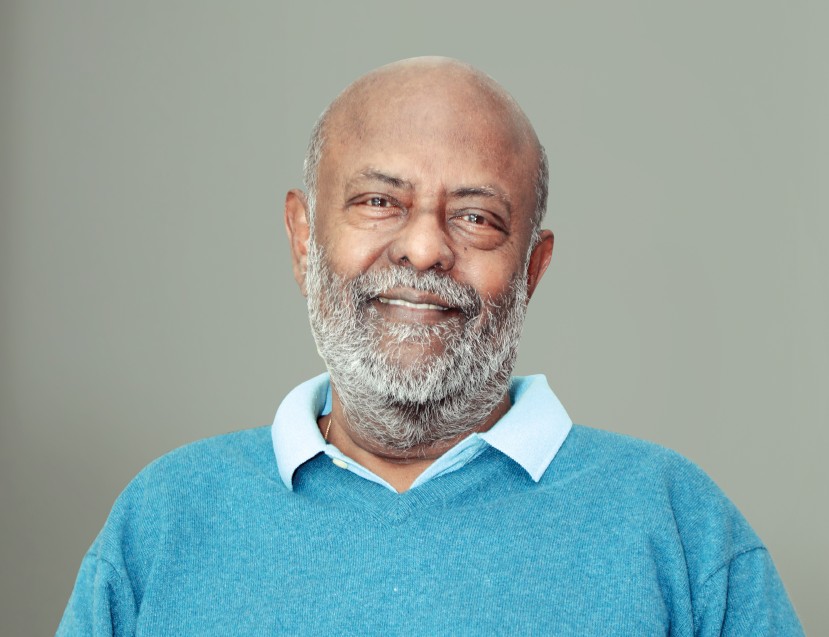
| Key facts | |
|---|---|
| Born | 14 July 1945, Moolaipozhi village, in what is now Thoothukudi district, Tamil Nadu [37] [27] |
| Family roots | Rural southern Tamil Nadu; seventh of eight children of Sivasubramaniya Nadar, a district judge, and Vamasundari [25] [24] |
| Education | Tamil-medium schools across Tamil Nadu; degree in electrical engineering, PSG College of Technology, Coimbatore [25] |
| Family | Wife Kiran Nadar, art collector and founder of the Kiran Nadar Museum of Art; daughter Roshni Nadar Malhotra, chairperson of HCLTech [40] [56] |
| Company / Group | Founder, HCL Group (1976); Chairman Emeritus and Strategic Advisor to the Board, HCLTech [1] |
| Wealth | US$27.4 billion, No. 7 on Forbes India’s 100 Richest 2026 (30 September 2026). Hurun’s 2026 India list counts the same fortune under “Roshni Nadar Malhotra & family”: rank 5, Rs 2,78,500 crore [61] [65] |
| Known for | Co-founding HCL, maker of some of India’s earliest microcomputers; HCLTech, which overtook Wipro in 2018-19 to become India’s third-largest IT services company; the Shiv Nadar Foundation [48] |
In the mid-1970s ten executives at DCM, then one of India’s five largest business groups, handed in their resignations in a single envelope. The young men who had built the company’s calculator business were leaving together, and the parting, as the trade magazine Dataquest later put it, was “acrimonious”. [30]
Six of the ten stayed together. Their leader was a marketing manager of about 30 who had grown up in the villages and small towns of southern Tamil Nadu, studied in Tamil and, by his own account, first saw a city at 22. [23] Years later an interviewer from the Wharton School asked whether he had bet the family ranch on the venture. “What family ranch?” Shiv Nadar replied. “I had barely worked for seven or eight years and had become a marketing manager.” [22]
The six pooled less than Rs 2 lakh and worked out of a barsati, a rooftop room, in Delhi. [33] Fifty years later the company that grew out of it, HCLTech, earns Rs 1,30,144 crore a year and employs more than 2.27 lakh people in 60 countries. [2] Forbes puts Nadar’s fortune at US$27.4 billion. [61] And in four of the last five years, by Hurun’s count, nobody in India has given away more money than he has. [85] [84]
This is the story of how he did it, and of what he got wrong: he built some of India’s earliest microcomputers and then missed the software boom that made his rivals famous. It is also the story of a tycoon who says the thing he will be remembered for is a college. [24]
Where it began
Shiv Nadar was born on 14 July 1945 in Moolaipozhi, a village in what is now Thoothukudi district at the southern end of Tamil Nadu. [37] [27] He was the seventh of eight children. His father, Sivasubramaniya Nadar, was a district judge, a job that came with frequent transfers, so the boy studied in four schools across the state. [25]
“My father was a judge, so he was located in various places as his postings went around,” he told Wharton in 2006. “I come from rural stock. I studied in Tamil, never in English.” [23]
One of those schools was the Elango Corporation higher secondary school in Madurai, where, its headmaster says, he studied in classes seven and eight. When Nadar visited decades later and saw the buildings falling apart, he paid Rs 15 crore to rebuild it. [39]
He was, he says without modesty, “a very good student”. He won scholarships through his student years and went to PSG College of Technology in Coimbatore to study electrical engineering. [27] [25] What he remembers most is the narrowness. “I didn’t have the latitude to study more. I was never allowed to do anything cross-disciplinary. Why can’t an engineering student learn physics?” [25]
“I first saw a city when I was 22,” he said. [23] Business Today’s account of his career has him starting work in 1967 at Cooper Engineering, a Walchand group company in Pune. [38] The next year he was in Delhi, as a management trainee at DCM, a textile-led conglomerate. [30] [25]
Delhi changed two things. He “fell in love with my wife, who is a Punjabi”, as he put it. [23] Kiran worked at the advertising agency MCM, and Shiv was one of its clients. [40] And in 1971 DCM picked him for its new electronics unit, DCM Data Products. Dataquest’s history has him running sales and marketing there, with a young IIT graduate named Arjun Malhotra beside him. [30] They launched an Indian-made desktop electronic calculator in 1972, and by Malhotra’s telling DCM soon had 80% of the calculator market. [30] [21]
By the early 1970s Nadar was among the best-paid executives in Delhi. [30] He was also stuck. India’s monopolies law limited what a large group like DCM could enter, and its licensing rules capped how much a company could make. “The restrictions were frustrating,” he told Dataquest. “I was yearning to do something to bypass these restrictions.” [30]
The first break
The trigger was a chip. The microprocessor had just arrived, and the DCM team could see that the programmable calculators they were selling were one step away from a computer. “A few of my colleagues and I could see that this was it,” Nadar recalled. “If we quit now and get started, there is a realistic chance of us making it.” [29]
The team had already built a 16-bit computer inside DCM. But the group’s lawyers feared that selling it would fall foul of the monopolies law, Malhotra told the Computer History Museum. “We decided that if the company didn’t understand how microprocessors were going to change the world in this computing business, we might as well go do it ourselves.” [21]
The six who stuck together were Nadar, Arjun Malhotra, Ajai Chowdhry, Subhash Arora, Yogesh Vaidya and D.S. Puri. [33] (Some later accounts speak of eight partners; the co-founders name six.) [38] Chowdhry puts their capital at Rs 1.87 lakh: “We borrowed, pooled our savings and, in one case, even sold a car.” [33] Malhotra remembers Rs 1.75 lakh. [21]
They called the firm Microcomp, a name they had coined at DCM for a calculator and which, Malhotra says, DCM had never got round to registering. [21] It began in Nadar’s home and then moved to the barsati of Malhotra’s grandmother’s house in Golf Links. [30] The business spread downstairs into her rooms. “What we would do is roll up the bedrooms in the morning, make those offices, and when we finished in the evening, roll back the bedroom and the living room and give it back to her,” Malhotra said. “And she became our receptionist.” [21]
Microcomp paid its way by selling another company’s calculators, under the Televista brand, for a share of the profit. [30] [21] “That was the time when I truly understood what cash flow is, and what profit is, and what reserves mean,” Nadar said. [22]
Then came the real obstacle. Only public-sector companies could get a licence to make computers. Uttar Pradesh’s state electronics corporation had a licence it was not using. “They had the licence. We had the technology,” Chowdhry says. [33] The two formed a joint company with equity of Rs 20 lakh, in which the state corporation took 26%. [21] Hindustan Computers Ltd, HCL, was born in August 1976. [22]
“Interestingly, our toughest challenge was not designing or making computers but getting the government’s approval to produce them,” Nadar said. [22] He never forgot who had opened the door. “We grew up in Uttar Pradesh,” he said decades later. “I owe a huge debt of gratitude to the state.” [25]
He hired like a much bigger company. HCL offered Rs 2,000 a month, more than Citibank paid, to graduates of the Indian Institutes of Management. “Otherwise, how do you get someone to work in an attic with a bedroom, a table and a chair?” he said. “I did not have even a table to myself.” He was 31, and the oldest person in the company. [22]
And he sold before he had anything to sell. HCL’s first machine, the Micro 2200, was still on the drawing board when its salesmen went out “armed with our brochure, a thing of beauty with a mock-up of the product”, Chowdhry writes in his memoir. The first orders came from IIT Kharagpur and IIT Madras. A later HCL advertisement summed up the attitude: “At HCL, there’s only one thing more important than brains. Guts.” [32]
The machine that made the company was the 8C, an 8-bit computer built on a Rockwell microprocessor. It was advertised at Rs 83,500 at a time when an Ambassador car cost Rs 16,000. [30] It came with a backup unit run off a truck battery, so that when the power failed the machine could pick up where it had stopped. [21]
HCL’s own history says the 8C made it the creator of a PC “6 months before IBM”, built “at the same time as Apple”. [5] That claim needs a pinch of salt. Asked whether the machine was a personal computer, Malhotra answered: “It wasn’t personal.” It was a business machine about the size of a filing cabinet, with a one-line display. [21] It was, all the same, a microprocessor-based computer shipped from a Delhi start-up in the same years as the pioneers in California.
In 1977-78 IBM left India. Chowdhry calls that “a great opportunity” for Indian computer makers. [32] Nadar disagrees. “IBM wasn’t evicted. The real story was different,” he said. In his telling IBM left mainly over a rule that the source code of products made in India had to be kept in the country, and its exit hurt. “If IBM had stayed on, we would have grown faster,” he said. “After they left, we had to create the market all by ourselves. At that time no one saw the computer as a necessity. It was a convenience.” [22]
Building the empire
The hardware years
“The 1980s were fantastic,” Nadar said. “This was a time when we were at the peak of our creative work.” [22]
In 1980, only four years old, HCL set up Far East Computers in Singapore to make hardware there, because, Malhotra says, “we didn’t want to be a big fish in a small pond”. Two of the six founders moved to run it. [21]
In December 1981 came NIIT. HCL could not find enough trained people, and a young colleague, Rajendra Pawar, turned the problem into a business. “NIIT was a result of brainstorming with Shiv,” Pawar recalled. “Shiv became the biggest investor in NIIT and the founding Chairman.” [36]
When the government eased rules on importing technology in the mid-1980s, HCL brought out a personal computer called Busybee and a line of Unix machines. [30] Its own timeline lists a relational database in 1983, India’s first Unix-based computer in 1985 and a multi-processor system in 1988. [5] Nadar has claimed the database came “ahead of Oracle”; we could not verify that. [22]
By 1987, Forbes India wrote, he dominated Indian hardware. [26] Revenue reached the founders’ dream figure of Rs 100 crore around then: Dataquest says 1987, Nadar says 1989. [30] [22]
Manufacturing under the licence raj was miserable. “We needed a license that allowed us to import 1,753,348 integrated circuits, and we were supposed to keep count and give the reconciliation to the government every year,” he said. “It was an impossible, very nasty, very hostile set of conditions.” [23]
America, Hewlett-Packard and the turn to software
In 1989 HCL took its Unix machine to the United States. It won government permission to convert rupees into US$5 million, rented an office in Sunnyvale, California, and landed a US$50 million order from an American computer maker. Then the customer was taken over and the order died. Malhotra was sent to shut the subsidiary down quietly. [21]
By then it had spent most of its US$5 million. It survived by accident. American software firms that had been using HCL’s engineers refused to let them go and offered to pay for them, at more than US$45 an hour. “I suddenly had a cashflow,” Malhotra said. [21] A failed hardware export had shown HCL that the world would pay for Indian engineers.
In 1991, as India opened its economy, Nadar tied up with Hewlett-Packard, which took 26% of the hardware company. The venture ended in 1997, when the promoters bought HP out and renamed the company HCL Infosystems. “With HP withdrawing its equity participation in the venture, we can take the business to any country we like,” he said. [41]
By the mid-1990s HCL was a tangle of more than 40 subsidiaries, and Nadar had concluded that the future lay in selling technology services to the world, not boxes to India. [30] He gathered the research and software businesses into a separate company, HCL Technologies. (Accounts date the spin-off anywhere between 1991 and 1997.) [29] [25] A joint venture with Ross Perot’s company, formed in 1996, was sold back to Perot in December 2003 for US$105.3 million, about Rs 479.6 crore. [42]
In 1998 Arjun Malhotra left to start his own firm; he says he “left HCL amicably”. [31]
In late 1999 HCL Technologies went public at the height of the technology boom. It sold 1.42 crore shares at Rs 580 each, raising Rs 823.6 crore, and investors bid for Rs 20,100 crore worth. [43] The shares listed on 11 January 2000. The company then had about 3,000 employees and annual revenue of US$166 million. [3]
Falling behind, and catching up
Then HCL stalled. In 2000, Forbes India noted, HCL Technologies, Infosys and Wipro each had revenue of roughly US$200 million. By 2005 Infosys had crossed US$1.5 billion and Wipro was near US$1.35 billion. HCL was about halfway there. [26]
The reason was a judgment Nadar made in the 1990s. He thought the Y2K work everyone else was chasing was low-value. His rivals used it to get inside America’s largest companies. “In hindsight we shouldn’t have missed it,” he said. “We were the most qualified for it.” [26]
What he did next is something founders rarely manage. In 2005 he stepped back from the daily running of HCL Technologies and made Vineet Nayar its president; Nayar became chief executive in 2007. Nayar was nearly two decades younger and had built a small group company called HCL Comnet. [26] [29] “No one expected me to pick Vineet,” he said. Nayar had never sold overseas. “I told him, ‘I’ve chosen you, I’ve been telling you well before, you never believed me but here it is, get started.’” [29]
Nayar asked for one thing, a free hand, and got it. Over four years, Forbes India wrote, he “undid pretty much everything his ‘mentor’ had put in place”. He coined the slogan “Employee first, customer second”, went after large outsourcing contracts and built the business of managing clients’ computer systems remotely, which grew from US$70 million in 2005 to US$355 million in 2009. [26]
The deals followed. In January 2006 HCL won a five-year contract worth about US$330 million from the British electronics retailer DSG. [44] In 2008, weeks after Lehman Brothers collapsed, it outbid Infosys to buy the British SAP consultancy Axon for GBP 441 million. [45] Nadar did not turn up at the press conference. “I have seen Shiv attempting to detach himself,” an independent director, Amal Ganguli, told Forbes India a year later. “In fact, at times he avoids meetings because when he is present, people at the company defer to him.” [26]
Detaching did not come naturally. People who tracked Indian IT, Forbes India wrote, described him as “the original pit bull terrier in the business”, and his executives read his mood from his clothes: a suit and tie meant a good day, rolled-up sleeves meant trouble. [26]
Nayar was followed as chief executive by Anant Gupta in 2013 and by C Vijayakumar, an HCL hand since 1994, in 2016. [27] [36] [49]
The product bet
Nadar’s last big call as chairman went back to his roots. In December 2018 HCL agreed to pay US$1.8 billion for seven IBM software products, among them Notes and Domino. [47] About 3,000 IBM staff moved across when the deal closed in 2019. “We believe in IP because that’s what we came from,” he said. “We understand technologies.” [29] It was a bet that an Indian services company could own products, something the industry has rarely managed: products are still only 2.9% of India’s software exports, as this CapitalVia analysis shows.
In 2018-19 HCL Technologies’ revenue of US$8.63 billion overtook Wipro’s, making it India’s third-largest IT services company. [48] In 2020 it crossed US$10 billion. [4] In 2025-26 it reported revenue of Rs 1,30,144 crore and net income of Rs 16,642 crore. [1] [2]
“HCL is a paranoid company,” he said in 2019, “and if you’ve read the book Only the Paranoid Survive, we are a typical example of that.” He also explained why he had never built a conglomerate: “Any time I let greed take over, it will destroy this company.” [29]
The group has since gone back to hardware. In May 2025 the Union Cabinet cleared a Rs 3,706 crore chip assembly plant near Jewar in Uttar Pradesh, a joint venture of the HCL Group and Foxconn. [50] Electronics, as another CapitalVia insight notes, is now among India’s biggest export stories.
How the wealth is held
Shiv Nadar personally owns 736 shares of HCLTech. [1]
The fortune sits in private family companies. At 31 March 2026 the promoter group held about 61% of HCLTech. Vama Sundari Investments (Delhi), which shares its name with his mother, held 44.21%, and HCL Holdings held 16.46%. [1] Forbes India reported in 2019 that he thinks the large family stake matters, because in India companies with diluted ownership eventually lose their way. [29]
The holding pays. The Nadar family received Rs 9,906 crore in dividends in 2024-25, the most among India’s promoter families that year, according to Business Standard. [55] Those dividends, he has said, are what fund his philanthropy. [24] When more was needed he sold shares: in June 2010 the family’s holding company sold 2.5% of HCL Technologies for about Rs 580 crore and gave the proceeds to the Shiv Nadar Foundation. [46]
On 6 March 2025 he gifted his daughter 47% of Vama Sundari Investments (Delhi) and of HCL Corporation, the family’s holding company, which left him with 4% of each. [59] [60] Rich lists have handled that differently. Hurun now lists the fortune under “Roshni Nadar Malhotra & family”, fifth in India at Rs 2,78,500 crore on its 2026 list. [65] [64] Forbes still lists it under Shiv Nadar: US$33.2 billion in October 2025, US$30.9 billion in March 2026 and US$27.4 billion, seventh in India, on 30 September 2026. [63] [62] [61] Ahead of him on the Forbes list are Gautam Adani, Mukesh Ambani, Savitri Jindal, Lakshmi Mittal, Sunil Mittal and Cyrus Poonawalla. [61]
The climb took decades. Forbes valued him at about US$3 billion in 2005, US$5.6 billion in 2011 and US$8.6 billion in 2013. [23] [25] [27]
The setbacks and failures
Nadar’s record has more misses than his reputation suggests, and he has been open about most of them.
Being too early. In the mid-1980s HCL set up a small software export unit in Madras. It flopped and was disbanded, and it was more than a decade before the group tried software exports seriously again. [30] A client-server product “failed, because all this was too new for India”, he said. Of that product and the database: “We said, this is new technology, but we’ll make it work - but it didn’t.” [22]
Saying yes too often. “There was a period when we said ‘yes’ to just too many things,” he admitted. “In the past 30 years, at least two years had to be written off because of that.” [23]
The missed boom. This was the costliest. Because HCL saw its engineers as people who designed products, it stayed out of the plain application work that built Infosys, TCS and Wipro. “I take the blame for that,” Malhotra has said. [21] Nadar’s own verdict on Y2K, “we shouldn’t have missed it”, covers the same ground. [26]
Hardware, in the end. The business he started with did not survive. HCL Infosystems announced in 2013 that it would stop making personal computers. [51] In 2025-26 its revenue was Rs 21.6 crore, and in August 2026 its auditor flagged doubt about its ability to continue as a going concern. [6] [52]
Holding on too long. Asked what he would have done differently, he did not name a deal. “I have always run the company hands on,” he said. “I could have taken my hands off the steering wheel a lot earlier and delegated more authority than I did.” [23]
The AI scare. The latest setback is not of his making. Fears that generative AI will eat into outsourcing wiped about US$50 billion off Indian IT stocks in the first half of February 2026 alone, Reuters reported. [53] HCLTech’s shares hit a 52-week low at the end of June 2026. [54] Forbes’ estimate of his wealth fell by nearly US$6 billion in under a year. [63] [61]
Controversies and allegations
A note on scope. In the court records, regulatory releases and news archives we could search, we found no conviction, criminal charge or regulatory penalty against Shiv Nadar personally. He is a party in only one matter below, a personal income-tax assessment from the early 1990s. The rest concern HCL companies, their promoter entities or the family’s institutions during the decades he led the group. Several continued after he gave up his executive role in July 2021. Those, and a client lawsuit by the brewer MillerCoors that was settled in 2018, are covered more fully in our profile of his daughter, Roshni Nadar Malhotra.
The 2002 income-tax search and the Mauritius share transfer
Allegation: On 24 January 2002 the income-tax department searched the offices of HCL’s promoter investment companies. It later alleged that in June 1999, months before the public issue, three promoter companies had sold 70 lakh shares of HCL Consulting, the company that became HCL Technologies, to a Mauritius company, which it said belonged to the same group, at Rs 50 a share. Relying on seized internal papers, including a September 1999 fax from a senior finance executive to Shiv Nadar that put the value at Rs 1,807 a share, the assessing officer held that the sale was meant to avoid capital gains tax in India. In February 2004 he added Rs 1,229.90 crore to the promoter company’s income. The first appellate authority upheld the addition in November 2004. [10]
Response: The company said the price of Rs 50 came from a chartered accountant’s valuation under the government’s guidelines at the time, that the sale had the Reserve Bank’s approval, that it received nothing above Rs 50 a share, and that the transactions had been disclosed in tax returns filed before the search. [10]
What happened next:
- On 24 March 2006 the Income Tax Appellate Tribunal in Delhi deleted the Rs 1,229.90 crore addition. It accepted that the Indian sellers and the Mauritius buyer were closely connected, but held that the provision the department had used did not apply to this kind of transaction, and that a sale already disclosed in regular returns could not be taxed as “undisclosed income” after a search. [10]
- The tribunal did not decide what the shares were really worth, calling that question “only academic”. It also dismissed the department’s own appeal over a separate addition of about Rs 89.5 crore. [10]
- Separately, in Shiv Nadar’s personal assessment for 1991-92, the department treated about Rs 24 lakh that group companies had spent on renovating and air-conditioning the house he lived in as a taxable perquisite, and levied a penalty of Rs 19.9 lakh for not declaring it. The addition to his income was upheld on first appeal. The penalty was cancelled, and the tribunal dismissed the department’s appeal against that in January 2007. [11]
Status: Decided in favour of the HCL promoter company at the tribunal in 2006. We found no reported ruling of a higher court reversing it, and could not confirm whether the department appealed further.
H-1B visas, wages and hiring in the United States
Allegation: Three former employees filed a whistleblower suit in a US federal court alleging that HCL underpaid workers on H-1B visas, which cut its payroll taxes, and used cheaper visa categories in place of H-1Bs to avoid fees. In December 2021 the Economic Policy Institute, a Washington think tank, used an internal HCL document from that case to estimate the underpayment at US$95 million a year or more. [13] [19] A 2019 proposed class action alleged that HCL favoured South Asian and visa-holding job applicants. [67] And in August 2024 the US Equal Employment Opportunity Commission (EEOC) sued HCL America. [15] According to the suit, in July 2021 the company rejected a qualified applicant of Indian descent in his early sixties, with an email calling him “too old” and telling the hiring team to “explore diverse candidates”. [16]
Response: On wages, HCL said it “is strictly compliant with all relevant rules and regulations” and pays “in accordance with applicable laws”. [66] On the class action, it said it “takes pride in its employment practices, including the hiring and promotion of a diverse team”. [67] The EEOC’s releases carry no statement from the company. [16]
What happened next:
- The whistleblower suit was dismissed in 2022, and an appeals court upheld the dismissal on 23 January 2025. The courts ruled on a point of law and made no finding on whether anyone was underpaid. [13]
- In the class action the court refused in March 2021 to certify a class of about 43,000 applicants. The parties reported a settlement that September; the terms were not disclosed. [68] [69]
- On 2 April 2026 a court approved a two-year consent decree in the EEOC case. HCL America agreed to pay US$495,000 to the applicant and to review its hiring policies. [16]
Status: One case dismissed, one settled confidentially, one closed by a consent decree running to about April 2028. None produced a court finding against HCL on the underlying claims.
Disney and UCSF: the outsourcing backlash
Allegation: HCL was a vendor in two widely reported American outsourcing rows. A laid-off Walt Disney World technology worker sued Disney and HCL America, alleging that false statements had been made in visa filings when Disney replaced its staff with contractors. [70] [14] In 2016 the University of California, San Francisco, signed a five-year contract with HCL worth about US$50 million and laid off 49 permanent IT staff, who expected to train their replacements. Congresswoman Zoe Lofgren wrote that using H-1B visas to replace the staff “would be a misuse of this visa category”. [71] [18]
Response: In court, Disney and HCL argued that the workers had misread the immigration rules. [70] The university said the contract would save US$30 million over five years. [17] We found no HCL statement on it in the reports we read.
What happened next:
- On 13 October 2016 a federal judge in Florida dismissed the Disney suit without prejudice, holding that HCL’s visa certification covered the working conditions of its own employees, not Disney’s. [14]
- In 2017 the California State Auditor found that the campus had not fully followed the university’s rules on justifying the displacement of employees. The finding was against the university, not HCL. [17]
Status: The lawsuit was dismissed without prejudice in October 2016, and we found no report of it being revived. The layoffs went ahead. No finding was made against HCL.
The Boeing 737 MAX report
Allegation: In June 2019, after two fatal crashes of the 737 MAX, Bloomberg reported that Boeing had relied on lower-paid outside engineers, including HCL staff, who helped develop and test the aircraft’s flight-display software. The report did not link HCL to the flight-control system blamed for the crashes. [72]
Response: HCL said: “HCL is not associated with any ongoing issues with 737 Max.” Boeing said it did not rely on HCL’s engineers for that flight-control system. [72]
Status: We found no legal or regulatory finding involving HCL in connection with the aircraft.
A CBI case involving HCL Infosystems
Allegation: In a case arising from Uttar Pradesh’s rural health mission, the Central Bureau of Investigation alleged that a state-owned company’s managing director had made irregular advance payments to two private firms in the 2009-10 purchase of 951 computers. A supplementary chargesheet in November 2014 named HCL Infosystems and one of its executives, alleging that he had conspired to bring the two firms in as HCL’s channel partners. [12]
Response: HCL Infosystems told the court that it was the lowest bidder, supplied the computers, gave bank guarantees and received no undue payment, and that the chargesheet disclosed no evidence of a conspiracy. [12]
Status: A special court framed charges in December 2018, and on 23 May 2019 the Allahabad High Court declined to quash them, saying the allegations had to be tested at trial. [12] The allegations are unproven. We could not find a reported verdict. Shiv Nadar is not named in the case.
Campus recruits left waiting
Allegation: In 2013 Forbes India reported that engineering graduates given HCL job offers in late 2011 had waited more than a year for joining dates, and that about 50 of them went on hunger strike in Bengaluru. [73] [74]
Response: An HCL executive told Forbes India: “Would you rather we hire them and place them on bench?” [73]
Status: We found no order by a labour authority against the company. Later disputes with an employees’ union over bonuses are covered in our profile of Roshni Nadar Malhotra.
The museum and the dismissed curator
Allegation: In 2023 the Kiran Nadar Museum of Art, funded by the Shiv Nadar Foundation, dismissed a curatorial manager, Sandip K. Luis. A statement signed by more than 500 artists and academics said he had been “arbitrarily” terminated over a Facebook post criticising Kiran Nadar’s support for a government-backed exhibition marking the Prime Minister’s radio programme, and demanded his reinstatement. [75]
Response: We found no public statement from the museum explaining the dismissal. The Art Newspaper quoted a Delhi gallerist, Peter Nagy, defending Kiran Nadar’s record of supporting Indian art. [76]
Status: No litigation or reinstatement has been reported. Shiv Nadar was not named in the coverage.
As of 3 October 2026, we have found no conviction, criminal charge or regulatory penalty against Shiv Nadar in any of these matters. The largest of them, the Rs 1,229.90 crore addition to a promoter company’s taxable income, was deleted by the tax tribunal in 2006.
Giving back
Nadar tells a story about his mother, Vamasundari. Flush with success, he was describing to her the fortune he had made. She heard him out and then observed that his money had been of no use to anyone outside his own family. [24] “His mother had told him that he should give back to the society,” said T.S.R. Subramanian, a former senior civil servant who was then a trustee of his foundation. “Education was the best field because Shiv was a product of education.” [27]
He set up the Shiv Nadar Foundation in 1994 and, two years later, the SSN College of Engineering near Chennai, named after his father. [28] [27] The model came from his own college. The family behind PSG, he says, has a rule “that in every generation, one person in the family will give up business-related work and devote time to the institutions run by the trust”. He calls it “an excellent practice which inspires us”. [28]
He likes to tell of one SSN student whose father had died and whose mother worked as a coolie, and who worked nights as a watchman to get through college. “Today he is in the US working as an IT professional and, in turn, supports poor, meritorious students at SSN.” [27]
The family calls its approach “creative philanthropy”: build institutions that will outlive the founder, in place of funding one project at a time. [20] “Philanthropy is not just about writing cheques,” Nadar says. “It is about building an organisation that has governance, accountability and transparency.” [28]
The institutions came quickly after his daughter returned from business school. VidyaGyan, begun in 2009, is a free residential school for gifted children from poor rural families in Uttar Pradesh. In 2018 about 2.5 lakh children competed for 300 places. [29] “Our goal is to have a future prime minister come from one of these places,” he said. [25] In February 2026 two of its graduates enrolled at Illinois Tech, the first from their districts to go to university in the United States. [85]
Shiv Nadar University opened in 2011 at Dadri, near Delhi, and now carries the government’s “Institution of Eminence” tag. [9] There are fee-paying Shiv Nadar Schools, a second university in Chennai and a programme in Uttar Pradesh’s government primary schools. [7] The Kiran Nadar Museum of Art, his wife’s project, opened in 2010. [77]
By March 2025 the foundation had spent Rs 15,015 crore, about US$1.75 billion, and its institutions had 18,657 students and 29,837 alumni. [7] Its website now puts the total at US$1.83 billion as of March 2026. [8] The giving has grown sharply. On the EdelGive Hurun India Philanthropy List, “Shiv Nadar & family” gave Rs 826 crore in 2018-19, Rs 2,042 crore in 2022-23 and Rs 2,708 crore in 2024-25. They topped the list in 2018-19 and in each of the four years from 2021-22. The latest figure was more than four times that of the Ambani family in second place. [80] [20] [82] [83] [84] In 2020-21, with Rs 1,263 crore, he was second to Azim Premji. [81] TIME named him to its 2026 philanthropy list. [85]
“These are acts of faith,” he says of the schools. “I may not see anything in my lifetime.” [25]
Where the money goes
The foundation publishes annual reports with its accounts, so anyone can check the claims. Its numbers add a caveat to the “education” label.
Of the Rs 15,015 crore spent by March 2025, Rs 7,311 crore, about 49%, went to the Kiran Nadar Museum of Art, a figure that includes its art collection. The university near Delhi accounted for Rs 3,436 crore, the fee-paying schools Rs 1,480 crore, VidyaGyan Rs 1,095 crore and the SSN institutions Rs 737 crore. In 2024-25 alone the foundation put Rs 901 crore into works of art. [7] Hurun’s 2022 list recorded his main cause that year as “Arts & Culture”, with Rs 603 crore going to the arts and Rs 371 crore to education. [20] A much larger museum building is planned near Delhi airport. [77]
Most of the educational institutions also charge fees. The foundation’s group earned Rs 643 crore in fee income in 2024-25. VidyaGyan is the exception: it is free. [7] None of this is hidden; it is in the foundation’s own reports. But “India’s biggest giver” is building a large museum and fee-charging universities as well as free schools for the poor.
“Sceptics are often quick to conclude that Nadar wants to redefine his legacy through the foundation,” Forbes India wrote in 2013, before adding that he “is putting his money where his mouth is”. [27]
In public life
Nadar received the Padma Bhushan in 2008. [8] He says he has no political affiliation: “I don’t and never will.” [28]
In October 2019 he was chief guest at the annual Vijayadashami event of the Rashtriya Swayamsevak Sangh in Nagpur, reportedly the first corporate leader to be invited. “The country faces many challenges, but the government alone cannot solve the problems,” he said. “Private sector, citizens, NGOs must also contribute to overcome these challenges.” [35] [78] The Wire noted that he used the platform to talk about low rural incomes and child stunting, and about his daughter making children in schools covered by a foundation programme eat chicken for protein, and read the speech as a “small, yet defiant, protest”. [79]
A Forbes India reporter who flew with him in 2013 found him in a kurta-pyjama and leather slippers on a chartered jet. “Don’t go by these trappings… these are not me,” he said. “I don’t own this. I don’t have a jet.” [27]
Succession
Nadar has one child, and he planned her path for more than fifteen years. Roshni Nadar Malhotra became chief executive of the family holding company in 2009, joined the HCL Technologies board in 2013 and took the chair on 17 July 2020, when he stepped down as chairman at 75. [34] [56] Her story is told in her own profile.
He drew the line early. “Roshni is a director on HCL Technologies but she will run it as a member of the board,” he told Forbes India. “She is a part of the governance but not of operations.” [28] Family owns; professionals run.
On 19 July 2021, having turned 76, he resigned as managing director. The company gave him the title of Chairman Emeritus and Strategic Advisor to the Board for five years. [57] That term ran to July 2026. HCLTech’s annual report for 2025-26 still describes him by the same title; we found no announcement of a formal extension. [1]
The ownership followed. The market regulator SEBI exempted his daughter from making an open offer in November 2024, and on 6 March 2025 he signed the gift deeds that made her the majority owner of the two family companies and, through them, the largest shareholder of HCLTech. [58] [59] His son-in-law, Shikhar Malhotra, sits on the HCLTech board and is chancellor of the university. [1]
Asked what building an organisation takes, Nadar’s answer was about leaving it. “First thing is, you’ll have to learn to let go of the sense of power.” And of everything he has set up: “The structure carries them, no single individual should, that’s the strength.” [29] He had also warned about what he was handing over. “HCL has become an elephant and elephants can run only at a certain pace,” he told Business Standard. “So they have to be mindful of the fact that the deer can easily outpace them.” [56]
What their journey teaches
If a rule blocks you, find the person the rule favours. Nadar could not get a licence to make computers, so he partnered with a state corporation that had one and was not using it. In a regulated business the permission is often the hardest part, and permissions can be shared.
Sell first, but then deliver. HCL took orders on a brochure and a mock-up. What turned bluff into a business was that the machines arrived. “We were known as people who had said we would produce a computer and deliver it, and we had done that,” he said. [22]
Being early is not the same as being right. HCL had a database, Unix machines and multi-processor computers before India was ready for them, and it ignored Y2K work because it looked dull. The dull work is what gave its rivals their customers.
Step back before you are pushed. HCL’s recovery began when its founder handed the company to a manager who reversed much of what he had built. One regret he has voiced is not doing it sooner.
Keep ownership and management separate, and say so. The family kept about 60% of the company, put professionals in charge and said years in advance that his daughter would govern, not operate. That clarity is why the handover caused so little noise.
Give through institutions, and publish the accounts. A cheque helps once. A school or a university has to be run every year, and published accounts let outsiders judge the giver’s choices, including the ones they disagree with.
Nadar’s own summary of his life is shorter. “I came from a rural background,” he told Forbes Asia, “but I did all right.” [25]
A profile for general reading, based on public records and reporting as of 3 October 2026. Not investment, tax or legal advice.
Sources (85)
- HCLTech Integrated Annual Report 2025-26 and AGM notice - HCLTech via Metropolitan Stock Exchange of India, Jul 2026
- Q4 and Annual FY2026 Investor Release - HCLTech, Apr 2026
- HCLTech celebrates 25 years since IPO - HCLTech, Jan 2025
- HCL Technologies marks $10B revenue milestone, thanks employees worldwide with special bonus - HCLTech, Feb 2021
- HCL Story - HCL Group, Oct 2026
- HCL Infosystems FY26 results press release - National Stock Exchange of India, May 2026
- Shiv Nadar Foundation Annual Report 2024-25 - Shiv Nadar Foundation, Oct 2025
- Shiv Nadar, Founder: leadership profile - Shiv Nadar Foundation, Oct 2026
- About Shiv Nadar Institution of Eminence - Shiv Nadar University, Oct 2026
- Slocum Investment Pvt Ltd v. Deputy Commissioner of Income Tax, order of 24 March 2006 - Income Tax Appellate Tribunal Delhi via Indian Kanoon, Mar 2006
- Assistant Commissioner of Income Tax v. Shiv Nadar, order of 25 January 2007 - Income Tax Appellate Tribunal Delhi via Indian Kanoon, Jan 2007
- HCL Infosystem Ltd v. State of U.P., order of 23 May 2019 - Allahabad High Court via Indian Kanoon, May 2019
- United States ex rel. Billington v. HCL Technologies Ltd, No. 22-1854 - US Court of Appeals for the Second Circuit via Justia, Jan 2025
- Perrero v. HCL America Inc, order of 13 October 2016 - US District Court for the Middle District of Florida via Justia, Oct 2016
- EEOC Sues HCL America for Age and National Origin Discrimination - US Equal Employment Opportunity Commission, Aug 2024
- HCL America to Pay $495,000 in EEOC Age and National Origin Discrimination Lawsuit - US Equal Employment Opportunity Commission, Apr 2026
- Report 2016-125.1, The University of California Office of the President: summary - California State Auditor, Aug 2017
- Lofgren calls on UC President Napolitano to stop outsourcing American IT jobs - Office of Congresswoman Zoe Lofgren, Nov 2016
- New evidence of widespread wage theft in the H-1B visa program - Economic Policy Institute, Dec 2021
- EdelGive Hurun India Philanthropy List 2022 - Hurun Research Institute, Oct 2022
- Oral History of Arjun Malhotra - Computer History Museum, Nov 2018
- HCL's Shiv Nadar: Transformation Is Beckoning, and It Is Right around the Corner - Knowledge at Wharton, Sep 2006
- HCL's Shiv Nadar: When Someone Brings China and India Together, It Will Be a Big Story - Knowledge at Wharton, Sep 2006
- Fireside Conversation with Dr. Shiv Nadar - Chennai International Centre, Feb 2023
- Indian Billionaire Shiv Nadar's Education Plan - Forbes Asia, Jun 2011
- How Shiv Nadar Learned to Let HCL Grow Up - Forbes India, Nov 2009
- Shiv Nadar's New Innings: Philanthropy - Forbes India, Nov 2013
- Shiv Nadar: The Outstanding Philanthropist - Forbes India, Jan 2015
- FILA Lifetime Achievement Award: HCL's Shiv Nadar - Forbes India, Dec 2019
- A Pioneer and a Philanthropist - DQ Channels, Feb 2011
- Personality: Arjun Malhotra, Passionate and Strong-willed - Dataquest, Dec 2011
- HCL co-founder Ajai Chowdhry recalls in his memoir how the brand achieved success in its early days - Scroll.in, Apr 2023
- We wanted to build an Indian computer: HCL co-founder reminisces early days on its 50th anniversary - Business Today, Aug 2026
- HCL founder Shiv Nadar's daughter is preparing for the long haul - Business Today, Sep 2016
- Govt Alone Can't Take Country Forward: Shiv Nadar at RSS Event - The Quint, Oct 2019
- Bird's Eye View - Business Today, Dec 2019
- Shiv Nadar: Unknown Facts about the HCL Man - The Hans India, Jul 2021
- HCL Tech founder Shiv Nadar turns 78 today - Business Today, Jul 2023
- Madurai: HCL founder Shiv Nadar's school gets a remodeling due to his contribution - ANI, Jun 2019
- Kiran Nadar: Portrait of a collector - Business Standard, May 2014
- HCL-HP break up win-win move for both - Business Standard, Jul 1997
- Perot buys HCL out of JV for Rs 479 crore - Business Standard, Dec 2003
- HCL Technologies IPO creates history - CIOL, Nov 1999
- HCL Technologies captures $330m DSG deal - Tech Monitor, Jan 2006
- HCL completes acquisition of Axon - Computerworld, Dec 2008
- HCL Corp sells 2.5% stake in HCL Tech for Rs 580 cr - Business Standard, Jun 2010
- HCL Technologies to acquire select IBM software products for $1.8 bn - Business Standard, Dec 2018
- HCL Tech overtakes Wipro to become third-largest IT services firm in India - Business Standard, May 2019
- HCLTech CEO Vijayakumar earns $10.85 mn in FY25, tops TCS, Infosys heads - Business Standard, Aug 2025
- Cabinet clears Rs 3,706 cr HCL-Foxconn chip assembly unit at Jewar - Business Standard, May 2025
- HCL to down shutters on PC business - Business Standard, Nov 2013
- HCL Infosystems Limited Auditor Raises Going Concern Doubt - MarketScreener, Aug 2026
- AI fears wipe out $50 billion from Indian IT stocks in February - Reuters via Yahoo Finance, Feb 2026
- Nifty IT sinks 2% to 3-year low; TCS, Infosys, HCL Tech, LTM hit 52-wk lows - Business Standard, Jun 2026
- Nadar family tops cash-rich promoter dividend income list in FY25 - Business Standard, Jul 2025
- Shiv Nadar steps down as HCL Tech chairman, daughter Roshni takes over - Business Standard, Jul 2020
- Shiv Nadar steps down as MD of HCL Tech; appointed Chairman Emeritus - Business Today, Jul 2021
- Mkt regulator Sebi nod to Roshni Nadar to acquire majority stake in HCLTech - Business Standard, Nov 2024
- Shiv Nadar gifts 47% of his stake in HCL, Vama Delhi to daughter Roshni - Business Standard, Mar 2025
- Shiv Nadar gifts 47% of his stake in HCL Corp, Vama Delhi to daughter Roshni - Upstox News, Mar 2025
- Gautam Adani Returns to the No. 1 Spot on Forbes List of India's 100 Richest - Forbes, Sep 2026
- The 10 Richest Indian Billionaires 2026 - Forbes, Mar 2026
- Mukesh Ambani tops Forbes India rich list 2025 - Business Standard, Oct 2025
- India's richest in 2026: Adani tops the list, 27 new billionaires emerge - Business Standard, Sep 2026
- Hurun India Rich List 2026: Adani reclaims top spot as wealth jumps 13% - India TV News, Sep 2026
- HCL accused of underpaying H-1B workers by $95m+ a year - The Register, Dec 2021
- HCL sued in US over H-1B visa misuse, hiring bias against Americans - Business Standard, Apr 2019
- California Court Denies Class Certification In Reverse Discrimination Case Brought By Job Candidates - Seyfarth Shaw Workplace Class Action Blog, Apr 2021
- HCL Workers Settle Lawsuit Alleging Company Favors South Asians - Bloomberg Law, Sep 2021
- Judge Rejects Lawsuit Against Disney for Replacing U.S. Workers With Immigrants - The Hollywood Reporter, Oct 2016
- University of California hires India-based IT outsourcer, lays off tech workers - Computerworld, Sep 2016
- Boeing's 737 Max Software Outsourced to $9-an-Hour Engineers - Bloomberg via IndustryWeek, Jun 2019
- HCL Tech's Problems With New Recruits - Forbes India, Apr 2013
- How HCL Tech ruined my life: A distraught recruit writes - CIOL, Mar 2013
- High-Handed: Kiran Nadar Slammed for Firing Museum Employee Who Criticised Her for Mann Ki Baat Art Show - The Wire, Jul 2023
- Controversy at Kiran Nadar Museum of Art in Delhi raises important questions over private museums in public life - The Art Newspaper, Aug 2023
- Louvre Abu Dhabi director Manuel Rabate leaves to head India's largest private art museum - The Art Newspaper, Feb 2026
- Shiv Nadar and Azim Premji among top India Inc leaders who have recently visited RSS headquarters - Scroll.in, Oct 2019
- Shiv Nadar's Small Act of Defiance at RSS Event - The Wire, Oct 2019
- HCL's Shiv Nadar tops philanthropy list with Rs 826 cr contribution in FY19 - Business Standard, Oct 2019
- Azim Premji retains India's Most Generous title for 2nd straight year - Business Today, Oct 2021
- From Nikhil Kamath to Prashanth Prakash: Key Highlights from EdelGive Hurun India Philanthropy List 2023 - Business Today, Nov 2023
- Rs 2,153 crore: Shiv Nadar tops EdelGive Hurun India's philanthropy list; Ambanis rank second - Business Today, Nov 2024
- Nadar family tops philanthropy list again with Rs 2,708 crore donations - Business Standard, Nov 2025
- Shiv Nadar, TIME100 Philanthropy 2026 - TIME, May 2026