
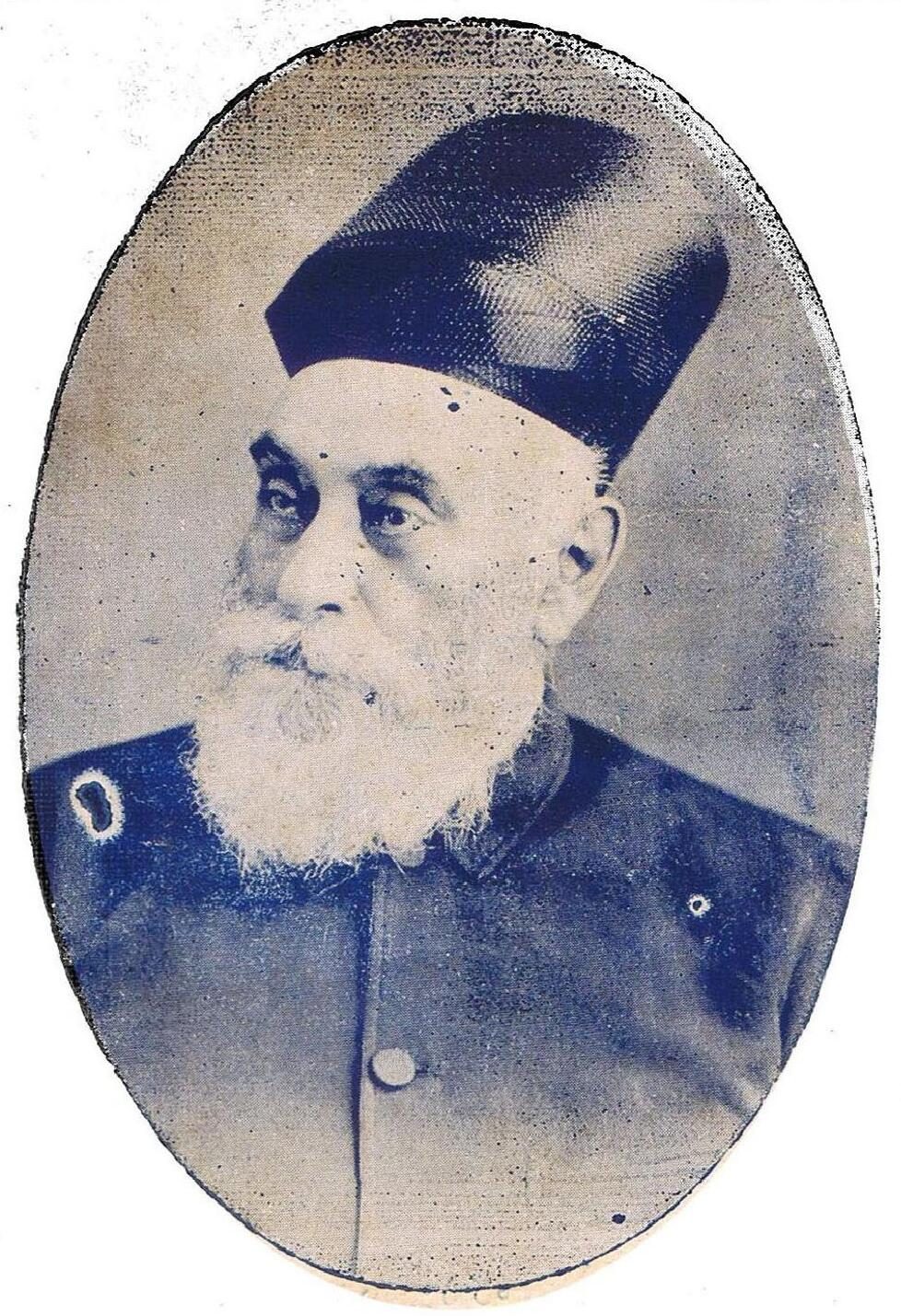
| Key facts | |
|---|---|
| Born | 3 March 1839, Navsari, Gujarat (then in the Gaekwad of Baroda’s territory) [1][7] |
| Died | 19 May 1904, Bad Nauheim, Germany, aged 65; buried at Brookwood Cemetery, England [1][2] |
| Family roots | Parsi family of Zoroastrian priests from Navsari, on its priestly rolls for more than 25 generations. Father Nusserwanji Tata, a Bombay trader; mother Jeevanbai [1][7] |
| Education | Elphinstone College, Bombay; left in 1858 as a “Green Scholar”, then the equivalent of a degree [1][8] |
| Family | Married Heerabai Daboo. Sons Sir Dorabji Tata (1859-1932) and Sir Ratanji Tata (1871-1918); a daughter died young [1][8] |
| Company/Group | Founder of the Tata group: trading firm (1868), Empress Mills (1877), Tata & Sons (1887), Taj Mahal Hotel (1903) [9][12][16] |
| Known for | Planning Tata Steel, Tata Power and the Indian Institute of Science, all completed after his death; ranked top philanthropist of the past century by EdelGive Hurun in 2021 [18][27][34] |
On 1 January 1877, in Nagpur, a 37-year-old Parsi trader from Bombay watched his new cotton mill start up. The same day, far away in Delhi, Queen Victoria was being proclaimed Empress of India, so he named the mill after the occasion: the Empress Mills [12][2]. Bombay’s businessmen had laughed at him for building in the middle of India, about 500 miles from the port that everyone called “Cottonopolis” [1]. He had bought ten acres of cheap marshland near a tank and filled it with earth before he could lay a single foundation [12].
Years later, when the Empress was paying rich dividends, a Marwari banker in Nagpur summed up the joke the town had once made about him: “Mr. Tata had not put gold into the ground, but had put in earth, and had taken out gold” [1][12].
That was Jamsetji Nusserwanji Tata. He was not the first Indian to build a cotton mill, and he did not live to see the three projects he is most remembered for, a steel plant, a hydroelectric scheme and a science institute. But he laid down the plans, the money and the habits of a business group that, more than 120 years after his death, earned revenue of more than Rs 16 lakh crore in a single year [46]. This is the story of how he did it, including the parts his admirers tend to skip.
Where it began
Jamsetji was born on 3 March 1839 in Navsari, a small town south of Surat that was then part of the Gaekwad of Baroda’s territory [1][7]. He was born in a single-storey house in the priests’ quarter, Dasturwad, which belonged to his maternal grandfather. His mother Jeevanbai had gone back to her father’s house for her first child, as custom required [7].
The family were Parsi priests. Harris, his first full biographer, writes that the Tatas had been on the priestly rolls of Navsari for “upwards of twenty-five generations” [1]. As a boy Jamsetji was initiated as a navar, the first grade of the Zoroastrian priesthood [1][10]. He was the first child and only son; four sisters followed [10].
His father, Nusserwanji Tata, was the one who broke with the priesthood. Born in 1822 “in humble circumstances”, he learned business from a country banker in Navsari, moved to Bombay and was apprenticed to a Hindu banker and general merchant [1]. Tata’s own heritage pages call him “the first member of the family to try his hand at business” [10]. By 1857 his firm, Nusserwanji & Kaliandas, had made some money supplying the British army during the Anglo-Persian war at Bushire [1].
At 13, in 1852, Jamsetji was called to Bombay [1][2]. He had learnt prayers, reading, writing and especially mental arithmetic in Navsari [2]. In Bombay he attended a vernacular school and then, at 14, the Elphinstone Institution [1]. The college register records him joining in January 1856 as a “free student”, meaning his fees were waived for promise [1][8]. He left in 1858 as a “Green Scholar”, which Harris describes as “then the equivalent of a degree” [1][8]. Among his early college contemporaries were the scholar R.G. Bhandarkar and Dinshaw Wacha, later his business associate and one of his first biographers [1].
While still a student he married Heerabai, “the daughter of Cursetji Daboo”, five years younger than him [1]. No reliable source gives the year. Their elder son Dorabji was born on 27 August 1859, when Jamsetji was 20 [1][8]. A daughter followed, and died in 1871 aged about ten; the younger son, Ratanji, was born that same year [1].
He briefly worked in a solicitor’s office, thinking of a profession [1]. Then his father pulled him into trade.
The first break
China, cotton and opium
In about 1859, at 20, Jamsetji joined his father’s firm [1][44]. That December the partners, Nusserwanji Tata, Kaliandas and the stockbroker Premchand Roychand, opened a branch in Hong Kong under the name Jamsetji and Ardeshir, and sent Jamsetji out to “lay the foundations of the China house” [1][4]. He went on to open a second branch in Shanghai [1][11].
What the firm traded matters for the rest of this story. Harris, whose 1925 chronicle the family endorsed, says plainly that the China house “dealt mainly in cotton and opium, imports which yielded handsome profits”, and sent back tea, silk, camphor, copper and Chinese gold [1]. Wacha, who knew the Tatas, described the opium trade of that era as “a kind of close monopoly and most remunerative” for Parsi houses [2]. Jamsetji came back to Bombay in 1863 [1][2].
The crash of 1865
He came home into a mania. The American Civil War had cut off cotton from the southern United States, and Lancashire turned to India. Wacha later wrote that bullion flowing into Bombay was “authentically recorded at 51 crores of Rupees” [2]. Shares in every kind of new company soared. The family’s partner, Premchand Roychand, was “the prince of that speculation”, in Wacha’s words, and the moving force behind a new bank, the Asiatic Banking Corporation, whose shares traded at a 65% premium [2][1].
Early in 1864, aged about 25, Jamsetji sailed for England. His tasks were to look after cotton consignments in Liverpool and to help set up a London branch of the new bank [1][4]. Then the American war ended. The collapse of Bombay’s bubble reached its climax on 1 July 1865, “the black day in the city”, as Wacha called it [2]. The Asiatic Banking Corporation failed in September 1866 [3].
Jamsetji was caught in London holding China bills that “speedily became worthless or depreciated”. He had advised selling the cotton early; the firm held on, and Premchand failed [1]. His creditors, Harris writes, appointed him “his own liquidator, with an allowance of £20 a month” [1]. One of them, J.H. Gwyther, was impressed enough to tell him: “Young man, you will go far” [1].
Back in Bombay, his father sold the family’s big house on Hornby Road and personal property to pay creditors, and the China branch was wound up [1][4]. Wacha says flatly that “the firm of Tata was hard hit” [2]. Harris is gentler, saying Nusserwanji was “not so deeply involved in the smash” but “had, however, to retrench” [1]. Either way, the young man had learnt the cost of a bubble at first hand. He spent much of his time in England in Lancashire, where, Harris says, he “obtained his first insight into the working of the cotton trade” [1].
Abyssinia and a new start
The family’s recovery came from a war. In 1867-68 Britain sent an army from Bombay to Abyssinia (now Ethiopia). Nusserwanji, with a syndicate of merchants, won the contract to supply it. The general demanded a year’s supplies; the campaign ended in about half that time, and the syndicate, Harris says, “found themselves the richer by forty lacs of rupees” [1][2]. That Rs 40 lakh was the whole syndicate’s gain; no source gives the Tatas’ share, which Harris calls “substantial, though not a large amount of capital” [1].
The Tata group dates its own birth to 1868, when, it says, the 29-year-old Jamsetji started a trading company with a capital of Rs 21,000 [9][24]. That figure comes from the group’s records; the early biographies by Wacha and Harris do not mention it, so it is best read as the group’s official account [9][1].
In 1869 he made his first move into manufacturing. With his father’s agreement and a few partners, he bought a bankrupt oil-pressing mill at Chinchpokli in Bombay, converted it to spin cotton, and named it the Alexandra Mill after the Princess of Wales [1][13]. About two years later he sold it to the cotton merchant Kesowji Naik at a profit. Harris calls the profit “moderate”; Wacha calls it “handsome”; no source gives the price [1][2].
In April 1873 he went back to Britain to study the Lancashire mills properly, “particularly by inspecting the most modern machinery” [1][11]. He came home in 1874 with a plan.
Building the empire
Empress Mills: the Nagpur gamble
The idea of going inland came from his father [1]. Jamsetji set three tests for a mill site: close to the raw cotton, close to a market, and with coal and water at hand [1][24]. He first chose Jubbulpore, for its Narmada water, but the government refused the site because it held a fakir’s shrine [1][12]. He settled on Nagpur: a cotton district, the terminus of the Great Indian Peninsula Railway, near the Warora coal mines, and a regional trading centre [1][12].
In 1874 he floated the Central India Spinning, Weaving and Manufacturing Company, with a capital of Rs 15 lakh in 3,000 shares of Rs 500 each [1][12]. (Some Tata pages give “Rs 1.5 lakh”, but 3,000 shares of Rs 500 make Rs 15 lakh, and Harris’s figures only work at the higher number [1][13].) As managing director he took Rs 6,000 a year, later cut to Rs 2,000 [1].
The mill opened on 1 January 1877 with about 30,000 spindles and 450 looms [1][12]. The start was rough. To save money he had bought cheap second-hand English machinery; Tata’s own history calls it “an expensive mistake”. The yarn was poor, a fire destroyed the loom shed, and the shares fell to about half their face value [13][1].
He did not walk away. In 1878 he went back to Europe, re-equipped the mill, and hired better people, including Bezonji Dadabhai Mehta, who became its long-time manager [1][13]. By 1881 the Empress paid a 16% dividend; within ten years it was paying 20% [1][13]. In the 1880s he tried the new American ring spindle when leading British machine makers would not build it, and the Empress was among the first Indian mills to use humidifiers and fire sprinklers [2][13].
The numbers that followed were remarkable for the time. By 1907 the mill had paid Rs 1.81 crore in dividends, and a Rs 500 share had grown in value to Rs 5,718 while also paying Rs 5,488 in dividends [1]. Speaking at Nagpur in 1901, Jamsetji explained his formula modestly: “with honest and straightforward business principles, close and careful attention to details, and ability to take advantage of favourable opportunities and circumstances, there is a scope for success” [1].
Looking after the workers
The Empress also became known for how it treated its workers, by the standards of the 1880s. The Tata group dates a pension fund to 1886 and accident compensation to 1895 [13][14]. Harris, without giving years, describes “a provident scheme, and a gratuitous pension fund, the first of its kind in any Indian mill” [1]. Later records add grain shops, dispensaries, crèches, schools and attendance prizes [1][14]. These measures came long before Indian law required them; the Factory Act of 1881, a government labour institute notes, had “inhuman and insufficient provisions for child labour” [43]. The fuller picture of the mill floor, including strikes, is in the controversies section below.
Svadeshi Mills: the blunder he fixed
In 1886 he wanted to spin fine yarn in Bombay to compete with Lancashire. He registered the Svadeshi Mills Company on 13 September 1886 and, instead of building new, bought the old Dharamsi Mill at Kurla for just over Rs 12 lakh [1]. It had been in liquidation “no fewer than four times”, says Harris [1]. Wacha says it had cost over Rs 50 lakh to build [2].
It was a mess. Labour was unruly, theft was common and machines stood idle. For two years it paid no dividend and its shares fell to a quarter of their value [1][13]. Wacha called the purchase “one of his few great blunders” [2]. Jamsetji’s response was to put his own money and reputation behind it. He sold some of his Empress shares, sent his best Nagpur managers to Kurla, and slowly turned it round until its shares were counted among the safest in Bombay [1][13]. He also bought the failing Advance Mills in Ahmedabad around 1900, after foreclosing on a loan [1].
In 1887 he turned his business into a partnership, Tata & Sons, with his cousin R.D. Tata and his son Dorabji; Ratanji joined later [1].
The Tata Line: taking on P&O
By the early 1890s the Empress was exporting yarn to China and Japan, and freight rates were set by a shipping cartel led by the British P&O line. Before Jamsetji entered, rates on yarn to Hong Kong and Shanghai had been pushed to “13 and even 19 rupees” a ton [1][2]. On a visit to Japan in 1893 he struck a deal with Nippon Yusen Kaisha (NYK): it would compete if he ran ships of his own at equal risk [1][15]. He chartered steamers and proposed a name to his sons: “I suggest that it be called the Tata Line, so that it may serve as an incentive to our family to make it a permanent one” [1][15].
P&O fought back hard. It cut rates to about one rupee, “tantamount to free freight”, Wacha wrote, and offered to carry cotton to Japan for nothing. It gave rebates only to shippers who signed that they had not used Tata or NYK ships [2][1]. Bombay merchants who had promised him their cargo broke their word. Jamsetji petitioned the British government and wrote a pamphlet, The War of Freights, without success [1][42]. After losing well over a lakh of rupees, he sent the ships back within about a year [1][42]. NYK carried on, and its directors later credited his “earnest and energetic efforts” for their success on the route [1].
Silk, cotton and other experiments
He was a restless experimenter. After the Japan trip he set up a silk farm near Bangalore with Mysore government support, run by Japanese experts, which trained Indian apprentices for free; its silk was praised in Europe, but it never became a big business and later passed to the Salvation Army [1][15]. He promoted Egyptian long-staple cotton in India, a venture Harris calls “less successful” [1]. Tata’s heritage pages also mention a cold-storage plant in Bombay that “failed for lack of public support” [15]. On why he imported trees and plants from abroad, he wrote to Dorabji: “If one tree thrives and helps to feed the people, my purpose is served” [1].
The Taj Mahal Hotel
His most visible monument in his lifetime was a hotel. Harris records the reason simply: “Someone made the casual remark that Bombay had no good hotel, and, chafing under the imputation, Mr. Tata decided to build one” [1]. (The more famous story, about his being turned away from Watson’s Hotel, is examined below.) Bombay had just been through the plague of 1896-97, and historians quoted by Tata group author Harish Bhat see the hotel as part of an effort to restore the city’s standing [37].
He took a 99-year lease on land at Apollo Bunder [1]. He tried to sell the lease to an English company; the deal fell through, and he was left with the project. Having spent “nearly £300,000” on building and fittings, he decided to finish it himself [1]. In 1902 he toured London, Düsseldorf, Berlin and Paris buying equipment [1]. The hotel had its own electricity plant and was the first building in Bombay lit by electricity, along with American fans, German lifts and Turkish baths, according to Tata’s history [16][1]. It opened on 16 December 1903 with just 17 guests [9][37]. Contemporaries called it “Tata’s white elephant” [37]. It took until about 1915 to prosper [1].
Cost figures vary widely: Harris says nearly £300,000, a Tata page says “more than Rs 4 crore”, and Bhat gives about Rs 26 lakh [1][16][37]. CapitalVia uses Harris’s figure as the earliest.
The steel dream
Jamsetji had wanted to make iron since the 1880s, when he tried and failed to get permission and coal for an ironworks at Chanda in the Central Provinces. He later complained to the Secretary of State that enterprise in India was “often thwarted by official opposition” [1]. The opening came in 1899, when Lord Curzon’s government relaxed the mining and prospecting rules [1]. The Secretary of State, Lord George Hamilton, urged him to go ahead [1].
In 1902, aged 63, he went to the United States. Tata’s history says he met President Theodore Roosevelt [20]. In Pittsburgh the engineer Julian Kennedy told him to prospect thoroughly first and sent him to Charles Page Perin, a New York consulting engineer [1][19]. Perin sent his associate C.M. Weld to India [1].
From 1903 Weld, Dorabji and Jamsetji’s nephew Shapurji Saklatvala searched the Central Provinces for ore and coal together, through jungle and heat [1]. In February 1904 the geologist P.N. Bose, then working for the Maharaja of Mayurbhanj, wrote to the Tatas about rich iron ore at Gorumahisani [28][1]. That lead, and the coal and water nearby, eventually took the plant to Sakchi, a village where the Subarnarekha and Kharkai rivers meet [29][1].
Jamsetji did not see it. He died in May 1904. His son and the engineers carried on. Tata Iron and Steel Company was incorporated on 26 August 1907 and raised about Rs 2.32 crore from some 8,000 Indian investors within three weeks [27][1]. The first steel ingot was rolled on 16 February 1912 [30][27].
A letter he is widely quoted as writing to Dorabji in 1902 about the future steel town has become part of the group’s identity: “Be sure to lay wide streets planted with shady trees, every other of a quick-growing variety. Be sure that there is plenty of space for lawns and gardens. Reserve large areas for football, hockey and parks. Earmark areas for Hindu temples, Mohammedan mosques and Christian churches” [53][51][29]. The quote comes through R.M. Lala’s history of the group and Tata publications; it does not appear in Harris’s 1925 biography [53][1]. On 2 January 1919, the Viceroy Lord Chelmsford renamed Sakchi as Jamshedpur in his honour, saying the enterprise “has been due to the prescience, imagination and genius of the late Mr. Jamsetji Tata” [1][29].
Power from the Western Ghats
His other unfinished plan was to light and run Bombay’s mills with hydroelectric power from the monsoon rains of the Western Ghats, to replace smoky coal [1]. Again his sons completed it. The Tata Hydro-Electric Power Supply Company was registered in 1910 with a capital of Rs 2 crore, and the Khopoli station began supplying power in 1915 [1][31]. It is the origin of today’s Tata Power [31].
How the wealth was held, then and now
Jamsetji’s fortune was held through his firm Tata & Sons and his shares in the mills, the hotel company and his Bombay properties [1]. No reliable figure for his total wealth exists. The best clue is the Tata group’s statement that the Bombay properties he offered for a science institute in 1898, popularly valued at Rs 30 lakh, were about half his wealth [18].
What happened after his death decided how the group is owned today. His younger son Ratanji died in 1918 and left his wealth to what became the Sir Ratan Tata Trust (1919), with a corpus of Rs 80 lakh; Dorabji, who died in 1932, left his to the Sir Dorabji Tata Trust [33][45]. Today trusts set up by the Tatas own about 66% of Tata Sons, the group’s holding company, and the two biggest together hold 51.54% [45]. That is why the descendants of Jamsetji have never been dollar billionaires on the scale of the group, and why rankers count most of the group’s value as charity. (Our profile of Ratan Tata explains how this structure later shaped the group’s biggest boardroom fight, and the Pallonji Mistry profile covers the family that became the largest minority shareholder in Tata Sons.)
The setbacks and failures
Jamsetji’s life is often told as an unbroken run of vision. The record is messier, and more useful for it.
- 1865: ruined in London. The collapse of the cotton bubble left him holding worthless bills, appointed liquidator of his own affairs on £20 a month, with the family selling its home [1].
- 1877-80: a bad start at Nagpur. Cheap second-hand machinery, poor yarn, a fire and shares at half their value nearly sank the Empress before it found its feet [13][1].
- 1886-96: the Kurla mill. Svadeshi Mills paid nothing for two years, its shares fell to a quarter of par, and Wacha counted it “one of his few great blunders”; it took a decade to fix [2][13].
- 1893-94: the Tata Line. He lost over a lakh of rupees and his allies deserted him, though freight rates afterwards settled “considerably lower” than before, Wacha noted [2][1].
- Smaller misses. The Mysore silk farm, Egyptian cotton and a cold-storage plant did not become businesses [1][15].
- Politics in the way. The Chanda iron project of the 1880s was blocked by official refusals, and the science institute he pledged in 1898 was stuck in official review for years; in 1903 the government declared it “in abeyance” [1][18].
- Death before completion. He did not live to see the steel plant, the power company or the Institute of Science open [1][26].
He had a habit of not quitting on a bad bet once he had put the family name on it, while being willing to close a venture, like the Tata Line, when the losses became open-ended.
Controversies and allegations
Jamsetji lived more than a century ago, and there are no court judgments or regulatory orders against him. But historians and journalists have raised serious questions about parts of his story, and some famous stories about him are not supported by the record. Each is set out below.
The opium trade
Allegation: Critics and some historians argue that the Tata fortune, like that of many Parsi trading houses in Bombay, was built partly on shipping Indian opium to China. The London Review of Books (2024) and Jacobin (2021), reviewing historian Mircea Raianu’s work on the group, point to “roots in war profiteering and the opium trade” [40][41].
Response: No formal Tata group statement on the subject could be found. The group’s own heritage pages about Jamsetji’s early years generally do not mention opium [21]. The authorised biographer Harris, however, states it plainly and without comment: the family’s China house “dealt mainly in cotton and opium” [1].
What happened next:
- Hong Kong Legislative Council records from March 1887, reported by Salon in 2007, list Jamsetji’s cousin R.D. Tata, of Tata & Co., among petitioners for the colony’s opium importers and wholesale merchants [39].
- Harris quotes Jamsetji’s own 1893 letters on the Tata Line, which counted on carrying “about two thousand chests of opium” alongside cotton, so the business link lasted into the 1890s [1].
- Raianu, a Harvard-trained historian, writes that opium’s place in the family fortune is “shrouded in myth and rumor”, that moral concerns about it were “largely absent” for British and Parsi merchants alike at the time, and that the China firm was “something of a side-show” to the mills [5]. His later research shows the China business exposed the parent firm to global financial shocks [6].
- The trade was legal at the time: China’s opium imports had been legalised under the treaties that followed the Second Opium War in 1858.
Status: Documented historical fact that the family firm traded opium from 1859 and that Jamsetji’s shipping plans involved it in the 1890s. How much of the fortune came from opium has never been quantified, and historians disagree on its importance as of October 2026.
War contracts and closeness to the Raj
Allegation: Critics argue the family’s nationalist image hides how much it gained from the British Empire. The family’s early fortune was rebuilt on army supply contracts for the 1857 Persian war and the 1868 Abyssinian expedition, which the London Review of Books calls “a 19th-century version of the military-industrial complex” [40][1]. Raianu describes the Tatas as “never too close and yet never too far from the centers of power”, and as the least nationalist of India’s big business houses, with only “tepid support” for the Congress [5]. The historian Vinay Bahl writes that he presented himself as a loyal British subject [50].
Response: Tata accounts stress his clashes with the colonial government: over the 1894 cotton excise duty, which he called “false Imperialism”, over P&O’s subsidised monopoly, and over Lord Curzon’s reluctance to back the science institute [21][1]. The group says he attended the first Congress session in 1885 and quotes him: “If I am not a native of India, what am I?” [21]. Harris says he remained a Congress member to the end of his life but “did not take an ostentatious part in politics” [1].
Status: Both sides rest on documented facts; the disagreement is about emphasis. A historical debate, not a legal matter, as of October 2026.
Labour conditions in his mills
Allegation: Labour historians note that his mills operated under the harsh conditions of their time. A Government of India labour institute records a strike at the Empress Mills in 1877, which it describes as “supposed to be the workers’ first strike in India” [43]. Harris records that “riots and strikes were frequent” at the Kurla mill, and mentions half-time girl workers at the Empress, as was common in Indian mills of the era [1].
Response: Tata and his biographers point to welfare measures well ahead of the law: a pension fund (dated by the group to 1886), accident compensation (1895), provident funds, crèches, dispensaries and schools [13][14][1]. Critics such as the London Review of Books note that his “constructive philanthropy” was explicitly about lifting “the best and most gifted” rather than the poorest [40].
Status: Both are documented. The labour unrest at Jamshedpur in the 1920s, often cited by critics, happened under his successors and is not part of Jamsetji’s own record.
The Watson’s Hotel story (an unproven legend)
Allegation: A widely repeated story says Jamsetji was refused entry to Watson’s Hotel in Bombay because he was Indian, and built the Taj in response. It appears in many popular articles and books [37][38].
Response: The record does not support it. Neither Wacha (1914) nor Harris (1925), both written by people who knew him or his family, mention it [1][2]. Historians Sharada Dwivedi and Charles Allen, in their history of the hotel, called it “far too petty a reason to fire a man of the calibre of JN Tata”, and Tata group executive Harish Bhat calls it “apocryphal” [37]. Raianu notes that overt colour bars were rare in Bombay at the time [41]. Open magazine described it as “urban lore” [38].
Status: Unproven. There is no documentary evidence for it, though historians accept that racial discrimination existed in colonial hotels and clubs. Jamsetji himself told a newspaper in 1899 that “it is in the clubs and institutions that a certain amount of antipathy is stirred up” [1].
Quotes he probably never said
Allegation: Several lines widely attributed to Jamsetji, including “In a free enterprise, the community is not just another stakeholder in business but is in fact the very purpose of its existence”, appear on Tata websites and in company reports [32].
Response: That line does not appear in either of the early biographies [1][2]. Harris himself worked from interviews and a handful of surviving papers [23], and Sir Stanley Reed’s introduction to his book notes that Jamsetji “never made a public speech in his life” and “wrote few letters” [1]. The famous description of him by Jawaharlal Nehru as a “one-man planning commission” is widely repeated, but no original Nehru text has been traced [52].
Status: Best read as later summaries of his philosophy, not his recorded words. His verified words, used in this profile, come from his letters, interviews and remarks recorded by Harris and Wacha.
Giving back
The Endowment, 1892
Jamsetji’s philanthropy was unusual for its time because it was aimed at building talent, not at relief. In 1892 he set up a fund to send gifted Indian students to study abroad, now the J.N. Tata Endowment for the Higher Education of Indians [1][22]. Its first scholars were two women doctors, Freany Cama and Krishnabai Kelavkar [22][32]. Jamsetji’s own reasoning was characteristically practical. “Every Indian that gets into the Civil Service, I have calculated, effects a saving to this country of two lacs of rupees”, he said, since that was what a British civilian’s pay and pension cost India [1].
By 1924 Harris estimated that about a fifth of the Indian members of the Indian Civil Service had been Tata scholars [1]. The group says more than 5,600 students have been funded since 1892, in more than 200 disciplines [22]. Tata Trusts lists among its alumni K.R. Narayanan, later President of India, the nuclear physicist Raja Ramanna and the astrophysicist Jayant Narlikar [32].
He explained his approach in an 1899 interview: “What advances a nation or community is not so much to prop up its weakest and most helpless members, as to lift up the best and most gifted so as to make them of the greatest service to the country. I prefer this constructive philanthropy” [1].
Vivekananda and the Institute of Science
In July 1893 Jamsetji and the young monk Swami Vivekananda were fellow passengers on the Empress of India, sailing from Japan to Vancouver on their way to Chicago [17]. Five years later, on 23 November 1898, Jamsetji wrote to him from Esplanade House in Bombay. He recalled Vivekananda’s views on “the duty, not of destroying, but of diverting” India’s ascetic spirit “into useful channels”, and connected them to his plan for a research institute of science. “I know not who would make a more fitting general of such a campaign than Vivekananda”, he wrote, offering to pay for “a fiery pamphlet rousing our people in this matter” [17][1]. In April 1899 Vivekananda’s journal Prabuddha Bharata strongly backed the project [17]. The letter is preserved at the Tata Central Archives in Pune [54].
In 1898 Jamsetji offered 14 buildings and four landed properties in Bombay, popularly valued at Rs 30 lakh, to endow the institute [18][2]. (Harris notes the actual offer was property producing a net income of Rs 1.25 lakh a year, which the public capitalised at Rs 30 lakh [1].) The Viceroy, Lord Curzon, was unconvinced, asking “Where are the students to come from?”; the scheme went through years of committees, a review by the chemist William Ramsay, and haggling over grants [18][55].
Jamsetji kept the offer alive in a codicil to his will [18]. His sons honoured it, though, as Harris notes, they were not legally bound to [1]. The Maharaja of Mysore’s government gave about 371 acres in Bangalore plus building money [26][18]. The Indian Institute of Science was formally created on 27 May 1909, and its first students arrived on 24 July 1911 [26][18]. It remains one of India’s leading research institutions.
The philanthropist of the century
In June 2021, the EdelGive Hurun Philanthropists of the Century report ranked Jamsetji first in the world, with giving valued at US$102.4 billion, ahead of Bill and Melinda Gates at $74.6 billion [34][35][36]. The figure is a modern valuation, based mainly on the share of today’s Tata group owned by the trusts his sons set up, rather than money Jamsetji gave in his lifetime [36]. It is best read as a measure of the structure he started, not a historical sum.
His death
In 1904, unwell during a journey through Europe, he was sent by his doctors to take the cure at Bad Nauheim in Germany [1]. According to Wacha, his wife Heerabai had died that March [2]. Jamsetji died in his sleep at Bad Nauheim on 19 May 1904, aged 65, with Dorabji and his cousin R.D. Tata near him [1][2]. He was buried in the Parsi burial ground at Brookwood Cemetery, near Woking in England, under a Persian-style mausoleum [1].
Succession
Dorabji and Ratanji
Jamsetji had prepared his elder son for years, making Dorabji a partner in Tata & Sons from 1887 and sending him prospecting for iron ore [1]. Dorabji, chairman from 1904 until his death in 1932, finished all three of his father’s great projects: Tata Steel (1907, first steel 1912), the hydroelectric company (1910, power 1915) and the Indian Institute of Science (1909) [27][31][26]. Dorabji was knighted in 1910 [2]. Both sons died without children, and both left their fortunes to charitable trusts, which is how the Tata Trusts came to control Tata Sons [33][45].
The group today
The group Jamsetji founded now has more than 30 companies and over a million employees, according to tata.com [25]. In 2025-26 its revenue was Rs 16,24,030 crore and its net profit Rs 1,70,525 crore, according to figures from the Tata Sons annual report reported by PTI [46]. Ratan Tata’s half-brother Noel Tata has chaired the Tata Trusts since October 2024 [48]. N. Chandrasekaran has been chairman of Tata Sons since 2017; in August 2026 he was reported to be stepping down at the end of his term in February 2027, with a selection committee choosing his successor [47][45].
Every year on 3 March, his birthday, Jamshedpur celebrates Founder’s Day with the lighting of Jubilee Park, and Tata Steel calls him the “Father of Indian Industry” [49].
What his journey teaches
Go where the inputs are, not where the crowd is. Bombay laughed at a mill in Nagpur. Jamsetji picked it because the cotton, coal, railway and market were all there, and the Empress became one of the most profitable mills in India [1][12].
Survive the bubble before you build. He was 26 when the 1865 crash left him liquidating his own debts on £20 a month. He never again let speculation run his business, and his biographers credit him with “close and careful attention to details” from then on [1].
Fix your mistakes in public. Cheap machinery at Nagpur and a bad buy at Kurla could have ended his career. Each time he put in better people and more of his own money, and both mills recovered [13][2].
Know when to close. He shut the Tata Line within about a year, once it was clear that P&O could keep losing money longer than he could [1][42]. Not every fight is worth finishing.
Plan beyond your own life. Steel, power and the Institute of Science all opened after his death. He set them up so others could finish them: a son who had been in the field for years, engineers he had hired, and a will that kept his pledge alive [1][18].
Tell the whole story. His family’s money came partly from war contracts and opium, legal at the time; his mills had strikes as well as pensions. Knowing that does not shrink what he built. It shows that reputations are built over a lifetime, and that the most lasting legacy he left was a structure, the trusts, that turned private wealth into public institutions. For a sense of how far India’s economy has moved from the textile age Jamsetji began in, see CapitalVia’s insight on electronics exports overtaking textiles, or read how another textile trader, Dhirubhai Ambani, built an empire a century later.
A profile for general reading, based on public records and reporting as of 27 October 2026. Not investment, tax or legal advice.
Sources (55)
- Jamsetji Nusserwanji Tata: A Chronicle of His Life (F.R. Harris) - Blackie & Son, via Internet Archive, Jan 1925
- The Life and Life Work of J.N. Tata, 2nd ed. (D.E. Wacha) - Ganesh & Co., Madras, Feb 1915
- A Financial Chapter in the History of Bombay City (D.E. Wacha) - via Internet Archive, Jan 1910
- Jamsetji Tata (B. Saklatvala and K. Khosla) - Publications Division, Government of India, Jan 1970
- The Incorporation of India: The Tata Business Firm Between Empire and Nation (Mircea Raianu) - Harvard University PhD dissertation, Jan 2017
- Trade, Finance, and Industry in the Development of Indian Capitalism: The Case of Tata (Mircea Raianu) - Business History Review, Sep 2020
- J.N. Tata Birthplace, Navsari - Tata Central Archives, Mar 2014
- Luminaries - Tata Central Archives, Jan 2024
- Our Timeline: The Early Years 1868-1917 - Tata Group, Jan 2024
- Navsari and the Tata origins - Tata Group, Mar 2019
- Jamsetji Tata: travel - Tata Group, Mar 2019
- The Road to Nagpur (Empress Mills) - Tata Group, Mar 2025
- Through the Mill - Tata Group, Mar 2019
- People First: labour welfare - Tata Group, Mar 2019
- Jamsetji Tata's experiments: sericulture, shipping, cotton, cold chain - Tata Group, Mar 2019
- Diamond by the Sea (Taj Mahal Hotel) - Tata Group, Mar 2019
- A Meeting On Board The Empress of India: Jamsetji Tata's letter to Swami Vivekananda - Tata Group, Mar 2019
- A Dream Fulfilled: Jamsetji Tata's perseverance and IISc - Tata Group, Mar 2024
- Nerves of Steel - Tata Group, Mar 2019
- Jamsetji Tata in the United States of America - Tata Group, Mar 2019
- Jamsetji Tata: His Fight For India - Tata Group, Feb 2020
- JN Tata Endowment at 130 - Tata Group, Jan 2023
- Jamsetji Tata chronicles: Frank Harris - Tata Group, Jan 2025
- The Tata Story: 150 Years, 1868-2018 - Tata Sons, Jan 2018
- Business overview - Tata Group, Oct 2026
- History - Indian Institute of Science, Oct 2026
- Tata Steel celebrates its 114th Foundation Day - Tata Steel, Aug 2020
- Tata Steel pays homage to geologist Pramatha Nath Bose - Tata Steel, May 2021
- Jamshedpur brochure - Tata Steel, Jan 2020
- Investments: historical perspective - Tata Investment Corporation, Jan 2024
- Our Story - Tata Power, Jan 2024
- Jamsetji N. Tata - Tata Trusts, Oct 2026
- Tata Trusts and the JN Tata Endowment - Tata Trusts Horizons, Aug 2021
- 2021 EdelGive Hurun Philanthropists of the Century - EdelGive Foundation and Hurun Report, Jun 2021
- Not Bill Gates or Warren Buffett: Jamsetji Tata is top philanthropist of the last century - Business Today, Jun 2021
- Jamsetji Tata world's top philanthropist - Onmanorama, Jun 2021
- Why did Jamsetji Nusserwanji Tata build the Taj Mahal Hotel in Bombay? (Harish Bhat) - Scroll, Mar 2023
- Hotel Watson - Open magazine, Jan 2013
- Tata (Andrew Leonard) - Salon, Apr 2007
- What's Good for India (Akshi Singh) - London Review of Books, Apr 2024
- The Tata Group Is Everything Wrong With Indian Capitalism (Thomas Crowley) - Jacobin, Jul 2021
- When Jamsetji did not shy away from shutting the first business that bore the Tata name - DT Next/PTI, Aug 2024
- Evolution of Trade Unions in India - V.V. Giri National Labour Institute, Jan 2024
- Jamsetji Tata - Encyclopaedia Britannica, Oct 2026
- Tata Sons succession: who controls Tata Group's holding company and how it operates - Business Today, Aug 2026
- Tata Group FY26 revenue climbs 7.8% to Rs 16.24 trn, net profit at Rs 1.71 trn - Business Standard/PTI, Jul 2026
- N Chandrasekaran to step down as Tata Sons chairman, will complete term till February 2027 - Moneylife, Aug 2026
- Noel Tata appointed new Chairman of Tata Trusts - Business Today, Oct 2024
- Tata Steel pays tribute to founder Jamsetji Nusserwanji Tata on his 186th birth anniversary - Tata Steel, Mar 2025
- Tata Family Enterprises (Vinay Bahl) - Encyclopedia.com/Gale, Jan 2006
- Temples, Townships and Schools: India's Philanthropic Legacy - Knowledge at Wharton, May 2011
- One Man Planning Commission: J.N. Tata (H.N. Pathak) - IIM Ahmedabad case, Jan 1967
- Men of Steel, Heart of Gold: an excerpt from The Tata Saga - Penguin India, Jan 2020
- Jamsetji Nusserwanji Tata exhibition - Tata Central Archives, Jan 2024
- IISc Bangalore: Birthing an Idea that was Ahead of its Time - LiveHistoryIndia, May 2021