
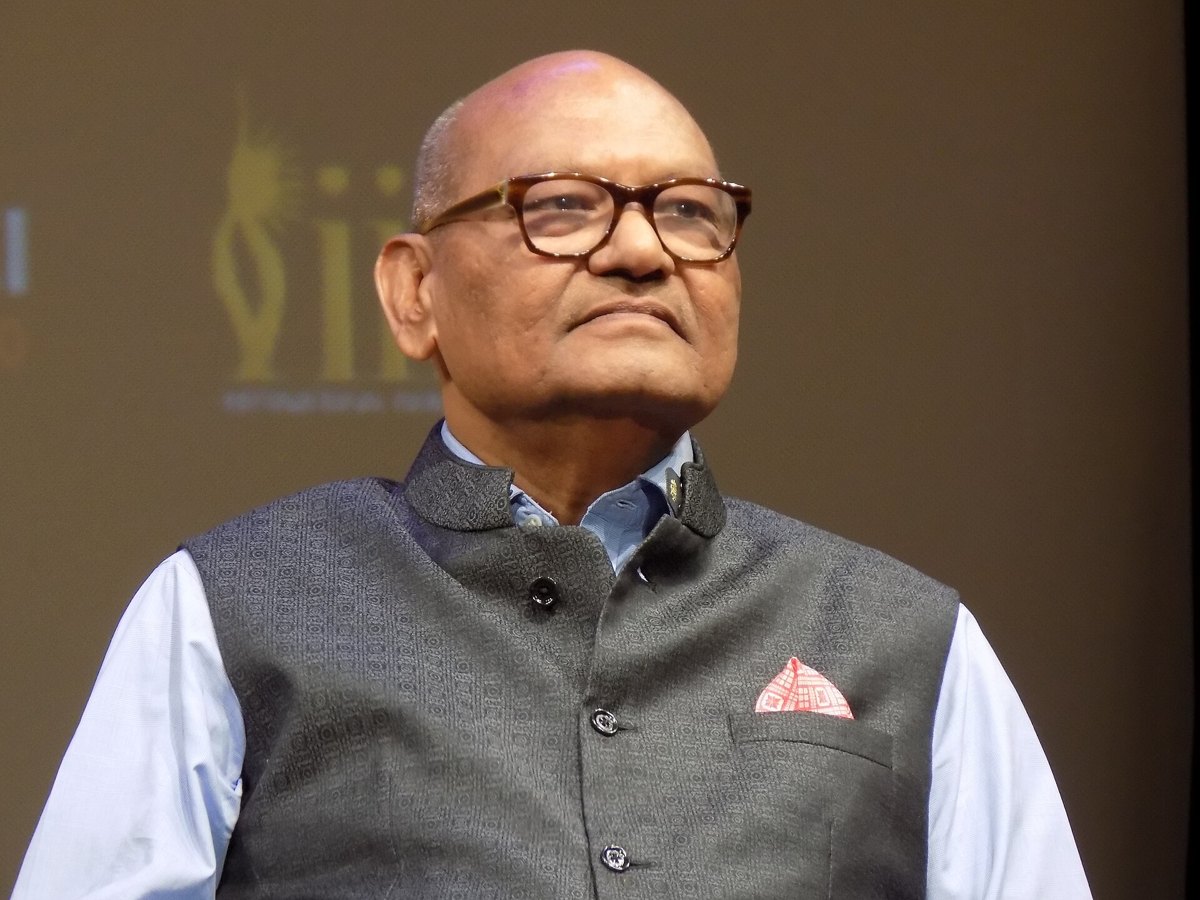
| Key facts | |
|---|---|
| Born | 24 January 1954, Patna, Bihar (a UK company filing lists September 1952) [20] [11] |
| Family roots | Marwari family in Patna; father Dwarka Prasad Agarwal ran a small aluminium conductor business [20] [21] |
| Education | Miller High School, Patna; never went to college [22] [23] |
| Family | Daughter Priya Agarwal Hebbar (chairperson, Hindustan Zinc); son Agnivesh died in January 2026; brother Navin is executive vice-chairman of Vedanta [14] [24] |
| Group | Vedanta Resources (London), parent of Vedanta Ltd, Hindustan Zinc, BALCO, Vedanta Aluminium Metal and Konkola Copper Mines |
| Hurun India Rich List 2026 | Rank 9, “Anil Agarwal & family”, about Rs 2.08 lakh crore, up 87% in a year [25] [26] |
| Known for | Turning a Mumbai scrap-metal trade into one of India’s largest metals and mining groups, mostly by buying assets others had given up on |
On the morning of 15 June 2026, four new companies began trading on India’s stock exchanges on the same day. All four had been carved out of one group, Vedanta, and the man who built it, now in his seventies, stood at the National Stock Exchange in Mumbai to mark the moment [27] [13].
“I am an ordinary man from Patna, Bihar who came to Mumbai,” Anil Agarwal told the room. “I came to Bombay at the age of 19-20… I had just one piece of luggage and reached here. There was only one thing that I had in mind: I have to do something big” [13].
Then he explained his long detour abroad: “I went to London because I did not have a godfather here” [13].
The listing came five months after the worst day of his life. On 7 January 2026 Agarwal announced that his son Agnivesh had died in the United States at the age of 49, and called it “the darkest day of my life” [28]. In the same message he wrote: “I had promised Agni that more than 75 per cent of what we earn would be given back to society. Today, I renew that promise and resolve to live an even simpler life” [29].
Between those two days sits one of the most unusual business lives in modern India. A boy who left school in Patna traded scrap in Mumbai, failed at business for a decade, then bought two government companies, listed the first Indian firm in London and assembled an empire in zinc, aluminium, copper, oil and iron ore. Along the way came a police firing that killed 13 people, a smelter shut for good, a sacred hill he could not mine, and a mountain of debt.
The M3M Hurun India Rich List 2026, released in September, placed “Anil Agarwal & family” ninth, new to the top ten, with wealth of about Rs 2.08 lakh crore after an 87% jump in a year [25] [26].
Where it began
Anil Agarwal was born on 24 January 1954 in Patna, into what the Press Trust of India has described as a lower-middle-class Marwari family [20]. His father, Dwarka Prasad Agarwal, ran a small aluminium conductor business in the city [20] [21]. (A 2009 profile called the father “a fabricator of grills and gates”; accounts of the family trade vary [30].)
The business took the boy to places most Patna schoolchildren never saw. “When I was 14-15 years old, I used to go to Renukut with my father,” he recalled in 2023. They would travel from Patna to Benaras and squeeze into a shared taxi that carried about seven people. “My father wished that one day only four could travel in the taxi. The Renukut factory would dazzle our eyes – that an aluminium factory could be like this” [31]. The factory belonged to Hindalco. Decades later he would bid against it.
He studied at Miller High School in Patna and did not go to university [22] [32]. Business Standard reported that he left after matriculation to follow his father into business [32]; PTI and Reuters say he quit studies at 15 [20] [33]. His own version, in a letter to Bill and Melinda Gates: “Like many young men and women in India, I started working when I was just 15 years old” [1].
Two things from that childhood stayed with him. One was a rule he credits to his grandfather: “to be the trustee of the wealth we create and plough it back for the greater good of the society” [1]. The other was a lasting awkwardness about language. He has described his younger self as “a little awkward and shy”, someone who “never felt presentable enough and spoke tooti footi English” [23].
The first break
At about 19 he left for Bombay, in his words “with only a tiffin box, bedding, and dreams in my eyes” [20]. The year is not settled. PTI’s account implies 1973; Business Standard says he came in 1975 and “never went back”; Reuters dates the start of his scrap business to 1976 [20] [32] [33].
He began in a room in Kalbadevi, Mumbai’s old trading quarter [30]. “When i first arrived in Mumbai, bahut mushkil waqt dekha,” he wrote years later, remembering the “local chai wale bhaiya” who gave him tea on credit and the “sewadaar at Syndicate Bank who guided me when i needed a loan for my business” [34].
He traded scrap, buying it from cable companies around the country and selling it in Mumbai [34].
In 1976 he made his first acquisition: Shamsher Sterling, a maker of enamelled copper wire, bought with borrowed money [34] [1]. It nearly finished him. “I had no money to pay the salary of my employees or buy the raw materials needed,” he has written. “I spent my days visiting banks to clear my payments, and my nights reviving the closed cable plant” [20].
Ten years of failing
What followed was a decade he began describing in public, in detail, only in 2022. To keep going he tried nine different businesses, among them magnetic wires, cables, aluminium rods and even multiplexes, “but all of them failed, one after the other” [20]. (In 2013 he put the number at seven: “I must have shut down seven businesses before 1986” [22].)
“For three years, I slipped into depression and no one knew about it,” he wrote in 2022 [20]. He called those ten years “the toughest years of my life” [20].
The company that became his flagship was incorporated in September 1975 as Rainbow Investment, renamed Sterlite Cables in 1976 and Sterlite Industries (India) in 1986 [35].
A second-hand plant and one big customer
The turn came in the mid-1980s. In 1986 Agarwal imported a second-hand plant from the United States and set up a cable factory “at a total cost of $1.5 million against the normal cost of almost $10 million”, Forbes India later reported [36]. Sterlite made jelly-filled telephone cables with an American collaborator and “supplied to the department of telecom, which was the sole buyer”, he said. He dates his first real break to 1988 [22].
The pattern was set for life: buy the machinery cheap, often second-hand or distressed, and run it at a lower cost than anyone thought possible.
Cables need copper and aluminium, and swings in their prices made profits volatile [34]. So Sterlite went backwards up the chain, first with a metal rod plant near Lonavala in 1989-90 [35], then with a far bigger bet: India’s first privately built copper smelter. According to the Centre for Science and Environment, Gujarat, Goa and Maharashtra all refused the plant before Tamil Nadu agreed [37]. The smelter at Tuticorin (Thoothukudi) was commissioned in 1997 [35]. It would become his worst crisis.
In 1995 he also bought Madras Aluminium in Tamil Nadu [34]. He was now in copper and aluminium. What he lacked was mines.
Building the empire
Two privatisations that changed everything (2001–03)
Agarwal’s chance came when the Vajpayee government began selling state companies. In February 2001 Sterlite bid Rs 551.5 crore for 51% of Bharat Aluminium Company (BALCO). The government’s reserve price was Rs 514.4 crore; the only rival bid, from Hindalco, the Aditya Birla Group company led by Kumar Mangalam Birla, was Rs 275 crore. Workers struck for about two months and the sale was challenged in court. In December 2001 the Supreme Court upheld it, ruling that disinvestment was a policy decision and that an offer above the reserve price, made through a proper procedure, gave no ground to interfere [5].
A year later came the better deal: in April 2002 a Sterlite company bought 26% of Hindustan Zinc from the government at Rs 40.51 a share, about Rs 445 crore, and made an open offer for another 20% [9]. In November 2003 it exercised an option to buy roughly 19% more at the same price. The government received about Rs 769 crore for 45% in all, and with the open offer Sterlite held about 65% [38] [9].
Hindustan Zinc then grew enormously. In 2002 it had capacity of 0.2 million tonnes and a profit of Rs 68 crore; in the year to March 2019 its profit was Rs 7,956 crore, and in October 2019 the government’s remaining stake of about 30% was worth Rs 27,523 crore [38]. In 2025-26 it mined a record 1,114 kilotonnes of metal [12]. “We created a company five times larger,” Agarwal said at the NSE [13]. BALCO’s aluminium capacity, 1 lakh tonnes when he bought it, had reached 6 lakh tonnes by 2023 [31].
London: “nobody believed me” (2003)
Agarwal had already moved his family to Britain; by 2013 he had lived in London for 15 years [22]. The landing was hard. On a call about a bankrupt cable maker called Duratube, an HSBC banker said, “I beg your pardon.” “I froze because I did not know what he meant,” he recalled. He worked on his English, learned “their rang dhang, and their ways of doing business”, and secured £3 million from the bank to buy the company [39].
In December 2003 he brought Vedanta Resources, the new holding company for his Indian businesses, to the London Stock Exchange. It was the first primary listing of an Indian company there and the second-largest London IPO of that year, raising US$876 million at 390 pence a share [40] [41].
Reuters reported that he “reportedly showed up on his bike” outside the Oxford home of Brian Gilbertson, the former chief executive of BHP Billiton, and cycled with him to London to persuade him to become chairman [33]. Gilbertson chaired the company through the float and left in July 2004 [40].
“Nobody believed me when I took Vedanta to the London Stock Exchange,” Agarwal told Businessworld in 2008. “Many were scared to put money in a company with a promoter with little education. My bio-data was scanned and auditors did 150 due diligence checks” [33].
Copper in Zambia, iron ore in Goa, zinc in Africa (2004–10)
In November 2004 Vedanta bought 51% of Konkola Copper Mines (KCM) in Zambia for US$25 million, and lifted its stake to 79.4% in 2008 [42].
In April 2007 it bought 51% of the iron ore miner Sesa Goa for a little over Rs 4,070 crore [43].
In May 2010 it agreed to buy Anglo American’s zinc mines for about US$1.3 billion: Skorpion in Namibia, Lisheen in Ireland and a 74% stake in South Africa’s Black Mountain [44].
The oil bet: Cairn India (2010–17)
Three months later came the biggest deal of all. In August 2010 Vedanta agreed to buy 51% to 60% of Cairn India, operator of the Rajasthan oilfields, from Britain’s Cairn Energy for between US$8.5 billion and US$9.6 billion [45]. It was the metals group’s first foray into oil and gas [33]. The deal closed in December 2011 at US$8.67 billion [46].
The sprawl was then tidied. Sesa Goa and Sterlite were merged into one listed company in 2013, renamed Vedanta Ltd in 2015, and Cairn India was folded into it in April 2017 [46] [47].
Steel and the insolvency courts
When India’s new bankruptcy code began pushing failed companies to auction, Agarwal bid. In April 2018 Vedanta won Electrosteel Steels for Rs 5,320 crore, taking about 90% of a company whose lenders were owed Rs 13,300 crore. It was the first resolution among the 12 large defaulters the Reserve Bank of India had sent to insolvency courts, and it took Vedanta into steel [48].
How the wealth is actually held
Agarwal’s wealth sits in a chain of holding companies. At the top is the family’s holding entity, Volcan Investments, which controls Vedanta Resources. In 2018 Volcan, which already held 66.53%, paid 825 pence a share, about US$1 billion, for the rest, and Vedanta Resources left the London Stock Exchange on 1 October 2018 [41] [49].
Vedanta Resources in turn is the promoter of Vedanta Ltd in India. Promoters held 68.11% of Vedanta Ltd in 2023 and 61.95% before a further sale in June 2024, as shares were sold to pay down the parent’s debt [50] [51]. Vedanta Ltd owns a majority of Hindustan Zinc and 51% of BALCO [52] [5].
Rich lists disagree about him sharply. Hurun’s 2026 figure of about Rs 2.08 lakh crore is nearly double its 2025 estimate of Rs 1.11 lakh crore, which placed him fourth among non-resident Indians, behind names such as fellow Londoner Lakshmi Mittal [53]. Forbes, whose method produces a far lower number, put “Anil Agarwal & family” at US$6.2 billion on 27 September 2026 [54].
In 2025-26 Vedanta Ltd reported revenue of Rs 1,74,075 crore, EBITDA of Rs 55,976 crore and profit after tax of Rs 25,096 crore, with net debt of Rs 53,254 crore [12].
Five banyan trees (2023–26)
In September 2023 Vedanta announced that it would split itself into separate listed companies [15]. The plan took almost three years. SEBI issued a warning in August 2025 because the scheme had been changed after the exchanges cleared it, and the Petroleum Ministry told the tribunal it feared the split could affect recovery of its dues [55]. The National Company Law Tribunal in Mumbai approved the scheme on 16 December 2025 [56].
It took effect on 1 May 2026 [12]. Shareholders received one share in each of four new companies for every Vedanta share, and on 15 June Vedanta Aluminium Metal, Vedanta Power, Vedanta Oil and Gas, and Vedanta Iron and Steel listed. Vedanta Ltd itself kept zinc and the other base metals [57] [27].
“Vedanta is like a big Banyan tree,” Agarwal said in December 2025. “There is tremendous potential in each business, and each one of them has the potential to become a Banyan tree by itself” [58]. On listing day he floated one more idea: Vedanta Resources, the London parent he took private in 2018, might one day be listed again, “maybe in America, maybe somewhere else” [59].
The setbacks and failures
The Indal raid (1998). In February 1998 Sterlite made a hostile offer for 20% of Indian Aluminium (Indal) at Rs 90 a share. Indal’s board told shareholders to reject it, and its Canadian parent Alcan countered [60]. Sterlite raised its bid to Rs 221 a share for 52%; shareholders went with Alcan anyway [8]. “It proved his undoing,” Forbes India wrote of the hostile approach [36].
Asarco (2008–09). Sterlite agreed to buy the bankrupt American copper miner Asarco, walked away in 2008 as copper prices fell, and lost a later bidding contest to Grupo Mexico. A US bankruptcy judge later ordered Sterlite to pay Asarco US$82.8 million in damages [61].
The Anglo American gamble (2017–19). Through Volcan, Agarwal built a £3.5 billion position in the mining giant Anglo American using exchangeable bonds, prompting talk of a merger. He called it a family investment, and unwound it in July 2019 with a gain of about US$500 million before fees [62].
The delisting that failed (2020). After taking the London parent private, he tried to buy out the minority shareholders of Vedanta Ltd in India at a floor price of Rs 87.5 a share [16]. He needed 134 crore shares. Only 125.47 crore were validly tendered, and the offer failed in October 2020 [63].
Chips with Foxconn (2022–23). In September 2022 Vedanta and Taiwan’s Foxconn announced a US$19.5 billion semiconductor and display venture in Gujarat. Foxconn pulled out in July 2023 [64] [65]. In September 2026 Agarwal said: “For now we are not pursuing any semiconductor ambition” [66].
Goa and Zambia. A Supreme Court order cancelling 88 Goa iron ore leases in 2018 hit the group’s iron ore business hard [67] [20]. In May 2019 a Zambian court put KCM into provisional liquidation at the request of the state mining company [68]. It took Vedanta until July 2024 to get the mine back, after promising more than US$1.2 billion to raise output and settle debts [69] [70]. A US listing document filed in June 2026 said there was “substantial doubt” about KCM’s ability to continue as a going concern, with Vedanta providing a letter of financial support, and the planned New York share sale of its new holding company, CopperTech Metals, was postponed on 30 June 2026 [71] [70].
Jaiprakash Associates (2025–26). In September 2025 Vedanta made the highest offer, about Rs 17,000 crore, in an auction for the bankrupt Jaypee group flagship [72]. Lenders instead chose a Rs 14,535 crore plan from Gautam Adani’s Adani Enterprises, citing factors such as payment terms and certainty of execution. “We were informed in writing that we had won. But life is never so simple. After some days, the decision was changed,” Agarwal wrote. A person involved in the process told Business Standard that “Vedanta was never declared the winning bidder” [73]. The appellate tribunal dismissed Vedanta’s challenge on 4 May 2026 [74].
The debt squeeze
The deepest setback was financial. The acquisitions and the 2018 buyout were funded with borrowing at Vedanta Resources, a holding company that depends on dividends from below.
In 2022-23 Vedanta Ltd paid a record Rs 37,758 crore in dividends, more than three times its profit, with nearly two-thirds going to the parent to repay debt. Its own net debt rose 20% [50]. A plan to raise cash by selling Vedanta’s overseas zinc mines to Hindustan Zinc for US$2.98 billion ran into opposition in February 2023 from the government, which still owned nearly 30% of Hindustan Zinc, and was never completed [52].
In January 2024 Vedanta Resources persuaded bondholders to extend US$3.2 billion of bonds. S&P cut its rating to “selective default”, calling the deal a distressed transaction [75].
Then the pressure eased. Promoters sold shares, Vedanta Ltd raised money from institutions in a July 2024 placement that drew bids of about Rs 23,000 crore [51] [76], and earnings rose: EBITDA grew 29% in 2025-26 [12]. By March 2026 the parent’s net debt was US$4.9 billion, against US$8.9 billion five years earlier [77]. In June 2026 it sold US$1.75 billion of new bonds at coupons of 7% to 7.75%, replacing debt that had cost more than 9% and as much as 11.25% [78].
“We never defaulted. We paid every obligation on time,” Agarwal said at the NSE [13]. S&P’s 2024 label sits awkwardly beside that sentence, though the extension was one that bondholders voted to accept [79].
Controversies and allegations
Most of the disputes around Vedanta concern what its plants and mines meant for the people living beside them. Below are the main matters, with the position as of 2 October 2026. We found no record of Agarwal being convicted of any offence, and several cases concern group companies and their officials, not him personally.
Thoothukudi: the smelter and the police firing
Allegation: For two decades residents and environmental groups in Thoothukudi alleged that emissions from the Sterlite copper smelter were polluting the air and water and harming people’s health [80] [37]. In 2018 protests grew against a plan to double its capacity. On 22 and 23 May 2018 police fired on protesters; 13 people were killed [81].
Response: Vedanta has denied the pollution allegations [80]. Agarwal said on Twitter that month that the company was the victim of a foreign conspiracy to keep India dependent on imports: “Certain vested interests will prefer India to remain import dependent and use our country as their market” [80]. He named no country or company.
What happened next:
- In April 2013 the Supreme Court had let the plant keep running, after the company said it made 39% of India’s copper, but held it liable to pay Rs 100 crore “for having polluted the environment in the vicinity of its plant” and found “misrepresentation and suppression of material facts” in its petition [3].
- In May 2018, days after the firing, the Tamil Nadu government ordered the smelter shut. The Madras High Court upheld the closure in August 2020 [2] [82].
- On 29 February 2024 the Supreme Court dismissed Vedanta’s appeal. “The closure of the industry is undoubtedly not a matter of first choice,” it said, but “the repeated nature of the breaches coupled with the severity of the breach of environmental norms” left the authorities no other option [2]. A review petition failed in October 2024 [83].
- A judicial commission under Justice Aruna Jagadeesan, whose report was tabled in October 2022, called the firing “unprovoked” and held 17 police personnel responsible [81].
- The CBI’s charge sheet named one police inspector and 101 protesters. A petition challenging it is pending before a magistrate in Madurai, the Madras High Court noted on 29 September 2026 [84].
- Vedanta has proposed a “green copper” plant at the site using 30% recycled metal. The state pollution board refused consent, and in February 2026 Vedanta went to the Madras High Court [85].
Status: The smelter has been shut since 2018 and its closure is final in law. The green copper petition was pending at the last report we found. We found no report of any conviction over the 13 deaths. The “foreign conspiracy” claim is unproven: no court or commission has accepted it.
Niyamgiri: the hill he was not allowed to mine
Allegation: Under a 2003 agreement with the Odisha government, Vedanta built an alumina refinery at Lanjigarh and planned to feed it with bauxite from the Niyamgiri hills, which the Dongria Kondh tribe hold sacred [86]. Campaigners alleged that forest and tribal-rights laws were being violated. In November 2007 Norway’s finance ministry said the government pension fund had sold its Vedanta shares and excluded the company, citing an unacceptable risk of contributing to “severe environmental damages and serious or systematic violations of human rights” [10]. The Church of England sold its £3.8 million stake in February 2010 [87]. In August 2010 an expert committee accused the company of “total contempt for the law”, and environment minister Jairam Ramesh refused forest clearance for the mine [88].
Response: Vedanta said the mine would not violate the rights of local tribes [33], and that it “remains fully committed to pursuing its investments in a responsible manner, respecting the environment and human rights” [87].
What happened next:
- In April 2013 the Supreme Court left the decision to the village councils. In July and August 2013 all 12 gram sabhas voted against mining [89] [90].
- In May 2016 the Supreme Court refused a plea by the state-owned Odisha Mining Corporation for fresh gram sabhas [89].
- On 1 October 2026 the Orissa High Court dismissed Vedanta’s petition to enforce a 2004 agreement for 150 million tonnes of bauxite, which had been terminated in 2015 [86].
- On 26 September 2026 Agarwal met Odisha’s chief minister and said the government had “assured us that necessary steps will be taken to obtain the required permissions”. Krushna Sikaka of the Niyamgiri Suraksha Manch replied: “We will continue to resist any attempt to mine these hills” [91].
- A newer bauxite block at Sijimali, won at auction in 2023, has also met resistance; a clash in April 2026 left more than 50 police personnel and several residents injured [92].
Status: Niyamgiri remains unmined 23 years after the first agreement. A fresh attempt is under way, and so is the opposition.
Zambia: pollution claims and the “$25 million” video
Allegation: Zambian villagers living beside KCM’s Nchanga mine, 2,577 of them by the end, sued Vedanta and KCM in the English courts, alleging that mine discharges had polluted the water they drank and farmed with [93]. Separately, a video surfaced in 2014 of Agarwal telling a business audience in Bangalore that he had bought KCM for US$25 million against an asking price of US$400 million, and that “every year it is giving us a minimum of 500 million dollar, plus 1 billion dollar” [94]. It drew angry reactions in Zambia.
Response: Vedanta and KCM fought the English case on jurisdiction and did not admit liability [93]. Vedanta says it has invested more than US$3 billion in KCM [70]. We found no public response from Agarwal to the video in the reports we read.
What happened next:
- On 10 April 2019 the UK Supreme Court ruled the claims could be heard in England, a landmark on the liability of parent companies. The case was later settled “without admission of liability” [93].
Status: The litigation is closed. After the 2019 liquidation and 2024 return described above, Vedanta again controls KCM, with the Zambian state holding about 20% [71].
Run-ins with the market regulator
Allegation: There have been four main matters.
- In April 2001 SEBI held that Sterlite’s share price had been manipulated in 1998, during the Indal bid, with entities linked to the broker Harshad Mehta. It barred Sterlite from the capital market for two years and ordered prosecution through three directors and officials, including Agarwal; the appellate tribunal threw the order out six months later [7] [8].
- SEBI penalised the company Rs 5.25 crore over a 2014 Cairn India buy-back in which far fewer shares were bought than announced [95].
- In 2023 it fined Vedanta Rs 30 lakh for a press release that made the Foxconn venture look like the listed company’s business when it belonged to the parent [65].
- In March 2024 it ordered Vedanta to pay Rs 77.62 crore in interest to Cairn UK Holdings for withholding dividends, and barred Navin Agarwal and two others from the market for two months and six directors, including Priya Agarwal, for one month [96].
Response: The companies contested the findings. On the Cairn dividends, Vedanta pointed to a tax dispute that had frozen the payments [96].
What happened next:
- The Securities Appellate Tribunal set aside the 2001 order in October 2001, finding insufficient evidence that Sterlite “had directly or indirectly indulged in market manipulation” [8].
- The tribunal overturned the 2014 buy-back penalty in 2023, but on 9 September 2026 the Supreme Court sent the case back to it for a fresh decision within six months [95].
Status: The tribunal set the 2001 order aside, and we found no report of that being reversed. The 2014 buy-back case is pending before the tribunal. We could not confirm the outcome of any appeal against the 2023 and 2024 orders.
The privatisation questions
Allegation: Unions and opposition parties have long argued that BALCO and Hindustan Zinc were sold too cheaply. On 18 November 2021 the Supreme Court, hearing a petition from a public-sector officers’ association, found “sufficient material for registration of a regular case” about the 2002 Hindustan Zinc sale and directed the CBI to investigate, while allowing the government to sell its remaining 29.5% [97].
Response: The BALCO sale was upheld by the Supreme Court in 2001 [5]. On Hindustan Zinc, the court said: “We abstain from commenting on some crucial facts and names of individuals involved so as to not cause prejudice to the investigation” [97]. We found no public statement from Vedanta on the CBI case.
Status: The government told the court in April 2022 that the CBI had registered a case [98]. We found no public report of its outcome. Agarwal has not been named as an accused in any report we read.
Political donations and lobbying
Allegation: In March 2014 the Delhi High Court, on a petition by the Association for Democratic Reforms, held that donations to political parties from Sterlite and Sesa Goa came from a “foreign source”, because both were controlled by UK-registered Vedanta Resources, and told the government to re-examine the parties’ receipts within six months [6]. In August 2023 the Organized Crime and Corruption Reporting Project reported that Vedanta had lobbied during the pandemic to loosen environmental rules, citing a January 2021 letter in which Agarwal asked the environment minister to let miners raise output by up to 50% without fresh clearances, saying this would “generate huge revenue for the Government and create massive jobs” [99].
Response: On lobbying, Vedanta said it makes “continuous representations” to the government “in the best interest of national development” [99]. The High Court’s directions were addressed to the government and the parties, not the companies. We could not find a public statement from Vedanta on the donations.
What happened next:
- When electoral bond data was published in 2024, Scroll’s analysis found Vedanta Ltd was the fifth-largest buyer, with Rs 386 crore of bonds [100]. The purchases were made under a government scheme that was lawful at the time; the Supreme Court struck the scheme down in February 2024.
Status: No penalty or regulatory action against the company has been reported in these matters.
The short seller: Viceroy Research
Allegation: On 9 July 2025 the US-based short seller Viceroy Research, which had bet against Vedanta Resources’ bonds, said the parent was “systematically draining” Vedanta Ltd and likened the structure to a Ponzi scheme; its report also used the word “parasite” [101] [102] [103].
Response: Vedanta called the report “a malicious combination of selective misinformation and baseless allegations” [101]. It obtained an opinion from former Chief Justice D.Y. Chandrachud, who wrote that Viceroy “has a track record of taking short positions in listed companies and then publishing misleading reports” [102].
Status: On 10 October 2025 the Supreme Court declined to entertain a petition seeking an investigation, and it was withdrawn [103]. No regulator has announced a finding based on the report.
The university that was never built
Allegation: In July 2006 the Vedanta Foundation and the Odisha government signed an agreement to build a vast Vedanta University near Puri, and the state began acquiring thousands of acres of farmland for it [4]. Landowners and public-interest petitioners said the acquisition was illegal. The Orissa High Court quashed it in November 2010 and ordered the land returned [104].
Response: The Anil Agarwal Foundation appealed, and later offered to limit itself to 3,837 acres and leave out the objectors’ land [4].
Status: On 12 April 2023 the Supreme Court dismissed the appeals with costs of Rs 5 lakh on the foundation. “It is not appreciable why the Government offered such an undue favour in favour of one trust/company,” it said, holding the acquisition “vitiated by mala fides and favourism” [4]. The university has not been built.
Deaths at work: Korba 2009 and Singhitarai 2026
Allegation: In September 2009 a chimney under construction at BALCO’s power plant in Korba collapsed, killing at least 40 workers. Police arrested BALCO officials and a contractor’s manager on charges of culpable homicide [105] [106]. On 14 April 2026 a boiler blast at Vedanta’s power plant at Singhitarai in Chhattisgarh killed 25 workers, by the later count. An initial official report cited excess fuel in the furnace and lapses in upkeep by Vedanta and its contractor, and police registered an FIR for causing death by negligence that named Agarwal among 8 to 10 people [107] [108].
Response: On Singhitarai, Agarwal said: “The entire responsibility was entrusted to NGSL, a partnership between NTPC and GE, among the most respected and trusted institutions in India.” The company announced Rs 35 lakh for each bereaved family [108]. The reports we read carried no response from NGSL, and no statement from BALCO on the Korba arrests.
Status: The Korba trial, against five companies and 17 individuals, is still running 17 years on; the High Court wants it finished by the end of 2026 [106]. The Singhitarai case is under investigation. An FIR is the start of an inquiry, not a finding of guilt, and we found no report of a charge sheet as of 2 October 2026.
Other matters involving group companies
Allegation: In the “Chinese visa” case the CBI alleges that Rs 50 lakh was paid in 2011 to get visas re-used for 263 Chinese workers building the group’s Talwandi Sabo power plant in Punjab; Congress MP Karti Chidambaram and a company representative are among the accused [109]. Separately, in June 2026 the Enforcement Directorate searched Vedanta group premises in a foreign-exchange investigation [110].
Response: Chidambaram denies the visa charges and has challenged them in the Delhi High Court [109]; we found no public statement from the company on that case. On the searches, Vedanta said: “We are extending full cooperation to the authorities” [110].
Status: A Delhi court framed charges in the visa case in December 2025 and the trial is pending; Agarwal is not an accused in the reports we read [109]. No findings from the Enforcement Directorate have been announced.
Giving back
Agarwal’s first big promise came in London in September 2014, at an event marking ten years of Vedanta’s listing. “My family supports my decision that 75 per cent of our wealth, which we gain as economic benefit, should be returned to society,” he said, after what he described as a meeting with Bill Gates [111]. Later reporting said he planned to place his shares in a trust and fund the work from dividends through the Anil Agarwal Foundation [32].
He signed the Giving Pledge in a letter dated 25 March 2021, together with his daughter Priya, joining Indian signatories such as Azim Premji [1] [18]. In July 2021 the foundation committed Rs 5,000 crore over five years to nutrition, healthcare, women and children, animal welfare and grassroots sport [112].
The flagship is Nand Ghar, a programme that rebuilds government anganwadis as modern childcare centres with electricity, clean water and digital teaching tools. By November 2025 there were more than 10,000 across 16 states [113]. The group also runs the BALCO Medical Centre, a cancer hospital in Chhattisgarh opened in 2018 [19].
In January 2025 he took over Riverside Studios, a century-old arts venue on the Thames in London, now run as the Anil Agarwal Riverside Studios Trust, for an undisclosed sum [114].
How much has actually been given? The EdelGive Hurun India Philanthropy List put his family’s donations at Rs 181 crore in its 2024 edition, eighth in the country [115]. It is a small fraction of a fortune that Hurun now counts in lakhs of crores; most of the 75% promise is still to be delivered.
He restated it in January 2026, on the day he announced his son’s death, in slightly different words: “more than 75 per cent of what we earn”, where the 2014 pledge spoke of “our wealth” [29] [111].
Succession
Agarwal has never been in a rush to settle the question. “People give charge of their empires to sons/daughters even if they are capable or not. That is not our mindset,” he told PTI in 2022, adding that he was “not in a hurry” to frame a formal plan [20].
The family is nonetheless present throughout the group. His brother Navin Agarwal, with him since the beginning, is executive vice-chairman of Vedanta Ltd. His daughter Priya Agarwal Hebbar is a non-executive director of Vedanta and chairperson of Hindustan Zinc [14]. His son Agnivesh, who had earlier chaired Hindustan Zinc and founded Fujairah Gold, a metals business in the UAE, was named chairman of Talwandi Sabo Power in 2019 [17] [24].
Day-to-day control lies with professionals. Anil Agarwal is non-executive chairman of Vedanta Ltd; the chief executive is Arun Misra and the chief financial officer Ajay Goel [14]. Agarwal has said the promoters intend to hold about half of each demerged company without running them day to day [58].
What remains unanswered is who will eventually control Volcan, the holding entity at the top. The 2014 plan pointed to a charitable trust [32]. No detailed structure has been published.
What their journey teaches
1. Buy what others have written off, then run it cheaper. A second-hand American cable plant at about one-seventh of the normal cost; BALCO and Hindustan Zinc from a government that could not grow them; Electrosteel from an insolvency court. He looked for assets priced on their past, not their potential.
2. Failure is survivable if each one is small enough to leave you standing. He closed seven businesses by one count and nine by another before the cable plant worked. None was big enough to end him.
3. If capital will not come to you, go to it. With “no godfather” in India, he listed in London, sat through 150 due-diligence checks and recruited a well-known mining chief as chairman [33]. By his account the group went on to raise US$35 billion abroad and invest it in India [13].
4. A licence from the government is not permission from the neighbours. Thoothukudi and Niyamgiri both had governments on their side at the start. Niyamgiri was lost at the village councils. Thoothukudi was shut for repeated environmental breaches after years of local protest. The smelter, by the company’s own account, once made 39% of India’s copper. It has been shut since 2018.
5. Debt at the top of a pyramid makes everything below it work for the lender. In 2022-23 the operating company paid out three times its profit so the parent could meet its bonds. The group came through with a “selective default” on its record and a smaller promoter stake.
6. A pledge is tested by a trust deed, not a speech. The promise to give away 75% is 12 years old. Whether it becomes a structure that outlives him is the unfinished chapter.
Agarwal likes to say that India has done well above the ground and must now turn to what lies below it. “India has the best geology,” he wrote in March 2026, arguing that producing more hydrocarbons and minerals at home would cut imports [116]. (Gold is one example: India’s gold imports still run to billions of dollars a month.) Asked in September 2026 about Adani and Mukesh Ambani’s Reliance entering aluminium, he said: “We welcome competition. Competition makes you more efficient” [66].
The scrap dealer from Patna is in his seventies, has just split his life’s work into five, and still talks about doing “something big”.
A profile for general reading, based on public records and reporting as of 2 October 2026. Not investment, tax or legal advice.
Sources (116)
- Anil Agarwal's Giving Pledge letter - The Giving Pledge, Mar 2021
- Vedanta Ltd v State of Tamil Nadu, judgment - Supreme Court of India, Feb 2024
- Sterlite Industries v Union of India, judgment - Supreme Court of India via Indian Kanoon, Apr 2013
- Anil Agarwal Foundation v State of Orissa, judgment - Supreme Court of India via Indian Kanoon, Apr 2023
- BALCO Employees Union v Union of India, judgment - Supreme Court of India via Indian Kanoon, Dec 2001
- Association for Democratic Reforms v Union of India, judgment - Delhi High Court via Indian Kanoon, Mar 2014
- Action against Harshad Mehta, Videocon, BPL and Sterlite - SEBI press release, Apr 2001
- Sterlite Industries v SEBI, order - Securities Appellate Tribunal, Oct 2001
- Hindustan Zinc open offer document - SEBI, May 2002
- Metals and mining company excluded from the Government Pension Fund Global - Norwegian Ministry of Finance, Nov 2007
- Anil Kumar Agarwal, officer appointments - UK Companies House, Oct 2026
- Vedanta Q4 and FY26 results press release - Vedanta Ltd, Apr 2026
- Chairman's speech at NSE - Vedanta Ltd, Jun 2026
- Leadership - Vedanta Ltd, Oct 2026
- Positioning Vedanta for the future: demerger announcement - Vedanta Resources, Sep 2023
- Intention to voluntarily delist Vedanta Ltd - Vedanta Resources, May 2020
- Agnivesh Agarwal appointed Chairman of Talwandi Sabo Power - Vedanta Ltd, May 2019
- The Giving Pledge welcomes 14 new signatories - The Giving Pledge, Dec 2021
- BALCO Medical Centre - Vedanta Ltd, Oct 2026
- 'Rockstar' reception, movie offers for Anil Agarwal's rags to riches tale - PTI via Devdiscourse, May 2022
- Dwarka Prasad Agarwal, father of mining baron Anil Agarwal, passes away - Business Today, Jan 2020
- Lunch with BS: Anil Agarwal, Chairman, Vedanta Group - Business Standard, Dec 2013
- 'As someone who never went to college...': Anil Agarwal likens Cambridge invitation to a dream - Business Today, Jun 2023
- Who was Agnivesh Agarwal, Vedanta chief Anil Agarwal's son who died at 49? - Business Standard, Jan 2026
- India's richest in 2026: Adani tops the list, 27 new billionaires emerge - Business Standard, Sep 2026
- Adani reclaims top spot as India's richest; billionaire count hits record 391 - The Federal, Sep 2026
- Vedanta group's four demerged entities make debut on stock exchanges - Business Standard, Jun 2026
- Anil Agarwal grieves son Agnivesh's death, calls it his darkest day - Business Standard, Jan 2026
- Vedanta's Anil Agarwal renews pledge to donate 75% wealth after son Agnivesh's death - The Federal, Jan 2026
- Nevin John: Showing his mettle - Business Standard, Jul 2009
- 'Hum Bihari log hain, kuch kar guzarenge': Vedanta's Anil Agarwal lauds the resolve of people from Bihar - Business Today, Mar 2023
- Anil Agarwal: Charity on his mind - Business Standard, Dec 2014
- Vedanta founder is a daring dreamer - Reuters via Deccan Herald, Aug 2010
- 'When I first arrived in Mumbai...': Vedanta's Anil Agarwal on his entrepreneurial journey - Business Today, Aug 2023
- Sterlite Industries (India) Ltd: company history - IIFL, Oct 2026
- Anil Agarwal's Big Bang Theory - Forbes India via Forbes, Aug 2009
- Three states refused to set up Sterlite plant before it came up in Tamil Nadu - Deccan Herald, May 2018
- Govt sold 45% of Hindustan Zinc for Rs 769 cr in 2002. Its 30% stake is now worth Rs 27,000 cr - ThePrint, Nov 2019
- 'Learnt their rang dhang': Vedanta boss Anil Agarwal remembers 'nervous' days in the UK - Business Today, Sep 2022
- Legendary Brian Gilbertson's colossal contribution to mining will live on - Mining Weekly via Polity, Dec 2025
- Agarwal makes firm offer to delist Vedanta from London Stock Exchange - PTI via Business Standard, Jul 2018
- Vedanta Resources: African Growing Enterprises file - IDE-JETRO, Oct 2026
- Sesa Goa buys Dempo Mining for Rs 1,750 cr - Business Standard, Jun 2009
- Anglo sells zinc assets in $1.3bn deal - Miningmx, May 2010
- Vedanta Group pays up to $9.6 billion for Cairn India - FinanceAsia, Aug 2010
- Cairn's Merger With Vedanta - Nishith Desai Associates, Jan 2016
- Vedanta-Cairn Merger Effective - PR Newswire, Apr 2017
- Electrosteel Steels goes to Vedanta; first of 12 IBC cases resolved - Business Standard, Apr 2018
- Vedanta Resources chairman Anil Agarwal to take company private on Oct 1 - Business Standard, Sep 2018
- Vedanta's record dividend to parent strains balance sheet - Business Standard, May 2023
- Promoter entity Finsider International sells entire 2.6% stake in Vedanta - Business Standard, Jun 2024
- India opposes Vedanta's $3bn zinc assets sale, rekindling debt worries - Reuters via Mining.com, Feb 2023
- Hinduja tops global NRI billionaire list with Rs 1.85 lakh cr: M3M Hurun 2025 - Business Standard, Oct 2025
- Anil Agarwal & family: profile - Forbes, Sep 2026
- Vedanta demerger faces delay as Centre objects, Sebi issues warning - Business Standard, Aug 2025
- NCLT Mumbai okays demerger of Vedanta into five distinct entities - Business Standard, Dec 2025
- Vedanta demerger: Oil & Gas, Power, Aluminium, Iron & Steel firms to list today - Business Today, Jun 2026
- 'Dividend is in my blood': Agarwal pledges payouts as Vedanta demerges - Business Standard, Dec 2025
- Anil Agarwal hints at overseas relisting of Vedanta Resources in 3 years - Business Standard, Jun 2026
- Rs 128cr Sterlite bid spurned by Indal board - Business Standard, Mar 1998
- Grupo Mexico wins $83 mn in Sterlite case over Asarco - Business Standard, Feb 2012
- Anil Agarwal's much-discussed Anglo investment ends with a whimper - Business Standard, Jul 2019
- Vedanta Ltd fails to get enough shares to delist from stock exchanges - Business Standard, Oct 2020
- Foxconn-Vedanta JV split credit negative for UK mining firm: CreditSights - Business Standard, Jul 2023
- SEBI Takes Action On Vedanta: Dissecting The Dodgy Disclosures That Led To It - The Core, Jul 2023
- Anil Agarwal confidently welcomes Adani, Reliance into aluminium as Vedanta targets 10Mt - AlCircle, Sep 2026
- SC dismisses Vedanta's plea for validating its Goa mining lease till 2037 - LiveLaw, Sep 2021
- Zambian court appoints provisional liquidator of Vedanta's Konkola Copper Mines - Reuters via Mining Weekly, May 2019
- Zambia agrees to hand disputed copper assets back to India's Vedanta - Reuters via Mining Weekly, Sep 2023
- Vedanta's CopperTech Metals delays US IPO - Mining.com, Jun 2026
- Vedanta's Zambia copper unit faces going-concern warning in SEC filing - Business Standard, Jun 2026
- Vedanta pips Adani with Rs 17,000 cr bid for Jaiprakash Associates - Business Standard, Sep 2025
- Anil Agarwal claims Jaypee asset bid reversal after written confirmation - Business Standard, Mar 2026
- NCLAT dismisses Vedanta's appeal against selection of Adani Group's bid for Jaiprakash Associates - PTI via ThePrint, May 2026
- S&P downgrades Vedanta Resources to selective default after debt extension - Business Standard, Jan 2024
- Vedanta's QIP receives bids for Rs 23,000 cr against offer of Rs 8,000 cr - Business Standard, Jul 2024
- Vedanta Resources lines up $5.2 bn debt refinancing after credit rating upgrades - Outlook Business, Jun 2026
- Vedanta unit accepts bids worth $1.75 bn for 3-tranche dollar debt: Bankers - Business Standard, Jun 2026
- Vedanta Resources' bondholders back company's debt restructuring plan - Business Standard, Jan 2024
- Anti-Sterlite protests in Tuticorin land a blow to Anil Agarwal's ambitions - Reuters via Onmanorama, May 2018
- Thoothukudi firing: Inquiry report finds police, revenue officials responsible for 13 deaths - Down To Earth, Oct 2022
- SC dismisses Vedanta's plea against closure of Sterlite copper unit in TN - Business Standard, Feb 2024
- SC junks Vedanta's review plea to look into reopening of Sterlite copper plant - The News Minute, Nov 2024
- Madras HC nixes contempt plea against CBI in Thoothukudi firing case - UNI, Sep 2026
- Sterlite moves Madras HC after TNPCB rejects green copper plan - Business Standard, Feb 2026
- Orissa HC dismisses Vedanta's plea to enforce 2004 bauxite supply agreement - Business Standard, Oct 2026
- Church of England sells £3.8m stake in Vedanta over human rights fears - The Scotsman, Feb 2010
- Jairam Ramesh shoots down Vedanta - DNA, Aug 2010
- Supreme Court quashes Odisha's plea on Niyamgiri - Business Standard, May 2016
- Niyamgiri: 10 years since India's first environmental referendum - Down To Earth, Apr 2023
- Tribals vow to oppose renewed mining push in Odisha's Niyamgiri hills - Business Standard, Sep 2026
- Odisha: Several residents, over 50 police personnel injured in clash amid protests against mining - Scroll, Apr 2026
- Vedanta and Konkola Copper Mines: case summary - Leigh Day, Oct 2026
- Video of Vedanta boss saying KCM makes $500 million profit per year - Lusaka Times, May 2014
- SC sends Vedanta buyback fraud case back to SAT for fresh examination - Business Standard, Sep 2026
- Sebi orders Vedanta to pay Cairn Rs 77.6 cr; bars Navin & Priya Agarwal from mkt - PTI via ThePrint, Mar 2024
- Supreme Court allows Centre to further disinvest its 29.5% shares in Hindustan Zinc, orders CBI investigation into 2002 disinvestment - LiveLaw, Nov 2021
- CBI registers FIR into 26% Hindustan Zinc stake sale in 2002: Centre to SC - Business Standard, Apr 2022
- Inside Indian energy and mining giant Vedanta's campaign to weaken key environmental regulations - OCCRP, Aug 2023
- Top buyers of electoral bonds include lottery king, Megha, Vedanta - Scroll, Mar 2024
- Viceroy shorts Vedanta Resources' debt; group calls report 'malicious' - Business Standard, Jul 2025
- Viceroy report on Vedanta lacks credibility, says ex-CJI Chandrachud - PTI via Telangana Today, Jul 2025
- Supreme Court refuses to entertain PIL on Viceroy's allegations against Vedanta - Bar & Bench, Oct 2025
- Orissa high court blow for Vedanta - Down To Earth, Nov 2010
- 3 Balco officials arrested for Korba chimney collapse - Business Standard, Nov 2009
- Balco chimney collapse: Trial on at court in Chhattisgarh's Korba as Chinese firm officials skip hearings - ETV Bharat, Feb 2026
- Blast at Vedanta plant linked to excessive fuel, negligence: Initial probe - PTI via Business Standard, Apr 2026
- Ops, maintenance entrusted to NTPC-GE: Vedanta chief on Chhattisgarh blast - Business Standard, Apr 2026
- Delhi High Court issues notice on Karti Chidambaram's plea against charges in Chinese visa scam case - LiveLaw, Jan 2026
- ED carries out searches against Vedanta Group as part of FEMA probe - PTI via Business Standard, Jun 2026
- Anil Agarwal pledges 75% of his wealth to charity - Business Standard, Sep 2014
- Anil Agarwal Foundation pledges Rs 5,000 crore for rural India - Business Standard, Jul 2021
- Vedanta's Nand Ghar crosses 10,000 mark across 16 states - The Tribune, Nov 2025
- Anil Agarwal acquires London's historic Riverside Studios - Eastern Eye, Jan 2025
- Rs 2,153 crore! Shiv Nadar tops EdelGive Hurun India's philanthropy list; Ambanis rank second - Business Today, Nov 2024
- Entrepreneurial push in PSUs can boost self-reliance: Vedanta's Agarwal - Business Standard, Mar 2026