
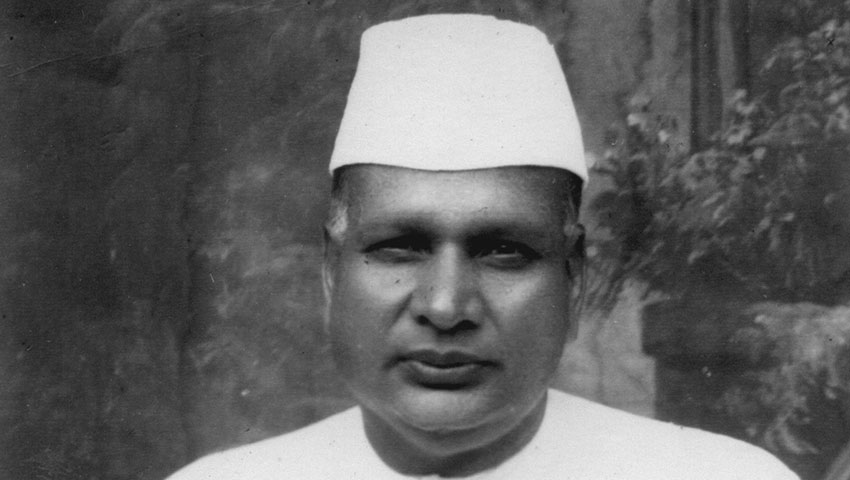
| Key facts | |
|---|---|
| Born | 4 November 1889, Kashi-ka-Bas, Sikar, Jaipur State (now Rajasthan) [1] [15] |
| Died | 11 February 1942, Wardha, aged 52 [1] [16] |
| Hometown/Family roots | Born to Kaniram and Birdibai; adopted at about five by Seth Bachhraj of Wardha (now Maharashtra) [2] [15] |
| Education | Two or three years in a Hindi school; learnt trade in the family firm [20] |
| Family | Wife Janakidevi Bajaj (married 1902; Padma Vibhushan 1956); children Kamla, Kamalnayan, Madalsa, Uma and Ramkrishna [1] [8] |
| Company/Group | Bajaj Group, founded 1926 (Bachhraj Factories, Hindusthan Sugar Mills, Mukand) [10] [13] |
| Wealth | Personal wealth of about Rs 5 lakh at death, after about Rs 25 lakh in recorded gifts (Kaka Kalelkar) [15] [21]. Bajaj family today: US$19.8 billion, No. 12 on the Forbes India Rich List 2026 [36] |
| Known for | Founding the Bajaj Group; Congress treasurer; Gandhi’s “fifth son”; giving the land for Sevagram |
In 1907 a 17-year-old in Wardha sat down and wrote a letter to the man who had adopted him. Seth Bachhraj was one of the richest traders in the cotton country of central India. The boy was his heir. The letter, written in Marwari, gave all of it back.
“I will not touch a pie out of your money,” he wrote. “I am taking nothing from the house – nothing but the clothes that cover me… I will not go to law to claim a pie of what is yours.” [20] To make sure no one could doubt him, he attached a formal deed giving up any legal claim to the estate [20] [24].
The old man went after him, found him, and begged him to come home. He did [20] [24]. A little over a year later Bachhraj died and the boy inherited everything anyway [24].
That teenager was Jamnalal Bajaj. He went on to found the Bajaj Group, which marked its hundredth year in 2026 [14] [34]. He became treasurer of the Indian National Congress, went to jail at least five times, opened his family temple to Dalits before most of India would, and gave Mahatma Gandhi the land on which Sevagram stands [15] [21]. Gandhi called him his “fifth son” [16]. When he died in 1942, his personal fortune was smaller than many of the gifts he had made [15] [21].
This is the story of a businessman who spent his life arguing with himself about what money is for. It explains a great deal about the company that later gave India the Chetak and the Pulsar, and about a family that, a century on, is still one of the country’s richest [36].
Where it began
A waterless village in Jaipur State
Jamnalal Bajaj was born on 4 November 1889 in Kashi-ka-Bas, a village in Sikar, then part of the princely Jaipur State in Rajputana [1] [2] [15]. Gandhi’s secretary Mahadev Desai described it as “a waterless village in Jaipur State” [20]. His father, Kaniram, was a farmer of modest means who also did some small-scale moneylending; his mother was Birdibai [2] [28]. The family were Marwaris, part of the trading community that had been spreading out from Rajasthan to every market town in India for a century [21] [27].
Sources differ on how comfortable the family was. The Jamnalal Bajaj Foundation, run by his descendants, calls Kaniram “well-to-do” [1]. ThePrint and the Free Press Journal describe the family as “small-time Marwari moneylenders” [21] [27]. Either way, they were village people, far from the big money of Bombay and Calcutta.
The well that bought a son
The big money arrived by chance. Seth Bachhraj, a self-made cotton trader and moneylender from Wardha in the Central Provinces, was looking for an heir [10] [28]. He had no grandson to carry on his firm. When he saw the little boy in Kashi-ka-Bas, he wanted to adopt him.
According to Desai’s account, the parents would not let the child go until Bachhraj agreed to dig a well for the dry village [20]. A later retelling, citing the historian U.S. Mohan Rao, adds that the mother had only made a polite remark, which the Bajajs took as a promise. When she denied it, a community panchayat ruled in their favour, perhaps helped by the offer of the well [24].
So, at about five (one Gandhian source says four), Jamnalal was taken from Rajputana to Wardha [15] [21] [28]. Formally he was adopted by Bachhraj’s widowed, childless daughter-in-law, which is why the group’s own histories call Bachhraj his “adopted grandfather” [10] [24].
Little school, a lot of business
Wardha was a cotton town, and the Bachhraj firm lived on cotton: buying it, financing farmers who grew it, and lending money in between [28]. In 1905 Bachhraj set up a cotton ginning factory there [10].
The boy got very little classroom education. Desai says he spent “two or three years in a Hindi school” before being put into the business [20]. What he learnt, he learnt at the gaddi: bookkeeping, credit, how to read a harvest and a borrower.
In May 1902 he was married to Janakidevi, the daughter of a merchant called Girdharilal Jajodia from Jaora in central India [1] [21] [28]. He was 12 and she was about 9 (the family foundation gives 11 and 8) [1] [3]. Child marriage was normal in the community then. Janakidevi would become a public figure in her own right: a freedom fighter, a worker for cow welfare and Vinoba Bhave’s Bhoodan movement, and a Padma Vibhushan recipient in 1956 [8].
The first break
The renunciation, and the inheritance
The 1907 letter is the moment every account of his life returns to. What set it off is not clear. One version says his grandfather scolded him for not wearing expensive jewellery to a wedding [15] [26]. Desai says the teenager had angered the short-tempered old man by reminding him that he himself had inherited his wealth without labouring for it [20]. Either way, the response was extreme for a 17-year-old: a written and legal renunciation of a fortune. “All earthly relationship is hollow,” he wrote [15].
He came back, and Bachhraj died around 1908, leaving him sole heir [24] [28]. At about 18 he was running one of Wardha’s biggest trading houses.
A Rai Bahadur for the British
For the next decade he did what a rich young Marwari merchant was expected to do. He expanded the cotton business, opened a Bombay office under the name “Bachhraj Jamnalal” and cultivated the colonial establishment [10]. His life is told in full in B.R. Nanda’s biography In Gandhi’s Footsteps [33]. A 1917 photograph shows him with Sir Benjamin Robertson, the Chief Commissioner of the Central Provinces [2].
During the First World War the British made him an honorary magistrate. After he contributed to the war fund, they gave him the title of Rai Bahadur, which the family foundation dates to 1918 [3] [21].
But he was also restless about what his wealth was for, as the 1907 letter had shown. In 1915 a lawyer named Mohandas Gandhi came back from South Africa and set up an ashram in Ahmedabad. Bajaj, about 26, went to see him [24] [26] [28].
The man who adopted a father
“Mahatmaji completely revolutionised the very foundation of my thinking,” he later said [24]. He moved his family to live at the Sabarmati Ashram for a time, so they could learn the ashram’s discipline of manual labour and simple living [15].
The bond deepened fast. During the Nagpur session of the Congress in December 1920, where Bajaj chaired the reception committee, the 30-year-old asked Gandhi: “Regard me as your son Devadas.” [16] Gandhi had four sons. He agreed, saying: “only I am giving nothing, you are the giver.” [16] From 1922 Gandhi’s letters to him began “Chiranjeev”, the form of address for a son [3]. In 1923 Bajaj wrote: “Blessed will be the moment when I shall be worthy of being known as Mahatmaji’s son.” [20]
After Bajaj’s death Gandhi put it the other way round: “Childless people adopt sons. But Jamnalalji adopted me as father.” [16]
That relationship was the real first break of Jamnalal Bajaj’s life. It did not make him richer. It decided what his riches would be used for.
Building the empire
There are two empires in this story. One is a business group. The other is a network of institutions, ashrams and causes that he financed and ran. He built both at the same time, and it is not always easy to separate them.
Giving up the title, keeping the business (1920-1925)
In 1921, when Gandhi launched the Non-cooperation Movement, Bajaj gave up the title of Rai Bahadur and resigned as honorary magistrate [1] [15] [19]. The family foundation says he was the only person to give up both [1]; that claim comes from his descendants and is not independently confirmed.
He also became the Congress’s money man. He chaired the reception committee at Nagpur in 1920 and served as treasurer of the Indian National Congress [15]. Sources disagree on when the treasurership began. The India Post brochure for his 1970 commemorative stamp says he was treasurer “from 1920 until the time of his death” [31], while other accounts date his election to 1933 [24]. ThePrint describes him as the Congress’s “regular financer and banker for almost two decades” [21]. Jawaharlal Nehru, in 1942, called him the longest-serving member of the Congress Working Committee [18].
The money flowed out quickly. According to mkgandhi.org, he gave Rs 2 lakh to the Tilak Swaraj Fund, Rs 2.5 lakh to found the Gandhi Seva Sangh in 1923 and Rs 1.3 lakh to the All-India Village Industries Association [15]. ThePrint reports that he helped raise about Rs 1 crore for the Tilak fund in 1921 [21]. In 1921 he gave a building in Wardha for a branch of Gandhi’s Satyagraha Ashram, run by a young scholar called Vinoba Bhave [3] [6].
In 1923 he led the Flag Satyagraha in Nagpur, a protest against a ban on carrying the national flag in procession. He was sentenced to 18 months in jail and fined Rs 3,000 [15]. A Rai Bahadur of five years earlier was now a convict. In 1925 he became treasurer of the All India Spinners’ Association, the body that ran Gandhi’s khadi programme [15].
The group takes shape (1926-1934)
While he was in and out of jail, the business was being put on a modern footing. The Bajaj Group dates its own founding to 1926 [10] [14] [35]. Its timeline lists the companies he set up [10]:
| Year | Company |
|---|---|
| 1926 | Bachhraj Factories Pvt Ltd: cotton ginning and pressing in Wardha, Guntur and elsewhere, the oldest Bajaj business [10] [11] |
| 1927 | Bachhraj & Co. Pvt Ltd [10] |
| 1930 | Deccan Ayurvedashram Pharmacy (later part of today’s Bajaj Consumer Care) [10] |
| 1931 | Hindusthan Sugar Mills Ltd, Gola Gokarannath, United Provinces [13] |
| 1934 | Hindustan Housing Co. [10] |
| 1937 | Jeewan Ltd, a managing agency [10] |
| 1938 | Jamnalal Sons Pvt Ltd [10] |
| 1939 | Takeover of Mukand Iron & Steel Works [10] [22] |
| 1941 | Bajaj International Pvt Ltd; Baroda Industries [10] |
The most important of these was the sugar mill. Hindusthan Sugar Mills was incorporated in November 1931 at Gola Gokarannath in Lakhimpur Kheri, in today’s Uttar Pradesh. It started with capacity to crush 400 tonnes of cane a day, at a time when India had fewer than 30 sugar mills [13]. The group describes it as one of the first Indian-owned full-scale sugar mills [44]. As Bajaj Hindusthan Sugar it grew to a capacity of 13,000 tonnes a day and is today run by a separate branch of the family [13] [38].
It is telling that the founder never moved the group’s centre of gravity to Bombay’s financial district. Wardha stayed home. His house, Bajajwadi, became what the group’s heritage page calls a “national guest-house” for Congress leaders [11] [15].
Bringing Gandhi to Wardha (1934-1936)
In the 1930s Bajaj pulled off what may be his most lasting achievement: he moved the centre of the freedom movement to his own district.
Gandhi needed a new base after leaving Sabarmati, and Bajaj offered Wardha. In 1934 he gave a bungalow and orchard there to the newly formed All-India Village Industries Association, and Gandhi first stayed at Maganwadi, another Bajaj property [15] [32]. In 1936 Gandhi moved to the village of Segaon, a few miles out of town, onto land Bajaj provided. It became Sevagram [15] [26]. In a letter of 19 March 1936, Gandhi capped the cost of his own hut at Rs 100 [26].
For the next decade, Congress Working Committee meetings, national conferences and visiting leaders all came to a small cotton town in the Central Provinces. That happened because one merchant made it possible. In 1937 Bajaj organised the Wardha National Education Conference there, and in 1938 he gave his Lal Bungalow at Paunar to Vinoba Bhave, which became the Brahma Vidya Mandir ashram [15] [24].
Steel, on Gandhi’s advice (1939)
In 1937 a businessman called Lala Mukand Lal had set up Mukand Iron & Steel Works in Lahore. In 1939, at Gandhi’s suggestion, Bajaj took it over [10] [22]. A Gandhian buying a steel works might sound odd, but Gandhi’s idea of trusteeship never asked businessmen to stop making money; it asked them to hold it for society. Mukand moved to Bombay and became one of the pillars of the group, today chaired by his grandson Niraj Bajaj [10].
How much was he actually worth?
There are no reliable figures for the Bajaj group’s size in his lifetime, and no Forbes or Hurun list to rank him. What survives is a remarkable pair of numbers recorded by the Gandhian writer Kaka Kalelkar: about Rs 25 lakh in recorded charity, against personal wealth of about Rs 5 lakh at his death [15] [21] [24]. Desai wrote that he gave away five times what he had inherited [20].
When he died, according to a Business Standard history, the family bank account held barely Rs 3.5 lakh and group sales were under Rs 1 crore [22]. The wealth he cared about was held, in the language of the time, “in trust”.
The setbacks and failures
Prison, again and again
The cost of his choices was personal and physical. After the 1923 Flag Satyagraha came the Salt Satyagraha of 1930, when he led the salt camp at Vile Parle in Bombay and was sentenced to two years’ rigorous imprisonment [15] [31]. In 1932, in Dhulia jail during the civil disobedience campaign, he was offered “A” class treatment and chose “C” class, so he could live like the ordinary prisoners around him [4]. In 1941 he was jailed again for individual satyagraha against India’s involvement in the Second World War [1] [15]. In all, he was jailed at least five times between 1923 and 1941 [4] [15] [31].
His family went with him. His grandson Rahul Bajaj later recalled that “grandfather, grandmother, mother, father, uncles, aunts, all were in British jails during the ’30s” (see our Rahul Bajaj biography).
A business run part-time
A business owner who spends months in jail and years on national causes pays a commercial price. The Bajaj group of 1942 was a respectable regional business, not an industrial giant. Over the same years his friend Ghanshyam Das Birla, also a Gandhian Marwari, built a far larger empire (see our G.D. Birla biography). By the Business Standard account, it was only under his son Kamalnayan that sales rose from under Rs 1 crore in 1942 to Rs 76 crore by 1972 [22]. Even the sugar mill nearly went: in 1941 he was planning to sell it until the Birlas talked him out of it [22].
Riot, injury and failed arguments
In 1924 he was seriously injured trying to stop a communal riot in Nagpur [24]. In 1935 he argued against Congress contesting the provincial elections under the new Government of India Act, and lost that argument [24]. Not every cause he backed succeeded, and his education schemes drew criticism, covered below.
A sudden end
On 11 February 1942, at his home in Wardha, Jamnalal Bajaj died suddenly, aged 52 [1] [16]. One account records the cause as a cerebral haemorrhage [26]. He had been due to visit Gandhi with Janakidevi almost at that hour [16]. He was cremated at Gopuri, where he had spent his last months living in a thatched hut and working for cow welfare [1] [15].
Gandhi, by the accounts of those around him, was shattered. Mahadev Desai wrote to C. Rajagopalachari that “Bapu is in great need of consolation… his sorrow is as deep and profound as it was on Maganlal Gandhi’s death” [26]. In Harijan, Gandhi wrote: “Never before, I can say, was a mortal blessed with a ‘son’ like him.” [16] Nehru said: “there is no other who can fit into his place.” [18]
Controversies and allegations
There are no court judgments, regulatory orders or fraud allegations against Jamnalal Bajaj personally. What exists is a set of political clashes and historians’ debates, set out below. Later disputes involving his descendants’ companies, such as the 2002-2008 family split, are covered in the succession section.
The clash with Jaipur State (1938-1939)
Allegation: In 1938 Bajaj was elected president of the Jaipur Rajya Praja Mandal, a body demanding responsible government in Jaipur State, his birthplace. The state’s rulers treated the Praja Mandal’s agitation as a threat. They banned his entry into the state and then banned the Praja Mandal itself [15] [30].
Response: Bajaj defied the ban. A letter from Nehru to G.B. Pant on 4 February 1939 records Bajaj phoning to complain that “the Jaipur police had entered with him into British territory”, and says he planned to go back into Jaipur that night [17]. A photograph kept by the family foundation shows him after his “forcible deportation from Jaipur state, with bloodstains on his clothes” [4].
What happened next:
- He was arrested and the Praja Mandal launched a satyagraha [15] [30].
- After public protests he was released unconditionally [15].
Status: Settled history. It was a political case under a princely state’s laws, with no finding of wrongdoing, and it ended with his release in 1939.
The “Gandhi’s capitalists” debate
Allegation: The writer Arundhati Roy has charged that Gandhi acted, in effect, as an agent of the businessmen who backed him, a circle that included Bajaj and G.D. Birla. Business Standard columnist Bhupesh Bhandari examined that “corporate agent” charge in 2015 [23]. He noted, among other things, that money from Gandhi’s trusts was kept in a Bajaj-owned bank [23].
Response: Bhandari concluded: “There is nothing in all this to suggest Gandhi worked like an agent of his businessmen friends” [23]. Historians have also cautioned against simple stories. Reviewing the historian Claude Markovits, Kanakalatha Mukund wrote that the idea of business backing nationalism, “reinforced by the… relationship between Gandhi and G.D. Birla and Jamnalal Bajaj”, is a simplification and “the reality was far more complex” [29]. Even a broadly critical essay on philanthropic capitalism found Bajaj the easiest of Gandhi’s capitalist friends to acquit of using trusteeship for gain [25]. After his death Gandhi wrote that whenever he described wealthy men as trustees of their wealth for the common good, he had Bajaj principally in mind [21] [42].
Status: An open historical debate, not a legal matter. No finding of wrongdoing has ever been made against Bajaj.
The Wardha and Vidya Mandir education schemes (1937-1938)
Allegation: Bajaj was a key backer of the Wardha education conference of 1937 and the “basic education” schemes that came out of it. In the Central Provinces the related Vidya Mandir scheme was attacked by Muslim organisations, including a Jamiat-i-Ulama sub-committee. They saw it as an attempt to establish Hindu dominance through primary schools, pointing to the scheme’s name, the exclusion of Urdu as a “mother tongue” and compulsory singing of Vande Mataram [25].
Response: We found no recorded reply from Bajaj himself. The scheme’s supporters in the Congress presented basic education as a national programme. A 2021 essay that discusses the episode concludes that the result was “unintended communalisation” rather than a deliberate design [25].
Status: A historical criticism of the policy, not of Bajaj’s personal conduct. There were no legal proceedings.
As of 30 October 2026, no other credible allegation against Jamnalal Bajaj personally has been found in court, regulatory or major press records.
Giving back
Opening the temple doors
On 17 July 1928, against fierce orthodox opposition, Bajaj opened the family’s Laxminarayan temple in Wardha to all castes, including those then called “untouchables” [15] [19]. Gandhian sources and his family foundation describe it as the first temple in India to do so [1] [15]; the claim is widely repeated but hard to verify independently. ThePrint notes that he did this before Gandhi made untouchability a national campaign [21]. He also opened his family wells to Dalits and served as secretary of the Congress anti-untouchability committee [31].
Women and education
He gave up purdah in his own household, a radical step for a Marwari family of his time [1] [5]. He founded the Mahila Ashram in Wardha and the Mahila Shiksha Sadan in Ajmer for women’s education [1]. In 1914, with Shrikrishnadas Jajoo, he founded the Shiksha Mandal in Wardha. It now runs colleges with about 10,000 students [7]. He also campaigned for Hindi as a national link language and presided over a Hindi Sahitya Sammelan session in Madras [1].
His last cause
In his final year he founded the Go Seva Sangh for cow welfare, described by India Post as “his last creation” [31]. After his death Janakidevi took it over at Gandhi’s urging [8].
The legacy institutions
- Jamnalal Bajaj Foundation: set up in 1977 by his younger son Ramkrishna Bajaj; it runs the Jamnalal Bajaj Awards, given since 1978 for constructive work, women’s welfare, science for rural development and Gandhian values outside India. Past winners include Nelson Mandela and Desmond Tutu. The prize is Rs 20 lakh per award [9].
- A postage stamp: India Post issued a 20-paise stamp on 4 November 1970, his 81st birth anniversary [31].
- JBIMS: Mumbai’s Jamnalal Bajaj Institute of Management Studies, founded by the University of Mumbai in 1965, carries his name.
- Bajaj Beyond: in March 2024 the group brought its CSR under one banner and committed Rs 5,000 crore over five years, mainly to skilling young people. Sanjiv Bajaj named Jamnalal as the inspiration [41]. The EdelGive-Hurun India Philanthropy List 2025 ranked the Bajaj family third, with Rs 446 crore donated in the year [43].
Succession
Kamalnayan and Ramkrishna
Jamnalal Bajaj had five children: Kamla, Kamalnayan, Madalsa, Uma and Ramkrishna [8]. His eldest son Kamalnayan took control of the business in 1942 at 27 [22]. Gandhi advised Kamalnayan to run the business ethically and the younger son Ramkrishna to carry on his father’s rural and constructive work [26]. Both did.
On 29 November 1945 the family set up Bachraj Trading Corporation to import scooters and three-wheelers. It began selling imported vehicles in 1948, got a manufacturing licence in 1959 and became a public company in 1960 [42]. It is now Bajaj Auto. Kamalnayan’s son Rahul joined in 1965, became chief executive in 1968 and spent four decades turning it into one of the world’s largest two- and three-wheeler makers [42] (see our Rahul Bajaj biography).
The split
The founder’s descendants have not always agreed. A dispute between Rahul Bajaj and his cousin Shishir Bajaj became public in 2002 and was settled in December 2008. Shishir’s branch took Bajaj Hindusthan Sugar and Bajaj Consumer Care; the rest stayed with Rahul, Shekhar, Madhur and Niraj Bajaj [38]. In 2008 Bajaj Auto was also split into three listed companies: Bajaj Auto, Bajaj Finserv and Bajaj Holdings & Investment [10].
The group at 100
In 2026 Rahul’s son Rajiv Bajaj is managing director of Bajaj Auto, and his other son Sanjiv Bajaj is chairman and managing director of Bajaj Finserv. Ramkrishna’s son Niraj Bajaj has been chairman of Bajaj Auto since May 2021 [39]. In November 2025 Bajaj Auto took control of Austria’s KTM, buying out its partner’s stake in the holding company to gain about 74.9% of Pierer Mobility, now Bajaj Mobility [40]. In FY2025-26 Bajaj Auto alone sold 51.2 lakh vehicles and earned a standalone profit of Rs 9,825 crore [45].
At the centenary event in Mumbai in May 2026, celebrated across the group’s annual reports that year [12], the group described itself as having more than 100 companies and 1.3 lakh employees, exporting to over 100 countries [34] [35]. Hurun valued the Bajaj family business at Rs 7.70 lakh crore in its 2026 list of India’s most valuable family businesses, placing it fourth [46]. Forbes ranked the Bajaj family No. 12 on its India Rich List 2026, with US$19.8 billion [36]; Hurun had ranked “Niraj Bajaj & family” sixth in 2025, at Rs 2,32,680 crore [37].
For readers following how family groups pass wealth across generations, see also our stories on Jamsetji Tata and Dhirubhai Ambani, and the market explainers in CapitalVia Insights.
What their journey teaches
Decide early what money is for, and write it down. At 17 Bajaj put his view of wealth in writing, as a legal deed. Everything that followed, from the temple to Sevagram, came from that answer. Most people never write theirs down, and drift.
Pick your mentor more carefully than your market. Bajaj sought Gandhi out in 1915 and, by his own account, Gandhi “completely revolutionised the very foundation of my thinking” [24]. That one relationship decided his life’s direction more than any business decision did.
Put your money where your values are, even when it costs you. Giving up a Rai Bahadur title, choosing “C” class in jail and opening a temple against his own community’s wishes all had real costs [1] [4] [15]. They also built a reputation for integrity that his family’s businesses still draw on a century later.
Location can be a strategy. He did not move to Bombay to be near power. He brought power to Wardha [15]. Founders outside metros can still build national networks if they give people a reason to come.
Build institutions, not just companies. Shiksha Mandal, the Gandhi Seva Sangh, the sugar mill and the foundation all outlived him [7] [9] [13]. Of everything he built, the institutions with their own governance lasted longest.
Plan for the business to run without you. His long absences in jail held the business back, and his son had to grow it after 1942 [22]. Choosing Kamalnayan for the business and Ramkrishna for public work, as Gandhi advised, gave each legacy a clear owner [26].
A profile for general reading, based on public records and reporting as of 30 October 2026. Not investment, tax or legal advice.
Sources (46)
- About Jamnalal Bajaj - Jamnalal Bajaj Foundation, Oct 2026
- Jamnalal Bajaj: timeline - Jamnalal Bajaj Foundation, Oct 2026
- Jamnalal Bajaj - a life well lived (timeline part 2) - Jamnalal Bajaj Foundation, Oct 2026
- Jamnalal Bajaj - a life well lived (timeline part 3) - Jamnalal Bajaj Foundation, Oct 2026
- Legacy: Jamnalal Bajaj - Jamnalal Bajaj Foundation, Oct 2026
- Wardha: historic legacy - Jamnalal Bajaj Foundation, Oct 2026
- Shiksha Mandal - Jamnalal Bajaj Foundation, Oct 2026
- About Jankidevi Bajaj - Jamnalal Bajaj Foundation, Oct 2026
- Introduction to Jamnalal Bajaj Awards 2026 - Jamnalal Bajaj Foundation, Oct 2026
- Time Line - Bajaj Group, Oct 2026
- Bajaj Heritage - Bajaj Group, Oct 2026
- A Century Celebrated - Bajaj Finserv Annual Report FY26, Jun 2026
- Company History - Bajaj Hindusthan Sugar Ltd, Oct 2026
- 100 Years, One Legacy: The Bajaj Group Marks Its Centenary Year - Bajaj Group, May 2026
- Jamnalal Bajaj - mkgandhi.org (Gandhi's associates), Oct 2026
- This Was Bapu: Spiritual Son - mkgandhi.org, Oct 2026
- To G.B. Pant, 4 February 1939 - Nehru Archive, Feb 1939
- Jamnalal Bajaj, 12 February 1942 - Nehru Archive, Feb 1942
- New India Samachar, page 41 - Press Information Bureau, Nov 2022
- History Recalled: Jamnalal Bajaj was gifted with the power to sublimate his sense of possession (Mahadev Desai, Harijan, 22 Feb 1942) - Global Bihari, Nov 2020
- Jamnalal Bajaj, the Gandhian capitalist who was the Mahatma's 'Merchant Prince' - ThePrint, Feb 2019
- Kamalnayan Bajaj: A 'Gandhian' rebel - Business Standard, Jan 2015
- Bhupesh Bhandari: India's first corporate agent? - Business Standard, Mar 2015
- Jamnalal Bajaj, Gandhi and philanthropic capitalism - Tattva, Feb 2021
- Jamnalal Bajaj and the limitations of philanthropic capitalism - Tattva, Feb 2021
- Jamnalal Bajaj, The Fifth Son - SabrangIndia, Aug 2026
- Jamnalal Bajaj Death Anniversary: Remembering the true patriot and Mahatma Gandhi's 'fifth child' - Free Press Journal, Feb 2022
- A True Blue Patriot - Marwar India, Feb 2016
- History, Politics and Business Communities - The Book Review, Oct 2008
- Praja Mandal Movement in Rajasthan - RajRAS, Oct 2026
- Jamnalal Bajaj 1970 commemorative stamp - iStampGallery, Oct 2026
- Jamnalal Bajaj and the move to Sevagram (Thomas Weber, Gandhi as Disciple and Mentor) - Cambridge University Press, Sep 2009
- In Gandhi's Footsteps: The Life and Times of Jamnalal Bajaj (B.R. Nanda) - Oxford Academic, Nov 2002
- Bajaj Group Marks 100 Years; PM Modi Highlights Role in India's Economic Journey - Autocar Professional, May 2026
- Bajaj at 100: From Freedom Movement to Global Scale - The Tribune, May 2026
- Bajaj Family profile - Forbes, Sep 2026
- Mukesh Ambani No. 1 again; India now has 350 billionaires (Hurun India Rich List 2025) - Business Today, Oct 2025
- Shishir Bajaj exits Bajaj Electricals - Business Standard, Jan 2009
- Rahul Bajaj resigns as Bajaj Auto chairman; Niraj Bajaj to take over - Business Today, Apr 2021
- Bajaj Auto completes acquisition of KTM - Autocar India, Nov 2025
- Bajaj Group commits Rs 5000 crore to CSR activities over a five year period - Autocar Professional, Mar 2024
- Bajaj Auto Limited History - FundingUniverse, Oct 2026
- Hurun India Philanthropy List 2025: Shiv Nadar tops with Rs 2,708 crore donation - Business Today, Nov 2025
- Bajaj Group pays tribute to its founder Shri Jamnalal Bajaj on his 136th birth anniversary - The Tribune, Nov 2025
- Press Release Q4 FY26 - Bajaj Auto, May 2026
- India's 10 Most Valuable Family Businesses in 2026 - DSIJ, Aug 2026