
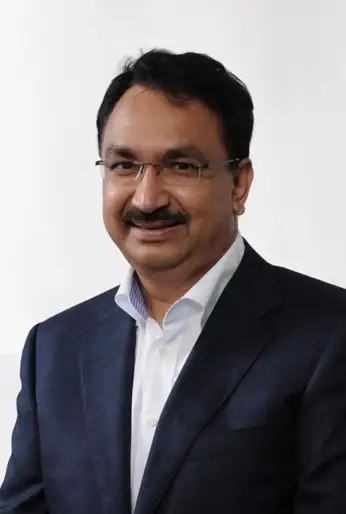
| Key facts | |
|---|---|
| Born | 19 November 1958 [1] |
| Died | 29 November 2022, Bengaluru, aged 64 [29] |
| Family roots | The Kirloskar industrial family of Kirloskarwadi, Maharashtra; son of Shreekant Kirloskar, grandson of S.L. Kirloskar, great-grandson of founder Laxmanrao Kirloskar [26][24] |
| Education | Lawrence School, Lovedale (Ooty); BS in Mechanical Engineering, MIT, 1981 [29][1] |
| Family | Wife Geetanjali Kirloskar (now CMD, Kirloskar Systems); daughter Manasi Kirloskar Tata (vice chairperson, Toyota Kirloskar Motor) [65][10] |
| Company | Chairman and MD, Kirloskar Systems; vice chairman, Toyota Kirloskar Motor (1998-2022) [29] |
| Public roles | President, SIAM (2013); President, CII (2019-20) [37][18] |
| Known for | Bringing Toyota’s car business to India and building its factories at Bidadi, near Bengaluru |
On 25 November 2022, Vikram Kirloskar stood on a stage in Mumbai to unveil the Innova HyCross, a hybrid version of the people-carrier that had become one of the most familiar vehicles on Indian roads [29]. In interviews that day he argued, with an engineer’s stubbornness, that hybrids were a better answer for India’s carbon problem than a rush to battery cars. “Long-term science is the only thing that works,” he told Business Standard [46]. Two days later he was telling reporters that India taxed its cars too heavily, but that he had “never asked for a GST reduction” [47].
On 29 November he died in Bengaluru after a cardiac arrest. He was 64 [29]. Media drives of the new Innova were due to begin the next morning.
It was a fitting last week for a man who spent four decades on factory floors. Vikram Kirloskar did not found the Kirloskar group; his great-grandfather did that in the 1880s. He was not the controlling owner of Toyota Kirloskar Motor; Toyota held 89%. What he did was persuade the world’s most exacting carmaker to build cars in India, and then help build, run and defend those factories for a quarter of a century. In the process, the 32 km stretch from Bengaluru to Bidadi became one of the country’s important automobile hubs.
This is the story of how the fourth generation of an old engineering family found his own path, nearly lost his place in the joint venture he helped create, and left a business that his wife and daughter now run.
Where it began
A family that started with a bicycle shop and a plough
To understand Vikram Kirloskar, start with his great-grandfather. Laxmanrao Kashinath Kirloskar, born in 1869 in Belgaum district, taught mechanical drawing at the Victoria Jubilee Technical Institute in Bombay. According to Business Today’s history of the group, he quit after being passed over for promotion by his British superiors and moved to Belgaum [30]. The family dates the start of its business to 1888, when Laxmanrao set up a small bicycle shop in Belgaum [3]. Accounts differ on the details: Business Today describes the 1888 firm as a trading business run initially by his elder brother Ramchandrarao [30].
From a workshop behind that shop came the products that made the name. The family says India’s first iron plough came in 1903 [3]; Business Today dates a hand-powered chaff cutter to 1902 and the plough to a few years later, and records that the first ploughs went unsold for about two years because farmers believed iron would poison the soil [30].
In 1908 the Belgaum municipality ordered the family off its site. The Raja of Aundh offered land and a loan, and in March 1910 the Kirloskars began building a factory town on about 32 barren acres near Kundal Road station, in today’s Sangli district, with 25 workers [30]. That town became Kirloskarwadi. Kirloskar Brothers Ltd followed in 1920 [3].
The MIT grandfather
Laxmanrao’s son Shantanurao, known as S.L. Kirloskar, sailed from Bombay in January 1922 to study at the Massachusetts Institute of Technology and graduated in mechanical engineering in 1926 [2]. He went on to build much of the modern group: Kirloskar Electric in Bangalore and Kirloskar Oil Engines in Pune were set up in 1946, the group exported its first diesel engines to Germany in 1954, and Kirloskar Cummins was formed in 1962 [3][26]. He was awarded the Padma Bhushan in 1965 [3]. The photographs in MIT Libraries’ exhibit on S.L. Kirloskar are credited “Courtesy of Vikram Kirloskar” [2], a small sign of how much the grandson treasured that link.
S.L. Kirloskar had two sons, Chandrakant and Shreekant. Chandrakant’s sons are Sanjay, Atul and Rahul Kirloskar, whose later quarrels would make headlines. Vikram was Shreekant’s son, and so their first cousin [26].
A boyhood of model aeroplanes
Vikram Shreekant Kirloskar was born on 19 November 1958 [1]. He went to the Lawrence School, Lovedale, a boarding school in the Nilgiris [29]. As a boy he built and flew model aircraft and played badminton, he recalled in a 2017 interview with Millionaire Asia [24].
He spoke little in public about his father, beyond this: “My father Shreekant Kirloskar died early but I value everything that I learnt from him,” crediting him with an emphasis on “mutual respect and HR development.” The bigger influence was the grandfather: “My grandfather S. L. Kirloskar always inspired me” [24].
He followed S.L. to MIT and graduated with a BS in mechanical engineering in 1981 [1]. Fortune India’s obituary noted that, by his own admission, he worked at summer camps in the United States and came home for a holiday only twice in six years [25]. MIT also gave him something less expected. “At MIT, I learnt a lot about art, music, theatre and humanities,” he said, and he took up art and sculpture there [24]. Later in life he compared cooking a meal to “making a painting or a sculpture” [24].
He was candid about the weight of the surname. “Of course there was a burden to perform. I had just graduated from MIT and expectations were high,” he said. He also admitted that the India he came home to was a sheltered market: “at that time there was no such great competition in India as it was the licence Raj” [24].
The first break
Four years on the shop floor
He did not start in a boardroom. “I was a trainee in manufacturing at Kirloskar Cummins in Pune when I started work in Kirloskar,” he said. “I was expected to improve quality and productivity on the shop floor” [24]. By his account, the first four or five years of his career were spent in the factory as an engineer, designing processes and machine tools [24][25].
That work took him to customers too. India Today reported that he first met Rahul Bajaj in the 1980s at Bajaj Auto’s Pune factory, “trying to sell him machine tools.” Bajaj became something of a role model. “I learnt it was important to do the right thing with continued emphasis on good governance and ethics. And to speak your mind confidently,” Kirloskar said of him [26].
In the late 1980s he sat on the government’s Development Council for Machine Tools, where, according to the Financial Express, he worked to open up import licensing for capital equipment [28]. It was an early sign of a lifelong habit: arguing for policy changes that would let Indian factories buy and use world-class equipment.
Toyota, through the textile door
His route to cars began with spinning machines. “First we started with textiles along with Toyota and then I thought we must get into the car business as well,” he said [24]. Kirloskar Toyota Textile Machinery was set up as a joint venture with Toyota Industries Corporation (the original Toyoda loom company) in 1995 and began production in 1997 at Jigani, near Bengaluru [35].
Toyota itself had a bruising history in India. It had been kept out of passenger cars in the early 1980s, and its truck venture with DCM, formed in 1983, sold the Dyna from 1985, peaked at about 3,700 vehicles in 1991 and was liquidated in 1997 [4]. Kirloskar had to persuade a cautious company to try again.
He later described why he wanted to: Toyota was where he “could see the best manufacturing company in the world from inside” [24]. Venu Srinivasan of TVS, a friend for decades, told India Today that Kirloskar “spent weeks and months shadowing the general manager of Toyota on their shop floor” [26]. (Srinivasan’s own story is on CapitalVia: Venu Srinivasan’s life story.)
In October 1997 Toyota Motor Corporation formed Toyota Kirloskar Motor (TKM) as a new joint venture with the Kirloskar group [4]. Vikram became vice chairman in 1998, a post he held for the rest of his life [29]. His daughter would later put it simply: “My father started the company grounds up with Toyota, convincing them to come to India” [73].
Building the empire
Bidadi and the Qualis
TKM chose Bidadi, a village about 32 km south-west of Bengaluru, for its factory. Production began in December 1999 with the Qualis, a sturdy multi-utility vehicle [4][7]. Kirloskar’s own description of his greatest strength fits this period: “if you ask me what is my big strength I would say it is building factories” [24]. Over his career, Fortune India reported, he developed at least 25 greenfield sites [25].
The Qualis went on sale in January 2000 and sold 28,022 units in 2001, about 23% of the utility-vehicle market, according to Business Standard [32]. It was a strong start in a market dominated by Maruti and Hyundai cars and Mahindra and Tata utility vehicles.
The partnership was strictly run on Toyota principles. Kirloskar often described its foundation in Japanese terms: “the basis of our relationship is mutual respect, shared values and a love for monozukuri,” the craft of making things [24]. He also took on Toyota’s attitude to rules: “we will follow global standards whether stipulated or not” [24].
The Innova and the 200,000 mark
In February 2005 Toyota replaced the Qualis with the Innova. It recorded over 4,000 sales and 15,000 bookings in its first month [7]. By November 2005 TKM had rolled out 200,000 vehicles in India; the first 100,000 had taken from 1999 to 2003, the second less than half that time [7]. The Innova became the default vehicle for taxi fleets, large families and government departments, and the Fortuner SUV later gave Toyota a strong position in large SUVs.
A web of joint ventures
Kirloskar’s Toyota relationship grew well beyond cars. In April 2002 Toyota set up Toyota Kirloskar Auto Parts (TKAP) on Kirloskar Systems’ premises at Bidadi, carved out of Kirloskar Systems’ existing axle and propeller-shaft business. Toyota Motor held 64%, Toyota Industries 26% and Kirloskar Systems 10%; 180 of its first 400 staff came from Kirloskar Systems [5].
In a 2017 interview he listed the family’s ventures with Toyota group companies as covering textile machinery and aluminium die-casting, cars, axles and transmissions, engines, heat exchangers and air-conditioning (with Denso), forklifts and insurance [24]. Kirloskar Systems, which he chaired, became the holding and investment company for these stakes [26][27].
Second plant and the Etios
In November 2008 Toyota approved a second Bidadi plant, planned at 100,000 vehicles a year, at an investment of about 68 billion yen. TKM had made about 52,000 vehicles in 2007 and employed about 3,200 people [6]. The plant began production in December 2010 [15], building the Etios, a family of small cars designed for India.
To build those cars with Indian-made engines and gearboxes, TKAP opened a gasoline engine plant in 2012 and a transmission plant in 2013. “This raises the localization ratio to over 90%,” Kirloskar said at the formal inauguration in February 2013 [8]. In June 2016, Toyota Industries Engine India, a joint venture of Kirloskar Systems and Toyota Industries, opened a Rs 1,100 crore plant at Jigani to make the GD diesel engines for the new Innova Crysta, with capacity of 108,000 engines a year. Kirloskar called it “a proud day” [34].
The industry’s spokesman
As TKM grew, Kirloskar became one of the industry’s public voices. He was elected president of the Society of Indian Automobile Manufacturers (SIAM) in September 2013 [37]. In April 2019 he became president of the Confederation of Indian Industry (CII) for 2019-20, after about three decades with the body [18].
That year turned out to be one of the hardest in CII’s history. When the COVID-19 pandemic arrived, he urged member companies to keep their people: “We are requesting our members to hold on to their staff and not do layoffs as far as possible,” he said in March 2020 [39]. In May 2020, as lockdowns stretched past 50 days, CII under his presidency called for an immediate fiscal stimulus of Rs 15 lakh crore, about 7.5% of GDP, “so that jobs and livelihoods are protected” [40]. At the time of his death he chaired CII’s manufacturing council and its hydrogen task force [29].
The Suzuki alliance and the hybrid bet
By the late 2010s Toyota was losing ground in India’s fast-growing small-car and compact-SUV segments. Under an alliance with Suzuki, the two companies agreed to supply each other’s vehicles, and TKM began selling Maruti-built cars under its own badge: the Glanza (from the Baleno) in 2019 and the Urban Cruiser in 2020 [66]. The Urban Cruiser Hyryder, built jointly with Maruti Suzuki and made at Bidadi, went on sale in 2022 [66].
Kirloskar defended the alliance on industrial grounds. “We have learnt a lot from each other on manufacturing, purchasing, the cost structure, and efficiency structure,” he said in November 2022 [46]. He was equally firm on technology. Citing research on India’s coal-heavy electricity, he argued that battery electric cars cut emissions little until the grid got cleaner: “The share of renewable energy as a percentage of total generation is only 30 per cent. Unless this goes up I don’t see carbon emission coming down” [46]. He was not against EVs: “I am not saying we will stay clear of EVs. We will do what our customers want” [46].
By April 2022 TKM had crossed two million cumulative wholesales in India; the two-millionth car was a Glanza [9]. It had passed one million cumulative sales in 2014 [36]. In calendar 2022, the last year of his life, it sold 160,357 vehicles, its best in a decade [71].
How the wealth was held
Unlike most families in this series, the Kirloskars of the Shreekant branch did not hold a listed company whose share price could be tracked daily. Vikram’s wealth sat inside Kirloskar Systems, a privately held company whose most valuable assets are minority stakes in Toyota group ventures: 11% of TKM, about 10% of TKAP and smaller stakes in others [33][9]. TKM’s own releases describe its owners as Toyota Motor Corporation (89%) and “Kirloskar Systems Limited (Vikram S. Kirloskar)” (11%) [9].
We found no Forbes or Hurun net worth figure for him, so we do not give one. What can be said is that the value of that 11% has grown sharply since his death. In FY26 TKM reported revenue from operations of about Rs 70,578 crore and a net profit of about Rs 5,225 crore, after a record Rs 5,672 crore profit in FY25 [69][68]. In FY26 it sold 406,081 vehicles, 20% more than the year before [14], and in calendar 2025 it sold 388,801 [23].
The setbacks and failures
When two markets collapsed in one year
Kirloskar was open about failure. At Mysore Kirloskar, a machine-tool company, he recalled a period when most of the revenue and profit came from Russia and Germany, “and both collapsed in the same year,” according to Fortune India’s account of his story [25][24]. He did not say which year. His lesson from such episodes: “recognizing your mistakes, accepting and learning from it is the only way you build experience” [24].
Nearly losing the Toyota stake
The biggest setback was quieter, and it was about money. A car venture eats capital, and the Kirloskar side could not keep pace with Toyota. Business Standard reported in February 2002 that the joint venture had begun with the Kirloskars holding a much larger share, but that successive capital infusions by Toyota had lifted the Japanese company’s stake to 88.86% by 2000, leaving the Kirloskars with 11.14% [31]. A 2000 agreement, the paper said, gave the Kirloskars the right to buy back to 26% by 2004.
Instead, the next day’s paper reported that Kirloskar Systems planned to sell most of its remaining stake for about Rs 100 crore, keeping roughly 1% with an option to buy back within four years. The reason given was that the family “could not wait for a longer period for returns.” Kirloskar said there would be “no change in the working of the venture” and that Toyota had “agreed to accommodate us” [32]. We could not find confirmation that this sale went through; later records show the family still holding the 11%.
What did happen is that the stake moved around the family. In March 2006 Kirloskar Oil Engines bought Kirloskar Systems’ 7.7 crore TKM shares. In November 2009, after a family settlement, Kirloskar Oil Engines agreed to sell its stakes in six Toyota-linked ventures back to Kirloskar Systems for about Rs 250 crore, including 11% of TKM and 10% of TKAP [33]. From then on the Toyota stakes sat with Vikram’s branch.
Had the family exited in 2002 for about Rs 100 crore, it would have given up a share of a company that in FY26 earned more than Rs 5,000 crore in a single year [69].
Diesel bans and a falling share
TKM’s reliance on diesel Innovas and Fortuners made it vulnerable when Delhi’s courts and tribunals restricted large diesel vehicles in 2015-16. Kirloskar was unusually blunt: “In Delhi, I am being punished for following the law,” he said in August 2016. “Right now we do not know who is making the decisions, is it the court or is it the government?” [38]
By August 2020 Toyota’s share of the Indian car market had fallen to 2.6%, from 5% a year earlier, according to Bloomberg’s reporting [44][41]. The pandemic year FY21 ended with a net loss of about Rs 55 crore for TKM; it returned to a Rs 518.8 crore profit in FY22 [45].
A hospital that was sold
Not every venture was industrial. Kirloskar and his wife Geetanjali set up a multi-speciality hospital in Bengaluru as a joint venture with two Japanese companies, and sold their 50% stake to the partners three years later, the Times of India reported [27]. He described it as her idea and passion [24].
Controversies and allegations
No court or regulator has made a finding against Vikram Kirloskar personally, as far as our review of court records, regulatory orders and major publications shows. The matters below involved companies he helped lead, chiefly Toyota Kirloskar Motor, which is controlled by Toyota, or the wider Kirloskar family.
The CCI spare-parts case (2014)
Allegation: The Competition Commission of India (CCI), acting on a complaint by Shamsher Kataria against three carmakers and then widening its inquiry, found that 14 car companies, including TKM, had restricted the sale of genuine spare parts and diagnostic tools in the open market, shutting out independent repair shops in breach of the Competition Act [20][49].
Response: On 25 August 2014 the CCI fined the 14 makers a total of about Rs 2,545 crore; Autocar India reported TKM’s share at about Rs 93 crore [20][48]. A TKM spokesperson said the company had not yet received the order and would respond after studying it [75]. TKM, Ford and Nissan appealed to the Competition Appellate Tribunal (COMPAT).
What happened next:
- In December 2016 COMPAT upheld the finding of a breach but cut the penalty base to turnover from spare parts only and sent the case back to the CCI to recalculate the fines [49].
- In February 2017 the Supreme Court stayed the COMPAT order in the appeals filed by Nissan, Ford and Toyota [50].
Status: Under appeal. We could not find a reported final Supreme Court judgment as of 23 October 2026.
Labour disputes at Bidadi (2014 and 2020-21)
Allegation: In March 2014 TKM declared a lockout during wage negotiations, citing deliberate stoppages and threats to supervisors; the union disputed the company’s account [51]. In November 2020 the union objected to faster line speeds and the suspension of an office-bearer; TKM declared a lockout and suspended 39 union members pending enquiry for alleged misconduct [53].
Response: In 2014 the lockout was lifted after the Karnataka government intervened, and TKM said the disputed issues had been referred for adjudication [51][52]. In 2020 the Karnataka government banned both the strike and the lockout on 18 November; TKM lifted the lockout, re-imposed it days later when most workers stayed away, and withdrew it by January 2021 [54][55]. The News Minute reported that a TKM delegation led by Vikram Kirloskar met Chief Minister B.S. Yediyurappa during the dispute [76].
What happened next:
- On 1 March 2021 TKM accepted an undertaking from union leaders, and the union called off its strike after about four months [56].
Status: Resolved. We found no reports of dismissals arising from the 2020 suspensions.
The 2020 “we don’t want you” row
Allegation: In September 2020 Bloomberg quoted TKM vice chairman Shekar Viswanathan (not Vikram Kirloskar) as saying Toyota would not expand further in India because of high taxes: “The message we are getting, after we have come here and invested money, is that we don’t want you” [41]. Union minister Prakash Javadekar called the report incorrect [77].
Response: Vikram Kirloskar publicly contradicted the impression the same day: “Absolutely! We are investing 2000+ crore in electric components and technology for the domestic customer and export” [42]. Toyota’s India managing director said the company “remains deeply committed” to the market [43].
Status: No legal consequence. It remains a widely cited example of carmakers’ frustration with India’s high vehicle taxes. Kirloskar later said: “I’ve never asked for a GST reduction” and argued for a gradual cut “over a period of time” [47].
The Kirloskar family dispute: where Vikram stood
Allegation: Since 2016, Sanjay Kirloskar’s Kirloskar Brothers Ltd has accused the companies controlled by his brothers Atul and Rahul of breaching a 2009 family settlement and of other wrongs; the two sides have fought before SEBI, the Securities Appellate Tribunal (SAT), the NCLT and the courts [59]. SEBI also fined Atul, Rahul and other family members in October 2020 over 2010 share sales, alleging insider trading [57].
Response: The SAT order of May 2022 records that the 2009 Deed of Family Settlement was executed by, among others, Sanjay, Vikram, Atul and Rahul Kirloskar [21]. Vikram was a signatory, but he was not a party to the insider-trading case, and he is not named in SEBI’s order or the SAT orders on it [57][58].
What happened next:
- SAT set aside SEBI’s insider-trading order in October 2022, and in December 2023 imposed costs on SEBI for delay in unfreezing the family’s shares [58].
- On disclosure of the 2009 deed, the Bombay High Court in September 2025 allowed the companies’ petitions to be withdrawn after SEBI clarified that disclosure would not amount to admitting that the deed is binding; related matters went back to SAT [22].
Status: The dispute between Sanjay’s side and the Atul-Rahul side continues in various forums. Vikram’s branch, which holds the Toyota ventures through Kirloskar Systems, has not been a litigant in it.
Tax disputes
Allegation: Tax authorities have raised several technical demands on TKM, including a customs demand of Rs 23.17 crore over the classification of imported parts between 2017 and 2022 [74].
Response: TKM contested the demands.
Status: In September 2026 the customs tribunal (CESTAT) in Chennai set aside that Rs 23.17 crore demand, along with the related penalties [74]. None of these matters named Vikram Kirloskar personally.
Giving back
Skilling rural Karnataka
His best-known social project was the Toyota Technical Training Institute (TTTI), set up by TKM in 2007 inside the Bidadi complex to give free residential training to young people from economically weaker rural families in Karnataka [16][17]. Toyota credits it to his guidance [13]. By August 2021 more than 650 students had graduated [17]. He liked to talk not only about corporate social responsibility but about “personal social responsibility,” and said creating jobs gave him the greatest satisfaction [24].
Climate and the long view
He was an early industry voice on climate. In a post days before his death, quoted by Business Today, he called it “a critical strategic requirement that businesses must address at all cost, as a collective responsibility” [64]. The Times of India’s obituary described him as a gentleman auto leader who championed the cause of climate change [27].
During the pandemic, Venu Srinivasan wrote, he helped suppliers survive and worked with the state to get hygiene kits and food to local communities [62]. “He knew he had to create jobs and livelihoods in his country, but that quality and process could not be sacrificed,” Srinivasan wrote [62].
Honours
He received the Suvarna Karnataka award for bringing Toyota to the state, the Indian Institute of Metals’ JRD Tata Award for 2020, and was elected a Fellow of the Indian National Academy of Engineering in 2021 [1][70]. He was a trustee of the Rhode Island School of Design [29]. After his death, CNBC-TV18 gave him an In Memoriam award in May 2023, received by his daughter [11], CII began a memorial lecture series in his name, inaugurated by Nitin Gadkari in December 2023 [78], and in February 2025 the Karnataka government gave him a posthumous “Industrial Legacy” award, accepted by his wife [13].
The tributes
The tributes on his death came from across politics and business. Nitin Gadkari called him “a tall statesman who’ll always be remembered for steering the transformation of the auto industry in India.” Uday Kotak wrote: “He had a world-class vision to bring the best to India.” Kiran Mazumdar-Shaw said she was “devastated” [63]. CII president Sanjiv Bajaj called his death “a personal loss for me and CII” [19]. Jairam Ramesh, a friend of more than 35 years, described him as “an engineer to the core” [64]. (Read CapitalVia’s profiles of Uday Kotak and Kiran Mazumdar-Shaw.)
Succession
Vikram Kirloskar died suddenly, without a long, staged handover. The business passed to the two people closest to it.
His wife, Geetanjali Kirloskar, who had long worked alongside him, became chairperson and managing director of Kirloskar Systems [65]. “I was already working with Vikram, so all stakeholders and partners knew me as a professional,” she told Outlook Business in March 2026. “I transformed my grief into resolve” [67]. She is also Finland’s honorary consul in Bengaluru, and was decorated by Finland in January 2024 for 15 years in that role [79].
Their daughter, Manasi Kirloskar Tata, a graduate of the Rhode Island School of Design who trained on TKM’s shop floor and joined its board in 2021, was appointed in December 2022 to the boards of the Kirloskar Systems joint ventures, including Toyota Industries Engine India, Kirloskar Toyota Textile Machinery and Denso Kirloskar Industries [65]. On 19 January 2023 she became vice chairperson of TKM and of Toyota Kirloskar Auto Parts [10]. She is married to Neville Tata, son of Noel Tata [66].
She has been frank about how sudden it was. “Within 24 hours, everything changed, and I was given this position for which honestly, I wasn’t sure if I was prepared,” she told Outlook Business in 2025 [66]. “I would like to carry forward my father’s mission of inclusive growth,” she said in January 2025 [72]. On the family’s commitment to the joint venture, she told Autocar India: “We are all in with Toyota. It is a 100-year plan” [73].
The business they inherited has grown fast. TKM sold a record 406,081 vehicles in FY26 [14] and, as of May 2026, employed 6,466 permanent staff with capacity of 342,000 vehicles a year at Bidadi [15]. In November 2023 it signed an agreement with Karnataka for a third Bidadi plant worth about Rs 3,300 crore [12], and in May 2026 Toyota announced a new vehicle plant in Maharashtra’s Bidkin industrial area, planned to start production in the first half of 2029 [15]. The Toyota group’s investment in Karnataka under his leadership had passed Rs 16,000 crore, the company said in 2025 [13].
Two episodes after his death touched the company. In January 2024 a certification scandal at Toyota Industries in Japan led TKM to pause despatches of diesel Innova Crysta, Fortuner and Hilux models; it resumed within about two weeks after confirming the engines met Indian rules, and said emissions and safety were not affected [60][61]. And in 2026 there was press attention on the size of TKM’s dividends to its Japanese parent, which also flow 11% to Kirloskar Systems [69].
What his journey teaches
Inheritance is a starting point, not a job. Vikram Kirloskar came from one of India’s oldest industrial families, but he started as a trainee on a Pune shop floor and spent years there before running anything [24]. The respect he earned from Toyota’s engineers came from that time, not from his surname.
Pick partners for what you can learn, not just what you can earn. He went to Toyota to see “the best manufacturing company in the world from inside” [24]. That humility, including weeks spent shadowing a Toyota manager [26], is what made a cautious Japanese company trust an Indian partner after its first Indian venture had failed [4].
A small stake in a great business can beat control of an ordinary one. The family’s share of TKM fell to 11% because it could not match Toyota’s capital, and in 2002 it planned to sell most of that for about Rs 100 crore [31][32]. Holding on to it turned out to be one of the best decisions the family made.
Say the uncomfortable thing, then do the work. He told the government that the auto sector was over-taxed and that he felt “punished for following the law” [38][47], yet also said he would choose a lower budget deficit over a tax cut [46]. Being blunt and fair at the same time made him credible with ministers and rivals alike.
Plan for the handover before you need it. His wife and daughter were already on the boards when he died suddenly [65], which kept a complex web of joint ventures steady. Many family businesses are not so lucky.
Readers interested in how India’s manufacturing and auto stories fit into the wider market can find more on CapitalVia Insights.
A profile for general reading, based on public records and reporting as of 23 October 2026. Not investment, tax or legal advice.
Sources (79)
- Obituary: Mr Vikram S Kirloskar - Indian National Academy of Engineering, Feb 2023
- Shantanu Lakshman Kirloskar 1926 - MIT Libraries, South Asia and MIT exhibit, Oct 2026
- Our Legacy - Kirloskar Limitless, Oct 2026
- Overseas Business Expands Globally: India - Toyota Motor Corporation, 75-Year History, Oct 2026
- Toyota establishes Toyota Kirloskar Auto Parts in India - Toyota Motor Corporation, Apr 2002
- TKM second plant investment approved - Toyota Motor Corporation, Nov 2008
- Toyota crosses 200,000 vehicle landmark in India - Toyota Kirloskar Motor, Nov 2005
- TKAP formally announces the inauguration of its gasoline engine plant - Toyota Kirloskar Motor, Feb 2013
- TKM clocks two million cumulative wholesales in India - Toyota Kirloskar Motor, Apr 2022
- Manasi Tata takes over as the Vice Chairperson of Toyota Kirloskar Motor - Toyota Kirloskar Motor, Jan 2023
- CNBC-TV18 honours late Mr Vikram Kirloskar with In Memoriam Award - Toyota Kirloskar Motor, May 2023
- TKM inks MoU with Government of Karnataka for a new plant - Toyota Kirloskar Motor, Nov 2023
- Government of Karnataka honours late Mr Vikram S Kirloskar with Industrial Legacy award - Toyota Kirloskar Motor, Feb 2025
- TKM registers 406,081 units sales in FY 25-26 - Toyota Kirloskar Motor, Apr 2026
- Toyota to build a new vehicle manufacturing plant in India - Toyota Kirloskar Motor, May 2026
- Toyota Technical Training Institute - Toyota Kirloskar Motor, Oct 2026
- TTTI announces opening of admissions for 2021-2022 - Toyota Kirloskar Motor, Aug 2021
- CII announces office bearers for 2019-20 - Confederation of Indian Industry, Apr 2019
- Vikram Kirloskar, Past President, CII leaves a deep void in Indian industry - Confederation of Indian Industry, Nov 2022
- Case No. 03/2011, Shamsher Kataria v Honda Siel Cars India Ltd and others - Competition Commission of India, Aug 2014
- Kirloskar Brothers Ltd v SEBI, Securities Appellate Tribunal order - Indian Kanoon, May 2022
- Kirloskar Industries Ltd and others v SEBI, Bombay High Court order - SEBI, Sep 2025
- TKM records 388,801 units sales in CY 2025 - Toyota Kirloskar Motor, Jan 2026
- Interview with Vikram Kirloskar (Millionaire Asia cover story) - Bindu Gopal Rao, Jan 2017
- Obituary: Vikram Kirloskar, a passionate engineer who loved building factories - Fortune India, Nov 2022
- How Vikram Kirloskar learnt business lessons from Rahul Bajaj - India Today, Nov 2022
- Vikram: A gentleman auto leader who championed cause of climate change - The Times of India, Dec 2022
- In Memoriam: Vikram Kirloskar (1958-2022) - Financial Express, Nov 2022
- TKM Vice Chairperson Vikram S Kirloskar dies at 64 - Autocar Professional, Nov 2022
- Kirloskar Brothers: Pump and Show - Business Today, Jun 2011
- Toyota to ease out Kirloskars from auto JV - Business Standard, Feb 2002
- Kirloskar eyes Rs 100 crore via Toyota JV exit - Business Standard, Feb 2002
- Kirloskar Oil to exit from six JVs; to earn Rs 250 cr - Business Standard, Nov 2009
- Toyota opens new diesel engine plant in India - Autocar Professional, Jun 2016
- India to become Toyota's global manufacturing hub for spinning machines - Indian Textile Magazine, Apr 2014
- Toyota Kirloskar Motor completes 20 years in India - Autocar Professional, Apr 2019
- Vikram Kirloskar is new SIAM president - The Economic Times, Sep 2013
- Being punished for following the law: Vikram Kirloskar - Business Standard, Aug 2016
- CII asks member companies not to lay off employees - Orissa Post (PTI), Mar 2020
- CII seeks Rs 15 lakh crore stimulus package to tide over Covid-19 crisis - Swarajya, May 2020
- Toyota halts India expansion blaming 'we don't want you' taxes - Bloomberg, Sep 2020
- Toyota to invest over Rs 2,000 crore on electrification of models in India - The Week (PTI), Sep 2020
- Toyota refutes official's claim, says deeply committed to Indian market - Business Standard, Sep 2020
- Toyota halts India expansion plans - Asia Times, Sep 2020
- Toyota's India operations turn around, posts highest net profit in 4 years - Business Standard, Oct 2022
- Carbon reduction hinges on share of renewables in energy: TKM's V Kirloskar - Business Standard, Nov 2022
- Reducing taxes on automobiles can benefit economy: Vikram Kirloskar - Business Standard (PTI), Nov 2022
- Carmakers fined - Autocar India, Aug 2014
- Competition Appellate Tribunal ruling in the auto parts case - IndiaCorpLaw, Jan 2017
- Supreme Court stays COMPAT order against car manufacturers - Bar & Bench, Feb 2017
- Toyota agrees to lift lockout on Monday - Deccan Herald, Mar 2014
- Karnataka govt asks Toyota Kirloskar to end impasse - Autocar India, Apr 2014
- Toyota Kirloskar suspends 39 union members at Bidadi unit - DT Next (PTI), Nov 2020
- Karnataka government bans strike at Bidadi Toyota factory - Deccan Herald, Nov 2020
- Toyota Kirloskar withdraws lockout at manufacturing plants - Deccan Herald, Jan 2021
- Toyota Kirloskar workers in Bidadi officially end strike after four months - The Week, Mar 2021
- SEBI fines Kirloskar Brothers' promoters, directors for insider trading - The News Minute, Oct 2020
- SAT hauls up SEBI for lackadaisical approach in Kirloskar Industries case - Outlook Business, Dec 2023
- Why Kirloskars are fighting SEBI over a family deed - Outlook Business, Jun 2025
- Toyota suspends sale of Innova Crysta, Fortuner and Hilux models - Deccan Herald, Jan 2024
- Toyota Innova Crysta, Fortuner, Hilux despatches resume in India - Autocar India, Feb 2024
- Vikram Kirloskar remade Indian manufacturing; his legacy is everlasting - Business Standard, Nov 2022
- 'Had world-class vision; tall statesman': tributes to Vikram Kirloskar - Business Today, Nov 2022
- 'Passionate engineer' Vikram Kirloskar has left a gap in India's automotive industry - Business Today, Nov 2022
- Kirloskar Systems appoints Manasi Tata as Director on the board of Kirloskar JV companies - Autocar Professional, Dec 2022
- Can Manasi Tata's creative instinct put Toyota in the driver's seat in India - Outlook Business, Aug 2025
- You can't push for respect, it comes from hard work: Geetanjali Kirloskar - Outlook Business, Mar 2026
- Toyota Kirloskar Motor delivers record Rs 5,672 crore profit in FY25 - Autocar Professional, Aug 2025
- Toyota India revenue crosses Rs 70,000 crore in FY26 - Autocar Professional, Aug 2026
- Vikram Kirloskar gets IIM-JRD Tata Award - The Hindu, Feb 2021
- Toyota Kirloskar Motor's sales hit decadal high in 2022 - Autocar Professional, Jan 2023
- It is my cause to increase diversity on the TKM shopfloor: Manasi Kirloskar Tata - Autocar Professional, Jan 2025
- New Toyota Maharashtra, Karnataka plants underline Kirloskar's commitment to JV - Autocar India, Jan 2025
- CESTAT Chennai sets aside Rs 23.17 crore customs demand against Toyota Kirloskar Motor - LiveLaw, Sep 2026
- Auto firms to appeal against Rs 2,545-cr fine - Business Standard, Aug 2014
- Ground report: 37 days on, why Toyota Kirloskar workers continue protest - The News Minute, Dec 2020
- Toyota Motors will not stop investing in India, clarifies Centre - Scroll, Sep 2020
- Gadkari roots for green hydrogen at Vikram Kirloskar Memorial Lecture - Blitz India, Dec 2023
- Order of the Lion of Finland awarded to Geetanjali Vikram Kirloskar - The Week, Jan 2024