
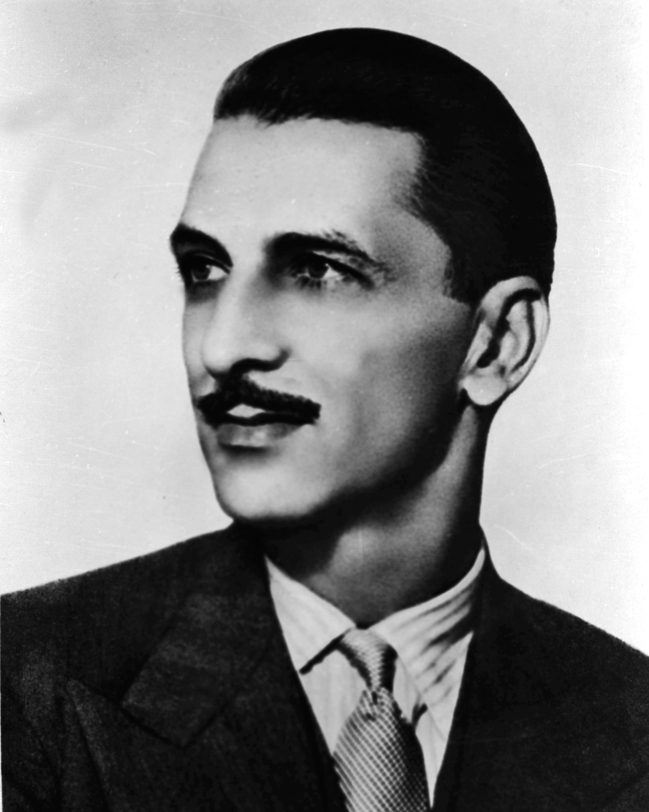
| Key facts | |
|---|---|
| Born | 29 July 1904, Paris, France [1] [2] |
| Died | 29 November 1993, Geneva, Switzerland, aged 89; buried at Père Lachaise, Paris [1] [58] |
| Family roots | Parsi Tata family of Navsari and Bombay. Father R. D. Tata, a cousin and partner of Jamsetji Tata; mother Suzanne “Sooni” Brière, French [1] [4] |
| Education | Lycée Janson-de-Sailly, Paris; schools in Bombay and Yokohama; a crammer in England. No university degree [2] [3] |
| Family | Married Thelma Vicaji in 1930; no children. Siblings Sylla, Rodabeh, Darab and Jimmy [1] [52] |
| Company/Group | Chairman of Tata Sons 1938-1991; founder of Tata Airlines/Air India and its chairman until 1978 [1] [2] |
| Known for | India’s pilot licence No. 1; founding Air India; building the Tata group from 14 companies to about 95; TCS, Titan, Tata Motors’ truck business; TIFR, NCPA and Tata Memorial; Bharat Ratna 1992 [8] [22] [55] |
At 6.30 on the morning of 15 October 1932, a 28-year-old man climbed into a small single-engine de Havilland Puss Moth at Drigh Road airfield in Karachi. Behind him were bags of mail. Ahead lay Ahmedabad, where fuel would arrive by bullock cart, and then Bombay, where his wife and a handful of friends were waiting on the mudflats of Juhu. He landed there at 1.50 in the afternoon [9] [10].
“On an exciting October dawn in 1932, a Puss Moth and I soared joyfully from Karachi with our first precious load of mail,” Jehangir Ratanji Dadabhoy Tata wrote later [13]. That flight was the start of the airline that became Air India.
JRD, as India came to know him, would spend the next six decades being two things at once: a pilot who loved speed and machines, and the patient chairman of India’s largest business group for 53 years. He was born a Frenchman, never went to university, rented his home for half a century, and ended up the only industrialist to be given the Bharat Ratna [55] [60]. He also lost his airline to the state, was sacked from it by a prime minister, and spent much of his career, by his own account, with “less real power” than almost any industrial chief in the world [33].
This is how that happened.
Where it began
A Parsi father, a French mother
JRD was born in Paris on 29 July 1904 [1] [2]. His father, Ratanji Dadabhoy Tata, known as R. D. Tata, came from the same Navsari family as Jamsetji Tata, founder of the Tata group, and was Jamsetji’s first cousin and a partner in the business [1]. You can read the founder’s own story in our Jamsetji Tata biography.
His mother, Suzanne Brière, was French. The family called her Sooni. JRD was one of five children: an elder sister, Sylla, and younger siblings Rodabeh, Darab and Jamshed, called Jimmy [52] [5]. At home he was “Jeh”, and he was fussy about it. To a friend who wrote “Dear Jay”, he replied: “For future reference, please note that my name is spelt ‘Jeh’, in abbreviation of ‘Jehangir’” [52].
“I was born a French man in France and was treated as a French man,” he said in a 1986 interview [6]. The family moved between Bombay and Paris until 1917, with summers at a beach house in Hardelot, on the north French coast [1]. One of their neighbours there was Louis Blériot, the first man to fly across the English Channel. JRD’s schoolmate was Blériot’s son [6]. At about 15 he took a joyride in a plane at Hardelot and decided he would be a pilot [11].
Schools on three continents
His schooling was scattered. He studied at the Lycée Janson-de-Sailly in Paris and, for a while, at the Cathedral school in Bombay. When the family moved to Japan in 1917 he spent about two years at an American school in Yokohama [2]. In 1923 he was sent to a crammer in England to polish his English and prepare for Cambridge, where he was meant to read engineering [3] [4]. That plan broke down when his mother fell ill. He went back to France and was with her when she died in 1923, aged 43 [4].
A year in the French cavalry
As a French citizen he was due for military service. In 1924 he was drafted for a year into Le Spahis, a cavalry regiment of Algerians, Tunisians, Moroccans and a few Frenchmen, based at Vienne, south of Lyon [3]. He had hoped to learn to ride well enough for polo. Instead he got saddle sores, and because he could type he was moved into the colonel’s office [3].
He liked the army enough to ask to stay on, which could have led to officer training at the famous Saumur riding school. His father refused and ordered him home. As JRD remembered it, R. D. Tata told him: “Certainly not. Don’t be a damn fool. Come back” [3]. JRD never got his Cambridge degree. “This decision is one I’ve regretted throughout my life,” he said [3].
There was a grim footnote. His biographer R. M. Lala recorded that after JRD left, his squadron was sent to Morocco to fight the Rif rebellion and was ambushed and wiped out [3].
The first break
An unpaid apprentice
In December 1925 JRD joined the Tata business in Bombay as an unpaid apprentice [3] [4]. Early in 1926 he was sent to Jamshedpur to learn how steel was made [5]. That summer his father died of a heart attack in France. “Though he was 70, to me he was a man who still had 20 years left in him,” JRD said [5].
At 22 he inherited his father’s permanent seat on the board of Tata Sons [1] [2]. It came with responsibility for his four younger siblings and a family that was not as wealthy as its name suggested. JRD sold property to repay money the family owed Sir Dorabji Tata and, setting aside the will, split the family income and shares equally among the five children [5]. He later told his sister Rodabeh that his aim was simple: “I want to be worthy of the Tatas” [5].
Licence No. 1
The other thing on his mind was flying. When a flying club opened in Bombay, JRD was one of the first to sign up. On 10 February 1929, after about three hours and 45 minutes of instruction, the Aero Club of India and Burma issued him the first pilot’s licence in India, numbered 1 [8] [13]. “No document has ever given me a greater thrill than the little blue and gold certificate,” he wrote [8].
The same year he gave up his French citizenship and became an Indian [2]. In 1930 he married Thelma Vicaji, known as Thelly [1].
In May 1930 he entered a race for a £500 prize offered by the Aga Khan to the first Indian to fly solo between India and England. He set out from Karachi on 3 May in a Gipsy Moth [7]. At Aboukir in Egypt he met a rival, 17-year-old Aspy Engineer, who was flying the other way and was stranded without spark plugs. JRD gave him spares. Aspy won the race by about two and a half hours [7]. “Our friendship ever since has been much more worthwhile than winning the competition would have been,” JRD wrote to Aspy in 1957 [7]. Aspy Engineer later became chief of the Indian Air Force.
The airline nobody wanted to fund
In March 1929 a British pilot named Nevill Vintcent, who had been giving joyrides around India, came to JRD with a plan for an airmail service from Karachi to Madras [10] [12]. JRD backed it and persuaded the cautious Sir Dorabji Tata, the group’s chairman, to put money in [10]. The capital was Rs 2 lakh [10] [11].
The British government of India would not pay a subsidy. It took about three years of letters and meetings before a ten-year airmail contract was signed on 24 April 1932, paying only a rate per pound of mail carried [8] [10]. Tata Air Mail started with two Puss Moths, three pilots, three mechanics and a palm-thatched hut at Juhu [9] [13]. The first flight was planned for September 1932, but the monsoon flooded Juhu, so it was pushed to 15 October, with JRD at the controls [9].
In its first year the service flew about 2.6 lakh km, carried 155 passengers and about 10 tonnes of mail [8] [13]. The Director of Civil Aviation’s report for 1933-34 noted that it had been 100% punctual [10] [11]. The airline is reported to have made a profit of Rs 60,000 in its first year, rising to Rs 6 lakh by 1937 [14].
“We had no aids whatsoever on the ground or in the air,” JRD remembered [11].
Building the empire
Chairman at 34
In 1938 the group’s chairman, Sir Nowroji Saklatvala, died suddenly in France. The Tata Sons board elected JRD to succeed him. He was 34, the youngest chairman the group has had [1] [2]. He would hold the post until 1991.
The group he took over was a set of companies in steel, power, textiles, hotels and chemicals, run under the managing agency system, which gave Tata Sons a strong say in each company until the system was abolished in 1970 [24]. Tata’s own history puts the number at 14 companies when he became chairman, and about 95 when he left [22].
JRD did not run it like a family firm. He brought in professionals and gave them room. “I like people and trust them unless they show themselves unreliable or incompetent,” he said [24]. Colleagues called him a “great synthesizer” who ran the group by consensus for 50 years. Some critics thought he was “too much of a consensus man” [24].
Chemicals, people and the 1940s
In 1939 the group launched Tata Chemicals on the salt works at Mithapur, on the Saurashtra coast in Gujarat [22]. It was a hard business. “Of all the companies with which I have been concerned, none has had to overcome so many difficulties,” JRD said later [22]. In 1943 a young engineer named Darbari Seth joined it. When Seth proposed expanding soda ash output in the late 1950s with an in-house design, JRD was the only one of 16 board members to back him. Seth went on to lead more than 14 Tata companies [26].
In 1943 JRD wrote a note to the managers at Tata Steel that is still quoted inside the group: “If we have 50,000 machines, we would undoubtedly have a special staff or a department to look after them, but when employing 30,000 human beings, each with a mind of his own…” [31]. Tata says this led to the first corporate personnel department in India; Tata Steel dates its Personnel Division to 1947 [31] [66]. In 1956 Tata Steel and its workers’ union set up a three-level system of joint consultation between management and workers [66]. (The eight-hour working day at Tata Steel, often credited to JRD, came earlier, under his predecessors [66].)
In January 1944 JRD was one of eight industrialists, along with G. D. Birla, Purshotamdas Thakurdas and others, who signed A Plan of Economic Development for India, better known as the Bombay Plan. It aimed to double per-person income in 15 years [32]. Ratan Tata later called it “the precursor to the Planning Commission” [22]. Read more about his co-signatory in our G. D. Birla biography.
The same year he set up a charitable trust with his own money, the JRD Tata Trust [1] [52].
Trucks, air conditioners and Air India International
On 1 September 1945 the group incorporated the Tata Locomotive and Engineering Company, Telco, to make railway engines [25]. JRD persuaded Homi Mody to release a brilliant engineer, Sumant Moolgaokar, to run it. In Geneva in 1954 JRD, Moolgaokar and J. D. Choksi negotiated a 15-year technical collaboration with Daimler-Benz. Telco’s first truck came out that year [25] [67]. When the tie-up ended in 1969 the trucks carried the Tata name. Telco became Tata Motors in 2003 [67].
In 1954 Tata Sons and the Swiss trading firm Volkart Brothers formed Voltas, which went on to make India’s first room air conditioners [68]. The same decade the group’s power company opened a 62.5 MW thermal plant at Trombay, near Bombay, in 1956 [23].
Meanwhile, the airline kept growing. Tata Airlines became a public company, Air India Ltd, on 29 July 1946 [13] [74]. In 1947, the year of independence, JRD proposed an international service. The government would own 49% of the new Air India International, Tata 25% and the public the rest [11]. On the night of 8 June 1948 a Lockheed Constellation called the Malabar Princess took off from Bombay for London via Cairo and Geneva with 35 passengers, JRD and Thelly among them [15]. A ticket cost Rs 1,720 [15].
The 1960s and 1970s: TCS, tea and the Taj
In 1962 the group formed Tata-Finlay with Britain’s James Finlay to grow and sell tea. It became Tata Tea in 1983 [23]. The same year it set up Tata Exports, now Tata International [23].
On 1 April 1968 Tata Consultancy Services was born out of the group’s data processing unit [28]. JRD asked F. C. Kohli, an engineer who had been with the group’s power company since 1951, to run it [29]. India’s software industry largely grew from that decision. TCS earned US$1 million in revenue in 1976 and opened a New York office in 1979 [28].
Under the hotelier Ajit Kerkar, the Indian Hotels Company grew from one hotel, the Taj Mahal in Bombay, into a chain, taking over palace hotels such as the Lake Palace in Udaipur in 1971 and Rambagh Palace in Jaipur in 1972 [23]. The first Taj hotel abroad opened in Lusaka, Zambia, in 1979 [23].
The postcard from a young engineer
One small episode from this period has become a legend. In about April 1974, a young engineering graduate in Bangalore named Sudha Kulkarni saw a Telco job advertisement that said “Lady candidates need not apply”. She wrote JRD a postcard. “I am surprised how a company such as Telco is discriminating on the basis of gender,” she wrote [30]. Within ten days she was called to Pune for an interview at the company’s cost, and was hired as Telco’s first woman engineer on the shop floor. She is now known as Sudha Murty, the author and philanthropist, and wife of the Infosys founder profiled in our Narayana Murthy biography. Years later JRD told her: “Never start with diffidence. Always start with confidence” [30].
Titan: the last big start-up
Titan was JRD’s last great bet. In 1984 Tata formed a joint venture with the Tamil Nadu Industrial Development Corporation, which held a licence to make watches [27]. JRD personally helped close the technology deal with the French watchmaker France Ebauches, and Xerxes Desai was made managing director [27]. In March 1988 JRD dedicated the factory at Hosur to the nation [27] [76]. “There was one man who thought that the effort should not be slackened. That was JRD Tata,” Desai recalled [27].
How big did it get?
The often-quoted numbers vary by source, so they are worth stating carefully. Tata’s own history says the group grew from 14 companies to 95, and puts turnover at Rs 17 crore at the start and an estimated Rs 10,000 crore at the end [22]. ThePrint and N. R. Narayana Murthy, writing in Outlook, give the group’s assets as Rs 62 crore in 1939 and more than Rs 10,000 crore by 1990 [53] [64]. Either way, it was a very large increase over 53 years, much of it achieved under heavy controls.
How the wealth was held
JRD was never a rich man by the standards of the group he led. Most of the shares of Tata Sons, the holding company, were left by Sir Dorabji Tata and Sir Ratan Tata, the founder’s sons, to charitable trusts. In 1957 TIME magazine reported that charitable trusts held 80% of Tata Sons’ wealth [37]. Today the trusts together hold about 66% of Tata Sons [63].
JRD’s own family shares had been split with his siblings. Some of those siblings later sold their holdings, and they became part of the 18.4% stake that the Shapoorji Pallonji family built up in Tata Sons [63]. That story is told in our Pallonji Mistry biography.
For about 50 years JRD and Thelma lived in a rented house, The Cairns, on Cumballa Hill in Bombay, paying Rs 1,230 a month to a Parsi trust [60]. Before he died he sold a Bombay flat and more of his shares to fund a trust for disadvantaged women [52] [60]. There is no reliable figure for his personal net worth, and any number you see online should be treated with suspicion.
Handing over
On 25 March 1991, at the age of 86, JRD handed the chairmanship of Tata Sons to Ratan Tata, son of Naval Tata, who had been adopted into the family by the widow of Sir Ratan Tata [1] [42]. Ratan Tata’s story, including the global deals he made over the next two decades, is told in our Ratan Tata biography.
The setbacks and failures
Growth with one hand tied
From the late 1950s to 1991, Indian companies needed government licences to set up plants, expand capacity, import machines or raise money. The Monopolies and Restrictive Trade Practices (MRTP) Act of 1969 added another layer for large groups like the Tatas. Of the officials who ran that system, JRD told the Christian Science Monitor in 1982: “They thought it was completely against the ideals of egalitarianism” [75].
JRD’s frustration was public. At Tata Steel’s annual meeting on 24 August 1972 he said that, “deprived of the right to decide what and how much to produce, what prices to charge, how much to borrow, what shares to issue and at what price, what wages and bonus to pay”, the company’s directors “from the chairman down have hardly any economic power”. He added: “I doubt that there is anywhere in the world, outside India, any industrial executive in charge of a major enterprise with less real power than I have” [33].
Specific projects stalled. In the 1960s his plans for a car plant and an integrated fertiliser complex were blocked [35]. The fertiliser project at Mithapur came up in Parliament: on 18 December 1968 a minister said it was “pending with the government”, pointing out that it was “an investment of Rs. 200 crores being concentrated in a single business house” [36]. Darbari Seth’s planned agro-industrial complex at Mithapur was “never completed due to the MRTP Act,” Tata later said [26].
He kept writing to prime ministers. On 21 February 1968 he sent Indira Gandhi a speech in which he said the “decade of development” had become a “decade of disillusionment”, and described India as a “benevolent one-party autocracy”. “With Nehru gone, the façade has begun to crack,” he wrote [34]. Ratan Tata later said JRD “suffered great frustration” in his last 20 to 30 years as chairman [22].
Losing the airline
The biggest single loss of his career was Air India. In 1953 the government nationalised it, and in 1978 a later government removed him as its chairman. Both episodes are set out in the controversies section below.
Mills and soaps that did not survive
Not every Tata business thrived. The Empress Mills in Nagpur, started by Jamsetji Tata in 1877, was profitable until 1984 but made losses from 1985. It was locked out from 3 May 1986, leaving more than 6,000 workers idle, and the Maharashtra government took it over by law later that year for Rs 6.10 crore [47]. The group’s soap and oils company, Tata Oil Mills (TOMCO), lost about Rs 13 crore in 1991-92 and was merged into Hindustan Lever in 1994, when the Bombay High Court noted competition from “a more efficient and prosperous company” [48].
A group of fiefdoms
The independence JRD gave his managers had a cost. By the late 1980s the group was, in the words of Business Today, “a loose confederation of companies, controlled zealously by powerful satraps” [77]. Tata Sons and the family held only about 5% to 15% of the main group companies [43]. The economist Omkar Goswami described the group Ratan Tata inherited as “an unwieldy agglomeration of over a hundred firms”, many of which did not earn their cost of capital [50]. A Business Standard editorial in 2004 said JRD “held the group together by sheer force of personality” and “did not leave a clean slate”, though it concluded that he chose his successor well [49].
In the same years, newer groups such as Dhirubhai Ambani’s Reliance grew far faster. Read how in our Dhirubhai Ambani biography.
Controversies and allegations
JRD was never charged with or found guilty of any offence by a court or regulator. The controversies of his life were political and corporate: fights with governments, comments that critics found troubling, and boardroom battles over succession.
The nationalisation of Air India (1953)
Allegation: In 1952 JRD complained to Prime Minister Jawaharlal Nehru that the government was treating the Tata air companies “shabbily” as part of a plan to weaken them and take them over cheaply [16]. In a telegram he said he could “only deplore” that so vital a step had been taken without giving the company a proper hearing [14] [18]. He argued that nationalisation would bring bureaucracy and lower standards [19].
Response: In a letter dated 10 November 1952, Nehru said he was astonished at the suggestion of a planned conspiracy. He said the Congress had long held that “transport services of almost all kinds should be State-owned”, and that the Cabinet “were driven to the conclusion that there was no other way out” [16]. In June 1953 Nehru called nationalisation “a great step forward” while accepting that air services had “made great progress under private enterprise” [65].
What happened next:
- The Air Corporations Act came into force on 28 May 1953, merging nine airlines into two corporations, Air India International and Indian Airlines [17].
- JRD had suggested keeping the domestic and international businesses separate, and the government adopted roughly that structure [20].
- At Nehru’s request he became chairman of Air India, without pay, and joined the Indian Airlines board [19].
Status: Settled history. JRD later wrote that he was upset “even more than the decision itself” by “the manner in which nationalisation was introduced through the back door” [14]. Lala recorded that, looking back, JRD felt nationalisation had become inevitable [18]. In January 2022, Air India returned to the Tata group after it won the government’s sale [73].
The “stabbed in the back” quote: a false claim
Allegation: A quote widely shared online claims that JRD wrote in his diary that “my own friend Nehru stabbed me in my back” over the airline’s nationalisation.
Response: A 2021 fact-check by Alt News traced the quote to a 2014 blog post. JRD’s biographer R. M. Lala recorded that JRD did not keep a diary [18].
Status: No credible source supports the quote, and it should be treated as false. JRD’s documented words of protest are the telegram and letters cited above.
Removed as Air India chairman (1978)
Allegation: On 1 January 1978 an Air India Boeing 747, the Emperor Ashoka, crashed into the sea off Bombay, killing 213 people [72]. About a month later Prime Minister Morarji Desai’s government removed JRD as chairman of Air India, with effect from 1 February 1978, and dropped him from the Indian Airlines board. No reason was given [19] [21]. He learned of it from his successor, Air Chief Marshal P. C. Lal, before the prime minister’s letter arrived [20]. London’s Daily Telegraph headlined the story “Unpaid Air India Chief Is Sacked by Desai” [21].
Response: On 13 February 1978 JRD wrote to Desai that “at no time in its history has Air-India been so successful and so profitable as in the current year, 1977-78”, and noted that he had met the prime minister on 24 January without being told [20]. Desai’s letter recorded his “distinguished services” [19]. Air India’s managing director resigned and staff associations protested [21]. “The way it was done was unpleasant for me,” JRD said later [21]. Reporters and historians have speculated about the motive, including politics and a poor relationship with Desai; no official document links the decision to the crash [73].
What happened next:
- In 1980, after returning to power, Indira Gandhi reappointed JRD to the boards of both airlines, though not as chairman [19] [21].
- He stayed on the boards until 1986 [19].
Status: Closed. He had chaired Air India, unpaid, for about 25 years.
His comments on the Emergency (1975-77)
Allegation: During the Emergency declared by Indira Gandhi in June 1975, the New York Times reporter J. Anthony Lukas reported that much of Indian business was pleased with it. As quoted by the historian Ramachandra Guha, Lukas reported JRD saying in Bombay that “things had gone too far. You can’t imagine what we’ve been through here - strikes, boycotts, demonstrations” and that “the parliamentary system is not suited to our needs” [40]. Guha called JRD’s political views on this “naïve”, while describing him as “a man of a larger and more humane vision” [40]. A 2024 essay in the London Review of Books argued that JRD “was willing to support authoritarianism, at least when it protected the interests of capitalists” [41].
Response: No public response or later retraction by JRD on these reported remarks appears in the record. Earlier in his career he had publicly backed a two-party democracy, supporting the pro-market Swatantra Party so that India’s political life could develop “around two main opposing Parties” [31].
Status: A matter of historical debate, not a legal one. The remarks are known through a single newspaper report and later historians’ accounts.
Government plans to take over Tata Steel (1978-79)
Allegation: After the Janata Party came to power in 1977, Industry Minister George Fernandes, backed by Steel Minister Biju Patnaik, pushed to nationalise the Tata Iron and Steel Company [39]. On 20 February 1979 Patnaik told the Lok Sabha that the takeover was “still under consideration”, noting that state-owned banks and financial institutions held about 45% of TISCO’s shares [38].
Response: The Tata Workers’ Union sent telegrams to Prime Minister Desai opposing the move, and workers protested [39].
Status: The plan was dropped and TISCO, now Tata Steel, was never nationalised [39]. An earlier question in 1972 on nationalising TISCO had also been answered “No, Sir” in Parliament [69].
The Russi Mody ouster and the battle of the satraps (1991-93)
Allegation: When JRD chose Ratan Tata as his successor, several powerful company chiefs, including Russi Mody of Tata Steel, Darbari Seth of Tata Chemicals and Ajit Kerkar of Indian Hotels, were reluctant to accept the authority of Tata Sons [42] [43]. In 1991 Mody promoted two protégés at Tata Steel without board approval; JRD did not back him and the order was withdrawn [43]. In 1992 the group introduced a retirement age of 75 for directors. Mody, who turned 75 in January 1993, called it a “black resolution framed with Machiavellian intent to get him out” [44].
Response: JRD and Ratan Tata pressed Mody to step down. According to the South China Morning Post, the Tata Steel board removed him as chairman in 1993 in his absence, accusing him of attacking the company in the press [45]. JRD publicly backed Ratan Tata throughout [43].
What happened next:
- Mody was later appointed joint chairman of Air India and Indian Airlines by the Narasimha Rao government [44].
- Darbari Seth retired under the rule on better terms and became chairman emeritus of Tata Chemicals [42].
- In 1997, after JRD’s death, Kerkar left all Tata boards after Indian Hotels’ board said it had lost confidence in him; no court or regulator made any finding against him [46].
- Years later Mody called Ratan Tata “a class act” and said, “It could have been handled more gracefully on both the sides” [44].
Status: Closed. The episode is now seen as the moment the group moved from JRD’s federation of strong managers to Tata Sons’ central control.
As of 2 November 2026, no court, regulator or official inquiry has found wrongdoing by JRD Tata personally.
Giving back
Science, cancer and the arts
JRD was a trustee of the Sir Dorabji Tata Trust from its founding in 1932 and chaired it for the last 25 years of his life [52]. Through it and the other Tata trusts he helped build some of India’s best-known institutions.
- Tata Institute of Social Sciences (1936): founded by the Sir Dorabji Tata Trust as a school of social work [52].
- Tata Memorial Hospital (1941): India’s pioneering cancer hospital in Bombay, funded by the Dorabji Trust [52] [53].
- Tata Institute of Fundamental Research (1945): On 12 March 1944 the young physicist Homi Bhabha wrote to the Dorabji Trust, after earlier letters with JRD, proposing “a School of Physics comparable with the best anywhere”. The trust backed it with JRD’s encouragement, and TIFR opened on 1 June 1945 [61]. It became the base of India’s atomic energy programme.
- International Institute for Population Sciences (1956): set up in Bombay with the Tata trusts, the UN and the Government of India [31].
- National Centre for the Performing Arts (1969): “the brainchild of JRD Tata and Dr. Jamshed Bhabha” [62].
- National Institute of Advanced Studies, Bangalore (1988): conceived by JRD as a meeting ground for India’s thinkers [1].
He also proposed to Nehru in October 1947 a national fund for disaster relief; the Prime Minister’s National Relief Fund was set up in January 1948 [31].
Family planning
For four decades JRD argued that India’s population growth was holding back its development. He raised it with Nehru as early as 1951 and in 1970 helped set up the Family Planning Foundation, now the Population Foundation of India [31] [53]. On 17 September 1992 he received the United Nations Population Award from Secretary-General Boutros Boutros-Ghali in New York [57] [70].
Giving away his own money
In 1944 he set up the JRD Tata Trust with his own funds. In 1991 he set up the JRD and Thelma J Tata Trust for disadvantaged women, selling more of his shares and a Bombay flat to fund it [1] [52].
Honours
He received the Padma Vibhushan on 26 January 1955 [54], France’s Legion of Honour, the Tony Jannus Award in 1979, and the Daniel Guggenheim Medal in 1988 “for a lifetime of significant contributions to aviation” [56] [70]. On 26 January 1992 he was named for the Bharat Ratna, India’s highest civilian honour [55]. His reaction, as recorded by Tata, was: “Why me? I don’t deserve it. The Bharat Ratna is usually given to people who are dead or it is given to politicians” [52].
The final flight and last years
On 15 October 1982, at 78, he flew a Leopard Moth solo from Karachi to Bombay again to mark the airline’s 50th anniversary [8] [1]. He said he did it because he felt “a growing sense of disenchantment in our land” and wanted to show what was still possible [8].
In 1965 a schoolteacher, K. C. Bhansali, wrote asking what principles had guided his life. JRD replied that he was “only an ordinary businessman and citizen”, and listed them: that nothing worthwhile is achieved “without deep thought and hard work”; that one must “think for oneself and never accept at their face value slogans and catch phrases”; that one must “forever strive for excellence”; and “that no success or achievement in material terms is worthwhile, unless it serves the needs or interests of the country and its people, and is achieved by fair and honest means” [51].
JRD died in a hospital in Geneva on 29 November 1993, aged 89 [1] [58]. India’s President Shankar Dayal Sharma called him “one of the builders of modern India” [59]. He was buried in the family tomb at the Père Lachaise cemetery in Paris [1] [53]. On 2 December 1993 the Lok Sabha paid tribute and adjourned. Speaker Shivraj Patil called him “the embodiment of simplicity and modesty”, and Prime Minister P. V. Narasimha Rao said “he did not let the acquisition of wealth become the goal of his life” [58]. A commemorative stamp was issued on 29 November 1994 [71].
Succession
JRD had no children. He chose Ratan Tata, then chairman of Telco, as his successor at Tata Sons in March 1991 [1] [42]. The choice was far from popular at the time: Ratan was seen by many senior managers as an unproven heir, and his 1983 strategy plan for the group had been resisted by the company chiefs [43].
JRD backed him through the battles that followed. The retirement-age rules Ratan brought in, and the gradual increase in Tata Sons’ stakes in group companies, ended the era of independent satraps [42] [43]. Ratan Tata chaired the group until 2012 and again briefly in 2016-17; today it is led by N. Chandrasekaran, profiled in our N. Chandrasekaran biography.
What his journey teaches
Start with what you love, and make it pay. JRD’s airline began as a young man’s passion for flying. What made it a business was the dull part: a mail contract, two small Puss Moths, and a 100% on-time record in the first year.
Back people, not just plans. Darbari Seth, F. C. Kohli, Sumant Moolgaokar and Xerxes Desai each built a major company because JRD trusted them when others did not. His rule was to trust people “unless they show themselves unreliable or incompetent”.
Let one letter change your mind. A postcard from an unknown engineering student made Telco change its hiring rule within days. Leaders who read and answer their mail hear things their managers will not tell them.
Give freedom, but plan for what comes after. The independence JRD gave his managers built the group and then nearly split it. Autonomy without clear rules on ownership and retirement left his successor a hard fight.
Fight the rules, but obey them. JRD spent decades arguing against licences and controls in speeches and letters, yet kept the group within the law. When the economy opened in 1991, the Tata name was still trusted.
Wealth is not the same as worth. He led India’s biggest group for 53 years, rented his home and gave away his shares. The institutions he backed, from TIFR to Tata Memorial, may outlast every company he ran.
A profile for general reading, based on public records and reporting as of 2 November 2026. Not investment, tax or legal advice.
Sources (77)
- JRD Tata life timeline - Tata.com, Nov 2026
- J.R.D. Tata - Encyclopaedia Britannica, Oct 2026
- JRD in the French Army (R. M. Lala excerpt) - Tata.com, Jul 2025
- Towards Greatness: JRD's first year at Tata - Tata.com, Jul 2025
- I want to be worthy of the Tatas - Tata.com, Jul 2026
- The Unknown JRD: a 1986 interview - Tata.com, Jul 2019
- The Race: JRD Tata and Aspy Engineer - Tata.com, Jul 2022
- Karachi to Bombay to Calcutta - Air & Space/Smithsonian, Nov 2026
- JRD Tata: Song of the Clouds - Tata.com, Jul 2023
- Nevill Vintcent, the man who inspired JRD Tata to start Air India - Scroll.in, Oct 2021
- Wings for a Nation - Tata.com, Nov 2026
- Tata doesn't always mean goodbye: the Tata group and Air India - Tata.com, Jan 2022
- The little-known story of the first Air India flight - The Better India, Mar 2017
- When Air India was efficient, profitable and growing fast (NYT India Ink) - Parsi Khabar, Nov 2012
- Air India's first international flight - Airways Magazine, Jun 2023
- Nehru's letter to J.R.D. Tata, 10 November 1952 - Nehru Archive, Nov 1952
- 70 Policies: Nationalisation of Air India, 1953 - Observer Research Foundation, Aug 2018
- Fact check: Did JRD Tata write that Nehru stabbed him in the back? - Alt News, Oct 2021
- How the government took Air India from JRD Tata (Shashank Shah excerpt) - Scroll.in, Dec 2018
- The original flight plan - Business Standard, Feb 2013
- The sacking was unpleasant: rare clip of JRD on the pink slip - Business Today, Feb 2024
- Expanding an Empire - Tata.com, Jul 2019
- JRD Tata: companies built - Tata.com, Nov 2026
- JRD Tata's leadership (R. M. Lala excerpt) - Tata.com, Jul 2022
- Birth of a giant: Tata Motors - Tata.com, Jul 2019
- Remembering Darbari Seth - Tata.com, Feb 2021
- JRD, Titan and Xerxes - Tata.com, Jul 2026
- TCS timeline - Tata.com, Nov 2026
- FC Kohli, a true legend who ensured India didn't miss the technology revolution - ThePrint, Nov 2020
- Appro JRD: Sudha Murty's tribute - Tata.com, Jul 2019
- JRD, The Citizen - Tata.com, Jul 2019
- The story of JRD Tata and GD Birla's Bombay Plan - Quartz, Nov 2018
- After the boardroom battle - Scroll.in, Nov 2016
- Two letters from JRD Tata to Indira Gandhi - Scroll.in, Jan 2026
- JRD, the letter-righter - Business Standard, May 2010
- Lok Sabha debate on the Mithapur fertiliser project - Lok Sabha Digital Library, Dec 1968
- Business: Fifty Years of Tata - TIME, Sep 1957
- Lok Sabha question on taking over TISCO - Lok Sabha Digital Library, Feb 1979
- Known and unknown - Business Standard, Jun 2007
- Gentle dents in a worthy idol (Ramachandra Guha) - The Telegraph, Jan 2007
- What's good for India: Good for Tata (Akshi Singh) - London Review of Books, Apr 2024
- The taming of the old guard - Business Standard, Nov 1997
- Tata to fiefdoms (Shyamal Majumdar) - Business Standard, Dec 2012
- Russi Mody: India's man of steel - Business Standard, May 2014
- Row threatens top Indian group - South China Morning Post, Nov 2026
- Kerkar severs links with Tata group firms - Business Standard, Sep 1997
- Empress Mills, Nagpur (Acquisition and Transfer of Undertaking) Act, 1986 - LegitQuest, Dec 1986
- Hindustan Lever Employees' Union v. Hindustan Lever Ltd - Bombay High Court via Indian Kanoon, May 1994
- JRD's true legacy - Business Standard, Jul 2004
- Ratan and remaking Bombay House (Omkar Goswami) - Business Standard, Dec 2012
- JRD Tata's letter to a schoolteacher - Tata.com, Jul 2020
- Tata Titans: JRD Tata - Tata.com, Nov 2026
- JRD Tata, the business baron who championed the art of giving - ThePrint, Nov 2019
- Padma Awards notification, 1955 - Government of India, Jan 1955
- Bharat Ratna notification, 1992 - Government of India, Jan 1992
- Daniel Guggenheim Medal recipients - AIAA, Nov 2026
- United Nations Population Award laureates - UNFPA, Nov 2026
- Lok Sabha Debates: obituary reference to J.R.D. Tata - Lok Sabha Digital Library, Dec 1993
- Indian pioneer Tata dies - South China Morning Post, Nov 1993
- JRD and The Cairns - The Tribune, Jul 2001
- Homi Jehangir Bhabha: architect of modern science and technology in India - arXiv, Jun 2009
- About us - NCPA Mumbai, Nov 2026
- How did the Mistrys acquire their shares in Tata Sons? (Peter Casey excerpt) - Scroll.in, Sep 2021
- Business: J.R.D. Tata (N. R. Narayana Murthy) - Outlook, Feb 2022
- Nationalization of air transport, 9 June 1953 - Nehru Archive, Jun 1953
- Labour Day: our people practices - Tata Steel, Nov 2026
- Our history - Tata Motors, Nov 2026
- Our history - Voltas, Nov 2026
- Lok Sabha question on nationalisation of TISCO - Lok Sabha Digital Library, Aug 1972
- Memorabilia collections - Tata Central Archives, Nov 2026
- J.R.D. Tata commemorative stamp, 1994 - iStampGallery, Nov 2026
- Accident: Boeing 747-237B VT-EBD, 1 January 1978 - Aviation Safety Network, Jan 1978
- The Air India story: from JRD's first flight to Tata's latest challenge - ThePrint, Aug 2026
- Air India (company profile) - Encyclopaedia Britannica, Nov 2026
- Tata: business, the public, and conscience - Christian Science Monitor, Jul 1982
- Our heritage - Titan Company, Nov 2026
- Tata transformed (R. Sridharan) - Business Today, Mar 2002